You can grow chaga at home, but I want to be straight with you: this is a multi-year project, not a weekend grow. Chaga (Inonotus obliquus) is a parasitic fungus that colonizes living birch trees from the inside out, and the usable conk you're after takes anywhere from 4 to 12 years to develop after inoculation. That's not a typo. If you go in with realistic expectations, set up your inoculation properly, and have access to living birch trees, this is absolutely something you can pull off at home. It just requires patience that most mushroom projects don't demand.
How to Grow Chaga at Home: Step-by-Step Guide
Marcus Holloway
29 Apr 2026
Can you grow chaga at home (and what does success actually mean)?
Yes, chaga can be cultivated outside of a lab. Applied inoculation programs in Finland and elsewhere have confirmed that living birch trees can be successfully inoculated with chaga mycelium, leading to visible infection, bark changes, and eventually sterile conk formation. A Finnish field study followed inoculated birches over 4 to 5 years and reported visible success across multiple stages, though it also noted that no conk formation was observed at the 3-year mark. That's the honest benchmark: you are planting something that will show you early signs of life within a year or two, but won't be harvestable for years after that.
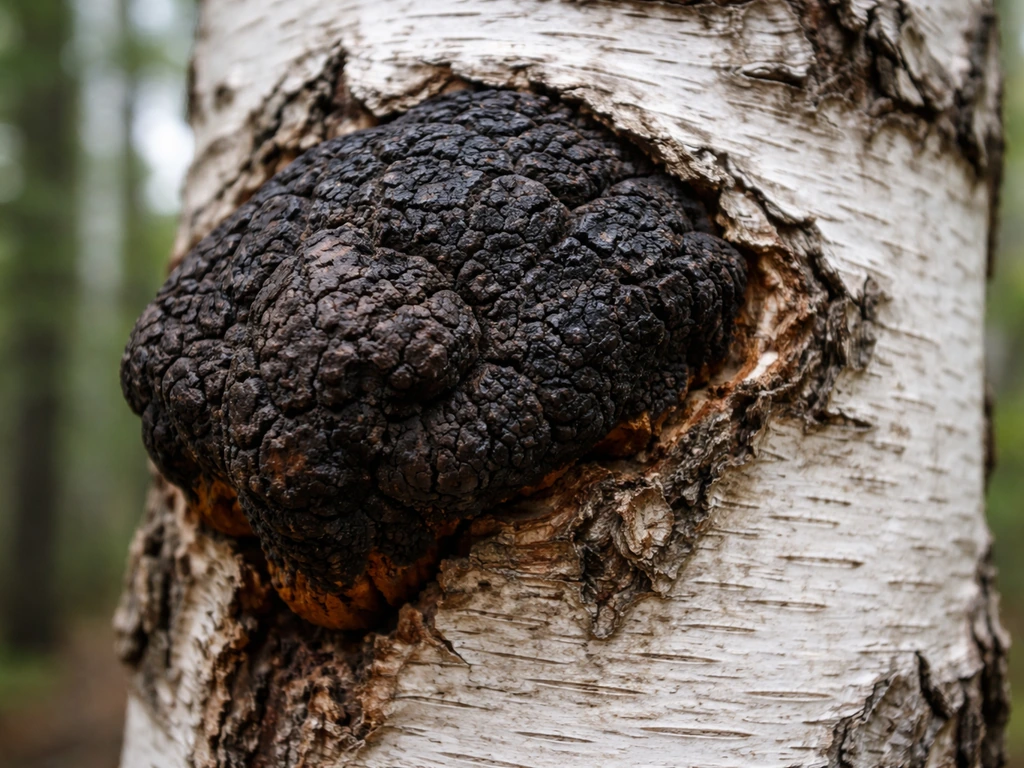
It also helps to understand what you're actually growing. The chaga "mushroom" most people harvest and brew into tea is not a true fruiting body. It's a sterile conk, essentially a dense mass of mycelium and decayed wood tissue that pushes through the bark of the host tree after years of internal colonization. The actual spore-producing stage (the basidiocarp) only appears much later, typically after the host tree is dead or dying. So when growers talk about "growing chaga," they mean cultivating this slow-developing conk, not a typical mushroom cap. If you're comparing this to growing ganoderma or lingzhi, which also require patience, chaga takes the concept of slow fruiting to a completely different level. If you're also curious about how to grow lingzhi, the key is having the right host substrate and being prepared for its own patience-driven timeline. If you are also asking how to grow ganoderma mushroom, plan for its own slow, controlled growing needs rather than treating it like chaga.
Home success looks like this: you inoculate living birch trees with mycelium dowels, wait 1 to 2 years for signs of internal colonization (subtle bark changes, slight swelling near inoculation sites), and then wait several more years for a visible conk to form. A mature, harvestable conk might take 5 to 10 years from inoculation. That's the realistic ceiling for a home grower without forest-scale infrastructure.
What chaga needs: host wood, suitable trees, and basic biology
Chaga is not a substrate fungus like oysters or shiitake. You cannot grow it on straw, coffee grounds, or cardboard. It is a wood-decay pathogen that causes white rot inside its host, and it needs a living birch tree to develop properly. The biology here matters: chaga enters through bark wounds in the wild, colonizes the interior wood over years (sometimes decades), and slowly produces the external conk we harvest. The relationship with the host is parasitic, meaning the tree is being damaged, but the process is slow enough that the tree often survives for many years while hosting the fungus.
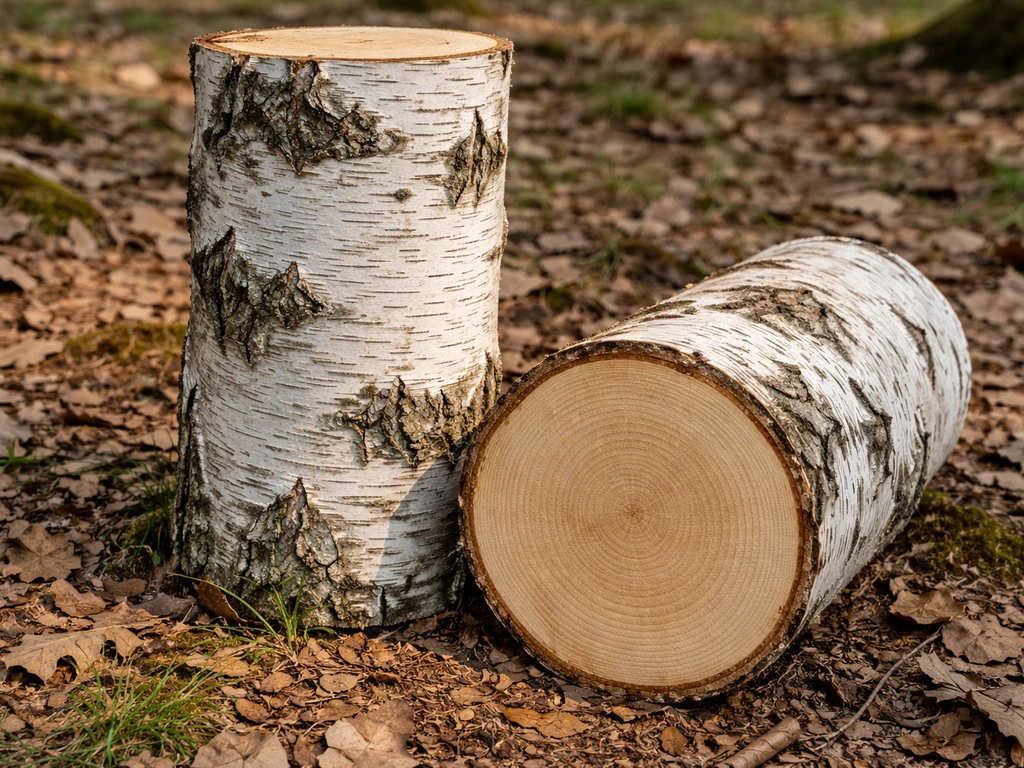
Birch (Betula spp.) is by far the preferred host. While chaga has been documented on other hardwoods like alder and elm, birch is where it thrives and where the conk develops most reliably. For a home project, you want living birch trees with trunks at least 10 to 15 cm in diameter, ideally mature enough to have established bark. Younger, thinner trees are not ideal inoculation candidates because there simply isn't enough interior wood volume to support meaningful colonization.
The tree needs to be alive throughout the process. This is a key difference from log cultivation methods used for species like shiitake or lion's mane. A standing, living birch provides the moisture, nutrients, and biological environment that chaga's mycelium depends on during its long internal colonization phase. Felled logs won't work for producing the sterile conk, though they may support limited mycelial growth.
Sourcing your starting material: spores vs spawn, and what to actually buy
Skip the spores. While chaga produces airborne spores in nature, growing from spores at home is impractical and extremely slow. The commercially available and field-tested option is mycelium dowels (also called plug spawn or inoculated wooden dowels). These are small wooden pegs that have been colonized with Inonotus obliquus mycelium in a lab setting. You drill holes in the birch bark, insert the plugs, seal them, and the mycelium transfers into the host wood from there.
Chaga mycelium dowels are available from specialty mushroom suppliers in Europe and increasingly in North America. When shopping, look specifically for "Inonotus obliquus mycelium dowels" or "chaga plug spawn." A typical recommendation from cultivation guidance is to use 3 to 4 dowels per inoculation site or per tree, depending on trunk diameter. Make sure the supplier clearly states the product contains live chaga mycelium and describes appropriate storage (usually refrigerated and used within a few months of manufacture). Freshness matters: old or poorly stored dowels will fail.
Liquid culture syringes of chaga mycelium are a less common but sometimes available alternative, which can be injected into drilled holes rather than using solid plugs. These are harder to source reliably and require more careful handling to avoid contamination, so I'd recommend starting with dowels unless you already have experience working with liquid cultures.
Inoculation setup: tools, materials, and step-by-step process
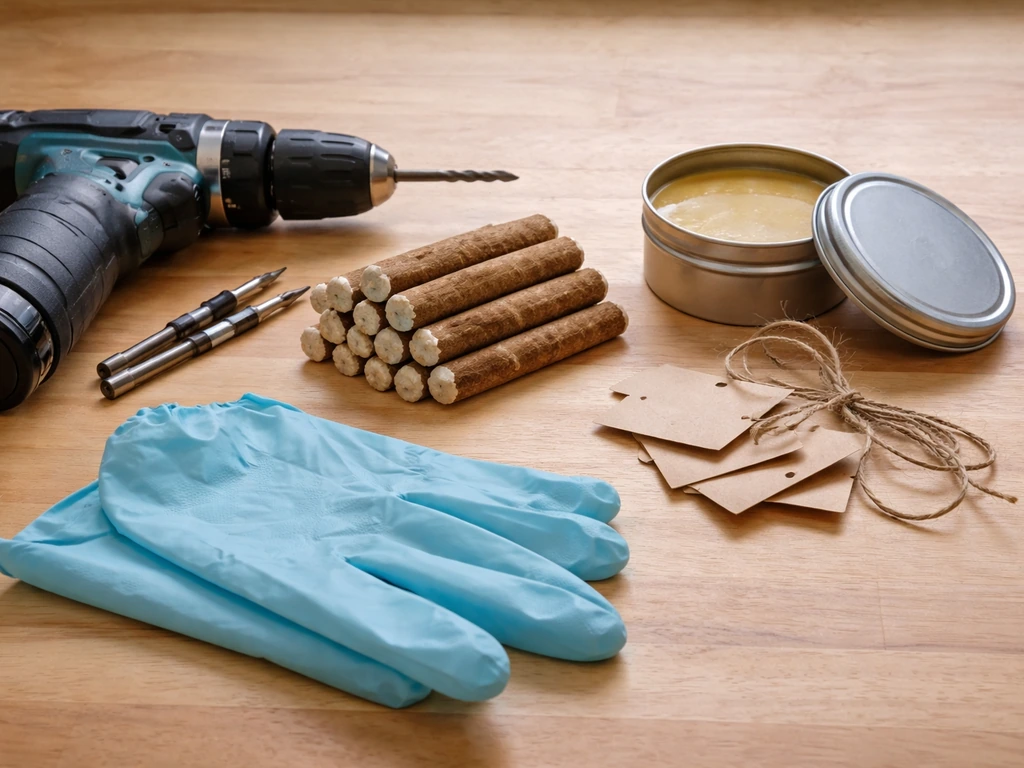
The inoculation process for chaga is straightforward mechanically, but the timing and conditions matter. You want to inoculate in late winter or early spring, before the tree's sap is running hard, or in late autumn after the growing season slows. This reduces physiological stress on the tree and gives the mycelium a better window to establish before the tree's immune defenses ramp up.
Here's what you need before you start:
- Chaga mycelium dowels (3 to 4 per inoculation point, sourced fresh from a reputable supplier)
- A drill with a bit sized to match your dowels (typically 8 mm or 10 mm, check your specific dowel diameter)
- Cheese wax, beeswax, or food-grade wax to seal holes after plugging
- A small brush or spatula to apply melted wax
- A heat source to melt wax (a small candle warmer or stove works fine)
- Isopropyl alcohol (70%) to wipe drill bits between trees
- A living birch tree with a trunk diameter of at least 10 to 15 cm
Step-by-step inoculation
- Choose your inoculation height on the trunk: aim for 50 to 150 cm above ground level, where the bark is intact and there are no existing wounds or fungal growth.
- Drill holes at a slight downward angle (about 15 degrees) to help prevent water pooling inside. Space holes roughly 15 to 20 cm apart in a staggered pattern around the trunk. Drill to a depth just slightly deeper than your dowel length.
- Immediately insert a mycelium dowel into each hole. Tap gently with a rubber mallet or the heel of your hand until flush with the bark surface. Do not leave gaps.
- Melt your wax and apply a generous coat over each plugged hole using a brush. The goal is a full seal that keeps moisture in and contaminants out. Let it harden completely before moving on.
- Label your tree with a durable tag noting the inoculation date and species. You'll want this record in a few years when you're checking for progress.
- Photograph the inoculation sites so you have a baseline to compare against future visits.
You don't need to do anything else to the tree immediately after inoculation. Do not injure or stress the bark further, do not add supplemental nutrients, and do not attempt to wrap or cover the tree. Let it go back to being a normal tree while the mycelium does its slow work inside.
Incubation and care: moisture, temperature, and environment
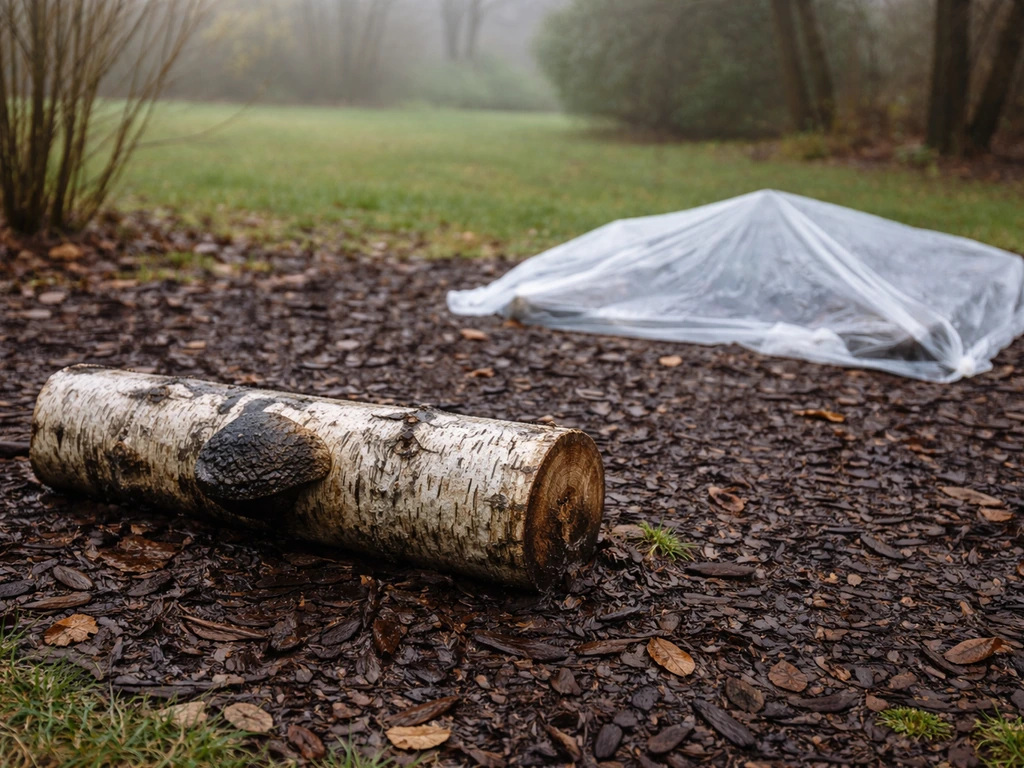
This is where chaga cultivation diverges most sharply from indoor mushroom growing. If you're still deciding what to attempt next, the general approach and patience involved are similar to how to grow cordyceps at home. There's no humidity tent, no fruiting chamber, no misting schedule. Your "incubation environment" is the outdoor climate where your birch trees live. What you're managing is really site selection and tree health rather than controlled conditions.
Chaga grows naturally in cool, temperate, and boreal climates. If you're in a region where birch trees grow naturally (northern US states, Canada, northern Europe, Russia), your climate is likely suitable. The fungus is cold-tolerant and does not need protection through winter. In fact, the freeze-thaw cycles of a northern winter are part of its natural environment.
What you do need to manage over the years is tree health. A stressed, dying, or diseased tree may not support long-term chaga development. Keep your inoculated trees reasonably healthy by not disturbing their root zone, avoiding soil compaction around the base, and not cutting competing branches excessively. The goal is a stable, living host for the long haul.
Check your inoculation sites once or twice a year, ideally in spring and late autumn. Early signs of successful establishment include the wax seals remaining intact (don't disturb them), subtle darkening or slight bark irregularity near the plug sites, and eventually very slight swelling at those points. These changes can take 1 to 3 years to appear. Patience here is not optional.
Harvesting timelines and how to know it's ready
Here's the reality check most guides dance around: visible conk formation from a home inoculation project typically takes 5 to 10 years, sometimes longer. Finnish field research confirmed no conk formation at the 3-year monitoring mark. A Maine Forest Service fact sheet also notes that a charred-looking conk at the infection site can begin forming in as little as about five years, though it may take much longer no conk formation at the 3-year monitoring mark. The overall timeline from inoculation to harvestable conk is widely reported as ranging from roughly 4 to 12 years depending on tree health, climate, and inoculation quality. Wild chaga conks grow at approximately 1 to 2 cm per year once visible, so even once you see the first bump pushing through the bark, you may wait another 2 to 4 years before there's meaningful mass to harvest.
A chaga conk is ready to harvest when it has substantial size and the characteristic appearance: a hard, irregular, charcoal-black exterior with an orange-brown interior. Conks under about 200 to 300 grams are generally considered too small to harvest sustainably. When you do harvest, use a chisel or hatchet to remove the conk without gouging deeply into the tree's sapwood. Leave a small portion of the base attached to the tree if possible, as this can allow regrowth over subsequent years.
A note on ethics and legality: harvesting chaga from wild trees on public land is regulated or restricted in many regions. Growing your own on private property with trees you own is the cleanest legal and ethical path, and it's one of the real advantages of starting a cultivation project.
Common problems and how to fix them
No signs of growth after 2 or 3 years
This is the most common and frustrating outcome. It can happen because the mycelium dowels were old or poorly stored before inoculation, because the holes weren't sealed well and the plugs dried out, or because the tree's natural defenses overcame the mycelium before it could establish. If you see no bark changes at all after 3 years, consider re-inoculating the same tree with fresh plugs at new holes positioned slightly higher or lower on the trunk. For more detail on the full process, see our guide on how to grow cordyceps re-inoculating the same tree. Also check that your wax seals are still intact. A cracked or missing seal exposes the plug site to competing organisms and drying.
Contamination at plug sites
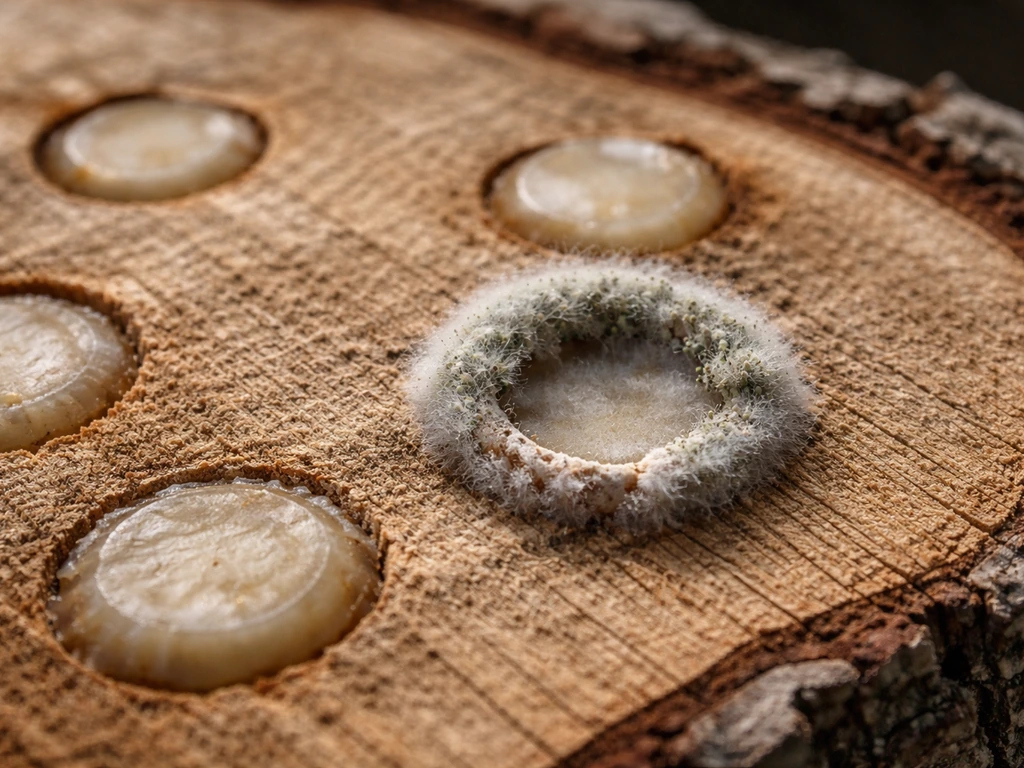
If you see visible mold or unusual fungal growth emerging from sealed plug sites, the inoculation was likely contaminated. This can come from using a drill bit that wasn't clean between inoculations, from handling dowels without gloves, or from wax that wasn't applied quickly enough after plugging. The window between drilling and sealing should be as short as possible. On future inoculations, wipe your drill bit with 70% isopropyl between every hole, handle dowels with clean gloves, and have your wax melted and ready before you start drilling.
Internal colonization but no external conk
This is actually a documented and frustrating gap in the chaga life cycle. A tree can show clear signs of internal infection (bark swelling, slight color changes, even darkening of the wood if you drill a test hole) without ever producing an external conk. The transition from internal colonization to conk formation is not guaranteed and is not fully understood. Factors like tree stress, inoculation depth, and site conditions on the trunk all seem to play a role. There's no reliable fix for this once you're in it, which is why inoculating multiple sites and multiple trees from the start is a smart hedge.
Wrong host tree species
Chaga is a birch specialist. If you've tried inoculating alder, beech, or other hardwoods and seen nothing, it's almost certainly a host mismatch. Stick to Betula species for reliable results. If you don't have birch on your property, this is worth factoring into your plans before you buy spawn. Transplanting or planting young birch trees specifically for a long-term chaga project is a legitimate strategy if you're committed to a decade-long cultivation timeline. If you are building that decade-long cultivation timeline, this guide on how to grow chaga mushroom is a useful comparison for what to expect and how to plan your steps.
Tree dies before conk forms
If your host tree dies from unrelated causes (drought, disease, storm damage) before a conk forms, your cultivation project is effectively over for that tree. The biology of chaga ties the conk's development to a living parasitic relationship. A dead birch can still support internal mycelial growth for a period, but the conditions for sterile conk development are no longer met. This is another reason to inoculate multiple trees rather than putting all your effort into one.
Your starting checklist and realistic timeline
| Timeline | What to expect |
|---|---|
| Inoculation day | Dowels inserted, holes waxed, trees labeled and photographed |
| Year 1 | No visible changes expected; mycelium establishing internally |
| Years 2 to 3 | Possible subtle bark changes or slight swelling at plug sites; no conk yet |
| Years 4 to 5 | First potential signs of bark bulging or external conk emergence; many trees still show nothing visible |
| Years 5 to 10+ | Harvestable conk formation on successful inoculations; growth rate roughly 1 to 2 cm per year once visible |
| Ongoing | Check trees annually, maintain tree health, re-inoculate failed sites if needed |
Before you start, here's what you need to have sorted:
- Access to living birch trees (Betula spp.) on property you own or have permission to inoculate
- Fresh chaga mycelium dowels ordered from a reputable supplier, stored refrigerated until use
- A drill, appropriate bit size, wax, brush, and heat source
- A record-keeping method (notebook, phone photos, dated tags on trees)
- Realistic expectations: this is a 5 to 10 year project, not a seasonal one
If you're newer to mushroom cultivation and want faster results while this long-term project develops, species like ganoderma or cordyceps are worth exploring in parallel. They operate on completely different timelines and can give you meaningful hands-on cultivation experience while your birch trees slowly do their thing. If you want a different kind of mushroom, you can also learn how to grow chanterelle mushrooms by using proper host trees, cleanliness, and patience for colonization. Chaga is a long game, but it's one of the more rewarding ones if you're willing to play it. If you want a different approach, our guide on how to grow monkshood covers the right soil, light, and timing for getting reliable blooms long game.
FAQ
Can I start chaga on birch trees I planted myself, or do I need fully mature trees right away?
You can inoculate younger birches, but success drops when the trunk is too small, because there is less interior wood to support years of colonization. Aim for the thickest birches you can manage, and consider inoculating multiple trees if yours are on the younger side to hedge against slow or incomplete development.
What’s a practical way to choose inoculation sites on the same tree?
Pick multiple spots at different heights and avoid areas with obvious wounds, cankers, or heavy peeling bark. Space sites far enough apart to reduce competition between infections, and keep the wax seals accessible for annual inspection without repeatedly scraping the bark.
How do I know whether the wax seal is still doing its job without damaging it?
Do not try to “test” the seal by poking it. Instead, check visually once or twice a year for cracks, gaps, or lifted edges, and look for any new wet staining or bark breakdown near the plug line. If a seal has clearly failed early, it is better to inoculate again on a different section than to try patching.
Should I remove bark, cover the inoculation, or apply any protective coating after plugging?
No. Avoid wrapping, covering, or adding anything that changes airflow or traps excess moisture at the site. The guide’s goal is for the tree to return to normal conditions, with minimal disturbance, so the mycelium can establish internally rather than competing with other surface organisms.
Can I inoculate more than once on the same tree, and is there a risk to conk formation?
Yes, re-inoculation is a reasonable hedge, especially if early signs do not appear after a couple of years. Use fresh plugs and place them at new holes rather than re-drilling the same spot. While multiple infections can occur, overdoing drilling on a small trunk can stress the tree, so limit the total number of sites.
Is drilling a test hole to check infection a good idea?
It can be useful, but it also increases wounding, which can stress the tree and raise the chance of competing organisms. If you do it, keep it minimal, sterile, and do not turn a test into repeated sampling. Visual checks of swelling and darkening around the seal are safer for most growers.
What climate conditions matter most over the 5 to 10 year timeline?
Chaga is cold-tolerant, so winter freeze-thaw is not a problem. The bigger risks are prolonged drought, major tree disease, and storm damage that compromises the host’s ability to stay alive long-term. In dry climates, prioritize choosing a birch site with stable moisture rather than trying to manage the fungus directly.
If my tree shows internal changes but no conk after several years, can I force it to fruit externally?
There is no reliable “forcing” method. Internal colonization does not guarantee sterile conk formation, and factors that control the transition are not fully controllable at home. The best practical response is to inoculate multiple trees and multiple sites from the start, so you are more likely to get at least some conk development.
How can I tell if my plugs are too old or were stored incorrectly?
If the supplier indicates a use-by window and the plugs have been stored warm, frozen repeatedly, or kept past the recommended period, establishment odds drop. When in doubt, assume low viability, buy from a source that clearly states storage guidance, and avoid using plugs that arrive dry, damaged, or without clear labeling.
What’s the most common mistake that leads to total failure after inoculation?
Most failures come from one of three issues: plugs that are no longer viable, seals that crack or let the plug dry out, or contamination during drilling and insertion. Your clearest improvement lever is preventing drying and contamination by minimizing the time between drilling and sealing and using clean handling for each site.
Can I inoculate non-birch hardwoods like alder or elm if I don’t have birch?
You can try, but birch is the most reliable host for conk development at home. If birch is missing, plan ahead by identifying where Betula trees are already present on your land or consider planting birch with the understanding that the timeline is still measured in years.
Is harvesting chaga safe for the tree, and how do I avoid killing the host?
Harvesting damages the host, even when you try to be careful. Use a controlled removal tool (chisel or hatchet) and avoid deep gouging into sapwood. Leaving some base attached can improve odds of regrowth, but it still may shorten the tree’s remaining lifespan, so harvest only when the conk is mature and substantial.
Are there legal or liability concerns when growing chaga near public areas?
Yes. Wild harvesting is often restricted, and cultivation rules can vary by region, especially if you move plant material or use spawn sourced from outside your country. The safest approach is to cultivate only on private property with trees you own and keep documentation of your inoculation materials and where they were used.