
Growing Cordyceps at home is absolutely doable, but you need to go in knowing which species you're actually growing and what success looks like. For most home growers, that means Cordyceps militaris, the orange-fruited species that produces real mushroom fruiting bodies under controlled indoor conditions. Cordyceps sinensis, the famous caterpillar fungus, is a different beast entirely and almost impossible to fruit at home. If you've been wondering why your sinensis attempts keep stalling, that's why. This guide walks you through both, so you know exactly what you're signing up for, and gives you a step-by-step cultivation plan you can act on today.
How to Grow Cordyceps at Home: C. militaris & C. sinensis
Marcus Holloway
23 Apr 2026
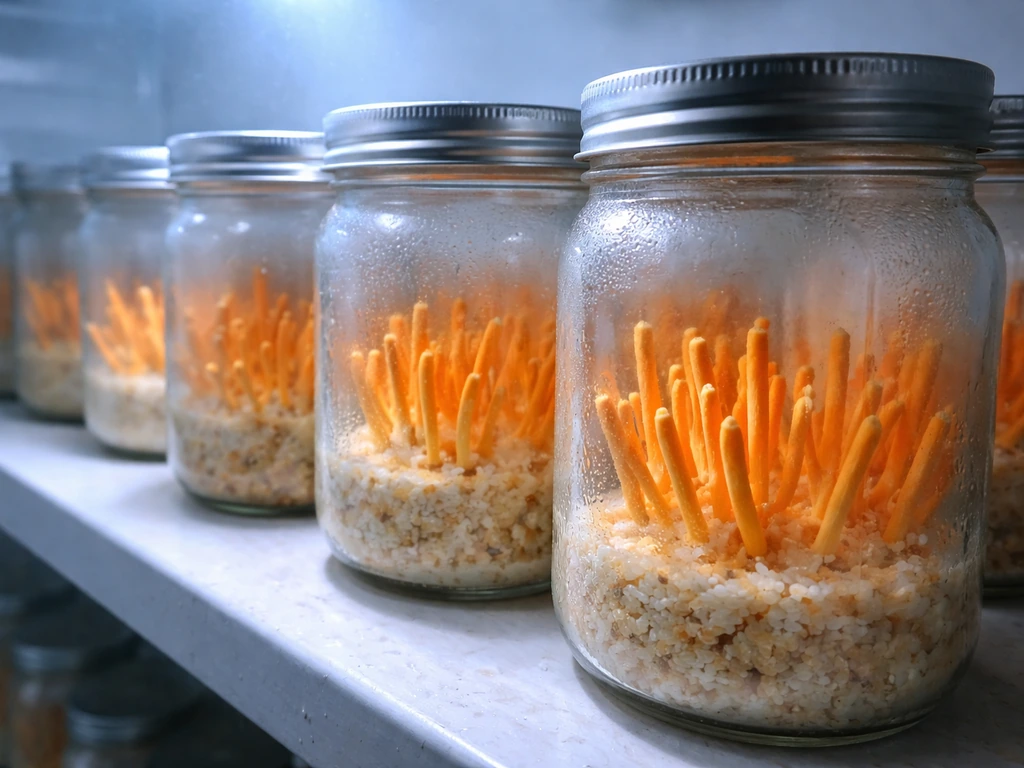
Cordyceps militaris vs. Cordyceps sinensis: what you're actually growing
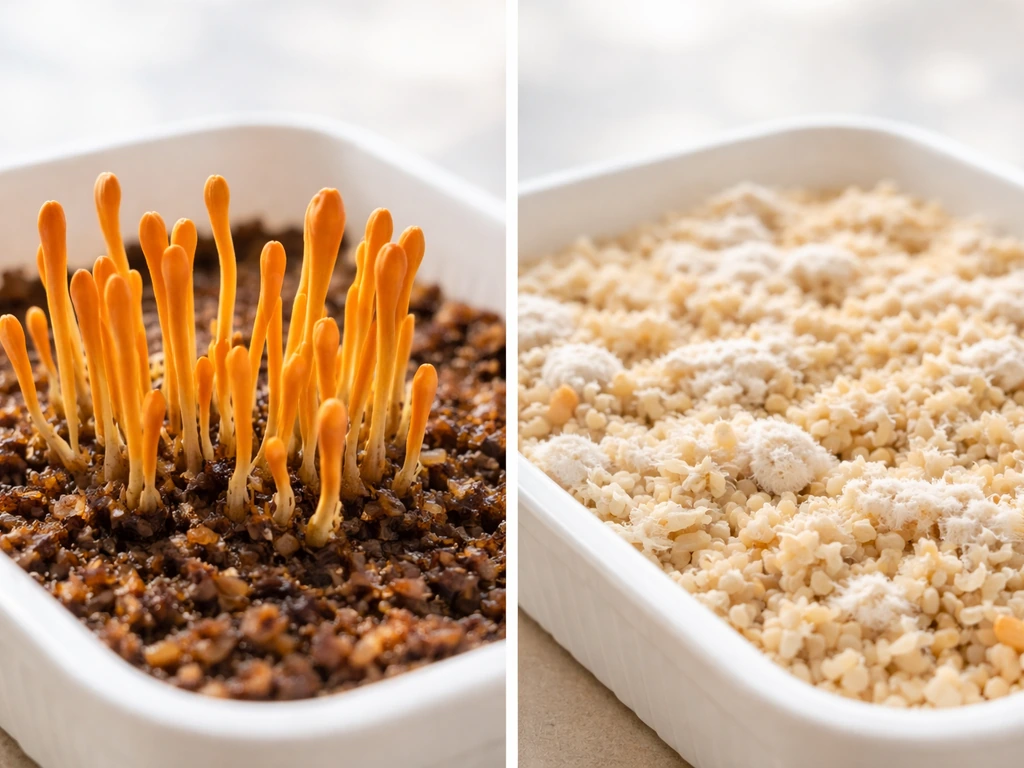
These two species are not interchangeable from a cultivation standpoint, and confusing them is the number one reason growers waste weeks of effort. Here's the practical breakdown.
| Feature | Cordyceps militaris | Cordyceps sinensis (Ophiocordyceps sinensis) |
|---|---|---|
| Natural host | Insect pupae (many species) | Ghost moth caterpillar larvae (very specific) |
| Fruiting bodies at home | Yes, achievable on grain/rice substrate | Extremely rare, almost never achieved indoors |
| Cultivation difficulty | Moderate, with the right setup | Very high, near-impossible for home growers |
| Growth timeline to harvest | 45 to 60 days from inoculation | Months to years even under lab conditions |
| Key active compounds | Cordycepin, adenosine, polysaccharides | Cordycepin, polysaccharides (similar profile) |
| What you realistically produce | Orange fruiting bodies (stromata) | Mycelium on substrate, rarely fruiting bodies |
| Recommended for beginners | Yes | No |
The bottom line: if your goal is growing actual Cordyceps fruiting bodies at home, focus on Cordyceps militaris. Research consistently shows it produces more stable fruiting body formation under controlled conditions, which is exactly what you need when you're working out of a spare bedroom or a grow tent. Cordyceps sinensis is worth understanding, so I'll cover it briefly, but I won't pretend you're likely to get a harvest from it at home.
What does a Cordyceps life cycle look like in practice?
In nature, Cordyceps spores infect an insect host, colonize it, kill it, and then produce a stroma (the characteristic 'spike' or club-shaped fruiting body) that erupts from the host body. In cultivation, you skip the insect entirely by giving the mycelium a nutrient-rich substrate (usually grain or a rice-based mix) that mimics the nutritional profile of an insect body. The fungus colonizes the substrate, then with the right environmental cues, produces those same orange stromata. Your goal as a grower is to shepherd it through colonization and then trigger and sustain fruiting.
What you need before you start
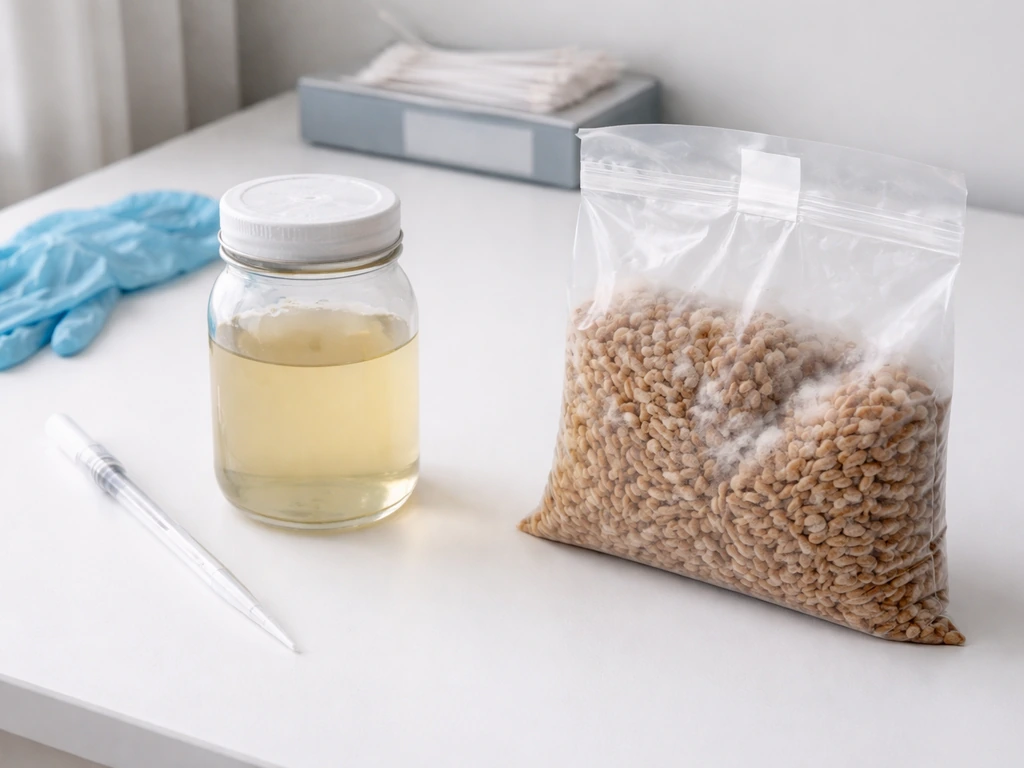
Getting your materials right before you begin saves you from scrambling mid-cycle or losing a batch to contamination. Cordyceps militaris is more contamination-sensitive than oyster or shiitake mushrooms, so preparation matters more here.
Spawn and inoculum
You have two main options: liquid culture (LC) or agar cultures transferred to grain spawn. Liquid culture is the easiest starting point for beginners. You can buy Cordyceps militaris liquid culture syringes from reputable mushroom supply vendors. Look for vendors who store cultures at low temperatures and have good reviews specifically for Cordyceps strains. Avoid spore syringes for Cordyceps militaris unless you have experience working with agar, since spore germination rates can be inconsistent and slow. If you have agar skills, starting on potato dextrose agar (PDA) or oatmeal agar gives you the most control.
Substrate and media
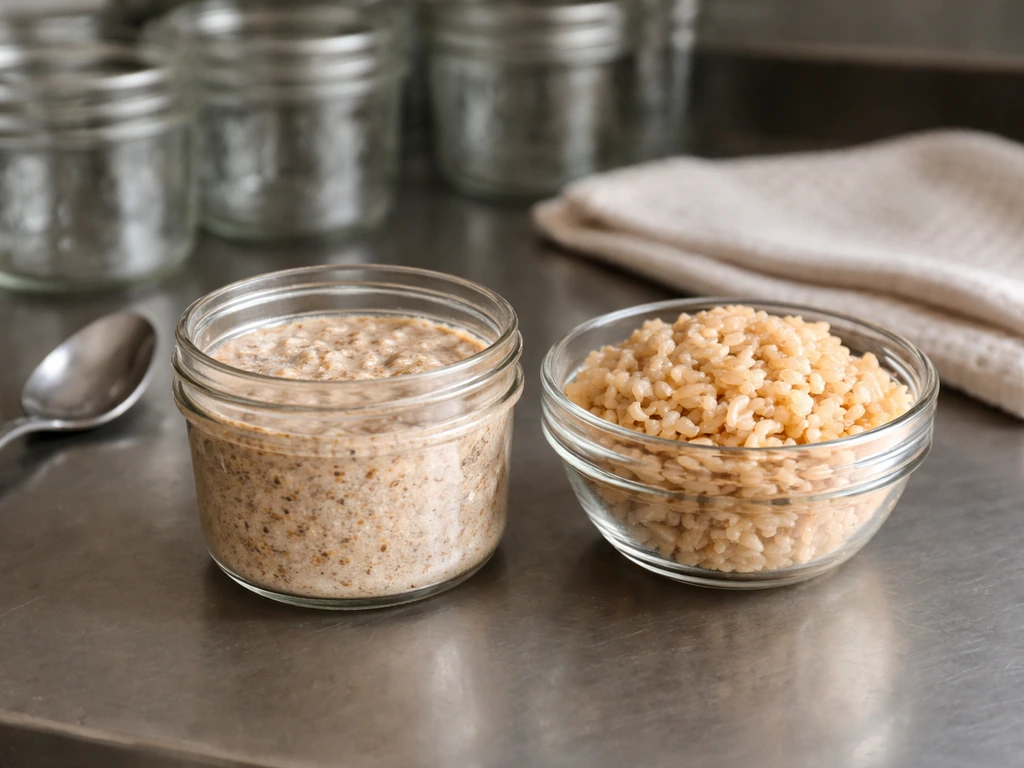
- Brown rice flour and water (BRF): the classic beginner-friendly substrate, easy to sterilize in half-pint mason jars
- Cooked whole grain rice (jasmine or brown rice works well): provides good nutrition and is widely available
- Grain jars (rye, wheat berries, or millet): excellent for building up a healthy mycelium mass before transferring to a fruiting substrate
- Silkworm pupae or mealworm pupae (optional, advanced): for growers who want the closest-to-nature substrate and highest bioactive compound content
- Nutritional additives: peptone, yeast extract, or dried silkworm powder can be mixed into rice-based substrates to boost yields
Tools and cleanliness supplies
- Pressure cooker (15 PSI rated, minimum 6-quart capacity) for sterilizing substrate
- Still air box (SAB) or laminar flow hood for contamination-free transfers
- 70% isopropyl alcohol and alcohol lamp or butane torch for flame sterilization of tools
- Nitrile gloves, face mask, and hair cover for working in the SAB
- Mason jars (half-pint or pint) with self-healing injection ports and polyfill filter lids
- Scalpel or inoculation loop if working with agar transfers
- Clear plastic storage tubs or small grow tents for fruiting chambers
- Hygrometer and thermometer (a combo unit works fine)
- Humidifier or ultrasonic mister for humidity control
- Full-spectrum grow light or LED red/blue panel (more on spectrum below)
A word on cleanliness: Cordyceps militaris colonizes more slowly than aggressive colonizers like oyster mushrooms, which means contamination has more time to take hold. Wipe down every surface you work on with 70% IPA, work in a still air box whenever you're making transfers, and never skip sterilization on substrate, even if it 'looks clean.' Most failed grows come down to skipping one of these steps.
Setting up your indoor grow: step by step
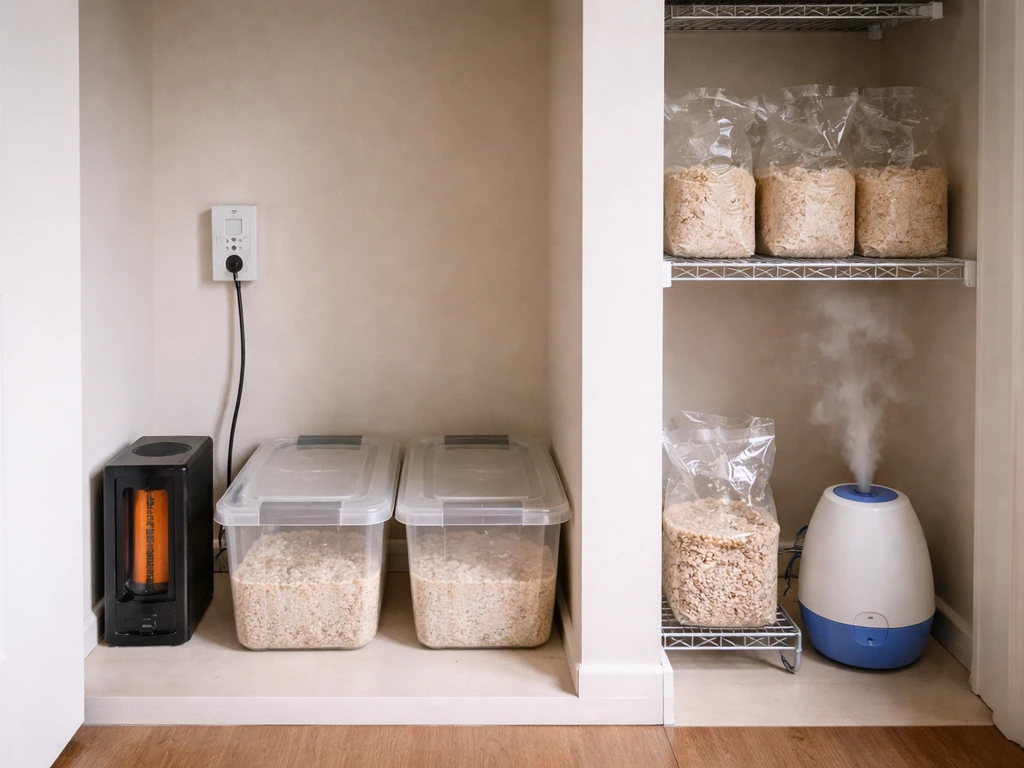
This plan is built around Cordyceps militaris on a rice-based substrate since that's the most practical approach for home growers. The whole cycle from inoculation to harvest runs roughly 45 to 60 days. Follow each phase in order and don't rush transitions.
- Set up your grow space: Choose a room or closet where you can maintain stable temperature (18 to 22°C during colonization, up to 25°C during fruiting). Set up your grow tent or fruiting chamber in this space with your hygrometer and thermometer in place before you start any substrate prep.
- Sterilize your substrate: Fill half-pint mason jars about two-thirds full with your prepared substrate (see substrate section below). Pressure cook at 15 PSI for 60 to 90 minutes depending on jar size. Let jars cool completely (at least 8 hours) before inoculation. Never rush this cooling period.
- Prepare your inoculation area: Wipe down your still air box with 70% IPA. Let it settle for 10 to 15 minutes before working in it. Put on gloves and a mask.
- Inoculate your jars: Shake your liquid culture syringe well. Inject 1 to 2 ml of liquid culture through the self-healing injection port of each jar. Flame sterilize the needle between jars. Seal ports with tape after inoculation.
- Colonization phase: Move inoculated jars to your grow space at 18 to 22°C in the dark. Check daily for signs of contamination (green, black, or pink patches). Healthy Cordyceps mycelium appears white to pale yellow and grows more slowly than most species. Expect full colonization in 14 to 25 days.
- Transition to fruiting conditions: Once jars are 80 to 90% colonized, begin the fruiting trigger by introducing light (12 hours on, 12 hours off), raising humidity to 85 to 95%, and maintaining temperatures around 20 to 23°C. This is the phase where most beginners make mistakes by rushing or over-misting.
- Maintain fruiting conditions daily: Fan briefly (30 seconds to 1 minute) once or twice a day for fresh air exchange. Mist walls of the chamber, not the developing stromata directly. Watch for the emergence of tiny orange pins, which typically appear 7 to 14 days after switching to fruiting conditions.
- Harvest at peak maturity: Harvest when stromata are fully elongated and showing visible surface texture but before the tips begin to turn powdery (spore release). Twist and pull cleanly at the base, or cut with a sterile scalpel.
Substrate preparation and inoculation in detail
For Cordyceps militaris (rice substrate method)
The most reliable beginner substrate is a cooked brown rice base. Rinse 1 cup of brown rice until the water runs clear, then cook it normally. You want the rice fully cooked but not mushy. Let it cool completely, then pack loosely into sterilized mason jars, filling no more than two-thirds full. The moisture content is critical: properly cooked rice holds about the right amount of water, but if your rice seems wet, spread it on a clean baking sheet for 20 to 30 minutes before jarring. Pressure cook jars at 15 PSI for 90 minutes, cool overnight, then inoculate via injection port with 1 to 2 ml of liquid culture per jar.
For a nutritional boost, experienced growers often add a small amount of silkworm powder (1 to 3% by dry weight) or peptone to the substrate. This mimics the insect-host nutrition that C. militaris evolved to consume and has been shown in multiple studies to increase cordycepin content in the resulting fruiting bodies. It's not essential for your first grow, but it's worth trying once you have the basic process dialed in.
For Cordyceps sinensis (mycelium cultivation method)
If you're set on working with Cordyceps sinensis, be realistic: your goal is cultivated mycelium on substrate, not fruiting bodies. If you still want a full, practical walkthrough for growing Cordyceps at home, focus on the militaris section and follow the steps in order how to grow cordyceps at home. For a straightforward home approach, see how to grow ganoderma mushroom for substrate, humidity, and fruiting setup basics. If you’re specifically looking for how to grow ganoderma lucidum, follow the ganoderma section’s substrate, temperature, and humidity priorities next. The most common approach is growing the mycelium in liquid culture or on agar, then transferring to a grain or rice substrate to build biomass for use as a supplement. Use PDA or a nutrient-rich broth (glucose, peptone, yeast extract in water) as your culture medium. Maintain temperatures between 18 and 22°C and keep the culture in low light. Sinensis mycelium grows much more slowly than militaris and is highly sensitive to temperature fluctuations. Stroma formation indoors has been documented in high-altitude laboratory settings with precisely controlled environments, but for practical home cultivation, collecting and using the myceliated substrate is the realistic output.
Environmental controls: the details that actually matter
Temperature and light are the two parameters that trip up most Cordyceps growers, and both are well-documented challenges even in laboratory settings. Getting these right is the difference between a full fruiting and a jar of stalled colonized substrate sitting on your shelf.
Temperature
Cordyceps militaris wants 18 to 22°C during colonization and can tolerate up to about 25°C during fruiting. Above 28°C, growth slows significantly and contamination risk spikes. Below 15°C, colonization nearly stops. If your home runs warm in summer, this is your biggest problem to solve. A small window AC unit pointed at your grow tent or a dedicated mini-split is the cleanest solution for warm climates. A cheap thermostat controller paired with a small heater handles the cold side. I've seen growers lose entire cycles because their grow room hit 30°C for a few days during a heat wave, so seasonal planning matters.
Light
Light is one of the more nuanced parts of Cordyceps militaris cultivation. During colonization, keep jars in the dark or very low ambient light. Once you trigger fruiting, the fungus needs light to form and orient stromata properly. Red light (wavelength around 660 nm) plays a particularly important role in fruiting body development, which is why many serious growers use red/blue LED grow panels rather than plain white light. A 2014 in vitro study in Microbiological Research similarly found that LED light regimens can increase bioactive substances in Cordyceps militaris fruiting-body culture, with red and pink light associated with different target compounds. A photoperiod of 12 hours on and 12 hours off works well. You don't need high intensity, 500 to 1000 lux is plenty. Running plain white light does work, but red-spectrum light tends to produce more uniform and vigorous fruiting.
Humidity and airflow
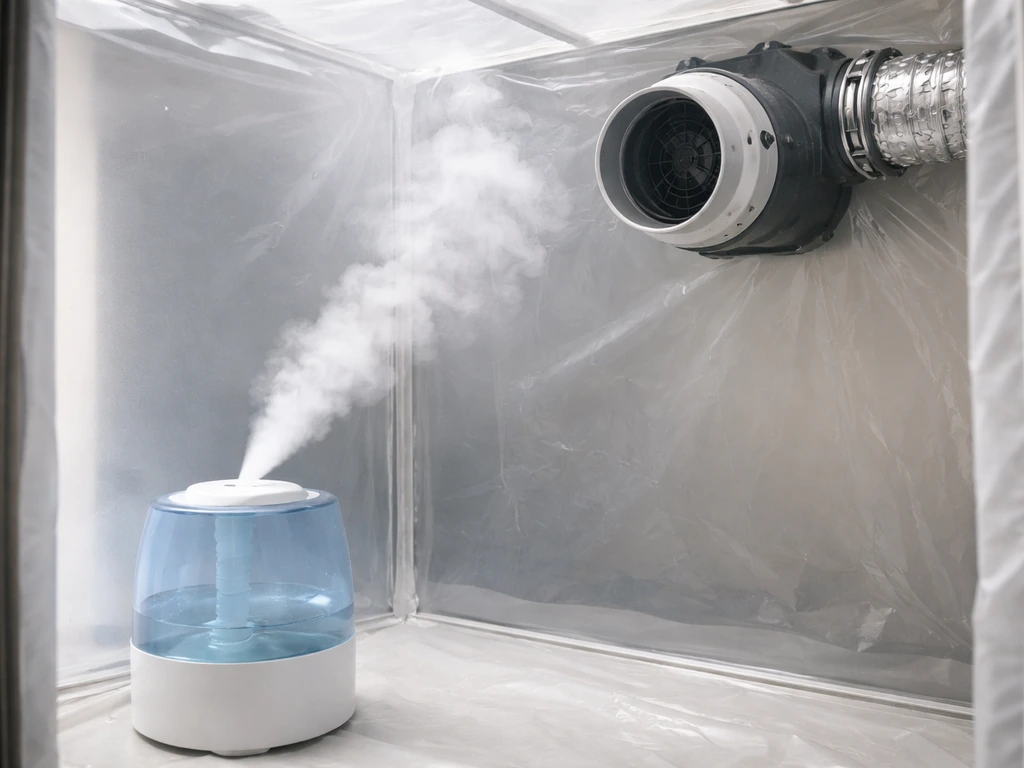
Target 85 to 95% relative humidity in your fruiting chamber. An ultrasonic humidifier on a timer is the most consistent way to hit this. Airflow is equally important: CO2 accumulation stunts stroma development and encourages aborts. A brief fan session (30 to 60 seconds) twice daily provides enough fresh air exchange without dropping humidity too sharply. In a grow tent, cracking the vent slightly and running a small oscillating fan on a timer works well. Do not mist the stromata directly, mist the walls and floor of the chamber to raise ambient humidity.
Quick environmental targets at a glance
| Parameter | Colonization Phase | Fruiting Phase |
|---|---|---|
| Temperature | 18 to 22°C | 20 to 25°C |
| Humidity | 70 to 80% (jar keeps moisture) | 85 to 95% |
| Light | Dark or very low ambient | 12h on / 12h off, red spectrum preferred |
| Fresh air exchange | Minimal (sealed jars) | Twice daily, 30 to 60 seconds |
| CO2 tolerance | Higher during colonization | Low: high CO2 stunts fruiting |
Harvesting, drying, and restarting the cycle
When and how to harvest
Harvest Cordyceps militaris stromata when they're fully elongated (typically 3 to 8 cm tall depending on strain and conditions) and the surface has visible texture, but before the tips go powdery. If you're trying to grow chaga instead, the general approach is similar, but the substrate, temperature, and timeline are quite different. If you're specifically asking how to grow chaga mushroom, you’ll want different temperature targets and a slower, more patience-driven timeline than Cordyceps. Powdery tips mean the fungus is releasing spores, which isn't necessarily bad, but yield and potency are best just before this stage. Twist each stroma gently at the base and pull, or use a clean scalpel to cut it. Handle harvested stromata gently since they bruise easily.
Drying and storage
Fresh Cordyceps militaris has a short shelf life (a few days refrigerated). For longer storage, dry at low temperature: a food dehydrator set to 35 to 45°C works perfectly. Avoid higher temperatures since heat degrades cordycepin. Dry until the stromata snap rather than bend, then store in an airtight container with a food-grade desiccant packet in a cool, dark place. Properly dried Cordyceps stores well for 12 months or longer.
Second flushes and restarting the cycle
After the first harvest, you can attempt a second flush by soaking the spent substrate briefly (dunking the jar's contents in clean water for a few hours, then draining) and returning it to fruiting conditions. Second flushes from Cordyceps militaris are possible but typically yield significantly less than the first. Most growers find it more productive to use the colonized substrate from spent jars as inoculum to colonize fresh sterilized substrate, essentially cloning the culture forward. Scrape healthy mycelium from the jar wall, transfer it to a new sterilized substrate under sterile conditions, and restart the colonization phase. You can extend a healthy strain this way for many cycles before needing fresh spawn.
Troubleshooting: when things go wrong
Contamination (green, black, or pink patches)
Green mold (usually Trichoderma) is the most common contamination in Cordyceps grows. If you see green patches on your substrate within the first two weeks, the jar is almost certainly compromised and should be removed from your grow space immediately (outside, in a sealed bag) before spores spread. Contamination usually traces back to three causes: insufficient sterilization, non-sterile inoculation technique, or substrate that was too wet going into the jar. Review each of those steps before starting your next batch. If contamination appears only at the very surface of a mostly colonized jar, some growers carefully scrape the top layer and continue, but this is risky and I generally don't recommend it for beginners.
Slow or stalled colonization
Cordyceps militaris colonizes more slowly than most mushrooms, so patience is important. If you see no visible growth after 10 days, check your temperature first. Below 16°C, colonization nearly halts. Also check that your liquid culture was viable: inoculate a test jar of plain PDA agar alongside your substrate jars so you can verify the culture is active before committing all your substrate. Old or improperly stored liquid culture is another frequent culprit. If the agar test jar shows growth but your substrate does not, suspect substrate moisture levels or contamination too early to see color.
Pins that abort or won't develop
Pinning followed by abort is usually an environmental issue. The most common causes are CO2 buildup (not enough fresh air exchange), humidity swings (inconsistent misting), or temperature too high or too low during fruiting. Dialing in your environmental controls before you start, not after problems appear, is the most reliable fix. If pins appear but stay small and stop elongating, increase fresh air exchange and check that your light cycle is consistent. Cordyceps militaris uses light as a directional and developmental cue, inconsistent photoperiods confuse the fungus and produce poor, disoriented fruiting.
Poor yield or thin, pale stromata
Thin, pale stromata usually mean insufficient light intensity or a nutritionally poor substrate. Switch to a red-spectrum LED panel if you haven't already, and consider adding a small amount of silkworm powder or peptone to your substrate on the next run. Yield also drops sharply if humidity is consistently below 80% during fruiting. Check your hygrometer calibration since cheap units can drift significantly. A salt calibration test (look up the simple two-salt method for hygrometers) is a quick way to verify accuracy.
Cordyceps sinensis-specific frustrations
If you're working with Cordyceps sinensis and seeing extremely slow or no growth, you're not doing anything wrong. This species naturally grows at high altitude in cold, specific conditions, and stroma formation is strongly influenced by temperature and light intensity in ways that are very difficult to replicate at home. Studies conducted at high-altitude laboratory sites in Tibet document how sensitive sinensis stroma development is even in near-ideal research conditions. If you're committed to working with this species, lower your temperature to 15 to 18°C, use very gentle light, and set your expectations for mycelium biomass rather than fruiting bodies. Growing sinensis mycelium as a cultured product (for personal use or further liquid culture expansion) is a more realistic goal than fruiting it.
Realistic timelines and what to expect
Here's an honest timeline for a Cordyceps militaris grow from inoculation to first harvest under good home conditions. If you want a quick, detailed walkthrough of the whole process, this guide is a great place to start when you’re learning how to grow monkshood. It's not fast, but it's reliable once you have the process down.
| Phase | Duration | Key signs of progress |
|---|---|---|
| Inoculation + early colonization | Days 1 to 7 | Faint white mycelial threads appearing near injection site |
| Active colonization | Days 7 to 25 | Visible white to pale-yellow mycelium spreading through substrate |
| Fruiting trigger + pin formation | Days 25 to 35 | Small orange pins emerging from substrate surface |
| Stroma elongation | Days 35 to 50 | Stromata growing to full height, deepening in color |
| Harvest window | Days 45 to 60 | Fully elongated stromata before tips turn powdery |
| Post-harvest / second flush attempt | Days 60 to 75 | New pins may emerge after substrate is soaked and rested |
If you're coming from growing oyster or shiitake mushrooms, the slower pace of Cordyceps will feel unfamiliar. Resist the urge to change variables mid-cycle. Pick your setup, nail your environment, and let the fungus work. Most troubleshooting happens before the next run, not during the current one. That mindset shift makes Cordyceps cultivation a lot less frustrating.
For growers interested in other specialty medicinal fungi, the cultivation principles around contamination control, environmental precision, and patience transfer well across many slow-growing species. If you are specifically looking for how to grow Ganoderma mushrooms, the approach will differ in substrate and environmental targets, so it helps to follow a ganoderma-focused cultivation guide. If you want to try a different kind of medicinal mushroom, learn how to grow chanterelle mushrooms next, since outdoor-style setups use different triggers and conditions. If you specifically want fruiting bodies, the same high-level approach differs from other medicinal species, so review the tailored steps for how to grow lingzhi mushroom. The experience you build with Cordyceps militaris will make you a sharper grower for other challenging varieties too.
FAQ
How do I know whether I should be growing C. militaris or C. sinensis at home?
If you want a predictable harvest, use the plan for Cordyceps militaris and treat it like a lab-like workflow: slow colonization means you must keep everything sterile and stable, especially jar preparation and fruiting chamber parameters. If your goal is specifically Cordyceps sinensis stromata, plan for a “biomass only” outcome (mycelium on substrate) rather than expecting home fruiting.
What’s the fastest way to confirm my liquid culture is viable before I inoculate everything?
For Cordyceps militaris, the most useful quality check is a simple agar test jar and a moisture check on the rice before sterilizing. If the agar test shows no growth, do not assume it will work on grain or rice, and if the cooked rice feels wet or leaves pooling water when packed, drying time before jarring will likely need to increase.
Is it okay to open jars to check progress during colonization?
Avoid opening and re-handling jars during colonization. If you must inspect, do it briefly in a clean still-air area, then close immediately. Frequent opening increases oxygen exchange in the wrong phase and, more importantly, invites contamination spores.
What should I do if my house temperature spikes during summer?
If your home runs warm, control is about stability, not peak. Use a temperature controller, not just an on off fan, and place the grow chamber where it buffers against heat swings (avoid direct sun, heat vents, and frequent door openings). A short overheating event can set you back even if average temperature looks acceptable.
How do I raise humidity without damaging developing stromata?
In fruiting, set humidity using the chamber’s walls and floor rather than direct misting onto stromata. Mist the sides briefly if you see humidity drifting, but avoid soaking, because wet surfaces can encourage surface contamination and deform stromata.
What’s the best way to prevent CO2 buildup and pin aborts?
CO2 management should be consistent, not aggressive. Follow a short, timed fresh air exchange routine, then verify with observation: if pins appear and stall, increase exchange slightly and keep the light cycle regular, because CO2 buildup plus inconsistent cues commonly leads to aborts.
Do I really need red light, or will any LED grow light work?
For Cordyceps militaris, red spectrum helps uniform development, but the key is consistency of the photoperiod. If you switch light types, change one variable at a time and keep a stable 12 hours on, 12 hours off schedule so the fungus can orient properly.
When exactly should I harvest so I avoid spores and maximize potency?
If tips go powdery, you are very near or at spore release. For best yield and potency, harvest as soon as stromata are fully elongated and before a powdery surface appears. Waiting longer can reduce what you recover and increase mess from airborne spores in the grow area.
If I see green mold, can I save the jar by scraping the surface?
In many home grows, green mold early is a “hard stop” situation. The safest practice is to remove compromised jars immediately and sterilize the area before starting the next run. If mold appears after heavy colonization, scraping can sometimes be attempted on a single jar, but it’s high risk for beginners and can contaminate the whole space.
What should I do if colonization stalls but there’s no obvious contamination?
If colonization stalls around the cold end, the fix is warming the whole jar environment, not just adding a heater near the room. Aim to keep jars within the target range during the entire colonization window, since brief dips can slow or pause growth.
My stromata look thin and pale, what variables should I troubleshoot first?
If your stromata are thin and pale, first verify light spectrum and photoperiod, then re-check humidity stability. Also check substrate moisture and jar packing density, because overly wet rice can lead to weak, poorly structured stromata even when the chamber humidity looks correct.
Is it worth doing a second flush on the same jars?
After your first harvest, a second flush can work, but it usually performs worse. If you choose to attempt it, do not rush soaking or return it to fruiting instantly, let it drain thoroughly and keep conditions stable, since standing water and rapid transitions are common causes of poor second flushes.
How can I tell if my humidity readings are accurate?
Never rely on a casual hygrometer. Calibrate before each season or every few months, and place the sensor where it represents the grow chamber air. A drifted sensor can make you unknowingly run humidity too low and cause aborts even if your humidifier seems to be working.
What should success look like if I’m trying C. sinensis at home?
For Cordyceps sinensis, the realistic home target is cultured mycelium on substrate, or mycelium expansion for further work, not dependable stromata. If you insist on fruiting attempts, lower temperature and use very gentle, low-intensity light, and evaluate success by growth and biomass rather than expecting the same timeline as militaris.