
You can grow chanterelle mushrooms at home, but it requires a completely different approach than growing oysters or shiitake. Chanterelles are ectomycorrhizal fungi, meaning they form a living partnership with tree roots to survive and fruit. You can't just inoculate a bag of sawdust and wait. What you actually need is a living host tree, a proper mycorrhizal inoculation, and patience measured in years, not weeks. That said, researchers at Oregon State University have documented successful fruiting of golden chanterelle (Cantharellus cibarius) in greenhouse conditions using inoculated pine seedlings, and a peer-reviewed paper in Nature confirmed it's achievable in controlled settings. So the honest answer is: yes, it's possible, and here's exactly how to go about it. If you want another long-term, host-dependent option, see how to grow chaga mushroom as well.
How to Grow Chanterelle Mushrooms at Home Indoors
Can you actually grow chanterelles (and what that means in practice)
Most of the mushrooms covered on this site, oysters, lion's mane, shiitake, even more complex ones like chaga, are saprotrophic or parasitic. They break down dead wood or feed off a single host. Chanterelles don't work that way. They are obligate ectomycorrhizal fungi, which means their mycelium physically wraps around the roots of a living tree and exchanges nutrients with it. The tree feeds the fungus sugars produced through photosynthesis. The fungus helps the tree absorb water and minerals. Neither partner does particularly well without the other, and no mushroom fruit bodies appear unless the partnership is actively thriving.
In practice, this means you can't skip the tree. You also can't rush colonization the way you can with a fast-fruiting species. Historical cultivation of chanterelles and other ectomycorrhizal mushrooms like porcini and matsutake has mostly been limited to managed forests and semi-natural sites because creating and maintaining the mycorrhizal association reliably has been genuinely difficult. The greenhouse breakthrough with pine seedlings changed what's feasible for dedicated home growers, but it didn't make chanterelles easy. It just made them possible with the right setup and realistic expectations.
Indoor vs outdoor growing: choosing the right setup
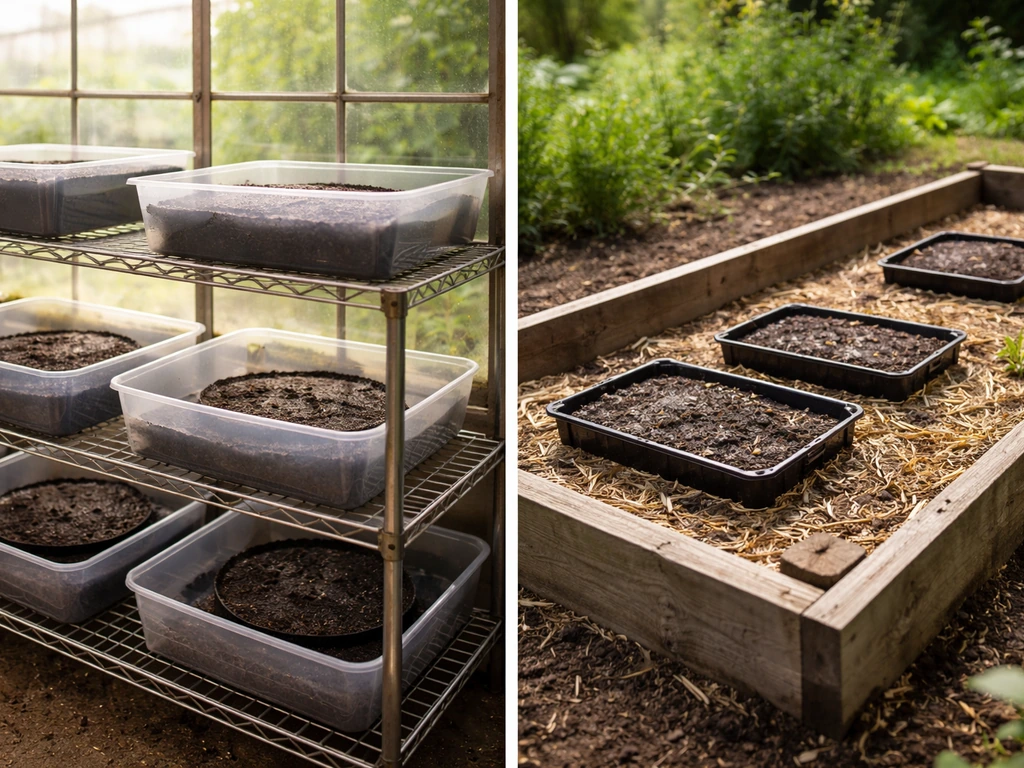
Your two main options are a greenhouse or outdoor bed setup. Each has real trade-offs, and which one makes sense depends on your space, climate, and how long you're willing to wait.
| Factor | Greenhouse Setup | Outdoor Bed Setup |
|---|---|---|
| Host tree required | Yes (potted seedlings) | Yes (planted in ground) |
| Timeline to first fruiting | 2 to 4 years after inoculation | 3 to 6+ years after planting |
| Environmental control | High (temperature, humidity) | Low (weather dependent) |
| Upfront cost | Moderate to high | Low to moderate |
| Scalability | Limited by pot/space | Can expand over time |
| Contamination risk | Higher (controlled space, competing fungi) | Lower (natural soil biology helps) |
| Best for | Colder climates, year-round growing, research-style approach | Temperate climates, long-term garden project |
The greenhouse approach mirrors the Oregon State University research model most closely and gives you the most control over temperature and humidity. But controlling those variables in a greenhouse is also more demanding, and competing fungi can be a bigger headache indoors. The outdoor bed method is less precise but more forgiving once the mycorrhizal relationship is established, especially if you're in a region with mature conifers or oaks already growing nearby. For most home growers, the outdoor approach is the more realistic long-term project. For anyone who wants to test the science or live in a harsh climate, a greenhouse setup with potted seedlings is the better bet.
The basics: trees, mycorrhizae, and site conditions
Before you plant anything, you need to understand what chanterelles actually need from their environment. Getting this right is the difference between a thriving colony and years of nothing.
Host tree selection
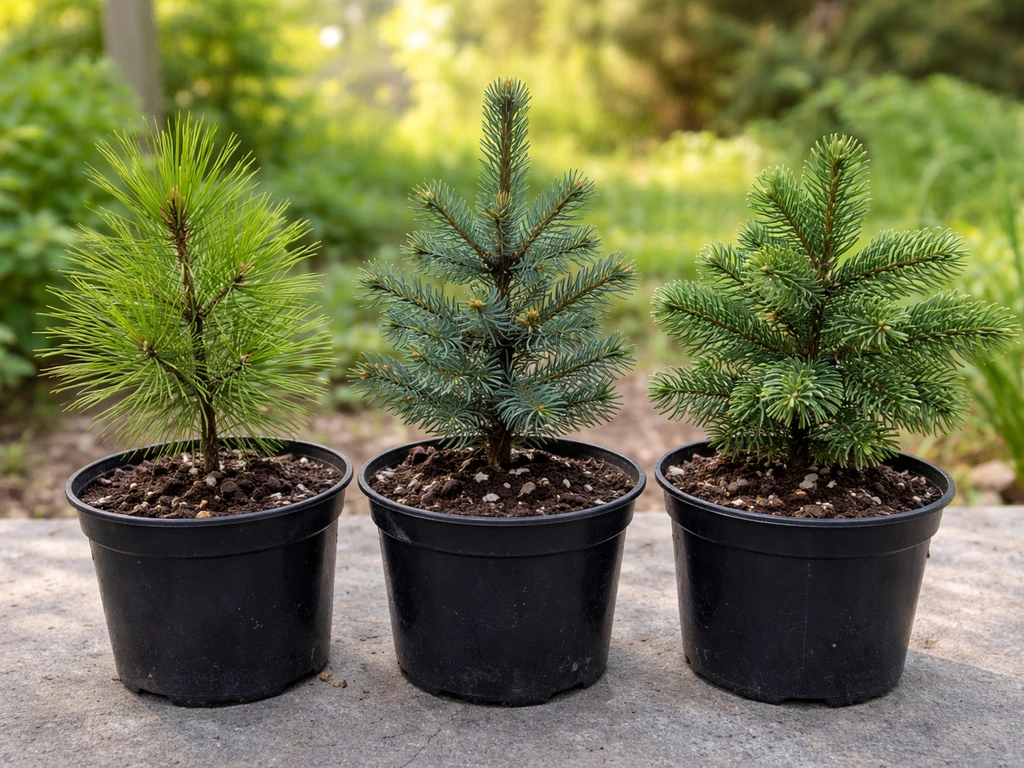
Chanterelles associate with a wide range of host trees depending on the species and region. Golden chanterelle (Cantharellus cibarius) commonly partners with pine, spruce, fir, oak, and beech. For cultivation, pine seedlings (Pinus sylvestris or similar) are the most studied and reliable hosts, largely because that's what the greenhouse research used. For outdoor beds, oak and beech also work well and tend to have longer lifespans as garden trees. If you already have a suitable tree in your yard or garden, that's your starting point. If you're planting from scratch, choose a native species that grows well in your climate and that chanterelles are known to associate with in the wild in your region.
Mycorrhizal establishment
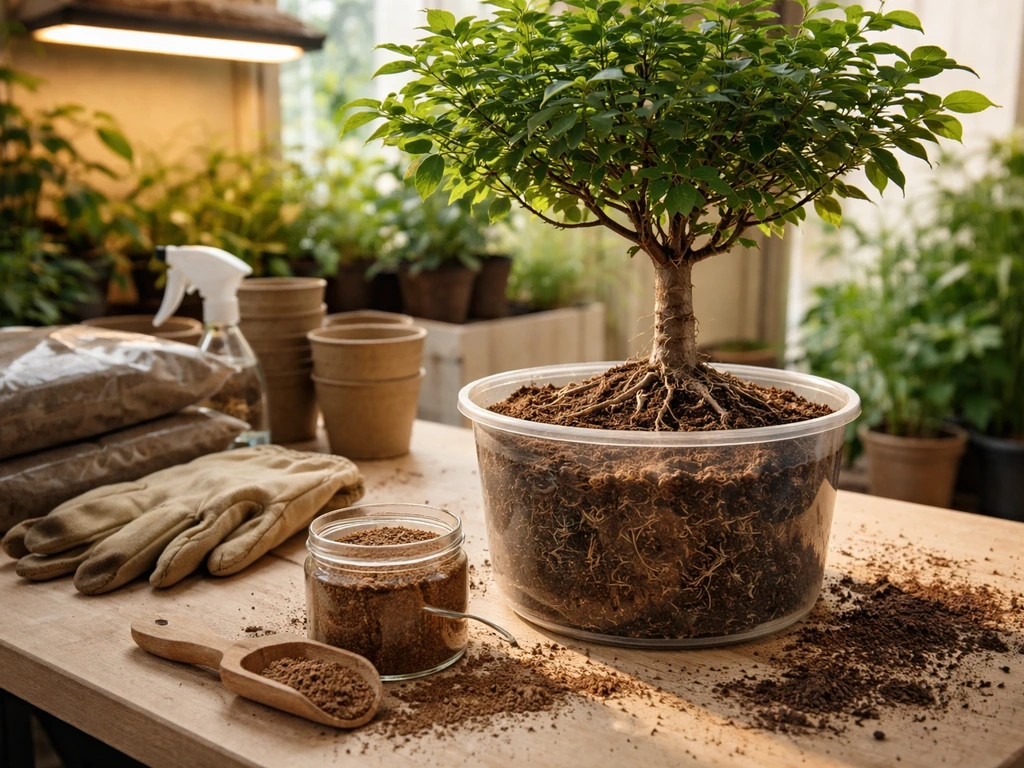
The mycorrhizal relationship forms when chanterelle mycelium colonizes the tree's fine root tips, forming a visible sheath. This is called the ectomycorrhizal mantle. For cultivation, you're deliberately creating this relationship by introducing chanterelle mycelium to young seedling roots under controlled conditions. This synthesis process takes weeks to months to establish and even longer before fruiting bodies appear. The USDA Forest Service research noted that artificially inoculated chanterelle mycorrhizae don't always persist in field conditions, which is one reason greenhouse growing with controlled soil and sterile substrate has shown more consistent results.
Site and environmental targets
- Soil pH: slightly acidic, between 4.5 and 6.0 is ideal for most chanterelle-tree pairings
- Temperature for fruiting: typically 55 to 65°F (13 to 18°C), though mycelial growth can continue in cooler conditions
- Humidity: 80 to 95% relative humidity during fruiting periods
- Light: indirect or dappled, not full sun direct exposure on fruiting site
- Drainage: excellent, chanterelles will not fruit in waterlogged or compacted soil
- Organic matter: moderate, a light layer of leaf litter or forest duff over the root zone is beneficial
- Competition: minimize aggressive competing fungi in early stages, especially in controlled setups
How to grow chanterelles at home: step-by-step
Here's a practical workflow you can actually follow. This covers both the greenhouse seedling method and the outdoor bed method, with notes on where the steps diverge.
- Acquire your host seedlings or identify your host tree. For greenhouse growing, source one to two year old pine or oak seedlings from a reputable nursery. Make sure they haven't been pre-inoculated with commercial mycorrhizal products, which can compete with chanterelle mycelium. For outdoor setups, identify a suitable existing tree or plant a new one at least one season before inoculation.
- Source your chanterelle inoculant. You have two main options: inoculated seedlings (pre-colonized young trees sold by specialty suppliers) or chanterelle mycelium spawn/culture. Inoculated seedlings are the most reliable route and sidestep the synthesis step entirely. If using spawn or liquid culture, you'll need to perform mycorrhizal synthesis yourself (covered in the next section).
- Prepare your substrate and container or bed. For greenhouse: use a mix of sterilized forest soil, peat, and coarse sand (roughly 40/40/20 by volume) in deep pots of at least 5 gallons per seedling. For outdoor: loosen soil in a 3 to 4 foot diameter ring around the tree base to about 6 inches deep, mix in forest duff or leaf compost, and adjust pH to 5.0 to 5.5 if needed.
- Perform inoculation. For mycorrhizal synthesis in greenhouse pots, introduce chanterelle mycelium (from a verified pure culture) to the root zone of the seedling during transplanting. Drench the roots gently with a liquid mycelium suspension or place colonized substrate directly in contact with the fine root tips. Minimize air exposure during this step.
- Establish initial growth conditions. Keep greenhouse pots at 60 to 70°F, maintain humidity above 80%, and water consistently but never saturate. Outdoors, water the root zone regularly during dry periods for the first two growing seasons. Mulch the surface with a 2 to 3 inch layer of wood chip or leaf litter.
- Wait for mycorrhizal colonization to establish. This typically takes 6 to 18 months before you can confirm active association. You won't see obvious signs above ground, but healthy, vigorous seedling growth is a good indicator the relationship is forming. In greenhouse settings, you can gently check root tips after 12 months for the characteristic whitish ectomycorrhizal mantle.
- Trigger fruiting conditions. Once colonization is established (usually year two onward for greenhouse, year three or later outdoors), mimic late summer to autumn conditions: drop temperatures to 55 to 65°F, increase humidity to 90%+, and reduce watering slightly to simulate seasonal rainfall patterns. Outdoors, natural autumn conditions often do this work for you.
- Harvest and maintain. Chanterelles fruit slowly over several weeks. Pick them when caps are firm and edges are just beginning to flatten, before the margin waves upward significantly. After harvest, return wood chip mulch, avoid disturbing the root zone, and continue tree care. A well-established site can produce recurring flushes over many years.
Growing from spores vs spawn vs inoculated seedlings
This is where a lot of aspiring chanterelle growers get tripped up, so let's be direct about what's actually feasible at home.
Growing chanterelle mushrooms from spores
Technically, you can collect spores from fresh chanterelles and use them to attempt inoculation. In practice, this is the hardest route and rarely works for home growers. Chanterelle spores are notoriously difficult to germinate and even more difficult to progress through the stages needed to form a viable mycorrhizal association with a host. Professional labs performing chanterelle mycorrhizal synthesis use carefully prepared pure culture mycelium grown on specific nutrient media, not raw spore prints. If you want to experiment with spores as a learning project, go ahead, but don't build your growing plan around it. The realistic timeline from spore to fruiting in a best-case scenario is 5 to 8 years, and success rates in home settings are very low.
Using spawn or liquid mycelium culture
Chanterelle spawn (colonized substrate or liquid culture from a verified source) is a step up from spores but still requires you to perform the mycorrhizal synthesis step yourself. This means introducing the mycelium to sterile or semi-sterile root conditions and giving it weeks to months to colonize the fine root tips before any association forms. It's doable but requires clean technique, the right substrate, and patience. A few specialty suppliers offer chanterelle liquid culture syringes or grain spawn. If you go this route, expect to spend 12 to 24 months before you can confirm whether colonization took, and another 1 to 3 years before potential fruiting.
Inoculated seedlings (the most reliable option)
Buying pre-inoculated seedlings, young trees whose roots already carry established chanterelle mycorrhizae, is the fastest and most reliable starting point for home growers. A handful of specialty nurseries in Europe and North America now sell these, and some mushroom cultivation suppliers are beginning to offer them. You still need patience: fruiting typically doesn't happen for 2 to 4 years after planting even with inoculated stock. But you skip the synthesis gamble entirely. This is the approach I'd recommend to anyone serious about actually harvesting chanterelles rather than just running an experiment.
| Method | Difficulty | Timeline to Fruiting | Home Feasibility |
|---|---|---|---|
| Spore inoculation | Very high | 5 to 8+ years | Low |
| Liquid culture / spawn synthesis | High | 3 to 6 years | Moderate with clean technique |
| Pre-inoculated seedlings | Moderate | 2 to 4 years | Best option for most growers |
Substrate prep and planting method
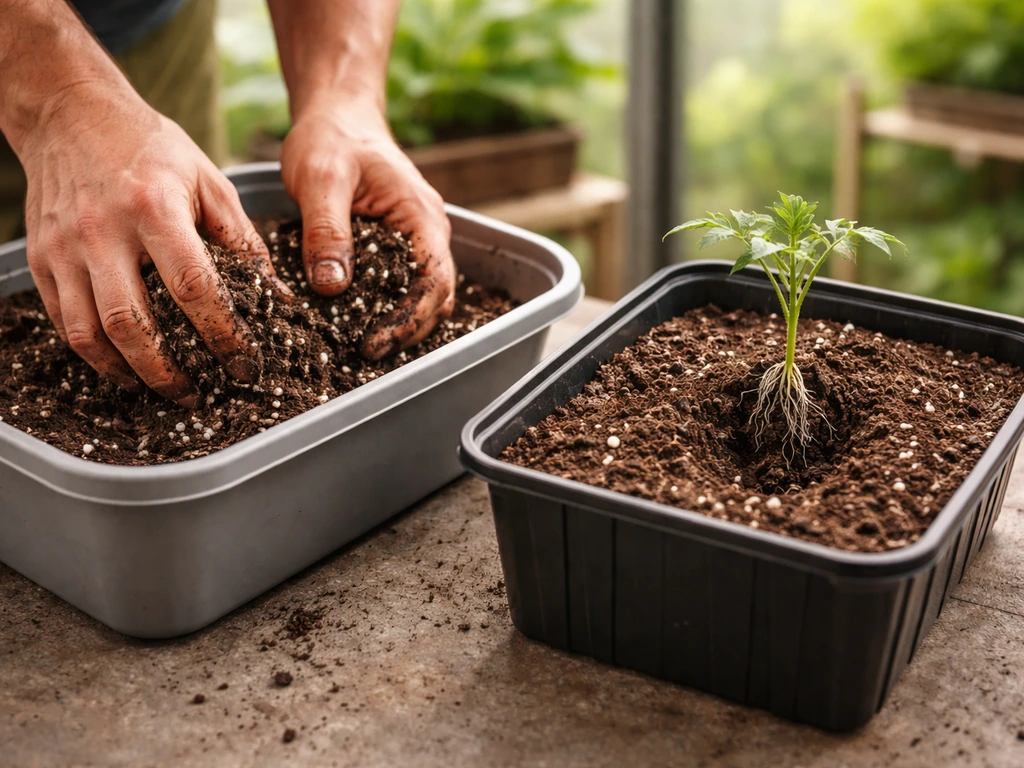
For greenhouse container growing, your substrate needs to balance drainage, aeration, and a slightly acidic pH while avoiding anything that would suppress the delicate mycorrhizal network. Don't use standard potting mixes, which are often loaded with perlite, lime, and fertilizers that will interfere with the fungal association. A good mix is 40% sterilized forest topsoil (from the base of an existing conifer or oak stand if you can get it), 40% sphagnum peat, and 20% coarse horticultural sand. Adjust pH to 5.0 to 5.5 with diluted sulfuric acid or sulfur if needed, and confirm with a basic pH meter before planting. Sterilize the mix in an oven at 180°F for 30 minutes if you want to minimize competing organisms, or use it pasteurized if you want to retain some native beneficial bacteria.
For outdoor beds, amend your native soil rather than replacing it. Till the root zone lightly, incorporate a few inches of partially composted leaf litter or aged wood chips from a matching tree species (pine chips for pine-associated strains, oak leaf mold for oak-associated), and top-dress with a 2 to 3 inch mulch layer. Avoid fresh wood chips, which can tie up nitrogen and create competing fungal activity. If your native soil is very clay-heavy or compacted, add coarse sand to improve drainage. Plant your inoculated seedlings or introduce spawn into the root zone in spring when soil temperatures are above 45°F and moisture is reliable.
Troubleshooting: why chanterelles fail and how to fix it
Even when you do everything right, chanterelles are unforgiving about certain conditions. Here are the most common failure points and what you can actually do about them.
No colonization after inoculation
This is the most common early failure, and it's usually caused by one of three things: contaminated substrate out-competing the chanterelle mycelium, inoculant that wasn't viable to begin with, or the root zone conditions being too wet, too dry, or at the wrong pH. If you're in the first 12 months, don't panic and dig everything up. Check that the seedling is growing healthily (a living, growing tree root system is your best sign the environment is acceptable), verify your substrate pH, and make sure you aren't overwatering. If the seedling is struggling or dying, the root zone is probably too wet or too hot. If it's thriving but you see no mycorrhizal development after 18 months, the inoculant may have failed and you'll need to re-inoculate with fresh material.
Colonization established but no fruiting
This is the frustrating middle stage. The USDA Forest Service research specifically highlighted this bottleneck: artificially inoculated mycorrhizae don't always translate into reliable fruiting, even in controlled settings. If your tree and mycorrhizal network are healthy but nothing is fruiting, the most likely culprits are temperature too high (above 68°F consistently), humidity too low during the trigger window, or the mycorrhizal network not being mature enough yet. Give it another full season before drawing conclusions. If you're in a greenhouse, try dropping temperatures by 5 to 10°F in autumn and bumping humidity to 90% for a sustained 4 to 6 week period to simulate seasonal cues. Outdoors, patience is usually the answer.
Contamination taking over
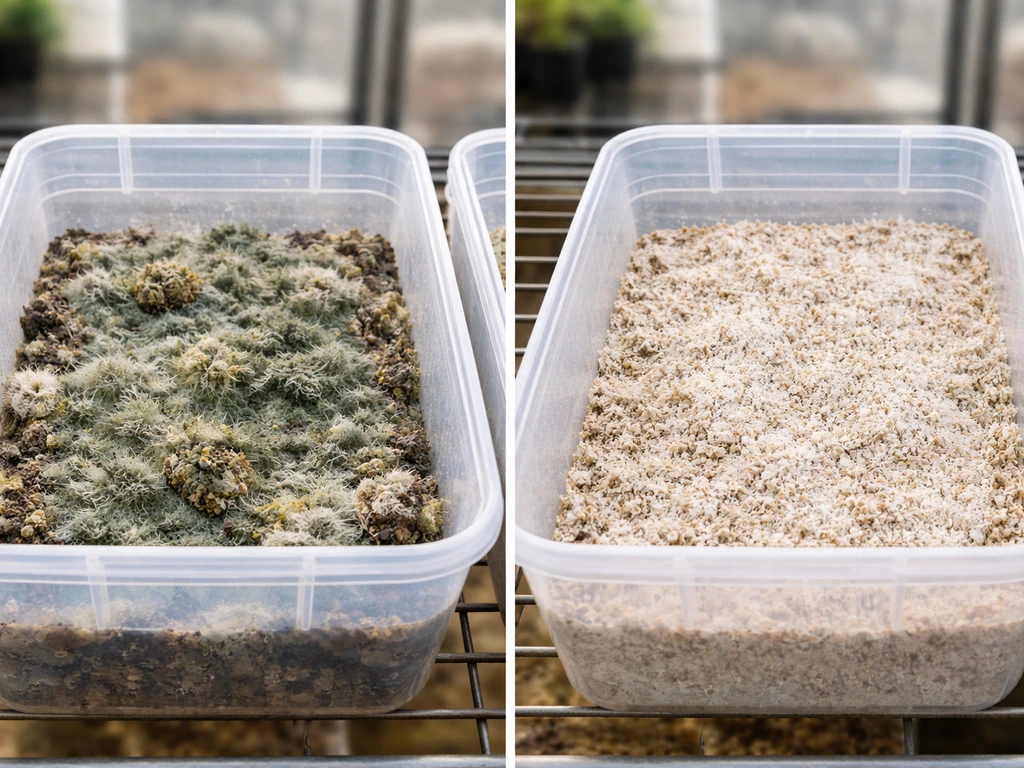
In greenhouse containers especially, other molds and fungi can colonize the substrate and crowd out the chanterelle mycelium before it can establish. Green or black molds on the soil surface are a warning sign. If you see this early on, improve airflow, reduce watering frequency, and make sure you're not introducing contaminants through unsterilized tools or potting amendments. Avoid using fresh compost, untreated manure, or any substrate that hasn't been at least pasteurized. If contamination is severe and widespread, you may need to start over with fresh sterilized substrate and a new inoculant source.
Low or inconsistent yield
Even a well-established chanterelle site may produce only a handful of mushrooms in a given season, especially in years two and three. This is normal. Chanterelles tend to increase in yield as the mycorrhizal network matures and spreads. A site that produces 3 to 4 mushrooms in year three might produce a full flush by year five. To encourage more consistent yields, maintain the mulch layer annually, avoid disturbing the root zone with digging or heavy foot traffic, keep the host tree healthy (water during droughts, no chemical fertilizers in the root zone), and maintain consistent soil moisture throughout the growing season rather than allowing extreme wet-dry cycles.
Host tree stress or decline
Since the chanterelle's entire lifecycle depends on the tree, anything that stresses the host directly impacts fruiting. Root competition from nearby aggressive plants, overwatering, pest damage, or nutrient deficiencies in the tree will all reduce or eliminate chanterelle production. Treat your host tree like the centerpiece of the project it is. Keep the root zone clear of competing ground cover within a 3 to 4 foot radius, apply a slow-release, low-phosphorus fertilizer to the tree only if it shows clear signs of deficiency (high phosphorus can suppress mycorrhizal activity), and monitor for any signs of root rot or pest infestation.
A realistic outlook for home chanterelle growers
Growing chanterelles at home is a multi-year commitment, and that's the honest truth. If you prefer a different kind of long-term gardening project, learn how to grow monkshood and plan for its slow, steady growth. It's nothing like growing oyster mushrooms or shiitake, where you can be harvesting within weeks. But it's also genuinely achievable, especially now that inoculated seedlings and better-documented greenhouse methods are available to home growers. If you're someone who enjoys the long game and wants to establish something that keeps producing year after year, a chanterelle bed or a greenhouse pot setup is a deeply rewarding project. If you want mushrooms on your plate in the next few months, look at faster-fruiting species first and build toward chanterelles as a longer-term goal. The fundamentals are clear: get the right host tree, inoculate it properly, nail your soil conditions and site, and then give it the time it needs. If you want a similar long-term, host-dependent approach, you can also use this guide for how to grow cordyceps alongside your current mushroom plans. Cordyceps cultivation at home is similarly long-term and depends on proper host and controlled conditions, so use this guide to plan your setup how to grow cordyceps. Ganoderma mushroom cultivation works differently than chanterelles, so it helps to review the specific steps for how to grow Ganoderma mushrooms before you set up your materials and environment. Follow the specific steps for how to grow Ganoderma lucidum, since its cultivation requirements are different from chanterelles. If you're looking for a similar long-term project, you can also follow a species-specific guide to how to grow lingzhi mushroom using the right substrate and growing conditions.
FAQ
Can I grow chanterelles indoors without a greenhouse if I have the right seedlings?
Yes, but it is much harder to hit the combination of cool temperatures, high humidity during the fruiting window, and low contamination pressure. A simple indoor room rarely maintains stable conditions for the sustained trigger period, so most home attempts fail at the “middle stage” when fruiting cues are required. If you try indoors, prioritize a sealed humidity-controlled enclosure (not a typical kitchen or sunroom), and plan to manage airflow to prevent mold.
Do I need to sterilize everything for chanterelles, or is pasteurization enough?
Pasteurization is often enough, especially for outdoor beds and partially native mixes, because completely sterile soil can reduce helpful native microbes. In containers, however, the competition risk is higher, so using either sterilized mix or pasteurized mix is a balancing act: pasteurize to reduce contaminants, but still use clean tools and avoid fresh compost or untreated manure. If you see surface mold early, switch to stricter sanitation and consider restarting with fresher inoculated material.
How can I tell if my inoculated tree has established ectomycorrhizae?
Look for evidence at the root zone rather than the soil surface. In many setups you cannot reliably confirm without gently checking fine roots (ideally minimal disturbance), since the mantle forms on fine root tips. Healthier signs include steady tree growth after transplanting and consistent absence of root-zone stress, but the most decisive confirmation is inspecting fine roots for a mycorrhizal mantle and then reseating the seedling carefully.
What pH should I aim for, and how sensitive are chanterelles to small pH errors?
For cultivation mixes, staying around pH 5.0 to 5.5 is the safe target described in practice. Small deviations can matter more than with many saprotrophic mushrooms, because the mycorrhizal network and the fine-root environment are sensitive. Recheck pH after mixing and before planting, since peat and amendments can drift, and avoid liming or high-alkalinity inputs that can silently suppress colonization.
Can I use store-bought potting soil, or should I always make my own mix?
Avoid standard potting mixes as the default, because they often contain lime, fertilizer, and high-mineral additives or excessive perlite that change the root environment and can disrupt the fungal partnership. If you must use a commercial soil, treat it as an ingredient you amend, not as the full mix. Blend it only after testing pH and ensuring it does not include high-phosphorus fertilizers or aggressive additives that could interfere with ectomycorrhizae.
How long should I wait before deciding my inoculation failed?
Give it time in stages. If you are within the first 12 months and the tree is healthy, assume establishment is still possible and focus on stable moisture, correct pH, and avoiding overwatering. If you see no meaningful ectomycorrhizal development after around 18 months, the inoculant may have failed or the conditions may not be supporting colonization. Even after successful colonization, fruiting can require an additional 1 to 3 years, so do not restart too early.
Is it better to start from spores, liquid culture, or pre-inoculated seedlings?
For most home growers, pre-inoculated seedlings are the most reliable because they skip the most uncertain mycorrhizal synthesis step. Spores are possible but are the hardest route, with very low success and long timelines. Liquid culture or grain spawn can work, but you still must perform the synthesis and then wait months for root colonization and additional years for fruiting, so treat it as a longer learning project rather than a quick harvest plan.
What temperature and humidity ranges matter most, especially for greenhouse fruiting?
Overheating is one of the most common fruiting blockers in greenhouse setups, especially if temperatures run too high consistently. In practice, aim to keep conditions cool enough that seasonal cues can be mimicked, then raise humidity very high during the trigger window for several weeks. If your greenhouse cannot hold a stable high-humidity period, outdoor setups often become more forgiving once established.
Why do I see molds on the soil surface, and should I remove them?
Surface molds usually indicate that competing organisms are establishing faster than the chanterelle mycelium, often due to excess moisture, poor airflow, contaminated amendments, or non-sterile tools. Don’t assume it is automatically fatal, especially if it appears early and localized, but address the cause immediately: improve airflow, reduce watering frequency, and stop introducing any untreated organic inputs. If mold is widespread or the tree starts declining, starting over with fresh substrate and inoculant is often the most practical fix.
How can I reduce the risk that neighboring plants compete with chanterelles?
Keep competing root systems away from the host’s root zone. In practice, clear a radius around the trunk (commonly several feet) of aggressive ground cover, and be cautious with deep-rooted perennials nearby. Also avoid frequent digging, heavy foot traffic, or repeated soil disturbance in that zone, since it can break fine roots that the mycorrhizal network depends on.
Do chanterelles need fertilizer, and what nutrients should I avoid?
In general, do not fertilize the mushroom system directly, since ectomycorrhizae can be suppressed by high nutrient inputs, especially phosphorus. The safer approach is to support the host tree health with low-phosphorus, slow-release fertilizer only if the tree shows deficiency symptoms. Avoid adding lime or high-phosphorus amendments, because they can shift pH and reduce mycorrhizal performance.
My site produces only a few mushrooms. Is that normal, and how do I improve yields over years?
Yes, low early yield is normal. Chanterelles often increase production as the mycorrhizal network matures and spreads, so a handful of mushrooms in early years can be a sign of progress rather than failure. To improve consistency, maintain the mulch layer annually, keep the host tree unstressed during droughts, and avoid extreme wet-dry cycles rather than trying to force more mushrooms immediately.
Is it legal and ethical to collect spores or inoculate trees on public land?
Be cautious. Removing chanterelles, taking soil, or introducing inoculated material can be restricted depending on location, protected habitats, and local regulations. For home projects, the safe default is to use purchased inoculated seedlings or approved spawn from reputable sources and limit work to your property or land where you have permission.