Honey mushrooms (Armillaria mellea and related species) can absolutely be grown at home, but they are one of the more challenging and misunderstood species in the hobby. The most realistic path for a home grower is outdoor log or stump inoculation, with indoor sawdust cultivation in bottles or bags as a more controlled (but still demanding) alternative. Expect a colonization window of 30 days for sawdust bags kept at 25°C, or 8 to 18 months for logs. Fruiting happens best around 16°C with 85 to 90% humidity and indirect light. If you go in with the right expectations and the right setup, you can pull consistent harvests. If you want the full, step-by-step process, see our guide on how to grow chestnut mushrooms. If you go in thinking this is like growing oysters, you will be disappointed.
How to Grow Honey Mushrooms Step by Step Indoors or Outdoors
Know which honey mushroom you're actually growing
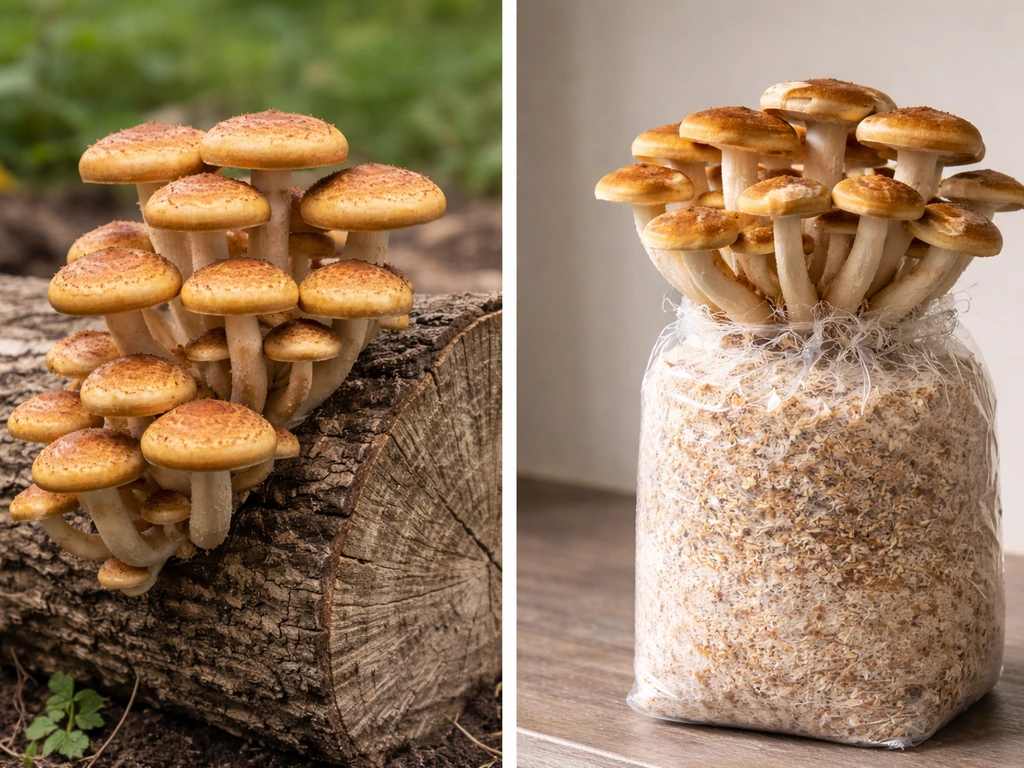
"Honey mushroom" is a common name for a whole group of Armillaria species, not just one fungus. Armillaria mellea is the one most commonly referenced in cultivation research and the one you will find spawn for from reputable suppliers. Other species like A. ostoyae and A. tabescens look similar and behave similarly in the wild, but A. mellea is the species with documented indoor sawdust cultivation results and is the one to target for home growing.
Here is the part most beginners skip: Armillaria is both a wood-decay saprobe and a plant pathogen. That dual nature matters a lot for where and how you grow it. On dead wood and stumps, it is perfectly safe to cultivate. But Armillaria spreads through rhizomorphs (dark, root-like strands) that can move through soil at roughly a meter per year, and it can infect living trees through root contact. UC IPM research confirms that inoculum can persist in buried woody roots for decades after an infected tree is removed. The takeaway is not to abandon the project, it is to be smart about placement. Do not inoculate logs or stumps within root-contact distance of healthy trees you care about, and never use freshly cut wood from a living, healthy tree as your substrate in an outdoor setting where roots connect to other plants.
On the legality side: honey mushrooms are not a controlled substance, and growing them at home for personal consumption is legal in virtually every jurisdiction. There are no permits required. The only "legal" concern worth mentioning is if you are on HOA-managed land or renting property with restrictions on outdoor garden modifications, since outdoor stump inoculation is a permanent-ish change to that wood.
Pick your grow method before you buy anything
The method you choose shapes every other decision. Honey mushrooms are a wood-loving species, so all practical paths involve wood in some form. If you want a practical walkthrough of the whole process, see our guide on how to grow wood ear mushrooms Honey mushrooms are a wood-loving species. Here are the main options and who they suit.
Outdoor logs and stumps (easiest entry point)
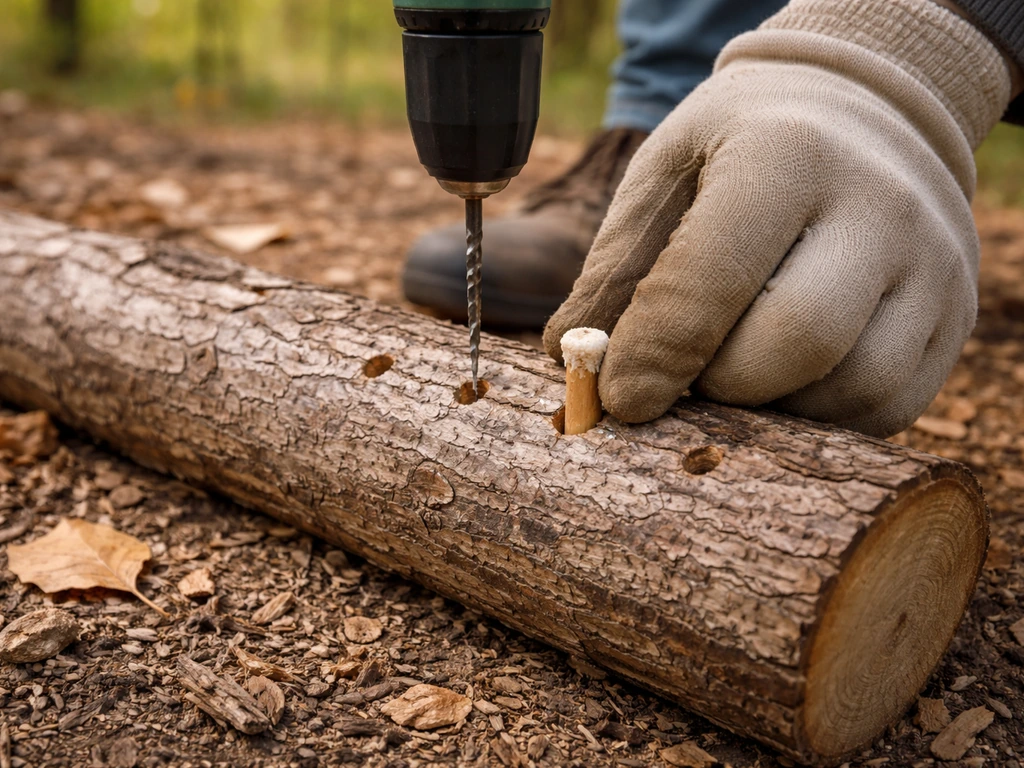
This is the most beginner-friendly method because nature does most of the work. You inoculate a hardwood log or dead stump with honey mushroom spawn, keep it moist in a shaded spot, and wait. The downside is time: log colonization takes 8 to 18 months before you see first fruits. The upside is that once established, a well-inoculated log or stump can fruit for years. Oak is the preferred wood species for Armillaria, which aligns with the research showing A. mellea fruiting body formation specifically studied on oak sawdust medium. Use freshly cut (within 1 to 2 months) hardwood logs, 4 to 8 inches in diameter and 3 to 4 feet long.
Indoor sawdust bags or bottles (faster, more control)
This is the method from the published Armillaria cultivation research: oak sawdust packed into polyethylene bottles or filter-patch bags, sterilized, inoculated, and incubated at 25°C in the dark for about 30 days until fully colonized, then moved to fruiting conditions. For a detailed step-by-step approach, see the indoor sawdust bag method and how to manage sterilization, incubation, and fruiting indoor sawdust bags. For a step-by-step guide, see the full walkthrough on how to grow mushroom dowels. You get faster results than logs and much more control over environment. The tradeoff is that you need to manage sterilization carefully and maintain specific fruiting conditions. This is a better fit for growers who already have experience with bag cultivation (oysters, shiitake) and want to try a more advanced species.
Outdoor woodchip beds
A woodchip bed is a middle-ground option: easier than indoor bags but more structured than a single log. You spread spawn through a prepared bed of hardwood chips, keep it moist, and let colonization happen over several months. If you are aiming for a woodchip-bed style approach, make sure you use the right hardwood chips and keep the bed at field capacity moisture so the spawn can colonize steadily woodchip bed. Cornell Small Farms notes that outdoor woodchip bed colonization can span 2 to 12 months depending on conditions. This method works, but honey mushrooms are less commonly grown this way compared to species like wine caps. It is worth considering if you have a shaded outdoor space with good moisture retention.
| Method | Difficulty | Colonization Time | Control Level | Best For |
|---|---|---|---|---|
| Outdoor logs/stumps | Low | 8 to 18 months | Low | Patient beginners, long-term yields |
| Indoor sawdust bags/bottles | Medium-High | ~30 days | High | Experienced growers, faster harvest |
| Outdoor woodchip bed | Low-Medium | 2 to 12 months | Low-Medium | Growers with shaded garden space |
My recommendation for most beginners: start with logs or a stump inoculation outdoors. Yes, you wait longer, but you spend less money on equipment, make fewer critical mistakes, and the results are more forgiving. If you have already grown species like shiitake or hen of the woods on logs, then stepping up to the indoor sawdust bag method is a natural progression and worth trying. If you are starting from scratch with hen of the woods, use a similar log-and-substrate mindset, but follow the species-specific growing steps for that mushroom.
What you need: full supplies checklist
For outdoor log or stump inoculation
- Honey mushroom plug spawn or sawdust spawn (Armillaria mellea strain, from a reputable supplier)
- Freshly cut hardwood logs (oak preferred, 4 to 8 inches diameter) or an established dead stump
- Drill with 5/16-inch bit (for plug spawn) or inoculation tool (for sawdust spawn)
- Cheese wax or beeswax to seal inoculation holes
- Small propane torch or candle to melt wax
- Shade structure or location under a tree canopy
- Garden hose or sprinkler for watering during dry spells
For indoor sawdust bag or bottle cultivation
- Honey mushroom grain spawn or sawdust spawn (Armillaria mellea)
- Oak sawdust (hardwood sawdust, not pine or cedar)
- Wheat bran or rice bran as a nutrient supplement (10 to 20% of dry weight)
- Polypropylene filter-patch bags or wide-mouth quart/half-gallon Mason jars
- Pressure cooker (for sterilization at 15 PSI) or large pot for pasteurization
- Isopropyl alcohol (70%) and paper towels for surface sanitation
- Still air box or flow hood for inoculation
- Thermometer and hygrometer
- Spray bottle for humidity maintenance
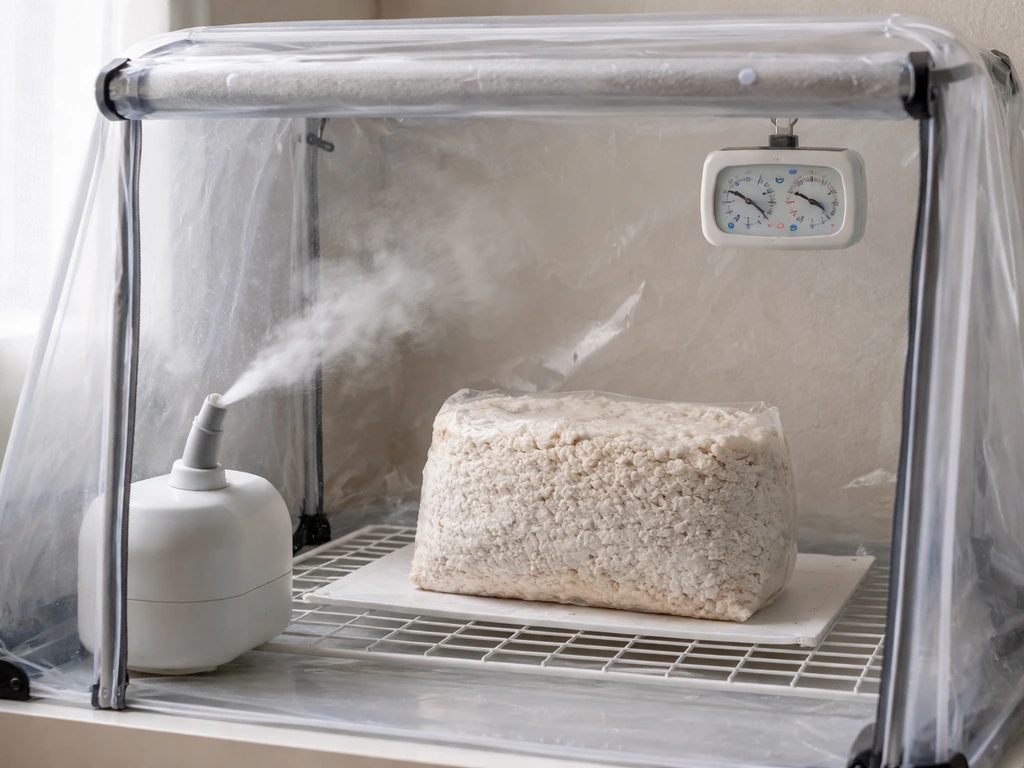
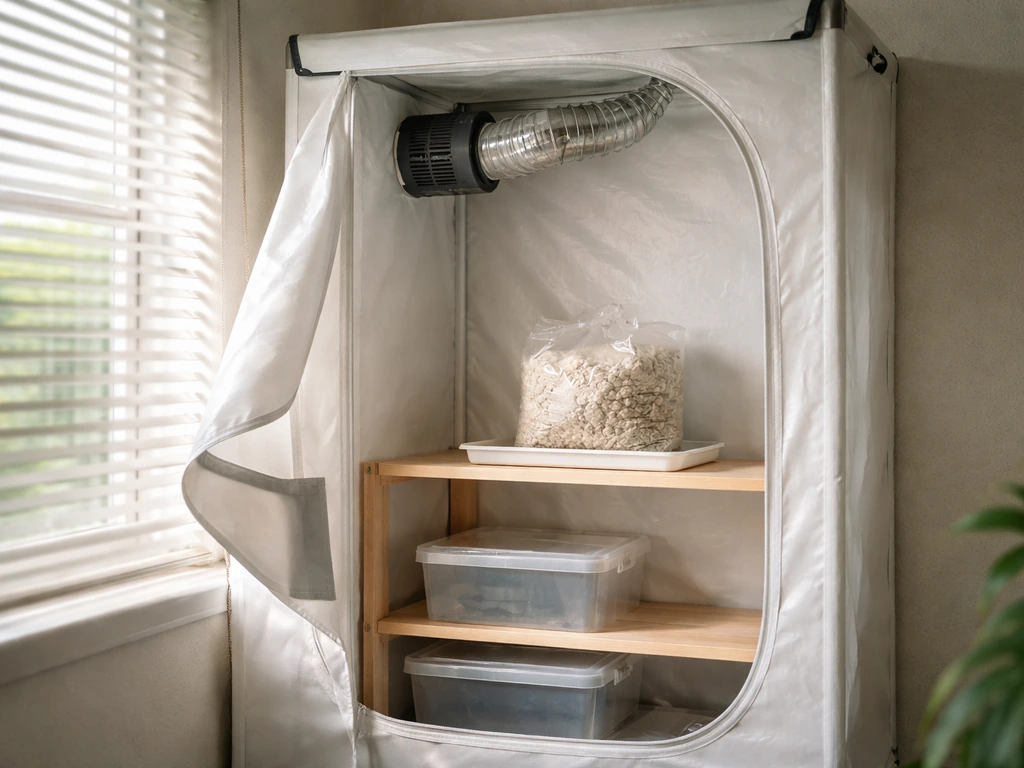
- Clear plastic tote or grow tent for fruiting chamber
- Humidity controller (optional but helpful)
- LED or fluorescent light on a timer for fruiting induction
Substrate preparation: how to get it right
Honey mushrooms are wood-decay fungi, so their substrate needs to reflect that. If you want a practical step-by-step on the process, see our guide on how to grow beech mushrooms. Oak sawdust is the research-backed choice. Mixing in 10 to 20% wheat bran by dry weight gives the mycelium extra nitrogen to work with and can speed colonization, but it also increases contamination risk, so your sterilization has to be thorough.
Moisture: getting to field capacity
Whether you are packing bags or preparing a woodchip bed, moisture level matters more than most beginners realize. The target is field capacity: wet enough that the substrate feels thoroughly damp throughout, but not so wet that water drips freely when you squeeze a fistful hard. If water pours out when you squeeze, it is too wet and you risk anaerobic pockets. If it barely holds together, it is too dry and colonization will stall. Mix your sawdust and water gradually and test as you go.
Sterilization vs. pasteurization
For indoor sawdust bags with nutrient supplements, sterilize. This means pressure-cooking your loaded bags at 15 PSI (121°C) for 2 to 2.5 hours. Pasteurization (soaking substrate in 160 to 180°F water for 1 to 2 hours) works for plain wood chips or lower-nutrient substrates but is not adequate for supplemented sawdust bags because it leaves too many competing microbes. For outdoor logs and stumps, no sterilization is needed: the wood itself is your substrate and you are relying on the mushroom mycelium outcompeting any native organisms already present.
Inoculation and incubation: how to start and what to watch
Inoculating logs
Drill holes in a diamond pattern every 4 to 6 inches along the log, about 1 inch deep. Pack plug spawn or sawdust spawn into each hole firmly, then seal with wax immediately. Work quickly to reduce contamination exposure. Lay inoculated logs in a shaded location, stack them off the ground slightly, and cover loosely with burlap or shade cloth. Keep them moist: they should not dry out but should not sit in standing water either. Incubation takes 8 to 18 months.
Inoculating sawdust bags
Let sterilized bags cool completely (down to room temperature, ideally below 25°C) before inoculating. Never rush this step. Work in a still air box or near a flow hood, wipe everything down with 70% isopropyl alcohol, and add grain spawn at roughly 10 to 20% of substrate volume. Higher spawn rates reduce contamination risk and speed colonization. Seal bags and move them to your incubation area.
Incubation conditions and what to monitor
For sawdust bags, incubate at 25°C in the dark. The A. mellea research documented full colonization in approximately 30 days under these conditions. You should see white mycelium spreading through the substrate within the first week. Check bags every few days. Healthy honey mushroom mycelium is white to pale cream and slightly stringy in texture. Any green, black, or pink patches mean contamination and those bags need to go out immediately. Do not open contaminated bags indoors.
- Temperature: 22 to 25°C during incubation
- Humidity in incubation area: 70 to 80% RH (bags self-regulate inside)
- Light: none needed during incubation (dark is fine)
- CO2: ambient levels are fine during spawn run
- Timeline: expect full colonization in bags within 25 to 35 days at 25°C
Fruiting setup: the environmental conditions that trigger pins
Once bags are fully colonized (substrate is white throughout with no visible gaps), it is time to trigger fruiting. This is where honey mushrooms differ most from common grocery-store species like oysters. They need a meaningful temperature drop, increased humidity, indirect light, and fresh air. NCAT also emphasizes that pins and young fruit bodies need high humidity to expand and that coordinating temperature, humidity, and airflow in the fruiting space matters for better development increased humidity, indirect light, and fresh air.. Get any of these wrong and you will sit there staring at colonized bags that never pin.
Temperature
Drop fruiting temperature to 16°C (plus or minus 1°C). The published A. mellea fruiting study used exactly 16°C for primordial formation. This is cooler than most people keep their grow rooms. In practice, this means you may need to move your bags to a basement, garage, or a dedicated cooled fruiting tent in warmer months. If ambient temperatures are between 14 and 18°C, you are in the right range. Do not try to fruit these above 20°C and expect good results.
Humidity
Target 85 to 90% relative humidity in the fruiting space. The research used 85 plus or minus 5% RH. Mist the walls of your fruiting chamber 2 to 4 times daily, not the mushrooms directly if pins have already formed (direct misting on developing pins can cause abort or bacterial blotch). A humidity controller and ultrasonic humidifier take the guesswork out if you want a hands-off approach.
Fresh air exchange
CO2 buildup is a fruiting killer. Aim to keep CO2 below 1000 ppm in your fruiting space. For most small grow tents or totes, opening the chamber for 30 to 60 seconds four to six times daily is enough. If you have a grow tent, running a small fan on a timer for brief intervals works well. Honey mushrooms in the wild fruit in open air, so they tolerate and actually need decent airflow once fruiting has started.
Light
Honey mushrooms need indirect light to trigger and direct fruiting body development. The A. mellea study used approximately 350 lux for 12 hours per day. In practical terms, this is the equivalent of a bright room or a standard LED strip light on a 12 hours on / 12 hours off timer. Direct intense light is not necessary or helpful; diffuse natural light from a north-facing window or a fluorescent tube a few feet away is plenty.
| Parameter | Incubation Stage | Fruiting Stage |
|---|---|---|
| Temperature | 22 to 25°C | 15 to 17°C |
| Humidity (RH) | 70 to 80% (ambient) | 85 to 90% |
| Light | None (dark) | 350 lux, 12h on / 12h off |
| Fresh Air | Ambient | Frequent exchange, CO2 below 1000 ppm |
| Timeline | 25 to 35 days (bags) | 7 to 21 days to pin after induction |
Harvesting, flushing, and what to do when things go wrong
When and how to harvest
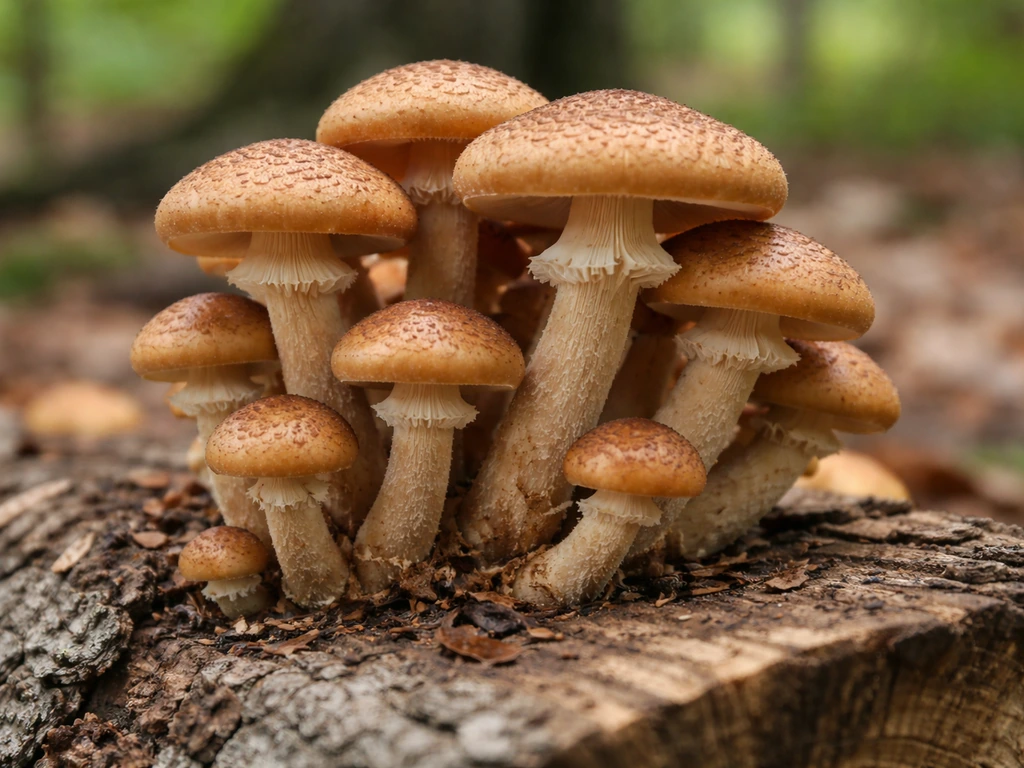
Harvest honey mushrooms just before or as the veil under the cap begins to tear. Once the veil breaks and the cap fully flattens, the mushrooms start releasing spores and degrade quickly. Twist and pull clusters from the base, or cut them cleanly with a sharp knife. Do not leave stumps of dead mushroom material behind as they can mold and contaminate the next flush. For logs and stumps outdoors, harvest whole clusters by cutting at the base.
Managing second and third flushes
After the first harvest, remove all remaining material from the surface, mist the substrate thoroughly, and return the bag or block to fruiting conditions. Expect a 7 to 14 day rest period between flushes. Honey mushrooms on sawdust typically yield 2 to 3 productive flushes before the substrate is depleted. Outdoor logs can continue producing for multiple seasons, which is one of the main advantages of the log method.
Troubleshooting common failures
No colonization after 3 to 4 weeks: First check temperature (too cold slows everything, too hot kills spawn) and moisture (too dry stops mycelial growth). Also consider whether your spawn was viable when you received it. Order spawn from suppliers who ship with cold packs in warm months and use it within 2 to 4 weeks of arrival.
Contamination (green, black, or pink patches): This almost always traces back to sterilization that was not thorough enough, bags that were inoculated before cooling down fully, or poor hygiene during inoculation. Green mold (Trichoderma) is the most common culprit. Bag it, remove it, and double-check your sterilization time and pressure next round. Do not try to cut out mold and save the bag; it is not worth it.
Mycelium looks fuzzy or rope-like but no pins: This is often a CO2 problem or the temperature is still too high. Make sure you have actually dropped the temperature to the 15 to 17°C range and that you are providing the 12-hour light cycle. Honey mushrooms specifically need that light trigger. Some growers also find that a 24-hour cold shock (moving bags to a refrigerator at 4 to 8°C overnight) helps break the stall.
Pins appear but abort before developing: This is almost always a humidity drop. Once pins form, any significant dip in RH causes them to abort. Check your misting schedule and look for any air leaks in your fruiting chamber. If you are in a dry climate or dry season, a humidity controller is worth the investment.
Weak yields on second flush: Normal to some extent, but if yield drops dramatically, check whether the substrate has dried out internally. You can rehydrate sawdust blocks by soaking them face-down in clean water for 4 to 8 hours, then draining before returning to fruiting conditions.
Pests (fungus gnats, mites): These are more common in outdoor setups. A layer of diatomaceous earth around log bases can deter crawling insects. For indoor setups, yellow sticky traps catch adult fungus gnats before they lay eggs in your substrate. Keep your fruiting space clean and remove spent mushroom material promptly.
Safety: what to watch out for in outdoor setups
Honey mushrooms are edible and popular in cooking, but they must be cooked before eating. If you are also curious about other wood-loving species, learning how to grow chicken of the woods mushrooms can be a great next step. Raw Armillaria has compounds that cause gastrointestinal distress in most people. Cook them thoroughly every time.
On the outdoor side, remember what was covered earlier about Armillaria's behavior as a pathogen. If you have healthy ornamental trees, fruit trees, or shrubs nearby, be cautious about where you place inoculated logs or stumps. Rhizomorphs from an established honey mushroom colony can spread through the soil and eventually contact living roots. The Missouri Department of Conservation and UC IPM both emphasize that Armillaria is effectively a disease of the site, persisting in buried wood and roots for decades. Using a raised bed setup with a physical barrier (thick plastic sheeting on the sides and bottom of a contained woodchip bed) can reduce the risk of unwanted spread significantly if you are growing near valued trees or shrubs.
If you want to check whether an existing stump in your yard already has Armillaria before you invest in spawn, you can scrape away the bark near the base and look for white, fan-shaped mycelial mats between the bark and wood. That white growth is the diagnostic sign, and it means the site already has an established colony you could potentially encourage rather than inoculate from scratch.
FAQ
If I only have access to softwood trees, can I still grow honey mushrooms outdoors?
Honey mushrooms grow far more reliably on hardwood species, especially oak, which is the common research medium. With softwood, colonization can be much slower and yields may be poor. If softwood is all you have, use an indoor sawdust bag approach where you can better control conditions, and expect you may need more time and extra hygiene to avoid failure.
How can I tell the difference between healthy mycelium and early contamination in sawdust bags?
Healthy Armillaria mycelium is usually white to pale cream and slightly stringy. Contamination often shows distinct color patches such as green, black, or pink, or forms spotty growth that spreads differently than the smooth advance front. The practical rule, do not open the bag to “check,” remove any bag showing colored patches immediately, especially indoors.
What should I do if my bags fully colonize but no pins appear after I lower the temperature?
First confirm the room actually reached the target, 16°C (roughly 15 to 17°C), because a “cooler” room that stays above 18 to 20°C commonly stalls pinning. Also verify fresh air and CO2 control, keep CO2 under about 1000 ppm by ventilating brief periods daily. Finally, ensure you are using the 12-hour indirect light cycle, honey mushrooms need that light trigger.
Can I use a refrigerator or unheated room as my fruiting setup?
Yes, but only if temperature stays stable in the 14 to 18°C range, not just during part of the day. If you use a refrigerator, be careful that humidity can become too low and dry the substrate, you may need a sealed humidified chamber inside. Avoid freezing conditions, and never assume “cold air” alone is enough without humidity, light, and airflow.
How much fresh air is enough during fruiting, what if I see drying?
Air exchange is needed because CO2 can suppress pin development, but too much airflow without humidity causes aborts. A workable approach is short openings or fan cycles (timed) several times per day, while misting the chamber surfaces to keep RH near 85 to 90%. If pins abort, reduce airflow duration and increase humidity instead of raising temperature.
Is it safe to harvest and reuse the same bag or log after a flush if I see small patches of mold?
If contamination is localized but clearly visible, do not try to keep the material in the same container indoors. For safety and cleanliness, discard affected bags or log sections because mold spores can spread to nearby fruiting units and ruin future flushes. If you are outdoors and only a tiny surface patch appears, removing that area promptly can help, but any colored mycelium spreading is a discard signal.
Do I need to disinfect tools and surfaces every time I open a bag?
Yes, especially during transfers from incubation to fruiting or whenever you check bags. Use a still-air approach (still-air box) and keep contact time minimal. Wipe surfaces with 70% isopropyl alcohol as described, and work in a clean workflow so you do not introduce airborne spores that will outcompete the mycelium.
What’s the best way to hydrate a drying substrate block without oversaturating it?
If the inside dried out, rehydration helps, but soak in a controlled way. Soak face-down in clean water for about 4 to 8 hours, then drain fully before returning to fruiting conditions. After reintroduction, monitor for anaerobic wetness, if water squeezes out freely, the block is too wet and you risk odor, poor pinning, or bacterial blotch.
Can I grow honey mushrooms near my fruit trees, even if the logs are “far enough”?
Do not rely on distance guesses. Armillaria spreads through rhizomorphs that can move through soil, roughly on the order of a meter per year, and it can infect living roots when there is root contact. If you have valued trees nearby, place inoculated wood in a contained raised setup with a physical barrier, or choose an outdoor site well away from root-contact zones.
How do I reduce the risk of accidentally encouraging an existing Armillaria colony elsewhere on my property?
Avoid inoculating wood in areas where you already suspect infected stumps or infected root zones. If you see diagnostic white, fan-shaped mycelial mats on a stump, the colony is already present, you can end up increasing activity. In that case, decide whether you are okay with the site being “productive” long-term, and keep the area separated from healthy ornamental plantings.
Are honey mushrooms ever safe to eat raw if I harvest very young specimens?
No, they should be cooked thoroughly every time. Even young mushrooms can cause gastrointestinal distress when eaten raw. If you are unsure about the species identification, do not eat them, cooking is not a substitute for correct identification.
How many flushes should I expect indoors, and how can I tell when the block is depleted?
Indoor sawdust blocks commonly produce 2 to 3 productive flushes before the substrate runs out. Depleted blocks often show dramatically weaker next-flush growth, slow pinning, or failure to re-establish a uniform mycelium white surface. When that happens, it is time to retire the block rather than repeatedly re-fruiting it.
Do higher spawn rates always improve success, or can they cause problems?
Higher spawn rates can reduce contamination risk and speed colonization, but there is a practical ceiling. Going too high can increase nutrient load and make sterilization gaps more damaging, and it can shorten the window before contamination shows. A moderate range, around 10 to 20% by substrate volume, is typically the safer target.