
Yes, you can grow hen of the woods (maitake) at home, but it takes more patience than most mushrooms. The fastest route is buying a pre-inoculated kit or log kit and fruiting it indoors. The most rewarding long-term method is inoculating fresh oak logs or stumps outdoors and letting nature do the heavy lifting over 9 to 18 months. Either way, this is a species that rewards people who set things up right at the start and then get out of the way.
How to Grow Hen of the Woods Mushrooms at Home
Marcus Holloway
27 Apr 2026
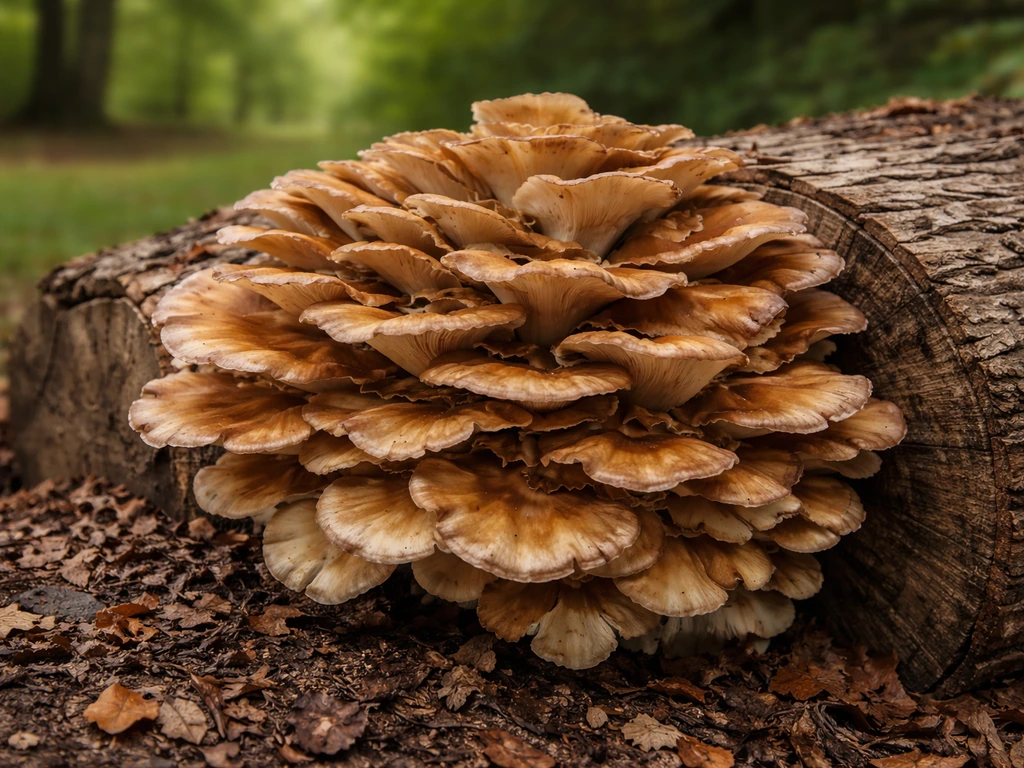
Can you actually grow hen of the woods at home?
Maitake is one of the more challenging species for home growers, not because the process is complicated, but because it takes a long time and is unforgiving about wood species. It is a butt-rot fungus, meaning it breaks down the base and roots of hardwood trees, particularly oaks. That biology drives every cultivation decision you make. Get the wood right and give it enough time, and maitake will fruit reliably. Try to shortcut the wood species or rush the timeline and you will end up with nothing.
The good news: unlike some gourmet species that need strict lab conditions to fruit, maitake is perfectly capable of fruiting outdoors with minimal intervention once your logs or buried blocks are colonized. Indoors, a kit can produce a flush in weeks if your conditions are dialed in. So whether you have a backyard or just a humid corner of your apartment, there is a workable approach.
Indoor vs outdoor: where should you start?
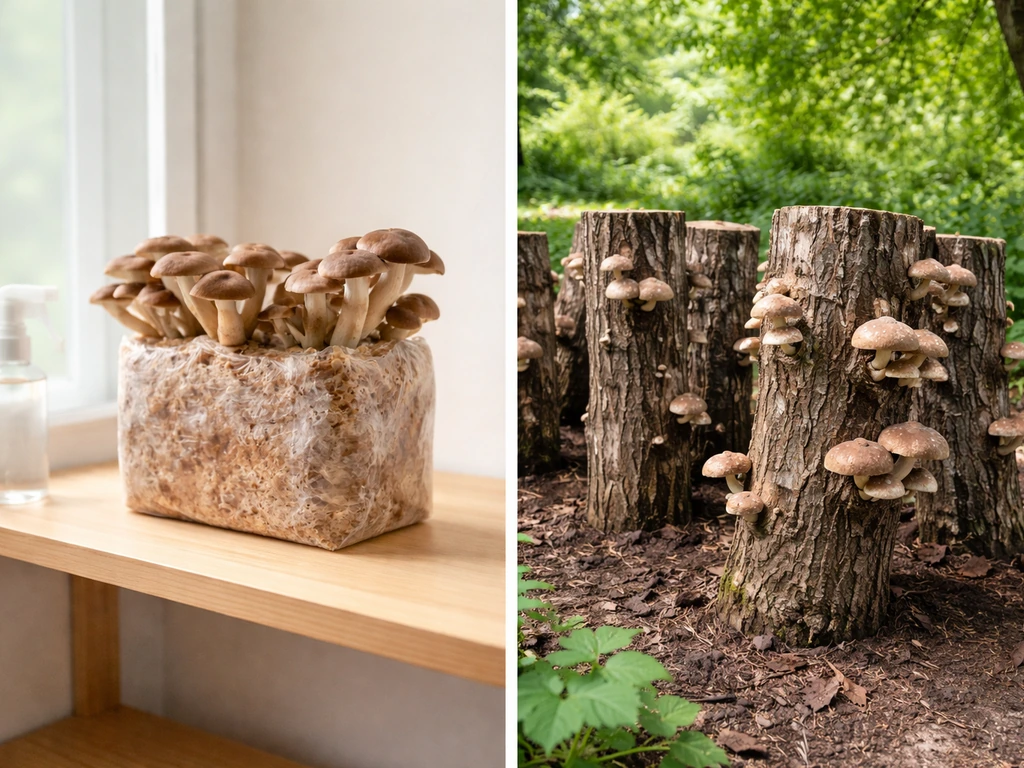
This is the first real decision point. Here is how to think about it based on your situation.
Starting indoors with a kit
If you want results this season and do not have outdoor space, or if you just want to learn what maitake actually looks like before committing to a multi-year outdoor project, a pre-inoculated kit is the right starting point. Companies like Mycocultures sell fully colonized maitake kits that just need the right fruiting environment: 80 to 90% relative humidity, ambient (indirect) light, and temperatures in the comfortable indoor range. No log prep, no drilling, no waiting a year. You can refrigerate the kit for up to three months if you are not ready to fruit it immediately, which makes timing flexible.
The downside of kits is yield. You will typically get one or two flushes from a block before it is exhausted. Think of it as a learning run and a very tasty one.
Going outdoors with logs or stumps
Outdoor log cultivation is the method with the highest long-term payoff. A well-inoculated oak log or buried stump section can fruit annually for several years. You do not need to manage humidity nearly as carefully because the outdoor environment handles most of it, especially if you site your logs in a shaded, moist spot. The trade-off is time: expect 9 to 18 months from inoculation to first flush, sometimes longer. This is genuinely a slow-burn project, but once it works, it works repeatedly.
| Factor | Indoor Kit | Outdoor Log/Stump |
|---|---|---|
| Time to first harvest | Weeks after setup | 9 to 18 months |
| Setup effort | Very low | Moderate (log prep, inoculation) |
| Humidity management | Active (misting, tent) | Mostly passive |
| Yield per cycle | 1 to 2 flushes per block | Multiple years of annual flushes |
| Wood species control | Done for you | You source oak logs |
| Cost | Higher per pound | Lower long-term |
| Best for | Beginners, small spaces | Committed growers with outdoor space |
My recommendation: if you are brand new, buy a kit first, fruit it, eat it, and then set up an outdoor log project at the same time. By the time you have worked through the kit, your logs will be well into colonization.
What spawn to buy and where to get it
For log or stump cultivation, you have two main spawn formats to choose from: plug spawn (also called dowel spawn) and sawdust spawn.
Plug spawn (dowels)
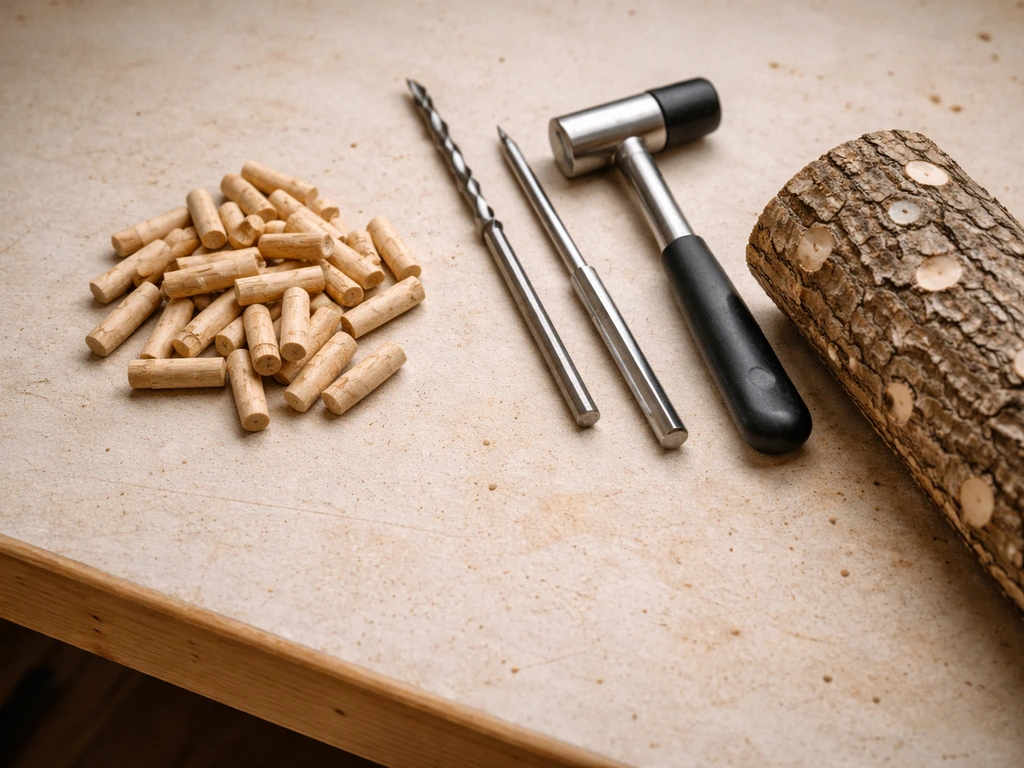
Plug spawn is the easiest format for beginners. These are small wooden dowels, typically made from sterilized birch, that are fully colonized with maitake mycelium. You drill holes in your log, hammer the plugs in, and seal them with cheese wax or beeswax. Fungi Perfecti sells plug spawn in packs of around 100 or 1,000 dowels. North Spore sells a complete Organic Hen of the Woods Log Kit that includes 100 plugs, a correctly sized drill bit, and sealing wax, which is genuinely the easiest way to get everything in one order. For most home growers doing two to four logs, a 100-count bag is plenty.
Sawdust spawn
Sawdust spawn colonizes logs faster than plugs because it has more surface area contact with the wood. The Wisconsin Mycological Society [describes a maitake log approach using sawdust spawn](https://www. wisconsinmycologicalsociety. org/growing-edible-mushrooms.
html) packed into drilled holes or sandwiched between log sections that have been sterilized first. This method gives quicker colonization but requires more prep work, including pressure-cooking or steaming the log sections to reduce competition from other fungi before inoculation. University of Wisconsin, Madison Division of Extension provides step-by-step instructions for using [sawdust spawn](https://forestry. extension.
wisc. edu/learn/grow-and-gather/mushrooms-on-logs-using-sawdust-spawn/) on logs, including a recommended inoculation pattern and general prep and inoculation steps. For experienced growers comfortable with a pressure cooker setup, sawdust spawn on sterilized oak sections is a solid route. For beginners, stick with plug spawn on fresh-cut logs.
What about spores?
Skip spore-based approaches for maitake unless you are doing serious laboratory work. Spores require sterile culture work to get from spore to usable mycelium, and maitake is notoriously slow in culture. Buy fully colonized spawn and save yourself six months of frustration.
Choosing wood, preparing logs, and inoculating
Wood species: oak is non-negotiable
Maitake will only fruit reliably on oak. North Spore is explicit about this on their log kit page. Red oak, white oak, and burr oak are all good choices. Avoid softwoods entirely, and do not bother with other hardwoods like maple or beech hoping for similar results.
If you want the full process and timing details for beech mushrooms, follow our guide on how to grow beech mushrooms. If you cannot source oak, maitake is the wrong project right now. Other species like chicken of the woods or honey mushrooms tolerate a wider range of wood hosts if you need flexibility.
For help choosing the right wood, timing, spawn, and fruiting triggers, see our guide on how to grow chicken of the woods mushrooms Other species like chicken of the woods or honey mushrooms. If you are curious about other similar species, also see our guide on how to grow chicken of the woods mushrooms.
Log sizing and timing
Cut logs 3 to 4 feet long and 4 to 8 inches in diameter. Freshly cut logs inoculate better than seasoned or dried wood. Aim to inoculate within two to four weeks of cutting, while the wood is still holding moisture but before competing fungi have established themselves. Late winter to early spring is ideal timing in most climates: the trees are dormant, the wood is fresh, and you can get your logs set up before warm weather brings in aggressive mold and competitor fungi.
The inoculation process, step by step
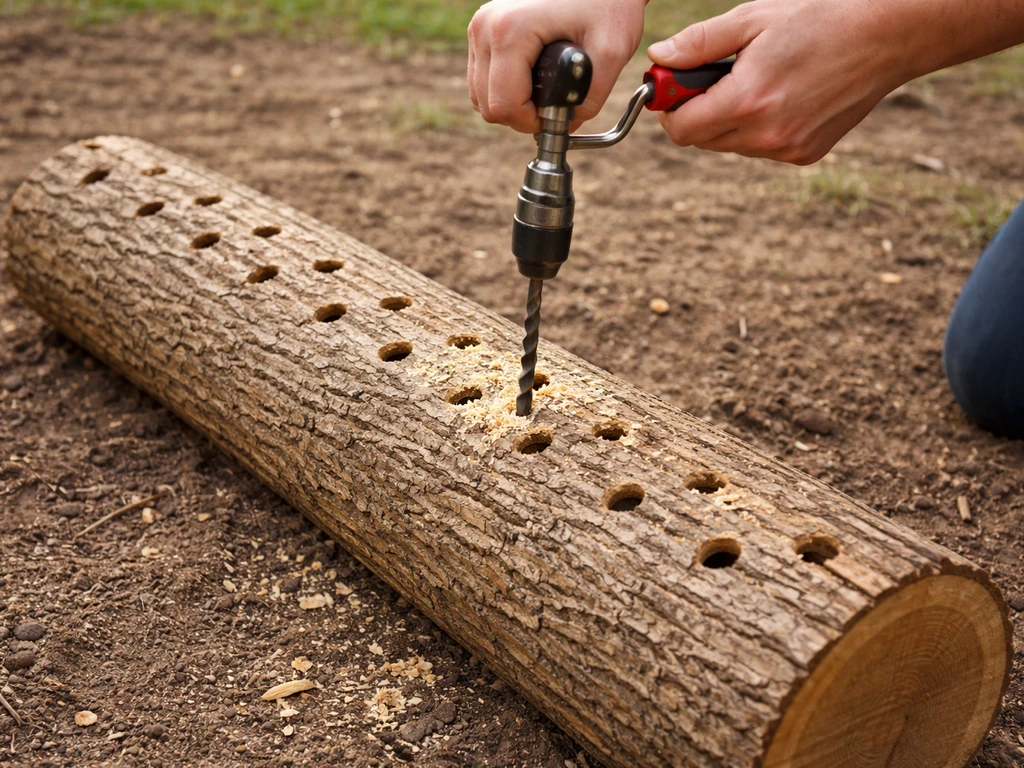
- Drill holes in a diamond pattern along the length of the log. Space holes about 4 to 6 inches apart in rows, with rows offset from each other. Use a 5/16-inch bit for standard plug spawn.
- Insert one plug per hole and tap it flush with the surface using a hammer or rubber mallet. The plug should sit just at or slightly below the bark surface.
- Seal each hole with melted cheese wax or beeswax applied with a small brush or dauber. This keeps competing mold spores out while the mycelium establishes. Fungi Perfecti notes sealing is not strictly required but significantly improves success rates, especially in humid outdoor environments.
- Label your logs with the date and spawn source so you can track colonization timelines.
- Move logs to your incubation site immediately after inoculation.
The buried block method
MycoHaus specifically recommends burying an inoculated oak section under about an inch of soil for maitake cultivation, reflecting its natural habit of growing from buried roots and the base of trees. If you go this route, inoculate your log sections with sawdust spawn, then bury them in a shaded bed with good drainage. You can also use sawdust as a spawn base, which is a common way to speed up colonization on oak logs sawdust spawn. This mimics the conditions maitake encounters in the wild and often produces very vigorous fruiting once colonization is complete.
Environmental conditions and how to trigger fruiting
Incubation phase
During colonization, maitake mycelium grows best at 73 to 75°F. Keep logs out of direct sunlight, in a shaded spot with good airflow. Outdoor logs should be stacked or laid in a shaded area and kept moist but not waterlogged. Indoors, a basement or garage at room temperature works fine. This phase takes the longest: figure 9 to 12 months minimum for plug-spawn logs to fully colonize before they are ready to fruit.
Fruiting triggers
Outdoor logs typically fruit in late summer through fall when temperatures drop and humidity rises naturally. That seasonal temperature shift is a key trigger. If you are forcing fruiting indoors from a kit or colonized block, the targets are: humidity at 80 to 90% RH, CO2 below 1,000 ppm (meaning you need regular fresh air exchange), and indirect or ambient light. No grow lights required. A humidity tent made from a clear plastic bag with small holes, misted two to three times daily, handles the humidity side. Keep the kit at indoor room temperature, typically in the low-to-mid 70s Fahrenheit.
For outdoor logs, you can encourage a flush by soaking logs in cold water for 12 to 24 hours in late summer or early fall. This temperature shock mimics autumn rain and can kick-start fruiting, similar to the forced-fruiting induction used with shiitake logs. It is not guaranteed with maitake, but it is worth trying once your logs are fully colonized.
Harvesting, handling, and what to expect for yield
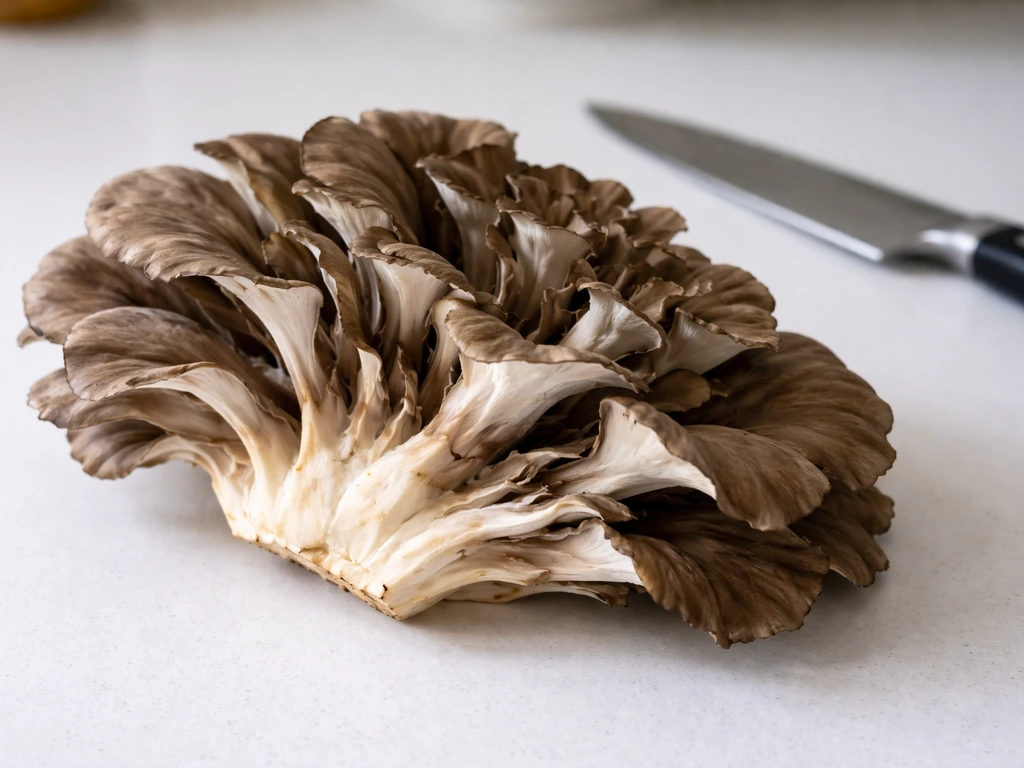
Maitake fruits as large, overlapping fronds with a distinctive grayish-brown top and white underside. Harvest before the edges start to turn white or curl upward, which signals over-maturity. Cut or twist the entire cluster from the base rather than picking individual fronds. A single mature fruiting body can weigh several pounds in a good season from an established outdoor log or stump.
From an indoor kit, expect one solid flush and possibly a second smaller one. Yields vary by kit size, but a typical commercial block might produce 4 to 8 ounces on the first flush. From outdoor logs in year two or three, individual flushes of 1 to 2 pounds per log are realistic, and a well-sited buried oak block can produce significantly more. Fresh maitake keeps in the refrigerator for about a week wrapped loosely in paper, or you can dry it at low heat for long-term storage.
When things go wrong: troubleshooting common problems
No visible growth or mycelium after several months
First, check your wood species. If you used anything other than oak, that is almost certainly the problem. Maitake mycelium will colonize slowly or fail entirely on incompatible wood. Second, check log moisture: logs that dried out during incubation will stall. Soak them in water for 12 hours and move them somewhere shadier and more humid. Third, if you used plug spawn, confirm the plugs were not dead on arrival. Spawn should look white and fluffy, not gray or slimy. Buy from reputable suppliers and check shipping conditions, especially in summer heat.
Green or black mold contamination
Green mold (Trichoderma) is the most common contamination issue. It outcompetes maitake mycelium when logs were not sealed properly, when wood was too old or already compromised, or when humidity is too high without adequate airflow. Seal all inoculation holes with wax immediately after plugging. If green mold appears on the log surface, it does not always mean the interior colonization is dead. Wipe the exterior with a damp cloth, improve airflow, and monitor. Sawdust spawn methods that use pre-sterilized log sections dramatically reduce this risk, which is why the Wisconsin Mycological Society approach includes sterilization as a step.
Colonized logs that will not fruit
This is frustrating but common with maitake specifically because it is a slow fruiter. If your logs have been colonizing for over a year and show no fruiting, try a cold-water soak followed by moving the logs to a spot with better temperature fluctuation. Logs sitting in a consistently warm environment never get the thermal cue to switch from colonization to fruiting mode. Seasonal temperature swings of 10 to 15 degrees are helpful. If you are in a region with a mild climate, the cold-water shock method is your best tool.
Slow fruiting from an indoor kit
If a kit is not pinning after two weeks in fruiting conditions, the most common culprit is humidity. Most home environments run at 30 to 50% RH, which is far too dry. You need 80 to 90% RH, and you cannot hit that with just occasional misting in an open room. Build a simple humidity tent: a large clear plastic bag or a plastic storage tote with holes drilled for airflow.
Mist the inside walls, not the block directly, two to three times a day. Temperature is the second variable: make sure the kit is not sitting below 65°F or above 80°F. And remember: kits can be stored in the fridge for up to three months. If you just received it and conditions are not right yet, hold it cold rather than trying to fruit it in a bad environment.
Wrong wood: can you recover?
If you inoculated with the wrong wood species and nothing is happening after six months, the honest answer is: start over with oak. If you want a complete, wood-based plan, follow our guide on how to grow mushrooms in wood chips start over with oak. Maitake's specificity for oak is not a preference, it is a biological requirement. Do not waste another year waiting on a log that will not produce. Source fresh oak, order new plug spawn, and restart. The good news is that plug spawn is inexpensive enough that restarting is not a major financial setback.
Practical materials list to get started today
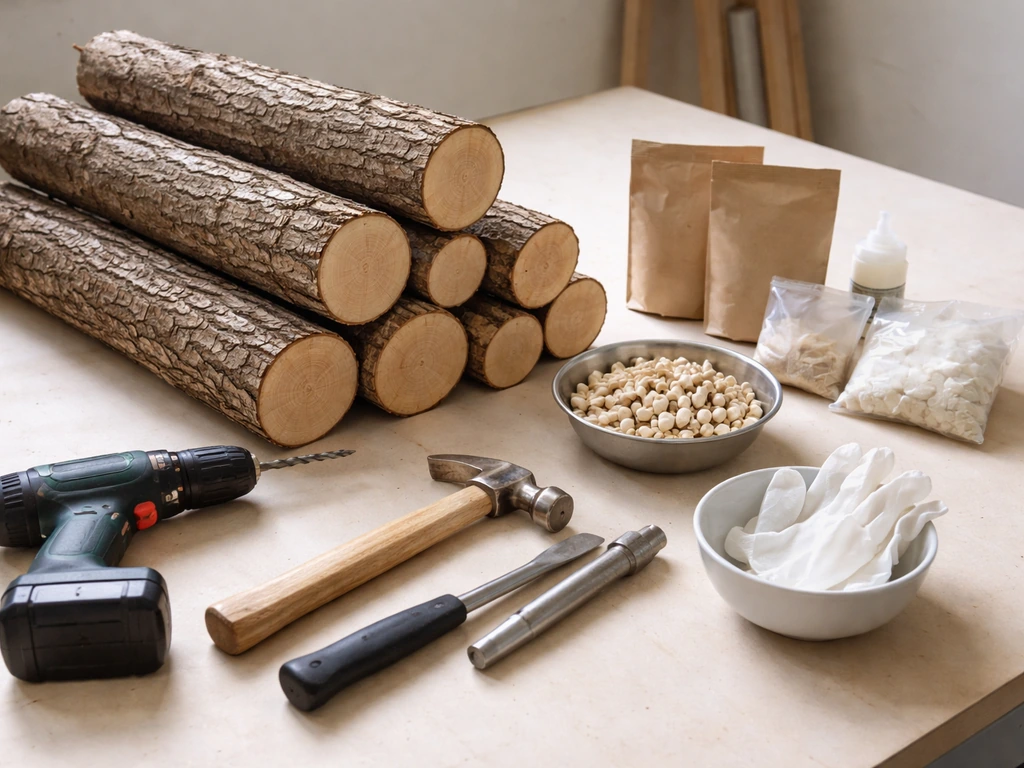
- Fresh-cut oak logs, 3 to 4 feet long, 4 to 8 inches diameter (cut within the past month)
- Maitake plug spawn or a complete log kit from North Spore or Fungi Perfecti
- 5/16-inch drill bit (included in North Spore's kit)
- Cheese wax or beeswax plus a small brush for sealing
- A rubber mallet for tapping plugs
- Optional: a clear plastic bag or humidity tent for indoor fruiting
- A spray bottle for misting (indoor fruiting only)
- A hygrometer to monitor humidity (indoor fruiting only)
Hen of the woods is not a mushroom for the impatient, but it is absolutely achievable at home if you commit to the right wood and give it real time to colonize. Chestnut mushroom cultivation is a different playbook, but if you are planning multiple species at home, it is worth comparing the wood, moisture, and timing considerations before you start how to grow chestnut mushrooms. Set your outdoor logs up this spring, grab a kit to satisfy the immediate craving, and check back on those logs next fall.
If you want to focus specifically on honey mushrooms, the same general log or block approach applies, but the wood and timing details differ, so check our guide on how to grow honey mushrooms. If you want a step-by-step plan and the key conditions, see our guide on how to grow wood ear mushrooms logs up this spring. That combination covers both timelines and teaches you far more than either approach alone.
FAQ
Can I keep using the same oak log after the first harvest, or do I need to start over?
Yes, you can re-use a log after it finishes fruiting, but it is not guaranteed. For oak logs that have produced well, you can keep the log outdoors in shade and keep it naturally damp. Expect reduced vigor over time, and if you used plug spawn on a small log diameter, you may get fewer future flushes than a thicker, well-colonized buried section.
What causes a kit to grow but not fruit (no pins), and what should I check first?
For indoor kits, do not use full sunlight or a hot grow area. Aim for indirect ambient light, plus stable temperatures, and provide fresh air regularly to keep CO2 under control. If the block looks healthy but never pins, check RH first, then make sure the kit is getting airflow rather than being sealed in a fully closed container.
My indoor humidity seems fine, how do I know if it is actually high enough for maitake?
Maitake can tolerate normal indoor air, but it usually cannot reach 80 to 90% RH with occasional misting. Use a humidity tent and mist the tent walls, not the block directly. Also, keep the kit in the low-to-mid 70s F, avoid placing it next to heaters, and do not let it sit below 65 F.
Can I inoculate with oak that is already cut and stored, or does it have to be fresh?
Use the condition of the wood and the timeline to decide. Fresh-cut oak inoculates best within a few weeks, because competing fungi have less time to establish. If you already have older oak, you can still try, but you should expect slower colonization and a higher chance of failure compared with properly timed fresh wood.
Should I do the 12 to 24 hour cold soak even if I think my logs are not fully colonized yet?
Cold-water soaking is mainly an induction trigger, not a rescue for stalled colonization. Only try a soak when the logs are fully colonized (you typically see strong, extensive internal growth for months and then wait for seasonal cues). If your logs are dry, green mold is active, or spawn was likely dead, soaking often wastes time.
If I see green mold, is there any way to save the log, or should I discard it?
Green mold on the outside does not automatically mean the whole log is dead, but it is a warning sign. Seal was probably delayed or airflow was poor. Wipe exterior mold off, improve airflow, and monitor for new growth. If fruiting never starts after correcting conditions and several more months pass, assume the interior may have lost the competition.
Why do I keep getting failure when I inoculate in warm months?
If you inoculated during summer or on wood that was already dry or compromised, you may not get a strong internal race before competitors move in. The fix is mostly preventative: use fresh oak, inoculate soon, seal promptly, and keep colonization shaded with airflow. For existing logs, focus on moisture and temperature stability rather than repeatedly disturbing them.
I used a hardwood other than oak, can maitake still work on it?
Do not confuse maitake with species that tolerate more hosts. Maitake is highly specific to oak, red or white oak being the typical acceptable choices. If you used maple, beech, or other hardwoods, do not expect oak-like results, even if the log stays moist for a long time.
Plug spawn or sawdust spawn, which one is better for a beginner?
Choose based on your tolerance for prep time and your comfort with sanitation. Plug spawn is lower-risk and simpler, but slower. Sawdust spawn can colonize faster, but it requires more sterilization steps to reduce competition. If you are new, plug spawn is the more forgiving decision.
What is a good way to stagger projects if I want mushrooms this year but also want long-term outdoor production?
Yes, but do it strategically. For example, if you are setting up outdoor logs in spring but want to fruit something sooner, run a kit indoors now and start your oak project outdoors at the same time. That way, you avoid waiting a full year on the outdoor timeline to learn how maitake fruiting looks.