
You can grow chicken of the woods at home, but you need to set realistic expectations upfront: this is a wood-decay fungus that wants a big, dense hardwood substrate, colonizes slowly over months, and does not respond well to the fruiting-block shortcuts that work beautifully for oyster or shiitake mushrooms. The most reliable home method is inoculating hardwood logs with plug or sawdust spawn and letting the mycelium do its slow work outdoors, though a dedicated indoor setup using large hardwood blocks or supplemented sawdust bags is possible if you can control moisture and fresh air carefully. Either way, you're looking at 6 to 18 months from inoculation to your first flush, so the best time to start is right now.
How to Grow Chicken of the Woods Mushrooms at Home
Marcus Holloway
30 Apr 2026
Quick reality check: what chicken of the woods actually needs
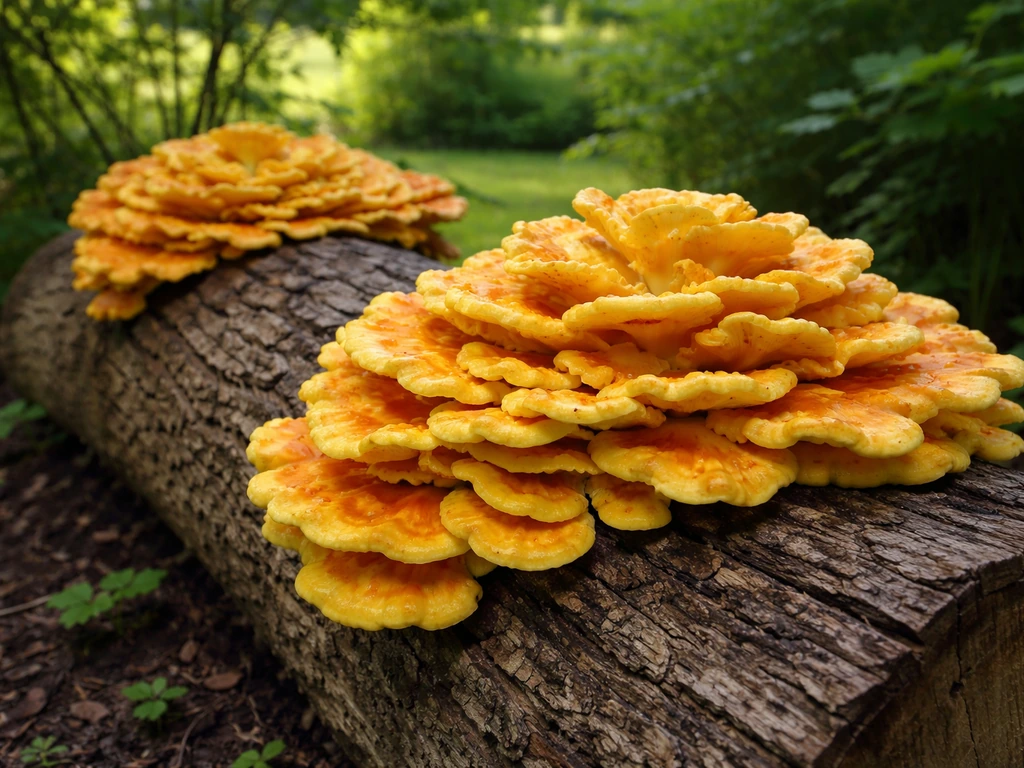
Chicken of the woods refers primarily to Laetiporus sulphureus and its close relatives, including Laetiporus cincinnatus (the white-pored version often found growing from the base of trees rather than up the trunk). Both are wood-rotting polypores, meaning their mycelium breaks down the lignin inside hardwood over a long period before producing those dramatic orange and yellow shelf fruiting bodies. This biological reality is the single most important thing to understand before you buy spawn or build a setup.
Unlike oyster mushrooms that can colonize a straw block in two weeks and fruit in three, Laetiporus is working through dense hardwood tissue. It needs time, moisture, and a substrate it can actually colonize fully. Shortcuts tend to produce contamination, not mushrooms. That said, the actual hands-on work per day is minimal once you get started. The waiting is the hard part, not the labor.
- Temperature for colonization: 55 to 75°F (13 to 24°C) is the comfortable range; optimal fruiting tends to happen in the 60 to 75°F window
- Humidity: logs or blocks need to stay moist throughout colonization; fruiting benefits from 85 to 95% relative humidity
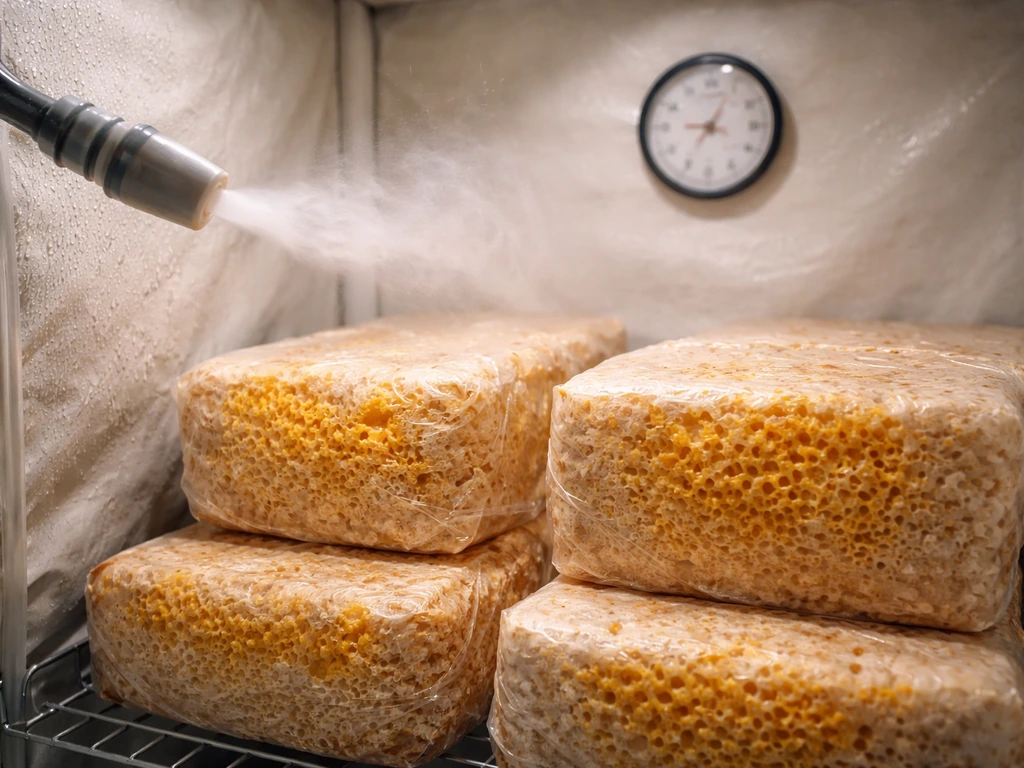
- Fresh air: Laetiporus needs good oxygen exchange, especially during fruiting; CO2 buildup causes stunted, deformed shelves
- Light: indirect natural light or a 12-hour ambient light cycle during fruiting is sufficient; no special grow lights needed
- Substrate: hardwood is non-negotiable; oak, cherry, apple, and sweet chestnut are preferred hosts
One honest note on difficulty: chicken of the woods is consistently rated as one of the more challenging species for home growers. It is not a beginner's first mushroom. If you are brand new to cultivation, getting comfortable with oyster mushrooms or shiitake first will give you the skills and confidence to tackle Laetiporus without as much frustration. That said, plenty of first-time growers succeed with logs, especially outdoors, because the process is forgiving in ways that indoor fruiting bags are not.
Indoor setup: yes, you can grow it indoors, but here's what that means
Growing chicken of the woods fully indoors is possible, and some growers do it successfully using large hardwood sawdust blocks or supplemented hardwood substrate bags. However, calling it "easy" would be misleading. The main challenge indoors is that you cannot rely on natural seasonal humidity swings to trigger fruiting, and the species wants a lot of fresh air at fruiting time, which works against keeping humidity high in a small tent or grow chamber.
Indoor environment to build
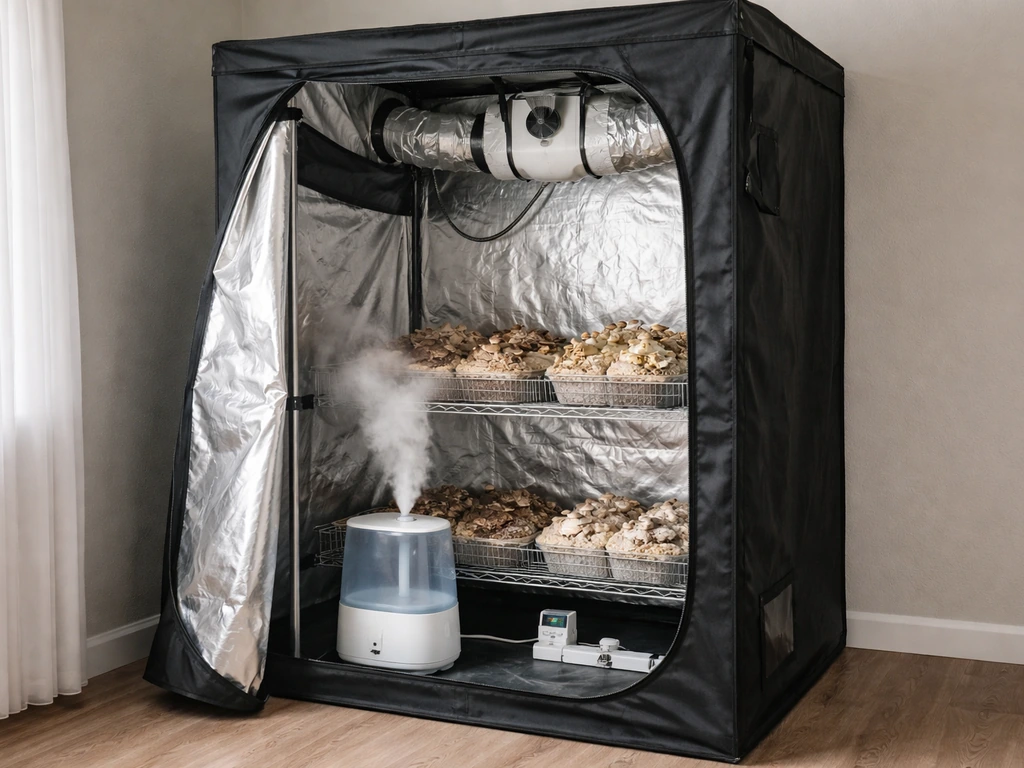
A 4x4 grow tent with an ultrasonic humidifier and an inline fan on a timer is the most practical indoor setup for fruiting Laetiporus blocks. You want to run humidity at 85 to 95% during fruiting but also allow fresh air exchanges every few hours. A simple approach: run your inline fan for 15 minutes every 3 to 4 hours to flush CO2, and run the humidifier between those cycles. A small hygrometer inside the tent will tell you if you're in the right zone.
- Grow tent: 4x4 or 4x8 if you want multiple blocks at once
- Ultrasonic humidifier: target 85 to 95% RH during fruiting
- Inline fan with speed controller and timer: 15-minute fresh air exchanges every 3 to 4 hours
- Hygrometer and thermometer: keep temperature at 60 to 75°F during fruiting
- Indirect lighting: a basic LED on a 12-hour timer gives enough light cues without heat stress
During colonization, you do not need the tent at all. Colonizing bags or logs just need a stable, warm, dark location like a spare closet or basement shelf. Bring them into the fruiting tent only when colonization is complete and you are ready to initiate pinning.
Outdoor home growing: simpler and often more successful
For most home growers, an outdoor log-based setup is genuinely the easier path. You drill holes in a fresh hardwood log, pack in sawdust spawn or tap in plug spawn, seal the holes with wax, and let the log sit in a shaded, moist spot in your yard. Waxing the surface of each inoculation hole helps seal in moisture so the spawn does not dry out and also reduces contamination from competing fungi [Cornell Small Farms](https://smallfarms. cornell.
edu/projects/mushrooms/methods-of-commercial-mushroom-cultivation-in-the-northeastern-united-states/3-inoculating-logs/). If you want to expand to chestnut mushrooms too, use the same wood-focused mindset but follow species-specific substrate and fruiting triggers how to grow chestnut mushrooms. Rain, soil humidity, and seasonal temperature changes do most of the work. The downside is the long wait (often 12 to 18 months for the first flush) and the fact that you cannot fully control timing.
The upside is that your success rate is higher, your contamination risk is lower, and the flushes can be enormous.
Getting your spawn: what to buy and where
Spawn is your starting material, and for chicken of the woods you have a few formats to choose from. Plug spawn (wooden dowels colonized with mycelium) is the most beginner-friendly for log inoculation because it requires no specialized tools beyond a drill and a hammer. Sawdust spawn works well for both logs and indoor blocks, and gives faster colonization because there is more mycelium contact with the substrate. Grain spawn is typically not recommended for Laetiporus because grain does not match the wood-based substrate well and contamination rates are higher.
Spores vs. spawn
Stick with spawn, not spores, for a practical home grow. Growing Laetiporus from spores requires sterile lab technique to get cultures established, and the germination rates are unpredictable. Spawn suppliers have already done that work and give you a colonized product ready to transfer to your substrate. Reputable online suppliers (North Spore, Field and Forest Products, Fungi Perfecti, and others) sell Laetiporus sulphureus and sometimes Laetiporus cincinnatus spawn in plug or sawdust formats. Always confirm the species when ordering, since the two behave somewhat differently and may have different preferred hosts.
Strain considerations
Most suppliers offer one or two strains of L. sulphureus, so your choice will be limited. If you can find L. cincinnatus spawn, it is worth trying alongside L. sulphureus: L. cincinnatus tends to prefer root wood and stumps and may behave a bit differently on your substrate. For a first grow, order whatever your preferred supplier stocks and do not overthink strain selection.
Preparing your substrate: logs vs. indoor blocks
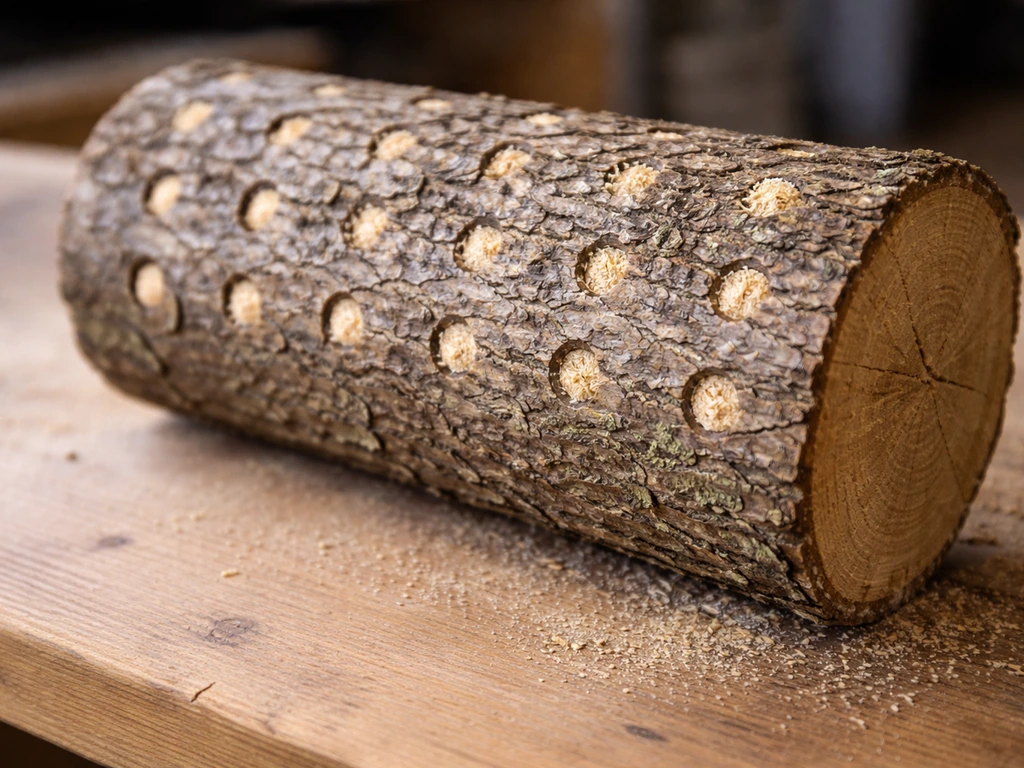
Substrate preparation is where the indoor and outdoor paths split significantly. Here is how to handle both.
Outdoor log preparation
Source fresh-cut hardwood logs that have been cut no more than 2 to 6 weeks before inoculation. Oak is the gold standard for Laetiporus, but cherry, apple, alder, and sweet chestnut all work well. Avoid conifers entirely and skip any logs that show signs of mold or competing fungal growth. Logs should be 3 to 8 inches in diameter and 3 to 4 feet long, a size that holds moisture well without becoming unmanageably heavy.
- Let freshly cut logs rest for 2 to 3 weeks so the natural antifungal compounds in the sap begin to dissipate
- Drill holes in a diamond pattern: holes every 4 to 6 inches along the length, rows staggered 2 inches apart
- Use a 5/16-inch drill bit for plug spawn, or a 12mm bit for sawdust spawn packed with a brass inoculation tool
- Pack spawn firmly into each hole so there are no air pockets
- Seal every hole with food-grade cheese wax melted and applied with a brush or dauber; this locks in moisture and prevents contamination
- Label your logs with inoculation date and species using a paint marker
Indoor hardwood block preparation
For indoor growing, you will build a supplemented hardwood sawdust block. The base is hardwood fuel pellets or hardwood sawdust (oak, maple, or cherry), hydrated to field capacity (about 60% moisture content, meaning the mix clumps when squeezed but releases no more than a few drops). A common supplemented formula adds 10 to 20% wheat bran or oat bran by dry weight to accelerate colonization, but be aware that supplementation also raises contamination risk. For Laetiporus specifically, some growers skip supplementation entirely on their first run to reduce that risk.
Mix your substrate, pack it into large polypropylene filter-patch bags (3 to 5 lb bags work well), and sterilize at 15 PSI in a pressure cooker for 2.5 hours, or pasteurize at 160 to 180°F for 3 to 4 hours if you are skipping supplementation. Let the bags cool completely to room temperature before inoculating. Inoculate with sawdust spawn under still-air or inside a flow hood if you have one, aiming for a 10 to 15% spawn-to-substrate ratio by weight.
Step-by-step growing workflow: colonization through fruiting
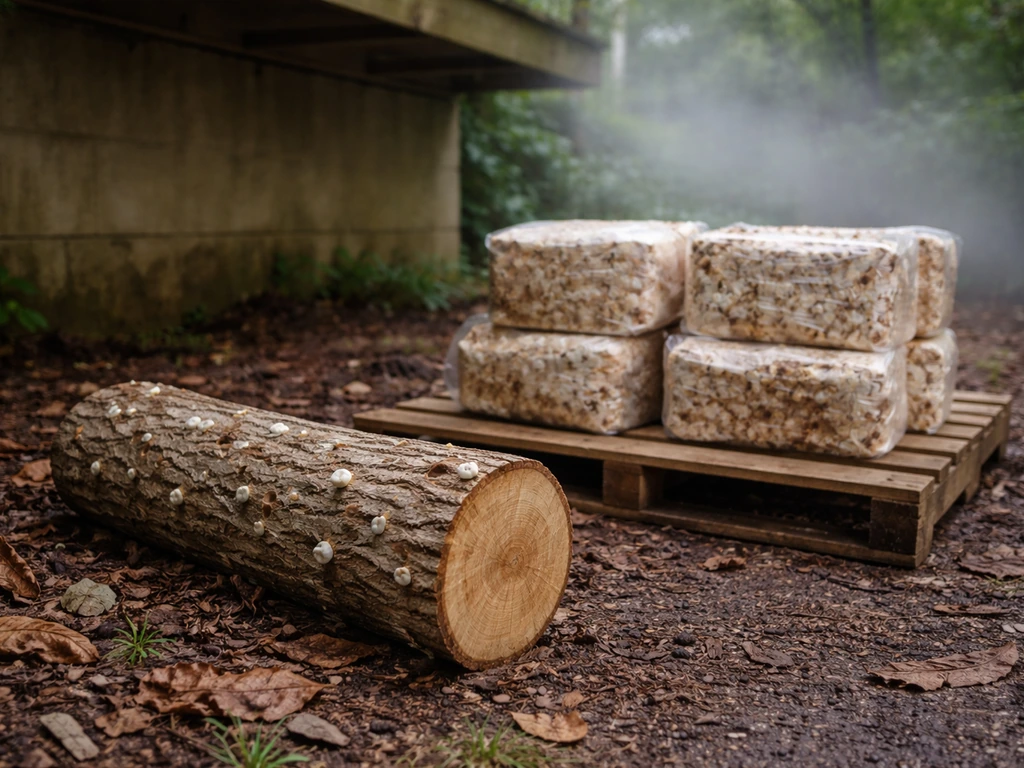
Phase 1: Colonization
For logs, place inoculated logs in a shaded, humid outdoor spot. A north-facing wall, under a deck, or inside a woodshed are all good locations. Stack logs off the ground on pallets or rails so air can circulate underneath and the ends are not sitting in standing water. Keep logs moist by soaking them for 12 to 24 hours once a month if rainfall is insufficient (less than 1 inch per week). For indoor blocks, store them in a dark space at 65 to 75°F and check weekly. White mycelium spreading through the block is what you are looking for.
| Stage | Outdoor Logs | Indoor Blocks |
|---|---|---|
| Timeline to full colonization | 12 to 18 months | 2 to 4 months |
| Temperature during colonization | Ambient (55 to 75°F ideal) | 65 to 75°F stable |
| Moisture management | Monthly soaking if dry; rain handles the rest | Sealed bags retain moisture; no active watering |
| Contamination risk | Low on intact logs | Moderate to high on supplemented blocks |
| Signs of progress | White mycelium at inoculation points and cut ends | White mycelium spreading visibly through bag |
Phase 2: Initiating fruiting
Laetiporus fruits when it experiences a trigger: typically a drop in temperature of 10 to 15°F combined with increased moisture. Outdoors, this happens naturally in late summer through fall. Indoors, you replicate it by moving your fully colonized block into the fruiting tent, dropping the temperature slightly if possible, and beginning your humidity and fresh air exchange cycle. For logs, a cold soak in water for 12 to 18 hours can shock the mycelium into pinning. Lay the log back in its spot afterward and watch the ends and sides over the following 2 to 3 weeks.
Phase 3: Fruiting body development
Pins appear as small orange or yellow nubs, usually at the ends of logs or at wound points. They grow quickly once they appear, sometimes doubling in size in 24 hours. Maintain humidity at 85 to 95%, keep fresh air exchanging regularly, and do not let the substrate dry out. From pinning to harvest-ready is typically 1 to 2 weeks depending on temperature. The shelves go through a color progression from bright orange-yellow when young to paler and more crumbly as they mature. Harvest before that fading stage.
Harvesting and what to do after the first flush
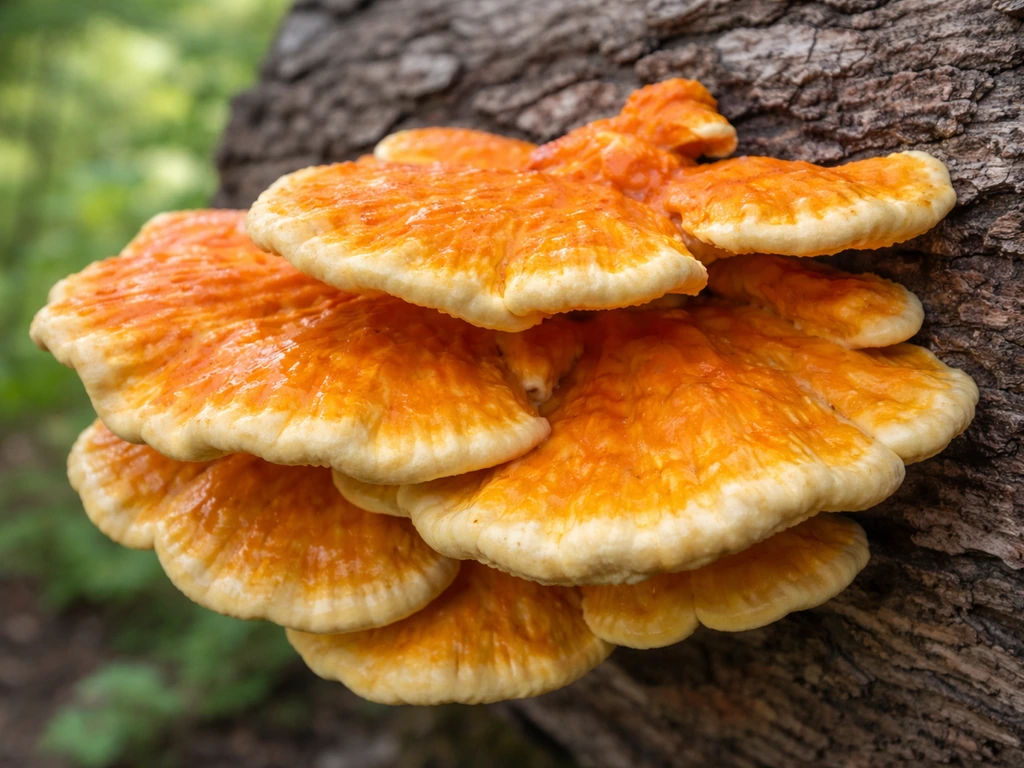
Harvest chicken of the woods when the shelf edges are still tender and the color is vibrant orange and yellow, before the outer margins start to lighten significantly or the texture turns brittle. Use a sharp knife to cut the shelf close to its base, leaving the attachment point intact on the log or block. Avoid twisting or pulling, which can damage the mycelium underneath and reduce future flushes. A fresh flush at harvest can weigh anywhere from a few ounces on a small log to several pounds on a well-colonized outdoor log.
After harvesting, the substrate needs recovery time. For outdoor logs, move them back to their shaded spot, soak them again if needed, and leave them alone. A second flush may appear a few weeks later or in the following season depending on how much energy remains in the wood. Healthy outdoor logs can produce mushrooms for 3 to 5 years before they are fully spent. For indoor blocks, remove the harvested stub, mist the block lightly, and return it to fruiting conditions. Expect one or two more flushes from an indoor block before it is exhausted.
Fresh chicken of the woods stores well in the refrigerator for up to a week. For longer storage, cook and freeze it, or slice and dehydrate at 95 to 115°F until fully dry, then store in an airtight container. Dried Laetiporus can be rehydrated in warm water before cooking.
Troubleshooting common problems
No growth or visible mycelium after months
For logs, the most common causes are logs cut too long before inoculation (the antifungal compounds are still active), logs that dried out completely, or spawn that was dead when it arrived. Virginia Tech Extension also notes that if logs were stored too long and dried out, you may need to [re-wet or soak them to restore the moisture](https://www. pubs. ext.
vt. edu/content/pubsextvt_edu/en/ANR/ANR-102/ANR-102. html) for successful inoculation. Check the spawn before inoculating: it should smell earthy and pleasant, not sour or ammoniated.
If you suspect the spawn was the problem, re-inoculate a new log. For indoor blocks, no visible growth after 3 to 4 weeks usually means either the block was too hot during sterilization and killed the spawn, or contamination moved in faster than the mycelium. Inspect closely for green, black, or pink patches that signal mold.
Contamination
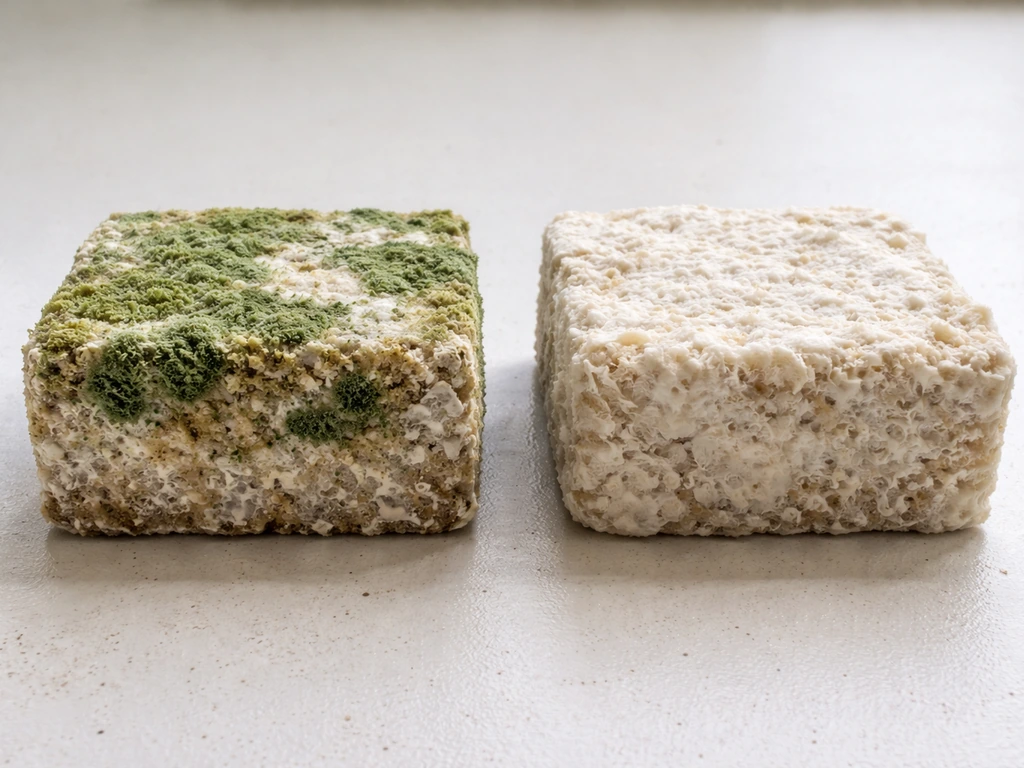
Green mold (Trichoderma) is the most common contaminant on supplemented blocks. If you see green patches, isolate that block immediately in a sealed bag and dispose of it away from your other grows. Contamination rarely self-resolves. Prevent it by sterilizing thoroughly, inoculating in clean conditions, and not over-supplementing your substrate. On logs, green mold occasionally appears at inoculation points that were not properly sealed with wax. Re-apply wax to any unsealed holes and monitor.
Slow colonization
Laetiporus is inherently slow compared to most cultivated species, so some patience is required. But if colonization has stalled completely on an indoor block (no visible spread for more than 4 to 6 weeks), check temperature. Blocks colonizing below 60°F or above 80°F will slow down significantly. Move the block to a warmer, more stable location. For logs, slow colonization is normal and expected; there is nothing to do except keep them moist and wait. how to grow mushrooms in wood chips.
Pins appear but abort before developing
Aborted pins are almost always caused by low humidity, too much CO2, or a sudden temperature spike. If your pins are developing as small nubs and then shriveling, check your hygrometer first. If humidity is below 80%, increase misting frequency. If humidity looks fine, look at ventilation: poor air exchange lets CO2 build up and aborts developing pins. Add more frequent fresh air exchanges and see if the next round of pins develops further.
Woody or tough texture on harvested mushrooms
Harvesting too late is the culprit here. Once the shelf edges start to pale and the cap surface becomes chalky or crumbly, the texture has already passed peak edibility. Watch your logs and blocks closely during the fruiting window and harvest earlier than you think you need to. Young, bright shelves with a tender edge are at their best.
Your next steps to start today
The most useful thing you can do right now is order spawn and source your logs or substrate materials so you can inoculate within the next few weeks. To learn the detailed indoor and outdoor steps, see our guide on how to grow beech mushrooms.
April and May are excellent times to start: temperatures are warming, hardwood trees have recently been pruned (a good source of fresh logs), and you have the whole summer for colonization to progress before fall fruiting conditions arrive. If you are going the outdoor log route, a single fresh oak log and a bag of plug spawn is all you need to get started for under $30.
For an indoor setup, budget for filter-patch bags, sawdust or fuel pellets, and a basic grow tent if you do not already have one.
If you enjoy the log-inoculation method, it translates directly to other wood-loving species. Hen of the woods (Grifola frondosa) and honey mushrooms are two others that thrive on similar hardwood substrates and outdoor setups, so the skills you build here carry over. If you want a similar long-term wood-based approach, see our guide on how to grow hen of the woods mushrooms.
For growers who want to explore sawdust-based indoor cultivation further, learning to grow with wood chips or dowel-based methods is a natural next step. If you want a closer look at the process, see our guide on how to grow mushrooms in wood chips wood chips or dowel-based methods. If you want the same kind of hands-on approach for how to grow wood ear mushrooms, the key ideas are clean spawn, the right wood-based substrate, and steady moisture and ventilation. Wood ear mushrooms also grow best on hardwood-based materials, so you will want to focus on clean spawn, consistent moisture, and good fresh-air exchange how to grow wood ear mushrooms.
The fundamentals are the same: clean spawn, appropriate substrate, moisture control, and patience.
FAQ
Can I grow chicken of the woods on softwoods like pine or fir if I can’t find oak?
No, conifers are a bad fit. Laetiporus sulphureus is a wood-decay fungus that does best on dense hardwood, and softwoods tend to either not colonize well or become dominated by competing organisms. If hardwood is scarce, broaden to other known hardwood options like cherry, apple, alder, or sweet chestnut rather than switching to pine or spruce.
How do I know whether my log is the right kind of “fresh” wood for inoculation?
Aim for logs cut within about 2 to 6 weeks of inoculation. If you wait longer, antifungal compounds and drying effects can reduce successful takeover, even if the log looks fine on the outside. Also avoid logs that show visible fungal growth already, because the existing competitors can race your spawn.
What’s the best way to prevent my indoor supplemented blocks from contaminating?
Limit supplementation if it’s your first attempt, sterilize thoroughly, and inoculate only when conditions are calm and clean (still-air method with careful handling, or use a flow hood if you have one). A practical decision aid is to start with non-supplemented pasteurized blocks or low-bran levels, then only increase supplementation after you’ve had one successful run.
My indoor blocks look colonized, but I’m not getting pins. What should I check first?
Recheck the trigger conditions, humidity, and fresh air timing. Pins usually require both a moisture increase and a temperature drop, plus frequent fresh air exchanges to prevent CO2 buildup. If humidity is in the right range but pins stall, focus on ventilation intervals (for example, more frequent fan cycles) before you change temperature repeatedly.
Is it normal for colonization to stall on logs?
Yes, slow progress is common. Unlike fast fruiting species, Laetiporus can take months to fully colonize, and outdoor weather drives the pace. The useful edge case is temperature extremes for indoors: if colonization is happening very slowly (for example, no spread for 4 to 6 weeks indoors), verify the block is staying roughly within 65 to 75°F and not outside 60 to 80°F.
Should I re-soak or re-wet logs right after inoculation and after it rains?
Don’t overdo it. After inoculation, you can keep logs in a consistently moist shaded area and soak periodically (such as monthly) if rainfall is low. After rain, evaluate whether the logs stayed damp without being in standing water, since prolonged saturation at the base can encourage rot or competing fungi rather than your mycelium.
Why are my pins aborting into tiny shriveled nubs?
The most common causes are low humidity, too much CO2, or a sudden temperature spike. A quick sequence is to check humidity readings first, then confirm ventilation is running on schedule. If humidity looks adequate, increase fresh air exchange frequency before making big temperature changes, because CO2 buildup can happen even in a humid tent.
Can I fruit chicken of the woods more than once from the same indoor block?
Often yes, but with diminishing returns. After harvesting, you need recovery time and you should return the block to fruiting conditions for a second and sometimes a third flush. In practice, indoor blocks usually give fewer total flushes than outdoors because the energy and structure of the block deplete faster under controlled conditions.
How should I harvest so I don’t damage future flushes?
Cut the shelf close to its base with a sharp knife, avoid twisting or pulling, and leave the attachment point intact. Damage at the base can tear the underlying mycelium network and reduce how well the log or block can pin again. If you harvest carefully at peak tenderness and vibrant color, you also reduce the chance of leaving over-mature growth behind.
Is it safe to eat every orange shelf I grow, including unidentified look-alikes?
Do not assume all orange polypores are edible. Chicken of the woods includes close relatives, and look-alikes exist, so you should positively identify the fungus before consuming and avoid eating any specimen with uncertainty. If you want the simplest control, buy spawn of a known Laetiporus species and keep consistent substrate and conditions, but still verify identification visually before cooking.
How do I store fresh chicken of the woods so it doesn’t go slimy?
Refrigerate promptly and aim to use within about a week. Keep it dry enough that excess surface moisture doesn’t accumulate, and use airflow in the storage container if possible. For longer storage, slice and dehydrate thoroughly, then seal in an airtight container, or cook and freeze rather than leaving it fresh for extended periods.
What should I do if my indoor blocks show green, black, or pink patches?
Treat it as contamination, isolate the affected block immediately in a sealed bag, and remove it from the rest of your grow area. Contamination rarely “fixes itself,” and spores can spread. After disposal, review sterilization and supplementation level, because green mold (often Trichoderma) is the most frequent issue on supplemented hardwood blocks.
Can I start small with one log, and will it really be worth the long wait?
Yes, one log can be a solid first project because the work is mainly drilling, sealing, and keeping moisture stable. The payoff is not immediate, expect roughly 6 to 18 months for first fruiting outdoors depending on conditions, but success on a single oak log often builds the confidence needed for scaling up and troubleshooting.