You can successfully grow mushrooms in wood chips by inoculating a moisture-corrected, pasteurized chip bed or bag with the right wood-loving spawn, then giving the mycelium time to colonize before triggering fruiting with a shift in temperature and humidity. The whole process works best when you match your species to your wood type, get your moisture content right (most wood substrates want 60–65% field capacity), and stay patient: outdoor wood chip beds can take months to colonize, while indoor bags move faster, typically 3–6 weeks. The biggest mistake people make is choosing the wrong mushroom for wood chips, or skipping substrate prep entirely and wondering why nothing grows.
How to Grow Mushrooms in Wood Chips: Step by Step
Marcus Holloway
19 May 2026
Best wood chip substrate approach: wood-lovers vs general-purpose mushrooms
Wood chips are a genuinely excellent substrate, but not every mushroom treats them the same way. True wood-decomposing fungi (called lignicolous species) have evolved to break down lignin and cellulose, and they thrive on wood chips with no help needed from grain or other nitrogen-rich additives. General-purpose mushrooms like button or portobello are composters, not wood-rotters. They need processed compost and manure, and wood chips will not work for them at all. Stick to species that naturally fruit from decaying wood in the wild.
There are two broad approaches depending on whether you're working indoors or outdoors. For outdoor beds, you spread wood chips directly on the ground, inoculate with spawn, and let nature do most of the work over months. For indoor growing, you pack chips (often mixed with a small amount of bran or sawdust to boost nitrogen) into bags or bins, pasteurize or sterilize them, and inoculate under cleaner conditions. Both approaches work, but they suit different species and timelines.
Choosing the right mushroom species for wood chips
This is honestly the most important decision you make. Get the species-substrate match right and everything else is much more forgiving. For a reliable harvest of chicken of the woods mushrooms, focus on the right wood type and moisture, then use a strong fruiting trigger with plenty of fresh air. Get it wrong and you're fighting biology from day one.
Species that love wood chips
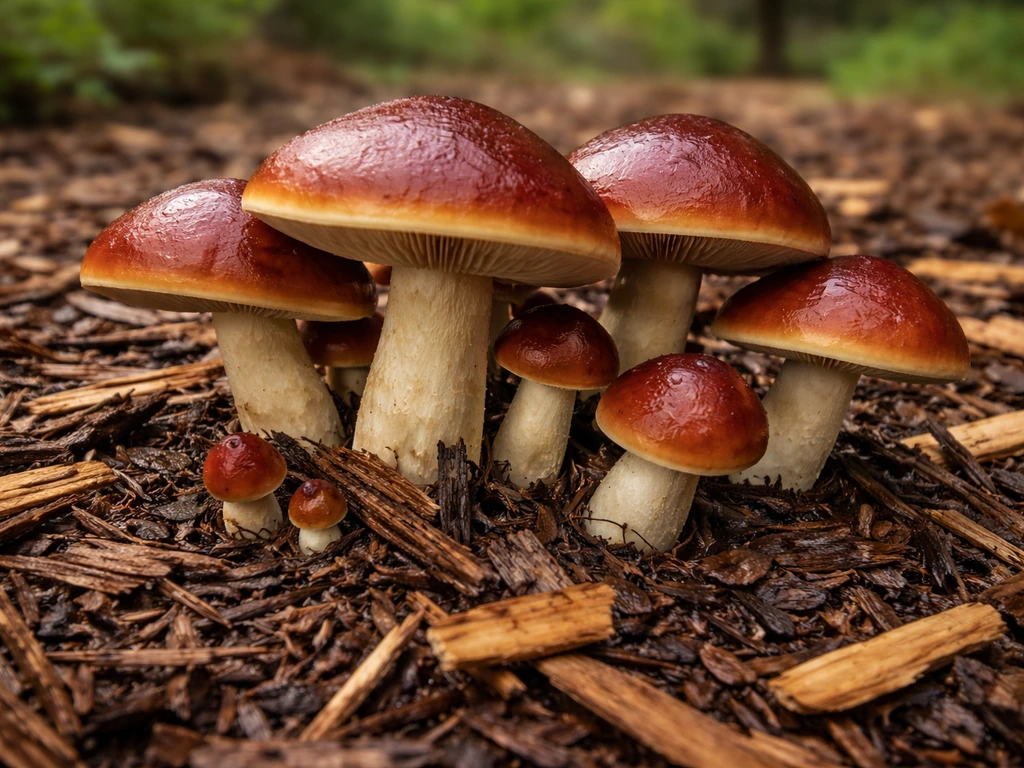
- Wine cap (Stropharia rugosoannulata): the single best beginner choice for outdoor wood chip beds. It colonizes aggressively, handles competition well, and produces large, beautiful burgundy-capped mushrooms. Beds as shallow as 4–6 inches of chips will work.
- Oyster mushrooms (Pleurotus species): fast colonizers that do great in pasteurized chip bags or bins indoors. Blue, pink, and golden oysters all work. They're forgiving and fruit prolifically.
- Shiitake (Lentinula edodes): the gold standard for hardwood logs and blocks, and perfectly viable in chip/sawdust-based bags. Slower to colonize than oysters but worth the wait. Mycelial growth peaks around 22–26°C, and fruiting happens best at 15–20°C.
- Lion's mane (Hericium erinaceus): prefers supplemented hardwood blocks or chips indoors. Needs very clean conditions but rewards you with striking, meaty clusters.
- Nameko (Pholiota nameko): a fantastic species for pasteurized sawdust-bran blocks that colonizes in roughly 3–4 weeks and fruits after a thermal shock. Less commonly grown but excellent for intermediate growers.
- Honey mushrooms (Armillaria species): genuinely wood-loving outdoor species that fruit from buried wood and chip beds. They take patience but naturalize beautifully in a garden setting.
- Hen of the woods (Grifola frondosa) and chicken of the woods (Laetiporus species): both are wood-decay fungi that can be cultivated on hardwood chips or logs outdoors, though they're more challenging and slower than wine cap or oyster.
Species to avoid on wood chips
- Button, cremini, and portobello mushrooms (Agaricus bisporus): composters, not wood-rotters. They will not colonize wood chips.
- Morels: mycorrhizal and not yet reliably cultivated in controlled conditions. Skip for now.
- Chanterelles: also mycorrhizal and partner with tree roots. Wood chips alone won't work.
- Any mushroom labeled 'grain spawn only' or sold for grain-based kits: these are typically bred for sterilized grain substrates and won't compete well in a wood chip environment.
If you're also interested in growing wood ear mushrooms or beech mushrooms, both are viable on wood-based substrates indoors using similar bag/block methods described below. Sawdust-based cultivation (a related approach) is worth exploring if you want to work with finer particle sizes, as it gives the mycelium more surface area to colonize. If you want a sawdust-based method specifically, you can use the same core steps of preparing the substrate and matching the right species, just with finer particles Sawdust-based cultivation.
Preparing wood chips for colonization
Wood type matters
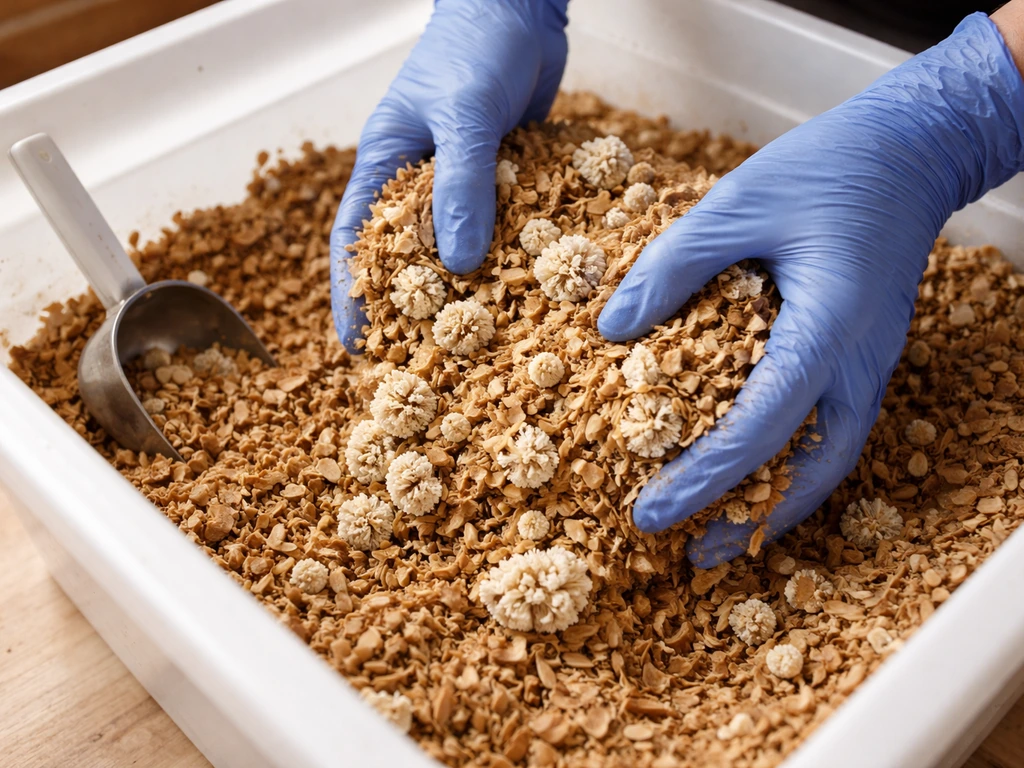
Hardwoods like oak, maple, alder, beech, and fruit woods are ideal for most edible species. Avoid aromatic softwoods like cedar, pine, and eucalyptus, as their oils are antifungal and will inhibit or kill your mycelium. Fresh chips from a tree service are often free or cheap and work well, but if they're very fresh (green), let them rest in a pile for a few weeks to off-gas any volatile compounds before using them.
Getting moisture right
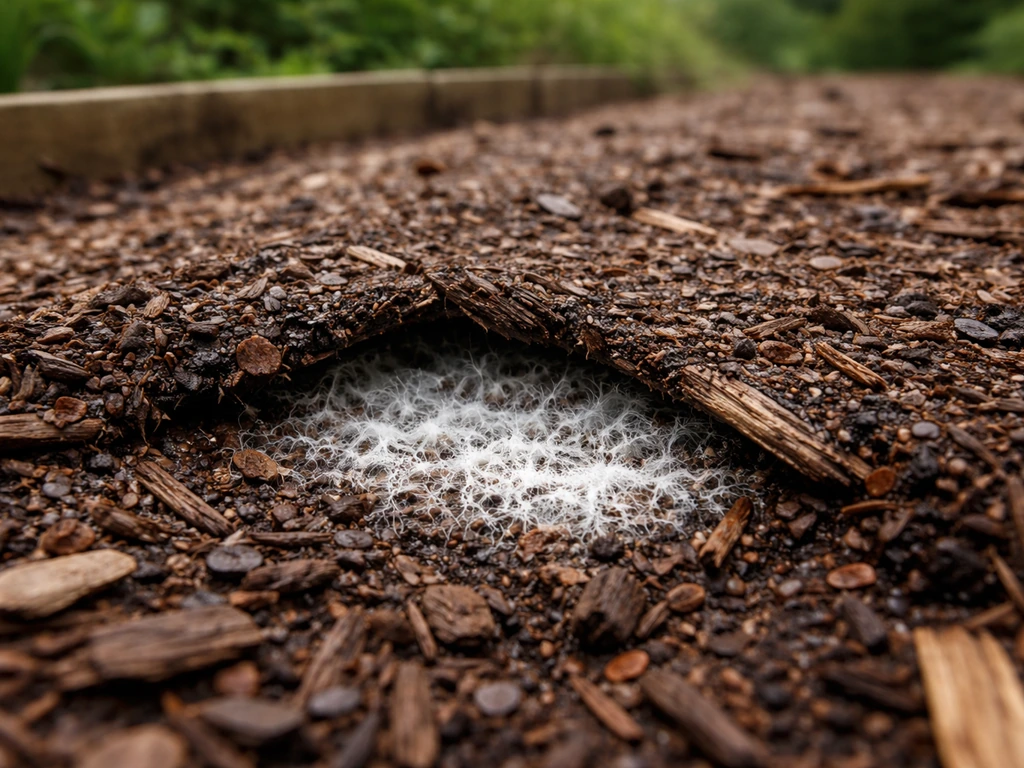
Target field capacity: when you squeeze a handful of prepared chips firmly, only a few drops of water should come out. Too dry and mycelium stalls; too wet and you create an anaerobic, contamination-prone mess. For shiitake blocks specifically, optimal substrate moisture sits around 35–45% by weight. For outdoor wine cap beds, the University of Minnesota recommends moistening chips for at least a few hours before inoculating and keeping beds no deeper than 6 inches to prevent waterlogging. A simple 24-hour soak or thorough hose-down the night before inoculation is usually enough for outdoor beds.
Pasteurization vs sterilization: which one do you need?
For most wood chip cultivation, pasteurization is sufficient and far easier to do at home. The goal is to kill competing molds and bacteria without destroying everything beneficial. Heat your chips to 160–180°F (70–82°C) and hold that temperature for 1–2 hours. You can do this by pouring boiling water over chips in a sealed container, using a steam pasteurizer, or even a large stockpot with a lid. One important thing to know: the chips themselves take much longer to reach temperature than the air or steam around them. In thick substrate beds, it can take many hours for the interior to hit pasteurization temp, so be patient and use a probe thermometer.
Sterilization (pressure cooking at 15 PSI / 121°C for 90–120 minutes) is reserved for supplemented, higher-nutrient blocks, like shiitake or nameko bags with added wheat bran, where contamination risk is much higher. Plain wood chips without supplementation rarely need full sterilization. For outdoor beds, you're not pasteurizing at all: the competitive nature of wine cap mycelium and the open environment means you just inoculate and manage the bed.
| Method | Temperature | Duration | Best For | Home Feasibility |
|---|---|---|---|---|
| Pasteurization (hot water) | 160–180°F (70–82°C) | 1–2 hours | Plain wood chips, straw, outdoor beds | Easy, no special equipment |
| Lime water soak (cold pasteurization) | Ambient (high pH) | 12–18 hours | Straw, some wood chips | Very easy, cheap |
| Pressure sterilization | 250°F / 121°C at 15 PSI | 90–120 minutes | Supplemented sawdust/bran blocks | Requires pressure cooker |
Spawn type and inoculation methods
Spawn is the mycelium-colonized material you use to inoculate your substrate. For wood chips, you have a few good options. If you want to know exactly how to grow mushroom dowels, start by using the right spawn and inoculating the wood in the same species-matched way described here.
Spawn types for wood chip growing
- Sawdust spawn: the most versatile and fastest-colonizing option for bags and bins. Mix it into your chips at roughly 10–20% by volume (higher rates speed colonization).
- Plug/dowel spawn: wooden dowels colonized with mycelium, most commonly used for log inoculation. Can also be pushed into outdoor chip beds or layered in. They're slower to spread but very easy to use for beginners. Mushroom dowel cultivation is a natural companion method if you're also working with logs.
- Grain spawn: great for inoculating supplemented wood chip bags indoors, though it adds a contamination risk due to its higher sugar and starch content. Use grain spawn on sterilized, not just pasteurized, substrates.
- Outdoor chip spawn (bulk sawdust/chip bags): many suppliers sell bags of colonized chips specifically for outdoor bed inoculation. Just break them up and layer them into your bed.
How to inoculate
- Let your pasteurized chips cool to below 80°F (27°C) before adding spawn. Adding spawn to hot substrate kills mycelium.
- For bags: work in a clean area (or a still air box), mix spawn evenly through the cooled chips at a 10–20% ratio, seal the bag, and allow colonization.
- For outdoor beds: layer chips 4–6 inches deep, scatter or layer spawn throughout (think layering lasagna: a few inches of chips, a layer of spawn, repeat), then top with a final layer of plain chips as a casing.
- For bin methods indoors: same layering approach as outdoor beds, but use a container with a lid and filter patches or drilled holes for gas exchange.
- Keep your work surface and tools clean. Wipe down with 70% isopropyl alcohol before handling spawn.
Incubation: what to expect and what to watch for
Incubation is the colonization phase where mycelium spreads through your chips. Your job is to keep conditions stable and stay out of the way. Different species have different sweet spots, but the principles are consistent.
| Species | Ideal Incubation Temp | Colonization Time (Bags/Blocks) | Notes |
|---|---|---|---|
| Oyster mushrooms | 70–75°F (21–24°C) | 2–4 weeks | Fast colonizer, white mycelium normal |
| Shiitake | 72–78°F (22–26°C) | 8–12 weeks (blocks) | Longer for logs (6–18 months) |
| Wine cap (outdoor) | 70–80°F (21–27°C) | 4–12 weeks (bed) | Outdoor timeline varies widely |
| Nameko | 72–77°F (22–25°C) | 3–4 weeks (blocks) | Needs thermal shock to fruit |
| Lion's mane | 70–75°F (21–24°C) | 2–4 weeks | Very sensitive to contamination |
During incubation, mycelium needs very little: warmth, darkness, and stable humidity. You don't need to mist or water bags during colonization. Keep humidity in your incubation space above 50% to prevent bags or bins from drying out. Fresh air exchange matters less during colonization than during fruiting, but you should never completely seal a growing bag without a filter patch, since CO2 builds up and the mycelium does still need some gas exchange. Healthy colonizing mycelium looks bright white to off-white and often has a faint mushroomy smell. Green, black, or pink patches mean contamination. Pull the bag and bin it before contams spread.
A note on outgassing from fresh wood chips
Very fresh hardwood chips can release volatile compounds, alcohols, and CO2 as they begin to break down. This can slow or stall early colonization. If you notice sluggish mycelial growth in the first week or two with fresh chips, this is often the culprit. Aging your chips for 2–4 weeks in an open pile before use solves this problem in most cases.
Fruiting setup: outdoors vs indoors
Outdoor fruiting in chip beds
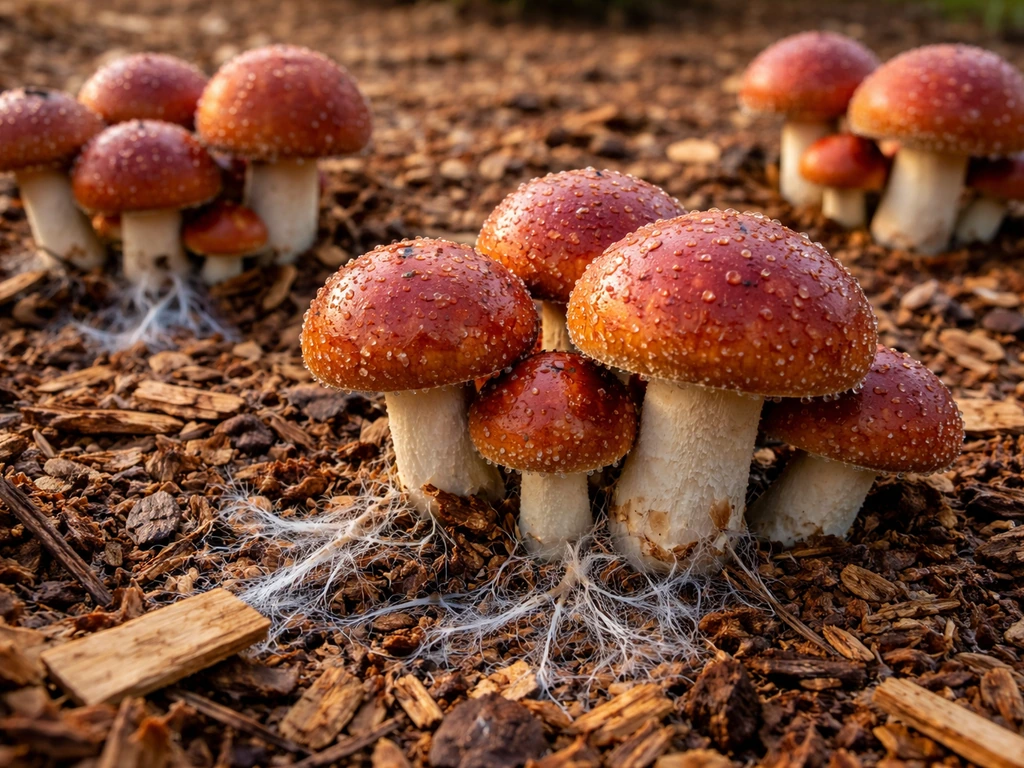
Once your outdoor bed is colonized (you'll see white mycelium threading through the chips when you peek underneath), fruiting happens naturally when conditions are right: typically in spring and fall when temperatures drop and rains come. Wine cap beds often fruit without any intervention at all. If you want to encourage fruiting, water the bed deeply to simulate a rainfall event and make sure the surface isn't compacted or crusted. Harvest wine caps when the veil under the cap is still intact or just beginning to tear; once it opens fully, they drop spores and the flesh softens quickly.
For outdoor shiitake logs (which use a similar wood-based principle), fruiting is triggered by soaking the log in cold water for 12–24 hours, then moving it into a shaded, humid area. Logs are ready to fruit once shiitake has fully colonized the outer sapwood, which can take 8–18 months depending on wood species and log size. For comparison, shiitake log vegetative growth is typically completed within about 8, 12 months depending on strain and wood type blank" rel="noopener noreferrer">can take 8–18 months depending on wood species and log size. Warm recovery temperatures between flushes (60–77°F) speed the log's turnaround for the next fruiting cycle.
Indoor fruiting from bags and bins
Once your chip bag or block is fully colonized (white throughout, no green or black spots), it's time to trigger fruiting. If you want to grow honey mushrooms, the same colonization basics apply, but you will still need the right species-substrate match and a reliable fruiting trigger trigger fruiting. The trigger is almost always a combination of: temperature drop (usually 10–15°F below colonization temp), increased humidity (85–95% RH), increased fresh air exchange, and sometimes light.
For nameko, drop temps to 10–16°C, raise RH to 90–95%, and provide diffuse light for 10–12 hours daily. For oysters, simply cut open the bag, move it to a fruiting space with good air circulation and humidity above 85%, and pins typically form within 5–10 days.
Fresh air exchange is non-negotiable during fruiting. CO2 above 1,000 ppm causes leggy, malformed mushrooms with long stems and tiny caps. Outdoor ambient CO2 runs around 420–450 ppm, which is why mushrooms grown outdoors or near an open window often look much better than those suffocated in a sealed container. Fan your fruiting chamber two to four times per day, or use a small fan on a timer with passive intake holes. For lion's mane and oysters especially, high CO2 produces the most obvious deformities.
Harvesting
Harvest before or just as the caps begin to flatten and curl upward. For oysters, that means picking clusters when edges are still slightly wavy but before they start dropping spores (a white dust around the base of the bag is your warning sign). Twist and pull gently from the base to avoid tearing the substrate. After harvest, remove any leftover mushroom stumps, allow the block to rest for 1–2 weeks, then resume fruiting conditions for the next flush. Most wood chip blocks give 2–4 flushes before yields drop significantly.
Troubleshooting and common failure points
Contamination (green, black, or pink patches)
This is the number one failure for indoor bag growing. Causes include: inoculating substrate that was too hot, using contaminated spawn, working in a dirty area, or bags with poor filter patches. Prevention is better than cure: cool your substrate fully before inoculating, use clean spawn from a reputable supplier, and wipe down your workspace. If you see green mold (Trichoderma), the block is likely lost. Isolate it immediately to prevent spores from spreading to your other grows.
Slow or stalled colonization
If mycelium growth stops or barely progresses after the first week or two, check temperature first (too cold slows everything down), then substrate moisture (too dry or too wet both stall growth), and then consider whether your chips are too fresh and still off-gassing. Grain-based spawn mixed into non-sterilized chips can also get overwhelmed by competing bacteria before the mycelium establishes. Increase your inoculation rate to 20–25% spawn by volume if you're seeing slow growth consistently.
No pins forming after full colonization
The most common cause is insufficient fruiting trigger: temperature hasn't dropped enough, humidity is too low, or CO2 is building up without enough fresh air. If you want to grow hen of the woods from wood chips, pay close attention to the fruiting trigger so pins can form after full colonization how to grow hen of the woods mushrooms. High CO2 (above 5%) can completely stall fruiting. Make sure you're actually dropping temperature by at least 10°F from incubation temps, getting RH up to 85–95%, and actively exchanging air. Some species like shiitake also need a physical shock (soaking, cold water) to break dormancy after colonization.
Substrate too wet or too dry
Over-wet chips go anaerobic and smell sour or rotten. Mycelium will not grow through waterlogged substrate. If your outdoor bed smells bad, fork it to aerate and let it dry for a few days before reassessing. Under-dry chips produce mycelium that hits a dry zone and simply stops. For indoor bags, misting the inside walls during fruiting helps, but the substrate moisture itself should have been set correctly at the start. You can't easily re-hydrate a bag mid-colonization without risking contamination.
Outdoor bed failures
Outdoor beds fail most often because of: the wrong wood type (aromatic softwoods), not enough spawn used (be generous, at least 20% by volume), a bed placed in full sun that dries out between waterings, or competition from aggressive weed molds in warm, wet weather. Shade is your friend for outdoor beds. A spot under trees or on a north-facing side of a building will hold moisture and keep temperatures more stable.
Scaling up and making it sustainable
Sourcing wood chips for free or cheap
Tree services are your best friend. Most arborists are happy to dump a load of fresh chips rather than haul them away, and they're often free for the asking. Check Chip Drop or contact local tree companies directly. Hardwood chips from orchard pruning (apple, cherry, pear) are especially excellent for shiitake and wine cap. Municipal composting programs sometimes have aged wood chip piles you can take for free as well.
Reusing spent chips
After a fruiting block is exhausted, the mycelium-colonized material makes excellent garden mulch and compost activator. Some growers use spent blocks to inoculate fresh outdoor chip beds, effectively extending the culture with no additional spawn cost. Wine cap beds in particular can be revitalized by adding fresh chips on top each year and allowing the existing mycelium to colonize the new material. One established wine cap bed can produce for 4–6 years with basic maintenance.
Realistic yield expectations
A standard 5-pound chip block indoors can yield 1–2 pounds of fresh mushrooms across 2–3 flushes for fast species like oysters. Shiitake blocks yield somewhat less per flush but continue producing over more cycles. Outdoor wine cap beds won't produce in measurable pounds the same way a controlled indoor setup does, but a well-established 4x8 foot bed can realistically give you several pounds of mushrooms per season in a good year. Don't expect indoor lab yields from an outdoor bed, and don't expect overnight results from a wood chip substrate: the slower timeline is the trade-off for lower cost and greater sustainability.
Your first steps today
- Pick your species based on your setup: wine cap for outdoors, oyster or shiitake for indoors.
- Source hardwood chips (avoid aromatic softwoods). Call a local tree service or check online for free chip drops.
- Order spawn from a reputable supplier for your chosen species. Sawdust spawn or outdoor chip spawn bags work best for beginners.
- For outdoor beds: prep a shaded spot, moisten chips, and layer in your spawn. For indoor bags: pasteurize chips, cool them, mix in spawn, seal bags with filter patches.
- Set up your incubation space at the right temperature and leave the substrate alone for 3–8 weeks.
- Once colonized, shift to fruiting conditions: cooler temps, higher humidity, and regular fresh air exchange.
- Harvest at the right moment and plan for follow-up flushes or outdoor bed maintenance.
FAQ
Can I grow mushrooms in wood chips without pasteurizing or sterilizing first?
You usually can for outdoor beds, where competition from existing microbes matters less because the mycelium can outcompete others once established. For indoor bags or bins, skipping heat treatment dramatically increases the odds of contamination, especially when using thicker chip layers or high-humidity fruiting conditions.
How thick should an outdoor wood chip bed be for mushrooms to fruit well?
Aim for shallow to moderate depth. If you go too deep, the lower layers stay waterlogged and can go anaerobic, while the top dries too fast. A practical guideline is to keep beds around 4 to 6 inches (waterlogging risk increases as depth increases), then manage shading and regular deep watering.
Do I need to add nitrogen like bran when growing in wood chips?
Not for all species. True wood-rotting mushrooms generally do fine on plain chips. If you are growing species that benefit from supplementation, use small amounts and mix thoroughly, because too much added nitrogen can raise contamination risk and can lead to faster mold takeover in indoor bags.
What’s the best way to test whether my chips are at the right moisture level?
Use a squeeze test and a consistent batch method. Firmly squeeze prepared chips in a fist: you want only a few drops, not a continuous stream. If your chips clump and drip, they are likely too wet, and if they crumble and feel dusty, they are likely too dry.
Can I reuse wood chips or a colonized bed after harvest?
Yes, for many outdoor and mixed systems. After an indoor block finishes, the spent chips can be used as garden mulch or to seed a fresh outdoor chip bed. For indoor production, reusing the same bag is rarely successful because contamination levels and nutrient depletion accumulate over time.
How do I know the difference between healthy white mycelium and contamination early on?
Healthy colonization is typically bright white to off-white with uniform, thread-like spread. Contamination often appears as distinct colored patches, like green, black, or pink. If colored spots appear, remove the block promptly and isolate it, rather than trying to cut out the area.
Why did my mycelium colonize but no mushrooms formed?
The most common cause is a weak fruiting trigger. Re-check that you lowered temperature enough (often around 10 to 15°F below colonization), raised humidity into the fruiting range (commonly 85 to 95% RH), and increased fresh air exchange. Also verify the bag is not fully sealed, CO2 buildup can prevent pinning even when the surface looks healthy.
How much fresh air do I need during fruiting?
More than you think, but not reckless. Use a fan on a timer or ensure passive intake holes, then observe morphology. If mushrooms become long-stemmed with small caps, that often indicates high CO2 from insufficient exchange.
Is light required for mushrooms grown on wood chips?
For many wood-chip species it helps, but it is not always the main trigger. Fruiting is primarily driven by humidity, fresh air exchange, and temperature shifts. For species known to respond to diffuse light (for example, some shiitake setups), aim for indirect light during fruiting rather than direct sun.
What should I do if my chips were very fresh, and colonization stalls in the first week?
Fresh, green chips can still be off-gassing volatile compounds and may suppress early growth. Age the chips in an open pile for a couple of weeks, then repeat substrate prep. If stalling is only slight and temperatures and moisture are correct, waiting after inoculation can also help, but severe sluggishness often improves after chip aging.
How do I choose spawn when growing from wood chips?
Match the spawn type to the species and target process (bag, bin, or outdoor bed). Avoid mixing grain-based spawn into a system that is prone to high contamination unless your sanitation and pasteurization are strong, because bacteria in non-sterilized substrates can overwhelm early mycelium before it fully establishes.
Can I grow wine cap mushrooms in wood chips, and do they need special prep?
Yes, and outdoor wine cap beds often tolerate less intervention once started. You still need correct chip moisture, shallow depth to avoid waterlogging, and good initial moisture soaking before inoculation. After that, they often fruit with natural seasonal changes, especially in spring and fall.
What’s the safest way to clean up after a contaminated indoor block?
Remove it from the growing area immediately and seal it (bag it) before disposal to limit spore spread. Wipe surrounding surfaces and avoid working in the contaminated zone and then going back to healthy blocks without cleaning hands, tools, and gloves.
How many flushes should I expect from wood chip blocks?
Many indoor wood-chip style blocks produce multiple flushes, often around 2 to 4 before yields drop noticeably. Outdoor beds can persist for years, but seasonal conditions affect output. If yields decline early, it often points to inadequate fruiting triggers or moisture problems.