
From inoculation to first harvest, Psilocybe cubensis typically takes 28 to 45 days total. P. subaeruginosa runs longer and slower, often stretching 60 to 90 days or more, largely because it needs a blank" rel="noopener noreferrer">cold trigger to initiate fruiting. Those ranges sound broad, but once you understand what's happening at each stage, you'll be able to tell whether your grow is on track or actually stalling out.
How Long Does It Take to Grow Psychedelic Mushrooms
Marcus Holloway
18 Apr 2026
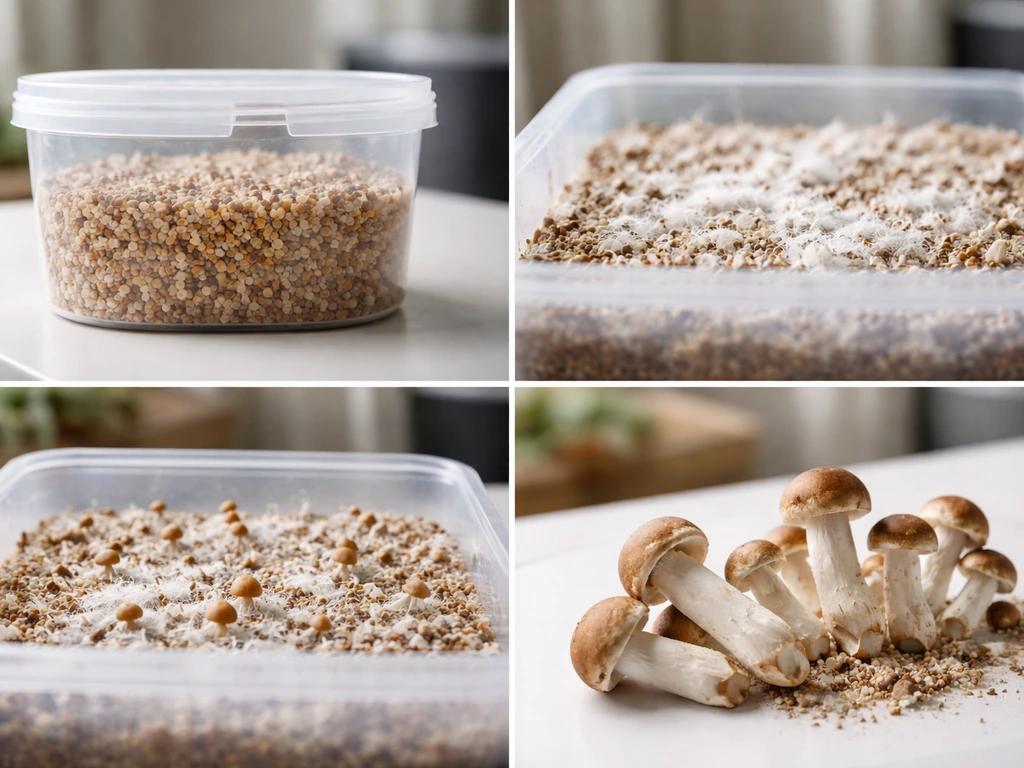
Typical timelines by species
These two species behave very differently in cultivation, and lumping them together is one of the fastest ways to misjudge your grow. If you want a deeper dive into just the magic mushroom timeline question, the article on how long does it take to grow magic mushrooms covers the broader picture, but here's the practical breakdown for each species specifically.
Psilocybe cubensis
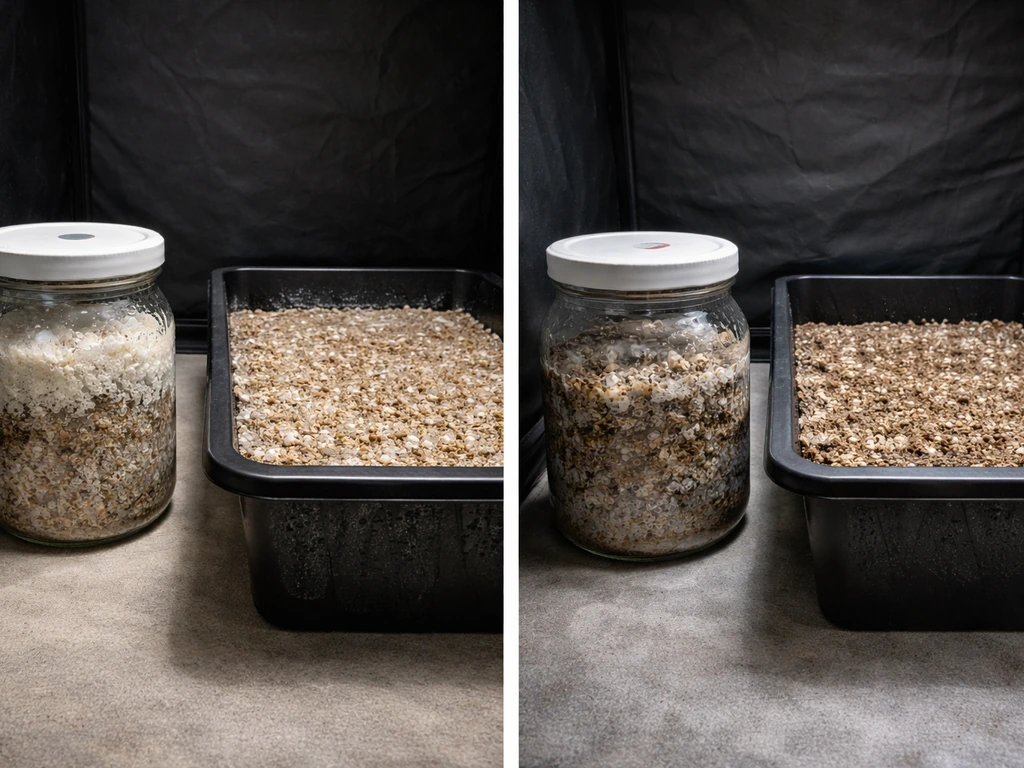
Cubensis is the workhorse of home cultivation for good reason: it's forgiving, fast-colonizing, and reasonably predictable. After inoculation, you can expect visible white mycelial growth within 5 to 7 days, with full colonization of a standard grain or PF-tek substrate typically wrapping up in 10 to 21 days. Strains like Golden Teacher sit comfortably in the middle of that window, usually fully colonized by day 14 or so in decent conditions.
Once you flip to fruiting conditions, first pins show up in roughly 5 to 12 days. After pins form, fruiting bodies mature to harvest-ready in about 7 to 10 days, sometimes stretching to 14 days if your temps run cool. All in, you're looking at 28 to 45 days from inoculation to cutting your first flush.
Psilocybe subaeruginosa
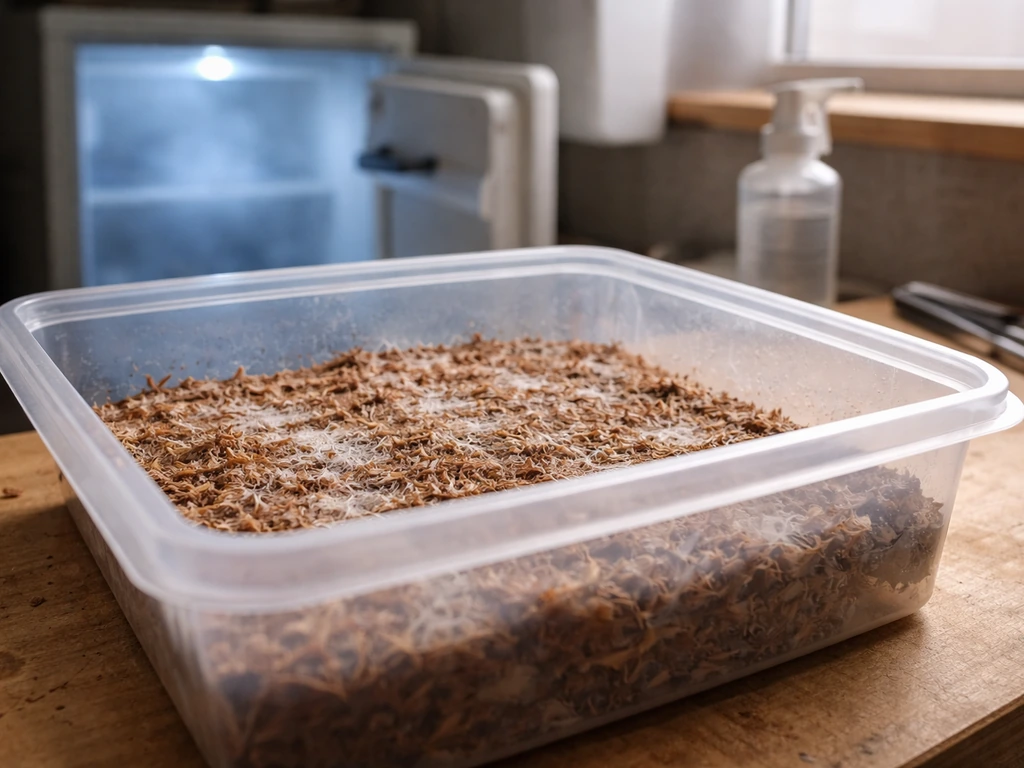
Subaeruginosa is a wood-loving species native to Australia and New Zealand, and it plays by completely different rules. Unlike cubensis, it requires a meaningful temperature drop to trigger pin formation. Think of it as a seasonal fruiter that needs to "feel" the arrival of autumn before it commits to producing mushrooms. Colonization on a wood-based substrate is generally slower than cubensis on grain, and the cold-triggering step adds time on top of that.
Once you apply the cold cue and warm back up, you're typically waiting at least a week before primordia appear, and the pins can take longer to mature than cubensis pins do. Realistically, budget 60 to 90 days for a subaeruginosa run, and don't be alarmed if patches fruit in waves over an extended period rather than one dramatic flush.
The question of how long to grow magic truffles gets asked alongside subaer questions often, and the answer in both cases is: slower than cubensis, more cold-dependent, worth the patience.
| Stage | P. cubensis | P. subaeruginosa |
|---|---|---|
| First visible mycelial growth | 5–7 days post-inoculation | 7–14 days post-inoculation |
| Full colonization | 10–21 days | 21–45 days (wood substrate) |
| Pin formation after fruiting conditions | 5–12 days | 7–21 days (cold trigger required) |
| Pin to harvest | 7–14 days | 10–21 days |
| Total inoculation to first harvest | 28–45 days | 60–90+ days |
What changes the clock between colonization and first pins
The single biggest variable between colonization and pin formation is how cleanly you make the transition to fruiting conditions. Mycelium won't commit to pinning just because it's fully colonized. It needs a signal, and that signal is a combination of lower CO₂, increased fresh air, a slight temperature shift, consistent moisture at the surface, and in the case of subaeruginosa, a genuine cold cue. Miss any of those and you'll sit there staring at a fully white block wondering why nothing is happening.
For cubensis, the transition is relatively simple: introduce fresh air exchange, drop temps slightly toward the low 70s°F range, and keep the surface from drying out. Many growers report pins within a week of making that shift when conditions are dialed in. For subaeruginosa, you need to actually cold-shock the substrate, usually by dropping temperatures to the low 50s°F or even into the high 40s°F for several days, before warming back up. After warming, primordia typically appear within 3 to 7 days if the cold cue worked. If you skip or half-heartedly apply the cold step with subaer, you may wait weeks and see nothing.
Substrate choice also quietly moves the clock. Grain spawn colonizes fast but doesn't sustain fruiting as long as bulk substrates. If you're comparing grow methods across species, it's worth reading about how long does it take to grow mushrooms in general, because the substrate-to-timeline relationship holds across many varieties, not just psilocybe species.
Environmental factors that speed things up or slow them down
Temperature
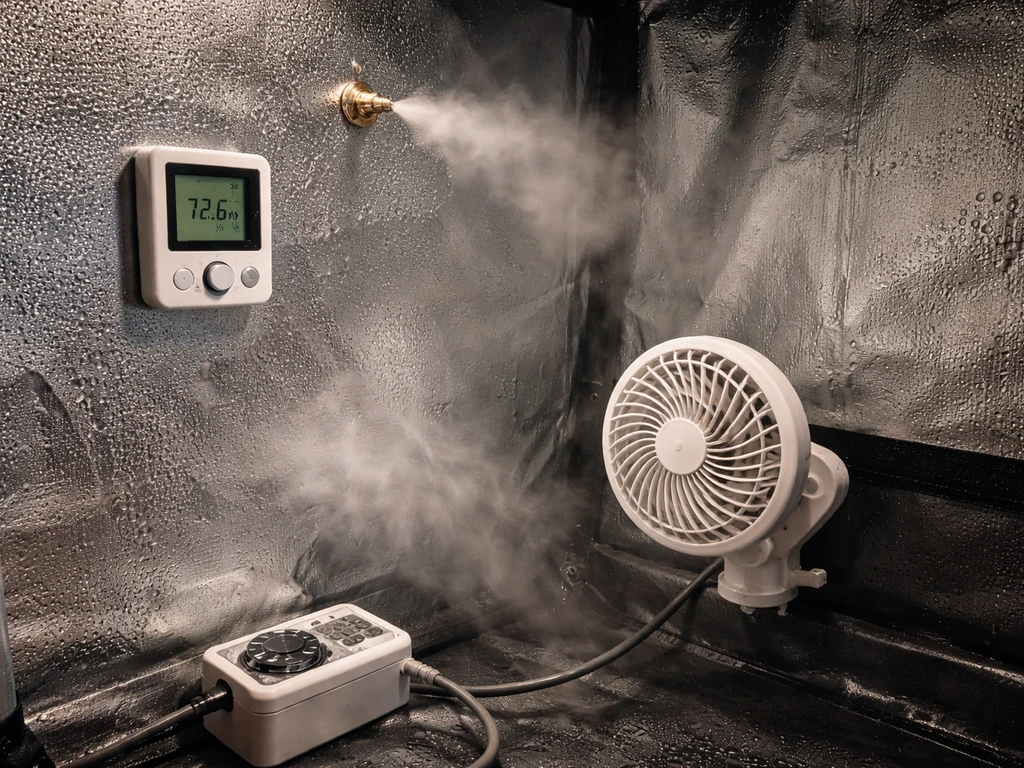
For cubensis, the sweet spot during fruiting is 72 to 75°F. Go significantly above that and colonization may speed up, but pin set often suffers or you get leggy, underdeveloped fruit bodies. Drop below 68°F and everything slows down noticeably. One useful way to think about it: at around 18.5°C (roughly 65°F), the pin-to-harvest window stretches to about 13 days. At warmer temps, it can compress to 7 to 8 days. Temperature doesn't just affect whether pins form; it directly controls how fast they develop once they do. For subaeruginosa, temperature is the whole game. Too warm and primordia abort before they get started. Unstable temperatures that swing warm mid-fruiting can collapse a flush entirely.
Humidity
Target 80 to 95% relative humidity during fruiting for cubensis. Below 85% and you risk cracked caps, aborted pins, and slower overall growth. NCAT’s mushroom cultivation guidance recommends keeping humidity high during fruiting, and warns that if air is too dry, caps can crack or split and pinheads can stall or wither before they grow risk cracked caps, aborted pins. But don't overcorrect by cranking humidity to 99%: that's a recipe for stagnant, mold-prone conditions. During colonization, running RH around 90% is reasonable, then adjusting slightly to 85 to 90% once fruiting begins. The goal is a moist surface that never fully dries out between mistings, while still allowing enough air movement to prevent condensation problems.
Fresh air exchange and CO₂
During colonization, you want zero or minimal fresh air exchange. CO₂ levels in the 5,000 to 10,000 ppm range during incubation are actually fine and help the mycelium run. But when you switch to fruiting, dropping CO₂ is critical. High oxygen, low CO₂ is what triggers pin initiation. Aim to keep CO₂ below 800 ppm during the early pinning window if you can measure it. In practice for home growers, this means fanning your fruiting chamber 2 to 4 times daily or running a passive FAE setup through polyfill ports. The key is steady, gentle air exchange rather than aggressive bursts, which can dry out your surface moisture and abort young pins.
Light
Cubensis is not a total-darkness fruiter. About 12 hours of indirect light per day actually helps stimulate pin formation and guides the direction of growth. It doesn't need much, just enough that the mycelium gets a day/night signal. Complete darkness during fruiting is actually a mistake some beginners make, and it can result in sparse, irregular pin sets. Subaeruginosa also benefits from a natural light cycle, consistent with its outdoor, forest-floor origins.
Stage-by-stage breakdown
Stage 1: Substrate prep and spawn
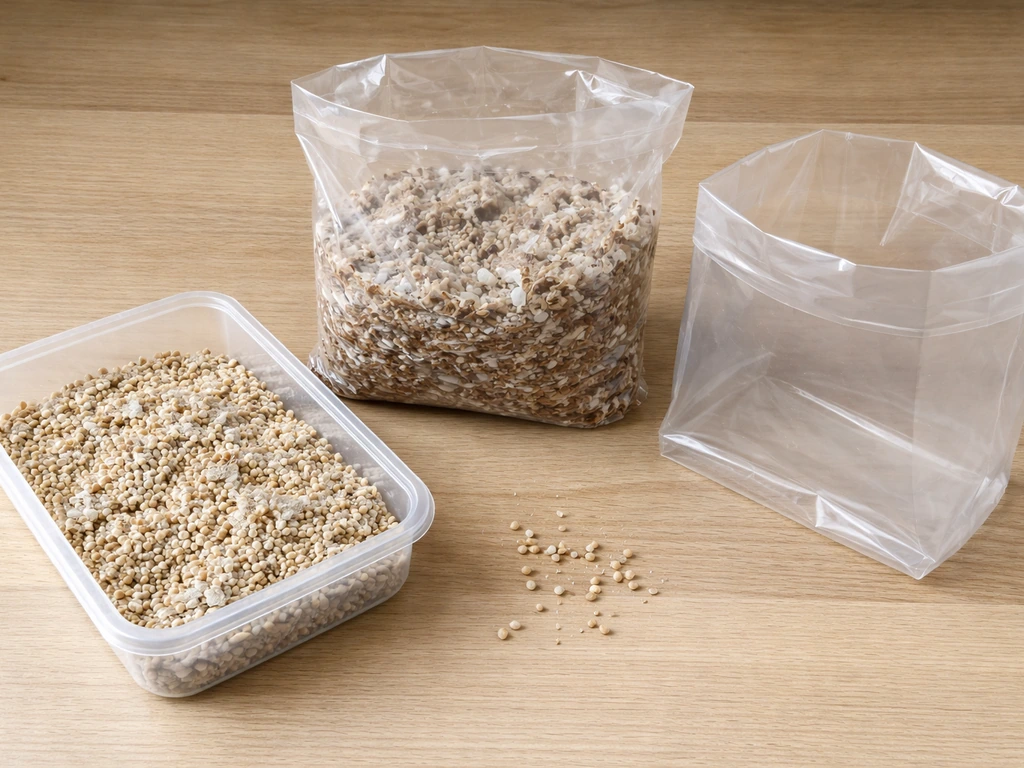
What you do here directly affects every stage that follows. For cubensis, grain spawn (rye, wheat berries, or popcorn) inoculated with a liquid culture or spore syringe gives you the fastest colonization. Sterilize properly, inoculate under clean conditions, and shake the jar once you see initial growth spreading from the inoculation point. For subaeruginosa, skip the grain-heavy approach and lean toward hardwood fuel pellets, supplemented sawdust, or a masters mix substrate. Wood-based substrates take longer to colonize but are closer to what this species actually evolved to fruit on. The time you invest in substrate prep is not wasted: a well-prepared substrate colonizes faster, resists contamination better, and produces more consistent flushes.
Stage 2: Colonization
Keep your colonizing containers in the dark, at stable temperatures (74 to 78°F for cubensis), and don't open them. Patience here pays off. For cubensis on grain, you'll see first white growth within 5 to 7 days and a fully white jar by day 10 to 21. For subaeruginosa on wood substrate, double or triple that window. A useful rule of thumb: once you think the substrate looks fully colonized, give it another 5 to 7 days before initiating fruiting. That extra consolidation time, sometimes called "tacking" or just letting it rest, gives the mycelium time to strengthen and results in better, more uniform pin sets.
Stage 3: Pin formation (primordia)
This is where most growers spend the most anxious days. For cubensis, introduce fruiting conditions (fresh air, light, humidity, slight temp drop) and then wait. Pins typically appear within 5 to 12 days. For subaeruginosa, execute your cold shock first: drop temps to the low 50s°F for at least 4 to 7 days, then bring back up to fruiting temp. After warming, watch for primordia within 3 to 7 days. If you're curious how this timing compares across related species, the breakdown of how long does it take to grow turkey tail mushrooms is a useful reference point for wood-loving species that also have temperature-sensitive fruiting windows.
Stage 4: Fruiting and harvest
Once pins are visible, the clock runs relatively predictably. Cubensis pins develop to harvest in 7 to 10 days under good conditions, occasionally up to 14 days. Harvest when the caps are fully opened and the veil underneath is just starting to tear. Don't wait for the veil to fully break: once it does, the mushroom is releasing spores and potency has typically peaked. For subaeruginosa, pins take longer to mature, often 10 to 21 days, and you want to watch for the same veil-tearing cue. The patient approach of harvesting just before the veil tears applies equally to both species.
How to tell if your grow is late or just within normal range
"Late" is one of the most misused words in the hobby. A cubensis grow that hasn't pinned after 10 days of fruiting conditions isn't necessarily in trouble. A grow that hasn't pinned after 21 days of proper fruiting conditions probably is. Here's how to think through it:
- No pins after 7 days of fruiting conditions: totally normal, keep going, verify your humidity and FAE are actually where you think they are
- No pins after 14 days: revisit conditions, check for dried surface, consider a light cold shock to reset
- No pins after 21 days on cubensis: something is off, likely surface dryness, contamination, or inadequate FAE
- For subaeruginosa, no pins after 7 to 14 days post-cold-shock: check whether your cold period was cold enough and long enough; a half-hearted cold step won't trigger fruiting
- Pins appearing then stopping: usually means an environmental disruption (temp spike, humidity crash, or a door slamming the tent open for too long)
One thing I've learned the hard way: growers often incorrectly diagnose contamination when the real issue is a dried-out surface. Dry, cracked substrate that won't pin is not contaminated, it's thirsty. Mist the surface lightly and give it another 3 to 5 days before panicking. Conversely, green or black spots that appear fuzzy are contamination and not a timing issue you can wait out.
Watching how other species behave can help calibrate your expectations. For example, reading about how long does it take to grow shiitake mushrooms gives you a useful comparison for how environmental triggering (like cold shocking or soaking logs) creates predictable fruiting windows with some natural variation baked in. The same logic applies here.
It's also worth understanding normal flush-to-flush variation. After your first harvest, remove all remnant stems and spent tissue, lightly scrape and mist the surface, and return to fruiting conditions. Repins for cubensis typically take 7 to 14 days to appear. For subaeruginosa, reprins can take several weeks, and another cold trigger may be needed. The how long do wine cap mushrooms take to grow timeline follows a similar pattern of initial slow establishment followed by faster subsequent flushes, and tracking your grows the same way helps you distinguish normal slowdowns from real problems.
Practical next steps for faster, more reliable results
If you want to hit the faster end of those timelines consistently, these are the levers that actually move the needle:
- Use liquid culture over spore syringes for inoculation: colonization starts faster and more uniformly, often shaving 3 to 7 days off your colonization window
- Don't rush the colonization-to-fruiting transition: wait for full colonization plus a few extra days of consolidation before switching conditions
- Control your four variables together, not one at a time: temperature, humidity, FAE, and light all need to be correct simultaneously for pin set to happen on schedule
- For subaeruginosa, commit to a real cold shock: 4 to 7 days at 50 to 55°F is not optional, it's the trigger; a mild overnight cool-down won't do it
- Keep a grow log: note the inoculation date, first visible growth date, fruiting conditions start date, first pin date, and harvest date; after two or three runs, you'll know exactly what your setup's actual timeline looks like
- If pins abort repeatedly, prioritize humidity stability first, then FAE second: most aborts come from humidity crashes or CO₂ spikes, not temperature issues
- Harvest on time: late harvests mean spore dumps, which can reduce the quality of subsequent flushes and make your grow space messier to work in
If you're just getting started and want a ground-level walkthrough of the process from scratch, the guide on how to grow magic mushrooms from scratch covers the foundational steps in detail. And if you're interested in branching out to other medicinal species that also reward careful environmental management, the guide on how to grow turkey tail mushrooms is a solid next read, particularly for understanding wood-based substrate technique that transfers directly to subaeruginosa cultivation.
The bottom line is this: cubensis is genuinely fast and manageable at 28 to 45 days total, as long as you keep conditions stable and make a clean transition into fruiting. Subaeruginosa demands more patience and a real cold-triggering step, but if you respect what the species needs, the 60 to 90 day window is predictable. The grows that drag on endlessly are almost always grows where one environmental variable quietly slipped out of range and nobody caught it for a week. Keep your log, check your setup daily, and the timelines will take care of themselves.
FAQ
If my mushrooms are not ready by day 45 for cubensis, what should I check first?
Start by verifying the fruiting trigger, especially CO₂ and surface moisture. If the surface is drying out, you can get a fully colonized block with no pins, mist lightly and wait 3 to 5 more days. If CO₂ is staying high, increase gentle fresh air exchange (or reduce closed, stagnant airflow) rather than only changing humidity.
For subaeruginosa, what counts as a failed cold shock versus a cold shock that just took longer?
A useful distinction is whether you see any early signs after rewarming, such as slight thickening of tissue or tiny primordia, even if they do not grow fast. If you see zero change after 7 to 10 days post cold cue, the cold step may have been too mild, too short, or the temperature afterward may be too unstable for the next stage to start.
Can I grow cubensis faster than the usual 28 to 45 days?
You can sometimes compress timelines by keeping incubation near the upper end of the recommended range and ensuring the fruiting transition is immediate and consistent. However, pushing heat too high often trades speed for leggy growth, weaker pin sets, and longer total time to harvest-ready fruits.
How long should it take from first pins to harvest, and what makes it longer?
For cubensis, harvest-ready typically arrives about 7 to 10 days after pins, sometimes up to 14 if temps run cool or if fresh air is insufficient. For subaeruginosa, maturity after pins is often 10 to 21 days. Biggest slowdowns usually come from cooler temperatures, fluctuating conditions, or surfaces that remain too dry between misting.
Is harvesting based on cap opening and veil tearing always reliable?
It is a good general cue, but watch the actual rate of change. If fruits are small and slow, they may appear to linger, yet the veil can still begin to tear suddenly when microclimate conditions shift. Aim to harvest when the veil is just starting to separate, not after full random tearing has occurred on every cluster.
My block is fully white, but nothing happens after switching to fruiting. How long can I wait?
For cubensis, if you have done the fruiting transition properly, first pins are commonly visible within about 5 to 12 days. If nothing appears by the later end of that window, reassess fresh air exchange and surface hydration first, because CO₂ and surface dryness are the most common reasons for a complete halt.
How should I log timelines to tell normal variation from a real problem?
Track dates for four checkpoints: inoculation, full colonization (your best estimate), fruiting switch, and first pins. Then note daily min and max chamber temperatures plus whether you saw any condensation or surface cracking. A single missed day of monitoring usually matters less than a week of drifting temperature or inconsistent fresh air.
What causes aborted pins, even when pins appear on time?
Aborted pins often result from swings in temperature, stagnant high CO₂, or overly aggressive misting that wets caps while also drying the surface between intervals. Keep fresh air gentle and steady, maintain a moist surface that does not crust, and avoid rapid temperature changes mid-fruiting.
Do different spawn types change the time to colonization and harvest?
Yes, spawn influences early speed and how consistently the fruiting phase continues. Grain-based spawn generally colonizes faster, but bulk substrate and overall moisture retention affect how long subsequent flushes last. If you compare grows, isolate one variable at a time, otherwise it is easy to misread the timeline.
How long between flushes should I expect for cubensis versus subaeruginosa?
Cubensis reprins are often about 7 to 14 days after the first harvest if you remove spent tissue and return to fruiting conditions. Subaeruginosa can take several weeks and may require another cold cue, so long gaps are more normal and need a different expectation baseline.
Is indirect light during fruiting optional, or can I use full darkness?
Indirect light is helpful for consistent pin behavior, it provides a day-night signal rather than intense illumination. Complete darkness during fruiting can lead to sparse or irregular pin sets, so if you must keep light minimal, use a consistent light cycle instead of leaving the setup unlit.