
Toadstools grow the same way all mushrooms do: a spore germinates, threads of mycelium colonize a food source, and once that mycelium is fully established and environmental conditions flip the right switches, a fruiting body pushes out. The tricky part is that 'toadstool' isn't a single species with a single recipe. It's a catch-all word for any capped, stemmed fungus, often applied to wild or poisonous-looking ones. So before you can reliably get them to grow, you need to know which species you're actually dealing with, because the substrate, temperature, humidity, and timing requirements vary significantly from one to the next.
How Do Toadstools Grow: Practical Home Growing Guide
Marcus Holloway
29 May 2026
What 'toadstools' are (and why species matters)
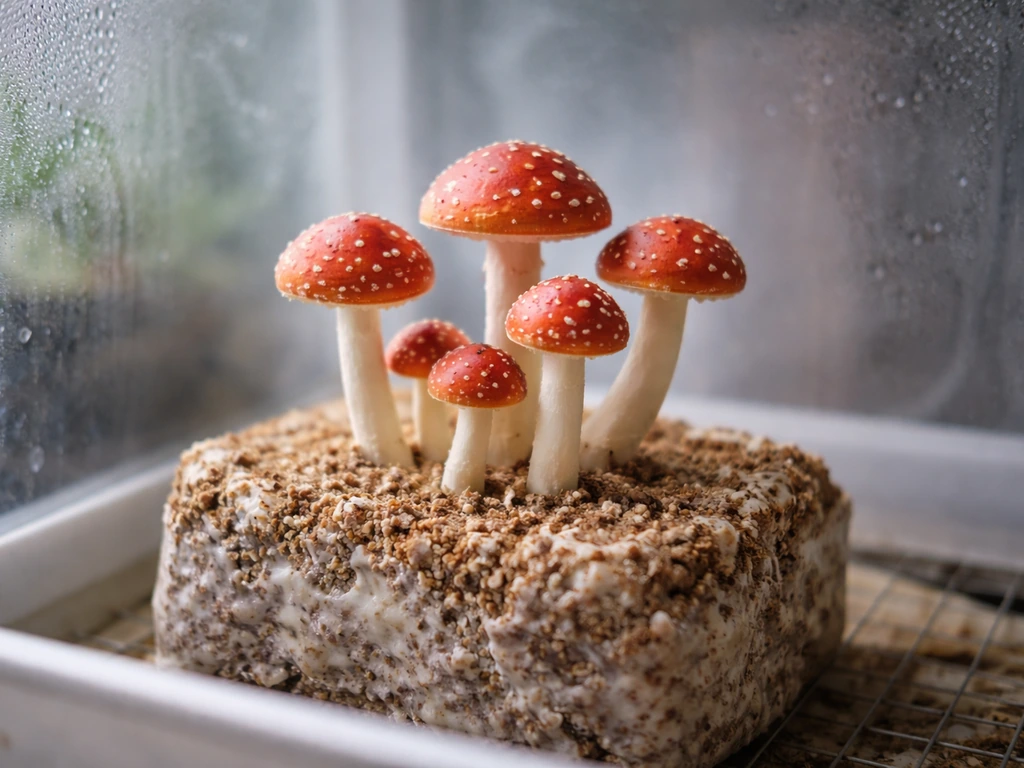
The word 'toadstool' is more cultural than scientific. It's commonly used for fungi with a stem and cap, especially ones that look poisonous or appear in fairy tale illustrations. 'Mushroom' tends to get reserved for edible species in everyday language. But in practice, the two terms describe the same structures. A species like Clitocybe odora (the aniseed toadstool) carries the name 'toadstool' casually, yet it's cultivated the same way as any other wood-associated mushroom. The point is: the label doesn't tell you how to grow it.
What does matter is the ecological role of the species. Wood-decomposers like shiitake, lion's mane, and oyster mushrooms break down lignin and cellulose in hardwood. Dung-lovers like Agaricus (the common button mushroom) need composted materials. Mycorrhizal species like many wild toadstools in the Amanita family form partnerships with tree roots and are essentially impossible to cultivate in isolation at home. If you're trying to grow a toadstool-looking mushroom, you first need to identify whether it's a saprotrophic (decomposer) species, because those are the ones home growers can actually cultivate.
The fungal life cycle: spores, mycelium, and fruiting
Every toadstool starts with a spore. When a spore lands somewhere with the right food, moisture, and temperature, it germinates and sends out thin filaments called hyphae. Those hyphae branch and network into a web called mycelium, which is the actual 'body' of the fungus doing the feeding. The fruiting body, the cap-and-stem structure you see, is just the reproductive stage the fungus produces when conditions trigger it.
The switch from vegetative mycelium to fruiting is not automatic. Research on species like Coprinopsis cinerea shows that fruiting body development begins when hyphal aggregates form tight knots of roughly 0.2 mm or less in diameter, creating what are called primordia. That transition is driven by environmental signals, not just time. Lower CO2, a shift in humidity, temperature changes, and light cues all play a role in telling the mycelium that it's time to reproduce. Get those signals wrong and the mycelium just sits there, feeding indefinitely without fruiting.
Substrate and nutrients: what the fungus actually eats
Mycelium needs carbon for energy and nitrogen to build protein. Wood-decomposing species thrive on high-carbon substrates like hardwood sawdust, logs, or straw. Hardwood sawdust has an extremely high carbon-to-nitrogen ratio, somewhere around 350:1 to 500:1, which means it needs supplementation to support vigorous growth. That's why you'll often see wheat bran, soy hulls, or rice bran added to sawdust blocks. These bring the C:N ratio down into a more fungus-friendly range, typically around 55:1 to 70:1 for wood-ear species, for example.
For Agaricus-type mushrooms, the substrate is composted materials, and the fruiting trigger actually requires adding a casing layer on top of the colonized compost. Without it, the mycelium won't switch to reproductive mode no matter how good your other conditions are. Shiitake can be run on oak, beech, maple, or hophornbeam logs, or on supplemented hardwood sawdust blocks. Oysters and wood ears also grow well on sawdust or straw. Choosing the wrong substrate for your species is one of the most common reasons toadstools never appear.
| Species | Primary Substrate | Supplement | Notes |
|---|---|---|---|
| Shiitake | Hardwood sawdust or oak/beech logs | Wheat bran, rice bran, CaCO3 | Logs take 6-12 months to colonize; blocks are faster |
| Oyster mushroom | Straw, hardwood sawdust | Wheat bran or soy hulls | Fast colonizer, very forgiving for beginners |
| Lion's mane | Hardwood sawdust | Wheat bran or oat bran | Sensitive to humidity during fruiting |
| Agaricus (button) | Composted manure/straw | Casing layer required | Needs casing layer to fruit |
| Wood ear (Auricularia) | Broadleaf logs or sawdust | Wheat bran (~15%) | Optimal C:N around 55-70 |
| Mycorrhizal toadstools (Amanita, etc.) | Not cultivable in isolation | N/A | Require live tree root partnerships |
The environmental triggers that actually make fruiting happen
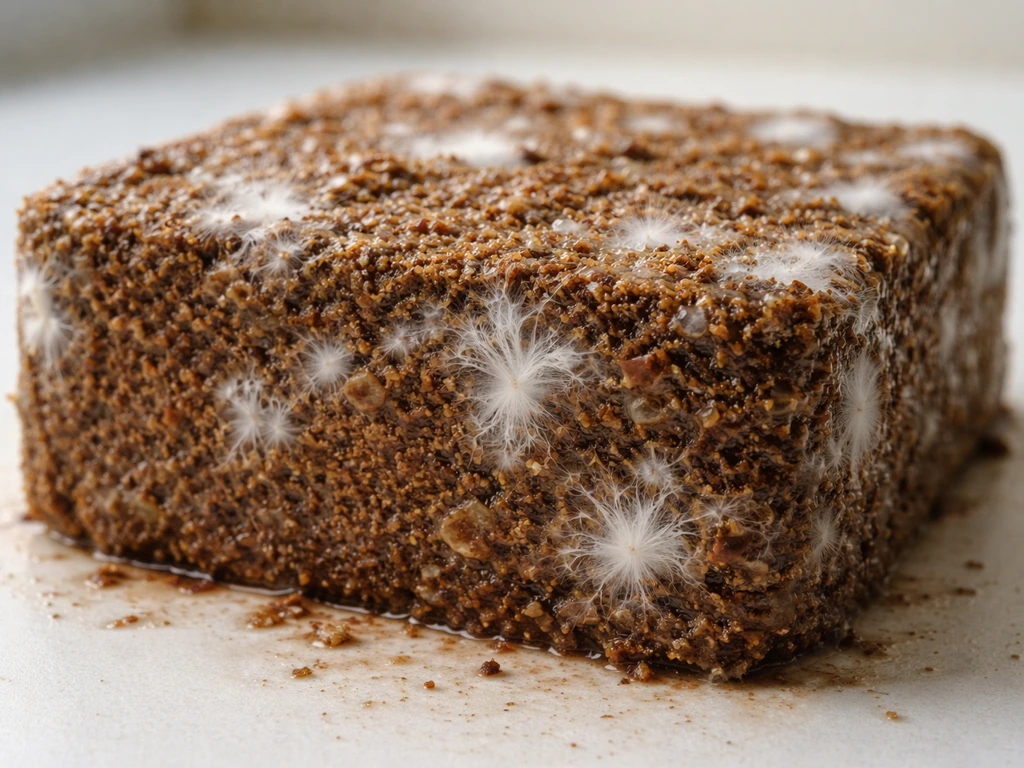
Once your mycelium has fully colonized the substrate, it needs the right set of environmental signals to fruit. These four levers are what you're managing every time you try to get a toadstool to appear.
Humidity
Most fruiting mushrooms want relative humidity between 85% and 95%. Below that range, pins abort, caps crack, and mycelium dries out before fruiting bodies can form. Lion's mane is especially sensitive, wanting 85 to 92% throughout the fruiting stage. You can hit these levels in a simple fruiting chamber by misting 2 to 4 times a day or using an ultrasonic humidifier on a timer. A cheap hygrometer is worth buying immediately if you don't have one.
Temperature
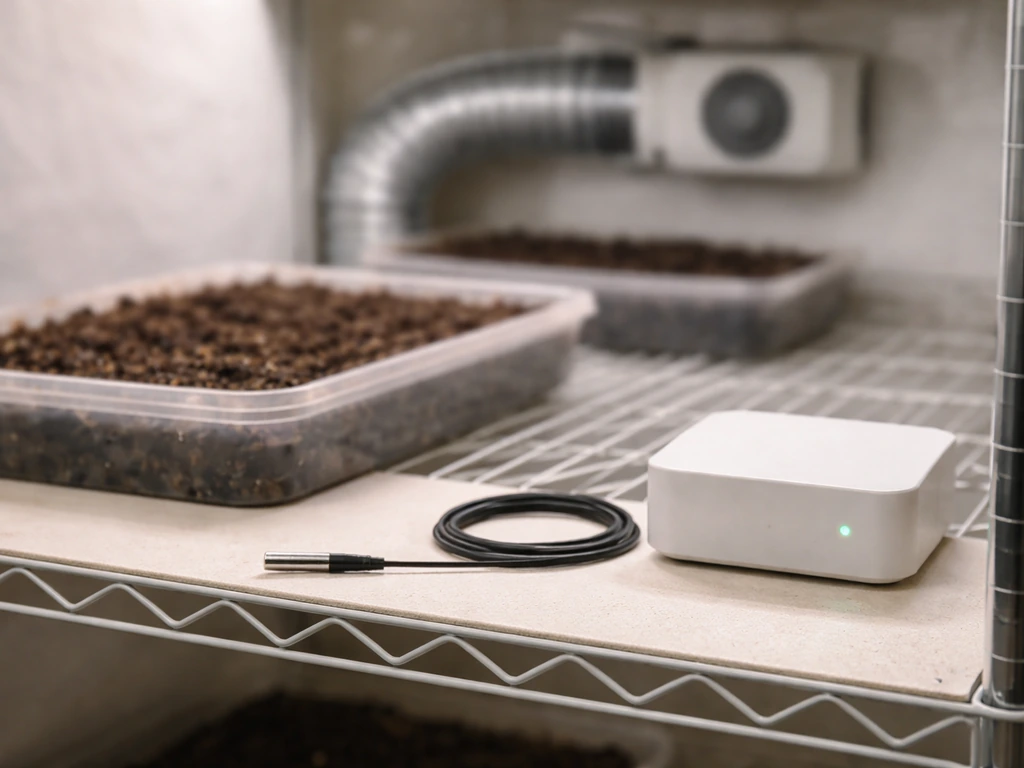
Temperature requirements vary by species, but most common cultivated toadstools fruit in the 15 to 25°C range. Shiitake is typically triggered by a temperature drop, sometimes called a cold shock. For Agaricus, compost is maintained around 24°C during spawn run. Getting the temperature wrong by even a few degrees can stall everything. Shiitake grown on a colonized block, for instance, often responds to soaking in cold water or moving to a cooler space as the fruiting trigger.
Fresh air exchange and CO2
This is the one growers underestimate most. CO2 levels above 1% (10,000 ppm) suppress shiitake fruiting body development, and above 5% CO2 fruiting essentially stops. During fruiting, most species want CO2 below 1,000 ppm. Too little fresh air exchange causes long, leggy stems, tiny caps, aborted pins, and sometimes no fruiting at all even when humidity and temperature look fine. Practical fix: fan your fruiting chamber 2 to 4 times a day for 30 to 60 seconds, or add passive air holes covered with polyfill. More ventilation is almost always the answer if pins form but then stop developing.
Light
Light isn't a food source for fungi, but it acts as a directional and developmental signal. Shiitake needs light during the fruiting stage even though it doesn't need it during spawn run. Coprinopsis research documents fruiting under a 14-hour light and 10-hour dark cycle. In Coprinopsis cinerea, fruiting body development has been documented under a 14-hour light and 10-hour dark cycle in controlled growth conditions. You don't need intense light, a regular room light or a basic LED grow strip on a timer works fine. Indirect natural light from a window is often enough. The important thing is that your fruiting chamber isn't sitting in complete darkness 24 hours a day.
How to start: inoculation options and setup
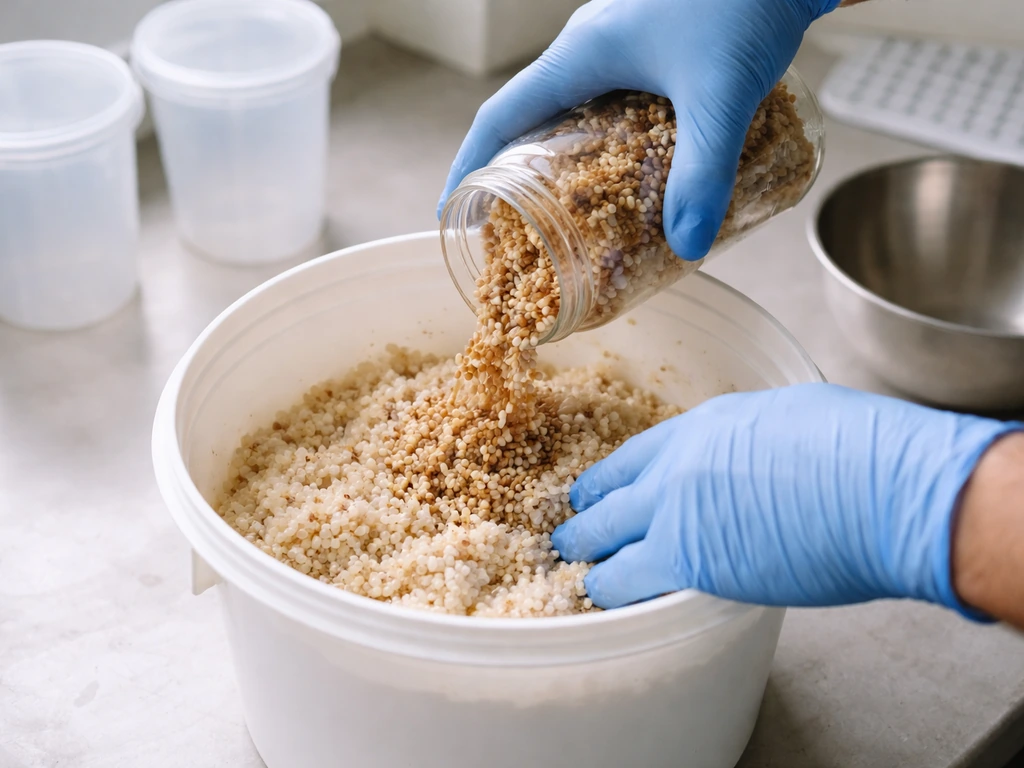
You have two main options for introducing a fungus to its substrate: spores or spawn. Spores are the reproductive cells, basically seeds. Spawn is already-colonized grain, sawdust, or wooden plugs with living mycelium actively growing in it. For home growers trying to get reliable results, spawn is almost always the better choice. It colonizes faster, has lower contamination risk, and doesn't require the extra germination step.
Spawn types and when to use them
- Grain spawn: colonizes fast, works well for sawdust blocks and indoor grows; mix it into your substrate at inoculation
- Sawdust spawn: great for log inoculation and blocks; the USDA notes sawdust spawn leads to a faster spawn run than plug spawn on logs
- Plug spawn: wooden dowels pre-colonized with mycelium; drill holes in a log, insert plugs, and seal with cheese wax; inoculate within 3 to 6 weeks of felling the log to beat contaminants
- Liquid culture or spore syringes: useful for more advanced growers making their own grain spawn; higher contamination risk for beginners
Basic indoor block setup (for beginners)
- Choose your species and get the right substrate (hardwood sawdust plus 10 to 20% wheat bran for shiitake or lion's mane; straw works for oysters)
- Sterilize or pasteurize the substrate to knock out competing organisms
- Let the substrate cool to room temperature before adding spawn
- Mix in grain or sawdust spawn at roughly 10 to 20% of total substrate weight for faster colonization
- Seal in a breathable bag or container and keep at the appropriate colonization temperature in a dark space
- Once fully colonized (white mycelium throughout, no green or black patches), introduce fruiting conditions: humidity up, CO2 down, add light
Outdoor log setup
For a more hands-off, natural approach, log cultivation is hard to beat. Drill a grid of holes about 2.5 cm deep and 10 to 15 cm apart across a fresh hardwood log. Pack with sawdust or plug spawn, seal the holes with cheese wax, and store the log in a shaded, humid spot outdoors. Shiitake logs on oak or beech can produce for multiple years. The downside is patience: logs take 6 to 12 months before first fruiting, compared to 3 to 4 months for a sawdust block.
Troubleshooting: why your toadstools aren't growing
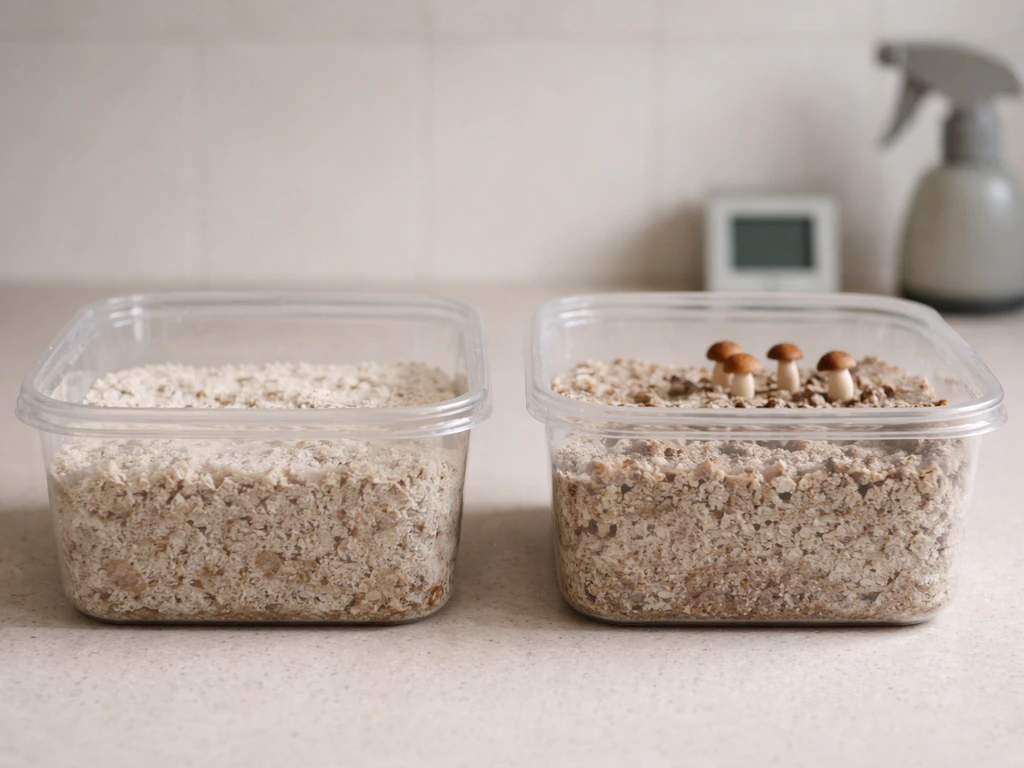
If your setup is running but nothing is happening, work through this checklist in order. Most problems fall into one of six categories.
| Symptom | Most Likely Cause | Fix |
|---|---|---|
| No pins after 2+ weeks of fruiting conditions | CO2 too high or humidity too low | Fan chamber more frequently; check hygrometer and mist more often |
| Pins form but abort or shrivel | Humidity drops or CO2 spikes during fruiting | Add humidifier or mist schedule; increase air exchange |
| Long, thin stems, tiny caps | Too much CO2, not enough fresh air | Increase ventilation immediately; add air holes |
| Green, black, or pink patches on substrate | Contamination (mold, bacteria) | Isolate block; if contamination is localized, cut it out; if widespread, discard |
| Mycelium stopped spreading partway through | Wrong temperature, substrate too wet or too dry, or contamination | Check temp is in spawn-run range; ensure substrate moisture is 60-65% |
| No growth at all after inoculation | Dead spawn, substrate too hot when inoculated, or wrong species for substrate | Source fresh spawn; always let substrate cool below 25°C before adding spawn |
Contamination is the biggest killer for indoor blocks. Green mold (Trichoderma) moves fast and usually means the substrate wasn't properly sterilized or the inoculation wasn't done cleanly. If you see green patches during colonization, that block is almost always a loss. Toss it outside well away from your grow area, clean everything, and start again with better sterile technique. This is one failure mode I've repeated more than I'd like to admit.
For outdoor log setups, the most common issue is drying out. Logs in full sun lose moisture fast and mycelium goes dormant. Keep logs in dappled shade, or soak them in water for 12 to 24 hours to re-hydrate and trigger fruiting. That cold water soak trick works reliably for shiitake once the log is well colonized.
Realistic timelines: what to expect and when
One of the biggest sources of frustration for new growers is expecting mushrooms too fast. Here's what a typical grow cycle actually looks like for common toadstool-type species.
| Stage | Shiitake (sawdust block) | Oyster mushroom | Agaricus (button) | Shiitake (log) |
|---|---|---|---|---|
| Inoculation to full colonization | 4-8 weeks | 1-3 weeks | 2-4 weeks (spawn run) | 6-12 months |
| Colonization to first pins | 1-2 weeks after fruiting trigger | 3-7 days after fruiting trigger | 1-2 weeks after casing | 1-2 weeks after soaking |
| Pins to harvest | 5-7 days | 3-5 days | 5-7 days | 5-7 days |
| Total inoculation to first harvest | 3-4 months | 3-5 weeks | 6-10 weeks | 7-14 months |
Primordia (the tiny pin-like nubs that become fruiting bodies) typically appear within one to two weeks after you introduce fruiting conditions, assuming colonization was complete and your environment is dialed in. If you're at week three of fruiting conditions with nothing showing, it's time to run through the troubleshooting checklist above rather than just waiting.
Most colonized blocks will give you two to four flushes before the substrate is exhausted. The first flush is usually the largest. Between flushes, rest the block for one to two weeks with lower humidity, then reintroduce fruiting conditions. Logs can produce seasonally for three to five years if maintained well.
Where to go from here
If you're focused on growing toadstool-type mushrooms, the practical starting point is picking one species, matching it to the right substrate, sourcing quality spawn, and nailing humidity and fresh air exchange before worrying about anything else. If you want step-by-step help tailored to your species and setup, follow a guide on how to grow toadstools. Red mushrooms can follow the same general fruiting logic, but you still need to match the exact species to the right substrate, temperature, and fresh air routine. Oyster mushrooms on straw are genuinely beginner-proof. Shiitake on a sawdust block is a strong second step. Snow fungus (Tremella) and other specialty species follow different rules again. Snow fungus (Tremella) requires specialty conditions compared with common toadstool-type mushrooms. Once you've got the basics of the grow cycle working for one species, the underlying logic transfers to everything else, including more advanced setups covered in guides on how to grow specific fungi like red mushrooms or other specialty varieties. If you want to go deeper, look for guides on how to grow specific fungi so you can tune substrate and environmental triggers for each species. If you're specifically aiming for crimson fungus in the overworld, the substrate and fruiting triggers differ from typical toadstool species, so follow the overworld-focused guide for it how to grow crimson fungus in the overworld. If you want a direct, step-by-step approach, see our guide on how to grow crimson fungus for the exact substrate and fruiting conditions it needs how to grow specific fungi. In general, “how to grow warped fungus” will depend on which species you have, since substrate, temperature, humidity, and fruiting triggers vary a lot guides on how to grow specific fungi.
FAQ
Do toadstools always fruit after the mycelium fully colonizes the substrate?
Not necessarily. Even after colonization, the fungus may stay in feeding mode if the fruiting triggers are missing or mismatched (CO2 too high, fresh air too low, humidity out of range, or wrong temperature rhythm). If you have clean colonization but no pins, reassess CO2 and fresh air exchange first, then humidity and temperature, before assuming the substrate failed.
What is the safest way to avoid contamination when inoculating at home?
Use prepared spawn and keep the work zone clean and still (avoid drafts), sterilize or pasteurize substrate as required for your species, and inoculate quickly to minimize airborne exposure. If you see green patches during colonization, treat it as a full failure of that block, remove it from your grow area, and thoroughly clean the space before starting a new batch.
Can I grow “wild” toadstool types from foraged specimens?
Usually not reliably. Many wild “toadstool” species are mycorrhizal, meaning they need living tree roots and specific biological partnerships, so they will not establish in isolation. Even for saprotrophic species, identity matters because substrate, temperature, and humidity requirements can vary widely.
Are spores easier or harder than spawn for getting toadstools to fruit?
For most home setups, spawn is easier. Spores require germination and early growth conditions and typically take longer and are more sensitive to contamination. Spawn usually colonizes faster and gives you a head start, which is why it is the preferred choice for consistent results.
If I’m getting pins but no mature caps, what is the most common cause?
CO2 and fresh air exchange. High CO2 can stall development after primordia form, leading to leggy stems, tiny caps, or aborted pins. Increase ventilation (short, frequent fanning or a passive fresh air route), then re-check humidity to ensure the pins are not drying out.
How do I know whether my humidity is “high enough” or just looks high on a hygrometer?
Use placement and stability checks. A hygrometer can read high near mist but be low where the surface dries. If you see cracked caps or pin abortion, assume micro-drying on the surface, then increase misting precision, use a humidifier with a timer, and confirm the sensor is positioned at fruit level.
Do I need light to grow toadstools?
For many species, light is a developmental signal during fruiting, even though it is not food. If shiitake-like species are involved, fruiting typically benefits from a consistent light-dark cycle. If your chamber is in complete darkness all day, primordia may fail to mature.
What temperature mistakes most often cause a stall?
Common errors are using the right range but in the wrong phase (spawn run versus fruiting), and temperature overshoot during active fruiting. Even a few degrees can slow or halt development, so use a thermometer inside the fruiting area and avoid placing the chamber near heat sources or cold drafts.
How often should I water or mist during fruiting?
Follow your target humidity range rather than a fixed schedule. Many growers mist multiple times per day, but what matters is that the substrate surface stays hydrated without pooling water. If you regularly get aborted pins or cracked caps, adjust both mist frequency and fresh air exchange (because high humidity with poor air can still fail).
Is a log cultivation setup actually practical, and how long should I expect?
It is practical but slow. First fruiting on properly inoculated hardwood logs often takes months (commonly 6 to 12 months), and production can continue seasonally for years if logs stay shaded and hydrated. Plan ahead and do not switch to “faster indoor” expectations too early.
What should I do between flushes on a sawdust block?
Let the block rest under gentler conditions (often lower humidity) and then reintroduce fruiting triggers. A common pattern is a few flushes before substrate exhaustion, with the first flush usually the largest. If you push fruiting conditions too aggressively between flushes, you may reduce total yields.
Can I mix substrates or substrates brands and still expect the same results?
Usually you should not assume interchangeability. Even with the same broad category (hardwood sawdust, compost, straw), particle size, moisture content, and supplement levels can change the effective carbon-to-nitrogen balance and water retention. Stick to a consistent substrate formulation for your chosen species, especially for wood-decomposers.
When should I stop troubleshooting and restart with a new block or log?
If contamination appears (for example green mold), it is generally a loss and delaying cleanup usually risks spreading spores to your other cultures. For no-fruiting cases, if you have had correct colonization plus stable fruiting conditions for about a couple of weeks without primordia, move through the checklist systematically (substrate match, CO2 and fresh air, humidity, temperature, light cycle).