Growing truffles at home is genuinely possible, but it looks nothing like growing oyster mushrooms on a bag of straw. You are not growing a mushroom in a kit. You are planting a tree, waiting years, and hoping the underground fungal network you set up produces fruiting bodies. The honest version: if you plant inoculated host trees in well-prepared soil this season, keep the pH around 7.5 to 8.0, manage the site consistently, and choose a compatible truffle species for your climate, you could be harvesting your first truffles in 4 to 7 years. That is not a typo. But it is absolutely doable in a backyard, and people are doing it successfully today.
How to Grow Truffles at Home: Step-by-Step Guide
Marcus Holloway
3 May 2026
What "growing truffles" actually means (this part matters)
Truffles are underground fungi, and they reproduce via spores packed inside that knobby fruiting body you see at the market. But unlike oyster mushrooms or shiitake, you cannot just inoculate a substrate and wait a few weeks. Truffles are mycorrhizal, meaning they live in a mutual partnership with the roots of specific trees. The fungus wraps around root tips and helps the tree pull in water and nutrients. In return, the tree feeds the fungus carbohydrates produced through photosynthesis. Neither the truffle nor the tree can thrive as well without the other.
This is what makes truffle cultivation fundamentally different from every other mushroom you might grow at home. You are not managing a substrate in a bucket. You are managing a living ecosystem between a tree and a fungus, underground, over years. Getting mycelium to colonize a sapling's roots (called inoculation) does not guarantee you will ever see a truffle. As National Geographic has noted, inoculation success is still somewhat unpredictable, and the appearance of mycelium is only the first step toward fruiting. Anyone selling you a "truffle kit" that promises results in weeks is selling you something other than culinary truffles.
If you are interested in faster-fruiting underground fungi, sclerotia truffles (Psilocybe or related species cultivated for their sclerotia) follow a completely different cultivation model with shorter timelines. Magic truffles also operate differently and are outside the scope of culinary truffle growing. This guide is focused on culinary truffles: black Perigord, Burgundy, white, and similar species grown in backyard orchards.
Picking the right truffle species for your climate and yard
Species selection is the single decision that will make or break your project before you dig a single hole. Match the wrong truffle to your climate and you will spend years maintaining a beautiful tree orchard that never produces anything edible. Here is how the major cultivatable species break down:
| Species | Climate Zone (USDA) | Host Trees | Avg. First Harvest | Difficulty |
|---|---|---|---|---|
| Black Perigord (Tuber melanosporum) | 7–9 (mild, dry summers) | Oak, hazelnut | 5–7 years | Moderate |
| Burgundy/Summer Truffle (Tuber aestivum) | 5–9 (more adaptable) | Oak, beech, hazelnut | 4–6 years | Easier |
| Bianchetto (Tuber borchii) | 7–9 | Pine, oak | 3–5 years | Moderate |
| White Truffle (Tuber magnatum) | 6–9 (specific humidity) | Oak, poplar, willow | 7–12 years | Very hard |
| Oregon White (Tuber oregonense) | 6–8 (cool, wet winters) | Hazelnut, pine, oak | 5–8 years | Moderate |
For most backyard growers in North America, the Burgundy truffle (Tuber aestivum) is the most forgiving starting point. It tolerates a wider range of climates, fruits slightly earlier, and the inoculated trees are widely available. Black Perigord is the prestige species and the one most commercial orchards target, but it demands hot, dry summers and very specific soil chemistry. For a more specific roadmap, see guidance on how to grow black truffle in particular, including climate and care considerations. White truffle is a project for experienced growers with ideal conditions and serious patience. This is where a dedicated plan for how to grow white truffle becomes especially important because it needs ideal conditions and long timelines. If you are on the West Coast or Pacific Northwest, Oregon white truffle on hazelnut is worth investigating.
Climate signals to look for
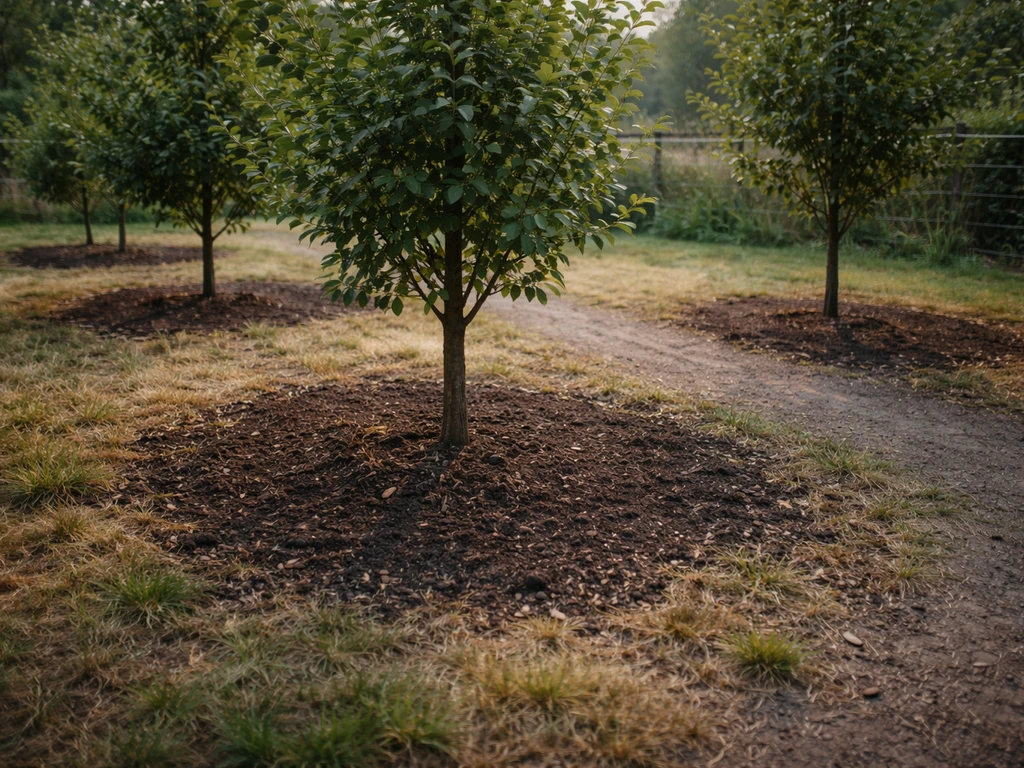
Black Perigord truffles thrive in Mediterranean-style climates: hot, dry summers, mild wet winters, and low humidity. They need a "brûlé" or burn zone to form, which is a dead circular patch of vegetation around the host tree caused by the truffle fungus outcompeting other soil life. If your summers are humid, rainy, or cool, Perigord truffles will struggle. Burgundy truffles are more tolerant of northern European and mid-Atlantic US conditions. Before buying trees, look up your USDA hardiness zone, your average summer high temperature, and your annual rainfall pattern. Then match that to the species table above.
Getting started with inoculated host trees
The most important practical advice I can give you: do not try to grow truffles from spores or from wild truffle pieces unless you are a researcher with a controlled lab setup. The realistic path for a home grower is to buy professionally inoculated host tree saplings from a reputable nursery that specializes in truffle cultivation. These are young oak or hazelnut trees (typically 1 to 2 years old) whose roots have been inoculated with a specific truffle strain during nursery production. You get a head start on the mycelial relationship that would otherwise take years to establish.
When purchasing inoculated trees, ask the supplier these questions directly before you commit:
- What truffle species and strain was used for inoculation?
- How was inoculation verified (PCR testing is the gold standard)?
- What is the nursery's recommended climate range for these trees?
- What soil pH do they recommend, and what were the trees grown in?
- Do they offer any post-purchase support or troubleshooting?
Reputable suppliers in North America include New World Truffieres, Garland Truffles, and American Truffle Company, among others. Prices typically run $25 to $50 per tree at the time of writing, and most growers plant a minimum of 6 to 10 trees to increase the odds of at least some successful colonization. Buying cheap, unverified inoculated trees is the most common and expensive mistake beginners make. If a supplier cannot tell you what testing was done, walk away.
Site selection and orchard layout
Truffle orchards need full sun, excellent drainage, and protection from strong winds. A south-facing slope is ideal in the northern hemisphere. Avoid low-lying areas where cold air pools in winter or where water sits after rain. Even a slight grade helps drainage enormously. The site should be away from competing trees whose roots or leaf litter might introduce competing fungi into your soil.
For spacing, most backyard orchards plant trees 15 to 20 feet apart in rows 15 to 20 feet apart. This allows the brûlé zones to develop without immediate overcrowding, gives you access to walk between trees for monitoring and harvesting, and lets sunlight reach the soil surface, which matters for soil temperature. A 10-tree planting on a 100 x 100 foot area is a reasonable starting footprint for a serious home grower. Smaller plantings of 4 to 6 trees are possible but reduce your statistical chances of getting fruiting from at least some trees.
Soil preparation: pH, drainage, and nutrient limits
This is where most home growers either succeed or fail before the trees even go in the ground. Truffle fungi are highly sensitive to soil chemistry, and getting this wrong means the mycorrhizal relationship will not persist even if your trees are perfectly inoculated.
pH is the most important single factor
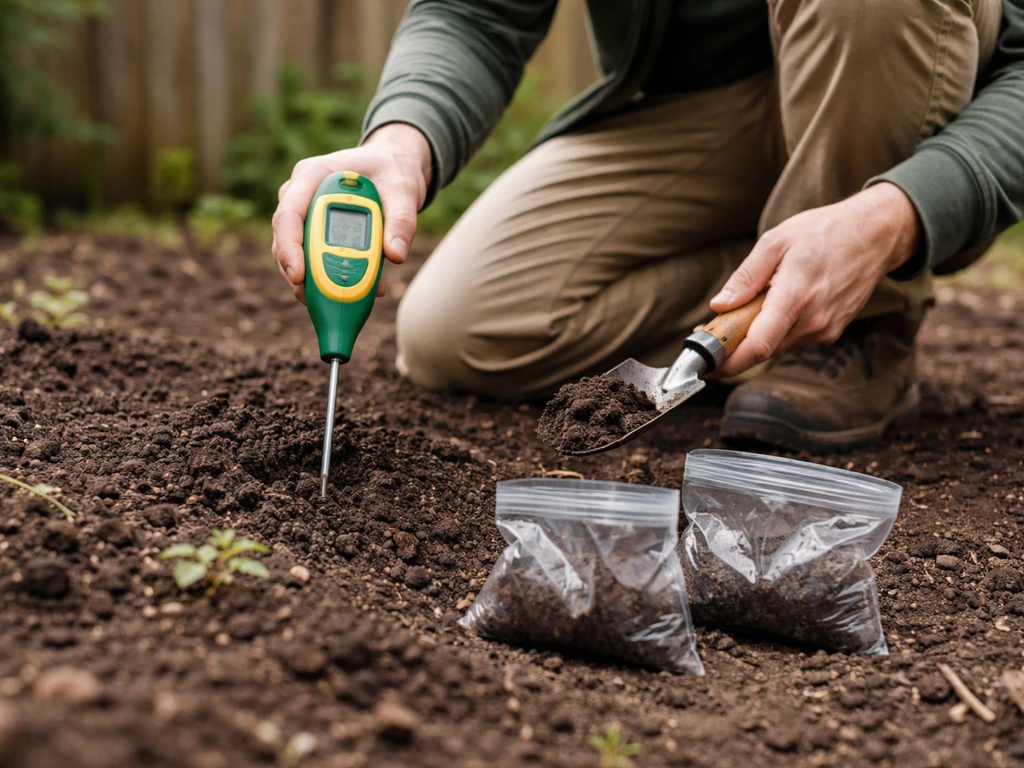
Most culinary truffles, especially black Perigord and Burgundy, require a soil pH between 7.5 and 8. A truffles handbook (TRUMAP) recommends a pH range of about 7.5, 8.5 for black truffle cultivation blank" rel="noopener noreferrer">between 7.5 and 8. 3. This is alkaline, which is the opposite of what most garden vegetables and fruit trees prefer. Average garden soil in North America tends to be acidic to neutral (pH 5.5 to 7.0). You will almost certainly need to raise your pH substantially before planting. Agricultural limestone (calcium carbonate) is the standard tool for this. Have your soil tested by a lab, not just a cheap meter, to get accurate baseline pH across the planting area, then calculate how much lime to apply based on your soil type. Sandy soils react quickly; clay soils need more lime and more time.
Apply lime at least 6 to 12 months before planting and retest. Do not rush this step. Planting into soil that is still too acidic gives competing fungi and bacteria a major advantage over your truffle mycelium. Target pH should be achieved and stable before the trees go in.
Drainage and soil structure
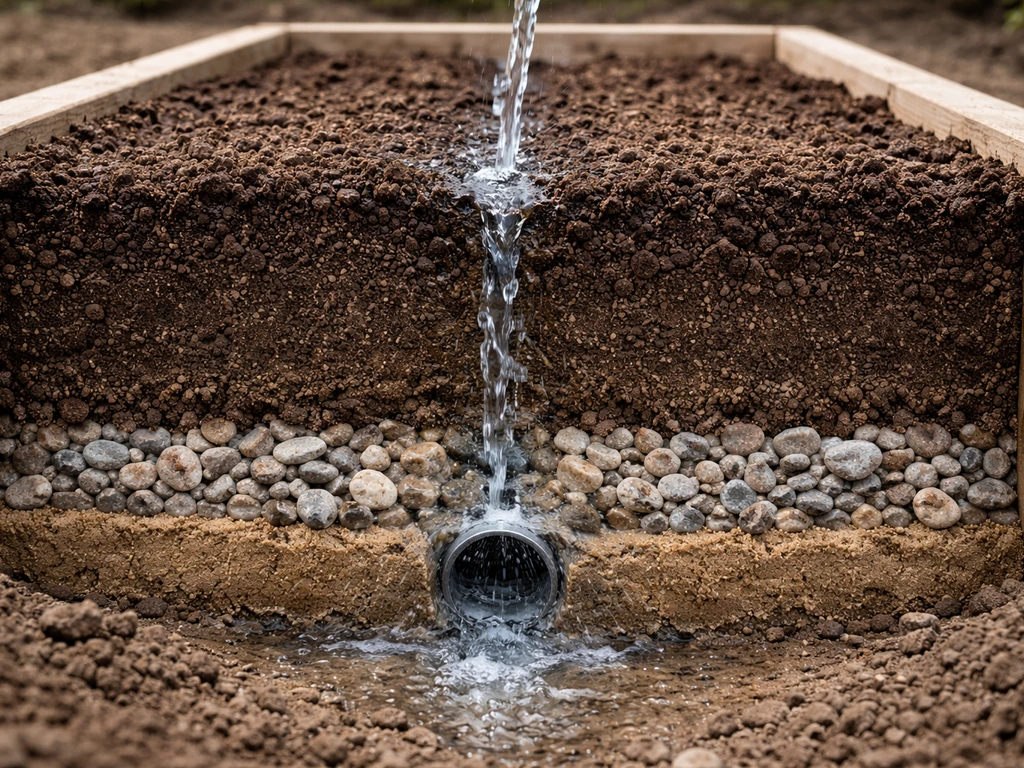
Truffles cannot form in waterlogged or compacted soils. If your native soil is heavy clay, you have two realistic options: choose a different site, or invest in significant amendment work before planting. Breaking up compaction with a subsoiler or broadfork down to 18 to 24 inches is helpful. Adding coarse gravel or perlite to improve drainage in the planting zone can help in moderate clay soils. True heavy clay that holds standing water for days is very difficult to correct sufficiently for truffle cultivation.
Keep nutrients low on purpose
This is counterintuitive for most gardeners: truffle mycorrhizal relationships are strongest in relatively poor soils. High nitrogen in particular suppresses truffle formation. Do not fertilize your truffle orchard the way you would a vegetable garden. Avoid manure, compost high in nitrogen, or synthetic fertilizers near the trees. The tree needs to be somewhat nutrient-stressed so it relies on the fungal partnership for nutrient acquisition. If the tree can get everything it needs from rich soil, the mycorrhizal relationship weakens. Keep phosphorus and potassium moderate, nitrogen very low, and calcium high (your lime application handles calcium).
Planting, mulching, and long-term care
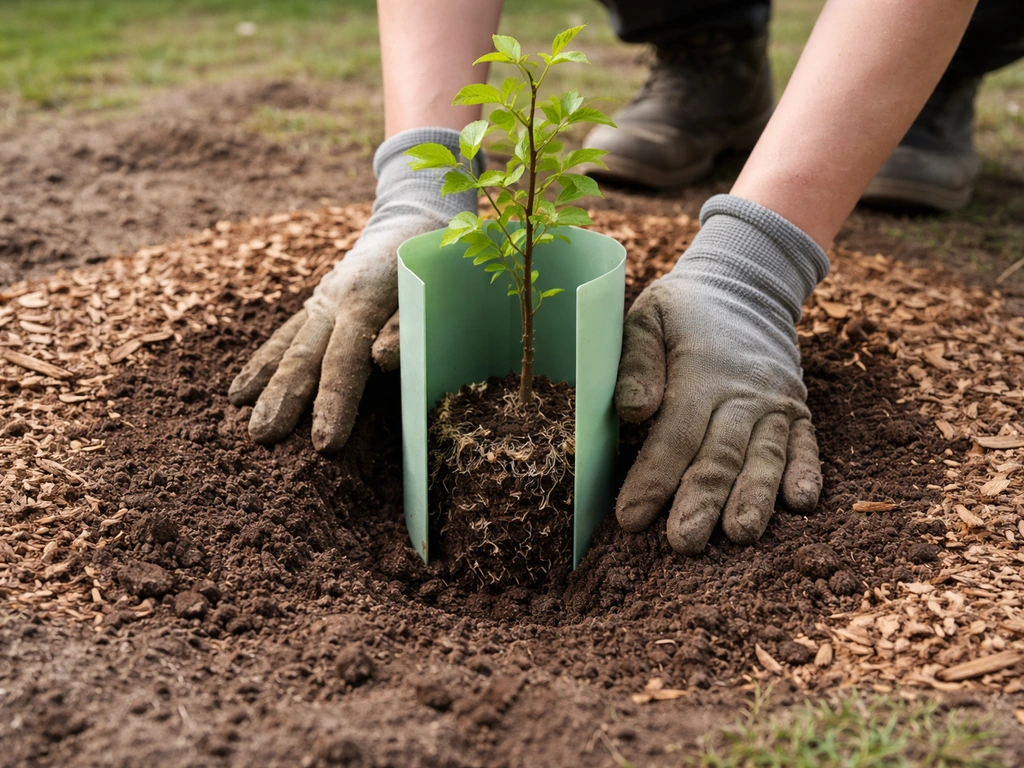
Plant your inoculated trees in late fall or early spring, during dormancy. Dig a hole just large enough for the root ball, plant at the same depth the tree was growing in the nursery container, and firm the soil gently around the roots without compacting it hard. Water thoroughly at planting. Do not add compost or fertilizer to the planting hole. Bare soil around the tree is not ideal either: apply a thin layer of wood chip mulch in a ring around the tree, keeping it 4 to 6 inches away from the trunk, extending out 2 to 3 feet. This moderates soil temperature and retains moisture without introducing too many competing organisms.
Irrigation strategy
Truffles need consistent moisture, especially in summer when rainfall is low. Drip irrigation is strongly preferred over overhead watering because it delivers water directly to the root zone without wetting foliage or creating humidity issues above ground. The goal is to keep soil at about 50 to 70 percent field capacity. A rough rule of thumb used in many commercial orchards is around 1 inch of water per week during dry periods, adjusted based on soil type and temperature. Overwatering is just as damaging as drought, so invest in a soil moisture meter and check regularly.
Weed and vegetation control
Aggressive weed control is essential, especially in the early years. Grasses and broadleaf weeds compete with the truffle fungus for space in the soil and can introduce competing fungi. Keep a clear zone of at least 3 to 4 feet around each tree. Hand weeding or light cultivation is preferable to herbicides near the root zone, though some commercial growers use pre-emergent herbicides carefully on the edges of the brûlé zone. As the truffle colonization strengthens, you may begin to see that characteristic dead-grass brûlé circle developing around your trees, which is actually a positive sign that the fungus is active and competitive.
Year-by-year care summary
- Years 1 to 2: Focus on tree establishment. Consistent irrigation, weed control, pH monitoring (retest annually), and no fertilizing. Protect young trees from deer and rodents.
- Years 3 to 4: Begin watching for brûlé development around trees. Continue irrigation and pH management. Some growers do a light surface soil disturbance (raking) around trees to aerate and check for mycelial activity.
- Years 5 to 7: First truffle formation is possible in this window, especially with Burgundy truffle. Increase monitoring frequency during the expected fruiting season for your species.
- Year 7 and beyond: Mature producing orchards. Yields typically increase over time as the fungal network expands. Some orchards continue producing for 30 or more years.
How to find and harvest your truffles
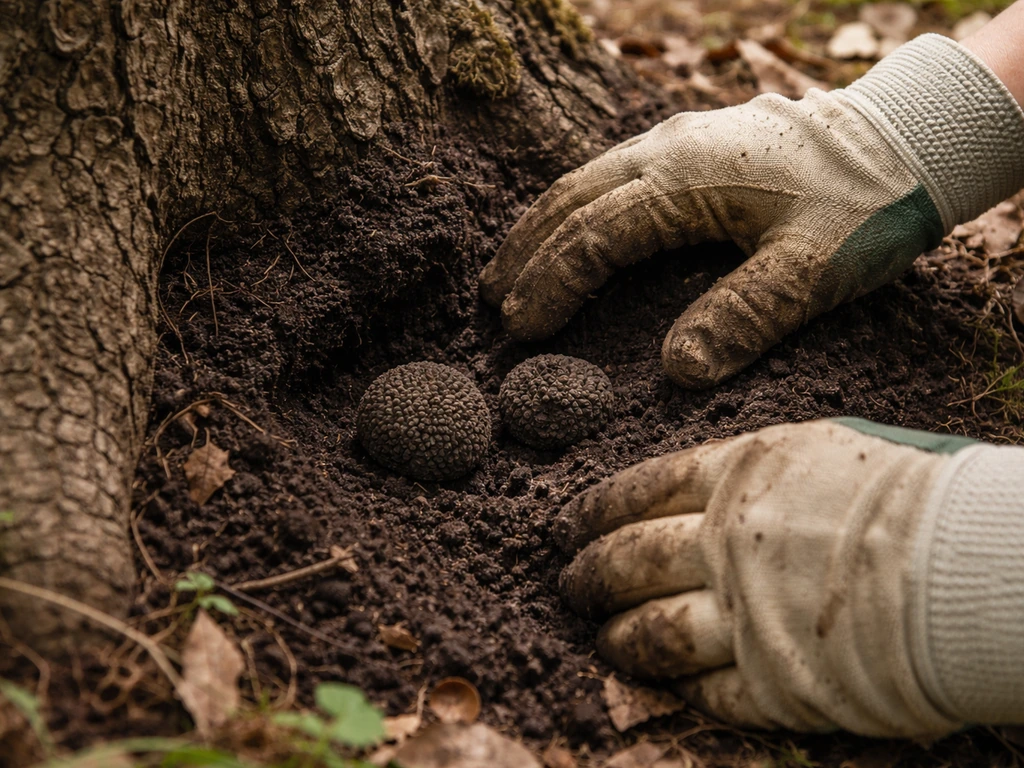
Knowing when to harvest is its own skill. Truffles ripen underground and cannot be assessed visually until you dig them up. Timing varies by species: black Perigord truffles typically ripen November through February; Burgundy truffles ripen August through November; Oregon white truffles ripen November through January. Harvesting too early is one of the most common mistakes home growers make because finding anything after years of waiting is exciting. An unripe truffle has no aroma and minimal flavor, which wastes the effort entirely.
Detection methods
- Trained dogs: The gold standard for home growers. Dogs can be trained to detect truffle aroma specifically, and this is far more humane and precise than pigs (which also tend to eat what they find). A well-trained truffle dog is a serious multi-year investment but pays off enormously.
- Fly method: Certain flies (Helomyza spp. and related species) lay eggs near ripe truffles. Watch for hovering flies near the base of your trees during the expected season and dig carefully where you see activity.
- Probing and raking: Using a thin probe or small rake to carefully disturb the top 2 to 4 inches of soil in the brûlé zone, then using your nose to detect the characteristic musky, garlicky aroma of a ripe truffle. This requires practice and a good nose.
- Crack inspection: Ripe truffles near the surface sometimes cause small soil cracks or slight mounding. Walk the brûlé zones slowly and look for subtle surface disturbances.
Yield expectations
Be realistic here. A young producing tree might yield 100 to 300 grams of truffle per season in its early productive years. Mature trees in a well-managed orchard can produce 500 grams to 1 kilogram per tree per season, though this varies enormously by species, site, and management quality. A 10-tree backyard orchard with 5 consistently producing trees at moderate yields could realistically give you 2 to 5 kilograms per season at maturity. At current market prices for black Perigord (around $800 to $1,200 per kilogram at farm gate in 2025 to 2026), that is meaningful value, but you are looking at years of upfront investment before any return. If you want a step-by-step plan specifically for black truffle cultivation, focus on matching your species to your climate and tuning soil pH and irrigation early how to grow black truffle mushrooms.
Troubleshooting when things go wrong
No truffles forming after 7-plus years
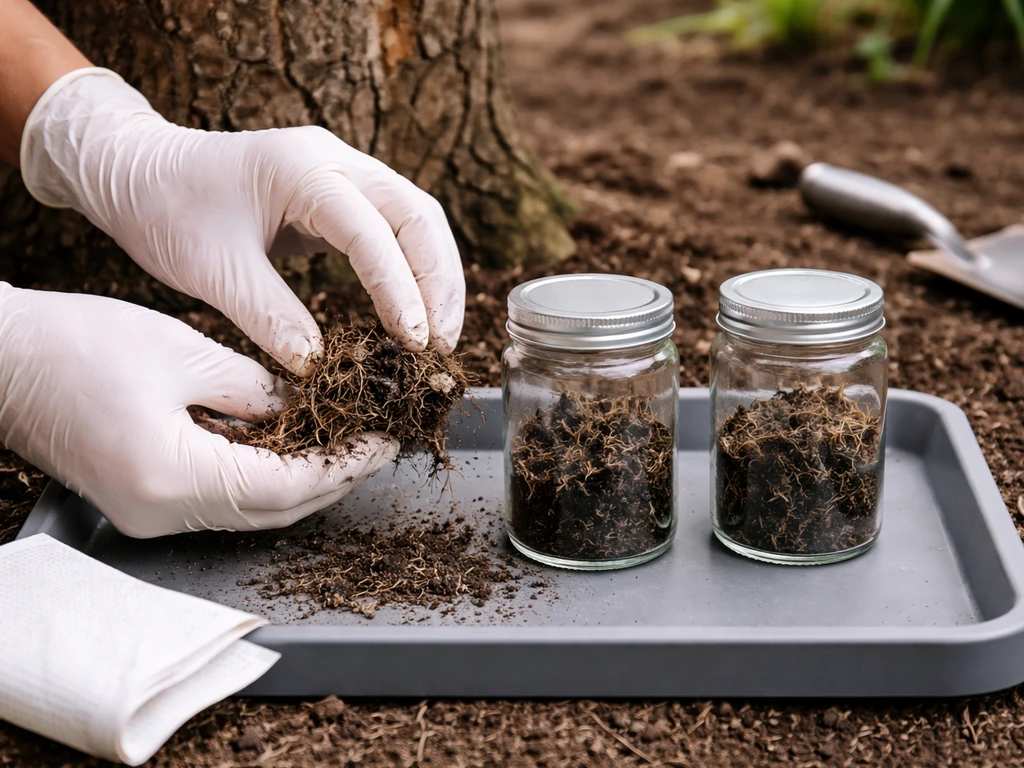
This is the painful scenario, and it happens. First, confirm that the truffle mycelium is actually still present on your tree roots. A soil or root sample sent for PCR testing (offered by some university extension programs and commercial labs) can tell you definitively whether the truffle fungus is still there. If it is absent, the mycorrhizal relationship was lost, possibly due to soil pH drift, competing fungi, overwatering, or high nitrogen from nearby sources. If the fungus is present but not fruiting, the issue is usually environmental: insufficient drought stress in summer, soil too wet in fall, or competing soil biology. Recalibrate your irrigation to allow more summer stress and ensure fall soil moisture is moderate, not high.
Poor or lost mycorrhizal colonization
Competing fungi are the most common colonization killer. If your soil is rich in organic matter or you added compost at planting, saprophytic fungi and other mycorrhizal species may have outcompeted the truffle. There is no easy fix once this happens: you may need to replace trees with freshly inoculated stock and start the soil remediation process again with the lessons learned. Going forward, keep organic matter inputs minimal, maintain high pH aggressively, and consider fumigation advice from a truffle specialist if competing fungi are a confirmed diagnosis.
pH drift and soil chemistry problems
Soil pH drifts acidic over time, especially with rainfall and organic matter decomposition. Test your soil pH every spring. If it has dropped below 7.5, apply a corrective dose of agricultural limestone and water it in. Do not let pH correction become an emergency reactive measure: build pH monitoring into your annual calendar. Also watch for signs of excess nitrogen from neighboring gardens, lawns, or if leaf litter is accumulating heavily in your orchard. Rake and remove leaf litter rather than letting it decompose in place.
Pests and animal damage
Deer will browse young trees heavily. Use tree tubes or wire cages from day one. Voles and mice can damage roots and eat developing truffles underground. Maintain a clean, mowed perimeter around your orchard to reduce rodent habitat. Wild pigs and boars are devastating in areas where they are present: fencing is the only reliable solution. Squirrels will dig and disturb the soil surface, potentially disrupting shallow mycelial networks.
Tree health issues
A sick tree cannot maintain a strong mycorrhizal relationship. Watch for signs of drought stress, root rot, or canker diseases on your host trees and address them promptly. Oak and hazelnut are generally tough, but they still need appropriate irrigation, especially in the first two to three years while establishing. If a tree dies, replace it with a fresh inoculated specimen and use the failure as data: check that planting spot for drainage issues, pH anomalies, or soil compaction before replanting.
Your practical next steps, starting today
If it is spring in your zone, now is a good time to start the groundwork before fall planting. Here is a concrete action sequence you can begin this week:
- Get a professional soil test done on your intended planting site. You need pH, nutrient levels (especially nitrogen, phosphorus, potassium, and calcium), and soil texture data. University extension labs typically do this for $15 to $30.
- Decide on your truffle species based on your climate zone using the table above. If you are in USDA zones 5 to 9 with moderate conditions, start with Burgundy truffle on hazelnut.
- Research reputable inoculated tree suppliers and place your order for fall delivery. Good suppliers often sell out early, so contact them now even if you are planting in October or November.
- Apply agricultural limestone to your planting site based on soil test results. Give it at least 6 months to react and stabilize before you plant.
- Plan your irrigation setup. Budget for a simple drip irrigation system before trees arrive.
- Source tree protection materials: deer tubes, wire cages, or fencing depending on your local wildlife pressure.
- Set a calendar reminder to retest soil pH in 3 months, then again at planting time.
Growing truffles at home is a long game, but it is one of the most rewarding projects a serious home cultivator can take on. If you are specifically looking for how to grow tremella mushroom, the requirements are very different from an orchard-style setup Growing truffles at home. The wait is real, the investment is real, and so is the satisfaction of harvesting something genuinely valuable from your own backyard. Treat it like a perennial orchard project rather than a mushroom grow, stay consistent with your blank" rel="noopener noreferrer">soil chemistry management, and you give yourself a real shot at success. If you specifically mean magic truffles, be aware they follow a different, regulated cultivation model and this guide is focused on culinary varieties. If you want to go step by step, follow a dedicated guide on how to grow truffles at home in your climate.
FAQ
Can I start a truffle orchard from seedlings or should I only buy already inoculated trees?
Buy inoculated host saplings if your goal is culinary truffles, because establishing the mycorrhizal relationship takes years and is not guaranteed from ordinary nursery trees. If you use non-inoculated seedlings, you would need a reliable inoculation plan and containment to avoid introducing competing fungi, and many home attempts end with no fruiting.
How do I confirm I really have mycorrhizal colonization before years pass?
Plan for a root or soil verification if you want certainty, rather than waiting for a brûlé circle. PCR-based testing is the most definitive option mentioned in the article body, and doing it after the early establishment period can help you catch failures caused by pH drift, overwatering, or competing soil fungi.
What soil amendments should I avoid besides fertilizer and compost?
Avoid adding organic matter right at the tree base, such as compost, manure, or high-nitrogen amendments, because they can change the underground biology and suppress truffle formation. If you use amendments elsewhere on your property, keep them out of the orchard rows, and stick to the thin, simple wood-chip mulch approach described (mulch kept away from the trunk).
Is a truffle orchard’s pH target the same for every truffle species?
No, species differ, but culinary black and similar species generally require a high alkaline range as described (around pH 7.5 to 8.3). Treat that as a minimum target for most kitchen-focused species, then fine-tune for your specific strain if your supplier provides requirements, because small deviations can reduce fruiting over time.
How strict do I need to be about irrigation levels and soil moisture?
Be strict, because both drought and waterlogging can break the mycorrhizal rhythm. Instead of only using “about 1 inch per week,” calibrate with a soil moisture meter to keep soil in the approximate 50 to 70 percent field capacity range, and adjust during hot spells or heavy soils where the same rainfall can cause very different wetness.
What does “brûlé” mean, and can I use it as a harvest timing tool?
A brûlé is the dead circular vegetation patch caused by the truffle fungus outcompeting other soil life, it is a sign the fungus is active, not a direct harvest calendar. Harvest timing still depends on ripeness by species, so use the brûlé as confirmation rather than as proof the truffles are ready to dig.
What’s the best way to handle weeds without harming the truffle zone?
Prioritize non-contact methods near the roots, like hand weeding or very light cultivation, and keep a clear zone of several feet around each tree. If you use pre-emergent herbicides, apply them only carefully to orchard edges, because accidental contact or repeated chemical exposure near the brûlé zone can stress the underground ecosystem you are trying to cultivate.
Can I plant too many trees too close together for a backyard orchard?
Yes. Overcrowding can prevent brûlé zones from developing properly and reduces sunlight and air and soil-temperature stability at the surface. The article’s spacing guidance (roughly 15 to 20 feet) exists to reduce that risk, and smaller plantings reduce statistical odds even if spacing is correct.
Why did my truffles stop even though my trees look healthy?
Common causes include competition from other fungi, soil pH drifting downward, nutrient imbalance (especially too much nitrogen), and irrigation changes that either keep soil too wet in fall or remove needed summer stress. A practical next step is to re-test pH in spring, inspect surrounding nitrogen sources like lawns and leaf litter, and consider root or soil testing to verify the fungus is still present.
What if my orchard has heavy clay, can I salvage the plan instead of relocating?
You may be able to salvage moderate clay with subsoiling to 18 to 24 inches and drainage improvements like adding coarse gravel in the planting zone, but true heavy clay that stays waterlogged for days is very difficult to correct. If water stands after rain, assume relocation or a more engineered drainage approach is required because waterlogging is a direct failure mode for truffles.
Are there signs of soil fertility problems in a truffle orchard before fruiting fails?
Often the issue is “too rich” or “too nitrogenous,” so look for heavy leaf litter buildup, vigorous growth that suggests high fertility, or nearby sources like fertilized lawns washing nutrients into the orchard. The article recommends keeping nitrogen very low, phosphorus and potassium moderate, and calcium high, which you can validate with repeated lab soil tests.
How long should I wait before calling it a failure and replanning?
Since fruiting is typically 4 to 7 years for first harvest, avoid rushing decisions after a short period. If you have confirmation that the fungus is absent via PCR, you can make an earlier change, but if the fungus is present and not fruiting, address environmental factors first (summer drought stress, fall wetness, and competition).
Can I reintroduce truffle fungus by digging and adding inoculated soil later?
In general, for a home orchard the reliable approach is replacing with freshly inoculated trees rather than trying to “patch in” fungus later, especially if competing fungi have already outcompeted the truffle. Without controlled inoculation and sterile conditions, adding soil can increase competition, so it is usually more effective to fix the underlying drivers (pH, drainage, nitrogen, organic matter inputs) and restart with verified inoculated stock if colonization is gone.
What animal damage should I prioritize preventing first?
Prevent browsing and root injury early, because deer can decimate young trees quickly and voles and mice can damage roots and disturb underground truffle development. The article notes tree tubes or wire cages for deer and maintaining a clean perimeter to reduce rodent habitat, while wild pigs and boars usually require robust fencing.