You can grow black truffles, but you need to set expectations straight from the start: this is a years-long project, not a weekend grow. The most common black truffle for cultivation, Tuber melanosporum (the Périgord or French black truffle), typically takes around 5 years to produce a first crop and a full decade to hit peak production. It also requires a living host tree, carefully adjusted alkaline soil, and disciplined long-term care. With the right setup, inoculated host tree, and patience, home cultivation is genuinely possible outdoors, and partially possible indoors with significant caveats. If you want a full walkthrough of how to grow truffle from selecting an inoculated host tree to managing soil pH over the long term, follow the step-by-step sections in this guide. If you want the full, step-by-step process, review the full guide on how to grow black truffle mushrooms. If you are specifically trying to learn how to grow tremella mushroom, the process is very different from black truffle cultivation, so it's best to follow a tremella-focused guide how to grow truffle.
How to Grow Black Truffles: Indoor and Outdoor Steps
Reality check: can you actually grow black truffles at home?
The honest answer is: yes, outdoors, with a serious long-term commitment. Indoors or in pots, the odds drop considerably. Here's why. Black truffles are not like oyster mushrooms or shiitake, where you pack some substrate into a bag and wait a few weeks. Tuber melanosporum is a mycorrhizal fungus, meaning it lives in a symbiotic relationship with the roots of a host tree, most commonly oak or hazelnut. The truffle fruiting bodies form underground where those fungal root connections (called ectomycorrhizae) are active. No host tree roots, no truffles. Full stop.
Indoor and container setups are essentially attempts to compress what is naturally a decade-scale orchard system into a pot or greenhouse. The rooting volume is restricted, contamination risk is higher, and it's much harder to maintain the exact environmental conditions the fungus needs over a multi-year timeline. That said, some growers have had early-stage success with containerized inoculated seedlings, especially as proof-of-concept or a stepping stone to an outdoor planting. If you're seriously interested, the outdoor orchard approach, even a small backyard one, is your best real-world pathway.
One important note on species: 'black truffle' is a loose term. Tuber melanosporum is the prestige variety, but summer truffles (Tuber aestivum) and winter truffles (Tuber brumale) are also called black truffles and have different host preferences, soil tolerances, and flavor profiles. Make sure you know exactly which species you're working with, because the cultivation details vary. This guide focuses primarily on T. melanosporum since it's the most sought-after and the one most cultivation resources target.
How black truffles actually grow (and why it matters for cultivation)
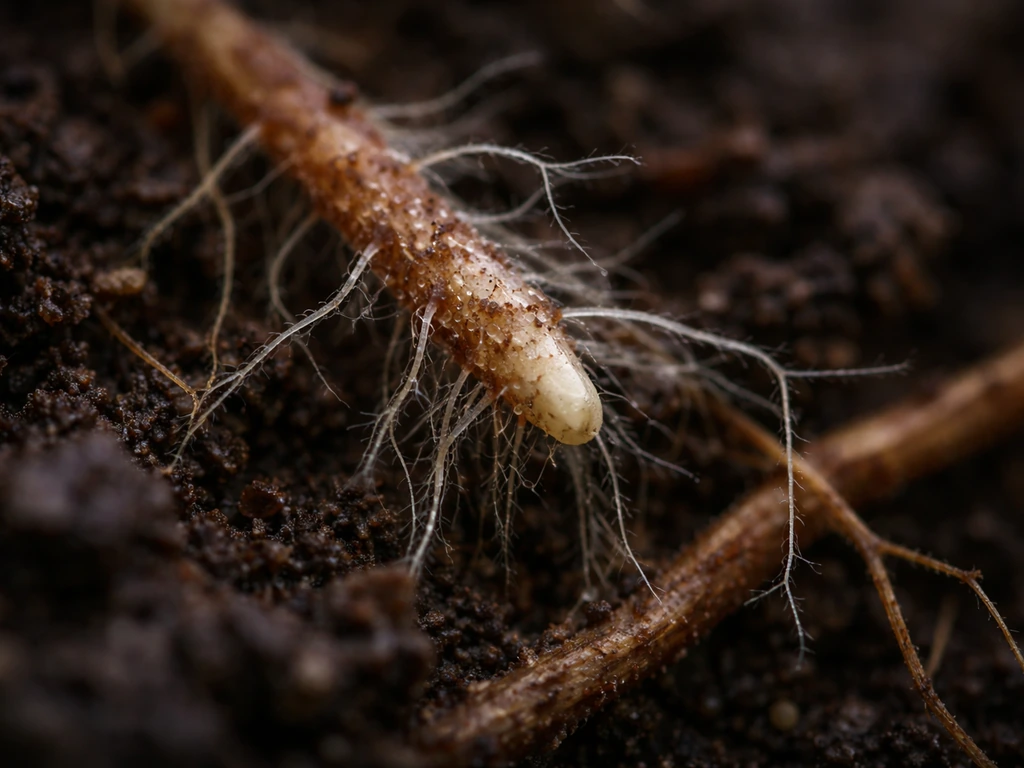
Understanding the biology here isn't just interesting, it's essential for not wasting years of effort. Tuber melanosporum colonizes the fine root tips of compatible host trees, forming a sheath of fungal tissue around each root tip. This ectomycorrhizal network extends out through the soil, pulling in water and minerals for the tree while getting sugars and carbohydrates in return. Truffle fruiting bodies (the actual truffles you eat) develop underground at the edges of this mycelial network, usually between late autumn and early spring in their natural environment.
What this means practically is that cultivation methods targeting black truffles as if they were typical saprophytic mushrooms, where you just add spawn to a substrate, will always fail. The fungus must first colonize living tree roots. Then those roots and the associated mycelium need to mature and expand across the surrounding soil. Only after that foundation is established does the fungus have the energy and mycorrhizal mass to allocate resources toward fruiting. This is why timelines are measured in years, not weeks, and why the quality of your starting inoculated tree matters enormously.
Indoors vs. outdoors: choosing your approach
Before you spend money on anything, decide which pathway fits your situation. Both are possible, but they have very different requirements, risk profiles, and realistic outcomes.
| Factor | Outdoor Orchard/Garden | Indoor/Container Setup |
|---|---|---|
| Space needed | At least a small garden plot or yard | Large containers, greenhouse, or sunroom |
| Timeline to first truffles | ~5 years minimum, often longer | Uncertain; typically longer due to restricted roots |
| Contamination risk | Moderate (manageable with soil prep) | High (competing fungi thrive in enclosed environments) |
| Environmental control | Depends on your climate | More controllable but labor-intensive |
| Host tree growth | Can establish naturally over years | Root restriction limits long-term viability |
| Realistic success rate | Higher with proper site prep | Lower; best used as a supplement to outdoor growing |
| Cost to start | Moderate (inoculated trees + soil amendments) | Moderate to high (containers, sterile media, lighting) |
For most home growers, the outdoor approach in a garden or small plot is the right choice. If you're in a climate-appropriate region (Mediterranean-type climates, parts of the Pacific Northwest, the Mid-Atlantic, or similar), even a single inoculated tree in a prepared bed gives you a realistic shot. The indoor or container route makes more sense if you're testing the concept, live in a challenging climate and want to overwinter a young tree, or plan to eventually transplant outdoors. Don't expect container-grown truffles to be a standalone solution.
Getting started: sourcing inoculated trees and initial setup
The single most important decision you'll make is where you get your inoculated host tree. This is not the place to cut corners. Specialized nurseries produce oak or hazelnut seedlings (typically English oak, holm oak, or hazelnut for T. melanosporum) by inoculating roots with tested, quality-controlled T. melanosporum spore inoculum. The inoculation quality, including purity testing to ensure no competing ectomycorrhizal fungi are already present on the roots, directly determines whether you have a functioning symbiosis to build on.
When evaluating suppliers, ask specifically about their inoculation and quality assurance process. Reputable nurseries will be able to tell you the species of Tuber used, how the inoculation was verified (ideally through microscopy or DNA testing of root tips), and what measures were taken to keep the growing environment sanitary. Avoid generic 'truffle inoculated' seedlings from sources that can't provide this detail, because a seedling contaminated with competing ectomycorrhizal fungi is essentially a years-long dead end.
Once your tree arrives, handle it carefully. If you're planting outdoors, minimize the time between receipt and planting. Don't let the root ball dry out. If you're using a container setup, source sterile or pasteurized growing medium and work in as clean an environment as possible, the same principles that apply to other specialty mushroom cultivation apply here, just scaled up dramatically in timeline.
Outdoor planting setup
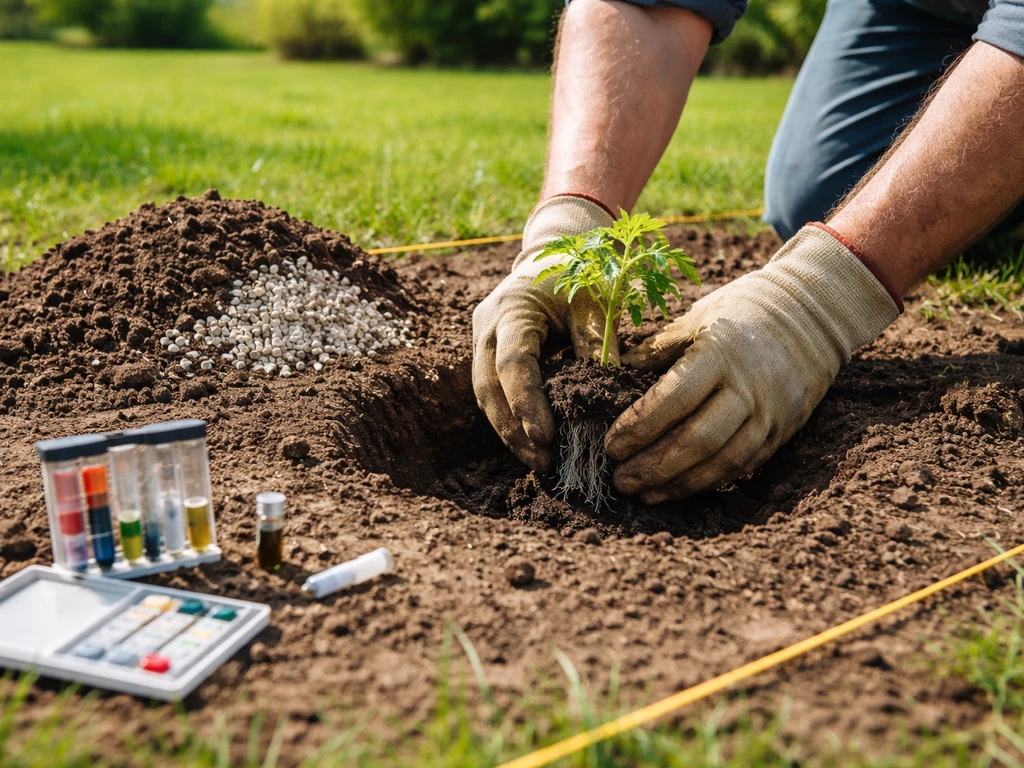
- Select a site with full sun, good drainage, and enough room for the host tree to mature.
- Test your soil pH before doing anything else (a basic soil test kit or extension service test works fine).
- Amend soil to reach the target pH range (more on this below) before planting.
- Dig a planting hole sized generously for the root ball, loosen surrounding soil to encourage root spread.
- Plant your inoculated seedling at the same depth it was growing in the nursery container.
- Mulch lightly with non-bark mulch (avoid wood chips from competing tree species) to conserve moisture without smothering roots.
- Install drip irrigation or plan a consistent watering regimen from day one.
Container/indoor setup
- Use the largest containers you can practically manage, at minimum 25-30 gallons, to give roots room to develop.
- Source sterile or pasteurized growing medium and amend pH before planting.
- Place in a bright location (south-facing window or supplemental grow lighting) since the host tree needs photosynthesis to feed the fungal symbiont.
- Plan for eventual transplant outdoors when the seedling outgrows container limits.
- Keep all tools and containers as clean as possible to minimize contamination risk throughout.
Soil preparation: pH, moisture, and nutrition
Soil is where most home growers go wrong, and it's probably the most fixable variable. Tuber melanosporum is strongly alkaline-loving. A Napa Watersheds WICC board presentation (PDF) also lists example truffle cultivation targets such as Tuber melanosporum soil pH around 7.5 to 8.3 and planting density values like trees per acre blank" rel="noopener noreferrer">Tuber melanosporum soil pH 7.5 to 8.3. The target pH range is approximately 7.5 to 8.3, with an ideal sweet spot around 7.7 to 8.0. Most garden soils in the US and UK are too acidic for T. melanosporum without significant amendment. If your soil is sitting at 6.5 or lower (very common), you need to raise it considerably before planting.
The standard approach is to incorporate finely crushed agricultural limestone (calcium carbonate) into the soil at least several months before planting, ideally a full growing season ahead. Crushed limestone raises pH slowly and sustainably without the harsh swings you'd get from quicklime. Test pH again after amendments have had time to react with the soil, and adjust further if needed. Some growers also evaluate whether their site has naturally calcareous (carbonate-rich) subsoil layers, since T. melanosporum thrives in naturally chalky or limestone-derived soils.
On nutrition: black truffle orchards are generally kept low-fertility deliberately. High nitrogen availability encourages competing weeds and can shift the fungal community away from T. melanosporum. Avoid adding nitrogen-rich fertilizers or fresh compost near your truffle trees. The mycorrhizal relationship itself handles most of the tree's nutrient needs when functioning correctly.
For moisture management, research has found that T. melanosporum mycorrhizal proliferation is actually highest when irrigation provides around 50% of evapotranspiration demand, not full irrigation. In a peer-reviewed irrigation study, researchers found that the time and dose of irrigation influence Tuber melanosporum ectomycorrhiza proliferation in young black truffle orchards when using relative evapotranspiration (ETo) levels, including a key 50% ETo treatment relative evapotranspiration (ETo) levels such as 50% ETo. The practical takeaway is that you want consistent, moderate moisture rather than keeping the soil soaking wet. A useful guideline is to allow the soil to dry to around -1 MPa water potential before rewatering (a soil moisture meter with tension readings helps here). Overwatering encourages competing soil organisms and root disease; underwatering stresses the host tree and the fungal network.
Year-by-year care and environmental management
Black truffle cultivation is a long game, and what you do in the first three years sets up everything that comes after. Here's a practical breakdown of what to focus on by stage.
Years 1 to 2: establishment
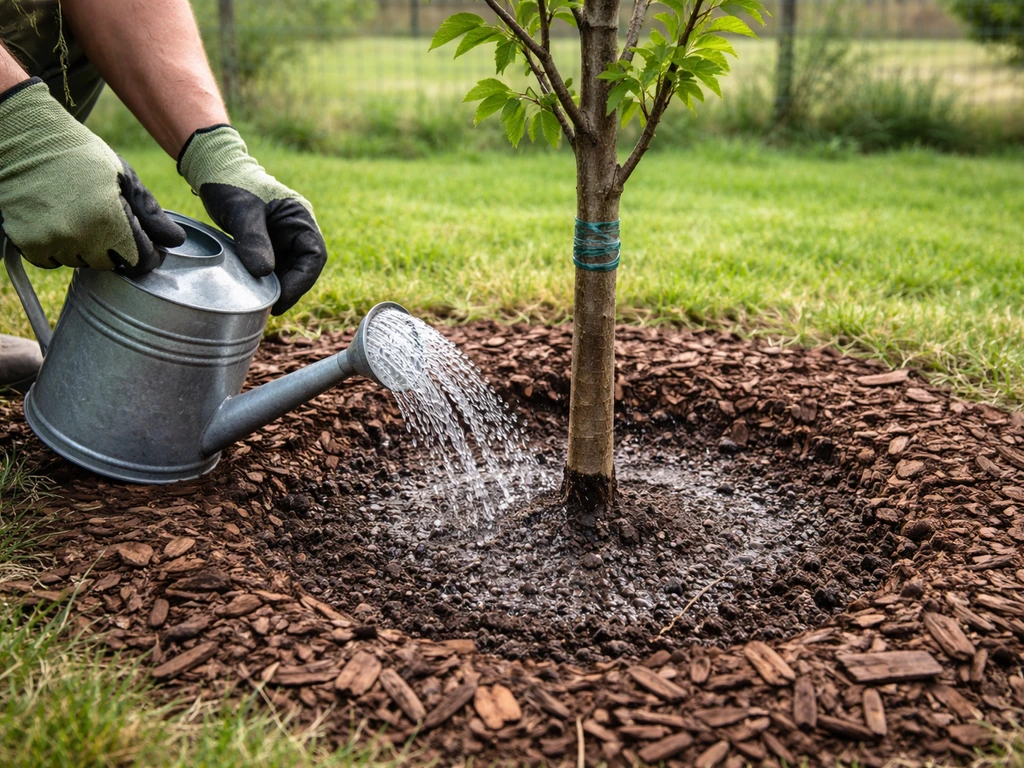
Your primary job in the early years is to get the host tree established and the mycorrhizal network expanding. Water consistently but not excessively. Keep weeds aggressively controlled around the base of your tree, within at least a 1-meter radius. This matters more than most growers realize: weed competition directly suppresses mycelial expansion of T. melanosporum in young plantings, because competing plants introduce competing fungi and reduce the carbon and water available to your truffle symbiosis. Hand weeding or careful mulching is better than herbicides, which can affect soil biology.
Years 3 to 5: mycelial expansion
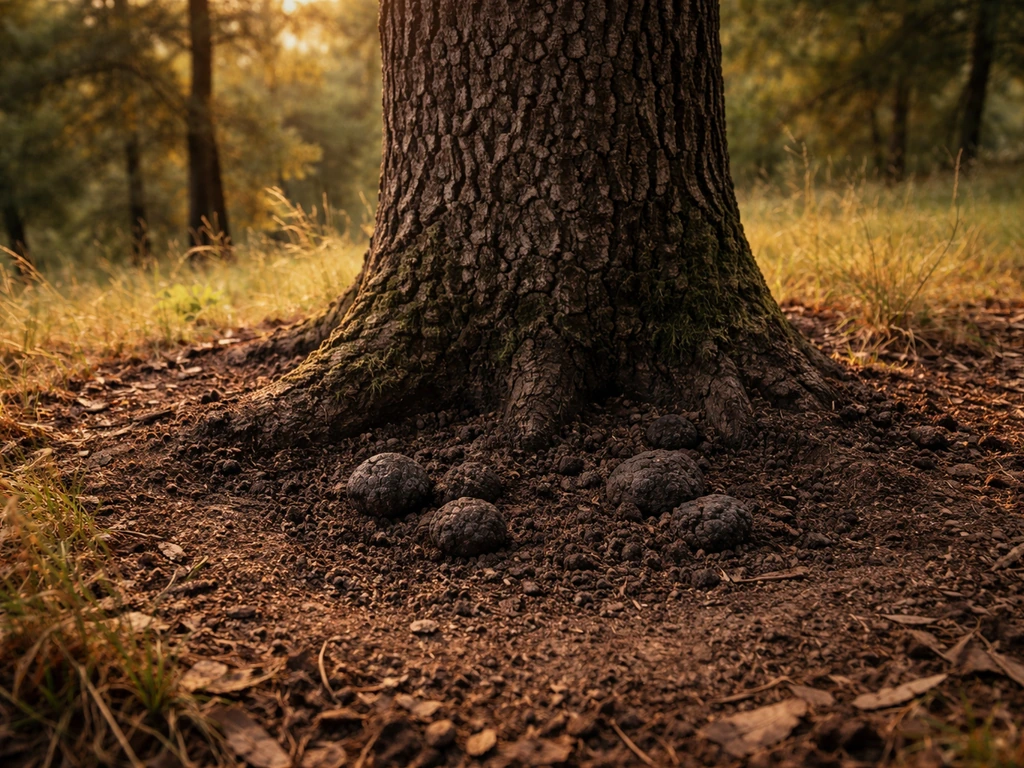
If establishment went well, you may start to see the 'brûlé' effect: a bare, scorched-looking circle of suppressed vegetation around the base of the tree. This is actually a great sign. The brûlé forms because T. melanosporum mycelium suppresses competing plants and fungi in the immediate root zone. It typically appears 3 to 5 years into a well-managed planting. Continue weed control, maintain irrigation, and test soil pH annually to make sure it hasn't drifted back toward neutral. Reapply crushed limestone in small top-dress applications if pH drops below 7.5.
Year 5 onward: first production and beyond
First truffles can appear around year 5 in well-established plantings, though year 7 to 10 is more common for consistent production. The natural harvest window for T. melanosporum runs roughly November through March. Trained dogs (or pigs, traditionally) are used in commercial operations to locate ripe truffles by scent. For a home planting, you can probe gently with a thin rod near the brûlé edges where truffle formation concentrates, or observe for small soil mounds or cracks that sometimes indicate a truffle pushing up slightly below the surface. Ripe truffles have a strong, distinctive aroma that can be detected by pressing your nose to the soil near the brûlé, especially on warm afternoons.
For indoor setups, environmental management means mimicking the seasonal cycle the tree and fungus expect. This includes a genuine cold dormancy period in winter (temperatures consistently below 10°C / 50°F for at least 6 to 8 weeks), followed by a gradual warming in spring. Without this temperature cycling, the host tree stresses and the fungal phenology gets disrupted. This is one of the reasons container setups are genuinely hard: you need to actively manage temperature seasonality rather than letting nature do it.
Troubleshooting: slow growth, contamination, pests, and what success actually looks like
No brûlé appearing after 4 to 5 years
This usually points to one of three problems: pH is off (test and re-amend), the original inoculation failed or was contaminated with competing fungi (difficult to fix without replacing the tree), or weed/competition pressure has been too high. If the tree looks healthy but there's zero sign of truffle activity after 5 years, consider sending a root tip sample to a lab that offers mycorrhizal identification. Some nurseries and extension programs offer this. If the roots show little or no T. melanosporum colonization, you're back to square one and may need to start with a fresh inoculated tree in better-prepared soil.
Competing ectomycorrhizal fungi
This is the number one biological threat to truffle cultivation. Pre-existing ECM fungi in native soil, including species from nearby forest trees, can rapidly colonize your host tree's roots and outcompete T. melanosporum. In outdoor settings, you can reduce this risk by avoiding sites adjacent to established forests, preparing the soil thoroughly before planting, and using inoculated seedlings with verified purity. In container settings, use only sterile or pasteurized growing media and never add non-sterile garden soil.
pH drift
Soil pH will naturally drift toward neutral or acidic over time, especially in higher-rainfall climates. Test annually, particularly in spring before the growing season. A simple top-dressing of fine agricultural limestone broadcast around the drip line of the tree (avoiding direct trunk contact) every 1 to 2 years is usually enough to maintain your target range. This is one of the most manageable maintenance tasks and one of the most commonly neglected.
Pests and animals
Rodents (particularly squirrels, mice, and voles) are the most common truffle pest in home settings. They locate ripe and near-ripe truffles by scent and dig them up before you even know they're there. Fine wire mesh buried 20 to 30 cm below the surface around the root zone, or cylinder guards around individual trees, can help. Wild boars are a serious issue in rural European settings. Regular monitoring near the brûlé in harvest season helps you find truffles before animals do.
Overwatering and underwatering
Both extremes hurt. Waterlogged soil drives anaerobic conditions that stress the host roots and encourage competing soil organisms. Chronically dry soil stunts mycelial expansion and can cause the host tree to drop leaves and reduce its sugar output to the fungal partner. A soil moisture meter is worth the small investment. Aim for consistently moist but well-drained conditions, and during summer dry periods especially, maintain drip irrigation at a rate that replaces roughly half of what evapotranspiration is removing.
Success signs to watch for
- Brûlé formation (bare zone of suppressed vegetation) around the tree base, typically years 3 to 5
- Healthy, vigorous host tree growth indicating an active mycorrhizal partnership
- Detectable truffle aroma near the brûlé edges in late autumn and winter
- Small soil disturbances or surface cracks near the brûlé perimeter in harvest season
- Root tip colonization confirmed by lab testing showing T. melanosporum presence
Growing black truffles is one of the most demanding projects in specialty cultivation, far more like running a small orchard than growing mushrooms in the conventional sense. If you've explored other truffle types like white truffles or summer truffles, or looked at magic truffles and sclerotia (which are an entirely different biological category), you'll know that nothing else in the truffle world demands quite this level of multi-year commitment. If you’re trying to grow sclerotia truffles, you’ll need a totally different approach than culinary black truffles. If you specifically mean magic truffles, the setup and legality requirements can differ a lot from culinary black truffles. But for growers willing to invest the time and set up correctly from day one, a home planting of even one or two well-managed trees is a genuinely realistic path to harvesting your own Périgord black truffles.
FAQ
What should I do if my black truffle tree doesn’t produce after 5 years?
If after 5 years you see no brûlé and no truffle activity, don’t keep waiting blindly. Test soil pH first, then check weed pressure and watering regime, and finally get a root-tip/mycorrhizal ID test if available. If the roots show little Tuber melanosporum colonization, the inoculation likely failed and replacing the tree in better-prepared, low-competition conditions is usually the only effective fix.
Can I grow black truffles like typical mushrooms by adding spawn to a substrate?
No, using “black truffle” spawn on compost or wood is not a valid shortcut for Tuber melanosporum. This fungus needs a functioning ectomycorrhizal symbiosis with living host roots first. If you plant inoculated seedlings but still want to add organic matter, avoid fresh compost and nitrogen-rich inputs near the tree base, since they can shift the fungal community.
How much space do I need between inoculated trees for growing black truffles outdoors?
Start with orchard spacing that allows root expansion and weed control. In-ground plantings are commonly managed as single-tree units with a clean radius, so plan for at least about a 1-meter weed-free zone around each tree and enough distance that roots won’t fully interlock too early. If trees are too crowded, it becomes harder to maintain pH and moisture balance consistently across the root zone.
Where should I plant (and where should I avoid planting) black truffles to reduce competition from native fungi?
Avoid site selection right next to established forests, hedgerows of mature oaks, or other vegetation with dense ectomycorrhizal trees, because competing ECM fungi can colonize your host quickly. If you only have a limited yard, choose the farthest area from existing mature tree roots and prepare the bed thoroughly before planting.
Can I realistically grow black truffles in pots or greenhouses?
Yes, but treat it as “proof-of-concept,” not a reliable production plan. Container success depends heavily on keeping pH in range, restricting competing organisms, and providing a real winter cold dormancy period. Also, plan for frequent monitoring because soil chemistry and moisture swing faster in pots, which can stress both host and mycorrhizal network.
How do I maintain the correct alkaline soil pH over many years?
For long-term pH stability, top-dress with finely crushed agricultural limestone (calcium carbonate) rather than repeatedly doing aggressive one-time adjustments. A practical strategy is to retest pH annually (especially before the growing season) and apply small limestone amounts if you drift below target. Keep the material out of direct trunk contact.
Do I need to fertilize my truffle orchard, and what should I avoid?
Over-fertilizing is a frequent failure mode. Keep nitrogen low, don’t add fresh compost near the tree, and avoid high-nitrogen lawn feeding practices in adjacent areas. If you must fertilize for tree health, use the lowest-impact approach possible and separate it from the truffle root zone management.
What temperature cycling is required for indoor black truffle growth?
Seasonality matters most for indoor containers. Plan for a genuine cold period with temperatures consistently below about 10°C/50°F for roughly 6 to 8 weeks, then a gradual warm-up. If you cannot provide that cooling cycle reliably, it’s better to focus on an outdoor planting or a plan to transplant outdoors.
How can I protect truffles from rodents without damaging the roots?
Yes. If rodents are common in your area, start protection before harvest season and keep it in place once you notice brûlé edges where truffles are likely forming. Use fine wire mesh barriers buried around 20 to 30 cm deep, or individual cylinder guards for young trees, and check them regularly because burrowing animals can bypass damaged areas.
What climate limitations make black truffle cultivation unlikely?
If you’re in a climate that doesn’t naturally provide the cold winter dormancy the host expects, container attempts become much less predictable. For outdoor planting, pick regions with Mediterranean-type winters or similar climates where the tree can experience winter chill; otherwise your best step is to transplant outdoors when conditions allow.
When is it worth sending a root sample to a lab, and what will it tell me?
A mycorrhizal root-tip test is worth considering if you’re not seeing expected milestones. It helps you distinguish between “pH and care problems” versus “wrong or contaminated mycorrhiza.” If the sample shows low colonization by Tuber melanosporum, replacing the inoculated tree in properly prepared soil often saves several more years.