Black truffle mushrooms (Tuber melanosporum and related Tuber species) can be grown at home, but "at home" means outdoors in an inoculated tree orchard, not in a bucket or a grow tent. You plant a truffle-inoculated host-tree seedling in the right soil, maintain that tree for several years, and eventually harvest underground fruiting bodies. It takes patience measured in years, not weeks. If you searched for "black trumpet mushrooms" instead, that's a completely different fungus (Craterellus cornucopioides), and the honest truth is that black trumpets cannot be cultivated using conventional mushroom-growing methods at all. This guide covers both, so you can figure out exactly which one you're after and get started the right way.
How to Grow Black Truffle Mushrooms at Home Step by Step
Marcus Holloway
21 May 2026
Black truffles vs. black trumpet mushrooms: let's clear this up first
These two mushrooms share a color and a name fragment, but they are completely unrelated in biology, appearance, and cultivation approach. Mixing them up is extremely common in search results, so it's worth spending a minute here before you buy anything or dig up your backyard.
| Feature | Black Truffle (Tuber melanosporum) | Black Trumpet (Craterellus cornucopioides) |
|---|---|---|
| Also called | Périgord truffle | Horn of plenty, black chanterelle |
| Appearance | Rough, warty, golf ball-sized underground body | Thin, funnel-shaped, hollow above-ground fruiting body |
| Where it grows | Underground, near host tree roots | Leaf litter and soil in deciduous or conifer forests |
| Cultivation possible? | Yes, with inoculated seedlings outdoors | No, not with conventional cultivation methods |
| Time to first harvest | 5 to 10+ years | N/A (wild forage only) |
| Flavor profile | Earthy, musky, intensely aromatic | Smoky, woodsy, mild truffle-like notes |
| Starting material | Truffle-inoculated tree seedlings | No reliable commercial spawn or starter available |
If you want to grow the luxury culinary fungus that sells for hundreds of dollars per pound, you want Tuber melanosporum (black truffle). If you want the wild-foraged chanterelle relative with a distinctive funnel shape, that's Craterellus cornucopioides (black trumpet), and growing it at home isn't currently feasible. Foraging is your best option for that one. Keep reading and I'll walk through both in detail.
What you can realistically grow at home (and what you can't)
Let's be straightforward about this, because truffle cultivation gets oversold online. Black truffles are genuinely growable by a dedicated home grower with outdoor space, but you need to go in with clear eyes about what "growing" actually involves here.
Black truffles: doable, but a long game
You can absolutely start a black truffle orchard at home if you have a patch of outdoor ground (or even large containers), the right soil conditions, and the patience to wait. Truffle orchards have been established successfully by small landowners across North America, Australia, New Zealand, and Europe. The catch is that Tuber melanosporum is an ectomycorrhizal fungus, meaning it only produces fruiting bodies when living in a symbiotic relationship with the roots of a compatible host tree.
Black truffles in cultivation are Tuber species, such as Tuber melanosporum, grown by inoculating compatible host-tree seedlings and establishing an outdoor calcareous orchard where the underground fruiting bodies take many years to form Tuber melanosporum is an ectomycorrhizal fungus. You can't just inoculate soil and expect truffles to appear.
The fungus has to colonize the roots of a living oak, hazel, or similar host tree, and that tree needs time to grow and establish that underground network. Expect your first harvest window to open somewhere between five and ten years after planting. Some growers see truffles at year four or five if conditions are ideal; others wait longer.
Black trumpets: wild-forage only (for now)
Craterellus cornucopioides fruits in leaf litter and humus-rich soil in deciduous and mixed conifer woodlands. Its fruiting depends on a web of ecological interactions (specific soil microbes, moisture cycles, forest floor chemistry, and likely mycorrhizal tree associations) that nobody has yet cracked in a cultivation setting. There's no commercially available black trumpet spawn, and attempts to grow it on standard mushroom substrates like straw or hardwood sawdust have not produced fruiting bodies. If you're specifically after black trumpets, your best path is learning to identify and forage them, not setting up a grow. This is genuinely different from most other mushrooms on this site, including other trumpet or chanterelle-adjacent species.
Materials and sourcing: what to get before you start
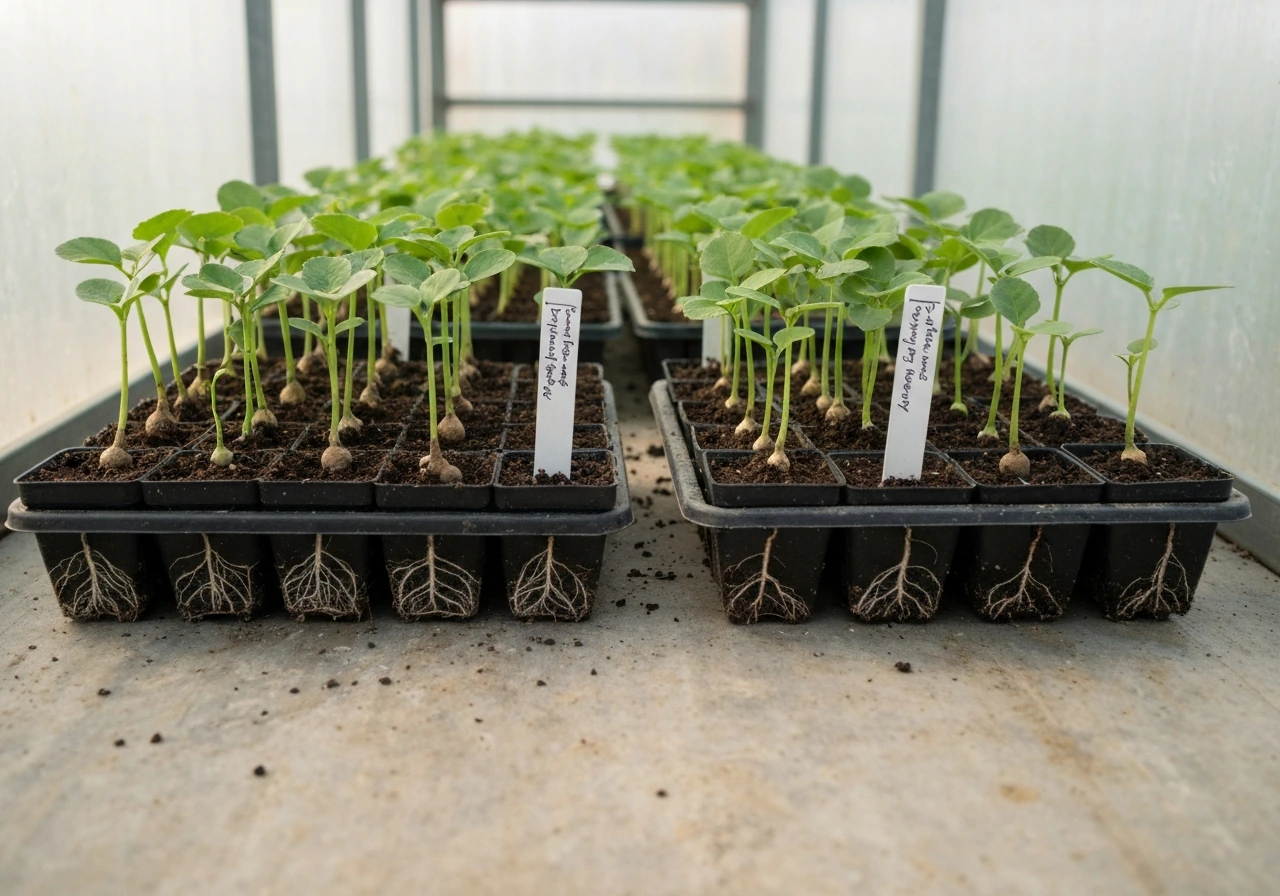
For black truffles, the most important purchasing decision you'll make is where you buy your inoculated seedlings. This is the single biggest variable in whether a home truffle project succeeds or fails, and it's where a lot of people get burned.
Inoculated host-tree seedlings
Do not buy just truffle spores or loose truffle spawn and expect to inoculate your own seedlings at home. The inoculation process requires controlled lab conditions, and DIY inoculation success rates are extremely low. Instead, buy pre-inoculated seedlings from a reputable truffle nursery. These seedlings have had their roots colonized with Tuber melanosporum mycorrhizae under laboratory conditions. A quality nursery will verify mycorrhizal status before selling (look for suppliers that conduct root-tip analysis or DNA confirmation, not just visual checks). Seedling quality matters enormously. A 2024 review of truffle cultivation in North America specifically highlighted that morphological standards and verified mycorrhizal status are critical quality criteria. Don't just buy the cheapest seedling you find.
- Compatible host trees for T. melanosporum: English oak (Quercus robur), downy oak (Quercus pubescens), holm oak (Quercus ilex), European hazel (Corylus avellana), and hornbeam (Carpinus betulus)
- Seedling size at purchase: typically 15 to 30 cm tall, grown in small nursery pots
- Verified nurseries will provide a mycorrhizal colonization rate (aim for 30% or higher on root tips)
- Expect to pay $25 to $60+ per inoculated seedling depending on the species and supplier
Soil amendment materials
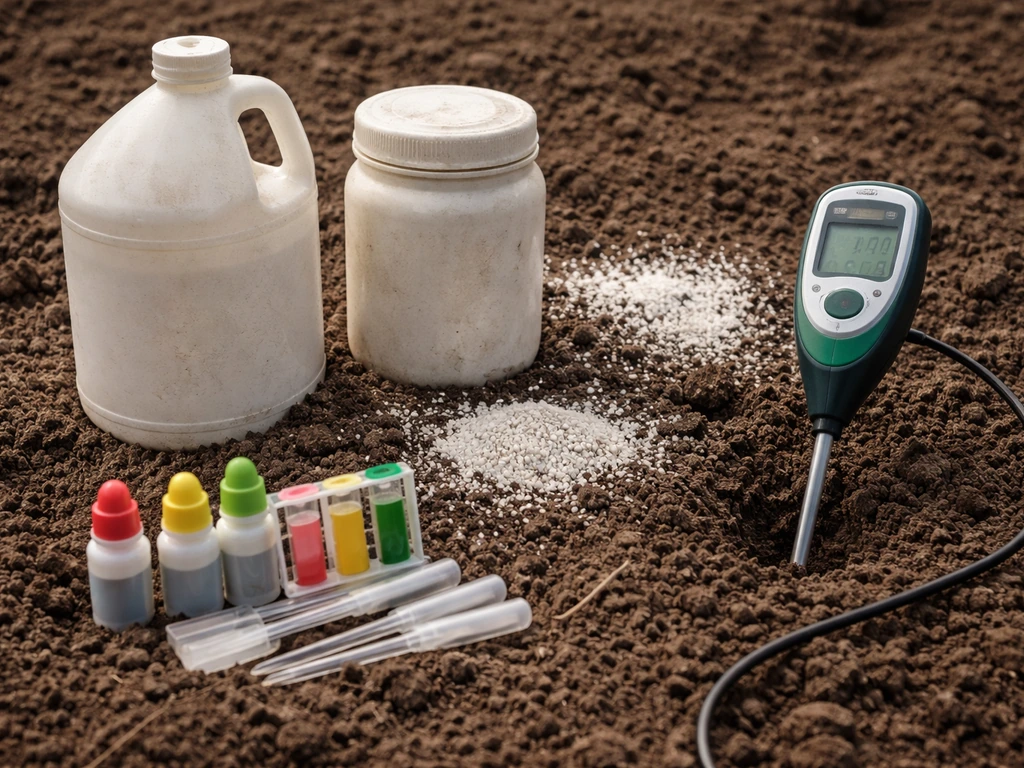
- Agricultural lime or crushed limestone to raise soil pH (you're targeting pH 7.5 to 8.3)
- A soil pH meter or test kit (this is non-negotiable)
- Coarse grit or gravel to improve drainage
- A soil nutrient test to check calcium levels (truffles thrive in calcium-rich, calcareous soils)
- Mulch for maintaining moisture around the tree base
Tools
- Spade and trowel for planting and careful harvesting
- Moisture meter or consistent watering schedule
- Truffle dog or pig (seriously, for detection at harvest time), or a raking method for small plots
- Protective tree guards if you have wildlife or foot traffic pressure
How to set up a black truffle cultivation plot: step by step
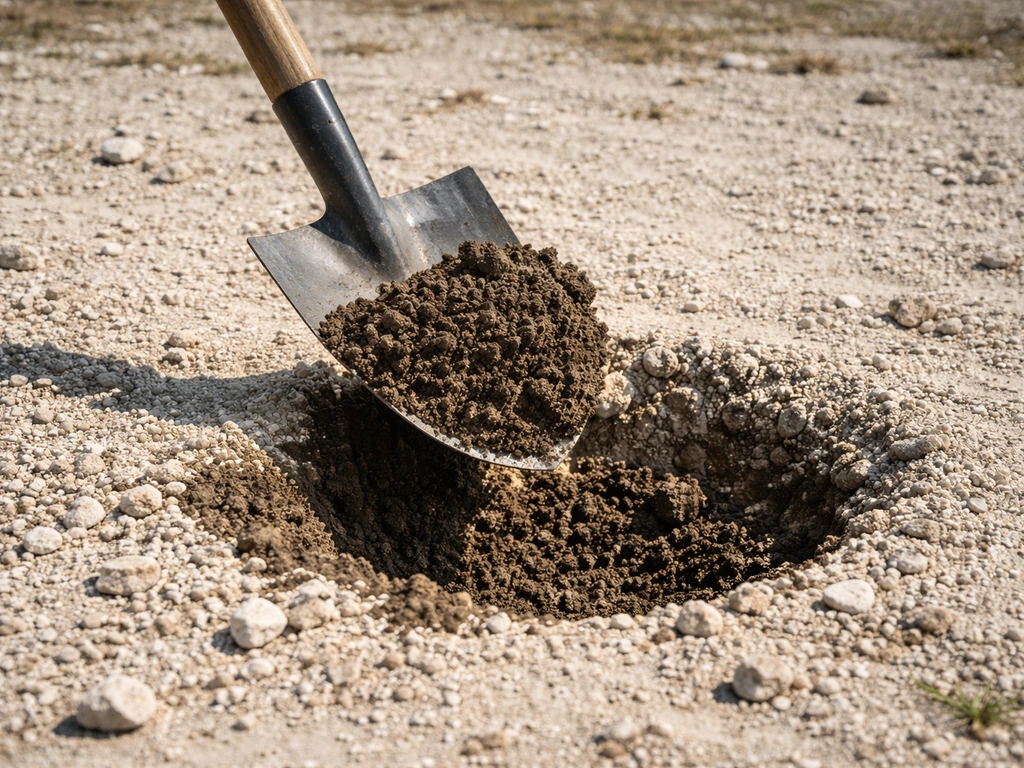
This is the full process from site selection to planting. Take each step seriously because shortcuts here cost you years of waiting, not just weeks.
Step 1: choose and prepare your site
Black truffles need well-drained, alkaline, calcareous soil with full sun to partial shade. A slope is actually ideal because it encourages drainage. Your site should receive at least six hours of sunlight daily. Test your soil pH first.
If it's below 7. 5, you'll need to apply agricultural lime months before planting, working it into the top 30 to 50 cm of soil. Retest after six to eight weeks. Clay-heavy or waterlogged soils are deal-breakers without serious amendment, since truffle mycelium will not tolerate standing water around the root zone.
If your native soil is very poor or the wrong type, container growing in large raised beds (minimum 1m x 1m x 60cm depth) filled with the right mix is a legitimate option for smaller spaces.
Step 2: check your climate
Tuber melanosporum prefers temperate climates with cold winters (it needs a chilling period) and warm, dry summers. It grows best where summers reach 25 to 30°C and winters drop below 5°C for a sustained period. USDA zones 6 through 9 are generally workable. Humid subtropical or tropical climates are very difficult. If you're in a region with hot, wet summers, look into Tuber aestivum (summer truffle) or Tuber borchii as more forgiving alternatives, though they command lower prices.
Step 3: plant your inoculated seedlings
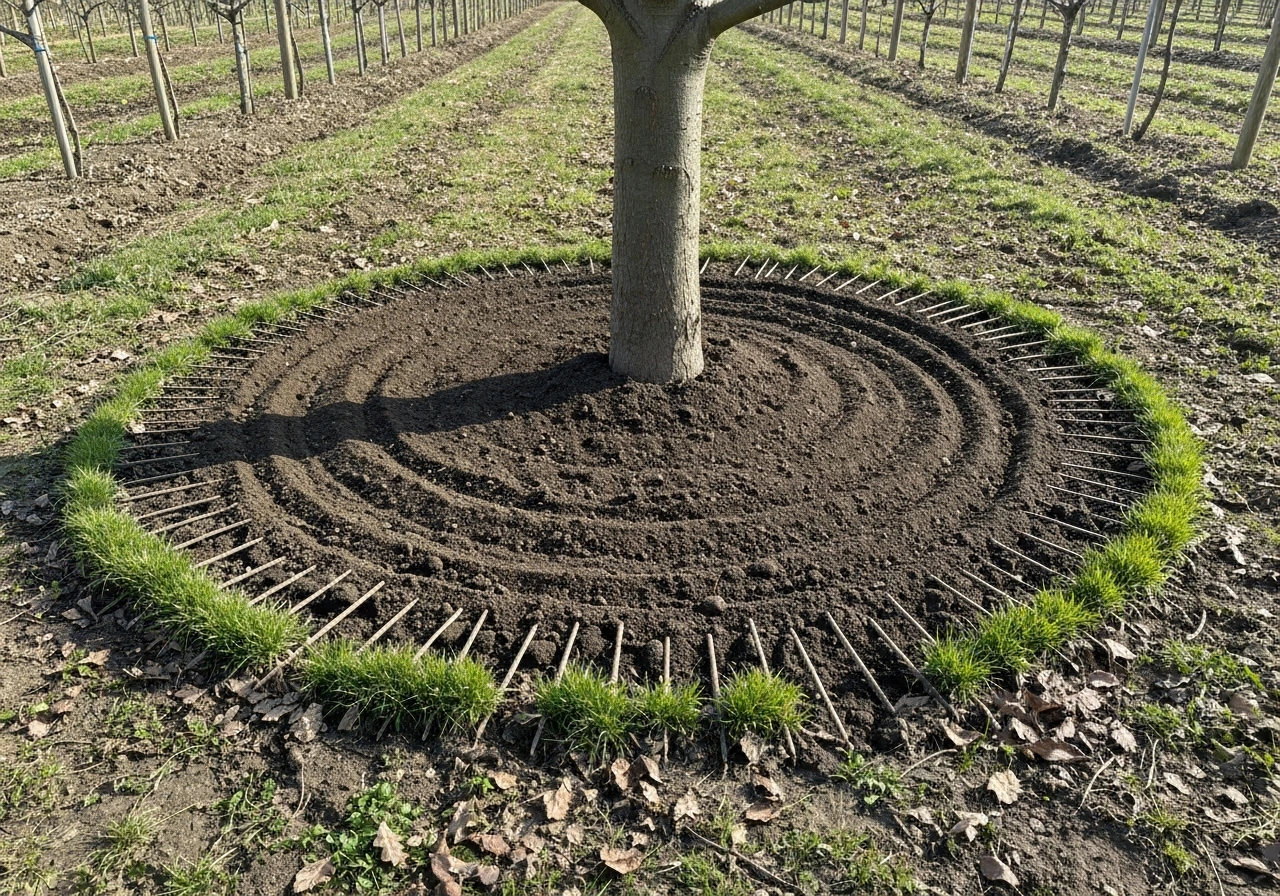
- Plant in late autumn or early spring when temperatures are mild and the seedling is dormant or just emerging
- Dig a hole slightly larger than the root ball, roughly 40 cm wide and 40 cm deep
- Mix the excavated soil with crushed limestone or lime to ensure high calcium content at the root level
- Place the seedling so the root collar sits at or just above ground level, do not bury the stem
- Backfill gently, press down to remove air pockets, and water thoroughly but not to the point of pooling
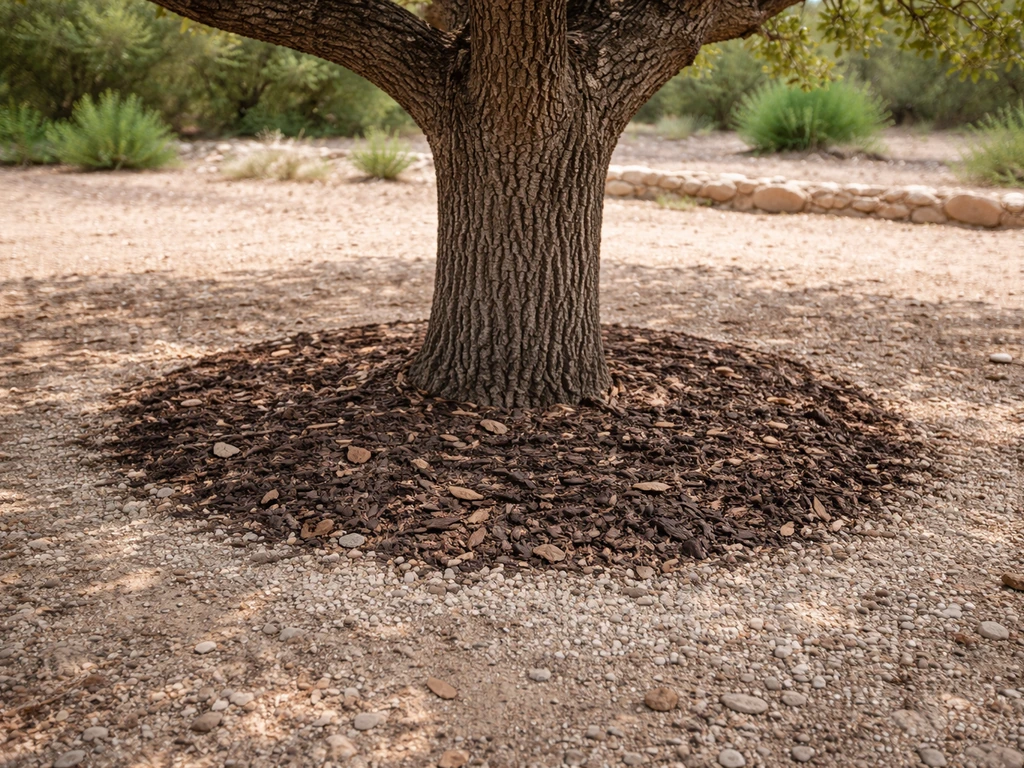
- Apply a light mulch ring 30 cm out from the trunk but leave a gap around the base to prevent collar rot
- Space trees 4 to 6 meters apart minimum to allow canopy development and root spread
Step 4: manage the brûlé zone
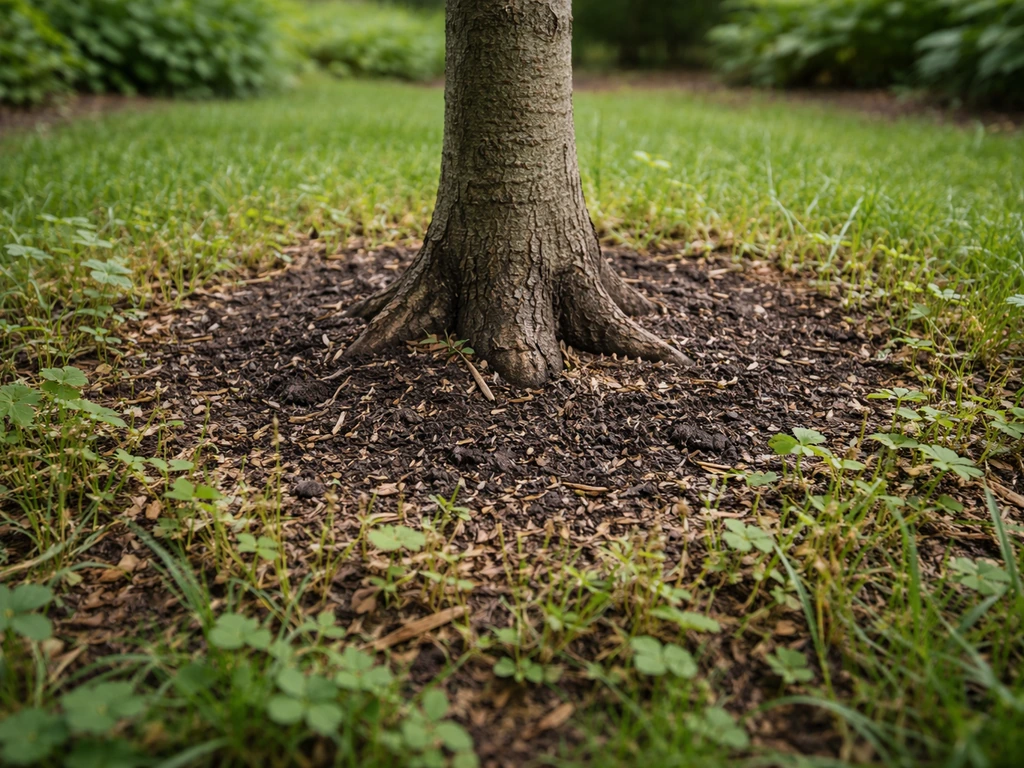
As your truffle mycelium colonizes the soil, it will create a "brûlé" (French for burned), a roughly circular zone around the tree base where competing vegetation is suppressed. This is a positive sign that your mycelium is active. Do not fight it by replanting grass or weeds in that area. Keep the brûlé clear and undisturbed. In the early years (before the brûlé appears) keep the area around each tree free of competing weeds manually.
Host tree and soil maintenance
Water your trees during dry spells, especially in the first two to three years of establishment. Aim to keep soil moisture consistent, roughly equivalent to 25 to 35mm of rainfall per week during dry months. Do not fertilize heavily with nitrogen, as this encourages leafy tree growth at the expense of the mycorrhizal relationship. Calcium-rich amendments (gypsum, crushed oyster shell, agricultural lime) can be added annually in small amounts to maintain soil chemistry. Have your soil pH tested annually and adjust as needed to keep it in the 7.5 to 8.3 range.
How to approach black trumpet cultivation (or why you shouldn't try yet)
I want to be upfront: there is no proven, repeatable home cultivation method for Craterellus cornucopioides (black trumpets) as of 2026. This isn't a gap in this guide, it's a gap in current science. Black trumpets fruit in specific woodland conditions involving leaf litter, humus-rich forest soil, and complex ecological relationships that haven't been replicated in a cultivated setting. Unlike oyster mushrooms or even shiitake, there's no spawn you can buy and no substrate recipe that reliably produces fruiting bodies.
The semi-wild option: transplanting forest habitat
Some adventurous growers have experimented with transplanting soil and leaf litter from spots where black trumpets reliably fruit in the wild, into shaded garden beds or woodland patches on their property that mimic the original habitat. This is not a reliable technique and success stories are anecdotal. If you have a woodsy corner of your property with deciduous trees, well-drained soil, and decent rainfall, it's low-risk to try. Take small amounts of soil and leaf litter from a productive spot (never overharvest from a wild patch), spread it in your prepared area in autumn, and keep the area lightly moist. Don't expect results and don't count on it.
What to actually do if you want black trumpets
Learn to identify and forage them. Black trumpets (Craterellus cornucopioides) are found in deciduous and mixed forests in late summer through autumn across North America, Europe, and parts of Asia. They're dark gray to black, funnel-shaped, hollow all the way through, and grow in scattered clusters in moist leaf litter, often near oaks and beeches. They can be tricky to spot due to their dark color against dark forest soil, but once you find a productive spot, it often fruits reliably year after year. If foraging interests you, that's genuinely the most reliable path to black trumpets on your table.
Care schedule, timelines, and what success actually looks like
Year 1 to 3: establishment phase
Your sole focus in the first three years is keeping the host tree alive and healthy. Water regularly during dry periods. Keep the root zone clear of competing vegetation. Maintain soil pH. Do not expect any truffle signs in this window. The mycelium is colonizing the root system and expanding through the soil underground. You won't see anything happening, but that's normal.
Year 3 to 5: watching for the brûlé
Sometime in years three to five, you may notice the brûlé zone appearing around your trees. Vegetation within roughly 0.5 to 2 meters of the trunk starts dying back or thinning. This is a very encouraging sign that your mycelium is active and producing allelopathic compounds to suppress competition. Keep this area undisturbed. Some growers have found their first truffles during this phase, but it's uncommon.
Year 5 onwards: raking and harvesting
From year five onward, begin checking for truffles from late autumn through winter (November to February in the Northern Hemisphere). Truffles form at or just below the soil surface, typically within the brûlé zone at a depth of 5 to 30 cm. Gently rake the soil within the brûlé using a hand rake or trowel, checking for small rounded bodies. A trained truffle dog is far more effective and worth considering if you're serious. Ripe truffles will have a strong, unmistakable aroma. Immature ones will be firm and odorless, so leave those and check back in a few weeks.
| Timeline | What to Expect | Key Tasks |
|---|---|---|
| Year 1 | Tree establishment, no truffle signs | Water, weed control, pH maintenance |
| Year 2 to 3 | Root colonization continuing underground | Monitor soil pH, protect trees |
| Year 3 to 5 | Brûlé zone may appear | Keep brûlé clear, maintain moisture |
| Year 5 to 7 | Possible first small harvest | Begin autumn raking and scent-checking |
| Year 7 to 10+ | Reliable annual harvest potential | Consistent care, annual soil testing, harvesting |
Troubleshooting: common problems and how to fix them
No brûlé appearing by year 4 or 5
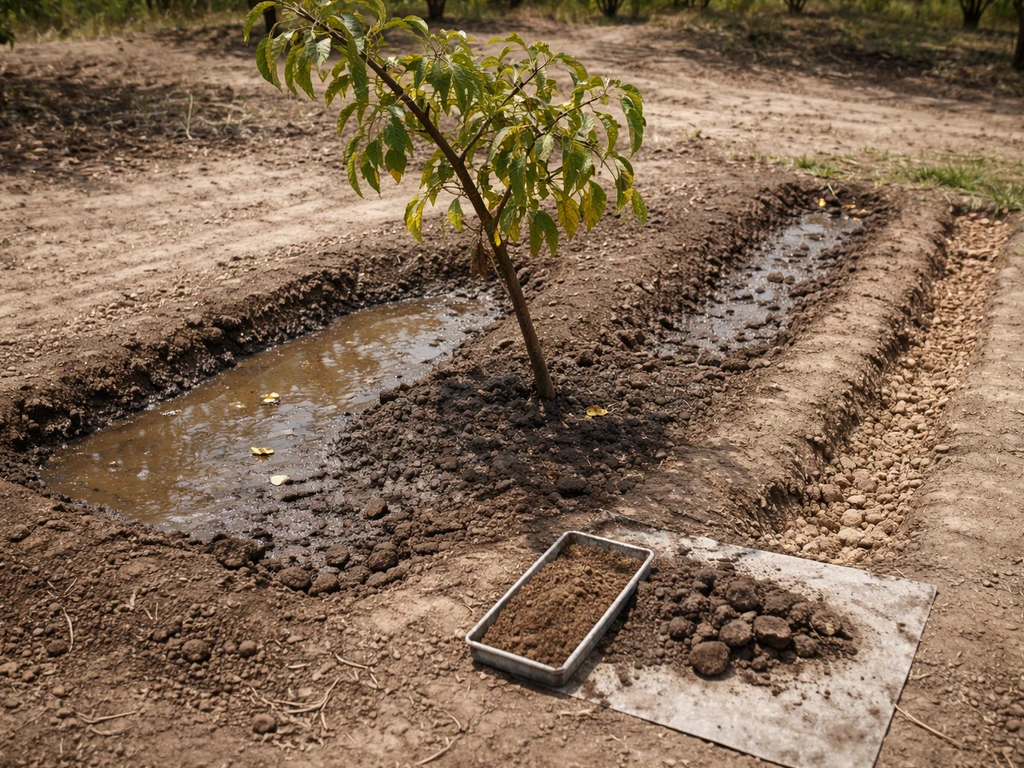
First, check your soil pH. This is the number one culprit. If pH has drifted below 7.5, the mycelium may be struggling. Apply agricultural lime and retest. Second, check drainage: if the root zone is holding water after rain, the mycelium may be damaged or suppressed. Improve drainage with grit and raised planting. Third, question your seedling quality. If you bought from an unverified supplier and your tree looks healthy but shows no brûlé for five-plus years, the original inoculation may have been substandard or the mycorrhizae may not have survived. There is no easy fix here, but replanting with verified seedlings from a reputable nursery beside the established tree (if space allows) is an option.
Tree dying or failing to thrive
A dead host tree means no truffles, so protect your trees. Common causes of failure are waterlogged soil, incorrect pH causing nutrient lockout, root competition from nearby aggressive trees, and physical damage to the root zone (like foot traffic or digging too close). Stake young trees in exposed sites to prevent wind rock. If a tree dies, replant with a new inoculated seedling and address whatever caused the failure before planting. Don't replant right on top of the dead root system until it's fully decomposed.
Truffles are small or have no aroma
Small, odorless truffles are almost always harvested too early. Tuber melanosporum needs cold winter temperatures to fully mature and develop its signature aroma. Wait until after the first hard frosts. The best harvests typically come in December through February. If you're finding small bodies that smell of nothing in October or November, cover them back up and check again in six to eight weeks.
Soil pH keeps dropping despite lime applications
Highly acidic native soils or areas with significant rainfall leaching can make pH management an ongoing battle. Switch from agricultural lime to ground limestone or dolomite lime, which releases more slowly and has a longer buffering effect. Applying a thin layer of crushed chalk or oyster shell around the brûlé each year also helps maintain calcium levels and buffering capacity. If your soil is genuinely hostile (pH below 6.5 consistently), container-raised beds with a purpose-built limestone-rich soil mix are the more practical route.
Competing fungi appearing in the brûlé
Other mushroom species sometimes appear in the soil around your truffle trees, and this can be alarming. Most of the time it's not a serious problem, but aggressive ectomycorrhizal competitors (like Hebeloma species, sometimes called "truffle killers") can displace Tuber melanosporum mycelium over time. If you notice consistent fruiting of other unidentified mushrooms in your brûlé and the zone seems to be shrinking rather than expanding, consult a truffle specialist or agronomist. Some growers remove competitor fruiting bodies before they sporulate to reduce their spread.
Your next steps based on your situation
If you have outdoor ground space in a suitable climate and you're committed for the long haul, start by testing your soil pH this week. If you want a clearer roadmap, use this checklist as a starting point for how to grow truffles at home. If you are learning how to grow black truffle, soil testing is one of the first practical steps before you buy seedlings start by testing your soil pH this week.
Order inoculated oak or hazel seedlings from a verified truffle nursery for a late autumn or early spring planting. If you're in a difficult climate or have limited space, research raised-bed truffle cultivation or look into summer truffles (Tuber aestivum), which tolerate a wider range of conditions. If you were actually looking for black trumpet mushrooms to grow, redirect your energy toward foraging skills.
If you want to grow tremella mushroom, look for separate cultivation guidance, since its requirements and setup are different from truffle and black trumpet approaches. It's the honest, practical answer. And if you're curious about other truffle types, the approaches for white truffles, summer truffles, and even magic truffles (Psilocybe sclerotia, which are entirely different organisms) each have their own methods and difficulty levels worth understanding separately before you commit.
If you are specifically asking how to grow magic truffles, make sure you understand the legal and safety requirements in your area before you attempt anything. If you specifically mean white truffles, the cultivation approach differs and you should review a white truffle plan before ordering anything.
FAQ
Can I grow black truffles in a bucket, greenhouse, or grow tent?
Not reliably. Black truffle cultivation depends on an ectomycorrhizal fungus forming a long-term living partnership with tree roots outdoors. Even if you keep conditions warm, the system still needs years for root colonization and soil ecology to establish around the host tree.
How many host trees do I need for a reasonable chance at harvest?
For home plots, more trees generally improves odds because fruiting can be sporadic. Many growers start with multiple inoculated seedlings (rather than a single tree) and give each one its own undisturbed brûlé zone. This also helps if one seedling underperforms due to nursery variability.
Is there a minimum soil depth requirement for truffle beds?
Yes. Truffles typically form a few to several inches below the surface, but the mycorrhizal network needs room to expand. In raised beds, use the full depth you can manage (the article suggests at least 60 cm) and avoid mixing in uncomposted organic matter that can change soil conditions too aggressively.
What host trees are best for Tuber melanosporum?
Oak and hazel are the classic compatible hosts, but success depends on the specific nursery-verified inoculation and local tree performance. If you use an alternative host, confirm it is accepted for Tuber melanosporum mycorrhizae, otherwise you may grow a healthy tree without establishing the truffle partnership.
Do I need to sterilize or amend my soil before planting?
You should correct chemistry and drainage, not sterilize. The goal is calcareous, well-drained soil with the right pH range, because the fungus needs to establish with the tree roots and persist in the existing soil microbial environment. Overdoing amendments or adding large amounts of compost can shift pH and nutrient balance away from truffles.
My soil pH is high, can I still grow black truffles?
Very high pH can also be problematic if it reflects underlying mineral imbalance or leads to nutrient availability issues. The practical target is maintaining pH in the roughly 7.5 to 8.3 range over time, and re-testing annually helps you avoid drifting too far in either direction.
What should I do if I see the brûlé zone but no truffles after many years?
First confirm the brûlé is expanding and staying free of competition, then verify drainage and irrigation habits. If the brûlé appears but stalls for a long time, a common root cause is seedling quality or loss of mycorrhizae. In that case, side-by-side replanting with verified inoculated seedlings from a reputable nursery is often the best practical option.
How do I know whether truffles are ripe without a dog?
Use aroma and texture. Ripe black truffles develop a strong, distinctive smell, while immature ones tend to be firm and odorless. If you find small, scentless bodies, leave them in place and re-check later during the typical harvest window.
Why do other mushroom species appear in my brûlé, and when is it a problem?
Some incidental fungi are normal, but consistent fruiting of unknown ectomycorrhizal competitors, especially when the brûlé shrinks, can indicate Tuber melanosporum is being outcompeted. If that pattern persists, it is worth consulting a truffle specialist or agronomist and considering removal of competitor fruiting bodies before spore release.
Should I fertilize the host trees to help the truffles?
Avoid heavy nitrogen fertilization. Excess nitrogen can push the tree toward leafy growth and reduce the competitive advantage of the mycorrhizal relationship. Use small calcium-rich adjustments if needed to keep chemistry stable, and rely on pH testing and targeted amendments rather than routine feeding.
Do I need irrigation after the trees are established?
You often need irrigation during extended dry spells, especially in the early years and in climates with summer drought. The key is keeping moisture consistent, not waterlogging. If the root zone stays wet after rain, that is a stronger risk than occasional dry periods, so prioritize drainage improvements.
Can I transplant soil or leaf litter from a wild black truffle spot into my yard?
It is not a dependable method. Truffles and their mycorrhizal ecology are difficult to replicate, and success from soil transplants is anecdotal. If you try it at all, keep it limited, never overharvest wild patches, and treat it as experimental rather than as a substitute for inoculated seedlings.
What’s the fastest way to diagnose why my black truffles never appear?
Run the checklist in order: soil pH first, then drainage, then seedling provenance. If pH is below target, lime adjustments and re-testing can be decisive. If drainage is poor, fix soil structure and avoid further root-zone disturbance. Finally, if the tree is healthy and still shows no brûlé after a long window, the inoculation may have been substandard, making replanting with verified seedlings the practical next step.
Is it safe to dig around my trees when checking for truffles?
Dig carefully and minimally. Tuber melanosporum fruiting bodies form near the surface in the brûlé, so frequent heavy raking can damage fine roots and disturb the mycorrhizal network. Use gentle, targeted probing only inside the brûlé and cover the soil back promptly.