Growing white truffles (Tuber magnatum, the famous Alba truffle) is genuinely one of the hardest things you can attempt in the world of fungi cultivation. You can grow them, but only outdoors, only with the right host trees planted in specifically prepared soil, and only with the patience to wait anywhere from three to eight-plus years before seeing your first fruiting body. There is no indoor shortcut, no substrate bag, no fruiting chamber setup that replicates what this species needs. That said, since 2019 controlled orchard production has been verified in scientific settings, which means it is no longer purely wishful thinking. It just requires a very different approach than anything else on this site.
How to Grow White Truffles Indoors and Outdoors
Marcus Holloway
24 Apr 2026
Can you actually grow white truffles? Realistic expectations first
Let me be direct with you: Tuber magnatum is in a different league from any mushroom you have grown before. It is not a fruiting body you coax out of a colonized substrate. It is an ectomycorrhizal fungus, meaning it lives in a symbiotic relationship with the roots of specific host trees. No trees, no truffles. Full stop.
The science on this species is still catching up to practice. A 2023 review in the literature confirmed that even establishing the mycorrhizal relationship does not guarantee fruiting bodies will form, because the two stages of the life cycle appear to be governed by different and not fully understood ecological triggers. In practical terms: you can have a healthy orchard where T. magnatum mycorrhizas are confirmed in root samples and still never see a single truffle.
The first verified controlled production blank" rel="noopener noreferrer">outside the species' natural Italian and Balkan range happened in France through INRAE and a nursery called ROBIN. In a four-year-old orchard, three truffles were found in 2019 and four in 2020. That is not a typo. That is the state of the science. Very small yields, long timelines, and still heavily dependent on site conditions. If you go in knowing this, you can make informed decisions about whether the project is worth it for your situation.
White truffle ecology: what this species actually needs
Tuber magnatum naturally grows in woodland habitats across northern and central Italy (especially Piedmont and Tuscany), the Istrian peninsula, and parts of the Balkans. It fruits underground between October and January, with peak harvest traditionally cited as October through late December, peaking in the Alba region of Piedmont. The fruiting bodies form in winter, and low temperatures during that period appear to be a necessary trigger for ascocarp development.
Soil chemistry is one of the most critical factors and also one of the most specific. T. magnatum prefers neutral to slightly alkaline soils, with an average pH around 7.7. The ROBIN program, which produced the first verified controlled harvest, specifies an optimum pH between 7.5 and 8.5, with a minimum of 8% total calcium carbonate (active limestone) in the soil. If your soil pH is below 7, you are not in the ballpark without significant amendment.
Beyond pH, the species is associated with moist, well-drained alluvial soils, often near river valleys or in areas with specific clay and silt profiles. Waterlogging is fatal to the mycelium, so drainage matters enormously. The microclimate also matters: sites need to match the temperature seasonality that triggers fruiting in the wild, which is why simply transplanting the approach to a tropical or arid climate is unlikely to work.
Host trees: who T. magnatum actually wants to partner with
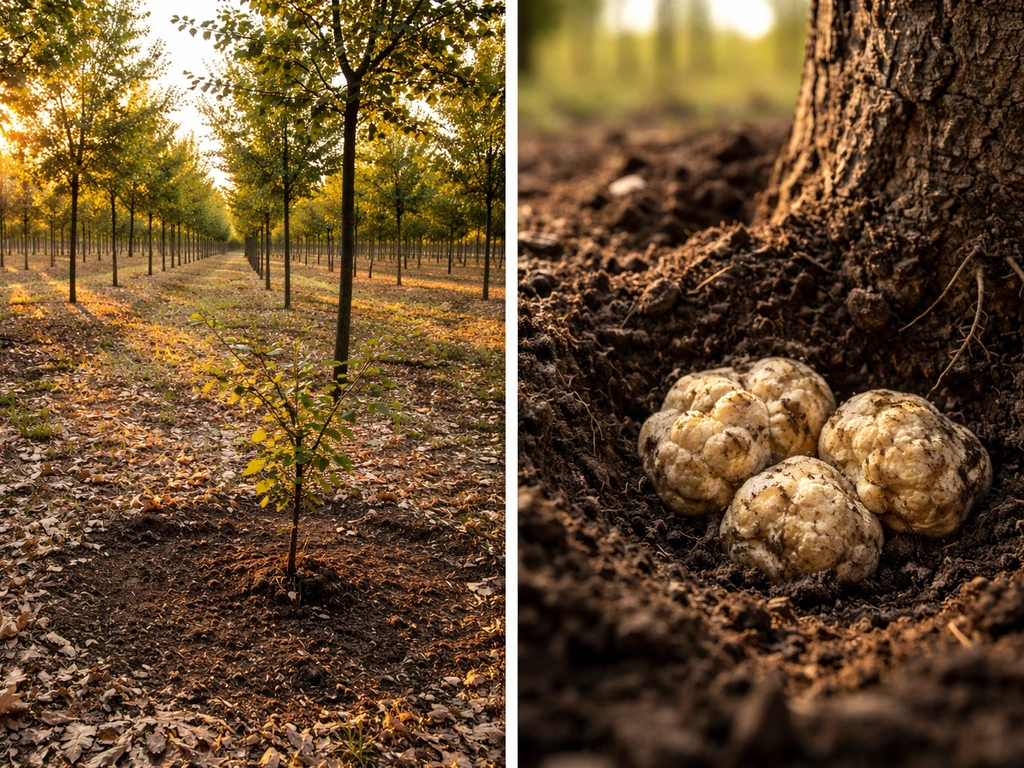
The host tree is not optional or flexible. T. magnatum forms mycorrhizas with a specific set of tree species, and the ROBIN program recommends three for orchard production: pedunculate oak (Quercus robur/pedonculata), pubescent oak (Quercus pubescens), and common hornbeam (Carpinus betulus). The broader scientific literature also lists Turkey oak (Quercus cerris), hazel (Corylus avellana), hop hornbeam (Ostrya carpinifolia), and several poplar species (Populus alba, P. nigra, P. tremula) as natural associates. For a first orchard attempt, the ROBIN-recommended trio is your safest starting point because it reflects what has actually produced verified results.
Outdoor orchard vs. home cultivation: understanding the options
There are really only two contexts to think about here, and they are very different in scope and feasibility.
| Factor | Outdoor Orchard | Indoor/Home Setup |
|---|---|---|
| Host trees required | Yes, mandatory | Not feasible indoors |
| Minimum land needed | Ideally 0.25+ acres for multiple trees | N/A |
| Soil control | Amendable with lime and organic matter | Cannot replicate field soil dynamics |
| Time to first harvest | 3 to 8+ years | Not achievable |
| Cost to start | High (inoculated trees + land prep) | High for alternatives; not viable for T. magnatum |
| Realistic yield (early years) | A handful of truffles if conditions align | Zero |
| Seasonal triggers (cold winter) | Naturally provided | Extremely difficult to simulate at scale |
| Feasibility for home growers | Possible with land and patience | Not feasible for T. magnatum specifically |
The outdoor orchard route is the only path that has produced real results. If you have land in a climate with cold winters, neutral to alkaline soil (or the ability to amend it), and several years of patience, this is genuinely worth pursuing. If your real goal is learning how to grow truffles at home, start by comparing this realistic orchard approach with the practical steps covered in our guide on how to grow truffle. If you are looking for something to grow indoors in a fruiting chamber, T. magnatum is not your answer, and I say that with respect for how exciting the idea sounds.
The indoor reality: why it does not work and what to try instead
I know many readers on this site are primarily home growers looking for a chamber-based fruiting project. The honest answer is that Tuber magnatum cannot be grown indoors in any practical sense. The species requires living tree roots to colonize, a specific soil microbiome, seasonal temperature swings (including genuine winter cold for fruiting to be triggered), and years of development underground. You cannot replicate a forest ecosystem in a tent.
The fruiting body formation is also far more difficult to control than the mycorrhizal colonization stage, even for researchers who do have inoculated trees in the ground. There is no grow bag, agar plate, or fruiting chamber setup that bypasses this. Attempts to culture T. magnatum mycelium in isolation from host roots simply do not lead to truffle formation.
If you want a truffle-adjacent home project that is actually achievable, look at growing sclerotia truffles (Psilocybe tampanensis or Pleurotus tuber-regium), which are true chamber projects, or black summer truffles (Tuber aestivum/uncinatum), which are somewhat more forgiving in outdoor orchard conditions than T. If you are interested in the more achievable route, learning how to grow sclerotia truffles focuses on chamber-friendly cultivation rather than outdoor orchard formation growing sclerotia truffles.
If you want the closest realistic alternative to learning how to grow black truffles, black summer truffles (Tuber aestivum or Tuber uncinatum) are a common starting point for orchards and outdoor attempts. If you want the black truffle alternative, the steps in our guide for how to grow black truffle mushrooms will walk you through the process. magnatum and have better-established cultivation protocols.
For purely indoor mushroom cultivation that scratches the specialty-fungi itch, tremella mushrooms are a fascinating alternative that can actually be grown at home on a substrate. If you want the steps, you can follow this guide on how to grow tremella mushroom at home on a suitable substrate tremella mushrooms. If you are deciding between indoor tremella and outdoor white truffle cultivation, tremella is the practical at-home option to start with how to grow tremella mushroom.
Sourcing your planting material: inoculated trees and where to find them
This is where many people get stuck, and it is worth being very specific. You do not start a T. magnatum orchard by buying spores off a website and inoculating your own trees. The inoculation process for this species is technically complex, and the details of commercial inoculation methods are largely proprietary. Most commercially inoculated plants are produced by applying ascospore suspensions derived from actual truffles to seedling roots under nursery conditions. Doing this reliably at home is not realistic.
What you can actually buy are pre-inoculated mycorrhizal trees from specialist truffle nurseries. ROBIN in France is the most prominent producer of T. magnatum inoculated plants and notes that their trees are produced under licensed, monitored conditions. Truffland and a small number of Italian and French nurseries also sell inoculated host trees. When you buy from these sources, you are getting a tree whose roots have been confirmed to carry T. magnatum mycorrhizas, which is a very different product from a generic oak seedling.
- Buy inoculated trees from ROBIN (France), Truffland, or verified Italian truffle nurseries
- Request mycorrhizal verification documentation with any purchase
- Avoid generic spore kits or unverified 'white truffle spawn' sold online, these are almost always misrepresented products
- Plan for shipping live trees internationally if you are outside Europe, check phytosanitary import rules in your country before ordering
- Order trees for spring planting so roots have a full growing season to establish before their first winter
Step-by-step: how to set up a white truffle orchard
Step 1: Site selection and soil testing
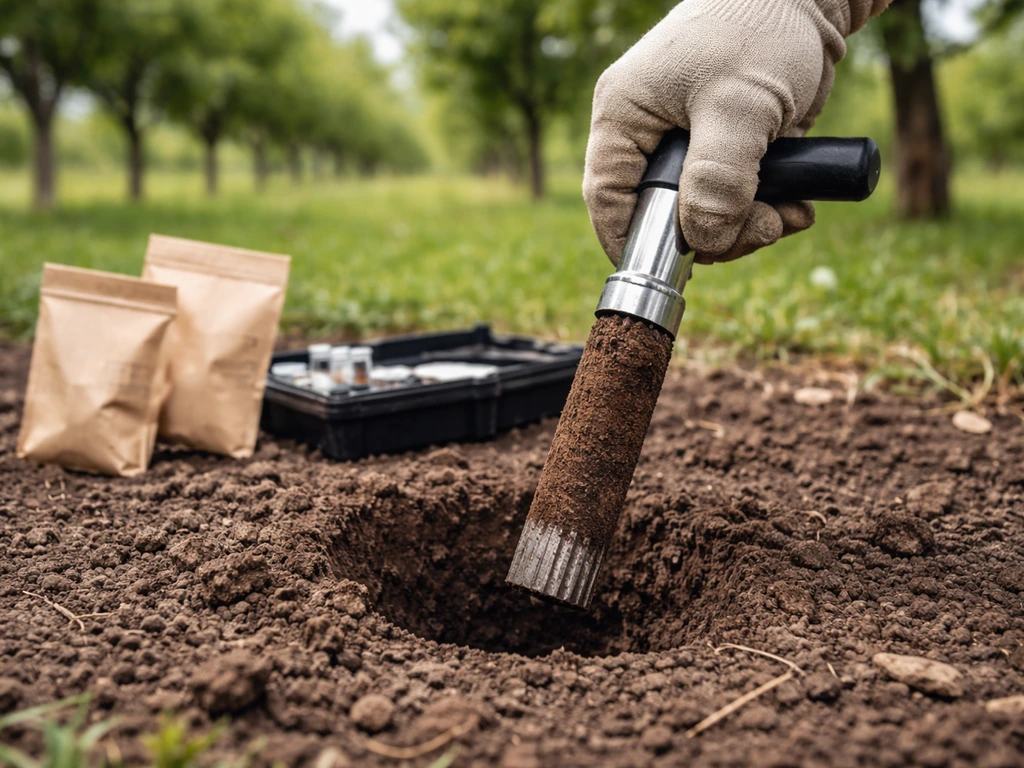
Send soil samples to a lab before you do anything else. If you are aiming for black truffle production instead, the orchard setup and soil targets differ, so use a dedicated plan for how to grow black truffle mushrooms white truffle orchard. You need to know your baseline pH, calcium carbonate content, organic matter levels, and drainage characteristics. In field studies of productive versus unproductive white-truffle soils, researchers characterized soil chemistry and structure using parameters such as active carbonate (AC), organic matter (OM), texture, and bulk density (BD), showing that these properties vary with truffle productivity [soil chemistry and structure using parameters such as active carbonate and organic matter](https://pmc. ncbi.
nlm. nih. gov/articles/PMC4275250/). Target a pH between 7.
5 and 8. 5 and at least 8% active limestone. If your soil is acidic, you can raise pH by incorporating agricultural lime (ground calcium carbonate), but do this at least six months before planting and retest before committing. Choose a site with good natural drainage, access to supplemental irrigation, and a climate that delivers genuine cold winters, ideally below 5 degrees Celsius for an extended period during November through January.
Step 2: Land preparation
Clear the planting area of competing vegetation, particularly any existing trees or shrubs that might compete with your host trees for root space or that have their own fungal associations that could crowd out T. magnatum. Deep till the soil to at least 40 to 50 cm to break up any hardpan and improve drainage. Incorporate lime amendments evenly across the planting zone and let the soil settle. Avoid heavy nitrogen fertilizers at this stage, as overly rich soil encourages competitive organisms.
Step 3: Planting your inoculated trees
Plant your inoculated oaks or hornbeams at a spacing of roughly 4 to 6 meters apart, which allows root systems to spread without overcrowding. Handle the rootball carefully when planting to avoid damaging the mycorrhizal network on the roots. Plant to the same depth the tree sat in its nursery pot. Water in thoroughly after planting, and apply a thin layer of gravel mulch around the base (not bark mulch, which is too acidic and too biologically active for T. magnatum). Avoid organic mulches that would decompose and acidify the soil.
Step 4: Irrigation and ongoing care
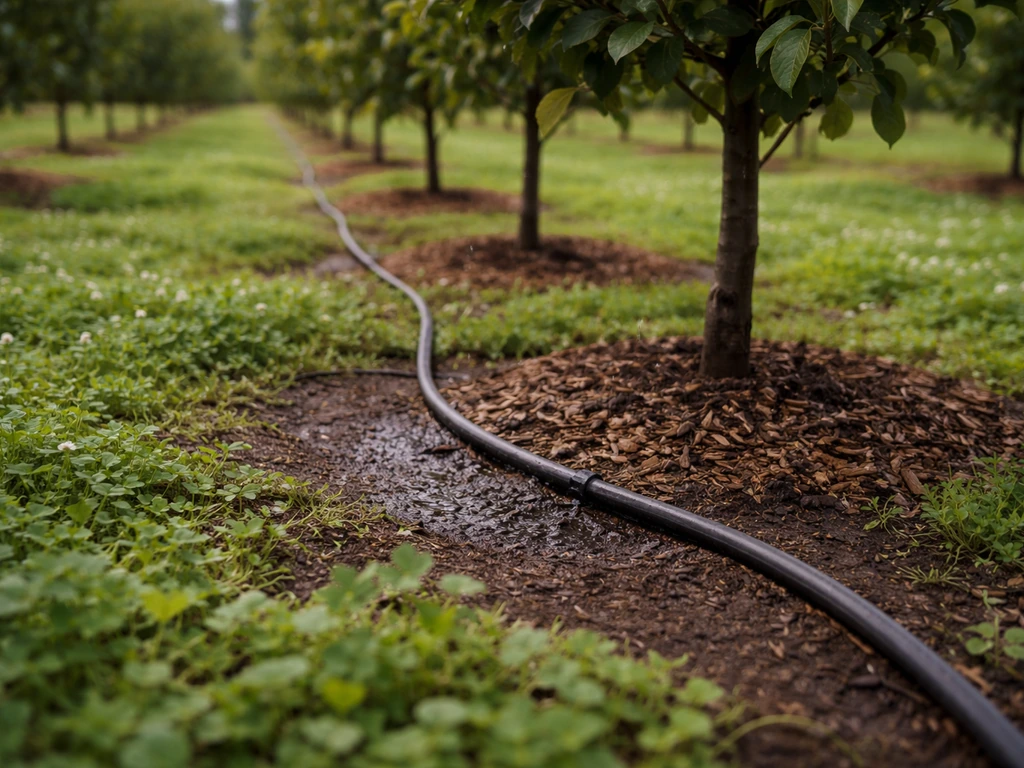
Irrigation is one of the most important management levers you have. T. magnatum in the wild is associated with moist alluvial soils, and drought stress in summer can interrupt mycelial development. Install drip irrigation and aim to maintain consistent soil moisture during dry periods, especially in the years before your first potential harvest. At the same time, do not overwater: waterlogging is as damaging as drought. The goal is moist but well-drained. Monitor soil moisture with a meter rather than guessing.
Step 5: The waiting game and year-by-year monitoring
This is the part that tests patience. If you’re specifically looking for how to grow magic truffles, the approach is totally different and depends on the species’ own cultivation requirements Step-by-step: how to set up a white truffle orchard. Do not expect to see truffles in year one or two. The INRAE-verified harvest happened in a four-year-old orchard, and broader research suggests productive orchards typically fall in the three to eight year window.
During this time, you can take root core samples and have them analyzed by a mycological lab to confirm T. magnatum mycorrhizas are present on the roots. This is the most reliable early indicator that your orchard is on track. The presence of mycorrhizas does not guarantee fruiting, but the absence of them means you definitely will not fruit.
The realistic timeline at a glance
| Year | What to Expect |
|---|---|
| Year 1 | Tree establishment, mycorrhizal network beginning to spread from roots |
| Year 2-3 | Potential mycorrhizal confirmation via root sampling; no fruiting bodies expected |
| Year 3-5 | First possible fruiting bodies in ideal site conditions; more likely years 4-6 |
| Year 5-8+ | More consistent (but still low) yields if ecology is well matched |
| Ongoing | Annual soil monitoring, irrigation management, weed and pest control |
Troubleshooting, harvesting, and what success actually looks like
Signs your orchard might be working
- Mycorrhizal root tips confirmed via lab analysis of soil core samples
- Brulé (bare soil zone) beginning to appear around tree bases, a natural suppression of ground vegetation sometimes associated with active truffle mycelium
- Soil pH and limestone content remaining stable within target range
- Trees are healthy and growing steadily without signs of drought stress or root disease
How to find and harvest your truffles
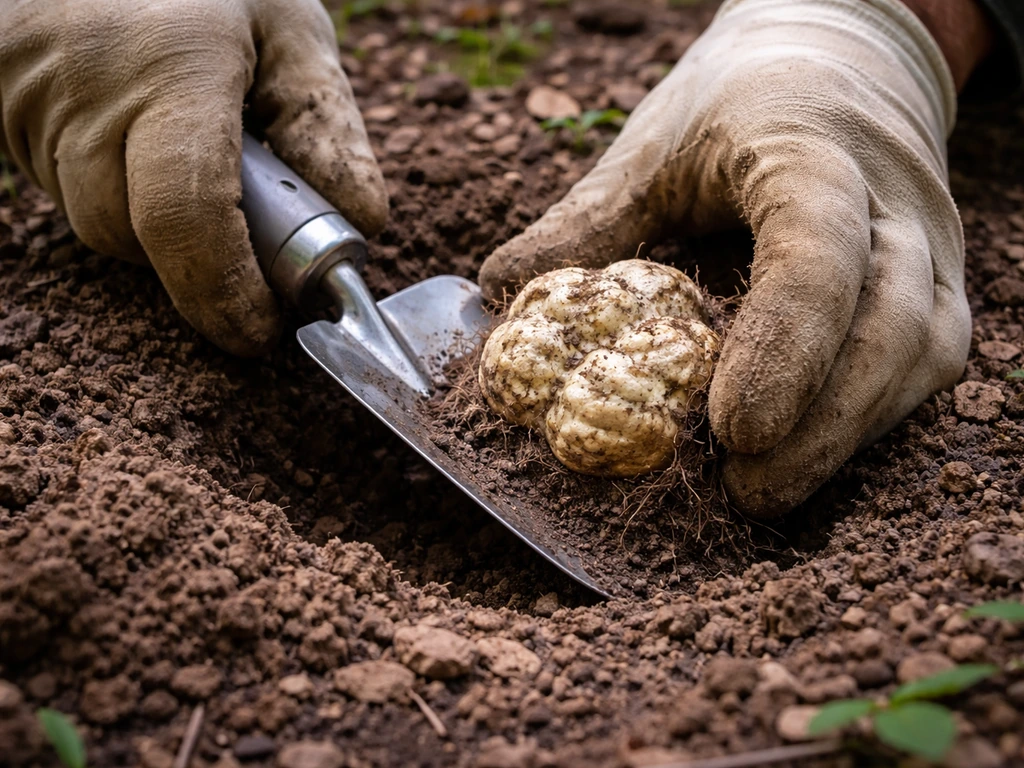
T. magnatum fruits underground, typically at 5 to 20 cm depth, between October and January. The only reliable way to find them without disturbing the soil unnecessarily is with a trained truffle dog. Dogs trained for truffle hunting locate ripe truffles by scent, which becomes detectable as the truffle matures. You dig carefully around the dog's alert point with a small hand tool to extract the truffle without damaging it or the surrounding root zone. This is a skill and requires actual training time with your dog, not something you improvise at harvest time.
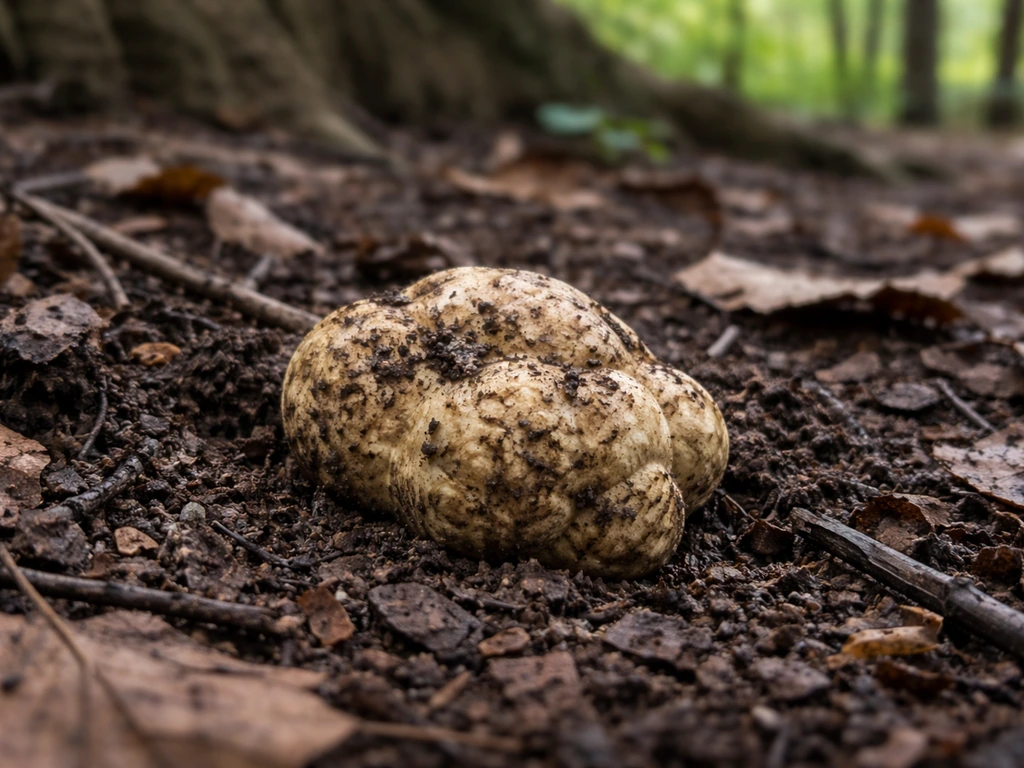
A ripe T. magnatum truffle is smooth to slightly irregular in shape, pale cream to ochre on the outside, and has a marbled pale interior with a distinctive, intensely aromatic smell. If it smells strongly and pleasantly pungent, it is ripe. If it has no smell or an off/fermented smell, it is either unripe or past its prime. Yield expectations for an early-stage orchard are genuinely low: even in the INRAE verified orchard, the first harvest was three truffles total in year four. Do not plant with the expectation of commercial volume in the first decade.
Common failure points and how to address them
| Problem | Likely Cause | What to Do |
|---|---|---|
| No mycorrhizas found in root samples after 2+ years | Poor inoculation quality, soil incompatibility, or competing fungi | Retest soil pH, source trees from verified supplier, consider replanting |
| Mycorrhizas present but no fruiting after 6+ years | Insufficient cold winter temperatures, soil drainage issues, or microclimate mismatch | Review irrigation and drainage; compare site climate to T. magnatum native range |
| Tree decline or root rot | Waterlogging or soil pathogen pressure | Improve drainage immediately; reduce irrigation frequency |
| Soil pH drifting below 7.5 | Insufficient limestone, organic matter acidifying soil | Re-apply agricultural lime; remove organic mulches |
| Purchased 'truffle spawn' online produced nothing | Product was mislabeled or non-viable; T. magnatum cannot be grown this way | Source certified mycorrhized trees from reputable nurseries only |
| Competing fungi crowding out T. magnatum | Too much organic matter or wrong tree species nearby | Remove competing vegetation and organic material from the truffle zone |
A note on fraud and product verification
White truffles are the most expensive food ingredient in the world by weight, which means fraud is rampant in both the food market and the cultivation supply chain. IAEA researchers have developed isotope and elemental fingerprinting (using markers like vanadium, zinc, and nitrogen-15 ratios) to authenticate genuine T. magnatum by geographic origin. For growers, this matters practically: do not buy inoculated trees without verifiable documentation from the nursery, and be extremely skeptical of any online product claiming to be 'white truffle spawn' or 'white truffle spores' sold cheaply. Genuine T. magnatum inoculated plants are expensive, typically produced under licensed nursery conditions, and sold by a small number of specialist suppliers.
Your next steps right now
- Get a soil test done this week. pH, active calcium carbonate, drainage profile. This tells you immediately whether your site is in the game.
- Contact ROBIN or another verified T. magnatum nursery to understand current availability of inoculated trees and shipping options to your country.
- If your soil pH is below 7, begin a lime amendment program now and plan for a planting date at least six months out.
- Research truffle dog training programs in your region if you are serious about harvesting, since this takes time to develop.
- Set your expectations honestly: this is a multi-year investment in land and time, not a kit you buy and harvest from next season.
FAQ
My soil is slightly acidic, can I still grow white truffles if I amend it?
Use soil pH and calcium carbonate as your gatekeepers. If your soil reads below 7, you can sometimes correct it, but you must amend at least six months before planting and then re-test right before you commit to inoculated trees. Also confirm you have enough drainage capacity, because even pH corrected soils fail if they stay saturated.
How do I know whether my site drains well enough for a white truffle orchard?
Yes, but only if you treat “good” as measurable. Waterlogging can be fatal, so look for site indicators like no standing water after rain, deep percolation, and the ability to keep root-zone moisture consistent. A practical approach is to plan drip irrigation for dry spells and rely on proven drainage for wet periods, not on one or the other.
If I check roots and find mycorrhizas, does that mean I will definitely get truffles?
Plan for a long pre-harvest confirmation window. Pull root cores each year once the trees are established, send them to a mycological lab, and track whether mycorrhizas are present. Remember, mycorrhizas mean the fungus is established, but they do not guarantee fruiting, so you can have success without harvest for a time.
Can I buy oak seedlings and inoculate them myself to save money?
You should not start with generic seedling trees. The key “product” is a pre-confirmed mycorrhizal association from a specialist nursery. Even if the tree species matches, a non-inoculated or poorly inoculated seedling can set you up for years of waiting with no truffles.
What tree spacing works best, and can I plant the orchard more densely?
Spacing depends on how the orchard will mature and how aggressively you manage competing vegetation. The commonly used 4 to 6 meter spacing helps prevent crowding, but you still need ongoing weed control for root-zone competition, and you should avoid planting under the canopy with anything that changes soil chemistry.
What fertilizers should I use, and is more nitrogen better?
Be careful with fertilizer strategy. Avoid heavy nitrogen applications because they can boost fast-growing competitors and alter the soil biology that truffle formation relies on. If you do fertilize at all, base it on soil test results and keep it conservative, then re-test soil chemistry before adding more.
Is compost or wood-chip mulching okay for white truffle trees?
If you suspect your soil is too rich, do not “fix” it with more organic matter. Organic mulches and compost can decompose, shift pH downward, and change the microbial community. For white truffles, use gravel mulch around the base and keep organic additions limited to what your soil tests justify.
How can I tell if a harvested white truffle is ripe?
Do not rely on aroma alone when you are learning. A ripe truffle has a strong, pleasant pungent smell, but you should pair smell with appearance cues (smooth to slightly irregular exterior, pale cream to ochre outside, marbled pale interior). If it smells fermented or unpleasant, treat it as unripe or past prime and stop harvesting from that pocket.
Can I speed things up by digging to check progress early?
Don’t expect year-one results, and avoid digging “for curiosity.” Instead, commit to low-disturbance monitoring. If you want an early reality check, use root core sampling for lab confirmation, then use a trained dog for harvest timing to minimize disruption to the root zone.
Why can’t I grow white truffles indoors in a tent or fruiting chamber?
It is risky and usually not worth it. White truffle fruiting is the harder, less controllable stage, and you need living host-root ecosystems, seasonal cold cues, and a suitable soil microbiome. Even when mycorrhiza formation happens, indoor setups commonly fail to produce the underground fruiting trigger.
Do I need a truffle dog, or are other harvesting methods better?
Choose dog training before orchard planting, not after. You need consistent scent work and proper digging habits to avoid damaging roots when the dog alerts. Treat it as an ongoing skill, because improvising at harvest time can easily destroy developing truffles and harm future yields.
If white truffles are too difficult, what is the closest alternative I can realistically attempt?
Yes, but it changes the job you are hiring or doing. Black and other truffle types often have more achievable orchard or chamber-adjacent workflows, while white truffles are specifically difficult. If your main constraint is indoors or warm climate conditions, switching species to something like black summer truffles is usually the more realistic next step.
How do I avoid scams when buying inoculated trees or “white truffle spawn”?
Fraud risk is high enough that you should verify every claim. Ask the nursery for documentation that the plants are inoculated under monitored conditions, and be skeptical of “spawn” or “spores” sold as a shortcut for Tuber magnatum. Also confirm you are buying from a specialist supplier that can back up geographic or authenticity claims.