
Growing Boletus edulis (porcini, king bolete) at home is genuinely possible, but it is nothing like growing oyster mushrooms on straw or lion's mane on sawdust. You cannot just inoculate a substrate bag and wait two weeks. Porcini is an ectomycorrhizal fungus, meaning it only fruits when it has formed a living partnership with the roots of a compatible host tree. That changes everything about the approach.
How to Grow Boletus edulis at Home Step-by-Step Guide
Marcus Holloway
27 May 2026
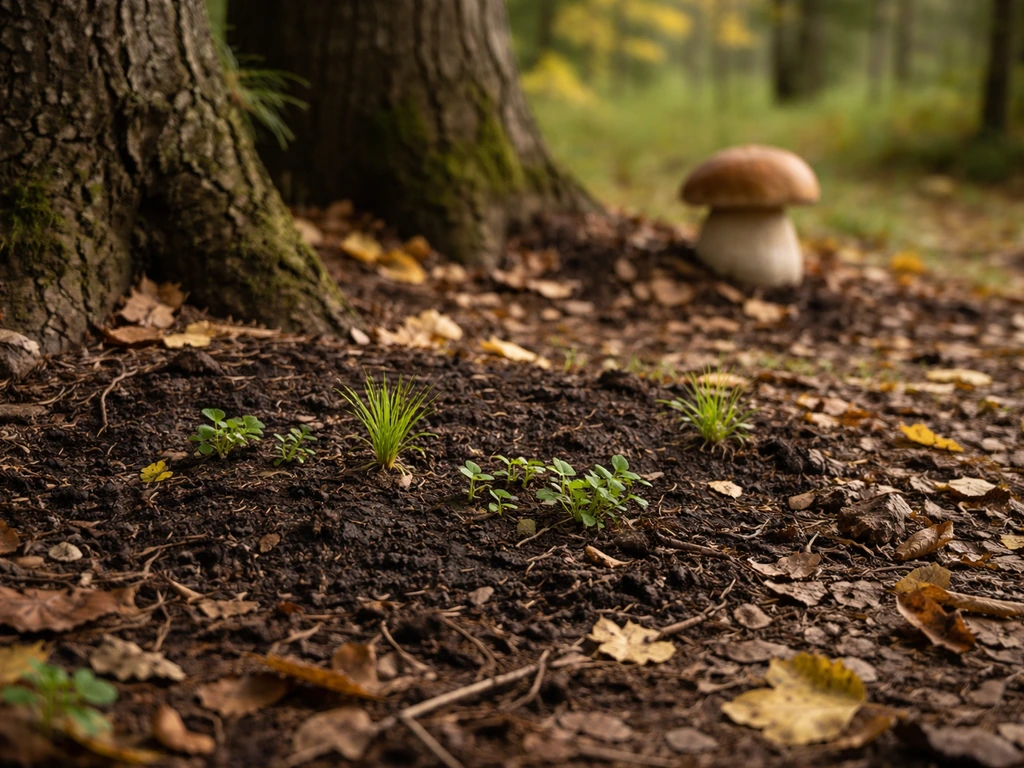
The realistic path is: source quality mycorrhizal inoculum, inoculate young host tree seedlings, plant them in a prepared outdoor bed, and maintain that site patiently. First fruiting typically takes two to five years, sometimes longer. That is the honest starting point, and if you go in with that expectation, the whole process becomes much more manageable.
Why porcini is genuinely difficult to grow (and why most attempts fail)
Most mushroom cultivation relies on saprophytic species, fungi that break down dead organic matter. You give them a sterilized substrate full of nutrients, keep the environment right, and they fruit. Boletus edulis is an obligate ectomycorrhizal (ECM) basidiomycete, which means it cannot complete its life cycle without a living host tree.
[The fungus wraps its hyphae in a sheath (called the mantle) around the tree's fine root tips, and a structure called the Hartig net forms between the root cortical cells. ](https://www. mycorrhizas. info/ecm.
html) Through this interface, the fungus delivers water and mineral nutrients to the tree in exchange for fixed carbon (sugars produced by photosynthesis). Neither partner does well without the other, and the fungus simply will not fruit without that active relationship in place.
This is why off-the-shelf porcini 'grow kits' based on wood chips or grain almost never work. The fungus is not adapted to break down bulk substrate independently, so without live roots to connect to, the mycelium either stalls or dies. It also means you cannot rush this. The ECM relationship needs time to establish, roots need to colonize the soil, and the fungus needs to build up enough mycelial mass before it can allocate energy to producing fruit bodies. People fail most often because they expect substrate-mushroom timelines from a forest fungus.
Pick the right host trees and get quality inoculation
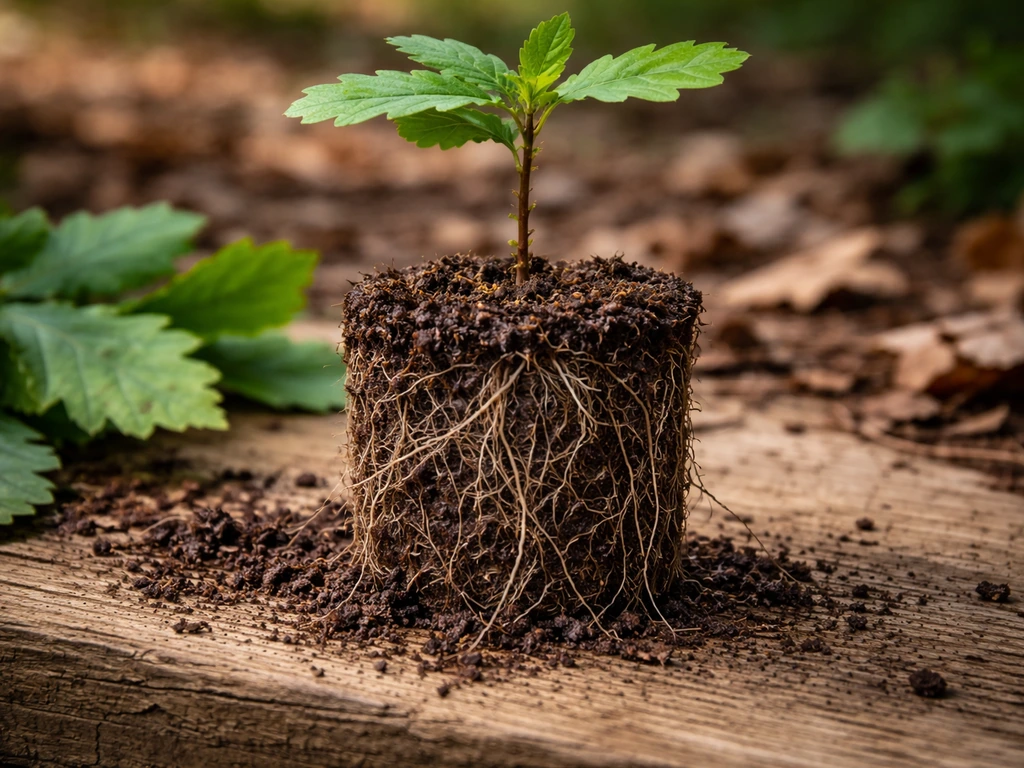
Boletus edulis associates with a range of tree species depending on region, but the most reliable and widely documented hosts include English oak (Quercus robur), sessile oak (Quercus petraea), silver birch (Betula pendula), downy birch (Betula pubescens), Scots pine (Pinus sylvestris), Norway spruce (Picea abies), beech (Fagus sylvatica), and sweet chestnut (Castanea sativa). For most home growers in temperate climates, oak or birch are the most practical choices because young seedlings are widely available, they establish readily in garden conditions, and porcini associations with these hosts are well-documented. Pine and spruce are good options if you have a more acidic, sandy site.
For inoculum, you have a few practical options. Commercially produced mycorrhizal inoculant in powder or granule form (containing B. edulis spores or colonized substrate) is the most accessible starting point. Some specialty suppliers also offer pre-inoculated seedlings, where young host trees have already been colonized in a nursery setting.
This is the most reliable option if you can find it, because the ECM relationship is already established before you plant. A third option used by experienced growers is collecting forest soil or duff from under established porcini fruiting sites and using it as a 'wild inoculant,' but this is inconsistent and can introduce competing fungi.
Whatever you source, check that the product is specifically labeled for Boletus edulis and that it is fresh: spore viability drops significantly with age and poor storage. Avoid freeze-dried products that have been sitting on shelves for years.
When inoculating seedlings yourself, work with young trees in the 1 to 2 year range, ideally still in containers. At this stage the fine root system is active and receptive to ECM formation. Host plants actually release metabolites into the rhizosphere that can trigger spore germination and direct hyphal growth toward the roots, so fresh, healthy roots are your best ally. Inoculate during the active growing season, typically spring to early summer, for the best take rates.
Site selection and soil prep
Porcini thrives in slightly acidic, well-drained, low-fertility forest soils. That last part is critical: high-nutrient garden soil actively works against you. Rich soils encourage competing saprotrophic fungi and bacteria, which can outcompete the ECM network. They also push the host tree toward fast vegetative growth rather than the slower, more stressed growth profile that tends to support stronger mycorrhizal relationships.
- Target a soil pH between 5.0 and 6.5. Test with an inexpensive probe or test kit and adjust with sulfur if your soil is too alkaline.
- Drainage is non-negotiable. Waterlogged soil suffocates fine roots and destroys the ECM network. Raised beds or slopes are ideal; flat, clay-heavy sites need amendment with coarse sand or grit.
- Avoid fertilizers entirely, especially nitrogen-heavy feeds. If your soil is too rich, dilute it with unfertilized sand or low-nutrient topsoil.
- Partial shade is preferable to full sun, particularly in hotter climates. The understory conditions of a woodland edge are what you are mimicking.
- A site with existing organic matter like leaf litter or aged wood chip mulch from forest trees is a real advantage, as it supports the soil food web that ECM fungi depend on.
- Keep the planting area away from established turf grass or heavily composted vegetable garden beds, both of which foster the wrong soil biology.
If you are working with a small garden, a dedicated bed of 2 to 4 square meters is enough to get started with two or three host tree seedlings. You can keep the trees pruned or coppiced to manage their size while maintaining the root system. The goal is living roots in the ground, not a full-grown forest.
How to inoculate and plant: step by step
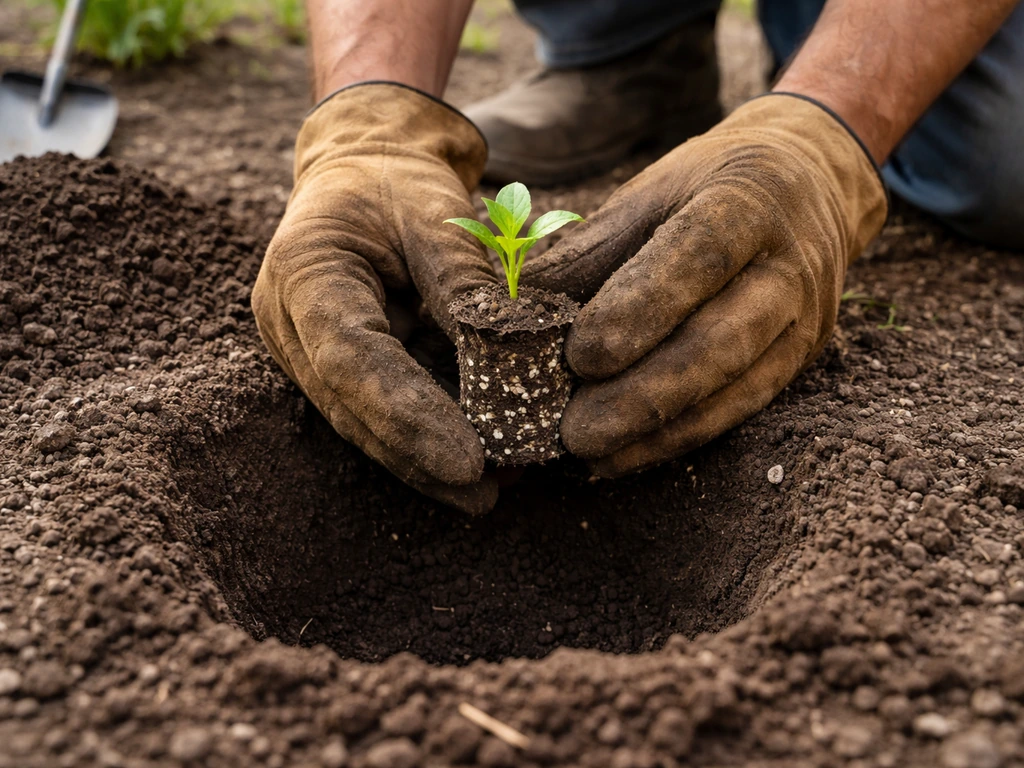
- Prepare your site first. Dig out the planting area to about 30 cm depth, remove any turf or aggressive weeds, and check drainage by filling the hole with water and watching how fast it drains. If it sits for more than an hour, improve drainage before proceeding.
- If using powdered or granular inoculant, mix it into the backfill soil at the rate specified on the packaging, usually around the root zone. Do not add it to the base of a deep hole where it will sit in standing water.
- If inoculating container seedlings before planting, gently water the inoculant into the container soil and allow the seedling to sit for one to two weeks in a shaded, moist spot before transplanting. This gives initial contact time between the inoculant and the roots.
- Plant seedlings at the correct depth (root collar at soil level, not buried). Space multiple trees at least 1.5 to 2 meters apart to give root systems room to develop without crowding.
- For pre-inoculated seedlings from a nursery, handle the root ball carefully, avoid shaking off the growing medium, and plant directly without washing the roots.
- Immediately after planting, apply a 5 to 8 cm layer of wood chip mulch (ideally from oak, birch, or pine) over the root zone, keeping it a few centimeters clear of the trunk to prevent rot.
- Water in well but do not saturate. The goal is moist, not wet.
One thing I would emphasize from experience: be careful with any inoculant that comes as a liquid suspension. Keep it refrigerated until use, apply it the same day you open it if possible, and never let it sit in direct sun. Heat and UV exposure kill spores fast, and this is one of the most common reasons an inoculation fails before it even starts.
Caring for your mycorrhizal bed over the seasons
The first two years are mostly about keeping the host trees healthy and the soil conditions stable. The ECM network is building underground during this period, and your job is to avoid disrupting it.
- Water consistently during dry spells, aiming to keep the soil moist but never waterlogged. Deep, infrequent watering (once or twice a week in dry weather) encourages deeper root growth, which supports a stronger ECM network.
- Replenish the wood chip mulch layer each autumn. As it breaks down it feeds the soil food web and maintains moisture and temperature stability around the roots.
- Never rotovate, dig, or disturb the root zone. Even foot traffic compacting the soil over the root zone can damage fine ECM-colonized root tips. Mark out a no-dig zone and stick to it.
- Do not apply fungicide to the site or surrounding area. This is obvious but easy to forget if you use systemic fungicide elsewhere in the garden.
- Avoid adding compost, manure, or fertilizer. If the host trees look pale or stressed, a very light application of a low-phosphorus mycorrhizal-compatible fertilizer is acceptable, but this should be a rare intervention, not routine.
- In autumn, allow fallen leaves from the host trees to accumulate naturally around the base. This mimics the forest floor and supports the fungi.
One mistake I see repeatedly is over-watering in the first month after planting. People are anxious about the seedlings and drown them. Soggy roots lose their fine root tips to rot, and the ECM colonization never gets a foothold. Water enough to keep things moist, then back off.
When to expect mushrooms and how to harvest them
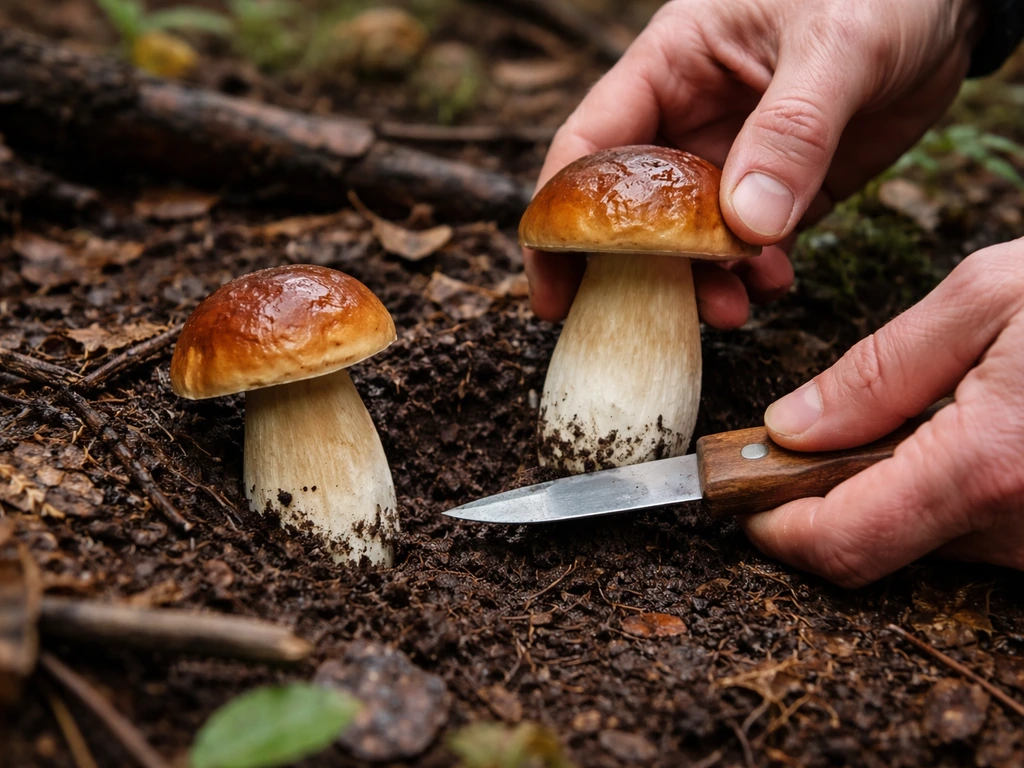
Be realistic: most successful porcini setups produce their first fruit bodies two to five years after planting, and some take longer. Year one and year two are almost entirely about establishment. If your trees are healthy and growing, the ECM relationship is almost certainly developing underground even if you see nothing fruiting. By years three and four, if conditions are right, you may start to see pinning.
In the wild, B. edulis fruits from summer through autumn, roughly June to November in UK conditions, with peak fruiting typically in late summer and autumn. Fruiting is triggered by a combination of warm soil temperatures followed by a drop in temperature and consistent moisture, classically: a warm period, then autumn rains, then cooler nights. You can try to encourage this by watering deeply after a warm dry spell in late August or September to mimic that triggering rain event.
Identifying B. edulis correctly is important. The cap has reddish-brown tones, often with a whitish or pale margin and a slightly lighter bloom when young. The flesh is white and firm, and critically, it does not change color when cut or bruised (no blue or yellow staining, which rules out several look-alikes). The underside has pores rather than gills, starting white and turning yellow to greenish-yellow with age. The stipe (stem) has a distinctive pale network or ribbed texture, often described as looking like a net etched into the surface. Familiarize yourself with these features before your first harvest season, ideally using a good field guide alongside photographs.
| Feature | What to look for in B. edulis |
|---|---|
| Cap color | Reddish-brown, pale whitish bloom when young |
| Flesh when cut | White, no color change (no bluing, no yellowing) |
| Underside | Pores, not gills; white when young, yellow-green when mature |
| Stipe texture | Pale net-like or ribbed pattern over the surface |
| Smell | Pleasant, nutty, mushroomy |
Harvest by gently twisting and pulling the fruit body from the ground, or cutting it cleanly at the base with a knife. Either method works. Collect young to medium-sized specimens before the pores turn fully green, as these have the best flavor and texture. Leave some larger, older fruit bodies in place to sporulate if you want to encourage natural spread.
Troubleshooting: no fruit, weak growth, and contamination
No mushrooms after several years
First, check whether your host trees are healthy and establishing well. If they are struggling (yellowing leaves, poor growth, dieback), the ECM network is almost certainly not developing properly either. Fix the tree first. Common causes of poor tree establishment at these sites are waterlogging, soil pH too high (above 7.0), or competition from aggressive weeds in the root zone. If the trees look fine but there is still no fruiting after four or five years, the inoculant may not have taken. You can try re-inoculating by carefully watering a fresh spore suspension or new inoculant into the root zone without disturbing the roots, then wait another season.
Wrong host relationship or failed colonization
If you used a host species that is not compatible or used low-quality inoculant with poor viability, the ECM relationship may simply never have formed. Unfortunately there is no easy way to confirm ECM colonization without laboratory analysis of root tips. Practically speaking, if you sourced inoculant from a reputable supplier, used a known compatible host, and the trees are growing healthily, assume colonization is occurring and be patient. If you have doubts about your original inoculant quality, a re-inoculation in year two or three is reasonable.
Competition from other fungi
Other ECM or saprotrophic fungi can colonize your site and compete with B. edulis for root space and resources. This is a real issue, especially if you used wood chip mulch that was not from compatible host trees, or if your soil already harbored competing ECM species. You cannot eliminate this completely, but you can reduce it by using mulch from the correct host tree species, keeping soil fertility low (which favors ECM fungi over aggressive saprotrophs), and avoiding soil disturbance.
Drying out
Fine ECM-colonized root tips are extremely sensitive to desiccation. A single dry spell in summer can set back months of network development. A thick mulch layer is your best defense. In consistently dry climates, consider installing a simple drip irrigation line around the root zone to maintain soil moisture without overwatering.
Over-fertilization
High soil phosphorus in particular is known to suppress ECM development, because trees under nutrient stress are more motivated to invest in mycorrhizal partnerships. If your soil is too fertile, the tree simply does not need the fungus as much, and the relationship weakens. If you have been adding compost or fertilizer, stop immediately and consider diluting the root zone soil with unfertilized sand or grit over the next season.
Timing and weather issues
Even a well-established porcini site will have off years. Dry autumns, unusually warm winters, and late frosts can all suppress fruiting. This is normal and not a sign that your site has failed. Keep notes on your local weather patterns and compare them to fruiting years. If you consistently get fruiting after wet September weather following a warm August, you can time supplemental watering to try to trigger that same sequence.
Your action plan starting today
Here is what to do right now, this week, and over the coming seasons to give yourself the best shot at porcini in your garden. If you are also looking for more advanced mushroom growing projects, you can apply the same careful thinking to learning how to grow psilocybe tampanensis.
- This week: order quality B. edulis mycorrhizal inoculant from a reputable specialty supplier. Source one to three young host tree seedlings (oak or birch are the easiest starting point for most temperate gardens). Get a soil pH test kit if you do not already have one.
- Before planting: test your soil pH and drainage. Adjust pH toward 5.5 to 6.0 if needed with sulfur. Fix any drainage issues. Clear the planting zone of turf, weeds, and fertilized soil.
- Planting: inoculate and plant your seedlings in late spring to early summer (or now if you are reading this in the right season). Mulch immediately.
- Year one and two: focus entirely on tree health and site maintenance. Water during dry spells, replenish mulch each autumn, and leave the root zone completely undisturbed.
- Years three to five: start monitoring for fruit bodies in late summer and autumn, especially after warm-then-wet weather patterns. Keep a site journal.
- Ongoing: never fertilize, never dig, and add compatible wood chip mulch annually to maintain the right soil environment.
Growing porcini is a long game, no question. But the process is not complicated once you understand the ECM logic behind it. You are essentially creating a small woodland edge habitat and letting the biology do what it does naturally, just with a deliberate head start. If you enjoy growing other species, like bella mushrooms or more substrate-based varieties, keep those going in parallel while your porcini site matures. Psybicilin mushrooms are typically not a realistic or legal home-grow target, so focus on common culinary species instead.
If you are specifically looking for how to grow psilocybe zapotecorum, the cultivation approach will differ a lot from ectomycorrhizal porcini and needs its own dedicated process. If you also want to learn how to grow bella mushrooms, plan for their different substrate and care needs alongside your porcini bed. The wait is genuinely worth it when you find your first king bolete pushing up through the leaf litter under your own oak tree.
For a related but different approach, look up detailed steps for how to grow mushrooms with psilocybin. If you are interested in a very different species, you can also apply similar planning to understand how to grow Psilocybe semilanceata responsibly. For guidance focused on cultivating this species, you would want a dedicated walkthrough on how to grow psilocybe semilanceata rather than relying on general mushroom tips.
FAQ
Can I grow Boletus edulis in a pot or indoors?
Yes, but only if you treat it as a young-forest project. Container trees can work for inoculation, then you must plant them in a suitable outdoor bed so the ECM network can expand. If you keep the tree in a pot long-term, nutrient buildup, temperature swings, and root restriction often reduce colonization strength and fruiting.
Is it okay to transplant the inoculated host trees later?
Do it only after roots are established and you can avoid disturbing them. The safest window is in early spring when the topsoil is workable and the bed is not waterlogged, and the only “top dressing” should be light, unfertilized mulch or a thin layer of low-fertility material. Avoid digging, rototilling, or aggressive root pruning, since exposed root tips can break the ECM connection and set you back.
What should I do if my porcini fruit for a year, then stop?
If you see fruit bodies for a couple seasons but then nothing for a year or more, it is usually a weather and site-balance issue rather than an immediate failure. ECM sites commonly have off years when late frosts, dry autumns, or unusually warm winters disrupt the trigger cycle. Keep the soil moisture steady and low-nutrient, but do not add compost or fertilizer to “fix” the slow year.
What mulching materials are safest for a porcini bed?
You generally should not use high-nitrogen mulch or composted manures near the host roots. These raise fertility and can push the site toward fast-growing saprotrophs that compete with the ECM network. Stick to leaf litter or low-fertility wood mulch matched to compatible host species, and let the bed mature rather than feeding it.
When is it worth trying re-inoculation?
Re-inoculation is reasonable when the trees are healthy and growing but you still have no fruit after about four to five years. Before re-inoculating, rule out the common blockers: soil pH above 7.0, waterlogging, heavy competition from weeds in the root zone, and fertilization that elevated phosphorus or nitrogen. Then, apply fresh inoculum to the root zone carefully without digging, ideally in spring or early summer.
How thick should the mulch be, and do I need irrigation?
Yes, but you must choose the right “placement” and protect the fine roots. Mulch should be thick enough to prevent desiccation (especially around summer drought periods), and irrigation if used should target the root zone evenly. Overwatering is still possible, so rely on moist-not-soggy soil conditions rather than keeping the bed constantly wet.
How do I lower soil pH and phosphorus for porcini?
Start by matching your soil and trees to the biology, then only fine-tune. If pH is too high, use acidic amendments sparingly and monitor over time, because big swings can shock roots. For fertility, stop compost and fertilizer, and if phosphorus is elevated, avoid any soil improvements that include bone meal, guano, or phosphate products.
Will B. edulis still work if the site already has other mushrooms?
Yes, but “compatible species” does not mean you can ignore the local ecology. If your native soil already has competing ECM fungi, B. edulis may colonize more slowly or only sporadically. Using mulch from compatible trees, keeping soil disturbance minimal, and maintaining low fertility are practical ways to improve competitiveness even when you cannot fully control what is already in the soil.
How close should the host tree be to lawn grass and foot traffic?
Avoid inoculating into areas where roots are actively stressed or competing heavily, for example under thick grass mats or deep-shaded lawns that you constantly cut. Remove aggressive ground cover in a limited radius, keep weed control gentle (hand pulling is best), and ensure the host seedlings have moisture access without waterlogging.
Should I harvest all porcini, or leave some to sporulate?
When fruiting starts, harvest timing matters for both quality and spread. Pick young to medium specimens before pores fully green, because older fruits often have tougher textures. Leaving some mature specimens can help local spore input, but it will not replace the multi-year ECM maturation phase.
My neighbor has porcini but I do not, even with similar trees. Why?
Yes, and it is usually not a “bad batch” signal. ECM fruiting can be patchy within a bed, even when colonization is working. Differences in soil moisture, microshade, and root density under each tree can produce one pinning spot while another stays quiet for a year.