
If you searched for 'psybicilin mushrooms,' you almost certainly mean psilocybin mushrooms, the fungi that contain the naturally occurring psychedelic compound psilocybin. 'Psybicilin' is simply a phonetic misspelling that shows up constantly in search queries, so you're definitely not alone. Growing psilocybin mushrooms at home is possible using the same core techniques that apply to any gourmet or specialty fungus: sterile substrate, controlled humidity, and patience. The critical difference is the legal context, which you need to understand before you do anything else.
How to Grow Mushrooms for Psilocybin: Safe, Legal Home Steps
Marcus Holloway
17 May 2026
First, get clear on what you're growing and whether you can legally do it

Psilocybin is classified as a Schedule I controlled substance under the US Controlled Substances Act, listed explicitly in 21 CFR § 1308. blank" rel="noopener noreferrer">21 CFR § 1308.11 lists “Psilocybin” in Schedule I and includes DEA Controlled Substances Code Number 7437. 11 with DEA Controlled Substances Code Number 7437. That means cultivating, possessing, or distributing psilocybin mushrooms is a federal crime in the United States, regardless of what state you're in. blank" rel="noopener noreferrer">The NCCIH confirms that the DEA's Schedule I classification makes even personal possession illegal at the federal level.
That said, the legal picture is shifting fast. As of 2026, Oregon and Colorado have state-level frameworks for regulated psilocybin use, and a handful of cities (including Denver, Oakland, and Seattle) have decriminalized personal possession in varying degrees. Some jurisdictions permit the purchase and possession of spores for microscopy purposes because spores themselves don't contain psilocybin. Growing mycelium or fruit bodies is a separate legal matter entirely. Before you proceed, look up the specific laws in your city, county, and state. This article covers the cultivation methods accurately so you understand the process, but it is your responsibility to know your local legal situation.
One more thing worth clarifying upfront: growing psilocybin mushrooms is about producing fruit bodies. Psilocybin is a naturally occurring compound in those fruit bodies, not something you 'make' or concentrate during cultivation. Potency varies depending on species, genetics, substrate, harvest timing, and drying method. You don't control the alkaloid content the way a lab does. Set your expectations accordingly.
Pick your species and your grow method
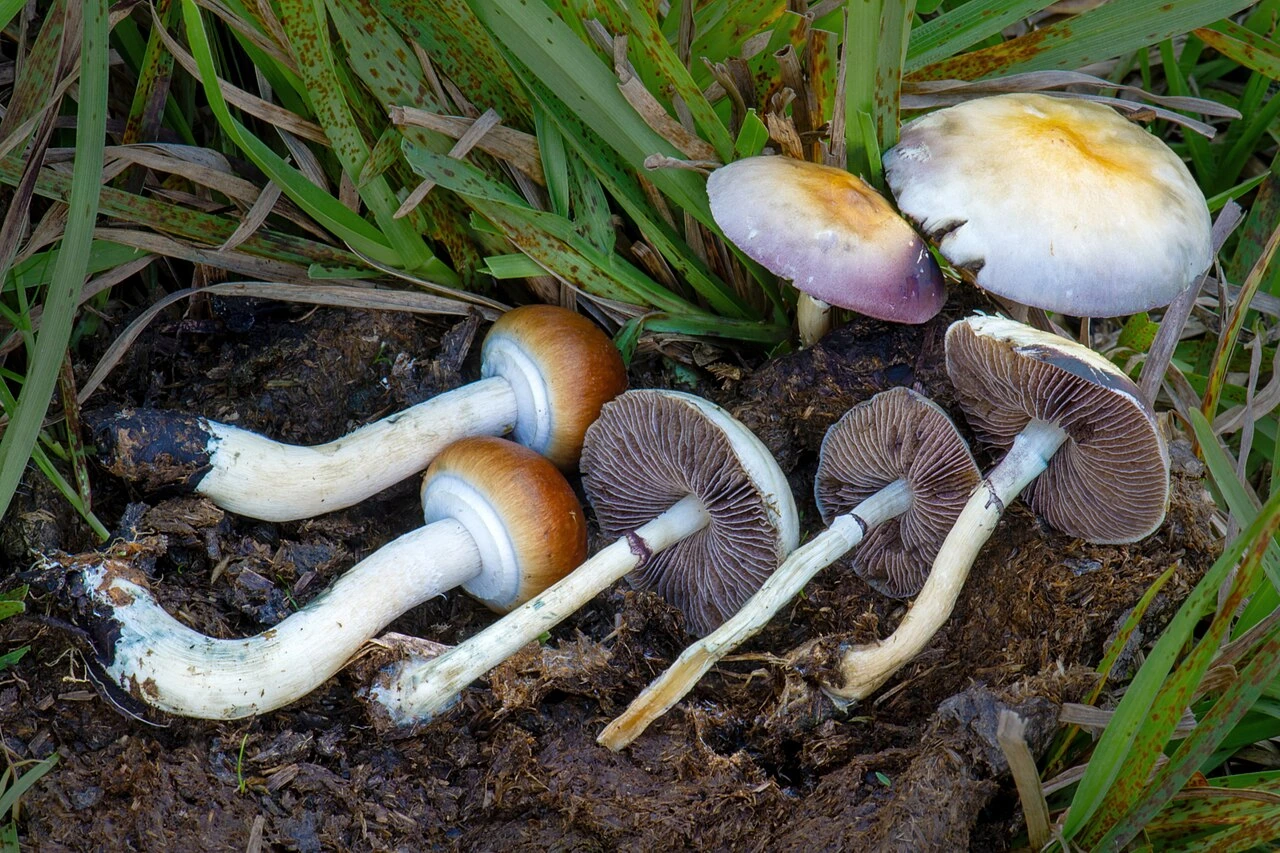
Not all psilocybin-containing mushrooms are equally easy to grow. For beginners, Psilocybe cubensis is the standard recommendation by a wide margin. It's forgiving, fast-colonizing, and well-documented. Spores are available from vendors in many jurisdictions for microscopy purposes. Intermediate growers sometimes move on to species like Psilocybe tampanensis, which produces both fruit bodies and underground sclerotia (sometimes called 'philosopher's stones'), or Psilocybe semilanceata (liberty caps), which are notoriously difficult to cultivate indoors. Psilocybe zapotecorum is another species with its own substrate and humidity quirks. For detailed, species-specific tips, including how to dial in substrate, humidity, and timing for this species, see our guide on how to grow Psilocybe zapotecorum. If you're just starting out, stick with P. cubensis until you have the fundamentals locked down.
| Species | Difficulty | Grow Method | Notes |
|---|---|---|---|
| Psilocybe cubensis | Beginner | Indoor (PF Tek, bulk) | Most documented, fast colonizer, forgiving |
| Psilocybe tampanensis | Intermediate | Indoor (rye grain, casing) | Produces sclerotia; slower than cubensis |
| Psilocybe semilanceata | Advanced | Outdoor (specialized grassy habitat) | Extremely difficult indoors; not recommended for beginners |
| Psilocybe zapotecorum | Intermediate-Advanced | Outdoor/Indoor hybrid | Requires specific high-humidity subtropical conditions |
For method, indoor cultivation gives you the most control and is what most home growers use. The two main indoor approaches are PF Tek (brown rice flour and vermiculite in mason jars, great for absolute beginners) and bulk substrate grows (sterilized grain spawn introduced to a larger pasteurized substrate like coco coir, straw, or manure-based mixes, which gives you bigger yields). Outdoor growing is occasionally done with wood chips or compost beds for some species, but it's slower, less predictable, and exposes your grow to contamination from wild competitors. Boletus edulis has very different cultivation requirements, so plan on adapting your substrate, moisture, and rooting approach accordingly Outdoor growing is occasionally done. Start indoors.
What you'll need before you start
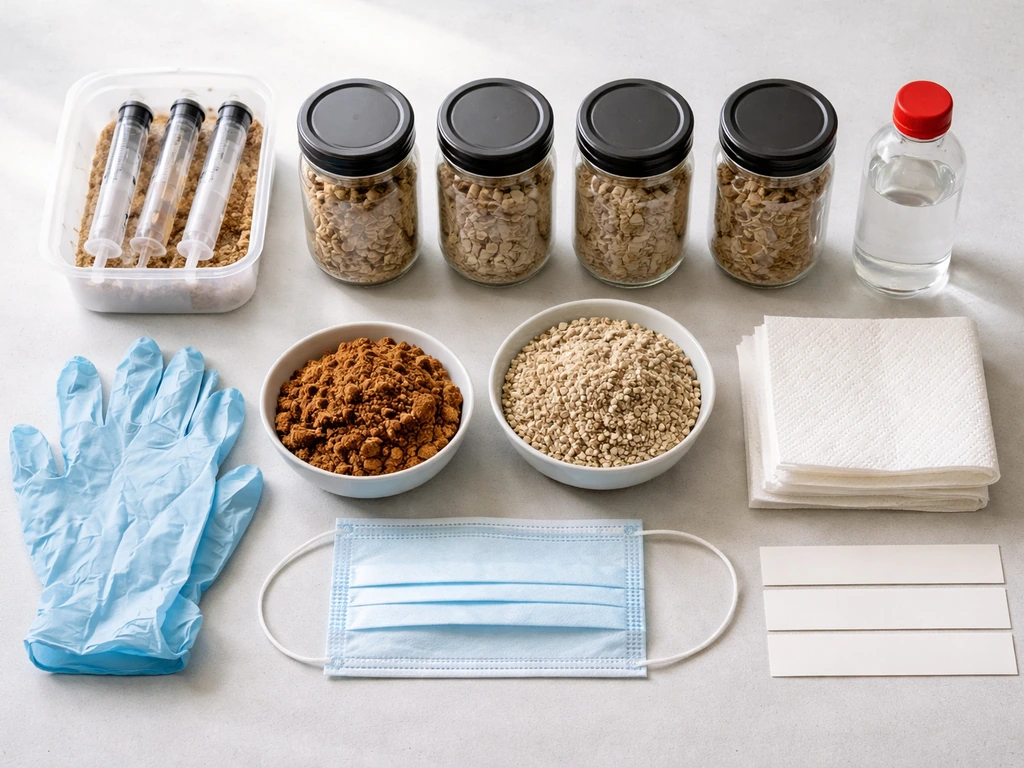
Getting your materials sorted before you begin saves a lot of frustration. A half-prepared setup is one of the most common reasons first grows fail. Here's what you need for a basic indoor bulk grow with P. cubensis:
- Spores or grain spawn (spore syringes for inoculation, or pre-colonized grain spawn if available legally in your area)
- Grain jars for spawn: wide-mouth quart mason jars filled with sterilized rye berries, wheat berries, or popcorn
- Bulk substrate: coco coir and vermiculite (50/50 by volume) is the most beginner-friendly and contamination-resistant option; manure-based mixes are also popular
- Pressure cooker (15 PSI capable) for sterilizing grain jars; a large pot works for pasteurizing coco coir
- Polyfill or synthetic filter discs for jar lids (to allow gas exchange without contamination)
- Isopropyl alcohol (70%), a still air box or a flow hood, latex gloves, and a face mask
- Monotub or shotgun fruiting chamber (a clear plastic storage bin works perfectly)
- Digital thermometer and hygrometer
- Spray bottle for misting
You don't need a fancy lab. I've run successful grows with a pressure cooker from a thrift store and plastic bins from a dollar store. What you absolutely cannot skimp on is the sterilization step and your sterile technique during inoculation. That's where most beginners cut corners and pay for it with green mold.
Substrate prep, sterilization, and inoculation
Preparing and sterilizing grain jars
Rinse your grain (rye berries work great), soak it in water for 12 to 24 hours, then simmer it on the stove for about 15 to 20 minutes until the kernels are fully hydrated but not burst. Drain them, let the surface moisture dry off for a few minutes, then fill your mason jars about two-thirds full. Put on your lids with polyfill or filter discs. Load the jars into your pressure cooker and sterilize at 15 PSI for 90 minutes. Let them cool to room temperature fully, ideally overnight, before you inoculate. Hot jars + condensation = contamination risk.
Pasteurizing bulk substrate
Coco coir and vermiculite don't need full sterilization because the mix is naturally resistant to most molds at the right moisture level. Bring a large pot of water to boiling, pour it over your coco coir and vermiculite (mixed 50/50 by volume) in a bucket, cover it, and let it sit for several hours until it cools to room temperature. Test the field capacity: squeeze a handful tightly. Only a few drops of water should come out. If it drips freely, it's too wet. Spread it out to dry slightly and test again.
Inoculating your grain jars
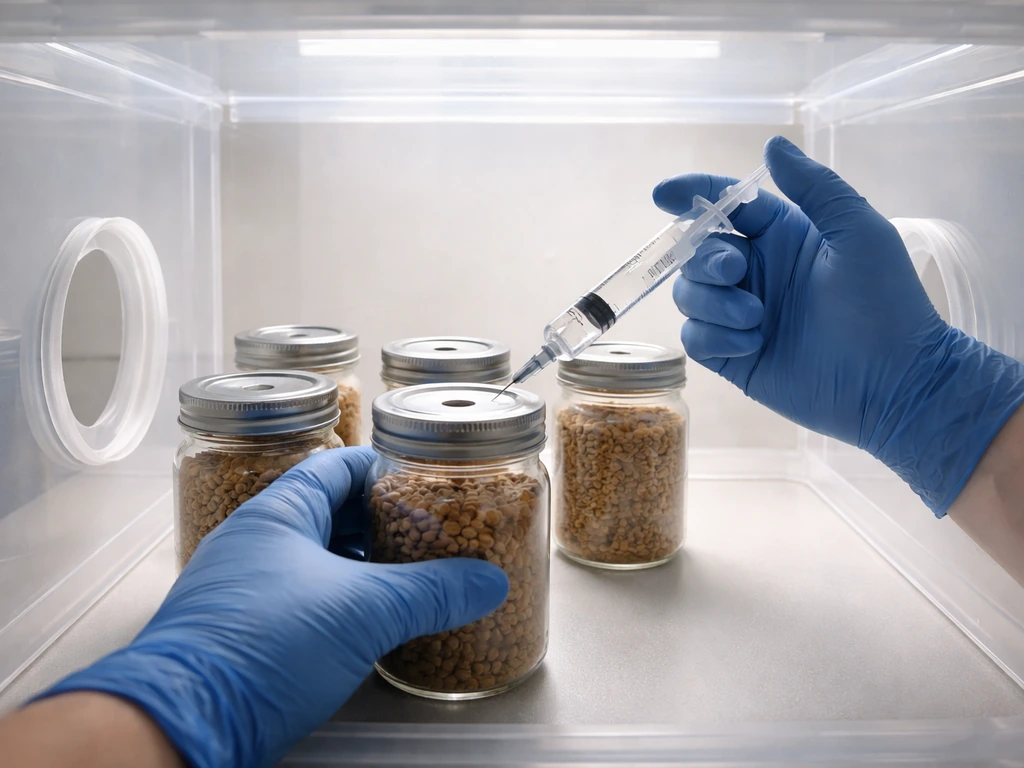
This step requires strict sterile technique. Work inside a still air box (a clear bin with arm holes cut into it, wiped down with 70% isopropyl alcohol) or under a laminar flow hood if you have one. Flame-sterilize your needle until it glows red, let it cool for a few seconds, wipe the injection port with an alcohol swab, and inject about 1 to 2 cc of spore solution per jar. Swirl the jar gently. That's it. Label each jar with the date and species. Now wait.
Incubation and fruiting chamber setup
Incubation: keep it dark and warm
Move your inoculated jars to a dark spot at around 75 to 80°F (24 to 27°C). P. cubensis colonizes well in this range. Too cold and colonization slows dramatically. Too hot (above 85°F/29°C) and you risk killing the mycelium or promoting bacterial contamination. You should start to see white, fluffy mycelium growth within 7 to 14 days. Full colonization of a quart grain jar typically takes 3 to 5 weeks. Don't rush it. Opening jars to check is one of the most common ways contamination gets introduced.
Check jars visually every few days without opening them. Healthy mycelium is white and looks fuzzy or ropy. Green, black, orange, or pink spots are contamination. Pull any contaminated jars immediately and take them outside before opening.
Transitioning to fruiting
Once grain jars are fully colonized (covered completely in white mycelium), it's time to introduce them to your bulk substrate. This process is called 'spawning to bulk.' Break up the colonized grain in the jar and layer it with your pasteurized coco coir in a monotub, aiming for roughly a 1:2 ratio of spawn to substrate by volume. Gently mix or layer them, then smooth the surface. Cover the tub and let the mycelium colonize the bulk substrate, again in the dark at 75 to 80°F. This takes another 7 to 14 days.
Once the surface of the bulk substrate is covered in white mycelium, it's time to trigger fruiting. Move your tub to an area with indirect ambient light (12 hours of light per day is plenty; mushrooms don't photosynthesize, but light acts as an environmental cue). Drop the temperature slightly to 70 to 75°F (21 to 24°C) and begin managing humidity and fresh air exchange (FAE).
Humidity, FAE, and temperature targets
| Parameter | Incubation Target | Fruiting Target |
|---|---|---|
| Temperature | 75-80°F (24-27°C) | 70-75°F (21-24°C) |
| Relative Humidity | No active management needed (sealed) | 80-95% RH |
| Fresh Air Exchange | Minimal (passive through filter) | 2-4 fan/manual air exchanges per day |
| Light | Dark or very low light | Indirect ambient, 12 hrs/day |
In a basic shotgun fruiting chamber or monotub, you achieve high humidity by misting the walls (not the substrate directly) with a spray bottle two to four times a day and fanning the tub open briefly each time to exchange CO2 for fresh air. High CO2 causes leggy, weak pins. Too little humidity causes surface cracking and aborted pins. You're aiming to keep that sweet spot between 80 and 95% RH. A cheap digital hygrometer inside the tub takes the guesswork out of it completely.
Harvesting, drying, and storing your mushrooms
Harvest timing matters both for yield and potency. Pick mushrooms just before or as the veil underneath the cap tears, while the cap is still convex (not yet fully open and flat). Once the veil breaks and spores start dropping, psilocybin content tends to decrease slightly and the mushroom has passed its peak. Twist and pull at the base or use a clean knife to cut at substrate level. Harvest all mushrooms in a flush at the same time, not one by one over days, to keep the surface clean.
After harvesting, remove any remaining pins or substrate debris from the surface, lightly mist, and let the tub rest for 5 to 14 days to allow a second flush to develop. Most grows produce 2 to 4 flushes, with the first and second being the most productive. After the third or fourth flush, contamination pressure usually builds and yields drop significantly.
Drying and storage
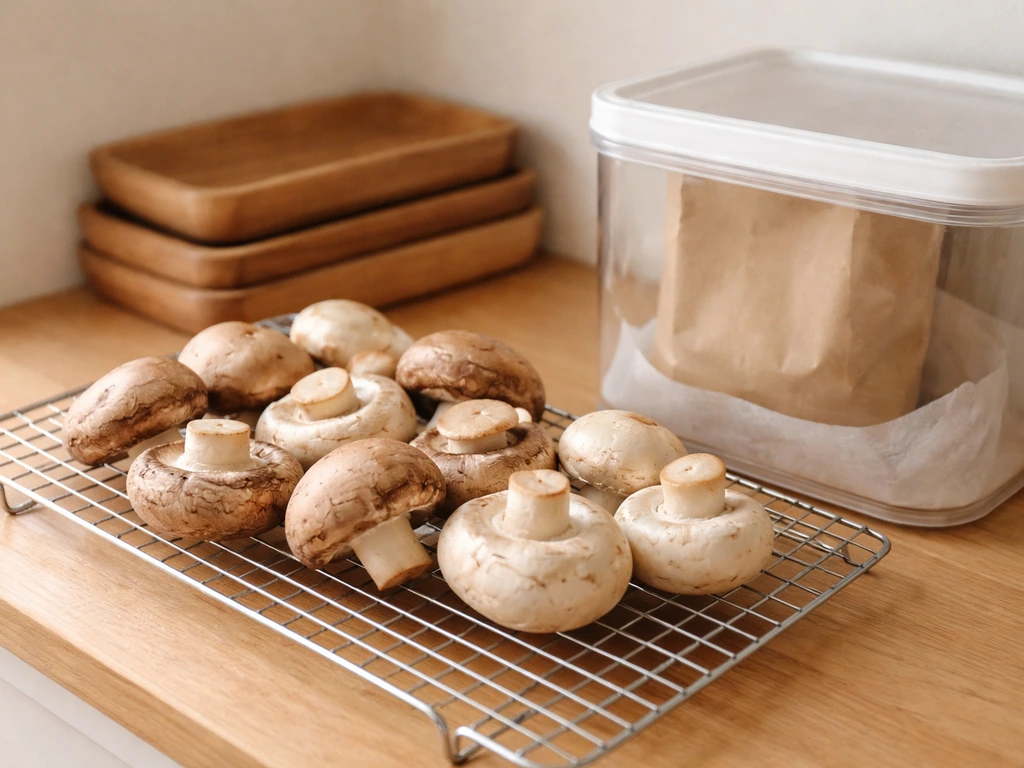
Fresh mushrooms are roughly 90% water by weight. Drying is essential for preservation and also affects potency per gram of dry weight. Lay harvested mushrooms on a wire rack or paper towels in front of a fan at room temperature for several hours to remove surface moisture. Then finish them in a food dehydrator at 95°F (35°C) or lower until they are cracker-dry and snap cleanly. Avoid oven drying above 150°F, as heat degrades psilocybin.
Once fully dry, store mushrooms in an airtight glass jar with a food-grade silica gel desiccant packet, in a cool, dark location. Properly dried and stored mushrooms can remain stable for 1 to 2 years or longer. Moisture is the primary enemy: if they reabsorb humidity, they'll degrade quickly and become susceptible to mold.
What affects potency
Potency in psilocybin mushrooms varies quite a bit, even between specimens from the same flush. Key factors include the genetic strain (some cubensis strains are selectively bred for higher alkaloid content), harvest timing (just before veil break tends to be peak), drying temperature (low and slow preserves more alkaloids), and storage conditions. Substrate composition has a smaller effect than most people expect. Don't assume every batch will be identical, and approach any harvest with appropriate caution.
Troubleshooting the most common problems
Contamination
Green mold (Trichoderma) is the most common contaminant and usually means your sterilization or sterile technique failed. Black, orange, or pink growth can indicate other molds or bacteria. If you see contamination in a grain jar, isolate it immediately in a sealed bag before removing it from your grow space. If contamination appears on the surface of a bulk tub after fruiting has started and is localized, you can try carefully cutting that section out and continuing, but contamination usually spreads. Prevention is always better than treatment: clean your workspace thoroughly, work in still air or with a flow hood, and don't rush the inoculation step.
No pins forming
Pinning failure usually comes down to one of three issues: CO2 is too high (not enough FAE), humidity is too low, or the temperature hasn't dropped enough to trigger fruiting. Make sure you're fanning the tub open multiple times a day, that your hygrometer is actually reading above 80% RH, and that there's at least a small temperature drop from incubation to fruiting. Sometimes just moving the tub from a shelf to the floor (which is naturally cooler) is enough to trigger a first flush.
Stalled or aborted pins
Pins that start forming but die off or turn yellow and abort are often caused by humidity swings, temperature spikes, or excess CO2. Check for drafts near your grow space, make sure your misting schedule is consistent, and confirm the tub isn't sitting somewhere that gets direct heat (like near a vent or in direct sunlight).
Low yields
Low first-flush yield is almost always a substrate or spawn ratio problem. If your spawn-to-substrate ratio was too low, there isn't enough mycelial density to support heavy fruiting. Make sure you're using at least a 1:2 spawn-to-substrate ratio by volume. Also check that your bulk substrate wasn't too wet at the time of spawning, as waterlogged substrate restricts oxygen and promotes bacterial contamination rather than fruiting.
Over- or under-humidity
If water is pooling on the substrate surface, you're misting too much or the substrate was too wet from the start. Back off misting and fan more aggressively to evaporate excess surface moisture. If your caps are cracking or the edges are curling, humidity is too low: increase misting frequency or add a humidity tent over the tub.
Realistic timelines for a first grow
- Day 0: Sterilize grain jars, let cool overnight
- Day 1: Inoculate jars with spore solution
- Days 7-14: First signs of mycelium growth in jars
- Days 21-35: Grain jars fully colonized, ready to spawn to bulk
- Days 35-49: Bulk substrate fully colonized
- Days 49-56: First pins appear (7-14 days after transitioning to fruiting conditions)
- Days 56-63: First flush harvest
- Days 70+: Second and subsequent flushes
From inoculation to first harvest, expect roughly 6 to 10 weeks total for P. If you’re specifically trying to grow Bella mushrooms, the key is choosing the right substrate and dialing in humidity and fresh air for the species you have P. cubensis. cubensis under typical home conditions. Species like P. tampanensis or P. semilanceata take considerably longer and require more specific conditions. If you want the full, species-specific timeline and requirements for how to grow Psilocybe semilanceata, plan on researching its temperature, substrate, and humidity targets before you start P. semilanceata. If you're curious about sclerotia-producing species or more demanding outdoor varieties like P. If you are specifically trying to grow sclerotia, focus on the sclerotia lifecycle and the substrate conditions that support sclerotium formation sclerotia-producing species. zapotecorum, those are worth researching as separate projects once you've completed at least one successful cubensis grow.
Know your legal situation before you grow
To be direct: in the United States, cultivating psilocybin mushrooms is federally illegal. In many other countries, it is also illegal. There are specific jurisdictions where decriminalization or regulated frameworks exist, and the legal landscape is changing. Research the laws in your specific location carefully, and factor in the distinction between spore possession (which has different legal treatment in some states) and actual cultivation. This guide exists to give you accurate information about the cultivation process itself. What you do with that information is your own responsibility.
FAQ
Is “psybicilin” a different mushroom than psilocybin mushrooms?
No. It is almost certainly a misspelling people search for when they mean psilocybin mushrooms. If a product, forum, or guide claims it is a separate “psybicilin” compound, treat it as a red flag because the cultivation targets and legal status are about psilocybin-containing fruit bodies.
Can I legally buy spores if growing psilocybin mushrooms is illegal where I live?
Sometimes, but legality varies by jurisdiction and is not uniform. Even when spores are treated differently because they contain no psilocybin, possessing or using them for cultivation can still trigger local or federal concerns. Verify your city and state rules about spore possession, microscopy use, and intent, not just state law broadly.
What should I do if my grain jars fully colonize but the bulk tub never pins?
Re-check the three fruiting triggers: fresh air exchange (not just fanning frequency), humidity stability (avoid daily swings), and a clear temperature drop from incubation to fruiting. If you used a monotub with inconsistent lids or big opening gaps, CO2 can stay high even when you think you are ventilating enough.
Do I need to open and inspect jars during colonization?
Avoid it. Visual checks should be done without opening containers. Opening jars mid-colonization is one of the biggest contamination sources because it breaks your sterile barrier and exposes interior material to room microbes.
How can I tell the difference between healthy mycelium and early contamination?
Healthy growth is white, fuzzy, or ropy and expands consistently. Contamination often shows color patches (green, black, orange, pink) or unusual textures that do not resemble spreading mycelium. If you see colored spots early, isolate immediately rather than waiting to “see if it clears up.”
If coco coir and vermiculite are “pasteurized” instead of sterilized, how do I know the moisture level is correct?
Use the field-capacity squeeze test, only a few drops should come out when you squeeze firmly. If it drips freely, it is too wet for good oxygen flow. Too-wet bulk commonly leads to stalled growth, bacterial issues, and weak or uneven pinsets.
Why do my mushrooms get leggy or have weak stems?
Leggy growth usually points to excessive CO2 or inadequate fresh air exchange. It can also happen if humidity is high but ventilation is poor, or if surface conditions are not being refreshed consistently. Adjust both, do not rely on misting alone to fix legginess.
What causes aborts, where pins start then stop growing?
Common causes are humidity swings, short temperature spikes, direct heat from vents or sunlight, or misting that wets the surface too unevenly. Also check for drafts in the grow area, drafts can dry surfaces and destabilize humidity right when pins are forming.
Is 1:2 spawn-to-substrate ratio always best?
1:2 is a solid target for many beginner bulk grows, but if your bulk is very wet or you used weaker colonized grain, you may need to avoid under-spawning. If you see consistently low first-flush yield and your moisture was correct, increasing spawn density can help support faster, denser colonization.
How do I prevent contamination when cutting out a localized infected section after fruiting begins?
Only consider it when contamination is clearly localized and the rest of the surface looks healthy. Use a clean tool, minimize the time the tub is open, and keep the affected tub separated from your other grows. Even then, contamination often reappears, so this is a stopgap, not a guarantee.
Does substrate choice strongly affect potency?
Not as much as strain genetics, harvest timing, drying quality, and storage conditions. Substrate impacts growth and yield, which can indirectly change your experience per batch, but it is not the main driver of alkaloid variation according to how potency factors usually behave.
What drying mistake most often ruins a batch?
Overheating or letting mushrooms reabsorb moisture. Using a dehydrator that runs too hot, drying unevenly, or storing before full cracker-dry completion can degrade psilocybin and also invite mold. Aim for low and controlled heat, then store with desiccant in an airtight container.
How long should drying take, and when are mushrooms fully dried?
They should be cracker-dry and snap cleanly rather than bending or feeling leathery. Drying time varies by thickness and humidity, so timing alone is unreliable. If pieces still bend, give them more time until they snap.
Why might my first flush be smaller even if everything looked fine during colonization?
Even small deviations can show up at fruiting, especially uneven moisture on the surface, insufficient fresh air exchange during pin formation, or an inadequate temperature drop. Also confirm your incubation-to-fruiting transition happened when the bulk was fully covered, not partially colonized.
How can I estimate my timeline for the whole process?
From inoculation to first harvest, many beginner cubensis grows land around 6 to 10 weeks, assuming good sterile technique and stable environmental conditions. If you are changing species, the timeline can shift significantly, so do not apply cubensis expectations to harder-to-cultivate species.
Can I speed up growth by increasing temperature during colonization?
Not safely. Higher temperatures can stress or kill mycelium and can also shift conditions toward bacterial problems. Stay within the typical colonization range and prioritize stability over faster growth.