
Psilocybe semilanceata, commonly called the liberty cap, is illegal to cultivate in most countries including the US, UK, Canada, and Australia, and providing step-by-step grow instructions for it is something this site won't do. What this guide will do is give you a genuinely useful path forward: explain why the legal situation is serious, walk you through what semilanceata actually needs (so you understand the biology), and then get into hands-on, practical cultivation guidance for legal gourmet and medicinal mushrooms that use the same core principles. If your real interest is controlled-humidity home growing, you can get a lot of satisfaction from species that won't put you at legal risk.
How to Grow Psilocybe semilanceata Legally and Safely
Marcus Holloway
22 May 2026
The legal situation is real, not just a disclaimer
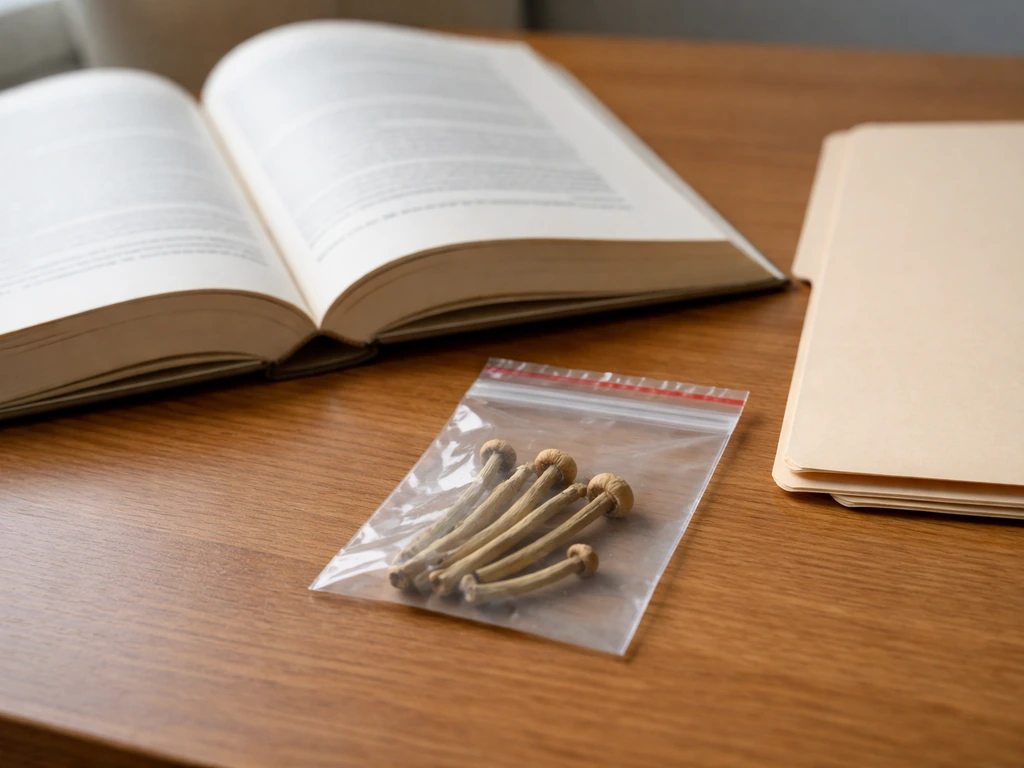
Psilocybin and psilocin are the active compounds in liberty caps, and they are Schedule I substances under the US Controlled Substances Act (21 U.S.C. § 812). In Canada, producing, possessing, or selling psilocybin or psilocin is illegal under the Controlled Drugs and Substances Act unless you have explicit Health Canada authorization, which is not available to ordinary home growers. In the UK, cultivation counts as production under the Misuse of Drugs Act 1971, which carries higher penalties than simple possession. Australia's Office of Drug Control similarly prohibits cultivation without authorization, and has no pathway for individual hobbyists. These aren't soft guidelines; US law enforcement seizures of psilocybin mushrooms rose dramatically between 2017 and 2022, which reflects active enforcement.
On top of the legal risk, there is a genuine safety issue. Liberty caps look remarkably similar to several toxic grass-growing species. Misidentification is one of the most common causes of mushroom poisoning, and even experienced foragers can get it wrong. Toxic look-alikes can smell and taste similar to the target species. Poisoning outcomes depend on the specific toxin and the amount ingested, so misidentification isn't just an inconvenience: it can be a medical emergency. If you're drawn to this topic partly through foraging interest, that risk alone is worth taking seriously.
Spore legality is a separate gray area in some US states and a few other jurisdictions, but that doesn't extend to cultivation. If you're researching legal pathways in your specific location, the practical starting point is your country's controlled substances legislation and any local decriminalization measures, not forum posts.
What liberty caps actually need (and why it matters)
Understanding the biology of Psilocybe semilanceata helps explain why it behaves so differently from cultivated species, and why home growers should redirect their energy. Liberty caps are mycorrhizal or at minimum highly adapted to cool temperate grassland environments. They fruit in damp, grazed pastures, often where soil has been enriched by livestock, in temperatures typically between 5°C and 12°C (41°F to 54°F). They have not been reliably domesticated the way species like oyster mushrooms or lion's mane have been, meaning there's no established substrate formula or predictable fruiting trigger that works in a home setup. Colonization and fruiting are slow compared to domesticated species. Even if cultivation were legal, this would be a genuinely difficult species to work with.
What you can legally grow are species that share the same core cultivation principles: controlled humidity, fresh air exchange, substrate colonization followed by an environmental trigger for fruiting, and clean technique throughout. Oyster mushrooms, lion's mane, shiitake, and chestnut mushrooms all follow this playbook. The methods transfer almost entirely, and some of these (lion's mane especially) have a growing body of research behind their medicinal properties.
For readers also curious about related psilocybin-producing species or sclerotia-forming fungi, those topics carry the same legal restrictions, and the same redirect applies. If you still want to understand the mushroom biology behind psilocybin production, the same high-level mushroom cultivation fundamentals apply the same redirect applies. For species like psilocybin-producing mushrooms, the same legal restrictions still apply, so the best next step is to focus on legal alternatives and general cultivation principles.
If you specifically want to understand how to grow sclerotia, the key is to pick a legal, sclerotia-forming species and then apply the same controlled-humidity, clean-technique workflow used for other cultivated fungi sclerotia-forming fungi.
Legal alternatives worth growing: what to choose and why
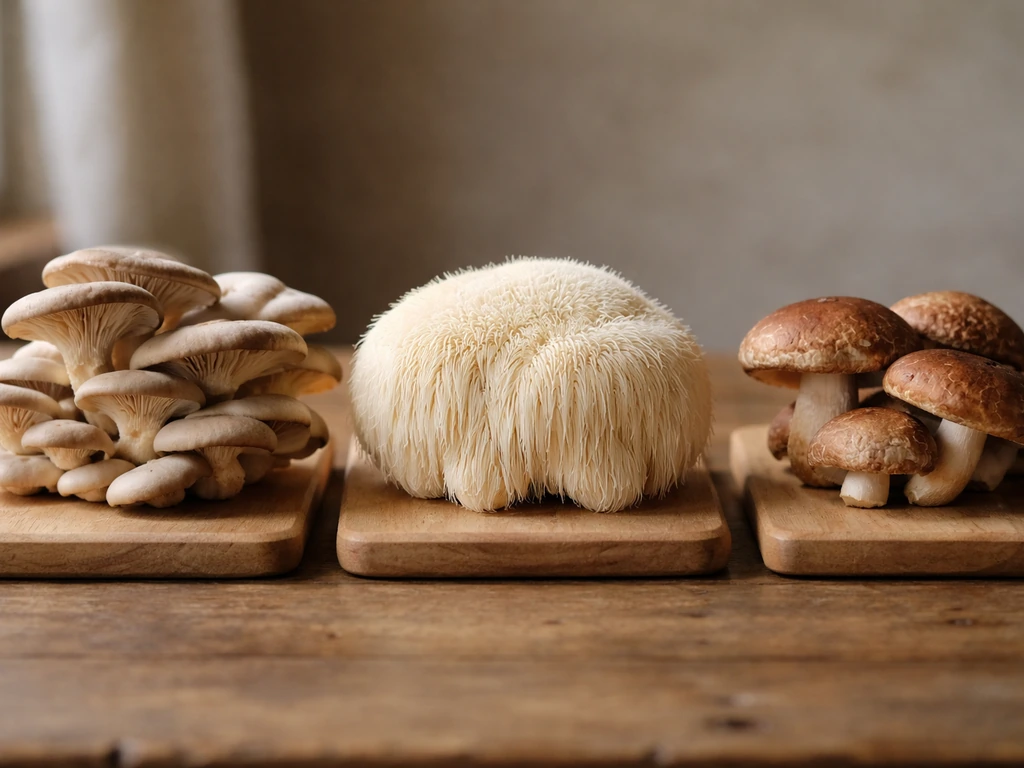
The best beginner alternatives are oyster mushrooms (Pleurotus ostreatus or P. pulmonarius), lion's mane (Hericium erinaceus), and shiitake (Lentinula edodes). Each suits a slightly different setup. Here's a quick comparison to help you pick the right starting point.
| Species | Substrate | Colonization time | Fruiting temp | Beginner difficulty | Why it's worth growing |
|---|---|---|---|---|---|
| Oyster mushroom | Straw, hardwood sawdust | 10–14 days | 15–24°C (59–75°F) | Very easy | Fast, forgiving, high yields, great for first grows |
| Lion's mane | Hardwood sawdust/pellets | 14–21 days | 18–24°C (65–75°F) | Easy–moderate | Medicinal interest, distinctive appearance, good yields indoors |
| Shiitake | Hardwood sawdust or logs | 60–120 days (logs up to 18 months) | 10–18°C (50–65°F) | Moderate | Excellent flavor, log growing mimics wild conditions |
| Chestnut mushroom | Hardwood sawdust with bran | 14–21 days | 16–22°C (60–72°F) | Easy–moderate | Dense clusters, nutty flavor, consistent performer |
For a first grow, oyster mushrooms are the honest recommendation. They colonize fast, fruit readily, and are extremely tolerant of beginner mistakes. Once you've done a couple of oyster runs and built your clean-workflow habits, lion's mane is a satisfying next step, particularly if you're interested in medicinal mushrooms. Shiitake on logs is rewarding but slow, so treat it as a parallel long-term project rather than your primary setup.
Set up your space before you touch any substrate
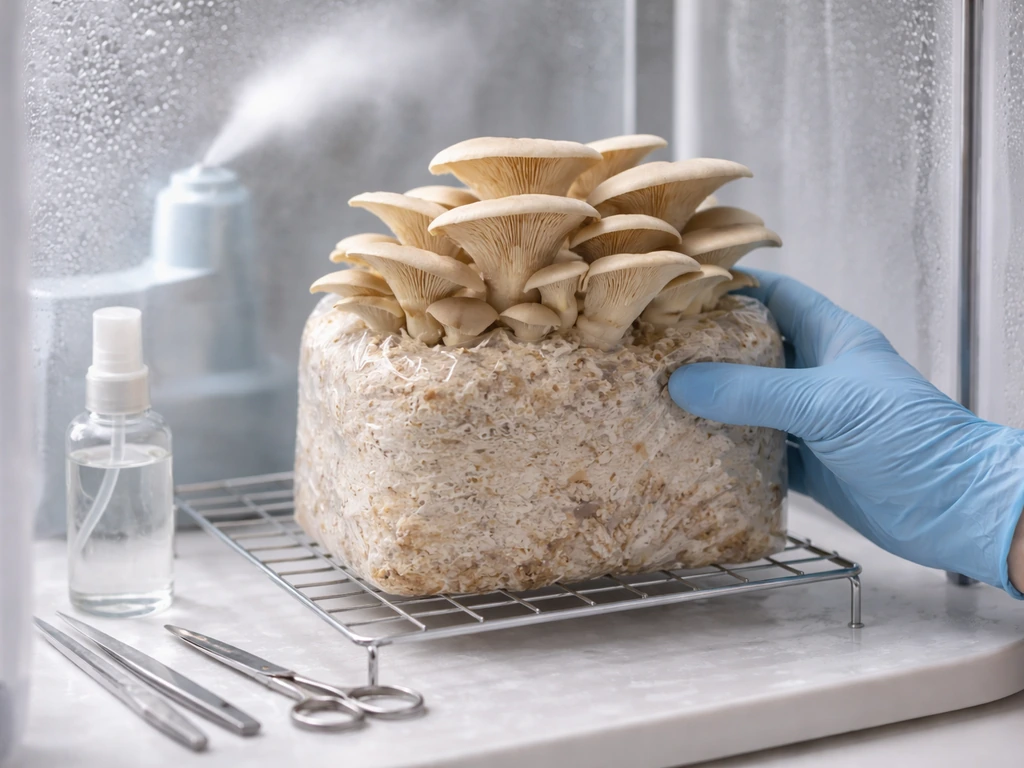
Contamination prevention starts before you buy anything. The biggest beginner mistake is focusing on equipment and ignoring workflow. A cleanroom mindset means treating inoculation like minor surgery: slow, deliberate, and with everything sterilized or sanitized before you begin. You don't need a lab. You do need a dedicated clean space, ideally with still air (a still air box works fine for beginners) or a flow hood if you're scaling up.
Essential equipment for a beginner home setup
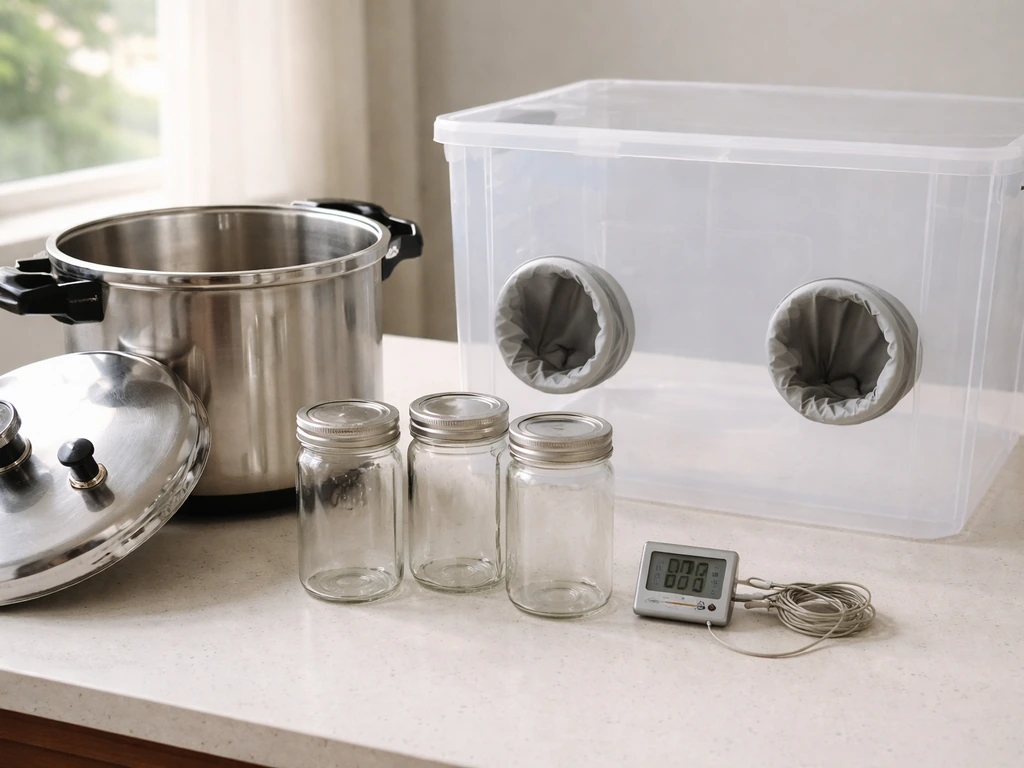
- Pressure cooker (15 PSI minimum) for sterilizing grain spawn jars and supplemented substrates
- Still air box (a clear storage tote with arm holes cut in the side) or a laminar flow hood
- Isopropyl alcohol (70%) for surface disinfection and glove spraying
- Nitrile gloves and face mask for inoculation sessions
- Hygrometer and thermometer for monitoring fruiting conditions
- Spray bottle for misting and maintaining humidity
- Polypropylene bags or mason jars for substrate
- Grow tent or a dedicated fruiting chamber (a plastic storage tote with holes drilled and stuffed with polyfill works well)
The critical concept here is that sterilization and pasteurization are not the same thing, and using the wrong one for your substrate type is one of the most common reasons beginners get contamination. Grain spawn jars need full sterilization in a pressure cooker (typically 90–120 minutes at 15 PSI). Straw for oyster mushrooms can be pasteurized (soaking in 74°C / 165°F water for 60–90 minutes, or using lime pasteurization), but supplemented hardwood blocks with bran need full sterilization because the added nutrients create a competitive environment where bacteria and molds thrive without it.
Step-by-step: from substrate prep to your first harvest
- Prepare your substrate: For oyster mushrooms, chop straw into 3–5 cm pieces and pasteurize by submerging in hot water (74°C / 165°F) for 60–90 minutes, or use the lime pasteurization method (pH 12 lime water soak for 12–18 hours). For lion's mane or shiitake indoors, use hardwood pellets rehydrated with water and optionally supplemented with wheat bran (up to 10–20% by dry weight). Sterilize in a pressure cooker at 15 PSI for 2–2.5 hours.
- Inoculate: Allow substrate to cool completely to room temperature (below 21°C / 70°F) before inoculating. Work in your still air box with gloves and mask, wiping all surfaces with 70% isopropyl first. Introduce grain spawn at roughly 10–20% of substrate weight. Mix thoroughly in the bag, seal, and label with the date.
- Colonize: Move inoculated bags or containers to a warm dark area. Oyster and lion's mane prefer 21–24°C (70–75°F) during colonization. Shiitake colonizes well at 18–24°C (65–75°F). Expect full colonization in 10–21 days for most species on sawdust-based substrates. You're looking for dense white mycelium spreading throughout the block. Any other colors (green, black, orange patches) are contamination.
- Initiate fruiting: Once the substrate is fully colonized, change the environment. Lower temperature slightly, increase fresh air exchange, boost humidity to 90–95% RH, and introduce indirect light (about 12 hours per day). For bags, cut or fold back the top and move to your fruiting chamber. For oyster mushrooms, cut X-shaped slits in the sides of the bag where you want pins to form.
- Maintain and harvest: Mist the fruiting surface lightly 2–3 times per day, avoiding direct heavy saturation. Watch for pin formation within 3–7 days for oysters, 7–14 days for lion's mane. Harvest just before or as the caps begin to flatten and edges start to curl up (oysters) or when the pom-pom is still dense and white with no yellowing (lion's mane). Twist and pull cleanly from the base.
- Rest and reflush: After harvesting, remove any remaining stub material to prevent rot, give the block a light mist, and let it rest for 5–10 days. Many species will produce 2–4 flushes before the block is exhausted.
Environmental targets that actually matter
Temperature, humidity, CO2, and light all need to work together. Getting one right and ignoring the others is why a lot of grows stall. Here are the numbers to work with.
| Parameter | Colonization target | Fruiting target | How to adjust |
|---|---|---|---|
| Temperature | 21–24°C (70–75°F) | 15–22°C (59–72°F) species-dependent | Heating mat under substrate during colonization; move to cooler area or use tent with no mat for fruiting |
| Relative humidity | Not critical (sealed container) | 85–95% RH | Mist chamber walls 2–3x daily; use a humidity tent; add a small ultrasonic humidifier for larger setups |
| CO2 / Fresh air exchange (FAE) | Low FAE fine (sealed) | Low CO2: target 0.08% or lower; fan or passive holes | Fan on timer for 2–4 minutes every few hours, or use polyfill-stuffed holes for passive FAE |
| Light | Not needed | Indirect, ~12 hours/day | Ambient room light or a cheap LED on a timer; avoid direct intense light on pins |
The most common environmental mistake is not enough fresh air exchange. High CO2 (from a sealed fruiting chamber with no ventilation) is what causes long, leggy, deformed stems and poor cap development on oysters, and it can completely stall lion's mane. If your pins look like they're stretching toward a light source rather than forming normally, increase FAE before adjusting anything else. A simple drill-and-polyfill setup on a plastic tote gives enough passive exchange for most small grows without sacrificing humidity.
Humidity and FAE are always in tension because more fresh air exchange dries out your chamber faster. The solution is not to choose one: it's to mist more frequently when you're also running more FAE, or to use a humidifier so you're not relying entirely on manual misting. A hygrometer with a min/max readout is worth having so you can actually see what your chamber is doing between checks rather than guessing.
Troubleshooting: what's going wrong and how to fix it
Contamination (green, black, or orange patches)
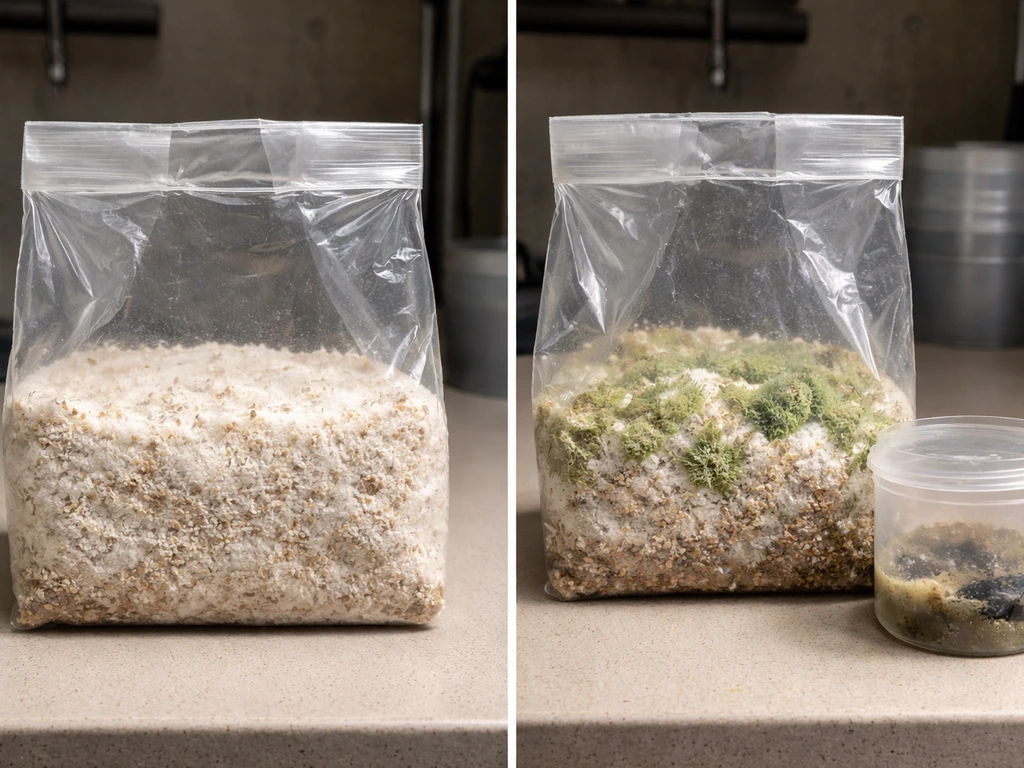
Green mold is almost always Trichoderma, and it's the most common contamination you'll encounter. Once it shows up, that bag or block is done: isolate it immediately in a sealed bag and throw it out away from your grow area. Don't try to cut around it and keep going. Trichoderma spreads fast and produces spores that will seed your next grow. The root cause is usually inadequate sterilization, inoculating while the substrate was still warm (above 21°C), or working without clean technique. If you're getting repeated green mold, review your sterilization time and pressure first, then look at your inoculation workflow.
Bacterial contamination shows up as wet, slimy, often foul-smelling patches, usually tan or light brown. This is almost always a sterilization or moisture issue. Your substrate may have been too wet before sterilization, or your jars didn't reach the right temperature throughout. Make sure lids are loose enough during sterilization to allow heat penetration, and check that your pressure cooker is genuinely reaching 15 PSI.
Mycelium stopped growing
Stalled colonization is usually a temperature problem. If your space is below 18°C (65°F), growth will be very slow or stop. A seedling heat mat under the container can fix this. It can also be caused by substrate that's too wet (mycelium needs some oxygen in the substrate) or spawn that was already weak or contaminated before you used it. If you're not sure whether spawn is healthy, look for vigorous white growth with no off-colors before inoculating. If you suspect contaminated spawn, don't use it.
No pins forming after colonization
This is almost always an environmental trigger problem. The block has colonized but the conditions haven't changed enough to signal fruiting. Make sure you've introduced a temperature drop (even a few degrees helps), increased FAE, and are maintaining humidity at 90%+ RH. For oysters, exposing the colonized surface to fresh air by opening the bag or cutting slits is often the direct trigger. For shiitake, a cold water soak (sometimes called dunking or cold shocking) for 8–24 hours can break stalling. If you're growing shiitake on logs, remember that colonization alone takes 6 to 18 months before the first fruiting bodies appear, so patience is the variable, not a technique problem.
Low yields or thin, deformed fruits
Thin stems and small or deformed caps point to CO2 buildup. Increase FAE. Pale, yellow-tinted fruits on lion's mane usually mean the block is past its productive prime or the humidity has been inconsistent. Abort pins (pins that start and then die without developing) are typically a humidity crash: the pins dried out before they could develop. Check whether your misting schedule is actually maintaining 85–95% RH between sessions, and adjust frequency or add a humidifier. Low overall yield across multiple flushes can also mean the substrate was under-supplemented for that species, or you're harvesting too late (after spore drop on oysters, yield from subsequent flushes drops noticeably).
Quick-reference troubleshooting summary
| Symptom | Most likely cause | Fix |
|---|---|---|
| Green mold (Trichoderma) | Poor sterilization or hot inoculation | Discard block, review sterilization and inoculation temps |
| Slimy wet patches, bad smell | Bacterial contamination, over-wet substrate | Discard block, reduce moisture in next substrate batch |
| Colonization stalled | Too cold, over-wet substrate, or weak spawn | Add heat mat, check spawn health, adjust substrate moisture |
| No pins after full colonization | Insufficient environmental trigger | Drop temp, increase FAE, maintain 90%+ RH, open or cut bags |
| Long leggy stems, small caps | High CO2 / low FAE | Increase ventilation immediately |
| Abort pins (dying before maturing) | Humidity crash | Mist more frequently or add a humidifier |
| Low yields, early flush exhaustion | Late harvest, under-supplemented substrate | Harvest earlier, adjust substrate recipe |
Where to go from here
The workflow you've just read applies cleanly to oyster mushrooms, lion's mane, shiitake, and chestnut mushrooms, and the environmental principles carry across to almost any cultivated species. If you're interested in more unusual gourmet species or want to explore medicinal mushrooms with distinctive growth habits, the same contamination-resistant, humidity-controlled approach is your foundation.
If you are specifically trying to figure out how to grow boletus edulis, keep in mind it generally needs very different conditions than the gourmet species covered here. Species like Psilocybe tampanensis and related varieties that form sclerotia follow the same legal restrictions as liberty caps and aren't covered operationally here for the same reasons. Focus on building clean technique with a forgiving beginner species first.
Once you've dialed in your setup and have a few successful harvests behind you, expanding to more challenging or temperature-sensitive species becomes much more manageable.
FAQ
If I’m interested in how to grow psilocybe semilanceata, what should I do instead so I’m not breaking the law?
A safer approach is to treat your goal as two separate projects: (1) learning the biology and legal boundaries, and (2) growing legal gourmet or medicinal mushrooms that follow the same humidity, fresh air exchange, and clean workflow principles. If you want to reduce risk, pick species like oyster or lion’s mane first, then transfer your setup and technique when you have a stable routine.
Can I mimic the cool, damp conditions semilanceata prefers using a legal mushroom grow setup?
For liberty-cap-like climates, a cool temperate setup helps, but it still will not make cultivation legal where it is prohibited. If you want the closest “environmental feel” legally, you can target species that fruit in cool conditions (for example, some oyster strains and certain shiitake workflows) and keep temperature-controlled fruiting rather than trying to copy a specific psilocybe protocol.
Does spore legality mean cultivation is allowed where I live?
Spore legality and cultivation legality can differ, so you should not assume that having spores is the same as being allowed to grow. Before spending money, check your local controlled-substances rules for what counts as production or cultivation, and verify whether any permits or exemptions exist for individuals.
How should I measure humidity and fresh air exchange so I don’t chase the wrong problem?
A high-quality hygrometer and clear targets prevent most “looks wrong” troubleshooting. Use min/max logging, because readings swing between misting and fresh air exchange, and avoid adjusting multiple variables at once, which can make the cause hard to identify (for example, don’t change both FAE and humidity on the same day unless you have a reason).
What’s the most common mistake when fixing leggy stems or poor cap development in oyster grows?
Yes, and it can be harmful. If you re-mist immediately after increasing fresh air exchange, you can raise evaporation risk and cause pin abortions. Instead, make one change, wait 12 to 24 hours, then evaluate pin spacing, cap development, and whether humidity recovered to your target range.
Should I cut around green Trichoderma or is there a better next step?
If you see green mold, isolate and discard the affected block or bag, do not try to “rescue” it by cutting. Then review two likely root causes that the contamination was able to exploit: sterilization/pasteurization mismatch for your substrate type, and inoculation workflow (for example, working when the substrate is still warm or skipping a dedicated clean area).
If I get repeated contamination, what should I check first besides my spawn and substrate recipes?
Trichoderma and many bacterial issues can both stem from workflow, not just sterilization. Before changing equipment, verify that your pressure cooker truly reaches and maintains the stated pressure, lids are managed correctly during sterilization for heat penetration, and you let the substrate cool to a safe temperature before inoculating.
How can I tell whether my mushrooms are stalled versus just not triggered yet?
Some stalls are “not yet fruiting,” especially with shiitake on logs where the timeline is months. For block-based species, confirm the environmental trigger you’re using is actually occurring (temperature change, increased FAE, and maintained humidity). If colonization is complete and conditions are correct for several days, then consider whether you have the wrong trigger timing rather than assuming failure.
What causes abort pins, and how can I confirm it wasn’t a fresh air exchange mistake?
Yes. If fresh air exchange is increased but humidity is not compensated, pins can start then die, which is consistent with a humidity crash. Use your hygrometer min/max to confirm that the chamber stayed within range between misting or humidifier cycles, and consider a humidifier if you cannot maintain the range consistently.
Why does lion’s mane turn pale or yellow, and should I adjust humidity or harvest sooner?
Lion’s mane can look pale or yellowed when humidity swings or when the fruit is exposed to inadequate moisture at the right stage. If the block is also old, that compounds the issue. The practical decision aid is to correlate the timing: if color shifts occur after humidity or misting adjustments, revert to your previous stable schedule and keep harvesting before the block is past peak productivity.
What’s the best first environmental adjustment for deformed oyster mushrooms, CO2 or temperature?
Thin stems and small caps are often a CO2 or ventilation pattern issue, while malformed caps plus leggy growth usually points to insufficient fresh air exchange. Instead of changing temperature first, adjust FAE in a controlled way (for example, increase ventilation before tweaking light intensity), then reassess growth shape over the next day.
Why do I get lower yield on later flushes, and is it always contamination?
Yield dropping across multiple flushes can come from harvesting late, nutritional mismatch, or substrate quality differences. As a practical check, harvest within the recommended window for your species and use the same drying and storage practices for your substrate blocks, because repeated over-drying between flushes can reduce performance.
My grow room is cold, what’s the safest way to improve colonization speed?
If your space is below about 18°C (65°F), colonization can stall or slow dramatically even with perfect cleanliness. A seedling heat mat under the container is a common fix, but avoid overheating, since inoculating or incubating outside the species-appropriate range can also increase contamination risk.
Can I use the same setup for oyster, lion’s mane, shiitake, and chestnut mushrooms without major changes?
Chestnut mushrooms and some other gourmet species may be legal alternatives with different substrate needs, but the same clean workflow and environmental principle set still applies. If you want to expand beyond oyster, plan for species-specific differences such as substrate supplementation level and the fruiting trigger method, rather than expecting one identical recipe to work for everything.