
You can attempt to grow Amanita muscaria indoors, but you need to go in with clear eyes: this is one of the hardest mushrooms a home grower can pursue, and the standard indoor mushroom setup will not work here. A. muscaria is ectomycorrhizal, meaning it needs a living tree host to complete its life cycle. There is no grain spawn bag, no fruiting chamber, no substrate formula that replaces that relationship. Most serious indoor attempts involve growing a compatible host tree (like a young birch or pine) in a container indoors, inoculating its roots, and essentially creating a miniature forest ecosystem in your grow space. It is slow, uncertain, and genuinely rewarding if it works. The failure rate is high. If you go in prepared, though, you give yourself a real shot.
How to Grow Amanita Muscaria Indoors: Step-by-Step Guide
Can you actually grow Amanita muscaria indoors? Realistic expectations first
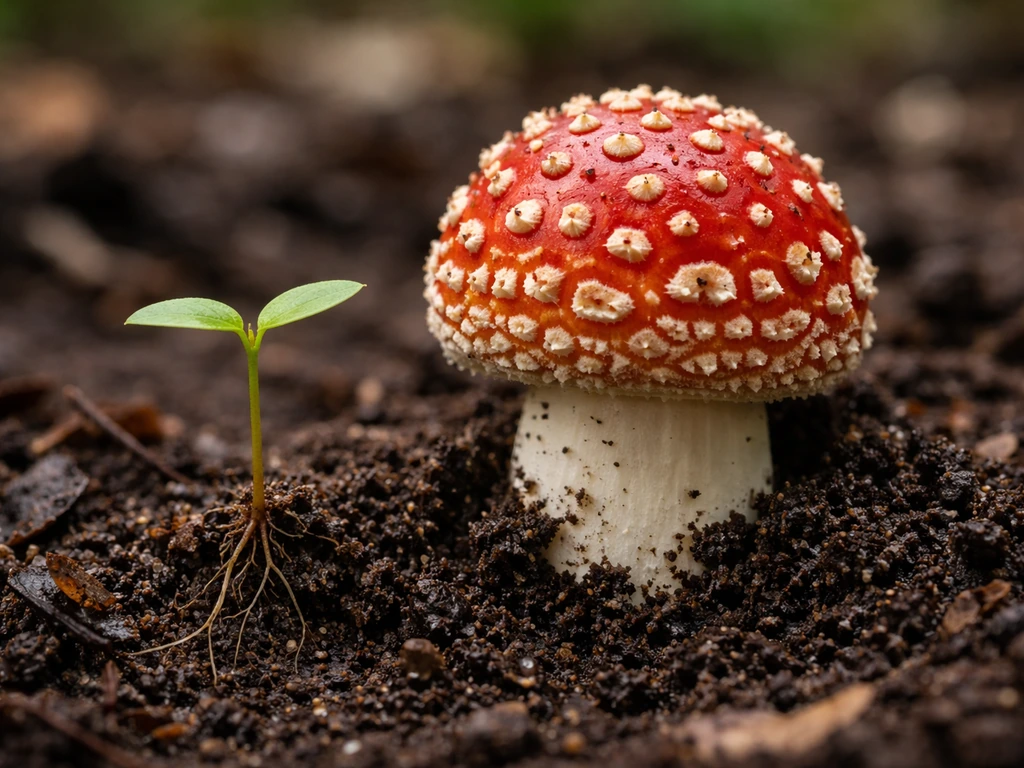
Let's be direct: A. muscaria is not like growing oysters or cubensis. Those are saprophytic species that break down dead organic matter, so you can feed them a substrate, control the environment, and get predictable flushes. Amanita muscaria does not feed on dead material. It forms a living partnership with tree roots, trading nutrients with the tree in exchange for sugars. Without a host tree, the mycelium has no reliable energy source and will not fruit. Reports from growers who have tried seeding the same area repeatedly suggest that about 85% of attempts fail even under repeat inoculation, so the odds are humbling. Indoors, those odds get harder because you are trying to replicate a forest soil ecosystem in a pot under artificial conditions.
That said, people have achieved colonization and occasional fruiting indoors using container-grown host trees. The key mental shift is this: you are not growing a mushroom, you are cultivating a symbiotic plant-fungus system. Success looks like seeing mycelium colonize the root zone of your host tree over several months, followed (eventually, maybe after a year or more) by pinning and fruiting bodies emerging from the soil near the tree's base. It is a long game, and it suits patient growers who enjoy the process as much as the result.
Why this mushroom is so different: the mycorrhizal challenge
The core challenge is the mycorrhizal relationship. A. muscaria forms ectomycorrhizal associations with specific tree species, wrapping around the fine root tips of its host and exchanging minerals (especially phosphorus and nitrogen) for photosynthetic sugars from the tree. The fungal mycelium is essentially dependent on the tree's metabolic output to generate enough energy to produce mushrooms. This is fundamentally different from the grain-to-bulk-substrate systems used for saprophytic species like psilocybe cubensis or oyster mushrooms.
The confirmed host trees for A. Amanita muscaria is an ectomycorrhizal fungus that forms symbiotic relationships with trees including pine (Pinus), oak (Quercus), spruce (Picea), fir (Abies), and birch (Betula) blank" rel="noopener noreferrer">the confirmed host trees for A. muscaria include pine (Pinus spp.. muscaria include pine (Pinus spp.), birch (Betula spp.), spruce (Picea spp.), fir (Abies spp.), and oak (Quercus spp.). For indoor growing, birch and pine are the most practical choices because they stay manageable in containers and are tolerant of indoor conditions. You cannot skip the host tree and substitute it with a substrate additive or nutrient amendment. That is the single most common misconception I see from growers coming from a standard mushroom cultivation background.
What you need: indoor setup and materials checklist
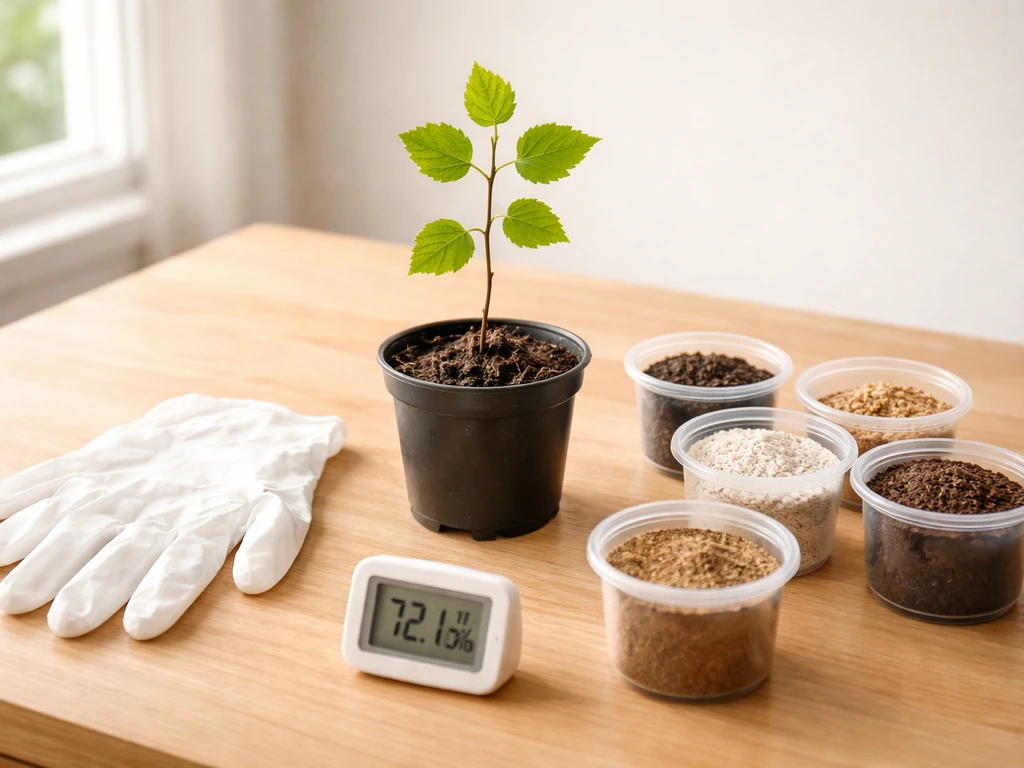
Before you start, gather everything. Improvising mid-grow with A. muscaria rarely ends well because environmental consistency matters enormously during root colonization. Here is what you are working with:
- A young host tree seedling: birch (Betula pendula or similar) or pine (Pinus sylvestris, P. strobus) grown from seed or a very young nursery seedling with minimal root disturbance. Bare-root seedlings work best for inoculation.
- A deep container: at least a 3-5 gallon pot with drainage holes, ideally 12+ inches deep to allow root spread.
- Substrate mix: a blend of native forest soil (from under conifers or birch if possible), coarse sand (30-40%), peat moss, and pine needle duff. Avoid potting mix with heavy perlite or fertilizer additives. Low-nutrient, slightly acidic (pH 4.5-5.5) soil is ideal.
- A. muscaria inoculum: spore slurry prepared from dried caps, or mycelium-colonized soil sourced from a known A. muscaria habitat (where legal and ethical to collect).
- Grow tent or enclosed indoor space: minimum 4x4 feet to allow for the container and to manage humidity and airflow.
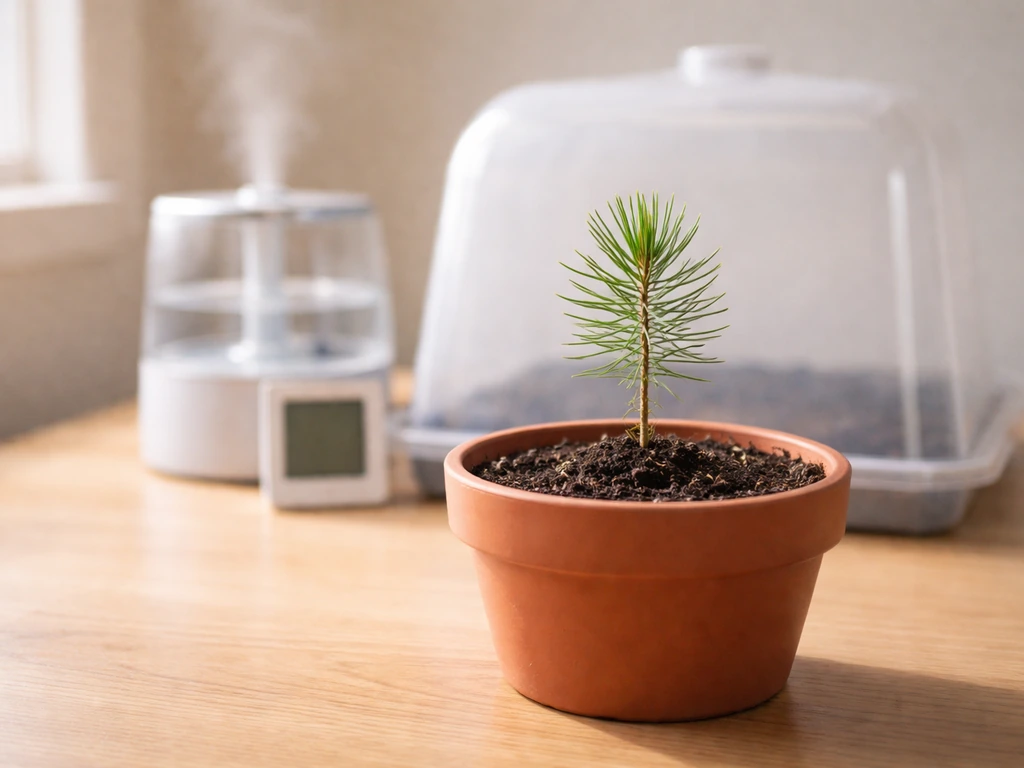
- Humidity control: ultrasonic humidifier or fogger capable of maintaining 70-90% RH during fruiting phases.
- Thermometer and hygrometer: digital combo units work fine.
- Low-intensity grow light or LED panel: enough for the host tree's photosynthesis (12-16 hours of light per day), not for the fungus directly.
- Cold stratification setup: a refrigerator or cool garage space for simulating winter dormancy, which is often essential for triggering fruiting.
- Sterile water and spray bottle for moisture management.
- Gloves, mask, and eye protection for handling inoculum and harvested mushrooms.
Getting your inoculum: spores vs. colonized soil
There are two realistic starting options for home growers, and neither is as straightforward as buying grain spawn for a saprophytic species.
Spore slurry from dried caps
Dried A. muscaria caps contain viable spores and are legally sold as novelty/educational items in many regions. To make a spore slurry, soak a gram or two of dried cap material in non-chlorinated water (let tap water sit 24 hours to off-gas chlorine) for 24-48 hours, then strain out the cap pieces. The milky water left behind contains spores. Apply this slurry directly to the root zone of your host seedling when transplanting. The germination rate for A. muscaria spores is low and highly variable, which is why repeat inoculation matters. Some growers apply a fresh slurry every 4-6 weeks for the first season.
Colonized soil from a natural habitat
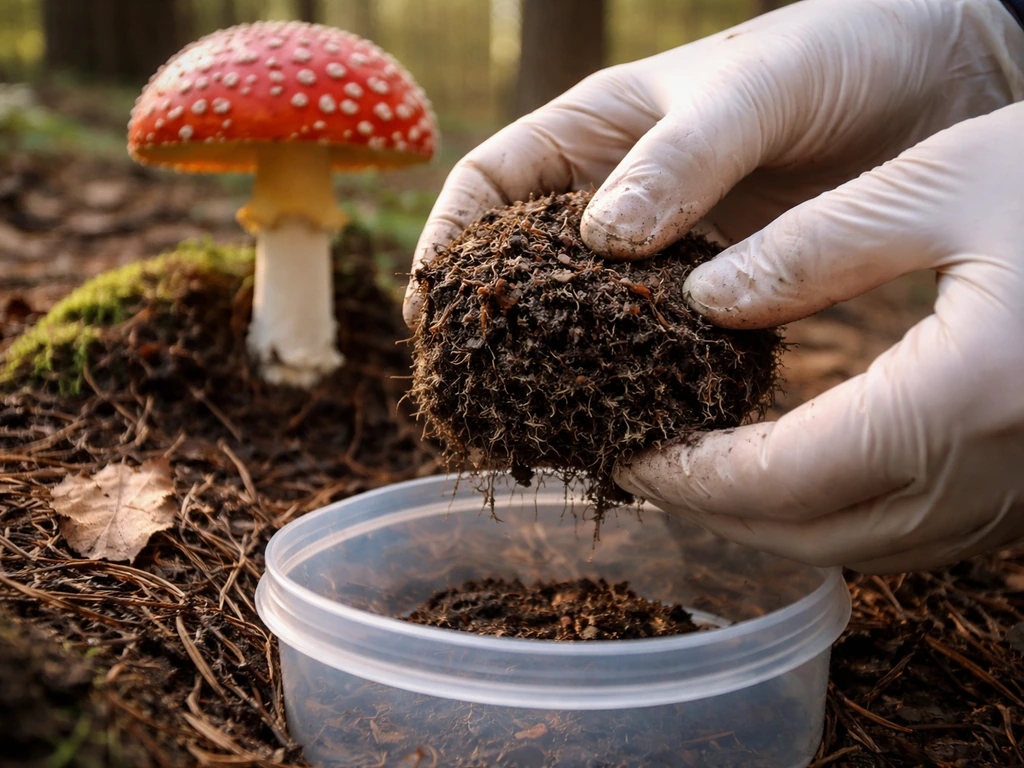
This is the higher-success-rate option if you have legal access. Collecting a small amount of soil (a few cups) from directly beneath a fruiting A. muscaria in the wild gives you established mycelium already adapted to its host tree type. Mix this soil into your container substrate near the seedling roots. Check local regulations before collecting anything from public or protected land. If you use this method, try to match the tree species: soil from under a birch association works best with a birch seedling host.
A note on commercial spawn
A small number of specialty suppliers now offer A. muscaria mycelium on agar or as liquid culture. These are hard to source reliably and expensive, but if you find a reputable one, agar-colonized mycelium transferred to the root zone of a seedling during transplanting is probably the most controlled approach available to home growers right now. The challenge is that ectomycorrhizal mycelium grown in isolation on agar often loses vigor without a living host, so timing the transfer quickly after colonization is critical.
Getting the environment right for colonization and fruiting
A. muscaria grows naturally in temperate and boreal climates with cool summers and cold winters. Indoors, you need to approximate this seasonal rhythm to get anywhere near fruiting. During the active growing season (roughly spring through early autumn analog), the root zone should stay between 55-65°F (13-18°C) while the ambient air around the tree canopy can be a bit warmer. High humidity is important but the soil should not be waterlogged. Aim for moist but well-drained conditions.
The cold dormancy period is where most indoor growers miss the trigger for fruiting. In nature, A. muscaria fruits in late summer through autumn, after the soil has cooled and following rainfall. Indoors, you simulate this by moving the container to a cold space (35-45°F / 2-7°C) for 6-10 weeks, reducing watering, and then bringing it back to normal temperatures with increased humidity. This temperature shock is widely reported as one of the most important fruiting cues for this species. Without it, you may get healthy mycelium colonization but no mushrooms.
| Parameter | Colonization Phase | Fruiting Phase |
|---|---|---|
| Temperature (air) | 60-70°F (15-21°C) | 50-60°F (10-15°C) |
| Temperature (root zone/soil) | 55-65°F (13-18°C) | 45-55°F (7-13°C) |
| Relative Humidity | 60-75% | 80-95% |
| Light (for host tree) | 12-16 hrs/day moderate LED | 10-12 hrs/day, reducing |
| Watering frequency | Regular, keep moist not wet | Reduce, then increase to simulate rain |
| Cold dormancy required | No | Yes (6-10 weeks near 35-45°F) |
Step-by-step grow workflow and realistic timelines
- Germinate host tree seeds or source bare-root seedlings. If starting from seed, germinate birch or pine seeds 6-8 weeks before planned inoculation. Seedlings should have visible root development but not be pot-bound.
- Prepare your substrate mix. Combine forest duff soil, coarse sand, and peat in roughly a 40/35/25 ratio by volume. Test pH and adjust toward 4.5-5.5 with sulfur or peat if needed. Do not sterilize this mix: the native microbial community is beneficial for mycorrhizal establishment.
- Inoculate at transplant time. When moving the seedling into its container, apply your spore slurry directly to the roots before covering, or mix colonized habitat soil into the substrate at the root level. For liquid culture or agar transfers, press the mycelium-colonized agar pieces against the fine root tips.
- Plant and establish. Bury the roots and lower stem to proper depth, firm the substrate gently, and water in. Place in your grow space under moderate light (12-14 hrs/day). Keep temperatures in the colonization range (60-65°F).
- Maintain and re-inoculate. Water regularly to keep the substrate moist but never saturated. If using spore slurry, apply a fresh dose every 4-6 weeks for the first 3-4 months. Watch for mycelial growth near the soil surface or under the pot lip: white or faintly yellowish threads are a good sign.
- Simulate winter dormancy. After 6-9 months of colonization-phase growing, reduce watering and move the container to a cool space (35-45°F) for 6-10 weeks. This is the cold stratification period. The host tree will go partially dormant. This is normal.
- Initiate fruiting conditions. Return the container to your grow space. Raise humidity to 85-95% RH using a humidifier. Resume regular watering to simulate spring rains. Maintain air temperatures around 55-60°F. Provide a gentle temperature fluctuation between day and night (a 10°F swing is helpful).
- Wait and monitor. Pins, if they appear, will emerge as small egg-like white buttons near the base of the tree. They can appear weeks to months after fruiting conditions are established. Be patient: the entire cycle from inoculation to first fruiting can take 1-3 years in indoor setups.
- Harvest. Pick mushrooms when the cap has opened but before it flattens completely and the edges begin curling upward. Twist and pull gently at the base.
Troubleshooting: why indoor grows fail and what to do about it
Most indoor A. muscaria projects stall or fail at one of a handful of predictable points. Here is what to look for and how to respond.
No visible mycelium after 3-4 months
This usually means inoculation did not take. The spore slurry may have had low viability, or the soil conditions were hostile (wrong pH, too much fertilizer in the mix, or soil that was too wet and anaerobic). Try re-inoculating with fresh material, check and correct your pH, and improve drainage. If you used potting mix with slow-release fertilizer, that high nitrogen environment is almost certainly the culprit: repot using a low-nutrient forest soil blend.
Host tree is struggling or dying
A stressed or dying tree means the symbiosis collapses. Young birch and pine are sensitive to overwatering, compacted soil, and insufficient light. Make sure your container drains freely and that the tree gets enough photosynthetically active light (a 2000-3000K LED at moderate intensity for 12+ hours works well). If the tree is yellowing, check soil pH and consider a very light application of low-phosphorus fertilizer since high phosphorus is known to inhibit mycorrhizal formation.
Mycelium present but no fruiting after cold dormancy
The cold period may not have been cold enough or long enough. Aim for at least 6 weeks at or below 45°F. When you bring the container back to fruiting conditions, make sure you are also raising humidity significantly and simulating a rainfall event by deep watering after the cold period ends. Some growers repeat the cold cycle a second year before seeing fruiting. This is normal and worth continuing.
Contamination in the substrate
Unlike the fully sterile substrate systems used for saprophytic mushrooms, A. muscaria cultivation actually benefits from a diverse soil microbiome. Seeing other molds or bacteria in the substrate is not automatically a failure. However, if you see green or black mold (Trichoderma or Aspergillus) spreading aggressively near the surface, increase airflow and reduce surface moisture. Avoid getting the top layer of soil too wet between waterings.
Environment too warm
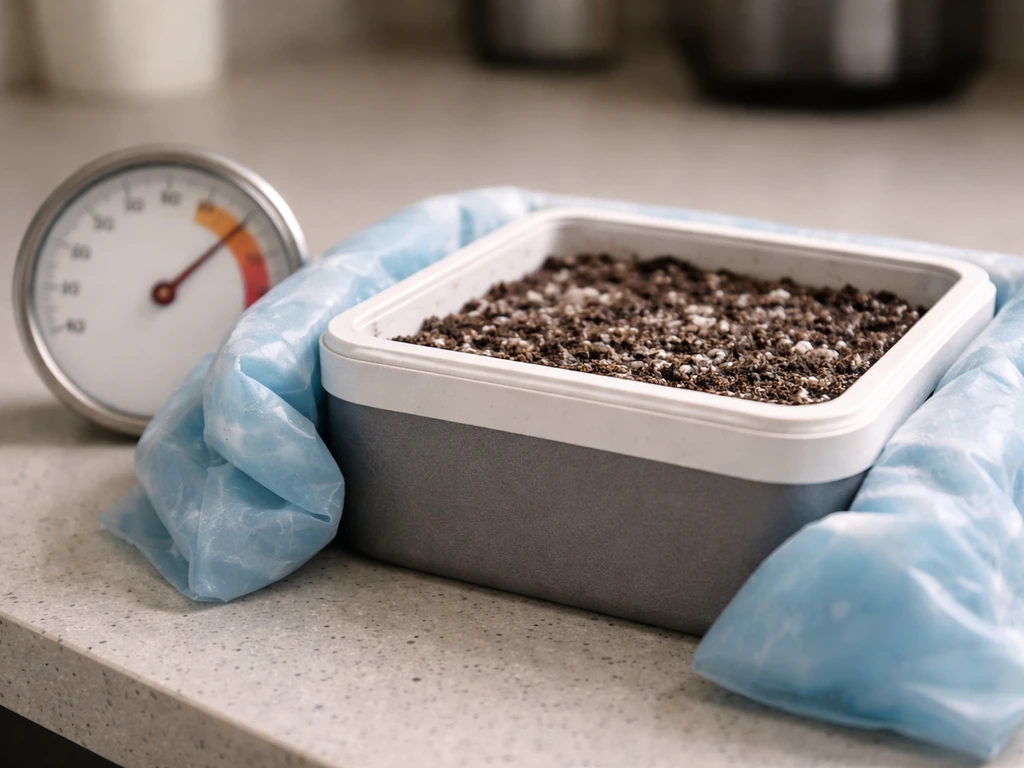
A. muscaria is a cool-climate fungus. If your indoor space runs consistently above 70°F during the growing season, mycelial activity will slow or stop. This is one of the most common mismatches for home growers in warmer climates. If you cannot keep temperatures in the 60-65°F range during colonization, consider a basement or climate-controlled closet, or accept that outdoor growing (in a suitable climate) may be more realistic for you.
Harvesting, storage, and serious safety considerations
If you do get fruiting bodies, harvest them by gripping the base and twisting gently to remove the entire stem from the soil. Wear gloves. Rinse your hands thoroughly after handling. For storage, fresh A. muscaria caps can be dried at low heat (95-105°F) in a food dehydrator until fully desiccated, then stored in an airtight container in a cool, dark place. Dried caps remain stable for months.
Now for the part you need to read carefully. A. muscaria contains muscimol and ibotenic acid, compounds that are genuinely toxic. Muscimol is classified as extremely toxic, with documented effects including nausea, delirium, and serious neurological symptoms. The FDA has explicitly stated that A. muscaria, its extracts, and its constituent compounds (muscimol, ibotenic acid, muscarine) are not authorized for use as food ingredients and may be harmful. This is not a mushroom you casually eat or experiment with. Growing it for ornamental, scientific, or ethnobotanical study purposes is a different matter, but anyone considering consuming it needs to understand that they are dealing with a substance with no FDA safety authorization and documented toxicity. Do your research thoroughly and consult relevant laws in your jurisdiction before doing anything beyond cultivation.
If you are interested in the mycorrhizal growing approach but want something more forgiving, it may be worth comparing this project to growing azurescens mushrooms indoors, which has its own significant outdoor-versus-indoor complexity. If you like the idea of an indoor project but want a different baseline for planning, you can also compare this to azurescens mushrooms indoors before you commit to how to grow ape mushrooms. If you are curious about how to grow azurescens mushrooms indoors, the indoor setup and timing also matter, but the challenges differ from this mycorrhizal approach growing azurescens mushrooms indoors. And if you found the ectomycorrhizal challenge here discouraging, going back to species like cubensis indoors is a much more achievable starting point while you build your cultivation fundamentals. If you want a faster, more beginner-friendly path, check out guidance on how to grow big cubensis indoors. If you are looking for a more direct path, learning how to grow cubensis indoors can help you build practical indoor mushroom-cultivation fundamentals before you tackle mycorrhizal species. . Many growers who want to avoid dealing with spores find cubensis to be a more straightforward indoor option using alternatives to spore-based starts cubensis indoors.
Is indoor growing worth pursuing for you?
Here is my honest take. If you have a cool indoor space, patience measured in years rather than weeks, access to viable inoculum, and genuine interest in the science of mycorrhizal systems, this project is fascinating and worth attempting. If you are hoping for a reliable, repeatable flush of mushrooms in a few months, this is not the right species or method. The failure rate is high even under good conditions. The alternative is pursuing A. muscaria outdoors, where establishing it under a compatible host tree in your garden with repeated inoculation over several seasons gives you a more natural environment for the fungus to work with, and that approach has produced more consistent results for dedicated growers. If you want a more natural path, see how to grow Amanita muscaria outdoors with the same compatible host-tree idea used in indoor setups. Either way, go in knowing what you are dealing with, and the project will be genuinely rewarding regardless of whether you get mushrooms in year one.
FAQ
What is the fastest way to know whether the mycorrhizae are actually establishing indoors?
Don’t rely on seeing mushrooms early. Instead, watch for subtle changes at the tree root zone over months, such as reduced fine-root dieback, healthier growth compared to an uninoculated control seedling, and consistent mycelial presence along the transplanting area. If the tree is declining or the soil stays consistently wet or sour, colonization is unlikely to progress even if you see occasional fungal threads.
Can I skip the cold dormancy step and still get fruiting?
You might get colonization, but fruiting is much less likely. Many indoor projects stall because the species typically needs a sustained temperature drop that mimics late-season soil cooling. A shorter or warmer “cold” period is a common failure point, especially if humidity and watering are not adjusted after the cold phase ends.
How wet should the soil be during colonization, and what counts as “waterlogged”?
Aim for moist and well-drained. Waterlogged means standing water, a consistently soggy feel days after watering, or foul, anaerobic odors from the pot. If you press the soil and it remains muddy and compacted, you should improve drainage and possibly switch to a more forest-soil-like mix rather than adding more water to “help humidity.”
Does pH matter a lot, and how do I correct it without harming the host tree?
Yes, pH swings can prevent colonization or stress the tree. Rather than strong quick-fix amendments, use a gradual approach: confirm your target range with a soil test, then adjust slowly with appropriate, low-strength changes that won’t spike nitrogen or phosphorus. If you used a peat-heavy potting mix or fertilizer-amended soil, repotting into a low-nutrient forest-style blend is often more reliable than repeated dosing.
Why does fertilizer commonly ruin my indoor amanita attempts?
Even if you keep temperatures and humidity on target, high available nitrogen or phosphorus can interfere with mycorrhizal signaling and stunt the symbiotic balance. Slow-release or “all-purpose” fertilizers are especially risky. If the tree needs recovery, use minimal input and avoid phosphorus-heavy products tied to bloom or flowering support.
What light level is enough for the host tree, and do I need direct sunlight?
You need enough photosynthesis to keep the tree supplying sugars, but you do not necessarily need direct sun. Consistent bright LED or filtered window light for 12+ hours can work, the key is avoiding prolonged low-light conditions that lead to yellowing or slow decline. If you see leaf paling, stretching, or weak new growth, increase light exposure before blaming the fungus.
Can I use the same host tree inoculation setup for multiple attempts in the same pot?
Be cautious with repeated inoculation. Repeated attempts in the exact same container can accumulate problems like compaction, nutrient shifts, or persistent moisture issues that stress the tree and disrupt the fungal balance. If attempts stall, consider refreshing the container conditions, improving aeration, and using a healthier, more comparable host rather than only adding more spores or slurry.
Is there an advantage to starting with birch versus pine indoors?
Both can work, but birch and pine differ in their container tolerance and sensitivity to indoor stress. Pine is often easier to keep compact in a pot, while birch can respond better when conditions are stable but may be more sensitive to overwatering and low-light stress. If your indoor environment fluctuates, choose the host species that you can keep healthiest year-round.
How do I handle mold that shows up on the soil surface without losing the project?
Not every mold is automatically a failure, but aggressive green or black growth usually indicates excess surface moisture and poor airflow. Reduce how wet the top layer stays between waterings, improve ventilation around the container, and avoid creating saturated humidity “puddles” on the soil surface. If the tree is also stressed, prioritize tree health and drainage changes first.
Do I need sterile technique for the inoculation and soil mix?
You generally do not need full sterility like saprophytic mushroom grows, and some microbial diversity can help the system. However, you do want to avoid obvious contamination sources that create persistent anaerobic conditions, like overly wet compost-like mixes. The goal is a stable, forest-like ecosystem with good drainage rather than a lab-sterile substrate.
How often should I re-inoculate if I’m using spore slurry?
Repeat inoculation is often used because germination is low and variable. A practical approach is applying a new slurry after several weeks during the first season and then reassessing tree health and any root-zone signs. If the host tree is struggling or the soil is too nutrient-rich or wet, adding more slurry can waste inoculum without improving outcomes.
What’s the safest way to store dried caps, and how do I prevent moisture reabsorption?
Dry until fully desiccated, then store in an airtight container in a cool, dark location. Use a container that you can keep sealed tightly, because even minor humidity uptake can degrade the material. If you notice any softening or clumping after storage, re-evaluate your drying level and packaging tightness before planning further handling.
Are there specific safety steps I should take around harvesting and handling?
Yes. Wear gloves during harvesting and thoroughly wash hands afterward. Also treat the dried material as potentially hazardous to ingest or handle casually, since the toxins are not removed by drying. Store harvested items away from food areas and keep them inaccessible to children and pets.