
Growing Amanita muscaria outdoors is genuinely possible, but it works nothing like growing oyster mushrooms in a bag. Fly agaric is an ectomycorrhizal fungus, meaning it lives in a partnership with the roots of specific trees. You are not building a substrate box and waiting for pins. You are inoculating the soil around a living host tree and essentially asking the mycelium to form a root relationship that may take one to three years before you ever see a single mushroom. That sounds daunting, but if you have the right tree in your yard and you go about it patiently, it is one of the most rewarding long-game projects in outdoor cultivation.
How to Grow Amanita Muscaria Outdoors: Step-by-Step Guide
Marcus Holloway
11 May 2026
Reality check: what 'growing' Amanita muscaria outdoors really means
Let's be direct about this upfront, because a lot of people come to Amanita muscaria cultivation expecting an experience similar to growing cubensis or oyster mushrooms. It is not. Indoor fruiting of Amanita muscaria on artificial substrate is not a reproducibly established technique as of 2026. If you are specifically trying to grow azurescens mushroom indoors, you will need a different indoor setup and expectations than the outdoor host-tree approach. Even the most experienced cultivators and vendors in the space are clear that in vitro mycelial culture and outdoor host-tree inoculation represent the realistic paths, while producing actual fruiting bodies indoors on a synthetic substrate remains essentially unsolved at a practical level.
Outdoor growing works because you are working with the fungus's actual biology rather than against it. Amanita muscaria forms ectomycorrhiza with a host tree: the mycelium wraps around root tips, exchanges nutrients with the tree, and over time establishes a network in the surrounding soil. Only once that network is mature and environmental conditions align will fruiting bodies appear. This is a fundamentally different project from a colonized grain jar. Manage your expectations going in and you will avoid a lot of frustration.
Outdoor site and host tree selection
The single most important decision you make in this whole project is choosing your tree. Amanita muscaria is documented in association with a range of host species including pine, spruce, fir, and birch. Birch (Betula species) is one of the most studied and reliable ECM partners for fly agaric, with the Betula verrucosa and Amanita muscaria relationship documented in peer-reviewed literature as a confirmed sheathing ectomycorrhizal association. On the conifer side, pine and spruce are your best bets. If you have a mature birch, Scots pine, Norway spruce, or silver fir in your yard or garden, you already have the most critical ingredient.
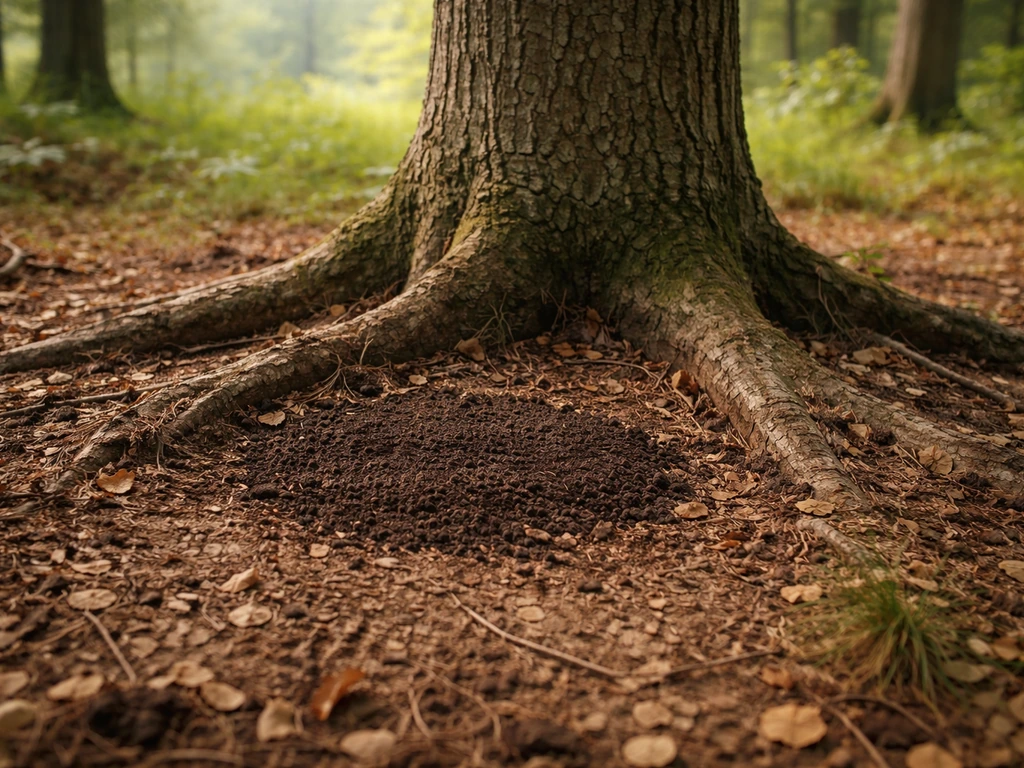
Beyond the tree itself, think about the microclimate around it. Amanita muscaria naturally occurs in temperate and boreal woodlands, so you want a spot that gets dappled shade rather than direct afternoon sun all day. The soil should stay consistently moist but never waterlogged. Avoid spots with heavy clay that pools water, or bone-dry sandy soil under eaves where rain never reaches. Somewhere the tree's roots are actively growing, with some leaf litter or duff layer intact, is ideal.
If you do not already have a suitable tree, you can plant a young birch or pine as part of the project. A sapling that is one to two years old and has an active root system can be inoculated at planting time, which can actually accelerate establishment compared to trying to work into the root zone of a massive old tree. The downside is that your timeline gets even longer since the tree itself needs to mature.
| Host Tree | Relationship Type | Best For | Notes |
|---|---|---|---|
| Birch (Betula spp.) | Strong, well-documented ECM | Most backyard growers | Fast-growing, widely available, proven association |
| Scots Pine | Strong, well-documented ECM | Temperate and boreal climates | Very reliable partner, slower tree growth |
| Norway Spruce | Good ECM association | Cooler, wetter climates | Often found in suburban yards |
| Silver Fir | Documented ECM associate | Mountain/highland gardens | Less common but viable |
| Other deciduous trees | Weak or unconfirmed | Not recommended | Oak, beech not reliable ECM partners for Amanita muscaria |
Materials: spores vs spawn vs starting cultures
You have a few options for starting material, and they each come with trade-offs. Spores are the most commonly available form for Amanita muscaria. You can get spore syringes or spore prints from specialty vendors. The upside is cost and availability. The downside is that germinating Amanita muscaria spores into viable mycelium that then successfully colonizes a host root system is unpredictable. Germination rates vary, and many attempts just do not take. If you go the spore route, plan to make multiple inoculations and treat it as a probability game.
Established mycelium cultures or colonized spawn are harder to find but give you a meaningful head start. Some specialty vendors produce Amanita muscaria mycelium on agar or grain, and this material, if genuinely viable, can be introduced to the soil much closer to the root zone with a better chance of establishing contact. If you can source it, this is the preferred starting material. Be skeptical of vendors making grandiose claims about indoor fruiting kits though. Stick to vendors who honestly describe outdoor inoculation as the goal.
A third option some growers use is wild-harvested material: spore slurry made from fresh or dried caps collected from known Amanita muscaria fruiting sites. This is appealing because the spores are fresh and locally adapted, but it requires you to positively identify the mushroom (critical given the Amanita genus includes deadly species) and ideally source from a location with the same host tree species you are working with. Never use wild-harvested material unless you are absolutely certain of your identification.
Soil prep and inoculation step by step
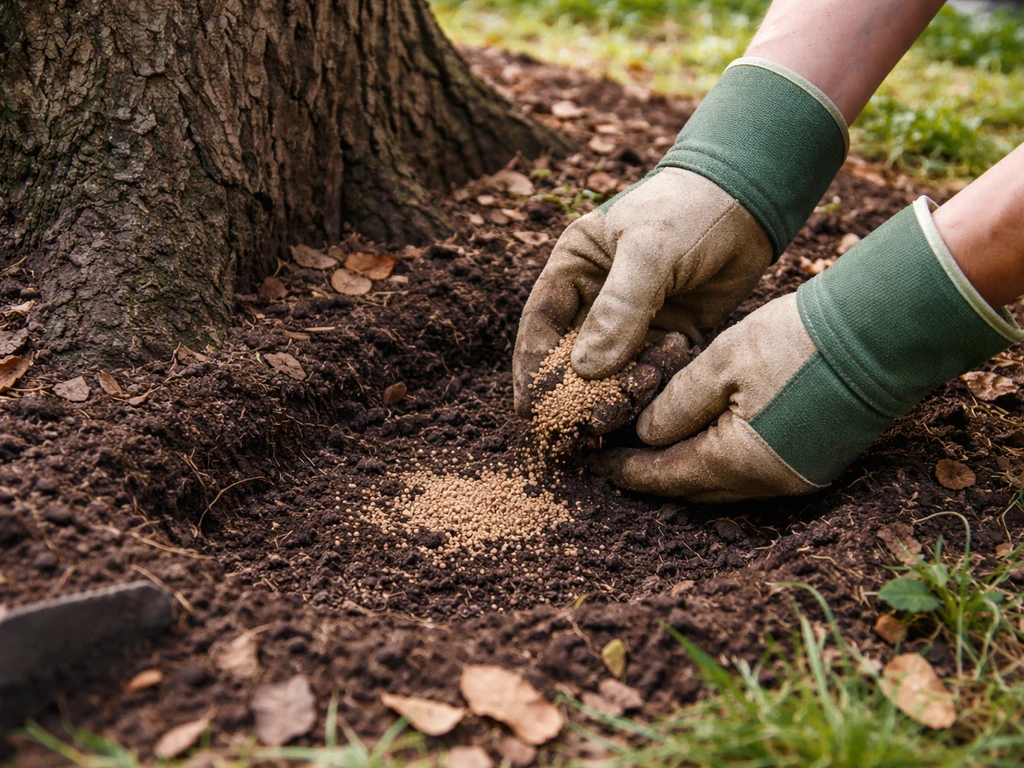
Do not go tearing up all the soil around your tree. You want to work with the natural root environment, not destroy it. The goal is to get your starting material into close contact with active root tips in the top 10 to 20 cm of soil, where fine feeder roots are most concentrated.
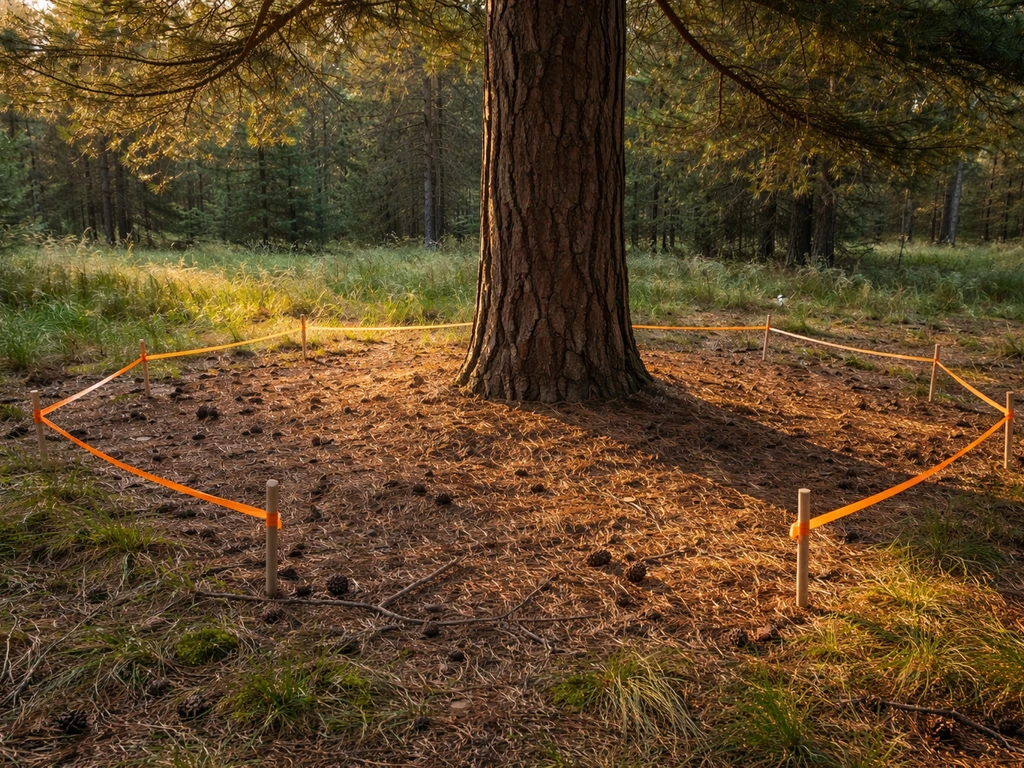
- Clear a working area around the drip line of your tree, roughly 30 to 100 cm out from the trunk depending on tree size. This is where the most active fine roots are found.
- Gently remove any grass, weeds, or thick mulch in a section about 60 cm wide and 60 cm long. Try not to sever large roots. Leaf litter and duff are fine to leave in place.
- Loosen the top 10 to 15 cm of soil with a hand fork. Do not rotary-till. You are opening pathways, not obliterating the existing root structure.
- If your soil is very compacted or has a heavy clay component, work in a small amount of pine bark fines or coarse wood chips (from compatible trees, not treated wood). This improves drainage and aeration without radically altering chemistry.
- For spore slurry: mix your spores with non-chlorinated water (let tap water sit 24 hours to off-gas chlorine) at a ratio of roughly one spore syringe per 500 ml of water. Pour this evenly into the loosened soil zone and lightly work it in.
- For grain spawn or agar-based mycelium: break the colonized material into small pieces and work it into the loosened soil, distributing it across the area rather than placing it all in one spot.
- Replace the disturbed soil and cover the inoculated area with a 5 to 8 cm layer of pine needle mulch or leaf litter. This holds moisture and mimics the natural forest floor.
- Water the area gently to settle everything in. Do not flood it.
One practical tip: inoculate in multiple spots around the tree rather than just one location. Spreading your starting material across three or four small areas increases the probability that at least one zone will establish a viable mycorrhizal relationship. I treat each spot as an independent attempt and accept that not all of them will take.
Seasonal timing, weather targets, and ongoing moisture management
Timing your inoculation well gives the mycelium the best window to colonize before environmental stress sets in. The two optimal windows are early spring, as soil temperatures rise above 8 to 10°C and trees break dormancy with fresh root growth, and early autumn, roughly six to eight weeks before your first expected frost. The spring window is often preferred because you get the entire growing season ahead of you for establishment. The autumn window works well for getting material into the ground while soil is still warm from summer, letting it establish through mild fall conditions.
Target soil temperatures between 10 and 20°C for inoculation. Below 8°C, fungal activity slows dramatically. Above 25°C, many ectomycorrhizal fungi struggle and competing soil organisms become more aggressive. If you are in a region with hot dry summers, spring inoculation with heavy mulching is your best strategy to keep the root zone cool and moist through the warm months.
Moisture is the variable you will manage most actively. The inoculation zone should feel like a wrung-out sponge, consistently damp but not saturated. In dry periods, water the area slowly and deeply once or twice a week. A soaker hose or drip line placed around the drip line of the tree is the cleanest way to do this without disturbing the soil surface. During wet periods, check that the mulch layer is not compacting into a barrier that prevents water from penetrating, and make sure the site drains adequately.
Once established through the first season, maintenance drops significantly. You are essentially maintaining a forest floor microhabitat. Replenish your pine needle or leaf litter mulch each autumn. Water during prolonged dry spells. Avoid using synthetic fertilizers anywhere near the inoculation zone, as high nitrogen disrupts mycorrhizal relationships. If your tree is otherwise healthy, the fungus will largely take care of itself.
What to expect: timeline, fruiting patterns, and success metrics
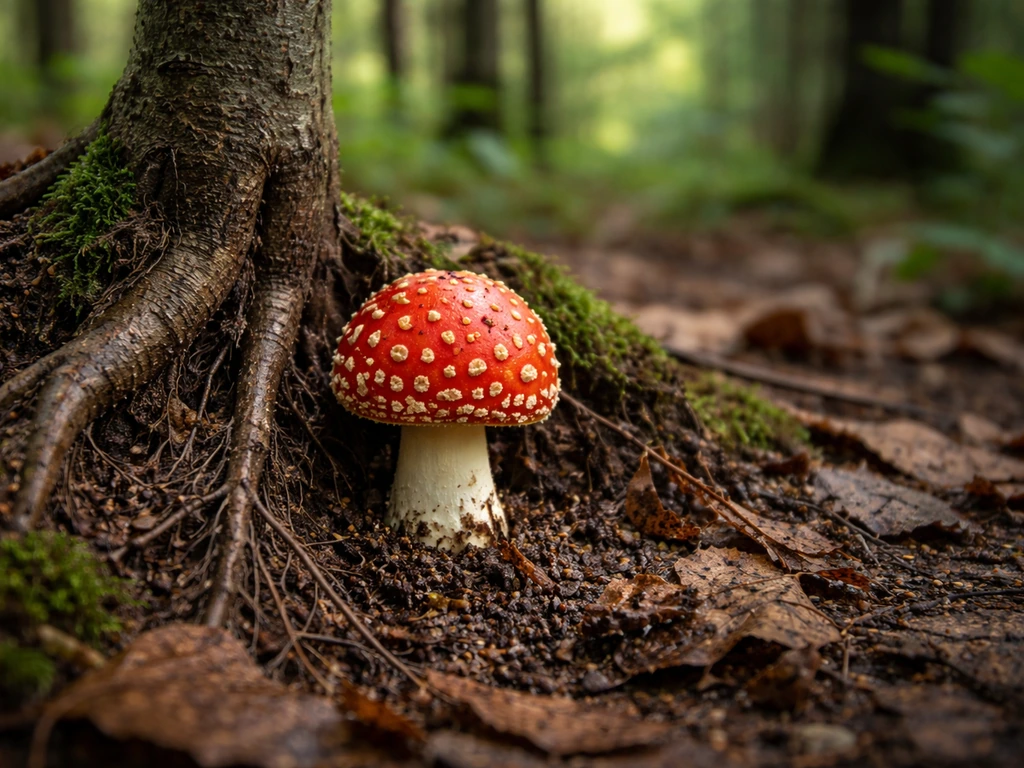
The honest timeline for first fruiting is one to three years from inoculation, and three years is more common than one. The ectomycorrhizal relationship itself may begin forming within one to two months of successful inoculation based on what we know about mycorrhizal formation in pine systems, but the mycelial network needs to expand and mature before it will produce mushrooms. Reports that ectomycorrhizae can be formed in a controlled timeline, with mycorrhizae formed over about five months when using Amanita muscaria with Pinus ponderosa, suggesting slow establishment at the mycorrhiza stage mycorrhizae were formed during a ~5-month period involving Amanita muscaria on Pinus ponderosa. Think of year one as establishment, year two as network growth, and year three onward as when you might realistically start seeing fruiting bodies.
When fruiting does happen, it tends to follow late summer into autumn patterns, often triggered by a combination of dropping temperatures and rainfall after a dry period. In temperate climates, September through November is the typical window. Fruiting is not going to be like a bag of oysters dropping pins every few weeks. You might get a flush of two to five mushrooms one autumn and nothing the following year, then a better flush the year after. Consistency improves as the network matures.
What counts as success? If you see Amanita muscaria fruiting bodies emerging within three meters of your inoculation site, you did it. Even one mushroom in year two or three is a genuine accomplishment. If you observe vigorous tree health and notice the distinctive mantled egg stages or developing caps in your mulched zone, that is your confirmation that the relationship took. Dig carefully near a spent mushroom and you may even see the white mycelial mat or sheathing around roots, which is another confirmation of active colonization.
Troubleshooting why it won't fruit (and what to adjust)
If years go by and nothing happens, or you are not confident the mycelium even established, work through these common failure points before starting over.
- Wrong host tree: This is the most common reason for failure. If your tree is an oak, beech, maple, or any species not in the documented ECM host list for Amanita muscaria, no amount of inoculation will produce results. Confirm your tree species before assuming the fungus is the problem.
- Starting material was not viable: Spores have limited shelf life, and poorly stored material may simply never germinate. If you used old spores or a culture of questionable provenance, the failure is upstream of the inoculation. Source fresh, verified material and try again.
- Soil too acidic or too alkaline: Amanita muscaria prefers slightly acidic to neutral soils, roughly pH 5.5 to 6.5. If your soil is way outside this range, adjust gently with sulfur (to lower pH) or garden lime (to raise pH), but do so cautiously to avoid root stress.
- Competing fungi and weeds: If your site is overrun with aggressive weed species or if fast-spreading competitor fungi colonized the zone first, Amanita muscaria mycelium may struggle to establish. Clear weeds regularly and avoid introducing substrate materials that carry competitor spores.
- Too dry during establishment: A single dry summer in the first year can kill off a young mycelial network before it has any resilience. If you had a drought and did not irrigate, this is likely your problem. Re-inoculate in autumn and commit to watering the following summer.
- Nitrogen overload: Synthetic lawn fertilizers applied near the tree or high-nitrogen mulch like fresh grass clippings inhibit ectomycorrhizal formation. Strip any enriched mulch back to bare soil plus leaf litter and let the area recover before re-inoculating.
- Too much disturbance: Repeated digging, foot traffic compacting the soil, or kids and pets churning up the area can destroy developing mycelial networks before they consolidate. Fence off or mark the zone and leave it alone between maintenance visits.
If you have addressed all of these and still see nothing after three full growing seasons, it may be worth trying a different location or a different host tree entirely. Some spots just do not work due to soil biology that is hard to assess without expensive testing. Move to plan B without taking it personally.
Safety, legality, and responsible outdoor placement
Amanita muscaria contains ibotenic acid and muscimol, psychoactive compounds that also cause toxicity symptoms including nausea, vomiting, disorientation, and in large amounts, serious harm. It is not a culinary mushroom. It is not safe to eat raw or prepared without specific decarboxylation processing, and even then it is not food in any conventional sense. Anyone growing it outdoors needs to take the physical hazard seriously from day one.
If you have children or pets, your placement decision is critical. Do not inoculate a site that children play near or that dogs frequent. The bright red cap with white spots is attractive and memorable to children precisely because it looks like a storybook mushroom. A curious toddler or a dog can ingest a fruiting body before you notice. Site your grow far from play areas, fence it if needed, and check and remove any mushrooms that emerge promptly if young children or pets are a concern.
On legality: as of 2026, Amanita muscaria is legal to grow, possess, and cultivate in most of the United States, Canada, the United Kingdom, and across most of Europe. It is not a controlled substance under federal US law or equivalent legislation in most countries, unlike psilocybin-containing mushrooms. Louisiana is a notable US exception, where Amanita muscaria is specifically listed as a controlled substance under state law. Always check your local and state or provincial regulations before starting any cultivation project, as laws change and vary by jurisdiction. Being a niche mushroom cultivator means staying informed about the legal landscape.
Handle all fruiting bodies with gloves. Wash your hands after working around the inoculation site, especially before eating. Do not consume any mushroom from the site unless you are absolutely certain of identification and understand the risks involved. If you are growing Amanita muscaria purely for the cultivation challenge, the ecology, or ornamental purposes, there is nothing inherently reckless about the project. Just be a responsible gardener about it. The same sensible precautions you would take with any toxic plant in your garden apply here.
If this long-game outdoor approach appeals to you but you also want a shorter-cycle cultivation project while you wait, the contrast with species like Psilocybe cubensis or even indoor oyster grows is stark. If you are really after how to grow big cubensis, start by planning for a faster, more controlled indoor grow compared with this long-game outdoor approach Psilocybe cubensis. If you are specifically after how to grow cubensis indoors, you will need a very different setup and environmental control than an outdoor mycorrhizal project Psilocybe cubensis. Psilocybe cubensis cultivation without spores is often discussed under methods that use alternative starting material, so it is important to be precise about what you are trying to germinate and why. Those are much faster, more controllable crops. Outdoor Amanita muscaria is a different kind of project: slower, more dependent on ecological variables, and ultimately more about working with nature than managing a controlled grow environment. For many growers, that is exactly what makes it worth doing.
FAQ
What tree species can I use if I do not have birch, pine, spruce, or fir in my yard?
In practice, your options are limited to ectomycorrhizal hosts that are known to associate well with fly agaric. If you only have a non-ectomycorrhizal landscaping tree (many common broadleaf ornamentals), inoculation may fail. Your best move is to plan the site around an appropriate existing host tree or plant a suitable sapling, then keep the roots undisturbed for years.
How close to the tree trunk should I place the inoculation spots?
Aim within the active fine-root zone rather than right at the trunk. A workable rule is the top 10 to 20 cm of soil out toward the drip line (or slightly inside it), and then use multiple small spots spaced around the tree to increase the chance that at least one zone contacts receptive root tips.
Can I use “compost” or potting soil to create a better inoculation bed?
Avoid importing sterile potting mixes as a replacement for your natural root soil. You want to preserve the existing duff and soil biology so ectomycorrhiza can form, and topping up with lots of non-local material can reduce contact with the right microbial community. If you need to adjust moisture, mulch and irrigation are safer than changing the soil profile.
Is it okay to inoculate if the soil is wet or muddy after rain?
Yes, as long as you are not creating waterlogged conditions. If the ground stays saturated for days, oxygen availability drops and colonization is less likely. Wait for the soil to drain to consistently damp, wrung-out sponge conditions, then inoculate and keep mulch permeable.
Do I need to disturb the roots or dig down to deeper layers?
No. Shallow contact is usually the goal. Work only as deep as needed to place inoculum near the top 10 to 20 cm where feeder roots are concentrated, and do not uproot or aggressively rework roots, since destroying the natural root environment is a common reason attempts fail.
How can I tell early on that something is happening if mushrooms never appear?
Look for indirect indicators rather than expecting fruiting immediately. Consistent tree vigor, the appearance of the mantled egg stage or developing caps within the mulched zone, and careful excavation near a spent mushroom later on (if any appear) are the most useful confirmations of active association.
What should I do if summers are very hot and dry where I live?
Spring inoculation plus insulation-style mulching is usually your best strategy. Keep the inoculation zone cool and consistently moist without saturating it, using drip or soaker irrigation placed around the drip line so you do not repeatedly wet and disturb the surface.
Should I keep watering every week even in the rainy season?
During wet periods, watering can be counterproductive. Instead, monitor drainage and mulch permeability, and reduce irrigation so the soil stays damp but not waterlogged. A quick practical check is whether the mulch acts like a barrier that prevents water infiltration and whether puddles persist.
How many years should I wait before giving up on a specific inoculation site?
Treat three full growing seasons as the decision point. If you see no signs of association by then, the odds are often low at that location, and you are better off starting over at a different microclimate and ideally with a different host tree.
Can I inoculate in the exact same spot multiple times?
Yes, and it can help, especially if your first inoculation was done with spores or uncertain starting material. Spreading across multiple spots is usually better than repeatedly hitting a single pocket, and you still want to respect the temperature window (soil generally needs to be in the active range) to avoid stressing establishment.
Are spore syringes and spore prints equally reliable for outdoor inoculation?
They are both possibilities, but reliability can differ because germination and viability vary a lot. Treat the spore route as probabilistic, plan multiple inoculation points, and do not assume that a single batch will establish a mature mycorrhizal network.
What is the safest way to handle, store, or dispose of inoculum and mushrooms?
Use gloves when handling fruiting bodies and avoid letting children or pets access any emerging mushrooms. After working, wash hands thoroughly, and if you remove mushrooms, bag and discard them promptly rather than leaving them to drop spores in accessible areas.
Is it ever safe to move or transplant the inoculated tree to a new location?
It is risky because you will disrupt the developing mycorrhizal network along with many fine roots. If you must relocate, expect a major setback and a long delay, and in most cases it is better to choose the correct permanent site first.
What legality steps should I take beyond “checking local rules”?
Confirm both cultivation and possession rules at the state, provincial, and municipal level, and document any exemptions or restrictions for your specific species. Laws can change, and enforcement can differ depending on whether material is considered a controlled substance, even when federal status is different.