
Growing shiitake mushrooms from plugs means drilling holes into a freshly cut hardwood log, hammering in small wooden dowels colonized with shiitake mycelium, sealing everything up, and then waiting about 12 months for the mycelium to spread through the wood before you trigger your first harvest. It's slow compared to indoor block methods, but it's genuinely beginner-friendly, low-cost, and once those logs are colonized, they'll produce flushes of shiitake for several years with minimal effort.
How to Grow Shiitake Mushrooms From Plugs: Step by Step
Marcus Holloway
11 May 2026
What shiitake plugs are and when plug-growing makes sense
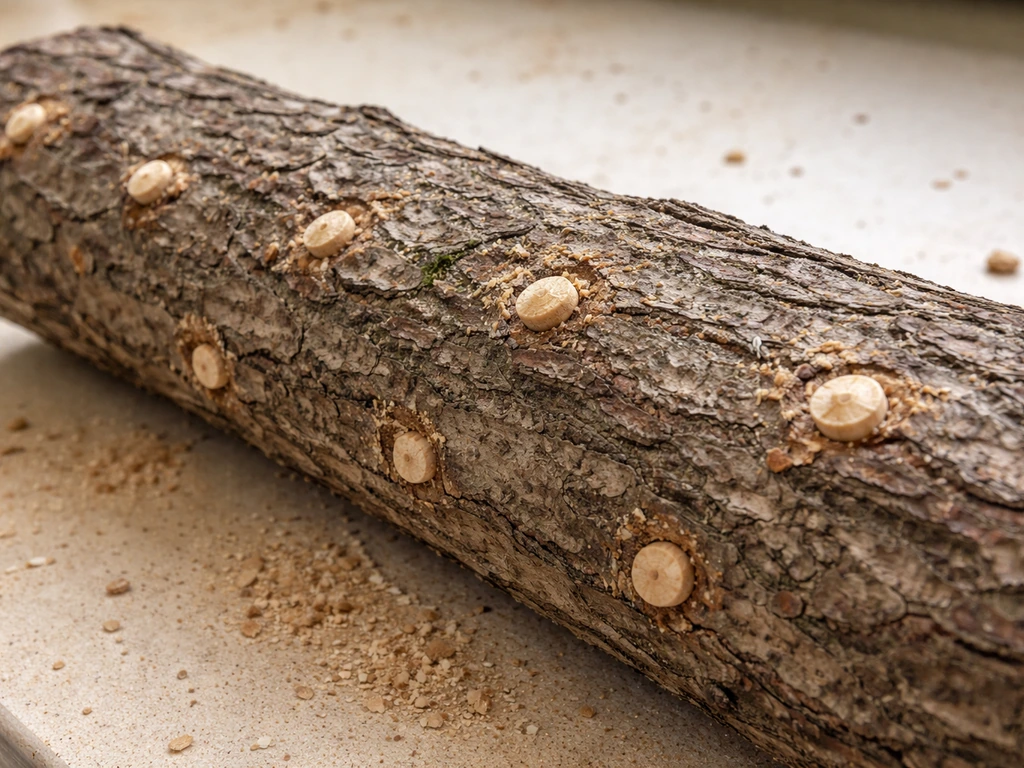
Mushroom plugs (also called plug spawn) are small hardwood dowels, typically about 1 inch long, that have been fully colonized with shiitake mycelium. You're not working with spores here. The mycelium is already growing on the dowel, so when you hammer a plug into a drilled hole in a log, you're transferring a living fungal culture directly into the wood. That's a big advantage over starting from spores, which is far more unpredictable.
Plug spawn is specifically designed for outdoor log cultivation. It's not the same as the grain spawn used for indoor fruiting blocks, and OSU Extension is pretty clear on this: don't use grain spawn on logs. It's meant for sterilized indoor substrates. For logs, you want plug spawn, sawdust spawn, or thimble spawn. Plugs are the easiest starting point for beginners doing a smaller number of logs, maybe 5 to 20, because the inoculation process is straightforward and forgiving.
Plug-growing works best when you have access to fresh hardwood logs, outdoor space with good shade, and patience. You're not going to harvest in 6 weeks like you might with oyster mushrooms on straw. But if you're looking for a low-maintenance, outdoor, multi-year growing system, this method genuinely delivers. Growers interested in other outdoor log methods might also find the approach for growing reishi mushrooms on logs familiar, since both share the same basic log-inoculation framework.
Materials and supplies you'll need
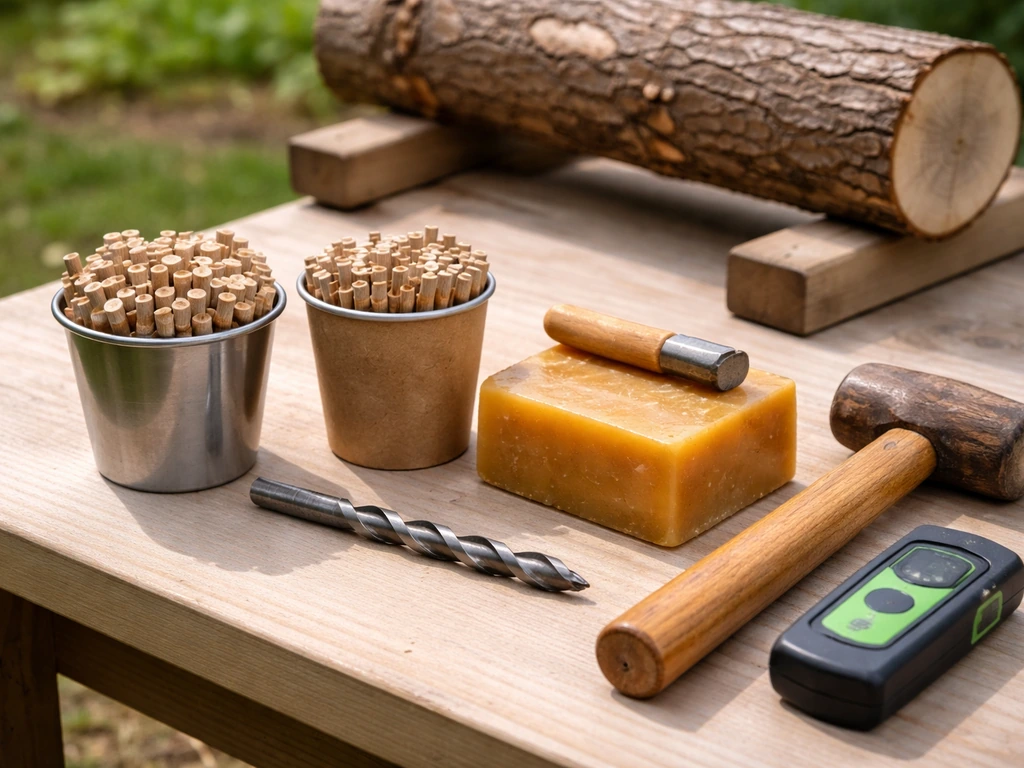
Before you start drilling, get everything together. Running out of wax or plugs halfway through is annoying and wastes colonization time.
- Shiitake plug spawn: species-specific dowels colonized with Lentinula edodes mycelium. Order from a reputable supplier like North Spore, Field & Forest, or Redwood Mushroom Supply. Buy enough plugs for your log count (you'll use roughly 30 to 50 plugs per 4-foot log depending on diameter).
- Hardwood logs: oak, sweetgum, and sugar maple work very well. Avoid conifers (pine, fir, cedar) and fruit trees. Logs should be 3 to 8 inches in diameter and about 3 to 4 feet long.
- A 5/16" (8.5mm) drill bit: this matches the diameter of standard plug spawn dowels. Don't guess on the bit size. If your supplier uses a different diameter, confirm before drilling.
- A drill: a cordless drill works fine. For larger batches, North Spore mentions using an angle grinder adapter with an 8.5mm bit to speed things up significantly.
- A hammer or rubber mallet: for tapping plugs into holes.
- Food-grade wax (cheese wax or beeswax): for sealing each hole after plug insertion. This keeps the mycelium from drying out and blocks competing fungi.
- A small brush or dauber: for applying melted wax quickly.
- A heat source: a small pot on a camp stove or a slow cooker works for melting wax.
- A wood moisture meter: optional but helpful for monitoring log moisture during incubation (target 35 to 45%).
Choosing the right log
This is where a lot of beginners go wrong before they even start. The log needs to be cut within one to two weeks of inoculation. That's a hard constraint. Fresh wood hasn't been taken over by competing fungi yet, and the moisture content is still right for mycelium to establish. If your log has been sitting cut for a month or more, the odds of successful colonization drop considerably. OSU Extension points out that logs not used in time can dry out or become contaminated with white rot fungi fast. Stick to freshly cut hardwood.
Drilling the log and inserting the plugs
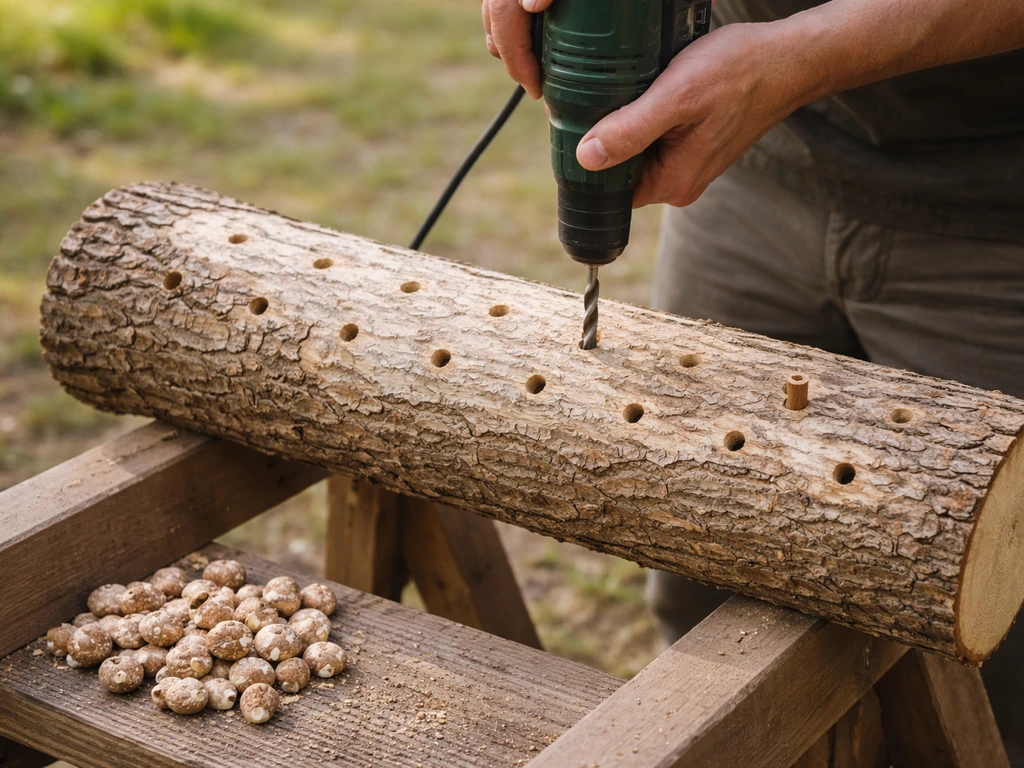
Drill holes about 1 inch deep using your 5/16" bit. Space holes roughly 6 inches apart along each row, and stagger the rows in a diamond pattern around the log. The PNW Forest-Cultivated Mushroom Growers Network recommends placing the inoculation holes in a diamond, or offset, arrangement around the log (about 50% offset) diamond pattern around the log. Cornell Small Farms describes this offset pattern well: each row is shifted so holes alternate between rows rather than lining up in straight columns. This staggered arrangement helps the mycelium colonize the wood more evenly. Tighter spacing means faster colonization but also higher spawn cost, so 6 inches is a solid balance for home growers.
Once your holes are drilled, work quickly. Take a plug and press it into a hole, then tap it flush with a hammer. You want the plug sitting at or just below the surface of the bark so the wax can fully seal it. Don't leave plugs proud of the surface or they'll catch on things and get knocked loose. Work through all the holes on the log before moving to wax.
Melt your wax and use a small brush or dauber to coat each plugged hole with a good seal of wax. Cover the entire plug and a small ring of bark around it. This step is not optional. The wax protects the inoculation point from drying out and from competing organisms getting in. Don't skip it thinking the bark provides enough protection on its own.
One note on sealing: some sources suggest plug spawn doesn't require waxing, and the PNW Forest-Cultivated Mushroom Growers Network describes plug inoculation without wax. That may work in consistently humid climates. But for most home growers in variable outdoor conditions, waxing is worth doing. It's cheap insurance.
Incubation: keeping conditions right while the mycelium colonizes
After inoculation, your logs need a shaded, wind-protected spot to rest for the colonization period. This is the slow part. Shiitake logs typically take at least 12 months to fully colonize before they'll fruit reliably. That's not a typo. Some logs need up to 18 months depending on wood density, log diameter, and temperature conditions. Plan your inoculation timing accordingly: logs inoculated in late winter or spring will usually be ready to force-fruit the following summer or fall.
The single biggest threat during incubation is the log drying out. Northern Woodlands is emphatic about this: keep logs in a well-shaded, wind-protected area because wind desiccates wood fast. Stack logs off the ground on a simple wooden frame or old pallets to allow airflow underneath, but keep them out of direct sun. A 70 to 90% shade cloth works well if natural shade isn't available.
Moisture is the key variable to watch. You're targeting 35 to 45% wood moisture content, which a wood moisture meter lets you track. If logs drop below that range during dry spells, water them with a garden hose or soaker hose. Don't soak them aggressively during colonization, just enough to bring moisture back up. A good weekly check during dry summer months will save you a lot of heartache.
Temperature-wise, shiitake mycelium grows best between roughly 40 and 80°F. The colonization process slows down significantly in cold months but doesn't stop entirely. That's fine. Outdoor log cultivation works with seasonal temperature swings, not against them. You don't need to move logs indoors over winter.
Triggering fruiting and managing the fruiting environment
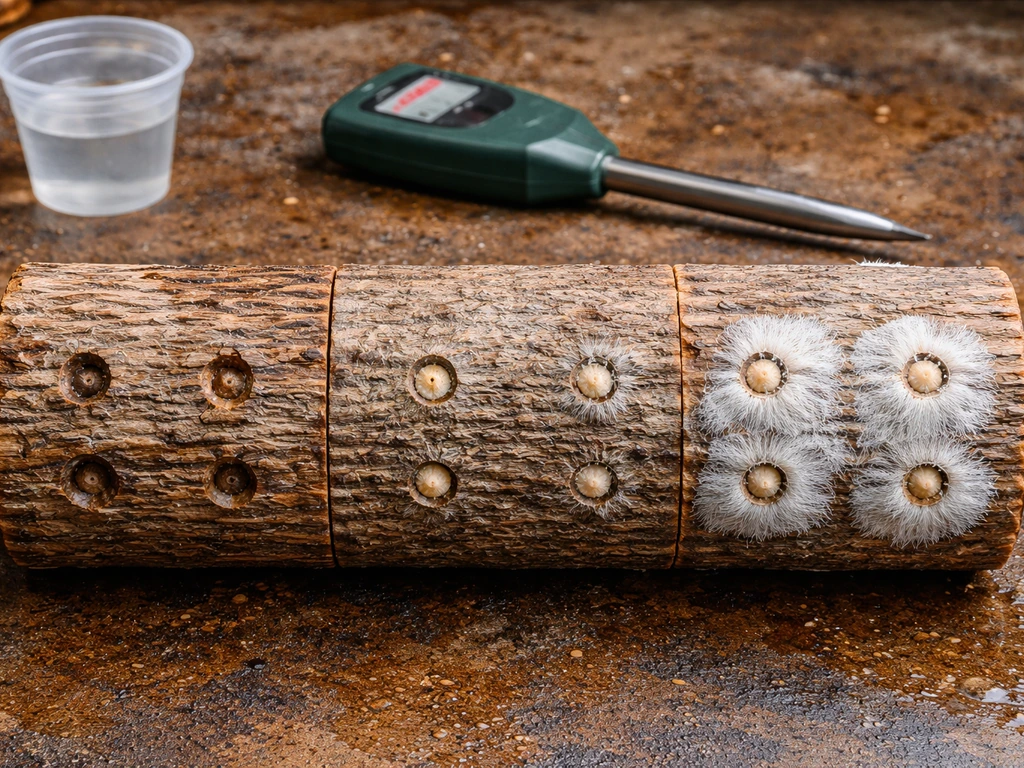
Once your logs are fully colonized (look for white mycelium visible at the ends of the log and at inoculation points), you can trigger fruiting by "forcing" or "shocking" them. The standard method is submerging the log in cold water for 12 to 24 hours. The cold water shock mimics the kind of temperature drop and rainfall event that triggers shiitake to fruit in nature.
How long to soak
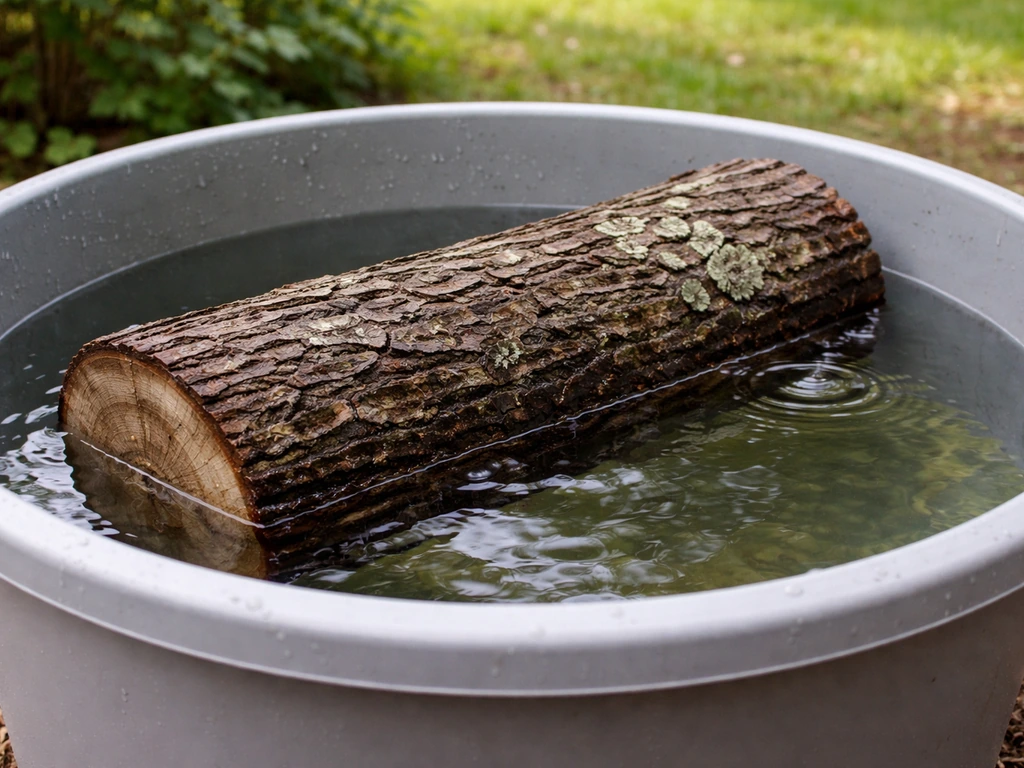
OSU Extension gives a useful range: soak for 6 to 24 hours in summer when water and air temperatures are warmer, and 2 to 3 days in cooler spring or fall conditions. N.C. Cooperative Extension caps soaking at 48 hours maximum. Field & Forest describes 12 to 18 hours as a typical sweet spot, flipping the log halfway through if it floats. Older logs with thicker bark need longer soaks to absorb enough water. Younger, thinner-barked logs respond faster. When in doubt, 18 to 24 hours in cold water is a safe starting point.
After soaking, move the log to your fruiting area and expect pins to form within a few days. According to USDA Forest Service data, pins develop into full-size mushrooms within 7 to 14 days after they appear. Shiitake naturally tends to fruit in summer through fall, often triggered by rain events, which is exactly what the cold soak is mimicking artificially.
Fruiting conditions
During fruiting, you want humidity high and airflow gentle. Shiitake fruiting temperature is roughly 41 to 68°F, so cooler conditions are generally better. Mist the logs with water once or twice a day if it's dry, but don't drown them. Allow the bark to partially dry out between mistings. Light matters less than humidity and temperature, but some indirect light is fine and won't hurt.
Between fruiting cycles, let the logs rest for 6 to 8 weeks before forcing again. They need time to rebuild mycelial energy. Don't try to force every few weeks. Natural rainfall events will often trigger spontaneous fruiting even between forced cycles, which is a nice bonus.
Harvesting, yields, and how many flushes to expect
Harvest shiitake when the caps are about 50 to 70% open and the edges are still slightly curled under. At that stage, the flavor and texture are at their peak. Once caps fully flatten and edges curl upward, they've matured past the ideal harvest point and will start dropping spores, which creates a fine white dusting around the growing area. Twist and pull or cut at the base to harvest cleanly.
Realistic yield expectations depend on log size and age. A single 4-foot oak log might produce 1 to 2 pounds of shiitake per flush in peak years, with 2 to 3 forced fruiting cycles possible per year plus spontaneous flushes. Peak production typically hits in years 2 and 3 of a log's life. Most logs continue producing for 4 to 6 years total, gradually declining as the wood is consumed by the mycelium.
This is meaningfully different from fast-turnover indoor cultivation. If you're used to oyster or crimini mushrooms fruiting in weeks on a block, the plug-and-log approach requires a different mindset. Crimini mushrooms also start from a plug or other spawn method, but their fruiting timeline and conditions are different from shiitake. You're building a multi-year system, not a quick crop. If you want to compare this to another outdoor approach, see how to grow matsutake mushrooms. But the payoff is years of low-effort harvests from logs you prepared once.
Troubleshooting common plug-growing problems
| Problem | Likely Cause | Fix |
|---|---|---|
| No signs of colonization after 6+ months | Log dried out, inoculated too late after cutting, or wrong wood species | Check moisture with a meter; soak log briefly if dry. Verify log was cut within 1-2 weeks of inoculation. Confirm wood species is hardwood (oak, maple, sweetgum). |
| White or green mold on log surface | Competing fungi colonizing before shiitake mycelium established | Remove visibly moldy sections if possible. Ensure logs were fresh-cut. Improve shading and air circulation around bedding area. |
| Plugs falling out | Holes drilled too large or plugs not flush-seated | Use a 5/16" (8.5mm) bit exclusively. Re-seat loose plugs and seal immediately with wax. |
| Forced fruiting produces no pins | Log not fully colonized yet, or soak too short/water not cold enough | Wait longer before forcing (18+ months for stubborn logs). Use colder water and extend soak to 24 hours. Try soaking in fall when ambient temps are cooler. |
| Very small or sparse flushes | Log too dry, rest period too short, or log nearing end of productive life | Check wood moisture and water logs if below 35%. Allow full 6-8 week rest between forcing cycles. Older logs (5+ years) will naturally produce less. |
| Logs cracking or bark falling off rapidly | Log drying too fast, poor site conditions | Move to shadier, more wind-protected location. Add a shade cloth. Mist logs during dry periods. |
| Pests (slugs, insects) eating pins | Fruiting bodies exposed to common garden pests | Harvest promptly when caps are partially open. Use copper tape or diatomaceous earth around bedding area to deter slugs. |
The most common failure I hear about from beginners is using a log that was cut too long ago or from the wrong tree. Shiitake is particular about wood. Oak is your safest bet. If you cut your own logs, inoculate within that two-week window and you'll sidestep the majority of contamination issues before they start.
Competition from other fungi is the other big one. OSU Extension highlights this clearly: white rot fungi move in fast on wood that isn't claimed by shiitake mycelium early. That's exactly why fresh logs and fast inoculation matter so much, and why waxing every hole is worth the extra 20 minutes.
Plug spawn vs. other shiitake growing methods
If you're deciding between plug spawn and sawdust spawn for log inoculation, the main trade-off is cost vs. convenience. Sawdust spawn is more cost-effective when you're inoculating a large number of logs (say, 50 or more), but it requires an inoculation tool and a bit more skill. Plug spawn is pricier per log but dead simple: drill, hammer, seal. For a first-time grower with 5 to 20 logs, plugs win on ease every time.
| Factor | Plug Spawn | Sawdust Spawn |
|---|---|---|
| Ease of use | Very easy (hammer in dowels) | Moderate (requires inoculation tool) |
| Cost per log | Higher | Lower at scale |
| Sealing required | Yes (wax each hole) | Yes (wax each hole) |
| Colonization time | 12-18 months (same for both on logs) | 12-18 months (same for both on logs) |
| Best for | Beginners, small batches | Experienced growers, larger operations |
| Available for shiitake | Yes | Yes |
Plug spawn and sawdust spawn are both outdoor log methods. Neither is the same as grain spawn or indoor block cultivation, which uses sterilized substrate and a very different workflow. If you've grown nameko or shimeji mushrooms indoors on blocks, understand that log cultivation with plugs is a slower, outdoor-focused process with a completely different timeline and trigger system. The patience required is the main adjustment.
Start with one to five logs if you're new to this. That's enough to learn the process, make a few mistakes, and still end up with a real harvest. Once you understand how your specific wood, climate, and site behave, you can scale up confidently. The plug method is forgiving enough that most beginners succeed if they use fresh hardwood and don't rush the colonization period. For a step-by-step guide from choosing logs to triggering fruiting, see how to grow shimeji mushrooms.
FAQ
Can I reuse the same logs after a failed first inoculation or lack of mycelium growth?
Avoid re-inoculating immediately. If the log stays uncolonized after the expected incubation window, it often means competing fungi took hold or the wood dried out. If you want a second attempt, inoculate only after the log is still fresh-feeling and reasonably moist, and consider cutting a new section (or using new logs) rather than risking the same failure mode on the whole log.
What’s the best way to tell if a log is colonizing versus just getting surface mold?
True shiitake colonization should show creamy white mycelium at the inoculation points and, later, at the log ends. Surface fuzz that changes color quickly, smells strongly sour or musty, or spreads rapidly across bark without matching end growth is more likely to be contamination. When in doubt, photograph the log ends weekly and compare changes over time.
Do I need to remove or treat the bark before inserting shiitake plugs?
Generally, no. Keep the bark on. The wax seal is designed to protect the inoculation site under the bark, and bark helps moderate moisture loss. Removing bark can dry the wood faster and make plugs less stable, especially in windy or sunny sites.
How often should I water logs during colonization, and how do I avoid oversoaking?
Water only when the logs drop below the target moisture range (about 35 to 45% wood moisture), or when they feel dry and light for their size. A gentle soak via soaker hose or a slow hose rinse is better than saturating daily. In humid summers, weekly checks are usually enough, and in rainy climates you may barely need supplemental watering.
Is a wood moisture meter required for success?
No, but it reduces guesswork. If you do not have a meter, use practical cues like consistent weight, how the bark looks after dry spells, and whether the log stays cool and damp to the touch. If you often miss the correct timing and logs dry out, a meter is one of the highest-value upgrades for plug-growing.
Do I have to soak the whole log every forcing cycle, and can I force in a smaller container?
Forcing works by getting cold water into the wood, so the log must be fully wetted and surrounded by water. A container that only partially covers the log tends to produce uneven fruiting. If you use a smaller area, rotate or flip the log so both ends receive similar water exposure, and ensure the total soak time stays within your chosen window.
What should I do if mushrooms start growing before I think the log is ready?
If pins appear early, it usually means the log already hit adequate moisture plus a cold or rain trigger. Let them fruit rather than re-shocking immediately, then rest the log for the normal 6 to 8 week recovery before any additional forcing. Repeated forcing during early growth can reduce total production later.
How do I prevent plugs from popping out after inoculation?
Press plugs fully to sit at or slightly below the bark surface, then seal thoroughly with wax. Avoid moving logs immediately after inoculation in a way that rubs plugs against wood or the ground, and stack logs on supports (pallets or a frame) so they do not get knocked during airflow checks. If you see a plug lifted and unsealed, re-wax it quickly if the log is still within the safe freshness period.
Can I grow shiitake plugs indoors on hardwood logs year-round?
You can, but you need to replicate outdoor log conditions: shaded incubation, controlled humidity, and appropriate seasonal-like temperature swings for forcing. Indoor bright sun and dry air can dry logs too fast. Many growers still keep incubation outdoors or in a shaded garage area with strong airflow and stable moisture control.
What’s the safest way to choose logs if I don’t have oak?
Oak is the most reliable for beginners, but other hardwoods may work depending on local availability and your climate. If you are experimenting, start with 1 to 2 logs of the alternate wood alongside oak controls so you can compare colonization speed and flush size. Also inoculate quickly after cutting, since delayed wood is a bigger cause of failure than log species in many cases.
How do I harvest without ruining future flushes?
Harvest at the 50 to 70% open stage with edges slightly curled under, then twist and pull or cut at the base cleanly. Try not to tear large chunks of bark with the stem, because damage can become a new entry point for contaminants. After harvest, let the log rest undisturbed for the recovery period before forcing again.