
You can successfully grow reishi mushrooms on hardwood logs at home, but you need to go in with realistic expectations: this is a slow, rewarding process that takes 9 to 18 months of incubation before you see your first fruiting bodies. Nameko mushrooms are grown a bit differently than reishi, so follow a dedicated nameko log or substrate approach when you’re ready how to grow nameko mushrooms. Inoculate oak or maple logs with red reishi (Ganoderma lucidum) sawdust spawn or plug spawn, seal the holes with food-grade wax, keep the logs humid and warm during the long spawn run, and you'll eventually get those gorgeous, lacquered red fans. Here's exactly how to do it right. If you're also curious about growing a different gourmet species, learning how to grow matsutake mushrooms starts with the right host conditions and patience during colonization.
How to Grow Reishi Mushrooms on Logs: Step by Step
Choosing the right reishi variety, wood species, and season
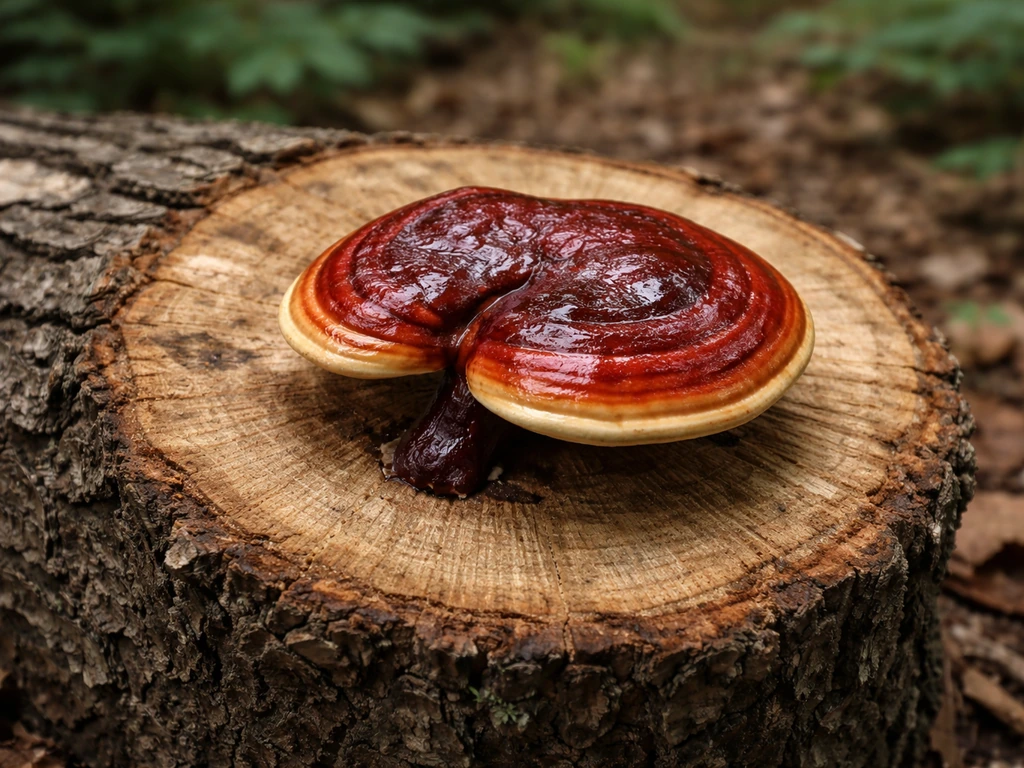
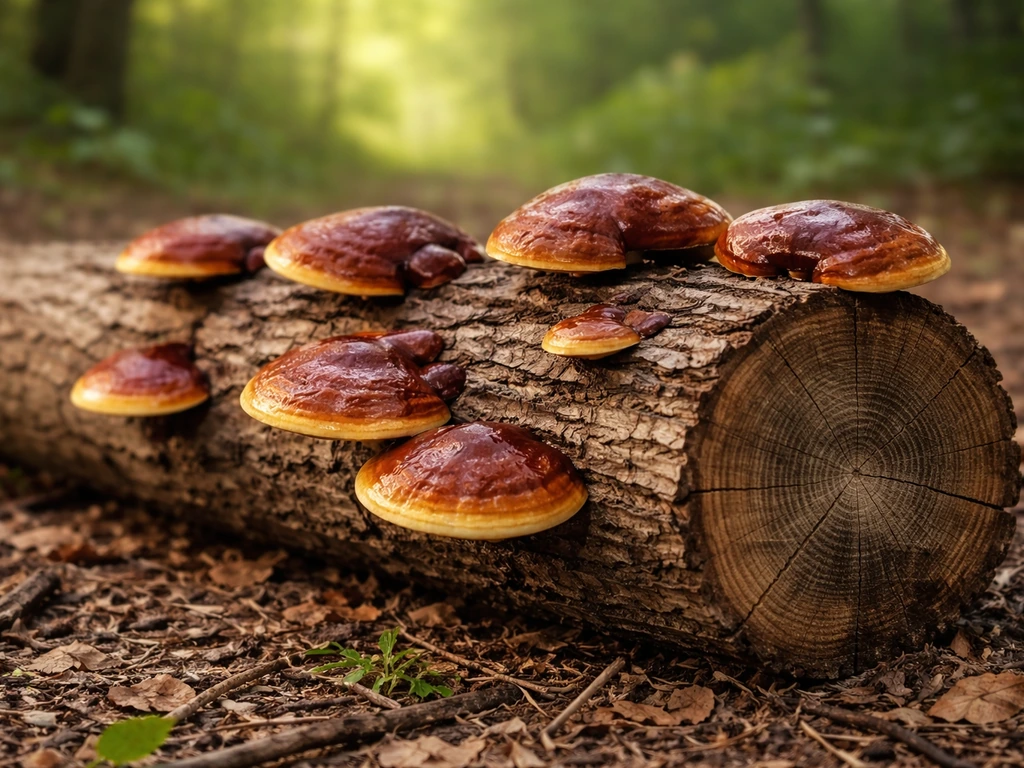
The standard variety for home log cultivation is Ganoderma lucidum, commonly called red reishi. It's the most widely available strain, the most studied for medicinal properties, and the easiest to source as spawn. If you're buying from a specialty supplier, look for strains like GL94, which is bred specifically for high-humidity environments and log production. Most beginners don't need to overthink strain selection, a quality red reishi strain from a reputable supplier is the right call.
For wood species, oak is the gold standard. Red oak, white oak, and maple are your best bets. These hardwoods have the density and sugar content reishi mycelium loves, and they hold moisture well through the long incubation period. Avoid softwoods like pine or cedar entirely, the resins inhibit mycelium growth and you'll end up with a contaminated log and nothing to show for it. Fruit trees like apple or cherry can work as secondary options, but if you have access to oak, use it.
Timing matters a lot with log inoculation. Late winter to early spring is the ideal window, typically February through April in most of North America. You want to cut logs when the tree is still dormant and the bark is tight, then inoculate within a few weeks of cutting. Fresh-cut logs have ideal moisture content and the native competing organisms haven't had time to establish. If you're working with logs that have been sitting for more than a couple of months, check them carefully for contamination before using them.
Log prep: selecting, cutting, inoculation timing, and sanitation
A good reishi log is 3 to 8 inches in diameter and 3 to 4 feet long. Shorter logs are easier to handle and fruit more predictably; longer logs hold more spawn points but are heavy and awkward. Look for straight logs with intact bark, bark helps retain moisture during the spawn run, so any significant damage is a red flag. Cut with a clean chainsaw or handsaw and make the ends as flat and clean as possible.
The big moisture question: do you need to soak the logs before inoculation? Usually no, and you should avoid it if you can. A freshly cut log from a living tree has perfectly adequate moisture content. Soaking is only worth doing if the log feels noticeably light and dry, you see cracking at the butt ends wider than about 1mm, or the bark looks thin and papery. Field & Forest Products notes that soaking is usually only needed for very light or dry logs, such as when butt ends crack wider than about 1 mm or the bark is thin and papery butt ends wider than about 1mm, or the bark looks thin and papery. In that case, a 24-hour soak in clean water before inoculation is the fix. Over-wet logs are a contamination risk, so don't soak unless you genuinely need to.
Sanitation is simple but non-negotiable. Work on a clean surface and don't let your logs sit on bare ground before inoculation. Wipe your drill bits with isopropyl alcohol between sessions if you're doing multiple logs. Keep your spawn out of direct sunlight and away from competing mold spores. You don't need a sterile lab environment, you just need to not be careless.
Inoculation methods: spawn vs plugs vs sawdust
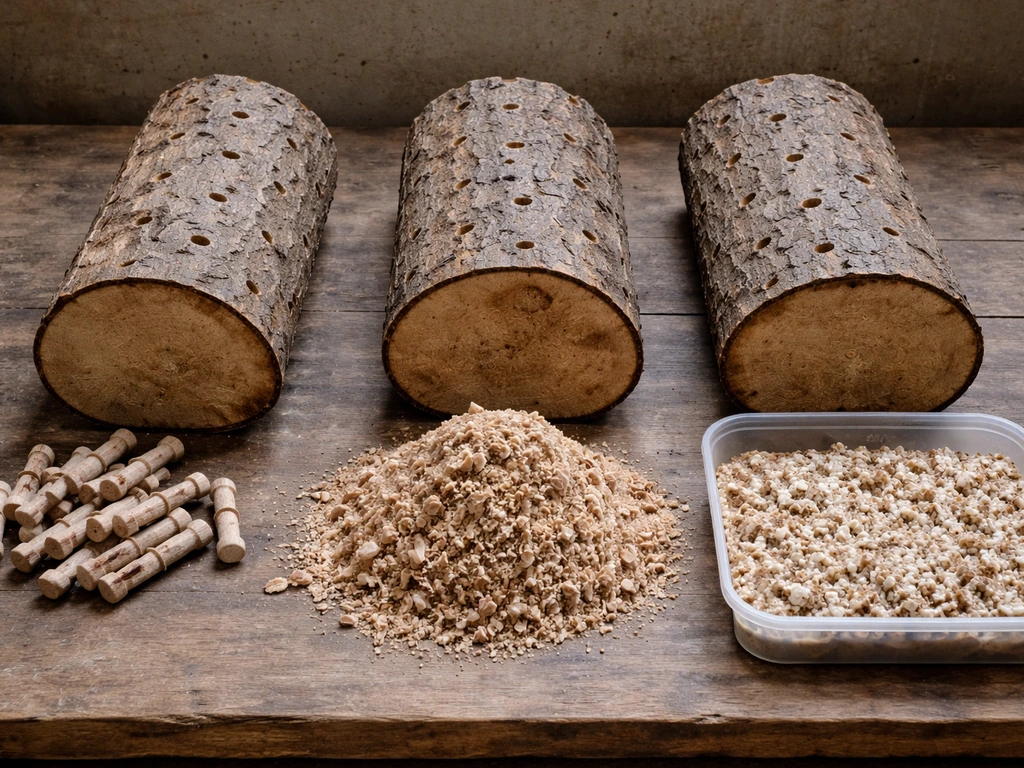
There are three common approaches for inoculating reishi logs: plug spawn (wooden dowels colonized with mycelium), sawdust spawn (a loose inoculant packed into drilled holes), and grain spawn (less common for logs, better suited for bags). For reishi logs specifically, sawdust spawn is the most efficient and is what OSU Extension recommends. If you want to try a different edible wood mushroom, learn the basics of how to grow shimeji mushrooms as well reishi logs. Plug spawn works well too and is more forgiving for beginners since the dowels are easy to handle and seat cleanly. When using plug (dowel-style) spawn, OSU Extension recommends drilling holes about 1 inch deep with a 12 mm drill bit, then sealing the holes with food-grade wax blank" rel="noopener noreferrer">plug spawn works well too. Grain spawn is not ideal for log work.
| Method | Best for | Difficulty | Cost | Colonization speed |
|---|---|---|---|---|
| Plug spawn (dowels) | Beginners, small batches | Easy | Low to moderate | Moderate |
| Sawdust spawn | Faster colonization, experienced growers | Moderate | Low | Faster |
| Grain spawn | Bags and blocks, not ideal for logs | Moderate | Low | Fastest but contamination risk on logs |
For most home growers, sawdust spawn is the best choice for reishi logs. It colonizes more aggressively than plugs and fills the drilled holes completely. If this is your first time and you're nervous about the process, plug spawn is a fine starting point, the technique is more forgiving and the results are solid.
Step-by-step inoculation process
- Drill holes in a staggered diamond pattern along the length of the log. Use a 12mm drill bit and drill each hole about 1 inch deep. Space holes roughly 4 to 6 inches apart in rows, offset so holes don't line up vertically.
- If moisture content seems low, spray a small amount of clean water into each hole before adding spawn.
- Pack sawdust spawn firmly into each hole using a spoon, dowel, or inoculation tool. Fill the hole completely with no air gaps. If using plug spawn, tap the colonized dowel into the hole flush with the log surface using a mallet.
- Immediately seal each inoculated hole with melted food-grade wax (cheese wax or beeswax both work). Cover the entire hole opening plus about a quarter inch around the edges. This keeps moisture in and contamination out.
- Label the log with the date of inoculation and strain used. You'll thank yourself later.
Incubation on logs: what reishi needs for the next year
This is the phase most people underestimate. After inoculation, reishi mycelium needs 9 to 18 months to fully colonize the log before fruiting. That's not a typo. Reishi is slow by mushroom standards, and rushing this phase by introducing fruiting conditions too early is a common reason for failure. The mycelium is working through the wood from the inside out, and you need to give it time.
During the spawn run, keep logs in a warm, humid environment. A greenhouse is ideal, but a shaded area that stays warm and moist also works well. The key is keeping logs off bare soil during this phase, store them on clean pallets or wooden racks. This prevents premature contact with competing organisms and gives you better airflow around the logs. Aim for temperatures in the 60 to 80°F range consistently. Cooler winters will slow colonization but usually won't kill the mycelium.
Moisture maintenance is your main job during incubation. If you're keeping logs outdoors, natural rainfall often handles this, but during dry stretches you'll want to mist or lightly water the logs once or twice a week. You're aiming for the logs to feel damp to the touch but never soggy. A log that dries out completely during spawn run is essentially a failed project, the mycelium desiccates and won't recover.
You'll know colonization is progressing when you see white or cream-colored mycelial growth appearing on the cut ends or between the bark. Don't panic if it's slow, reishi really does take a full year or more. Logs inoculated in early spring typically don't fruit until the following summer at the earliest. That timeline aligns with what Field & Forest Products documents: logs fruit the first summer a full year after inoculation.
Triggering fruiting and managing your fruiting setup
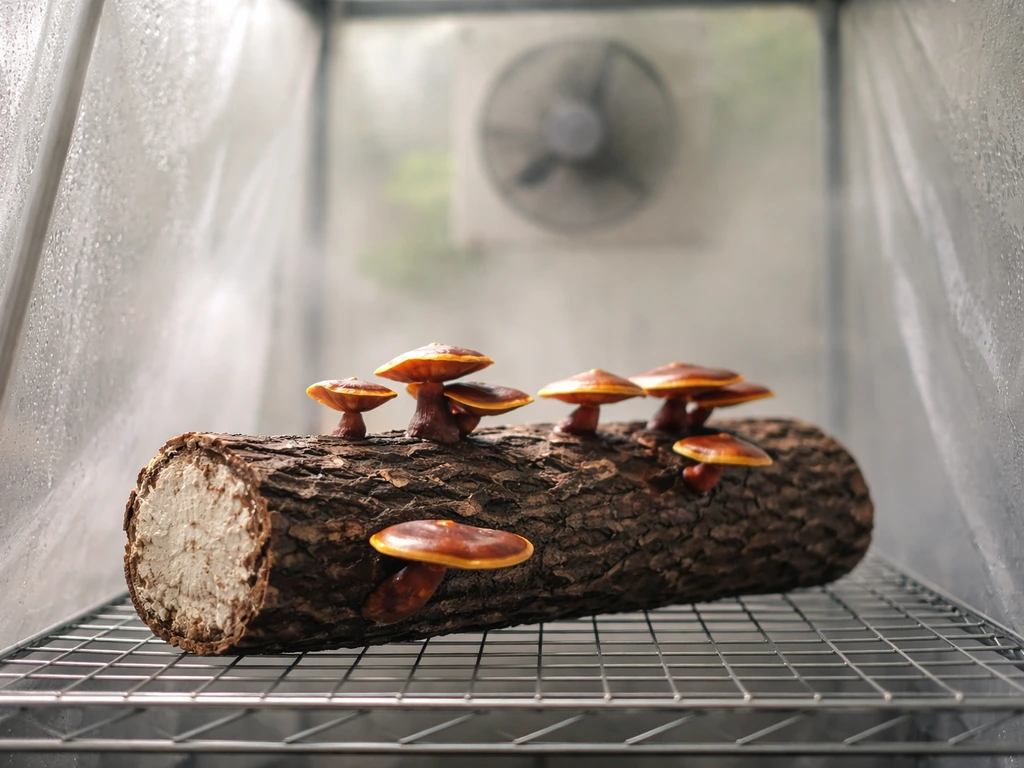
Once you're confident the logs are well colonized (usually after at least 9 months with visible mycelium on the ends), you can move them to fruiting conditions. Place logs where they'll get indirect light and stay in contact with or very close to the soil surface. The near-soil placement helps maintain the high ambient humidity reishi needs. A shaded spot on the north side of a building works well; south-facing exposed spots tend to dry out too fast.
Fruiting temperatures for reishi are daytime highs of 70 to 85°F with nighttime temperatures around 60°F. That natural day-night temperature swing actually helps trigger and develop fruiting bodies. Reishi is far less tolerant of cold than, say, shiitake mushrooms grown from plugs, so don't push fruiting conditions until you're reliably above 60°F at night. Shiitake grown from plugs often benefits from similar attention to consistent temperatures and humidity, just with a different fruiting schedule shiitake mushrooms grown from plugs.
High humidity is non-negotiable at this stage. Reishi fruiting bodies are notoriously sensitive to low humidity and will stop growing or develop abnormally if the air is dry. If you're fruiting indoors or in a controlled space, aim for 85 to 95% relative humidity. Outdoors in a humid climate, natural conditions may be sufficient. In drier climates, mist the logs and the ground around them at least twice a day. A humidity tent made from clear plastic sheeting loosely draped over the logs can help significantly.
Once pins appear, fruiting bodies take roughly three months to fully develop. Reishi grows slowly and deliberately, you'll watch those little red knobs develop into the flat, shelf-like fruiting bodies over weeks. Expect one to three fruiting bodies per log in the first year, potentially more in subsequent years as the mycelium becomes more established.
Maintenance, troubleshooting, and why things go wrong
Reishi on logs is a long-term project and things do go wrong. Here are the most common problems and how to deal with them.
No visible colonization after several months
If you see zero mycelial growth after 4 to 6 months, check your moisture levels first. Dry logs kill spawn fast. If logs feel lightweight and the bark is pulling away, they've dried out and the spawn run may have failed. Second, check whether green or black mold has colonized the holes, if contamination beat the mycelium to the food source, the spawn didn't take. Logs with failed inoculation can sometimes be re-drilled and re-inoculated in a different set of holes, but success is lower the second time around.
Green mold and contamination
Green mold (usually Trichoderma) is the most common competitor. It typically gets in when spawn holes aren't sealed properly or the wax coat was too thin. If you catch it early, you can scrape off the mold, clean the area with a diluted hydrogen peroxide solution, and re-seal. In established colonization, healthy reishi mycelium often out-competes surface molds. If mold is covering large sections of the log under the bark, the log is likely a loss.
Stalled or malformed fruiting bodies
Antler-like or elongated reishi that won't flatten into a proper cap is almost always a CO2 problem. Reishi fruiting bodies respond dramatically to fresh air exchange. If your logs are under a tight plastic tent with no ventilation, punch holes or add a small fan on a timer. Misshapen antler growth is a classic sign of too much CO2 and not enough fresh air.
Overly wet logs
Logs sitting in standing water or constantly saturated soil will develop bacterial rot and anaerobic conditions that kill mycelium. Logs should be moist but never submerged. Raise them on gravel or wooden supports to allow drainage, especially in rainy seasons.
Pests
Slugs and snails love reishi fruiting bodies and will chew them down overnight. Set copper tape around your fruiting area or place logs on a raised structure. Fungus gnats can get into developing fruiting bodies if you're growing in a humid enclosed space, yellow sticky traps and good airflow help keep populations in check.
Wrong wood species
If you inoculated softwood or a very hard, dense wood like black locust, poor colonization is expected. There's not much to do except chalk it up to experience and source oak or maple for your next round.
Harvesting, drying, storage, and getting the most out of your reishi
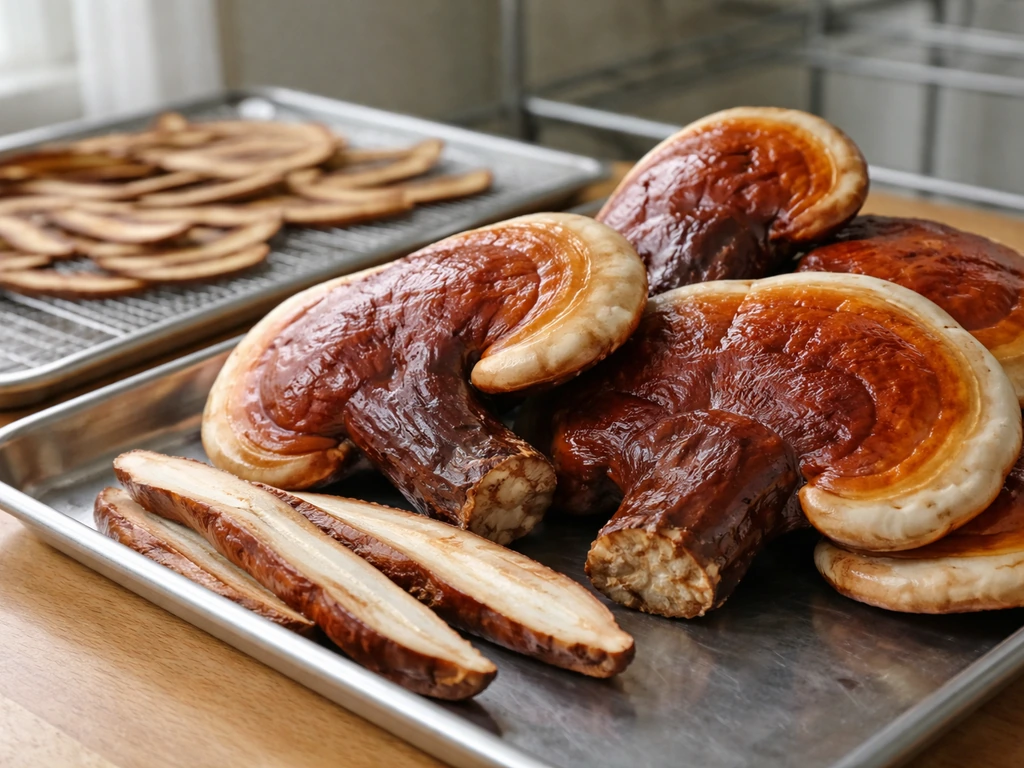
Reishi is ready to harvest about three months after the pins first appear. The key visual indicator is the cap margin: when the white or cream-colored growing edge turns red and stops actively expanding, the mushroom is mature. You may also notice a ring of reddish-brown spore dust around the base of the fruiting body, that's another sign maturity is close. Don't wait too long after this point; over-mature reishi becomes tough and the medicinal compound concentration begins to decline.
To harvest, cut the fruiting body at the base with a clean knife or twist it off cleanly. Leaving a stub invites bacterial rot at the harvest point, so cut as close to the log surface as you can manage. After harvest, the log will often fruit again in subsequent seasons with proper care, keep it moist and let it rest through winter.
Drying reishi properly
Reishi is not a mushroom you eat fresh like shiitake or crimini. It's woody, tough, and bitter. You dry it for tea, tinctures, or powder. Drying correctly preserves the active compounds, primarily triterpenoids and beta-glucans.
- Slice the fruiting body into quarter-inch to half-inch thick pieces. Thinner slices dry faster and more evenly.
- Use a food dehydrator at 95 to 115°F for 4 to 8 hours, or use an oven on its lowest setting with the door slightly open.
- Alternatively, dry in a single layer in a warm, well-ventilated room. This takes several days but works fine in dry climates.
- Reishi is fully dry when it snaps cleanly rather than bending. Any flexibility means there's still moisture inside.
Storage
Store dried reishi slices or powder in airtight glass jars away from direct light and heat. Properly dried reishi keeps for 12 to 24 months without significant degradation of active compounds. A small food-safe silica gel packet in the jar helps if you live somewhere humid. Label with the harvest date so you know what you're working with. Don't store reishi in plastic bags long-term, moisture can sneak back in and mold will follow.
Once you've mastered the rhythm of reishi on logs, the process becomes intuitive. The payoff, both in terms of the striking mushrooms themselves and the potent medicinal material you can produce at home, is absolutely worth the long wait. Inoculate this spring, keep the logs happy, and you'll be harvesting your own red reishi by next summer. If you want to try a faster, more familiar gourmet option next, learn how to grow crimini mushrooms for edible harvests and simpler timing.
FAQ
Can I grow reishi on logs indoors, like in a garage or basement?
Yes, but you must replicate two things the article emphasizes: high humidity and fresh air. Use a humidity tent or misting system, keep logs off bare concrete with racks or pallets, and add ventilation so CO2 does not build up (antler-like growth is a giveaway). Also, expect slower drying and higher mold risk indoors, so monitor the drill holes and airflow daily.
What if my logs are already old or dried out before I buy spawn?
Old logs can work if they still have usable moisture, but dried logs usually fail because the mycelium cannot rehydrate well. Check for signs like cracking at the butt ends (around 1 mm or more) and a noticeably light feel. If they are dry, a single 24-hour soak can help, then inoculate promptly and seal holes immediately to avoid competitor establishment.
Do I need to sterilize tools or the drill holes beyond cleaning the bits?
You do not need lab sterilization, but you should be consistent about reducing spores where inoculation happens. Wipe drill bits with isopropyl alcohol between logs, keep spawn shaded and covered, and drill and inoculate without leaving fresh holes exposed. The fresh-air and seal quality matter as much as tool cleanliness.
How do I know whether my reishi logs are too wet or just properly humid during the spawn run?
Properly humid logs feel damp, not waterlogged, and they should not be dripping or surrounded by pooling water. If you see soggy bark, foul smells, or rapid blackening, you likely overshot into saturation. The fix is to dry them slightly off the ground with better drainage, then resume gentle misting rather than soaking.
I sealed holes with wax, but mold still appeared. What are the most common causes?
Most failures after sealing come from wax that is too thin, holes that were not fully packed with spawn, or contamination getting in before the wax cures. Scrape and treat early cases, but for larger infected areas under the bark you will likely lose the log. For next time, pack holes tightly, drill straight, and ensure full coverage so air and spores cannot reach the spawn.
Can I re-drill and re-inoculate a log that has failed the first time?
Sometimes, but success drops on the second attempt. Only try if the contamination is limited and you can remove or reduce the failed material, then use a new set of holes that are healthy, sealed cleanly, and properly spaced. If the log shows widespread mold under the bark, replace it rather than investing more time.
How should I position logs for fruiting if I do not want them touching soil directly?
Reishi benefits from near-soil humidity, but you do not necessarily need direct contact. Place logs on raised supports so they are close to the ground, then maintain humidity by misting and possibly using a loose humidity tent. If you lift logs too high and the air is dry, you can get stalled or abnormal growth even with good temperature.
Why are my reishi growing antlers instead of flat shelves, and what should I change first?
Antler-like elongation usually signals too much CO2 and insufficient fresh air exchange. Start by improving ventilation immediately, punch holes in any tight plastic cover, and avoid fully sealing the logs. After fresh-air correction, keep humidity high so you fix CO2 without drying the fruiting bodies.
My pins appeared, then growth stalled. What conditions should I check?
Check humidity and nighttime temperature first. Reishi stops or deforms when air is dry, even if daytime looks warm. In practice, confirm nighttime stays reliably above 60°F and target very high humidity during development (humid, misted environment and tight monitoring of the humidity tent).
How long can I store dried reishi before using it, and how should I prevent re-molding?
Dried reishi can last about 12 to 24 months if kept airtight and away from heat and direct light. To prevent re-molding in humid areas, use a tight seal (glass jar) and consider adding a small silica gel packet. Keep the jar closed whenever possible, and if you notice any softness or clumping, re-check dryness and consider re-drying.