
You can grow Morchella esculenta at home, but let me be upfront: it is one of the most genuinely difficult mushrooms to cultivate reliably, and the path to success looks different from growing oysters or shiitakes. The method that actually works for most home growers involves building an outdoor bed, inoculating it with viable spawn or liquid culture, and then waiting, sometimes through more than one spring season, for the right environmental triggers to line up. This guide walks you through every step of that process, from sourcing your starting material to knowing when to harvest.
How to Grow Morchella Mushrooms: Step by Step for Morels
Marcus Holloway
17 Apr 2026
A quick reality check before you start
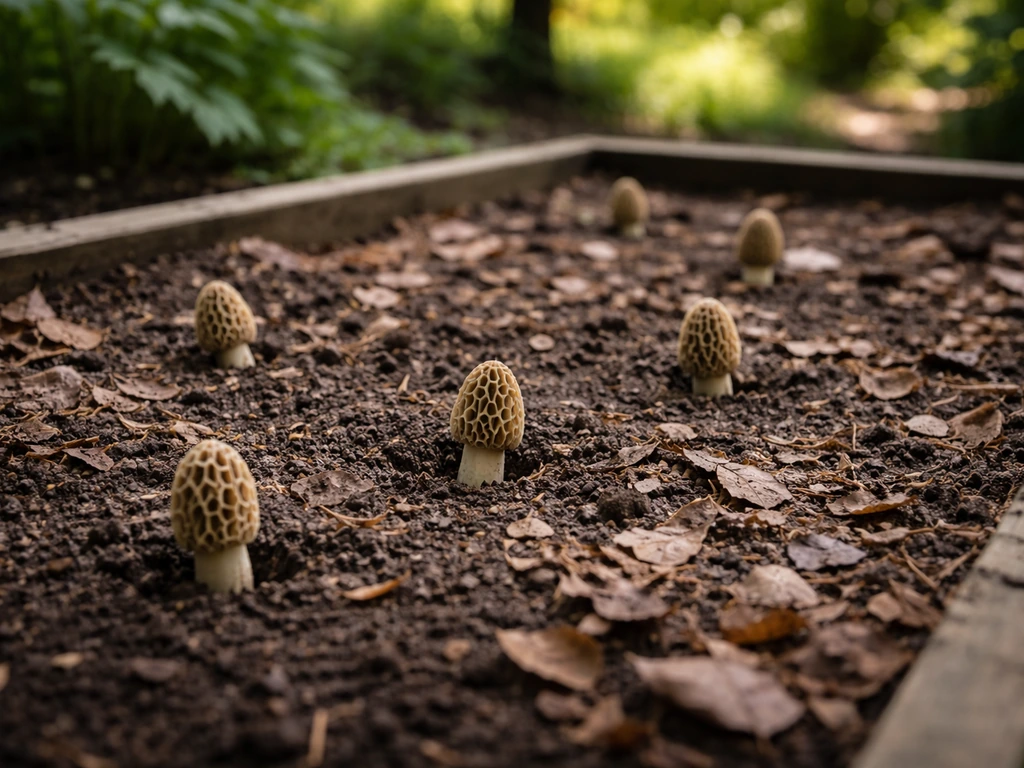
Morels are notoriously temperamental because their life cycle involves a critical dormant stage: the sclerotium. Before a morel fruits, the mycelium forms these hardened, nutrient-packed survival structures, and the transition from sclerotium to primordia (the first tiny fruiting buttons) depends on a precise cascade of soil temperature, moisture, soil chemistry, and microbial signals. Establishing viable colonization and sclerotia is often the first milestone, not immediate fruiting. Many growers inoculate a bed and see no mushrooms the first spring, then get a small flush the following year. That is completely normal, not a failure.
"Success" with morels has to be defined differently than with other species. If you inoculate a bed, see white mycelial threads in the soil by late summer, and get your first flush the following spring, that is a genuine win. If you get mushrooms the same season you inoculate, consider yourself lucky. Going in with that mindset will save you a lot of frustration. Unlike the learning curve for growing pioppino mushrooms, where indoor fruiting is predictable and fast, morels operate on their own ecological schedule.
Choose your starting material carefully
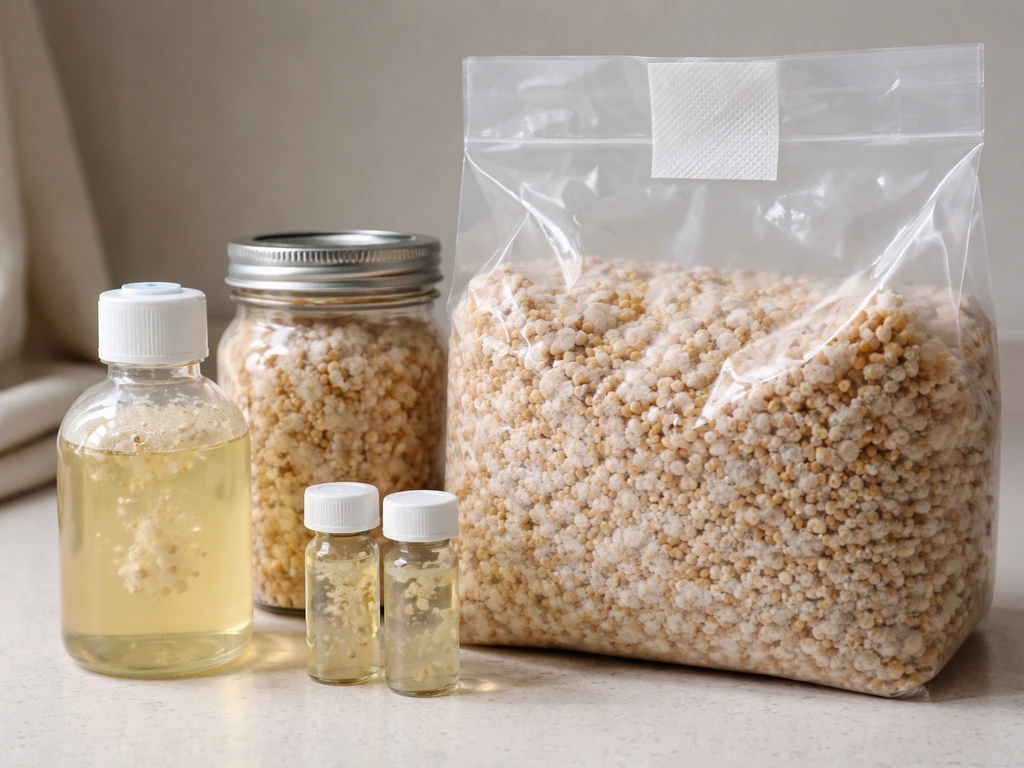
The single biggest predictor of success is starting with viable, legitimate material. You have a few options, and they are not all equal.
Liquid culture and spawn from reputable suppliers
Commercial liquid culture or grain spawn from a dedicated mushroom supplier is your best starting point. Look specifically for Morchella esculenta or Morchella importuna spawn that is described as producing sclerotia-forming colonized material suitable for outdoor bed inoculation. Some suppliers frame their morel liquid culture explicitly around outdoor beds and sclerotia formation, which is the honest framing you want. Avoid anything marketed as guaranteed to fruit indoors in 30 days.
Wild-harvest inoculum: legal nuances you need to know
Some growers attempt to create inoculum from wild-foraged morels by blending mushroom tissue with water and applying it to a prepared bed. The results are inconsistent, and before you even try it, check local regulations. Many state parks and forests restrict manipulation or removal of wild fungi. For example, Wisconsin's state park rules allow hand-picking mushrooms for personal consumption but may restrict other manipulation.
On public federal lands, rules vary by forest: the Willamette National Forest, for instance, requires no permit only if you stay under one gallon per person per day for non-matsutake species, but using foraged material to create commercial or repeated inoculum sources sits in a gray area. If you are sourcing from outside the U. S. or moving cultures across state lines, USDA APHIS permit requirements may apply depending on how the material is classified.
The safest, most consistent approach is just buying spawn from a domestic supplier.
Site and substrate: getting the bed chemistry right
Morels are soil saprotrophs with the most active mycelium in the top 0 to 10 cm of soil. That shallow zone is where you need to focus your prep. Generic mushroom compost advice does not apply here. The physico-chemical properties of the soil bed are central to whether Morchella actually fruits, and the research on this is pretty specific.
pH and key nutrients
Target a soil pH between 6. 5 and 7. 5. This is slightly neutral to mildly alkaline, which is notably different from most garden beds that growers tend to keep acidic.
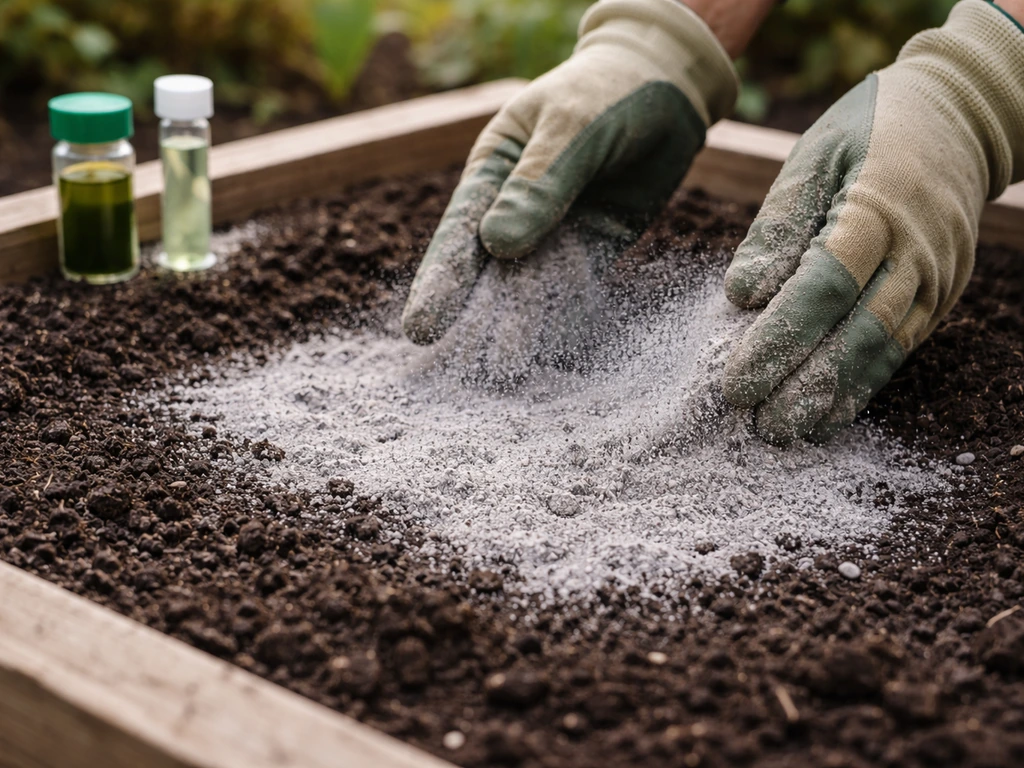
Wood ash is your best tool for hitting this range: it raises pH and increases total potassium, both of which are identified as major environmental factors influencing Morchella's soil microbial community and yield. Wood-ash amendment studies in Morchella report that wood ash affects yield and quality by shifting soil physicochemical properties and the microbial community, with soil pH and total potassium highlighted as key environmental factors [Wood ash is your best tool for hitting this range](https://pmc. ncbi. nlm.
nih. gov/articles/PMC11676116/). Mix wood ash with water and work it into the top layer of your bed a few weeks before inoculation to let pH stabilize. Nitrogen and organic matter support mycelial growth, while potassium and phosphorus depletion can limit fruiting body formation, so a balanced starting bed matters.
Think compost-amended loam, not pure peat or heavily clay-dominant soil.
Bed structure and site selection
Choose a partially shaded outdoor site, ideally near a deciduous tree (apple, elm, and ash are traditional favorites) or with some decomposing woody material incorporated into the bed. Build your bed to a depth of 10 to 25 cm of amended substrate. A shallow raised bed or an in-ground trench both work. Pre-wet the bed if soil water content is low (roughly below 18% by feel, meaning the soil barely clumps when squeezed). Avoid full sun exposure, which dries the top layer too quickly during the critical spring window. Good drainage underneath is also important since waterlogging is a common killer.
| Parameter | Target Value | Notes |
|---|---|---|
| Soil pH | 6.5–7.5 | Use wood ash to raise if needed |
| Bed depth | 10–25 cm | Inoculate in top 5 cm |
| Soil moisture at inoculation | ~50% (field capacity) | Pre-wet if too dry |
| Light exposure | Partial shade | Near deciduous trees preferred |
| Wood/organic matter | Present, decomposing | Elm, apple, ash chips are ideal |
Inoculation: how to establish your mycelium
Inoculation is fairly straightforward once the bed is ready. The goal at this stage is not fruiting. The goal is getting live Morchella mycelium established and, eventually, sclerotia formed. Those nutrient-loaded dormant structures are what supply the later ascocarp (fruiting body) development.
- Prepare your spawn or liquid culture as directed by your supplier. If using grain spawn, break it up so it is loose and easy to distribute.
- Apply spawn to the top 5 cm of the pre-wetted bed by mixing it into the surface layer or by distributing it in shallow furrows across the bed.
- Lightly cover with a thin layer (about 1–2 cm) of your substrate mix or fine wood chips.
- Water gently to settle the material without saturating it.
- After inoculation, maintain bed temperature between 15 and 22°C for the first 72 hours to encourage initial mycelial establishment. Cover the bed with burlap or a breathable fabric if overnight temperatures are cold.
- Label your bed with the inoculation date. You will need this when evaluating timelines later.
The sclerotia formation phase happens over weeks to months as the mycelium colonizes the bed. You may see faint white threading in the top layer if you gently probe the soil after 4 to 8 weeks. That is your sign that colonization is progressing. If you see nothing after 10 to 12 weeks, the spawn likely did not take, and you will need to diagnose why before re-inoculating.
Environmental targets and timing
This is where most home attempts fall apart, because morels need a specific seasonal cascade rather than stable conditions. Think of it as a multi-stage trigger sequence.
Temperature: the most critical variable
Primordium formation (those first tiny buttons) typically initiates at around 10°C soil temperature. For Morchella importuna and related species, the temperature range from mycelial stage to fruiting differentiation is 2 to 12°C, and fruiting bodies do not develop well above 20°C. In practice this means you are working a narrow spring window where nights are still cold and daytime soil temps are climbing through single digits into low double digits. If your spring warms fast and soil temperatures jump past 20°C quickly, your fruiting window closes. Track your soil temperature with a cheap probe thermometer rather than relying on calendar dates, since the timing varies by several weeks depending on your location and microclimate.
Moisture dynamics matter as much as moisture level
Soil moisture is not just about keeping the bed damp. The pattern of moisture and slight drying cycles during spring contributes to primordia initiation. A bed that stays uniformly saturated will not fruit as reliably as one that experiences modest wet and dry cycles mimicking natural spring rain patterns. Aim for substrate moisture around 50% (moist but not soggy), and during the fruiting phase, target air relative humidity of 70 to 90%, not exceeding 95%. Outdoors, you approximate this with mulch cover, shade cloth, and irrigation as needed during dry spells.
Seasonality and realistic timelines
If you inoculate in late summer or early fall, you give the mycelium an entire dormant winter to establish sclerotia before the following spring's fruiting window. This is the ideal timing for temperate growers in the Northern Hemisphere. If you inoculate in spring of the same year you want fruit, you are racing against the clock and the odds are against you. Sclerotia may fruit the following spring or may require even more time to establish, so plan for a multi-year project rather than a single-season experiment.
Caring for and monitoring your bed through to harvest
Once your bed is inoculated and overwintering, your job is mostly about keeping the site stable and watching for signs of activity in spring. Here is the weekly maintenance rhythm that works.
Over the fall and winter
Water the bed lightly if there has been no rain for 2 or more weeks, to keep the soil from completely drying out. Do not over-water during cold months. Add a thin layer of leaf mulch over the bed before hard frost to insulate the mycelium. In spring, remove or thin the mulch as soil temperatures begin rising so the surface warms properly.
During the fruiting window
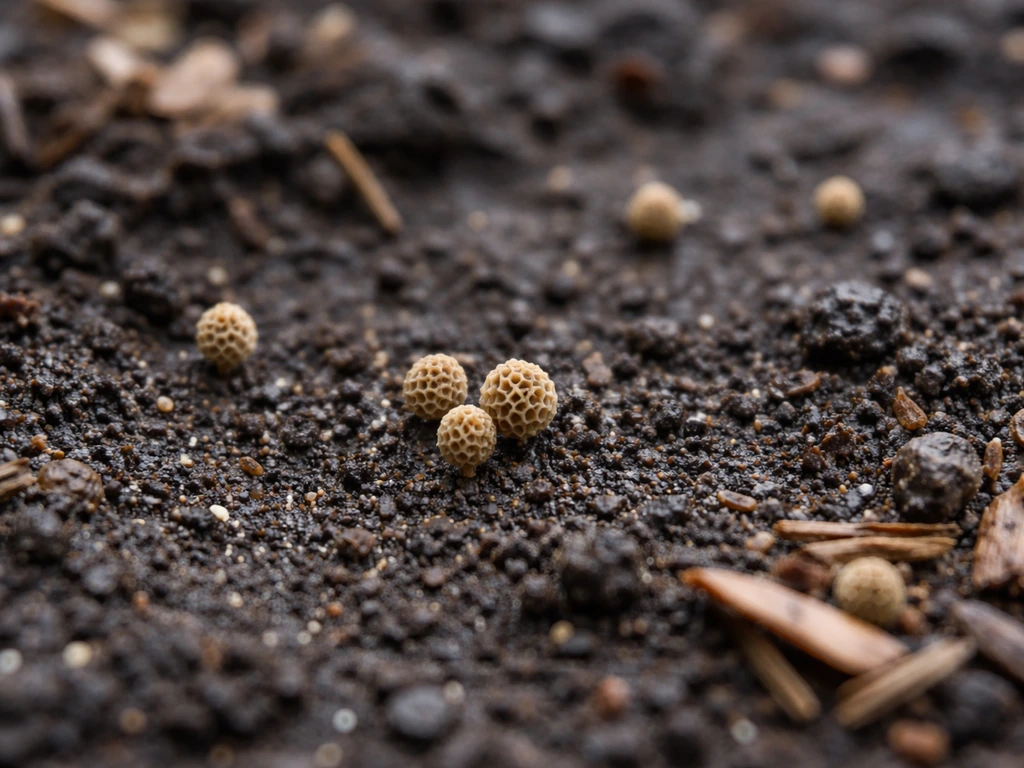
As soil temperatures approach 8 to 12°C in spring, begin checking the bed daily. Look for tiny pinheads or honeycomb-textured buttons emerging from the soil surface. If conditions are dry and warm, mist the bed in the morning to support humidity. If there is a warm dry spell pushing daytime temps above 20°C, use shade cloth to slow warming and spray irrigate in the morning. The fruiting window for morels in any given location is typically 2 to 4 weeks before conditions become too warm. During this window, maintain RH around 85% if you can measure it near the bed surface (a wireless hygrometer probe set low works well for this).
Harvest cues
Morels are ready to harvest when the fruiting bodies reach about 10 cm in height and when the cap surface pigment darkens (from pale tan toward a deeper yellow-brown or grey tone depending on the strain). Do not wait too long: overripe morels soften and become less flavorful quickly in warm conditions. Cut at the base with a clean knife rather than pulling, to minimize soil disturbance.
Troubleshooting: why it failed and how to fix it
Morel cultivation has a long list of failure modes, but most of them fall into a handful of categories. Working through these systematically will save you from repeating the same mistake season after season.
Mycelium established but no fruiting
This is the most common frustration. You can see white mycelium when you probe the bed, but spring comes and goes without a single mushroom. The most likely causes are: soil temperature never hit the 8 to 12°C primordia initiation range for long enough (either your spring was too warm or too cold), bed moisture was too uniform without the wet-dry cycling that triggers initiation, or your soil chemistry is off.
Try a wood ash and water drench in early spring to simulate post-fire alkalinity, which research describes as a fruiting trigger. Check pH: if it has drifted below 6. 5, amend again. Also consider that triggering sclerotia to fruit requires the right soil physicochemistry, nutrient gradients, and microbial signals, so a bed that has been in place for only a few months may simply need another season.
Large-scale cultivation research notes that sclerotia production is complex and is influenced by multiple environmental and chemical factors such as nutrition, osmotic pressure, pH, temperature, and light, including nutrient-rich versus nutrient-poor differentials [sclerotia to fruit requires the right soil physicochemistry, nutrient gradients, and microbial signals](https://pmc. ncbi. nlm. nih.
gov/articles/PMC10455658/).
Contamination and competing fungi
When environmental conditions favor pathogenic fungi in the bed, competing fungal taxa can inhibit Morchella fructification outright. Green or black mold on the soil surface, a sour smell, or visible competitor growth are warning signs. Avoid over-watering, ensure decent air circulation around the bed, and do not pile on heavy organic matter that traps moisture and heat. If you are running the same bed for a second or third year, be aware that continuous cropping changes the soil microbiome and can increase pathogenic fungal abundance, actively suppressing your morels. Consider refreshing the bed with new substrate and a fresh inoculation every 2 to 3 years rather than expecting indefinite production.
Wrong moisture levels
Too wet: soil stays anaerobic, spawn rots, and competing bacteria dominate. Fix by improving drainage under the bed and reducing irrigation. Too dry: mycelium desiccates and sclerotia do not develop properly. Fix by watering deeply once a week rather than light daily misting, and use mulch to reduce evaporation. The target is consistent field-capacity moisture with natural variation, not constant saturation.
Poor site choice
Full sun beds dry out too fast and warm past 20°C too early. Heavily compacted clay soils restrict mycelial spread and drainage. Sites under conifers tend to be too acidic (pH below 6) and may contain allelopathic compounds. Move to a deciduous-tree-adjacent site with loose, loamy soil if you can. Like the challenge you face when you consider whether you can grow puffball mushrooms in your specific yard, site suitability for morels is highly location-dependent and sometimes you simply need to try a different spot.
Timing mismatch
Inoculating too late in spring means the mycelium has almost no time to establish before winter, and too-early spring inoculation into still-frozen ground kills spawn. Late summer to early fall is the sweet spot. Track local soil temperatures rather than calendar dates, since morel fruiting timing in your area may differ by several weeks from national averages. Regional mycological societies often publish observational notes on when local morels fruit, which is practical calibration data for your own growing timeline.
Outdoor beds vs. semi-controlled setups
Most home growers are going to work with outdoor beds, and that is fine. But if you want tighter control, especially in climates where spring temperatures swing unpredictably, a semi-controlled setup using a cold greenhouse or polytunnel gives you the ability to manage soil temperature, humidity, and air exchange more precisely. Controlled methods target substrate moisture around 50%, relative humidity around 85%, and fresh air exchange rates of 6 to 8 changes per hour during the primordia-to-maturation window. Outdoors, you approximate those targets with shade cloth, mulch, and irrigation, but you cannot dial them in exactly. The tradeoff is cost and complexity versus the control you gain.
This comparison is worth thinking about in terms of how other specialty species approach the same problem. Growing something like porcini mushrooms also involves outdoor ectomycorrhizal dynamics that resist indoor control, making the outdoor bed approach the only practical path for home growers. Morels and porcini share that frustrating quality of being species where you set up the best conditions you can and then largely let nature run the show.
Your next steps: what to do today, this week, and this spring
If you are reading this in spring right now, you have two options: either get spawn into a prepared bed immediately and hope for a late-spring window, or use this season to build and prep your bed so it is ready for a late-summer or fall inoculation. The fall inoculation path is slower but much more likely to give you mushrooms the following spring.
- Today: Order Morchella esculenta liquid culture or grain spawn from a reputable supplier. While you wait, scout your yard for a partially shaded spot near a deciduous tree with loose, workable soil.
- This week: Dig and prep your bed to 10 to 25 cm depth, amend with mature compost and a handful of wood ash, water it in, and check pH with a basic soil tester. Adjust if needed.
- At inoculation: Pre-wet the bed, apply spawn to the top 5 cm, cover lightly, and label the bed with date and strain.
- Weekly through fall: Check bed moisture, water lightly if dry, probe gently after 6 to 8 weeks to look for white mycelial threads.
- Before winter: Mulch the bed with leaves and back off watering as temperatures drop.
- Next spring: Install a cheap soil thermometer probe and start monitoring weekly once daytime air temps consistently hit 10°C. Apply a wood ash drench as soil temps approach 8°C to prime the fruiting trigger. Check the bed daily as soil temps climb through 10 to 15°C.
If you see no fruiting after two full spring seasons, evaluate site chemistry, drainage, and whether your spawn was viable to begin with before giving up. Many growers who succeed with morels describe the first flush as coming out of nowhere after a winter of doubt, which is frustratingly accurate to the biology. Just remember that even with challenging species like puffball mushrooms, the outdoor bed approach demands patience before you see results. Morels simply take that patience to an extreme. Set up the right conditions, manage the chemistry, hit the seasonal triggers, and give it time. When those first honeycomb caps push through the soil, it is absolutely worth it.
One final note: keep a log. Write down your inoculation date, spawn source, bed pH at prep, first sign of mycelium, soil temperature readings each week in spring, and when (or whether) fruiting happens. That data is invaluable for diagnosing future failures and for comparing notes with other growers. If you have ever worked through growing puffballs at home, you already know how useful that kind of season-by-season record becomes once you are trying to refine outdoor growing conditions year after year. Same principle applies here, just with even more variables to track.
FAQ
My bed shows white mycelium, why do I get zero morels in the spring?
If you see plenty of white mycelium threads but no mushrooms, treat it as an “incomplete trigger” rather than a total failure. The most common missing piece is the spring cascade, where soil spends enough time in the primordia initiation range (about 10°C and within the 2 to 12°C differentiation window) while moisture experiences slight wet-dry swings. Also recheck bed pH in early spring, because even a good initial pH can drift lower over winter.
Should I keep my morel bed constantly wet?
Avoid “one-time drenching” right after inoculation. In most cases you want field-capacity moisture early, then let spring weather create modest drying cycles that resemble natural rain patterns. A practical approach is to water deeply only when the bed has been dry for 2 or more weeks, then mulch to slow evaporation, rather than misting lightly every day.
How do I know when to start checking for primordia?
Yes, temperature tracking matters more than calendar timing. Set a cheap soil probe thermometer and aim to begin daily checking when soil temperatures approach roughly 8 to 12°C, not when you expect “spring” to start. A fast warm-up can shut the fruiting window quickly (especially if daytime highs push the bed past about 20°C).
If I inoculate in fall, will I get morels the next spring for sure?
When you inoculate in late summer or early fall, you reduce the odds of fruiting right away, because the bed needs winter time for sclerotia development. For many home growers, the first meaningful flush comes the following spring or even the next one, so plan as a multi-year project rather than expecting mushrooms the same year.
What should I do if there are no signs of colonization after a few months?
If your bed still has no visible activity after 10 to 12 weeks, the most likely cause is that the spawn did not colonize and establish viable sclerotia. Before re-inoculating, confirm the basics: bed pH stayed in the 6.5 to 7.5 range, drainage is adequate (no waterlogged pockets), and the spawn was stored and handled correctly prior to use. Then decide whether to refresh the bed substrate or at least improve the bed conditions before adding new inoculum.
Can I use my usual mushroom compost or potting mix for morels?
Morels do not respond well to “indoor-style” mushroom compost assumptions because they depend on the shallow topsoil microbial and chemistry environment. Keep your prep focused on the top 0 to 10 cm, with total bed depth in the 10 to 25 cm range, and use amendments aimed at pH and nutrient balance rather than generic heavy composting.
Is it okay to keep reusing the same morel bed year after year?
Generally, do not keep a single outdoor bed producing indefinitely. Continuous cropping can shift the soil microbiome toward competitors and pathogens that suppress fructification. A practical rule is to refresh the bed and re-inoculate every 2 to 3 years rather than expecting steady production forever.
Does the way I harvest affect next flushes?
You can harvest by cutting at the base to minimize extra soil disturbance, but you should also avoid reworking the bed surface during the fruiting window. If you pull, loosen, or rake heavily, you can damage developing primordia or disrupt moisture pockets that are needed for the next flush.
If I fail the first spring, should I immediately replace the spawn?
Don’t assume “no mushrooms” equals “the spawn was bad.” If you get none in the first spring but had good colonization by late summer, it may still fruit after overwintering because sclerotia are forming during the dormant period. Before blaming the spawn, confirm that spring conditions actually matched the primordia window and that the bed experienced modest moisture cycling.
Can I adjust pH during the fruiting season if it seems off?
Don’t over-correct pH during the season. Wood ash preps a bed so pH can stabilize, but repeated adjustments during active spring periods can disrupt the microbial community. Use soil testing to confirm direction, then make changes during bed prep, and only do light corrections if early readings clearly drift out of the target range.
What should I do if I see mold or competing fungi in the bed?
If competitor fungi show up, prioritize reducing the conditions that favor them. Practically, that means improving drainage, avoiding prolonged saturation, and preventing heavy organic buildup that traps heat and moisture at the surface. After correcting conditions, let the bed sit and monitor, because frequent intervention can further disturb the microbial signals morels need.
Is a cold greenhouse better than an outdoor bed for morels?
A semi-controlled setup can help in climates with rapid spring swings, but it still cannot fully remove the need for correct biology. If you use a cold greenhouse or polytunnel, focus on maintaining substrate moisture near field capacity (around 50% target for consistency), air relative humidity around 85% during primordia-to-maturation, and adequate fresh air exchange (on the order of several changes per hour).
What should I track in my grow log to improve results next year?
Yes, and it is one of the best ways to diagnose your specific failure mode. Record inoculation date, spawn source, bed pH at prep, weekly soil temperature during spring, and notes on rainfall or irrigation. Over 2 to 3 seasons, these logs usually reveal whether the issue is timing (temperature window missed), chemistry (pH drifted), or moisture pattern (too constant or too dry).