You can grow truffles in Wisconsin, but you need to go in with clear eyes: this is a long-term orchard project, not a weekend mushroom kit. If you're wondering whether you can grow truffles hydroponically, the short answer is that truffles require host-tree roots and a soil-based mycorrhizal setup rather than a hydroponic bed can you grow truffles hydroponically.
How to Grow Truffles in Wisconsin: Step-by-Step Guide
Marcus Holloway
5 Jun 2026
The most realistic path is planting mycorrhizally inoculated seedlings (hazelnut or oak) in a prepared, high-pH site and waiting roughly 6 to 13 years for your first harvest. Wisconsin's climate is workable in zones 4b through 6, but you'll need to choose your species, site, and soil conditions carefully. Get those three things right from the start, and you've got a real shot. Get them wrong, and you'll spend years nursing trees that never produce a single truffle.
What truffles actually are (and what kind of grower this takes)
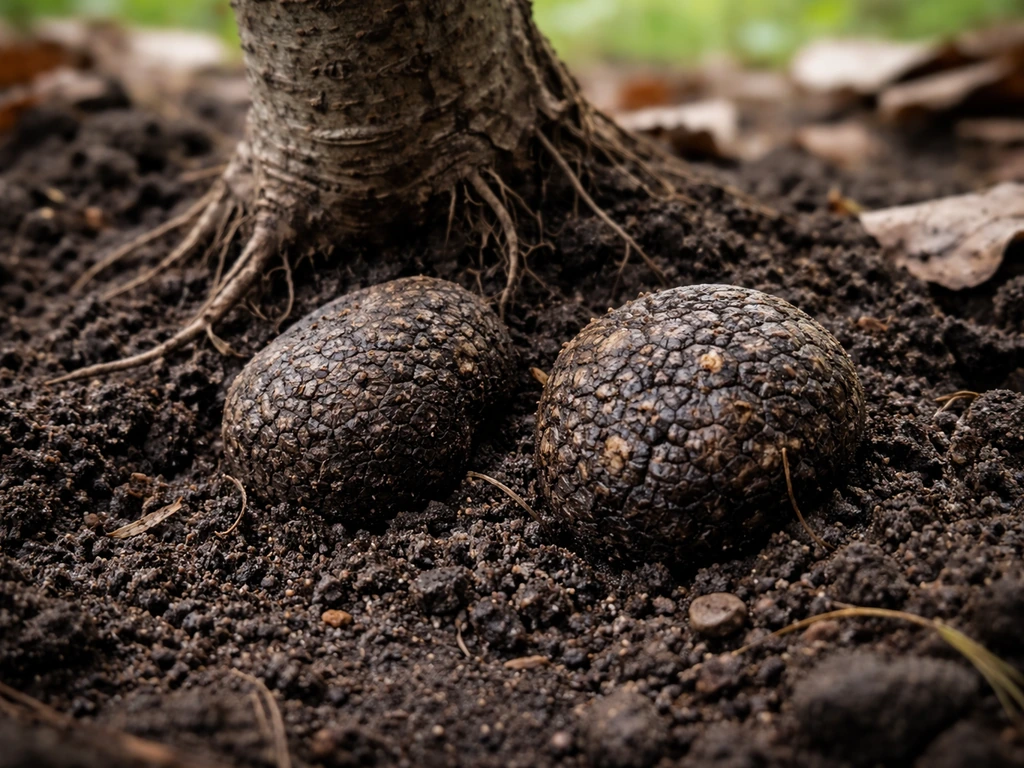
Truffles are not mushrooms you grow in a bed of substrate. They are the fruiting bodies of ectomycorrhizal fungi, meaning they only produce underground fruiting bodies when their mycelium is living inside and around the roots of a compatible host tree. No tree, no truffles. Ever.
The two species worth attempting for cultivation are the Périgord black truffle (Tuber melanosporum) and the Burgundy/summer truffle (Tuber aestivum / Tuber uncinatum). The MU Extension agroforestry practice guide likewise identifies Perigord black truffle (Tuber melanosporum) and burgundy/uncinatum-type truffles (Tuber aestivum and Tuber uncinatum) as the best candidate species for cultivation in the south-central United States, using compatible mycorrhizal symbiosis in orchards burgundy/uncinatum-type truffles (Tuber aestivum / Tuber uncinatum).
Both require the same fundamental setup: inoculated host tree roots, the right soil chemistry, and a long runway of patience.
This means truffle cultivation is an agroforestry investment, not a quick crop. If you're looking for something you can harvest in a season or two, truffles aren't it. But if you've got land, patience, and the willingness to do the soil prep properly upfront, Wisconsin can support a productive truffle orchard. Think of it like planting a fruit orchard, except the payoff takes longer and the product is worth far more per pound.
Wisconsin conditions and picking your best site
Wisconsin spans USDA hardiness zones 3 through 6 (updated 2023 map), and that range matters a lot for truffle cultivation. Tuber melanosporum is the more cold-sensitive of the two main species, so if you're in the northern part of the state (zones 3 or 4a), Tuber aestivum is the more realistic choice since it tolerates cooler conditions better. In southern Wisconsin (zones 5 and 6), Périgord black truffle is the higher-value target and more achievable.
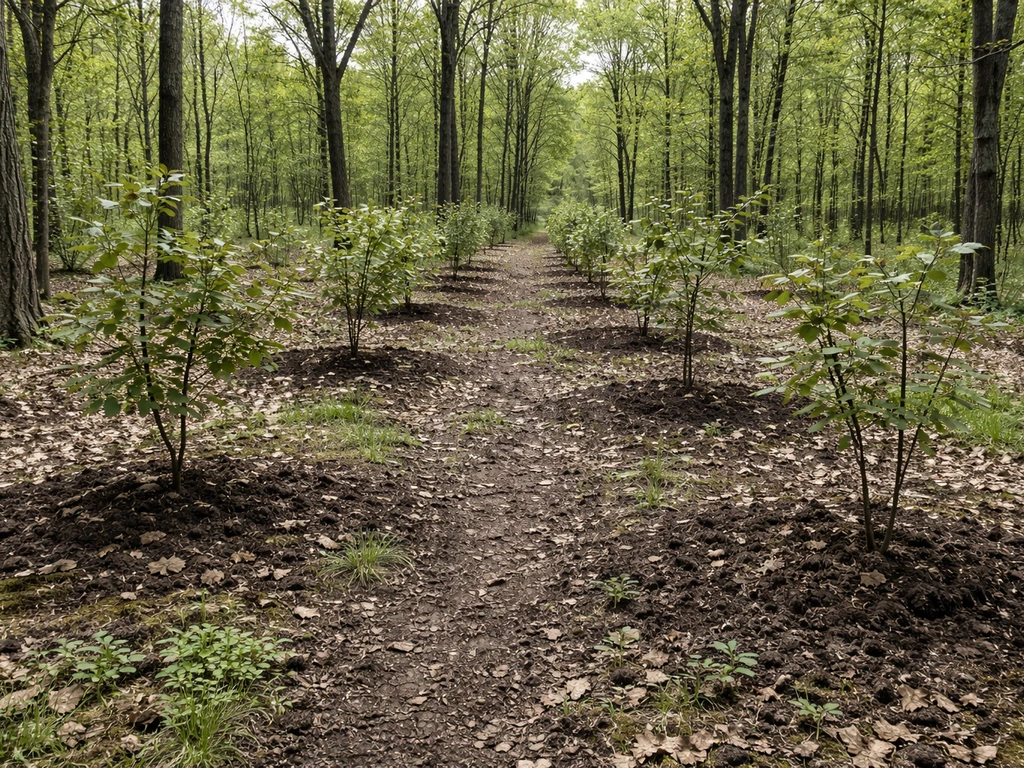
Site selection is where most Wisconsin growers make their first mistake. Truffles, especially Tuber melanosporum, need a warm, open, well-lit orchard floor. A shaded forest understory won't work. You want a south or southwest facing slope if possible, with good air drainage to reduce frost pocket risk. The site should have no history of heavy fertilization (overly rich soil is actually a problem, not an asset) and no dense weed pressure you can't control. Avoid low-lying areas that collect cold air or hold standing water after rain. Well-drained, loamy-to-chalky soil is ideal. Heavy clay or poorly drained sites will kill your mycorrhizal relationship before it ever gets started.
For host trees, hazelnut (Corylus avellana or American hazel) is widely used in North American truffle trials and is the most common choice for both black and Burgundy truffles. Oak species work well too, and for a Wisconsin-adapted orchard you might consider mixing hazelnut with hornbeam (Carpinus betulus) or linden (Tilia cordata) for resilience. Pine (Pinus nigra) is another documented host for Tuber melanosporum if your site and goals suit it. The key is matching your host tree's cold hardiness to your specific Wisconsin zone.
Inoculated seedlings vs. DIY inoculation: the honest comparison
For most Wisconsin growers, buying commercially inoculated seedlings is the right move. Suppliers like the American Truffle Company (ATC) or similar North American producers sell hazelnut and oak seedlings that have been inoculated with verified Tuber melanosporum or Tuber aestivum in nursery conditions. The nursery phase alone takes 5 to 8 months to establish solid mycorrhizal colonization before the seedling is even ready to sell. You're buying that work, and it's worth paying for.
DIY inoculation is technically possible but genuinely difficult. It requires sourcing quality spore slurry or inoculum, creating sterile or semi-sterile nursery conditions, and having a way to verify colonization under a microscope (or sending root tips to a lab). One major risk: if you inoculate with low-quality or contaminated inoculum, you may colonize your trees with the wrong fungal species entirely. Competitor fungi can displace your target truffle species and you won't know for years. Unless you have serious mycology lab experience, start with commercially inoculated seedlings.
| Approach | Cost | Difficulty | Colonization Risk | Best For |
|---|---|---|---|---|
| Buy inoculated seedlings | Higher upfront | Low to moderate | Low (verified at nursery) | Most Wisconsin growers |
| DIY inoculation | Lower upfront | High | High (competitor displacement) | Experienced mycologists with lab access |
Getting the soil right: pH, texture, and weed management
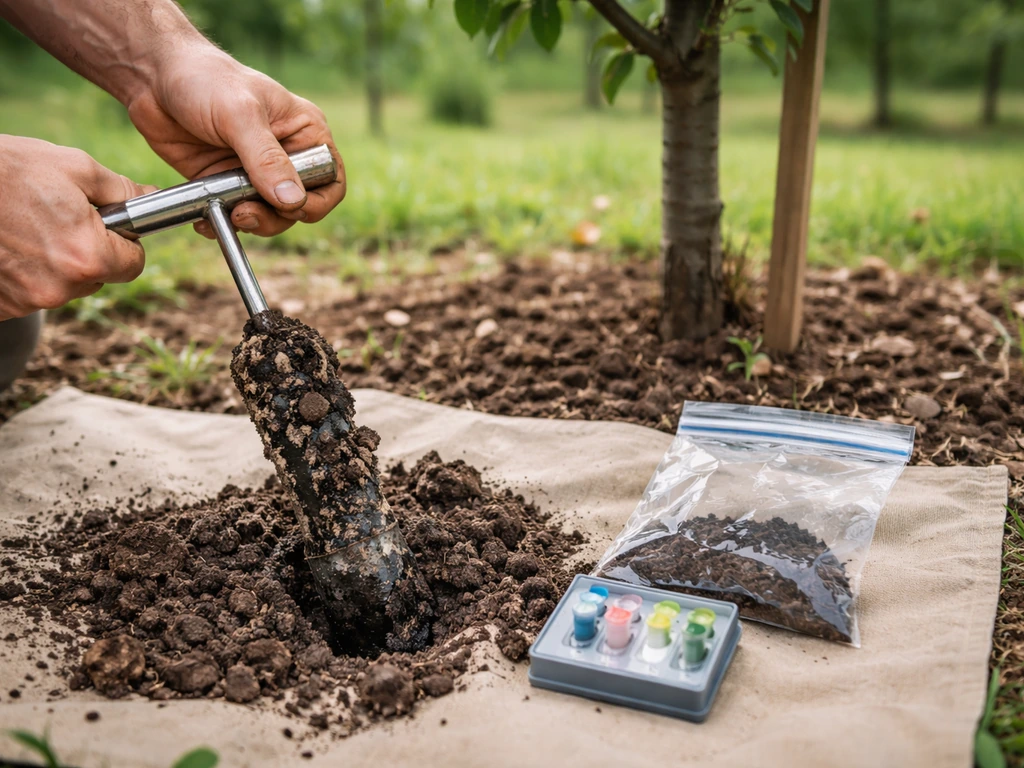
Soil pH is the single most important variable in truffle cultivation, and most Wisconsin soils aren't naturally in the right range. Tuber melanosporum wants a pH of 7.7 to 8.0, with an acceptable range of about 7.5 to 8.3. Tuber aestivum is similar, preferring naturally calcareous, high-pH soils. Most of Wisconsin's agricultural soils sit in the 6.0 to 7.0 range, so you'll almost certainly need to amend upward with ground limestone (calcium carbonate). The Trufficulture planting guide recommends getting soil to pH 7.5 before you plant, and notes that reaching target pH can take several months of amendment and testing, so start this process well ahead of your planned planting date.
Get a soil test done first, not after. Your county extension office or a private soil lab can test pH, organic matter, calcium, and texture. Once you know where you're starting, you can calculate how much agricultural lime to apply. For clay-heavy soils in Wisconsin, you may also need to improve drainage with coarse sand or grit. Avoid adding compost or high-nitrogen fertilizers to your truffle orchard soil. Truffles evolved with trees in nutrient-poor, alkaline environments. Rich soil encourages competing fungi and actually suppresses truffle mycelium.
Weed management is critical, especially in the first three to five years. Grass and broadleaf weeds compete with your host trees, introduce competing fungal species, and shade the orchard floor. The most effective early approach used in research trials is a double layer of white woven polypropylene mulch mat (about 2 meters by 2 meters per tree) placed around each seedling after planting. White reflects heat to the soil surface, which Tuber melanosporum benefits from, while suppressing weeds and reducing evaporation. Chemical weed control around the tree rows is also commonly used in managed truffle orchards. Whatever method you choose, keep the soil bare and clean around your trees.
Planting, spacing, and what the first few years look like
Plant in spring (after last frost) or early autumn, when soil temperatures are moderate and roots can establish before stress kicks in. For most of Wisconsin, late April through May or September are your windows. At planting time, dig a hole just large enough for the root plug, set the tree in without disturbing the mycorrhizal root zone, and immediately drench the planting hole with water to collapse air pockets and improve root-to-soil contact. This step sounds simple but it genuinely improves first-year survival rates.
Spacing should be 13 to 20 feet between trees (roughly 4 to 6 meters), which gives each tree room to develop a brûlé zone without immediate competition from neighboring trees. At the higher-density end used in European orchards, about 1,200 plants per hectare at roughly 2.9 meters by 2.9 meters is a reference benchmark, but for a small Wisconsin plot, erring toward wider spacing (15 to 18 feet) gives you more flexibility and better orchard floor access for monitoring.
The first two years are establishment years. The trees are building root mass and the mycorrhiza is either consolidating or struggling. Don't expect to see any visible truffle indicators yet. Your job during this phase is soil pH maintenance, weed control, and appropriate watering. Resist the urge to fertilize heavily, even if the trees look slow.
Watering, mulching, and seasonal care through Wisconsin winters
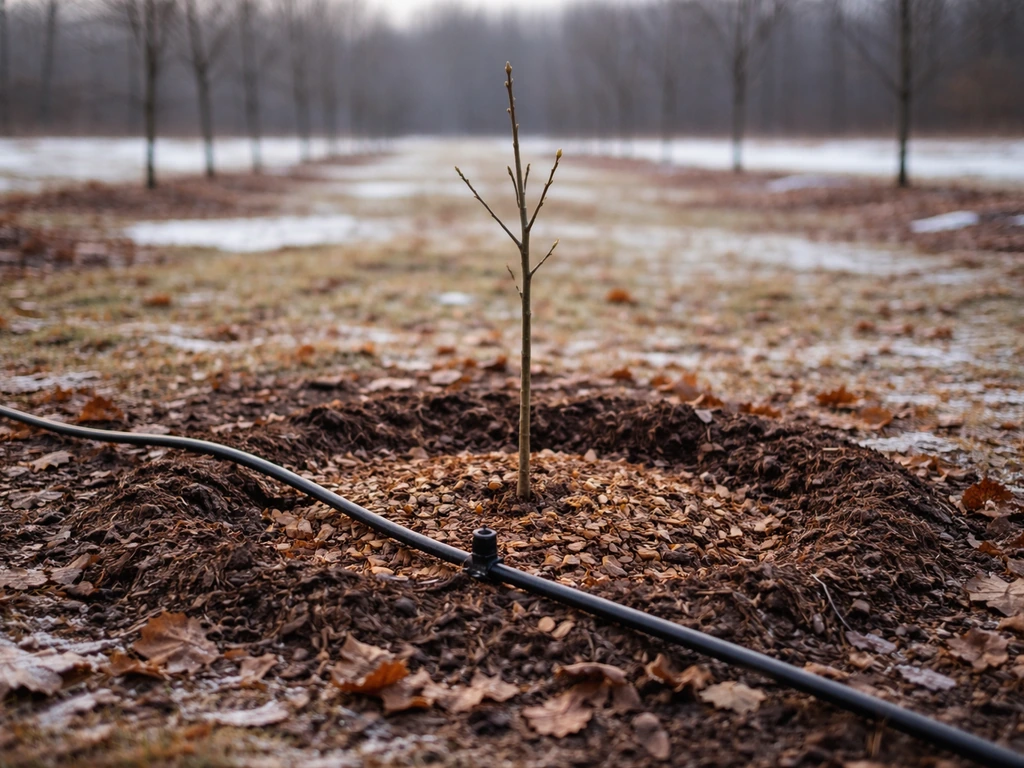
Wisconsin's summers can be hot and dry enough to stress young truffle trees, which hurts mycorrhizal development. Tuber melanosporum needs consistent soil moisture but hates waterlogging. During the growing season, aim for steady moisture in the root zone without saturation. The University of Wisconsin's WISP (Wisconsin Irrigation Scheduling Program) is a genuinely useful tool for this: it combines soil water balance calculations with root-zone monitoring data so you can schedule irrigation efficiently without over-applying water or leaching your carefully adjusted soil chemistry.
Drip irrigation is the best delivery method for a truffle orchard. It keeps water at the root zone without wetting the surface around the brûlé, and it's easy to schedule precisely. Overhead irrigation is fine for young establishment-phase trees but switch to drip once the orchard matures.
Wisconsin winters are cold, and that's actually not entirely bad news. Truffles need a cold period, and Tuber melanosporum is harvested in winter (December through March in the northern hemisphere). The greater concern is freeze-thaw cycles in early spring that heave root systems in poorly drained soils, or late spring frosts that damage newly flushed growth on young hazelnut trees. Protect young trees with a ring of coarse wood chip mulch (not fine wood chips, which can acidify the soil) kept at least 6 inches away from the trunk. Deeper snow years actually insulate soil well. The real risk is an open, snowless winter with repeated hard freezes in zones 3 and 4.
Each spring, re-test your soil pH. Rainfall and biological activity will gradually push your pH back down over time, and you'll likely need annual or biennial liming to keep the orchard in range. This is routine maintenance, not a sign something went wrong.
How to know if it's actually working
The most reliable way to verify mycorrhizal colonization in your orchard is a root tip analysis. You can dig up a small sample of fine feeder roots from beneath your trees (minimally disruptive, just a few grams of root tips from the upper 15 to 30 cm of soil) and send them to a service like ATC's Root Analysis and Mycorrhizal Monitoring program. They'll assess what percentage of root tips are colonized, which fungal species are present, and the developmental stage of the mycorrhiza. This is the only way to catch competitor displacement early, before it costs you years of effort.
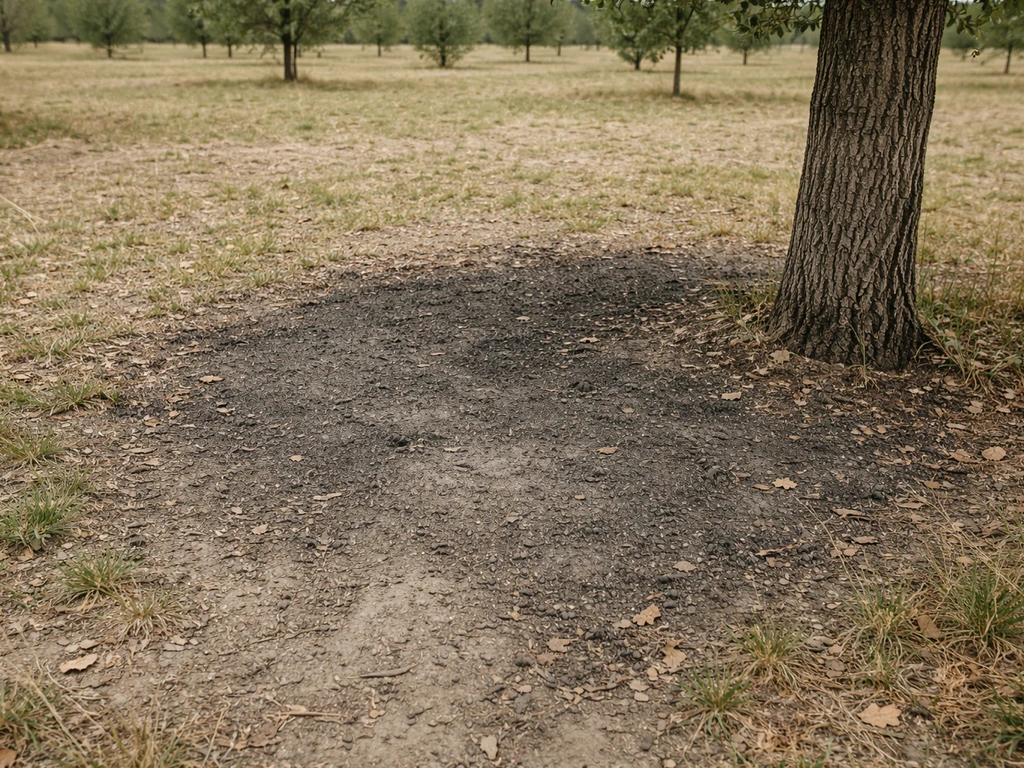
The surface indicator most growers watch for is the brûlé, sometimes called the burnt patch. It's a roughly circular zone of bare or suppressed grass around the base of the tree, caused by the truffle mycelium outcompeting vegetation. Brûlé typically first appears 2 to 5 years after planting, and its appearance is a genuinely exciting sign that your mycorrhizal network is expanding. By years 3 to 5, healthy trees should be showing brûlé if colonization is proceeding well. No brûlé by year 5 or 6 is a red flag worth investigating with a root analysis.
First potential harvest in Wisconsin, assuming good establishment, is realistically 6 to 13 years from planting. That's a wide range because individual site conditions, host tree species, mycorrhizal vigor, and weather variation all influence timing. Tuber aestivum tends to produce a bit earlier than melanosporum. Don't write off your orchard at year 7 if you haven't harvested yet, especially if your trees look healthy and brûlé zones are present.
Harvest, storage, and why most first-time orchards fail
Harvesting your first truffles
Ripe Tuber melanosporum is harvested from roughly December through March. Tuber aestivum peaks in autumn (September through November). A trained truffle dog is the most practical tool for locating ripe truffles just below the soil surface. Dogs can be trained at home over months of work, or you can hire a trained dog handler for your first harvests to assess what you've got. Probing (using a thin metal rod to feel for the slight give of a truffle a few centimeters down) is also used but is slower and less accurate. When you find a truffle, use a small trowel to extract it carefully, refill the hole, and tamp the soil back down to avoid disrupting root systems.
Fresh truffles are highly perishable. Wrap each truffle loosely in paper (not plastic) and store in an airtight glass jar in the fridge at around 2 to 4 degrees Celsius. Use within 5 to 7 days for peak aroma, though they'll last a bit longer if needed. Freeze only as a last resort, as freezing significantly damages texture and aroma.
Common failure points and what to do about them
- Wrong soil pH: This is the number one killer. Truffles simply won't establish in soil below 7.5. Test before planting, amend early, and test again every spring. Never assume pH is stable year to year.
- Competitor fungi displacement: Other ectomycorrhizal fungi can colonize your trees and outcompete the truffle species. This is why buying quality inoculated seedlings from reputable suppliers matters, and why root tip analysis in years 2 to 4 is worth the cost.
- Overly fertile or organic soil: Adding compost or nitrogen fertilizer encourages fast-growing competitor fungi and bacterial activity that suppresses truffle mycelium. Truffle orchards need lean, calcareous conditions.
- Inadequate weed control: Grasses and broadleafs around the base of trees shade the orchard floor, introduce competing fungi, and out-compete the host tree's root system during establishment. Plastic mulch mats or consistent manual weeding is non-negotiable for the first five years.
- Cold and drainage stress: In zones 3 and 4, severe winters without snow cover or poorly drained soils that freeze hard can damage fine root systems and break mycorrhizal associations. Site selection and raised-bed preparation in problem soils help mitigate this.
- Animal disturbance: Deer, squirrels, and boar (in some Wisconsin counties) will dig for truffles once aromatic compounds are detectable near harvest. Fencing your orchard, at minimum with deer exclusion, protects years of investment.
- Giving up too early: Many people abandon truffle orchards in years 4 to 6 because they see nothing. But if your brûlé is developing and root analysis shows colonization, the orchard may simply need more time. The minimum realistic timeline is 6 years, and 10 or more is common for first meaningful production.
Your next steps today
If you're serious about growing truffles in Wisconsin, here's exactly what to do right now. In Stardew Valley, purple mushrooms grow in specific biomes and conditions, so it helps to follow a dedicated guide for how to plant and harvest them how to grow purple mushrooms in Stardew Valley.
First, identify your USDA hardiness zone using the 2023 Wisconsin map (this determines your viable species choice: Tuber aestivum for zones 3 to 4b, Tuber melanosporum for zones 5 to 6). Second, submit a soil test for your candidate site, specifically requesting pH, calcium, organic matter, and soil texture. Third, start shopping for commercially inoculated seedlings from reputable North American suppliers, because quality stock sells out and lead times can be long.
Fourth, draft a simple site plan: sun exposure, drainage, spacing grid at 15-foot intervals, and a weed management approach. If you're trying to grow truffles in a game like Stardew Valley, the mechanics are different, but this kind of planning mindset still helps when you’re comparing the two approaches. Fifth, order your lime and apply it now if your pH is below 7. 5, so the soil can reach target range before planting season.
Truffle growing in Wisconsin is a long game, but it's a legitimate one. If you're wondering how to grow truffles in India, focus first on matching your host trees and local soil pH with the same mycorrhizal cultivation principles used in temperate regions. The cold winters, the need for calcareous soil, and the multi-year timeline are all manageable if you plan carefully and don't cut corners on soil prep.
Growers in neighboring states like North Carolina and Georgia face different but parallel challenges around climate and host tree compatibility, and the same core principles apply everywhere: get the pH right, use verified inoculum, and protect your orchard floor. If you want to grow truffles in North Carolina, you can follow the same core principles, but you need to tune your species choice, soil pH, and orchard-site conditions to your specific region Growers in neighboring states like North Carolina.
Georgia truffle growers should use the same core principles, then tailor their host species and soil pH targets to Georgia’s climate and site conditions how to grow truffles in georgia. Wisconsin's challenge is its cold, but its reward is a potential growing window that's genuinely suited to winter-harvest Périgord truffles in the southern half of the state.
FAQ
Can I grow truffles in Wisconsin in containers or raised beds?
In most cases, no. Truffles depend on an ectomycorrhizal network that spreads through a deep, stable soil profile around the host roots. Containers and raised beds usually heat or dry too fast, and they restrict root expansion, which can prevent a reliable brûlé and delay or stop truffle formation.
What if my soil test shows pH is too low, but I can’t lime immediately?
Start the pH plan as early as possible, because target levels can take months. If you are short on time, don’t plant yet. Re-test after amendment and only plant when you are within the target range (or very close), since competitor fungi and weak mycorrhiza are harder to correct later.
Is it okay to add compost, manure, or general fertilizer to help the trees establish faster?
Avoid it. Organic amendments and nitrogen-rich fertilizers often lower the competitive advantage of the truffle fungus by pushing the soil toward more nutrient-rich conditions. Instead, focus on pH correction, weed control, and maintaining appropriate moisture for the roots.
How can I tell whether mycorrhiza has been colonized by the right truffle species, not just “something”?
Don’t rely only on tree vigor or the presence of brûlé. The practical check is root tip analysis sent to a lab service that can identify fungal species and estimate colonization percentage, which helps catch competitor displacement before it becomes a multi-year loss.
Should I worry that wildlife, insects, or grazing animals will interfere with my orchard?
Yes, protect young trees. Use fencing or deterrents for deer and ground animals that can damage roots and trunks, and control burrowing or trampling in the first few years. Root damage during establishment can delay mycorrhizal consolidation and reduce the chance of a reliable brûlé.
What irrigation mistakes most often fail truffle orchards in Wisconsin?
Overwatering and keeping the surface wet are common problems. Truffle mycelium needs steady root-zone moisture without waterlogging, so use drip irrigation and avoid letting irrigation leach the limed zone or create saturated pockets, especially in heavier soils.
Do I need to re-make the soil pH every year, or is once enough?
Plan on maintenance testing. Rainfall, biological activity, and seasonal cycles tend to push pH downward over time, so re-test annually or biennially and re-apply agricultural lime only if you are drifting out of the target range.
How do I choose between Tuber melanosporum and Tuber aestivum if I’m in a borderline Wisconsin zone?
When you are near the northern edge of a zone, lean toward the species with better cold tolerance for that location. Also consider your site’s cold-air drainage, sun exposure, and frost risk, because a better microclimate can make the more cold-sensitive option viable in some areas.
Why do I see weeds, and then later no brûlé by year 5?
Weeds can introduce competing fungi and also shade the orchard floor, which can slow the truffle network. Review your first few years of orchard-floor management, then consider confirming colonization with root analysis before assuming the trees will “catch up” naturally.
What’s the safest way to harvest truffles without damaging the roots?
Harvest carefully and restore the hole promptly. Use a small trowel, remove the truffle with minimal disturbance, and tamp the soil back down to close the cavity. Then avoid re-probing the same spot repeatedly, since repeated root disruption can weaken the mycorrhizal structure.
How do I store truffles I find, especially if I need to transport them?
Keep them cold and oxygen-controlled, paper wrap first, avoid plastic. For transport, maintain refrigeration and limit time out of the fridge, because aroma drops quickly even when texture seems intact. Freeze only as a last resort due to major texture and flavor loss.