
Yes, you can grow truffles in India, but only in specific regions and with a very different set of expectations than most crops. The Himalayan foothills, parts of Himachal Pradesh, Uttarakhand, and Jammu & Kashmir have the climate, elevation, and soil potential to support Asian black truffles and a handful of native Tuber species. The plains? Forget it. Truffles are not a quick win anywhere in the world, and in India the knowledge base, sourcing infrastructure, and documented commercial success are still in early stages. That does not mean you should not try. It means you need to go in clear-eyed about what it actually takes.
How to Grow Truffles in India: Step-by-Step Guide
Marcus Holloway
6 Jun 2026
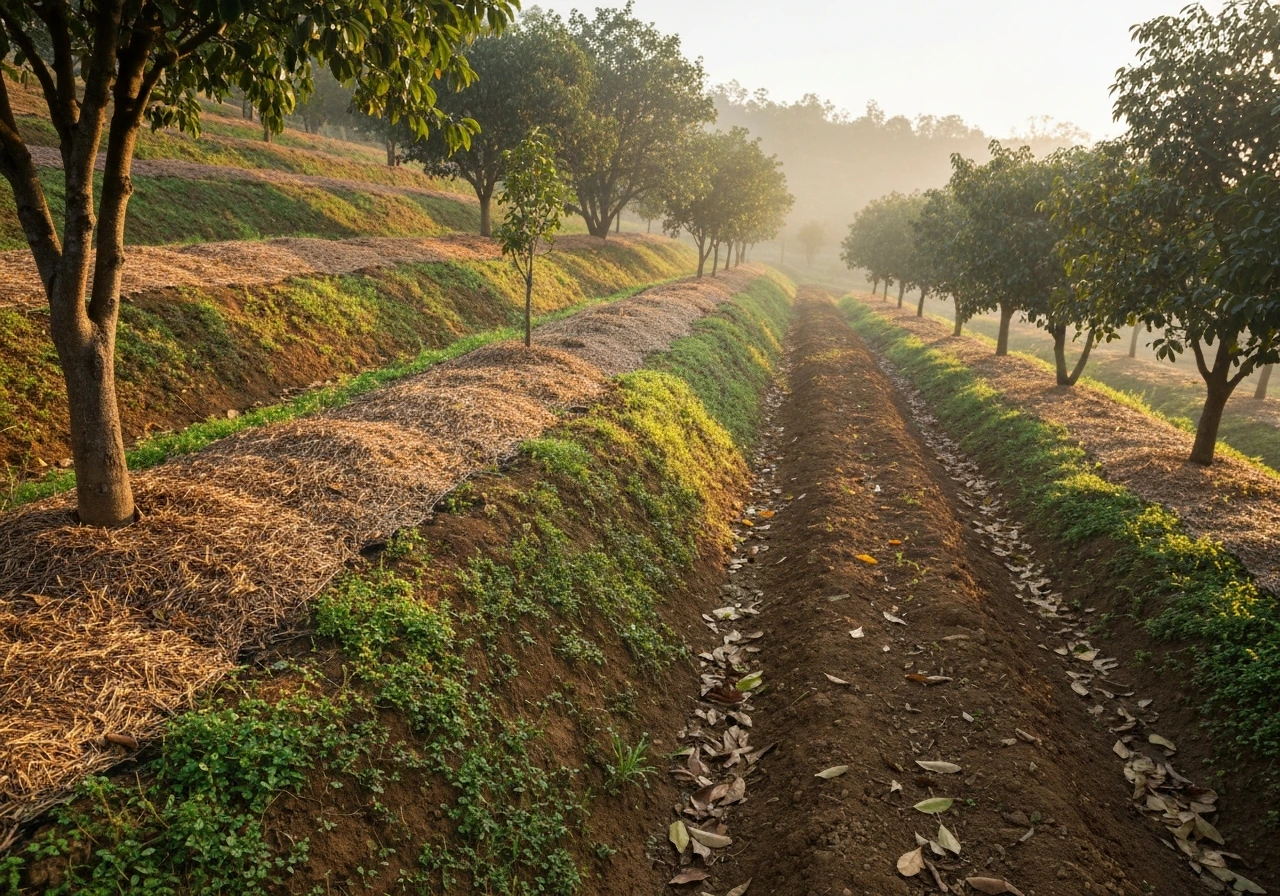
Reality Check: Is Truffle Farming in India Actually Feasible?
Let me be straight with you: commercial truffle farming in India is at an experimental stage, not an established industry. There are no large-scale truffle orchards with proven multi-year harvest records in the country yet. What exists is genuine scientific evidence that edible Tuber species grow wild in the Indian Himalaya (including the recently described Tuber asiaticum from Himachal Pradesh), active mycological research, and imported knowledge from more established truffle-farming countries like France, Spain, New Zealand, and Japan. This is encouraging, but it is not the same as a proven commercial playbook.
The core challenges in the Indian context are: finding verified inoculum (mislabeled spores and seedlings are a real problem), matching your site precisely to species requirements, waiting 5 to 8 years before seeing your first harvest, and managing an orchard through that entire period without breaking the fragile mycorrhizal relationship between the fungus and the host tree. The investment is significant. A small 1-acre trial orchard with inoculated seedlings, soil prep, irrigation, and fencing will realistically cost between Rs. 3 to 6 lakh or more depending on your region, and that is before the waiting period. Treat your first planting as a learning orchard, not a revenue plan.
That said, if you are in the right zone and willing to do the work methodically, the opportunity is real. India already has native truffle diversity, established host trees, and the elevation and seasonal temperature swings that truffles need. You are not forcing a plant into a hostile environment. You are just doing it in a place where the local farming community has not done it before, which means you will be building knowledge as you go.
Which Truffle Species and Climates Actually Fit India
Not all truffles are equal, and not all Indian regions are equal. The most relevant species for Indian conditions fall into two groups: Asian black truffles and native Indian Tuber species.
Asian Black Truffles (Tuber indicum complex)
When people talk about cultivating Asian black truffles, they usually mean the Tuber indicum complex, but this is actually a cluster of closely related cryptic species including Tuber himalayense, Tuber sinense, Tuber pseudohimalayense, Tuber formosanum, and Tuber pseudoexcavatum. This distinction matters enormously when you are sourcing inoculum because a supplier might label any of these as 'Tuber indicum.' Get the species confirmed by someone who can do molecular identification if possible, because mismatched inoculum will waste years of your time. Japanese researchers have successfully cultivated Tuber himalayense and Tuber japonicum using both spore suspension and trap-plant seedling techniques, which gives us a workable inoculation framework you can adapt.
European Species (Tuber melanosporum)
The Périgord black truffle (Tuber melanosporum) is the global benchmark for commercial cultivation. It needs a Mediterranean-style climate: hot dry summers, cold winters, and a very specific soil chemistry. Parts of the Himalayan foothills and some highland zones in Jammu & Kashmir come close, but the match is not perfect. If you want to experiment with T. melanosporum, it requires a soil pH of 7.6 to 7.9, perfect drainage, and consistent seasonal temperature variation. It is a higher-risk choice for India than the Asian black truffle group.
Native Indian Species
Tuber asiaticum, described from Himachal Pradesh, is the most exciting option for Indian growers in the long run. It is adapted to local conditions, associated with local host trees, and does not need to be matched to an imported ecological template. The challenge is that cultivation protocols for this species are still being developed, and inoculum is not yet commercially available. Keep watching this space, especially if you are in Himachal Pradesh. Similarly, Trappeindia himalayensis in the Himalaya is associated with Cedrus deodara and represents a native truffle-like fungus with potential, though it is a different genus and not yet in commercial cultivation.
| Species | Best Indian Regions | Climate Fit | Cultivation Readiness |
|---|---|---|---|
| Tuber himalayense / T. indicum complex | HP, Uttarakhand, J&K hills | Good: cold winters, seasonal variation | Moderate: protocols from Japan/China adaptable |
| Tuber melanosporum (Périgord) | Select high-altitude zones in J&K, HP | Marginal: needs Mediterranean profile | Low-moderate: high soil prep burden |
| Tuber asiaticum | Himachal Pradesh (Himalaya) | Excellent: native species | Early stage: no commercial inoculum yet |
| Tuber pseudohimalayense | Himalayan foothills | Good: Asian climate adapted | Moderate: mycorrhizal synthesis documented |
Site Selection and Soil Requirements
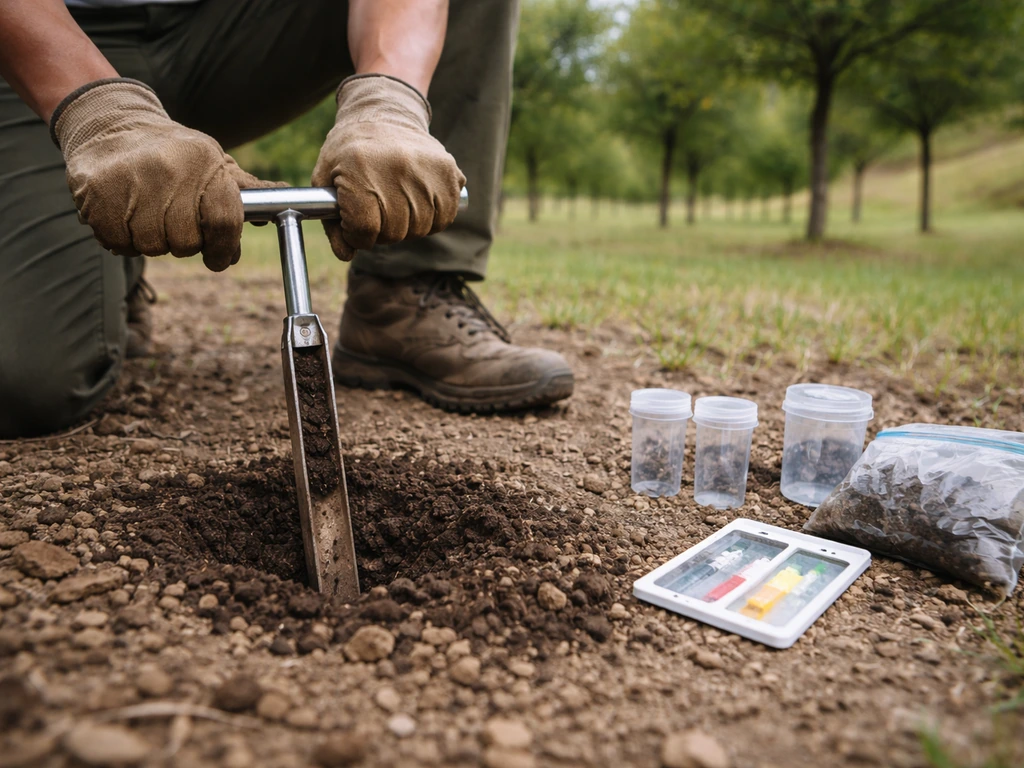
Choosing the right site is probably the single most important decision you will make. Get this wrong and no amount of management will fix it. Truffles have tight soil chemistry requirements, and you need to assess your land honestly before spending money on seedlings.
Climate and Elevation
Target elevations between 1,200 and 2,800 meters in the Himalayan foothills. You need cold winters (ideally dropping below 5°C for several weeks), warm dry summers, and good annual rainfall spread across the right seasons. Avoid low-elevation, hot-humid zones. Coastal India, the Gangetic plains, and most of peninsular India are not suitable. North Carolina has a very different climate than the Himalayan foothills, so you need to use local site testing and species matching rather than assuming truffle farming will work the same way grow truffles in North Carolina.
Soil pH: The Non-Negotiable
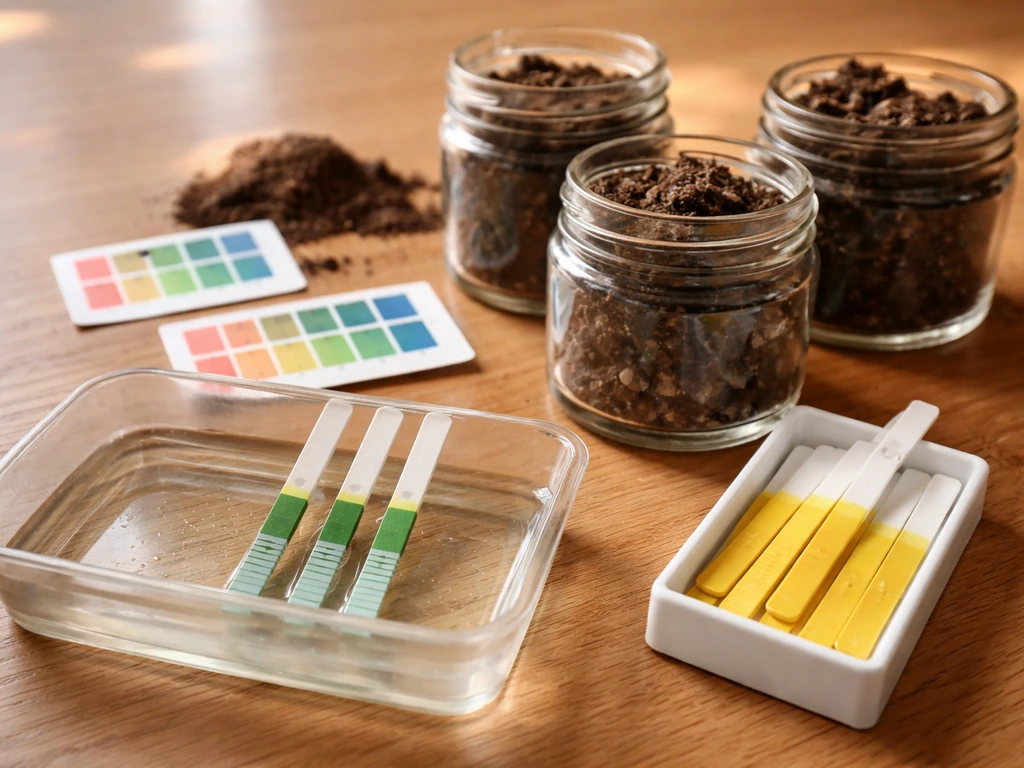
Truffles need alkaline soil. The minimum workable pH is around 7. 5, with the optimal range sitting between 7. 5 and 8.
5 depending on species. For T. melanosporum specifically, aim for 7. 6 to 7.
9. Most Indian soils in the target elevation zones tend toward neutral to mildly acidic, so you will almost certainly need to add lime. A truffle cultivation profile from the University of Kentucky’s Center for Crop Diversification notes calcium carbonate goals for reaching the truffle-appropriate alkaline range, with [orchard-site pH adjustment with lime](https://mushrooms. mgcafe.
uky. edu/sites/mushrooms. ca. uky.
edu/files/truffles. pdf) often required. Get a soil pH test done first (basic testing labs exist in most states) and test at multiple depths, not just the surface. If your pH is below 7.
0, you will need significant amendment before planting. Incorporate agricultural lime or dolomitic limestone into the top 40 to 60 cm of your planting zones and retest after 3 to 6 months.
Soil Texture, Drainage, and Limestone Content
Truffles despise waterlogging. Their mycelium needs well-oxygenated soil, and standing water even for short periods can kill the fungal network you have spent years building. The best soil is loamy to sandy-loamy with a lumpy or stony structure that allows water to drain through and air to circulate. Heavy clay soils are a problem; they compact, hold water, and restrict the mycelium's lateral spread.
If your soil has a clay pan below the surface (common in many Indian hill soils), break it up before planting. Active limestone in the soil is not just about raising pH; calcium carbonate plays a direct role in truffle formation. If your site lacks it naturally, you will add it through your liming program. Research at multiple Tuber indicum growth sites in Yunnan, Sichuan, and Tibet found consistent links between topographic drainage patterns, soil calcium levels, and truffle productivity.
Think of your drainage as part of the cultivation system, not just background geography.
- Target soil pH: 7.5 to 8.5 (test at 10 cm, 30 cm, and 50 cm depths)
- Soil texture: sandy loam, loamy, or stony/gravelly; avoid heavy clay
- Drainage: no standing water; no clay hardpan within 60 cm of surface
- Calcium carbonate: incorporate lime if not naturally present
- Slope: gentle slopes (5 to 20 degrees) improve natural drainage and are ideal
- Avoid shaded hollows, frost pockets, or sites with poor air circulation
Host Trees, Inoculation, and Planting Layout
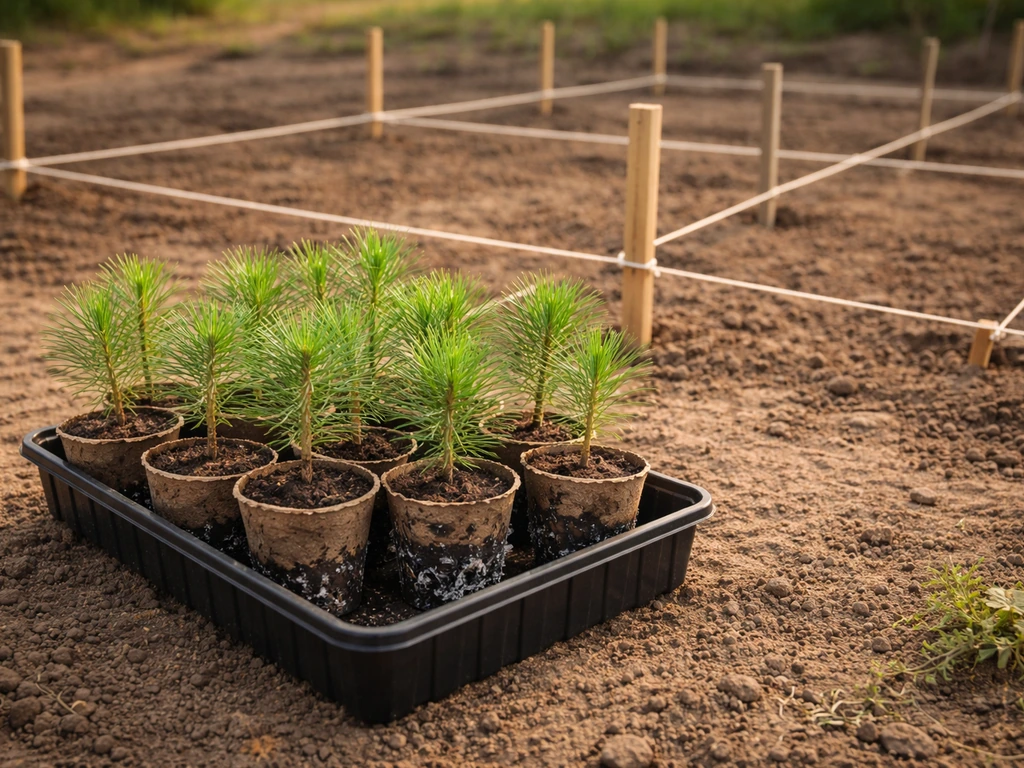
Truffles are obligate ectomycorrhizal fungi. They cannot grow without a living host tree, and the relationship is species-specific. Pick the wrong host, and the inoculation will fail no matter how good your soil is. Choosing the right host tree is not optional; it is the whole foundation of the system.
Host Tree Species for Indian Conditions
For the Asian black truffle group, the most documented and commercially viable host trees include Quercus species (oaks), Pinus armandii, and Pinus yunnanensis. Quercus leucotrichophora (banj oak) and other native Himalayan oaks are strong candidates in India given their natural distribution in the target elevation zones. Experimental work with Tuber pseudohimalayense has confirmed successful mycorrhizal synthesis with multiple broad-leaved trees and Pinus armandii, which is directly relevant for Indian planting plans.
For anyone interested in native Indian species like Tuber asiaticum, local Himalayan oaks and conifers are the logical partners to explore, even if formal protocols are still being established. Cedrus deodara, already identified as a host for the native Trappeindia himalayensis in the Himalaya, may also be worth trial planting with native Tuber species.
Planting Layout
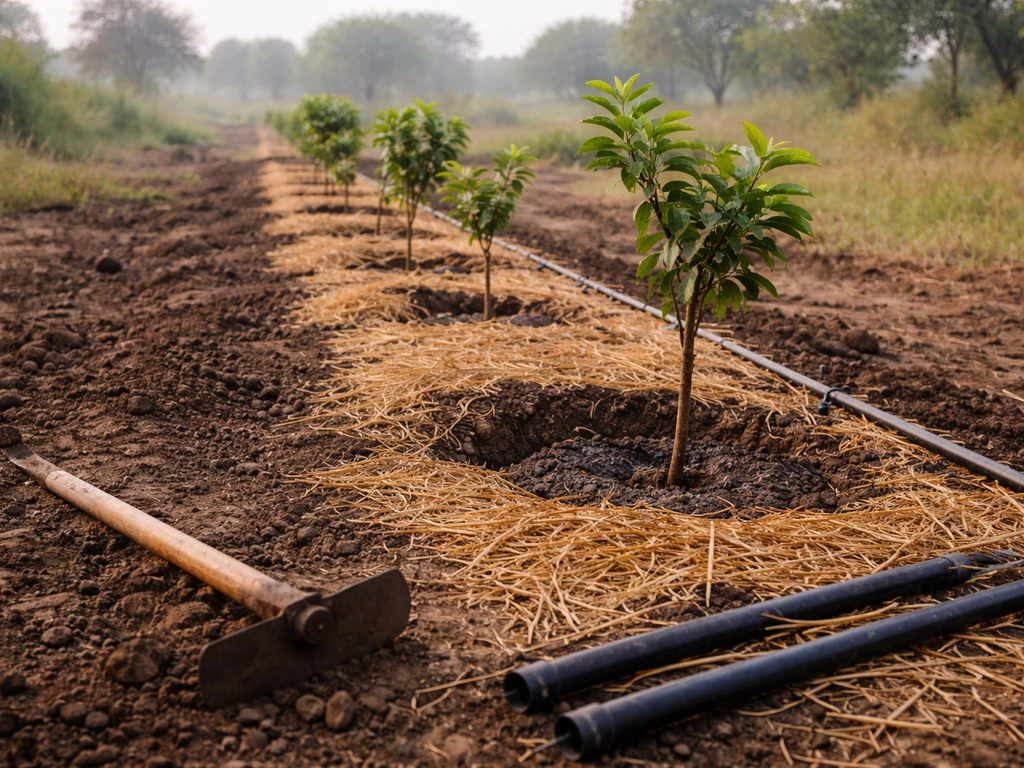
Standard truffle orchard spacing is 4 to 6 meters between trees in rows and 4 to 6 meters between rows, giving you roughly 280 to 625 trees per hectare. Wider spacing allows more sunlight penetration and easier management; denser spacing can speed canopy establishment but requires more aggressive pruning later. Plan your irrigation lines and access paths at planting time. You will need to cultivate the soil shallowly around trees periodically, and you need to be able to do that without damaging surface roots or the mycorrhizal network.
Inoculation Methods, Planting Stock, and Sourcing Advice
This is where most Indian growers will hit their first major obstacle: sourcing verified inoculated seedlings or quality inoculum. The supply chain for truffle inoculum in India is thin, and the risk of receiving mislabeled or dead inoculum is real.
Inoculation Approaches
There are two practical routes documented in the research. The first is spore suspension inoculation, where you prepare a suspension from truffle ascomata (fruiting bodies) and use it to inoculate seedling roots during germination or transplanting. The second is the trap-plant seedling method, where you grow seedlings in proximity to existing truffle mycelium or inoculated soil to allow natural mycorrhization. Mycorrhization trials using [spore suspension and trap-plant seedling techniques](https://agris.
fao. org/search/en/providers/122535/records/65dfcdf10f3e94b9e5dc758d) have been used to assess host range for truffle species such as Tuber japonicum and Tuber himalayense on specific indigenous oak and pine hosts, demonstrating practical inoculation approaches in Asia. Japanese research on Tuber himalayense and Tuber japonicum used both methods to establish host-range assessments, and this is the most relevant applied research for Indian growers to draw from. The trap-plant approach is more accessible if you can source genuine ascomata from documented wild or cultivated sources.
Buying Pre-Inoculated Seedlings
Pre-inoculated seedlings are the easiest starting point if you can find a trustworthy supplier. Europe (France, Spain, Italy) and New Zealand have established nurseries that export inoculated host trees. Some Australian and Chinese suppliers also exist. When purchasing, ask specifically which Tuber species was used for inoculation, request documentation of mycorrhizal colonization rate (a figure above 30% is often cited as a minimum threshold), and ask whether the plants have been tested under controlled conditions. Be especially cautious of Indian or generic online sellers claiming 'truffle seedlings' without this documentation. Misidentified inoculum in the Asian black truffle complex (e.g., selling T. indicum when it is actually a non-commercial relative) is a documented real-world problem, not a hypothetical one.
Verification Tips
If you are serious about this, connect with mycology departments at institutions like CSIR-IHBT in Palampur (Himachal Pradesh) or forest research institutes in your region. They are actively working on Himalayan fungi and may be able to help with species confirmation or point you toward legitimate inoculum sources. University agricultural extension programs in HP and Uttarakhand are also starting to engage with this topic.
Care and Management Over the Years
Once your seedlings are in the ground, the job is to keep the conditions stable and the mycorrhizal relationship intact. Every management decision you make should be filtered through one question: will this disturb the fungal network? If the answer might be yes, proceed carefully or not at all.
Irrigation
Truffles need moisture but not wet soil. Drip irrigation is the standard in commercial orchards because it delivers water slowly and precisely without saturating the root zone. In Indian hill conditions, you may get sufficient monsoon rainfall, but you will likely need supplemental irrigation during dry pre-monsoon and post-monsoon periods. The danger zones are drought stress in summer (which weakens both tree and fungus) and waterlogging in the monsoon (which can rot the mycelium). Install irrigation lines so they can be moved or lifted when you need to do shallow soil cultivation. Avoid overhead sprinklers, which promote fungal disease on foliage and contribute to soil compaction.
Mulching and Ground Cover
A thin layer of wood chip or straw mulch (5 to 8 cm) around the base of trees helps maintain soil moisture, moderate temperature, and suppress weeds without smothering the surface soil. Keep mulch away from the trunk base to prevent collar rot. Some established truffle orchards also develop a characteristic 'brûlé' or burnt circle of bare ground around each tree as the mycelium spreads and suppresses competing plants. Do not panic when you see this; it is actually a positive sign of active mycelium.
Weed Control
Competing roots and especially competing ectomycorrhizal fungi are one of the most formidable threats to truffle orchards globally. Control weeds mechanically with shallow cultivation (no deeper than 5 to 8 cm) or by hand near the trees. Avoid herbicides close to the root zone; some can disrupt fungal activity. Mow grass between rows rather than letting it grow into the tree zones. Remove any volunteer trees or shrubs that establish themselves in the orchard because their roots bring competing ectomycorrhizal fungi.
Pruning
Host trees should be pruned to allow adequate light penetration to the orchard floor. Truffles form better in well-lit conditions near the dripline of the canopy. Annual or biennial pruning to maintain an open, airy canopy structure is part of standard orchard management. Do not let the trees grow into a dense closed canopy.
Pest and Animal Protection
Wild boar, porcupines, and rodents are the main truffle-eating animals to worry about in Indian hill regions. Perimeter fencing is essential, not optional. In areas with Himalayan black bears or leopards (depending on your location), you will need robust fencing and potentially electric deterrents. During the harvest season especially, animal intrusion can destroy an entire year's crop overnight.
Timeline Expectations: When Will You Actually See Truffles?
Brace yourself: the first harvest from a newly planted truffle orchard typically arrives 5 to 8 years after planting. Some orchards in ideal conditions see sporadic first fruiting at year 4 or 5; others wait 9 or 10 years. This is not a sign that something is wrong; it is just how this fungus works. The mycelium spends those early years colonizing the root system and spreading through the soil before it is ready to fruit.
Here is a rough timeline to keep in mind:
- Year 1: Plant inoculated seedlings, establish irrigation, do soil pH checks every 6 months, apply lime as needed
- Years 1 to 3: Monitor tree establishment, manage weeds aggressively, do not disturb roots, check for brûlé development from year 2 onward
- Years 3 to 5: Brûlé zones should start forming if mycorrhizal colonization is succeeding; continue soil management and irrigation
- Years 5 to 8: First truffle formation possible; begin regular soil probing and trained-animal searches during the expected harvest window
- Years 8 onward: Potentially consistent annual harvests if the orchard is well managed
The brûlé, that distinctive bare ring of soil around each tree where grass and other plants are suppressed, is your best early indicator of a functioning mycelial network. If you see no brûlé forming by year 4 or 5, something is wrong with the mycorrhizal relationship and you need to investigate. In Indian conditions, the absence of brûlé development by year 4 most often points to pH issues, competing fungi, or failed inoculation.
Harvesting, Storage, and Troubleshooting Failures
How to Harvest
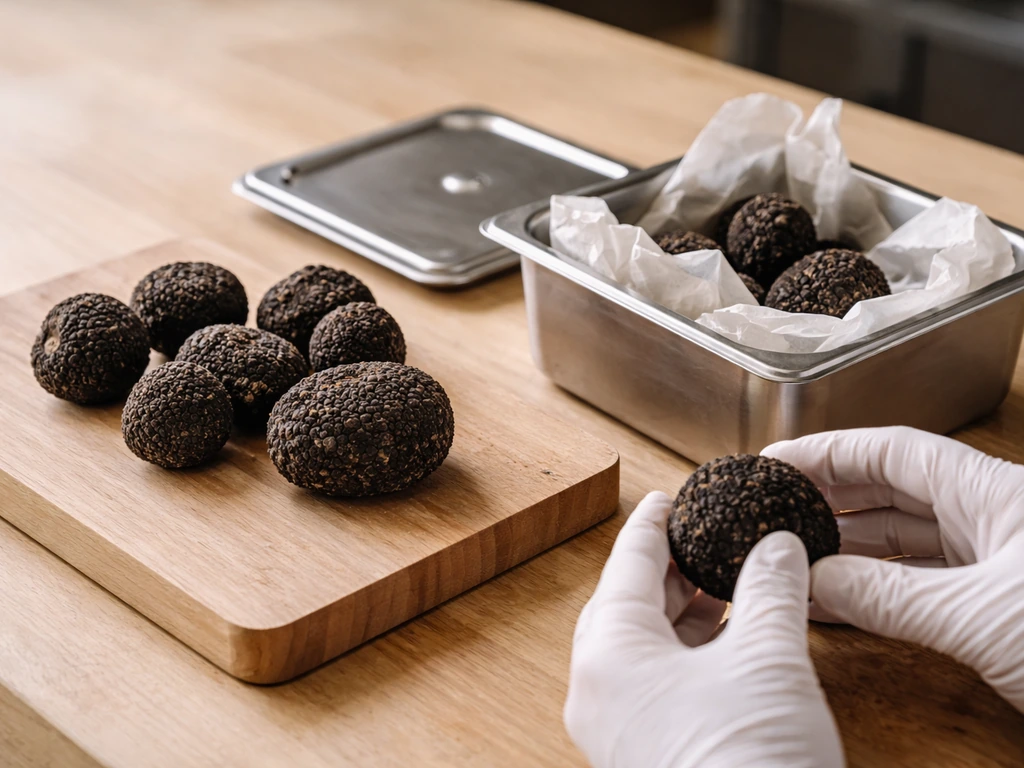
Truffle hunting traditionally uses trained dogs (or pigs, but dogs are more practical). In India, you will need to train a dog specifically for truffle detection, which takes several months. During harvest season (for most Asian black truffles, late autumn through winter), walk the orchard with your dog, particularly under and near the dripline of each tree. When the dog indicates a spot, probe the soil carefully by hand or with a thin metal rod before digging. Harvest truffles only when they are ripe: the interior should be dark with a white marbling pattern, and the aroma should be strong. Unripe truffles have little flavor and will not command good prices.
Storage
Fresh truffles are highly perishable. Store them wrapped individually in paper towels inside a sealed container in the refrigerator at 2 to 4°C. Change the paper daily as it absorbs moisture. Fresh truffles last 5 to 10 days at most before quality degrades significantly. For longer storage, freeze whole truffles (quality declines somewhat but remains acceptable for cooking) or preserve them in oil or salt. Never store fresh truffles uncovered or in contact with other strong-smelling foods.
Troubleshooting the Most Common Failures
Most truffle orchard failures in new growing regions trace back to a short list of diagnosable problems. Here is how to recognize and address each one:
| Problem | Signs | Fix |
|---|---|---|
| Wrong soil pH | No brûlé by year 4-5; poor tree vigor | Re-test soil at depth; apply agricultural lime or dolomite; retest after 6 months |
| Poor drainage / waterlogging | Tree dieback; yellowing leaves; no fruiting | Install subsoil drainage; break clay pans; raise planting mounds if needed |
| Competing ectomycorrhizal fungi | No brûlé; mycelium overtaken by other fungi | Source sterile inoculated plants; remove competing trees; maintain strict orchard hygiene |
| Failed or mislabeled inoculation | No brûlé; roots show no truffle mycorrhiza on inspection | Source verified seedlings; have roots checked by a mycologist; consider re-inoculating young trees |
| Drought stress | Leaf scorch; premature tree defoliation | Increase drip irrigation during dry periods; check soil moisture at 20-30 cm depth weekly |
| Over-irrigation | Waterlogged soil; root rot; no truffle scent in brûlé zone | Reduce irrigation frequency; check drainage; allow soil to partially dry between watering cycles |
| Delayed or zero fruiting after year 8 | No truffles despite apparent brûlé and healthy trees | Check if brûlé is genuine truffle suppression or allelopathy from another cause; use soil probing; consult specialist |
| Environmental mismatch | Trees struggle; poor growth despite irrigation | Audit elevation, winter temperatures, and rainfall pattern against species requirements; consider switching to native species |
One thing worth emphasizing: if you are comparing notes with growers in other parts of the world, like those attempting truffles in Georgia, North Carolina, or Wisconsin, the climate variables are different enough that their specific timing and soil amendment data may not translate directly to your Indian site. Your elevation, monsoon pattern, and soil parent material are unique to your location. Do your own soil testing rather than copying another region's lime application rates.
Your Next Practical Steps
If you have read this far and still want to do it, here is what to do this week. If you meant the Stardew Valley version, the purple mushroom growth steps are very different from real-world truffle farming purple mushrooms in Stardew Valley. Get a soil test from a certified lab: pH at multiple depths, calcium levels, texture analysis, and drainage assessment.
The same approach, starting with a site test and matching the right species to your climate, also applies when planning how to grow truffles in Wisconsin. If your pH is below 7. 5, start a lime amendment program before you spend a rupee on seedlings. Identify your target species based on your elevation and climate.
Reach out to CSIR-IHBT in Palampur or forest research institutions in your state to find out what active research or sourcing connections might be available to you. And treat your first 0. 5 to 1 acre as a learning plot, not a commercial orchard. The growers who will eventually produce commercial Indian truffles will be the ones who started small, documented everything, and adjusted based on what their land actually told them.
FAQ
Can I grow truffles in India in containers or small pots?
Yes, but you still need a host tree and matching mycorrhizal conditions. “Container truffles” are not a realistic path to commercial production because the fungus needs stable, long-term soil chemistry and a large, undisturbed root zone for 5 to 8 years. If you do trials in pots, treat them only as inoculation and observation tests, not a production system, and expect very slow or no fruiting.
What if my soil pH is low after I already bought seedlings, should I lime immediately?
Do a soil pH and calcium carbonate check before planting, because liming after inoculation is slower and risks disturbing the root zone. If pH is below about 7.0, plan substantial amendment ahead of time, then retest after 3 to 6 months to confirm you reached the target range (often 7.5 to 8.5 depending on species). If you must correct later, use spot adjustments away from young feeder roots and avoid heavy digging.
Is it safe to relocate or replant inoculated seedlings if my site preparation is delayed?
In most cases, avoid transplanting after inoculation. Disturbing roots can break or reduce mycorrhizal colonization and can set back development for years. If you must move plants, do it early, handle the root ball intact, and do not bare-root or wash roots. You should also verify colonization on a sample of plants if possible before committing to large-scale moves.
If I do not get truffles for years, how do I know the orchard is still on track?
Yes, you can set expectations by focusing on colonization success, not immediate fruiting. The first useful sign is not a mushroom, it is establishing the brûlé and maintaining stable soil conditions while the mycelium spreads. If you get healthy mycorrhiza but delayed fruiting, the orchard may still be progressing, but you should investigate quickly if brûlé fails to appear by about year 4 to 5 or if pH and drainage are wrong.
Do monsoon rains eliminate the need for irrigation in a truffle orchard?
Rain is helpful only when drainage and oxygen are right. During monsoon, standing water or a saturated root zone can collapse the mycelial network. To reduce risk, shape beds for runoff, check drainage after heavy rains, and ensure irrigation lines do not trap water. If you see puddling near trunks, treat it as a system design problem, not a watering frequency problem.
Can I use herbicides in and around truffle orchards to control weeds?
From a practical standpoint, no herbicides near the host roots. Mechanical weed control (shallow tilling or hand weeding near tree rows) is safer because some chemicals can affect soil biology and fungal activity even if they do not kill the host tree. If you need a chemical approach, do it off the root zone and only after confirming with local agronomy guidance for compatibility with ectomycorrhizal systems.
Is fencing enough, or do I need additional pest control for wild boar and rodents?
Yes, fencing is one of the highest-return protections because animal damage can wipe out an entire season. In addition to perimeter fencing, consider blocking burrowing access at fence lines and using deterrents during peak harvest months. If you have local predators such as bears or leopards in the area, plan for sturdier barriers early rather than upgrading after incursions.
How do I avoid mislabeled inoculated seedlings or “truffle seedlings” that are not viable?
Order inoculated seedlings with documentation and verification steps. Ask which exact Tuber species or cryptic complex was used, request evidence of mycorrhizal colonization (often a percentage threshold is cited), and confirm the plants were tested under conditions similar enough to your climate. If documentation is missing or the supplier is vague, assume high risk and run a small verification trial before scaling.
Can I mix different host tree species in the same orchard, or does that harm truffle formation?
Truffles are tied to very specific host-fungus compatibility, so hosts are not interchangeable. Even within the Asian black truffle group, wrong host selection can prevent successful mycorrhiza. For Indian conditions, prioritize documented host candidates for your target species, and if you want to trial a new host, do it on a small section first and monitor for brûlé and colonization.
What are the most common causes of no brûlé showing up by year 4 or 5?
Yes, and it is usually diagnostic. The absence of brûlé by about year 4 to 5 often points to issues like incorrect pH, failed inoculation, competing fungi, or ongoing soil disturbance that disrupts the fungal network. If you see a weak or irregular brûlé pattern, re-check drainage, recent soil amendments, and whether other ectomycorrhizal hosts or volunteer roots are competing.