Yes, you can grow truffles in a greenhouse, but it works very differently from growing other mushrooms indoors. Truffles are not substrate growers. They are ectomycorrhizal fungi that live symbiotically on the roots of specific host trees, and that partnership is what you are actually cultivating. A greenhouse gives you real advantages: season extension, climate control during vulnerable early years, and protection from competing fungi in the soil. NC State's Mountain Research Station even overwintered inoculated hazelnut trees in an unheated greenhouse as part of their research truffle orchard. But a greenhouse does not shortcut the timeline. Expect to wait five to twelve years before you see your first truffle, and that is with everything going right.
How to Grow Truffles in a Greenhouse Step by Step
Realistic expectations before you start
The most important thing to accept upfront is that truffle cultivation is orchard farming, not mushroom farming in the traditional sense. NC State's research orchard first documented truffle production in November 2017, and that orchard was roughly twelve years old when it hit consistent production. Even in a greenhouse where you control temperature, humidity, and pests, you are not going to hack that timeline down to a season or two. What you can do is give your inoculated trees the best possible start, protect them from competing fungi during their most vulnerable years, and maintain the soil chemistry that lets the mycorrhizal relationship thrive. Think of the greenhouse as a nursery and early-life support system, not a magic production chamber.
That said, a greenhouse is genuinely useful here. To translate that greenhouse advantage into practical results, follow a clear indoor truffle plan for host trees, sterile substrate, and seasonal soil temperature swings. It lets you control soil temperature during winter, keep humidity ranges stable, and most importantly, quarantine your trees from wild ectomycorrhizal (ECM) fungi that would otherwise colonize the roots and outcompete your truffle inoculant. If you are serious about truffle cultivation and you already have a greenhouse structure, this is one of the better ways to invest it over the long term.
Truffle biology and picking the right host tree
Truffles (genus Tuber) cannot survive without a living host tree. The fungal mycelium wraps around the tree's fine feeder roots to form mycorrhizae, exchanging minerals and water for sugars the tree produces through photosynthesis. Without that ongoing exchange, the fungus dies. This means every decision you make about your greenhouse setup, your soil, your watering, and your fertilization ultimately comes back to one question: is this good for the host tree roots and the mycorrhizal relationship?
The two truffle species most practical for deliberate cultivation in a controlled environment are Tuber melanosporum (Perigord or black truffle) and Tuber aestivum (Burgundy or summer truffle). Perigord black truffle is the higher-value target but demands very specific alkaline soil conditions. Burgundy truffle is more forgiving and performs better across a wider soil pH range. For a greenhouse growing situation, Burgundy truffle is often the smarter starting point unless you are prepared to engineer your soil very precisely.
Host tree selection matters as much as truffle species. The tree and fungus have to be matched. Here are the most commonly used host trees for each species:
| Truffle Species | Preferred Host Trees | Soil pH Range | Climate Notes |
|---|---|---|---|
| Tuber melanosporum (Perigord black) | Hazelnut (Corylus spp.), English oak (Quercus robur), Holm oak (Quercus ilex) | 7.5 to 8.3 | Prefers warm summers, cold winters; needs winter chilling hours |
| Tuber aestivum (Burgundy/summer) | Hazelnut, oak, hornbeam (Carpinus betulus) | 7.0 to 8.5 | More climate tolerant; suits temperate greenhouse conditions |
| Tuber borchii (bianchetto) | Pine (Pinus spp.), hazelnut, oak | 6.5 to 8.0 | More adaptable; lower commercial value but easier to establish |
Hazelnut is the most popular greenhouse host because it is compact, fast-growing relative to oak, and tolerates container culture reasonably well. If you want long-term in-ground production inside your greenhouse, oak is more productive over decades but takes longer to establish and needs much more vertical space. For most home greenhouse growers, hazelnut is the practical first choice.
Setting up your greenhouse for truffle cultivation
Soil and growing media
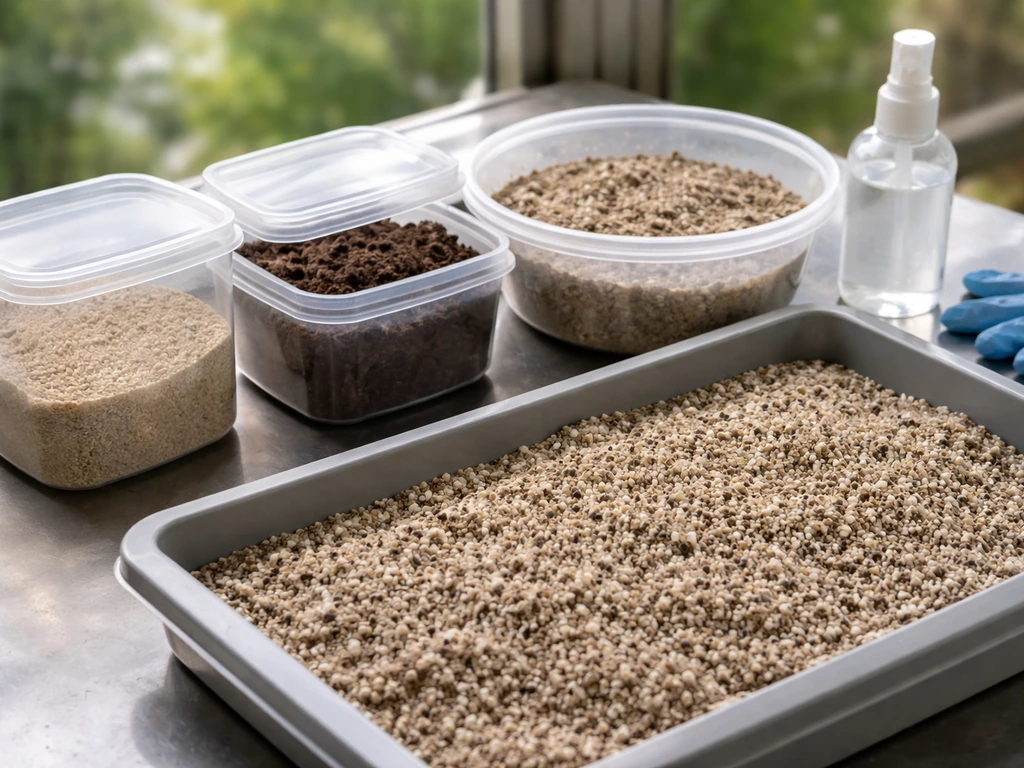
This is where most home growers get it wrong. Standard potting mix or garden soil is almost certainly contaminated with competing ECM fungi spores and will suffocate your truffle inoculant before it has a chance to establish. You need sterile, pH-adjusted, low-nutrient growing media. Truffles thrive in alkaline, well-drained, calcareous (calcium-rich) soils. Mix crushed limestone or agricultural lime into your substrate to bring pH up to 7.8 to 8.3 for black truffle, or 7.5 to 8.5 for Burgundy truffle. Check pH monthly with a quality meter, not litmus strips.
For container growing in a greenhouse, a recommended base mix is roughly 60 percent sterilized sand or perlite, 30 percent sterilized loam or clay-based soil, and 10 percent powdered limestone. Avoid peat, compost, bark chips, or anything organically rich. High organic matter feeds competing organisms and shifts pH in the wrong direction. The goal is lean, alkaline, and well-drained.
Temperature and humidity
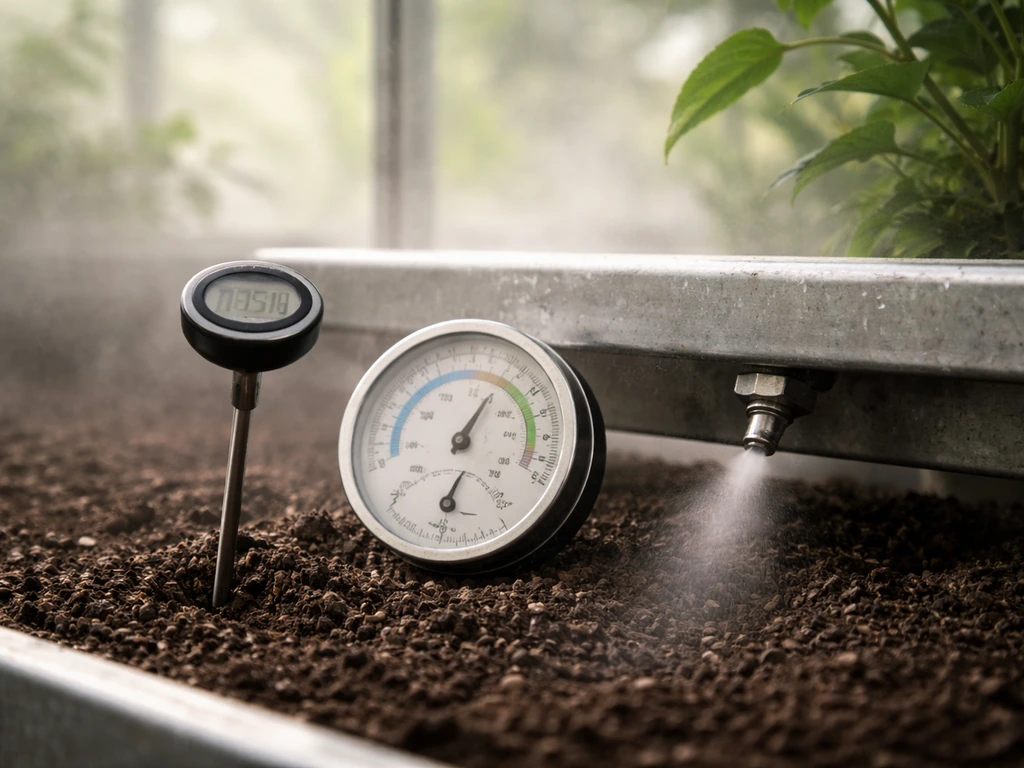
Tuber melanosporum needs distinct seasonal temperature cycles to trigger fruiting. Summer soil temperatures between 16 and 22 degrees Celsius (61 to 72 F) support mycelial growth, while winter chilling (soil temps dropping to around 4 to 8 degrees Celsius / 39 to 46 F for at least 6 to 8 weeks) appears necessary to trigger fruiting body development. This is a critical point for heated greenhouses: if you keep your greenhouse warm year-round, you may support healthy tree growth but never trigger truffle production. An unheated or passively heated greenhouse that follows natural seasonal temperature swings is often better for fruiting than a fully climate-controlled one, which aligns with how NC State used an unheated greenhouse for their research trees.
Relative humidity should sit between 60 and 80 percent. Too high and you risk mold and bacterial root diseases. Too low and the feeder roots dry out, breaking the mycorrhizal connection. A digital hygrometer placed at root level (not just canopy level) gives you the most accurate read. In a greenhouse, good air circulation through vents or a low-speed fan is important to prevent stagnant humid air around the base of your trees.
Light
The host trees need full sun or near-full sun, at least six hours of direct light per day. Truffles themselves form underground and are indifferent to light, but the photosynthetic output of the host tree drives the entire sugar supply for the fungus. A shaded or dim greenhouse will produce weak trees and almost certainly no truffles. Orient your greenhouse to maximize southern or western light exposure, and keep glazing clean. Supplemental grow lighting can help during short winter days, but prioritize natural light if you can.
Irrigation and drainage
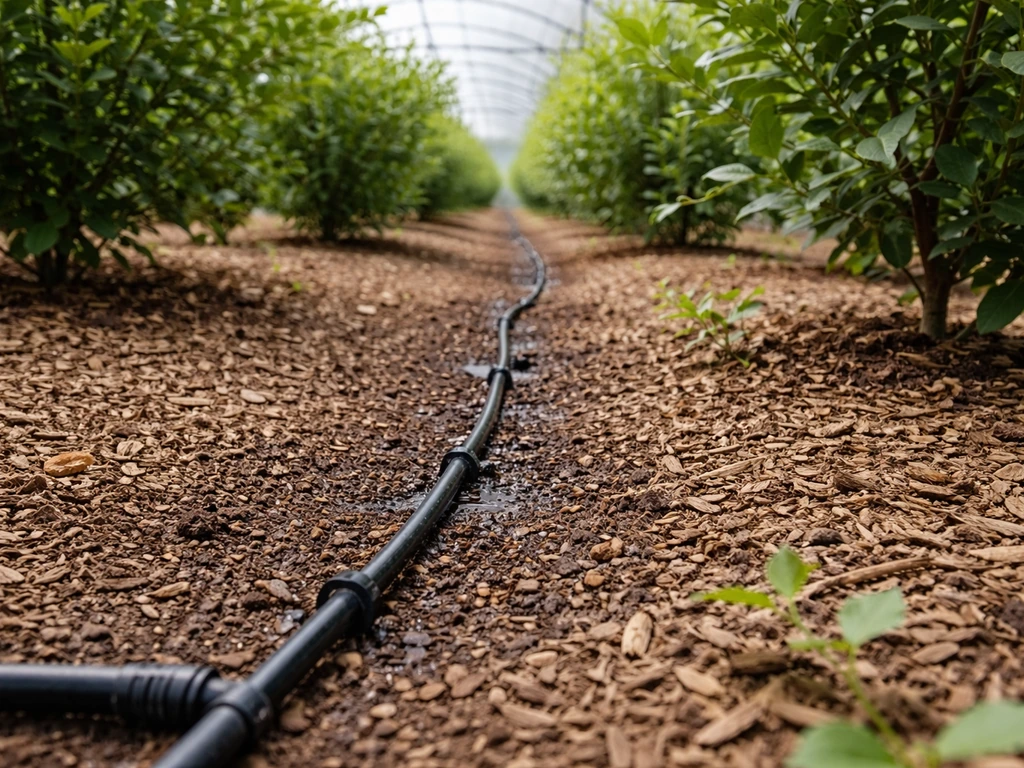
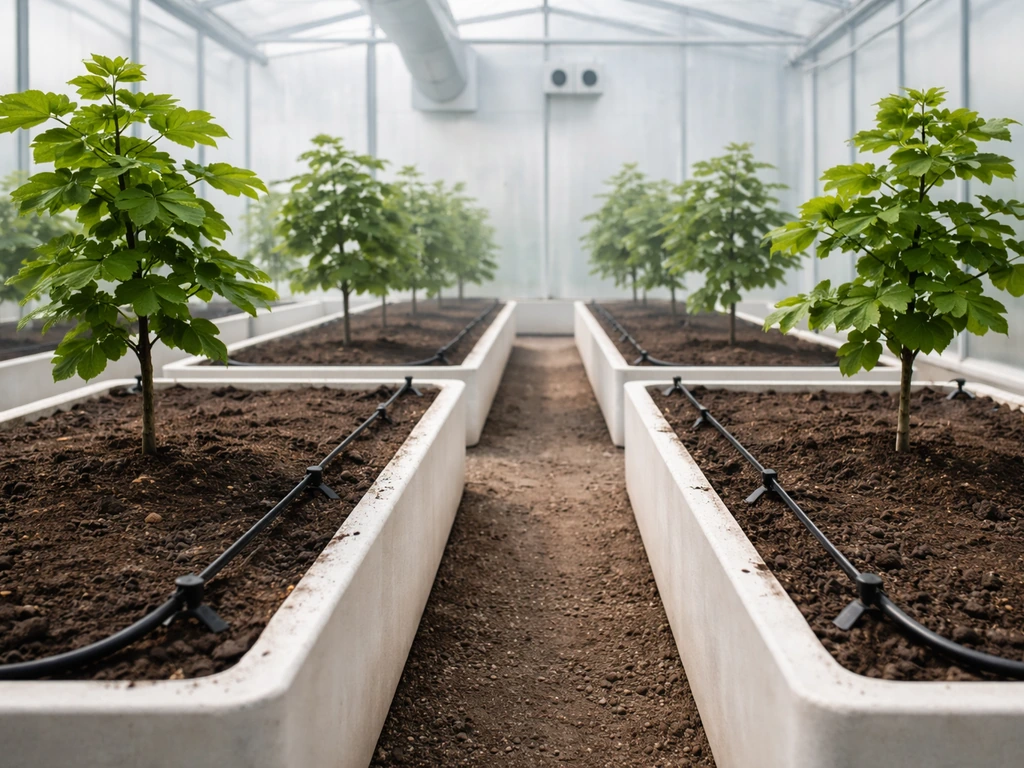
Truffle orchards are almost always drip-irrigated, and your greenhouse system should be no different. Overhead watering or flooding stresses roots, encourages surface mold, and can physically displace developing truffles. Install drip lines or soaker hoses at soil level and water deeply but infrequently: about 25 to 35 mm (1 to 1.5 inches) of water per week during the growing season, less in winter. Drainage is just as critical. Waterlogged roots kill mycorrhizae fast. Raise containers slightly or install French drains if you are planting in-ground inside the greenhouse.
Getting inoculated trees: sourcing and planting
Do not try to inoculate your own seedlings unless you have access to a certified Tuber inoculant and a clean-room setup. DIY inoculation almost always fails or produces unreliable results. Instead, buy certified mycorrhizal-inoculated seedlings from a reputable truffle nursery. When ordering, confirm the specific Tuber species used in inoculation, the host tree species, the inoculation verification method (DNA testing or microscopy), and the tree age. Seedlings should be no older than one to two years to minimize the chance that competing fungi have already colonized the roots during nursery storage.
Sterility during handling and planting is non-negotiable. Research published in Plant and Soil emphasizes that greenhouse and container sanitation is critical to avoiding contamination from competing ECM fungi propagules. That means sanitizing your tools, your containers, and even your gloves before handling the root ball. Never mix inoculated tree soil with your existing greenhouse soil. Plant each tree into its own prepared container or a well-isolated in-ground section.
Planting steps
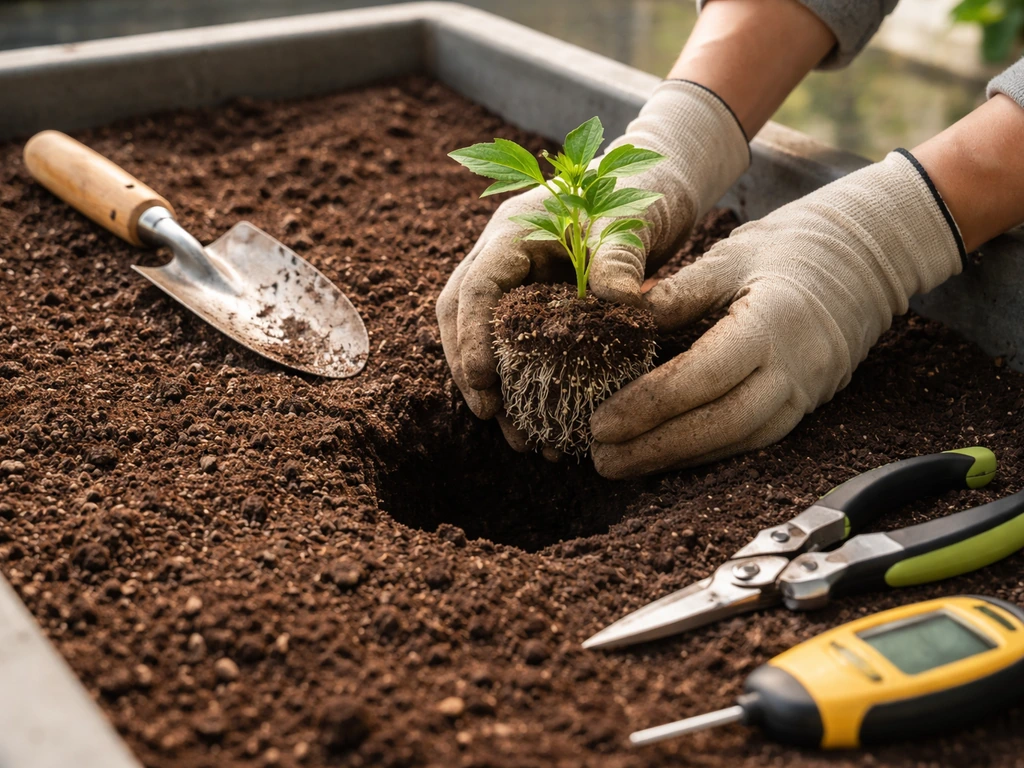
- Prepare your containers or in-ground beds with sterilized, pH-adjusted substrate at least two weeks before planting. Recheck pH before you plant.
- Sanitize all tools with a 70 percent isopropyl alcohol solution or a dilute bleach rinse followed by a clean water rinse.
- Carefully remove the tree from its nursery container without disturbing the root ball. Do not wash or bare-root the tree.
- Dig a hole slightly larger than the root ball. Plant at the same depth the tree was growing in the nursery, never deeper.
- Backfill with your prepared substrate. Do not add fertilizer, compost, or any organic amendments at planting.
- Water in thoroughly with clean, pH-neutral water to settle the substrate around the roots.
- Mulch the surface with crushed limestone chips or clean gravel only, no organic mulch.
Container vs. in-ground inside the greenhouse
Both approaches work, and each has trade-offs. Containers give you total control over substrate composition and pH, they are portable, and you can sterilize them between uses. The downsides are restricted root volume (which limits tree size and potentially truffle yield) and faster drying out. In-ground planting inside the greenhouse gives trees more root run and more closely mimics a real orchard, which may ultimately produce better yields, but you lose the ability to sterilize or replace the soil if something goes wrong. For beginners, starting in large containers (200 to 400 liters) is safer. More experienced growers with a dedicated greenhouse and solid sanitation protocols can consider in-ground beds isolated by root barriers.
Managing your greenhouse truffle orchard year to year
Spacing and tree layout
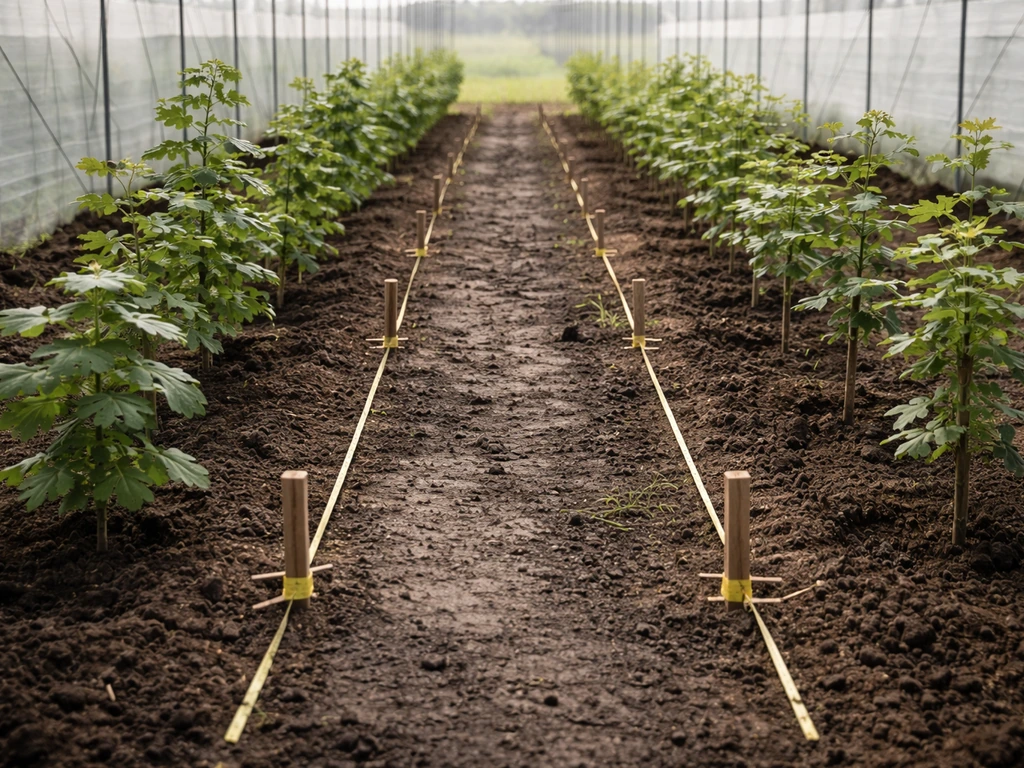
Hazelnut trees in a greenhouse orchard need at least 3 to 4 meters (10 to 13 feet) between them to allow adequate canopy development and airflow. Oak trees need more: plan for 5 to 6 meters minimum. Crowding trees stresses them, reduces photosynthesis, and dramatically increases humidity-related disease pressure. If your greenhouse is small, fewer trees with adequate spacing will always outperform more trees crammed together.
Pruning
Light annual pruning keeps the canopy open and encourages root growth, which is where you want the tree's energy going. For hazelnut, remove suckers from the base regularly. They drain the tree's energy and are not mycorrhizally useful. Prune to maintain an open vase shape rather than a dense thicket. Do all pruning with sterilized tools and at the end of winter dormancy, before spring bud break.
Watering strategy
Deep, infrequent watering is better than frequent shallow watering. You want to push roots down, not keep them at the surface. In summer, water to a soil depth of at least 30 cm (12 inches) every 7 to 10 days. In winter, back off significantly and allow the top 5 to 10 cm of soil to dry between waterings. Track soil moisture at 20 to 30 cm depth with a probe, not just by feeling the surface.
Fertilization: what not to do
This is a big one. Do not use nitrogen-heavy fertilizers. High nitrogen promotes tree leaf and stem growth at the expense of root growth, and it feeds competing soil organisms that will colonize and crowd out your truffle mycelium. If your trees show nutrient deficiency (yellowing leaves, stunted growth), address it with a very dilute, phosphorus-focused fertilizer applied once per season at most. A light top-dressing of powdered limestone every six to twelve months helps maintain pH without feeding the wrong biology. Otherwise, leave the soil alone.
Weed and grass management
Grass and weeds inside your greenhouse compete with host tree roots and can harbor competing fungi. Keep the area under your trees clean, but do not use herbicides near the root zone. Hand-pull weeds or use clean gravel or limestone chip mulch over the soil surface to suppress them. The brule, or burned zone, that forms around producing truffle trees (where the truffle mycelium suppresses surface vegetation) is a natural sign of a healthy truffle relationship, so do not panic if you see bare soil appearing around your trees after several years.
Troubleshooting: when things go wrong
Trees not producing truffles
If your trees are healthy but not producing after seven or more years, the most common causes are incorrect soil pH, lack of sufficient winter chilling, loss of truffle inoculant to competing ECM fungi, or insufficient root zone volume. Check pH first: if it has drifted below 7.5, add agricultural lime and recheck in three months. If your greenhouse stays too warm in winter, try opening it up or removing insulation panels to allow natural temperature drops. If you suspect competing fungi have taken over, send a root tip sample to a lab for DNA analysis to confirm whether your truffle inoculant is still present.
Poor host tree establishment
Yellowing leaves, stunted growth, or early leaf drop in the first two years usually indicate root stress. Check for waterlogging, pH extremes, or root damage during planting. Young inoculated trees are fragile, and rough handling during transplanting is a surprisingly common cause of early failure. If a tree looks seriously stressed in its first season, quarantine it from others and investigate soil moisture and drainage before assuming the inoculant has failed.
Contamination by competing fungi
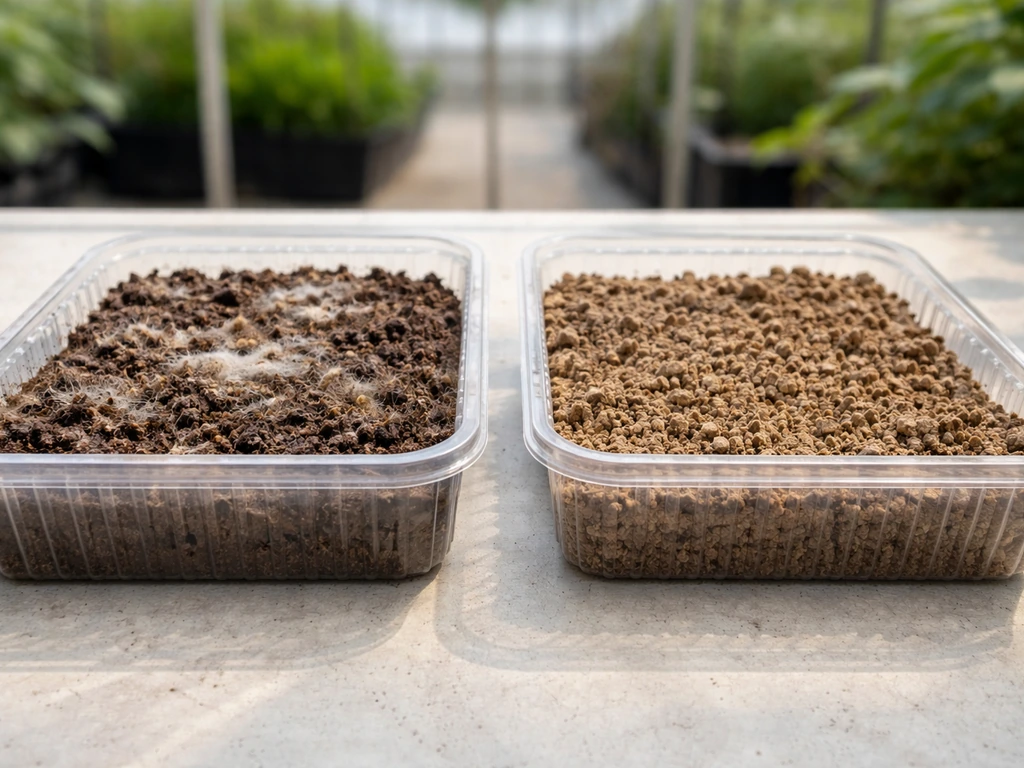
This is the most insidious problem in greenhouse truffle growing and the one most often overlooked. Competing ECM fungi (common species like Scleroderma, Pisolithus, or even wild Tuber species) can colonize your host tree roots and effectively lock out your cultivated truffle inoculant. They arrive through contaminated soil, unsterilized tools, footwear tracked in from outside, or even airborne spores if your greenhouse is regularly opened. Prevention is everything here: sanitize tools every time, use only sterilized substrate, and be strict about what comes in through your greenhouse door. If contamination is confirmed by root tip analysis, your options are limited. Removing and replacing the tree with a fresh inoculated seedling in sterilized substrate is usually the most realistic path forward.
Mold, root rot, and soil diseases
Surface mold on your substrate is usually a sign of overwatering or poor drainage. Back off irrigation and improve airflow. Root rot (Phytophthora is a common culprit in greenhouse environments) is more serious and usually means waterlogged conditions. Improve drainage immediately and avoid wetting the base of the trunk. If you catch it early enough, improving drainage and allowing the soil to dry out can halt progression. Badly affected trees generally do not recover fully and may need to be removed.
Pests inside the greenhouse
Greenhouse environments create warm, sheltered conditions that certain pests love. Fungus gnats are the most common issue: their larvae feed on fine feeder roots and can damage the delicate mycorrhizal root tips your truffle depends on. Use yellow sticky traps to monitor populations and allow the top few centimeters of substrate to dry between waterings, which breaks the gnat life cycle. Aphids on hazelnut foliage are common and manageable with insecticidal soap spray, keeping applications away from the soil surface. Avoid systemic pesticides, which can leach into the root zone and damage mycorrhizal fungi.
Your immediate action checklist
If you are ready to move forward, here is what to do right now rather than getting stuck in planning mode.
- Test your greenhouse soil or proposed substrate pH and adjust to the 7.8 to 8.3 range using agricultural lime before sourcing trees
- Source certified inoculated seedlings from a reputable truffle nursery; confirm the Tuber species and inoculation verification method in writing
- Prepare large containers (200 liters minimum) or isolated in-ground beds with sterilized, low-nutrient, limestone-amended substrate
- Set up drip irrigation with a timer; aim for deep weekly watering during the growing season
- Install a digital thermometer and hygrometer at root level to monitor actual soil conditions, not just air conditions
- Establish a sanitization protocol for all tools and entry points before your first seedling arrives
- Plan your winter temperature management: if your greenhouse is heated, identify how you will allow adequate chilling for fruiting
- Set a calendar reminder to check and adjust soil pH every three months for the first two years
- Record planting dates, pH readings, irrigation amounts, and tree health observations in a grow log from day one
Truffle cultivation in a greenhouse is genuinely possible and the controlled environment gives you real advantages over outdoor orchard growing, especially in regions with unpredictable climates. Growing truffles at home follows the same core requirements, from using inoculated host trees to maintaining sterile, alkaline soil and proper seasonal temperature swings can you grow truffle at home. But it is a years-long commitment that rewards patience, clean practice, and close attention to soil chemistry.
If you want to dig deeper into whether a full outdoor or purely indoor setup might suit your situation better, the questions of growing truffles indoors more generally and how hard truffle cultivation actually is are worth exploring alongside this guide. If you are specifically targeting New Zealand conditions, see how to grow truffles in nz for a country-focused rundown of the orchard setup and climate considerations.
For a fuller overview, also review how to grow truffles indoors step by step before you invest in trees and infrastructure questions of growing truffles indoors. Go in with clear eyes about the timeline and the biology, and this is one of the most rewarding long-game projects you can take on as a serious cultivator.
FAQ
If I heat my greenhouse, will it prevent truffles from forming?
In a greenhouse, the key is soil temperature, not just air temperature. If your heating keeps the root zone above the chilling range all winter, you can end up with vigorous hazelnuts or oaks but no fruiting. Use soil probes and either allow passive seasonal swings or selectively reduce heat at root level during winter months.
How do truffles get contaminated in a greenhouse if the soil and trees are clean?
Yes, but treat it as a quarantine risk. If you open the greenhouse often, use footbaths, change into greenhouse-dedicated footwear, keep door traffic minimal, and consider installing a small “clean zone” for handling inoculated trees. Wild spores can arrive through airflow or on tools, even if you sterilize substrate.
What happens if my greenhouse truffle soil pH is too high after adding limestone?
Yes. If you use lime to raise pH, you can overshoot and push pH too high, which stresses feeder roots and reduces mycorrhizal function. After liming, recheck pH monthly for a few months and stop adding lime once you consistently hit your target range.
Can I start in containers inside the greenhouse and later transplant the trees outdoors (or into beds)?
You can, but you should avoid moving inoculated trees into “real” native soil unless the native soil is fully isolated. Truffle inoculants are vulnerable to competing ECM fungi, and mixing soil can restart competition and make your pH strategy irrelevant. If you must transition outdoors, do it using a fully isolated root zone with barriers and the same sterile, alkaline substrate plan.
My hazelnut leaves are yellowing, should I fertilize more for truffles?
It can mask the real cause. Yellowing leaves can come from nutrient issues, but it can also be from root stress (pH drift, drainage problems, transplant damage). Before you add fertilizer, check drainage and pH first, then only do a light, phosphorus-focused feeding at most once per season.
What if my greenhouse winter is too mild in my region, is there a workaround?
For most greenhouse setups, dormancy is not optional. If the tree never experiences winter conditions, you may miss the chilling trigger needed for fruiting. Even when the greenhouse is sheltered, design your system so the root zone can drop for a sustained period.
How do I keep my host trees healthy without over-fertilizing?
Lower nitrogen is safer, but you still need enough minerals for healthy trees. The practical approach is to keep a minimal fertilization schedule, then correct specific deficiencies sparingly (for example, via dilute, phosphorus-focused inputs) rather than using regular potting fertilizer. Overfeeding is a common way growers accidentally invite competing organisms.
When should I prune greenhouse host trees to maximize truffle yield?
Early pruning is mostly about canopy structure and light, not “speeding up truffles.” Heavy pruning or summer pruning can reduce photosynthate to the roots during crucial periods. Focus on winter dormancy pruning, keep the canopy open, and avoid aggressive cuts once leaves are fully established.
Is it normal for the area around my trees to go bare as brulé develops?
If you see bare soil or a “brulé” zone around established producing trees, that is often normal. What is not normal is widespread dieback, foul smells, persistent surface mold, or sudden growth collapse. Those point to waterlogging, contamination, or root disease rather than a healthy truffle suppressing vegetation.
How do I know when to harvest truffles in a greenhouse?
In greenhouse orchards, truffle harvest timing is practical and sensory. Let the orchard mature, then check periodically for signs like aroma and attraction of target insects, but do not harvest early just because you “see something.” Also, avoid disturbing the soil aggressively around developing truffles, since that can damage roots and mycorrhizae.
What should I look for when buying inoculated trees so I do not get the wrong truffle species?
If inoculation verification is vague, assume higher risk. When ordering, ask for the specific Tuber species used, the host species, the inoculated tree age, and the type of confirmation (such as DNA-based or microscopy). Trees without clear documentation are a common reason greenhouse growers miss the first fruiting window.
How important is container size for greenhouse truffle production?
Yes, but it is not a simple “bigger is always better” situation. Too small a root volume can limit tree growth and truffle potential, but moving to in-ground beds removes your ability to fully sterilize or replace soil if contamination occurs. For beginners, larger containers plus strict sanitation are usually the lowest-risk compromise.