Yes, you can grow truffles at home, but not the way you grow oyster mushrooms or shiitake. Truffles are not a weekend project or a bag of substrate you inoculate on your kitchen counter. They are slow, finicky, and deeply dependent on a living relationship with a host tree and the right soil chemistry. That said, home cultivation is genuinely possible, people have done it successfully in backyard orchards and even controlled greenhouse setups, and if you go in with realistic expectations and the right starting materials, you have a real shot. Let me walk you through exactly what that looks like.
Can You Grow Truffles at Home? Black and White Guide
Marcus Holloway
20 Apr 2026
Reality check: can home truffles actually happen, and why are they so hard?
The core biological reality is this: truffles are ectomycorrhizal fungi. They do not grow on dead wood, straw, or compost like most edible mushrooms. They grow underground, attached to the living roots of specific host trees, in a symbiotic relationship where the fungus exchanges nutrients and water with the tree in return for sugars. If you break that relationship, or never establish it properly, you get no truffles. Period. This is why the spore-on-substrate approach that works beautifully for gourmet mushrooms is essentially useless for truffles. You cannot inoculate a bag of grain and expect results. Ectomycorrhizal infection can be initiated from fungal spores or from hyphae in soil around feeder roots spore-on-substrate approach.
The other hard truth is time. Documented data from North American truffle orchards puts the first harvest of Tuber melanosporum (Perigord black truffle) at somewhere between 5 and 13 years, with an average of around 8 years. That is not a typo. You are planting trees today and hoping for truffles sometime around 2033 or 2034.
A lot can go wrong in that window, and most things that go wrong are not immediately visible because everything is happening underground. That is what makes truffles genuinely difficult compared to any other fungus a home grower is likely to attempt. If you are wondering how hard is it to grow truffles, the timeline and subterranean complexity are why most home attempts fail without careful planning.
None of that means you should not try. It means you should start correctly, choose the right species for your climate, and treat this as a long-term garden project rather than a seasonal crop. If you do those things, the odds shift meaningfully in your favor.
Black truffles vs white truffles: which one can you actually grow at home?
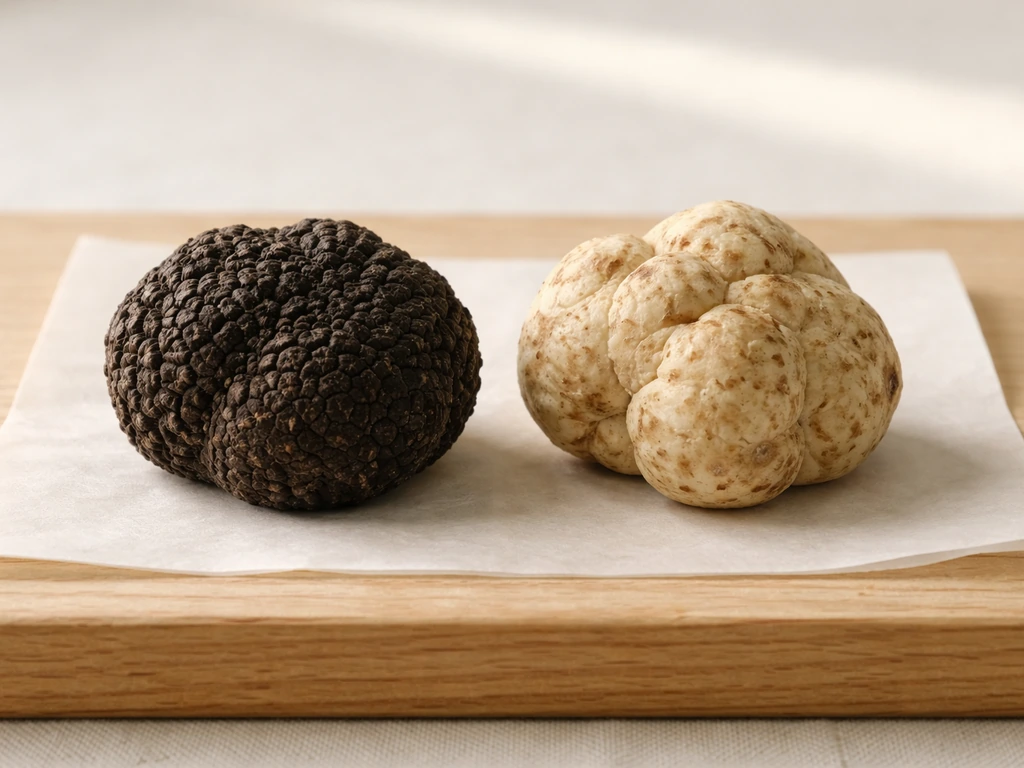
This is the question I get most often, and the honest answer is that black truffles are the realistic home grower's choice. White truffles (Tuber magnatum, the prized Italian white) have never been reliably cultivated anywhere in the world at the time of writing. Researchers and commercial growers have been trying for decades. The ecological requirements of T. magnatum are so specific, including particular soil microbiomes, moisture regimes, and host relationships, that even expert mycologists with controlled environments and large budgets have not cracked consistent cultivation. Attempting to grow white truffles at home right now is essentially a science experiment with very low odds of producing food.
| Feature | Black Truffle (T. melanosporum) | Burgundy Truffle (T. aestivum) | White Truffle (T. magnatum) |
|---|---|---|---|
| Cultivation feasibility | Established, practiced worldwide | Moderate, growing body of success | Not reliably achieved anywhere |
| Time to first harvest | 5 to 13 years (avg. ~8 years) | 4 to 8 years | Unknown, often never |
| Climate needed | Mediterranean-like, warm dry summers | Broader European climates, more forgiving | Very specific, humid with particular soil biology |
| Host trees | Oak, hazelnut, hornbeam | Oak, hazelnut, beech | Poplar, willow, oak, linden |
| Soil pH requirement | 7.5 to 8.3 (alkaline) | 7.0 to 8.5 | 7.0 to 8.0 (very specific microbiome) |
| Recommended for home growers? | Yes, best option | Yes, good beginner alternative | No, not yet practical |
If your climate is warm and dry in summer with mild winters (think Mediterranean, parts of California, Oregon, parts of the American Southeast, southern England, or similar zones), Tuber melanosporum is your target. If you are in a cooler, wetter climate with harsher winters, the Burgundy truffle (Tuber aestivum) is more forgiving and worth considering. Both can be grown using inoculated saplings, which is the method that actually works.
Outdoor yard vs greenhouse: which setup gives you the best shot?
For most home growers, the right answer is an outdoor truffle garden. Truffles need the full relationship between their host tree, the surrounding soil ecosystem, rainfall patterns, and seasonal temperature swings to fruit reliably. Trying to replicate all of that indoors is extraordinarily difficult, far more complex than growing mushrooms in a humidity tent.
If your goal is how to grow truffles indoors, plan for extremely hard-to-control conditions and consider starting with an outdoor phase to establish a stable mycorrhizal network replicate all of that indoors. That said, a greenhouse can play a supporting role, particularly for starting saplings in colder climates before transplanting outdoors, or for extending the establishment phase in areas with harsh late frosts.
If you want to focus on how to grow truffles in a greenhouse, plan for the seasonal simulation and careful management needed to keep the mycorrhizal network stable.
A dedicated greenhouse setup for full truffle cultivation (trees, soil, multi-year timeline) is rarely practical or cost-effective at the home scale. The infrastructure required to house mature oak or hazelnut trees, maintain correct soil chemistry, and simulate seasonal cycles is essentially a commercial operation. If you are genuinely interested in a controlled-environment approach, that topic is worth exploring in detail separately, but for most readers the backyard orchard model is the right starting point.
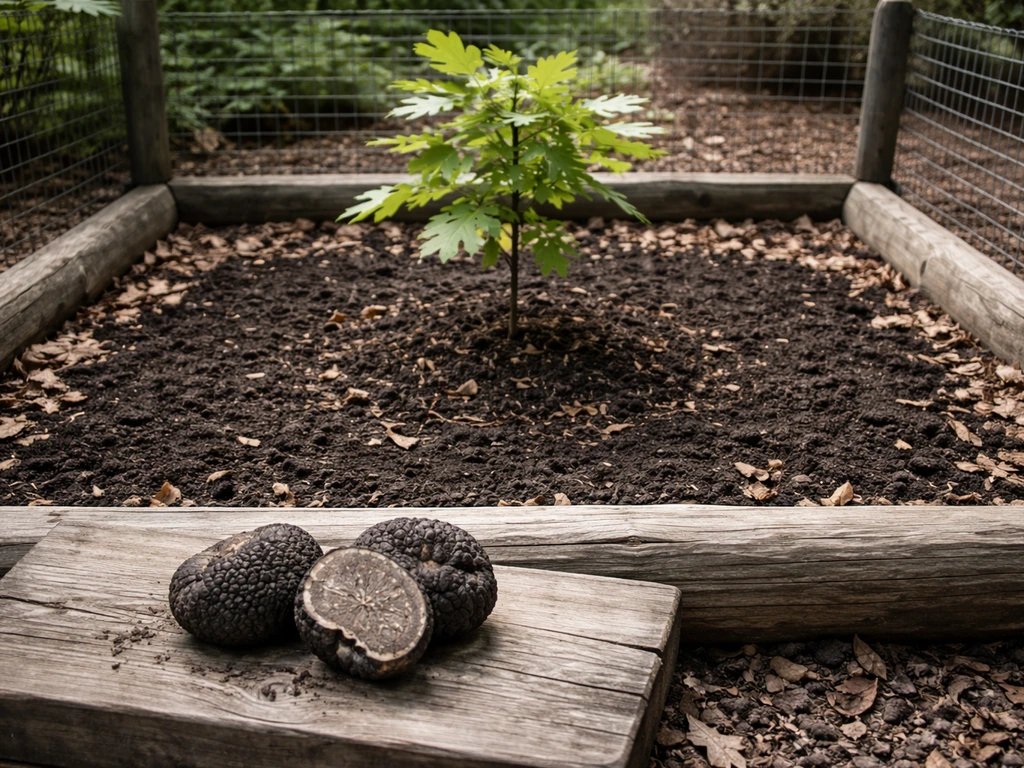
For your outdoor site, you need at minimum a 10 by 10 foot patch per tree, full or near-full sun exposure, excellent drainage, and the ability to adjust soil pH before planting. A south-facing slope is ideal. Urban rooftop gardens, container setups, or shaded suburban plots are not suitable. Truffles are fundamentally a rural or large-suburban-lot project.
How to start correctly: inoculated trees are non-negotiable
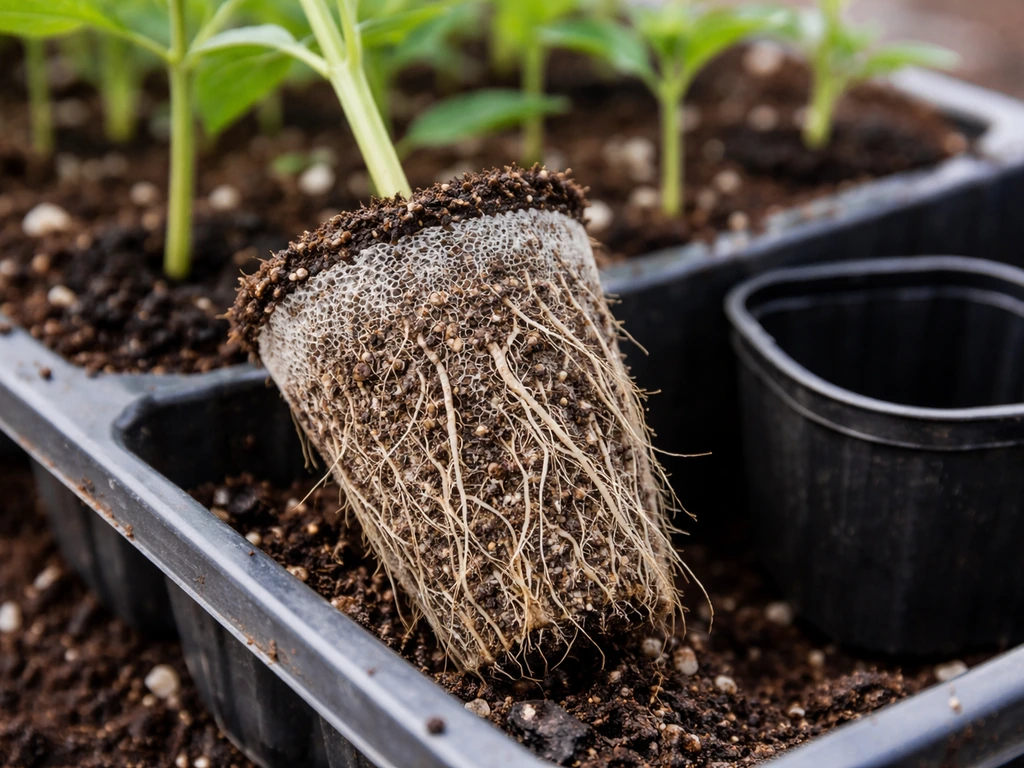
The single most important decision you will make is how you obtain your starting material. You need to buy nursery-grown saplings that have already been inoculated with truffle mycelium, ideally verified by the nursery using DNA testing or microscopy to confirm successful colonization of the root system. National standard guidance for inoculated seedlings describes testing requirements, including microscopy checks of colonization and DNA testing to confirm the truffle species DNA testing or microscopy. Do not attempt to inoculate your own trees from spores collected in the wild. Do not try to transplant wild truffles or their surrounding soil. These approaches have a near-zero success rate for beginners and waste years of growing time.
Reputable truffle nurseries in Europe, North America, New Zealand, and Australia sell inoculated saplings of host species such as English oak (Quercus robur), holm oak (Quercus ilex), pubescent oak (Quercus pubescens), and hazelnut (Corylus avellana). Hazelnut is often the best choice for home growers because it grows faster, stays smaller, and tends to produce truffles sooner than oak. Expect to pay between $25 and $80 USD per inoculated sapling depending on species, nursery, and shipping. Buy from a nursery that can provide documentation of their inoculation method and quality testing.
When your saplings arrive, keep the roots moist and plant as quickly as possible, ideally within 24 to 48 hours. The mycorrhizal network on the roots is living and sensitive to drying out or overheating. Handle the root ball gently and avoid any fungicide treatments on or near the planting hole.
Getting the soil right before you plant anything
Soil preparation is where most home growers either set themselves up for success or guarantee failure before a single tree goes in the ground. Truffle fungi, particularly T. melanosporum, require alkaline soil with a pH between 7.5 and 8.3. Most garden soils in temperate climates sit between 5.5 and 7.0, which is far too acidic. You must test and amend before planting, not after.
- Test your soil pH using a lab test (not just a cheap home kit, which is often inaccurate). Send samples to a local agricultural extension service or certified soil lab.
- If pH is below 7.5, apply agricultural lime (calcium carbonate) to raise it. The exact amount depends on your soil type: sandy soils need less, clay soils need more. Follow your soil lab's recommendation.
- Avoid dolomitic lime as a primary amendment because the magnesium content can interfere with the calcium-heavy soil chemistry truffles prefer.
- Aim for good drainage. If your site is heavy clay, amend with coarse grit or gravel to a depth of at least 18 to 24 inches, or build a slightly raised planting area.
- Clear the planting zone of competing vegetation, especially grass and weeds, in a radius of at least 4 to 5 feet around each planned tree location.
- Do not add compost, manure, or high-nitrogen fertilizers. Truffles need low-nutrient, well-drained, limestone-rich soil. Enriching the soil encourages competing fungi and discourages truffle mycelium.
- Re-test pH two to four weeks after liming and again before planting to confirm you are in the target range.
The brule, or scorched earth zone, is a natural sign that truffle mycelium is active around a tree. It appears as a bare, brownish ring where the truffle mycelium suppresses grass and competing plants. You can encourage this by keeping the area around your trees clear and mulch-free (no wood chip mulch, which encourages other fungi). Some growers use a thin gravel mulch to retain moisture without introducing competing organic material.
Planting, caring for your trees, and what a realistic timeline looks like
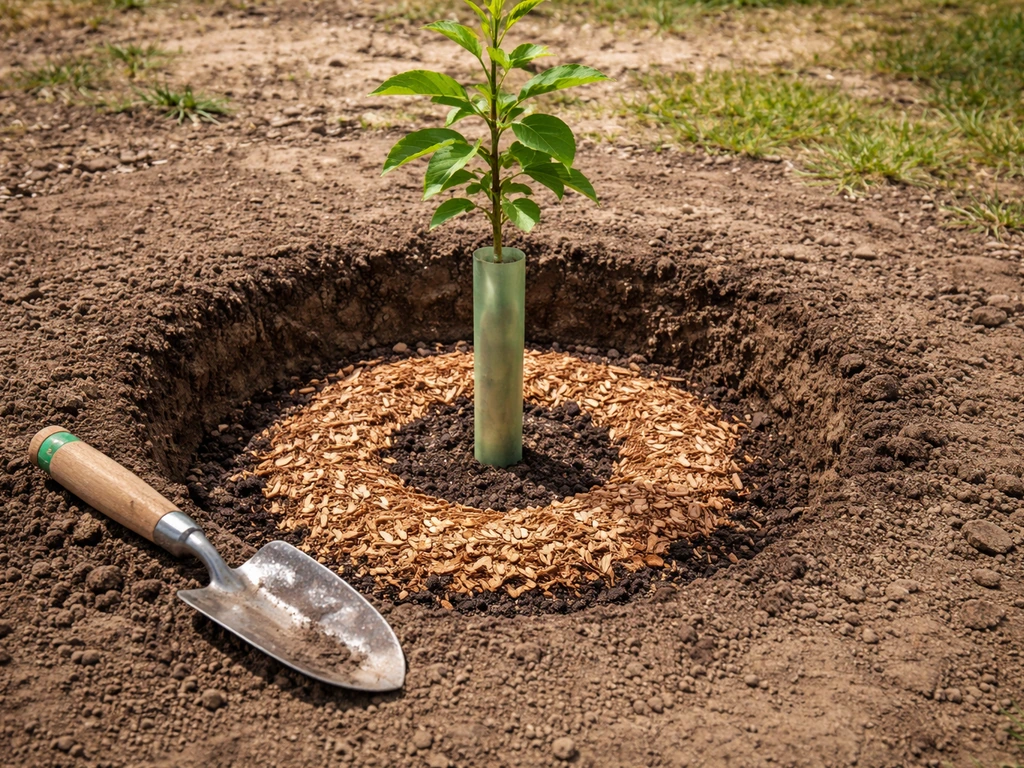
Plant your inoculated saplings in late autumn or early spring, when the tree is dormant or just waking up, to minimize transplant stress. Dig a hole slightly wider and no deeper than the root ball. Place the sapling so the root collar sits at ground level, not below it. Backfill with the native soil (already pH-adjusted), firm gently, and water in well. Space trees at least 15 to 20 feet apart for oaks, or 10 to 13 feet apart for hazelnuts.
For the first two to three years, your main job is keeping the trees alive and healthy without overfeeding them. Water during dry spells, especially in the first summer after planting, but do not overwater. Truffles do not like waterlogged roots. Weed around the base regularly. Do not fertilize unless you see severe nutrient deficiency symptoms, and even then, use only a light application of a low-nitrogen product. Prune the trees lightly to encourage a balanced canopy but do not stress them with heavy cuts.
From year three onward, start watching for the brule zone. Its appearance is one of the first signs that your mycelium is active and spreading. It does not mean truffles are forming yet, but it means the symbiosis is working. By years five to seven, depending on your climate, species, and soil management, you may start to detect a faint truffle aroma around the base of your trees in late autumn. This is when a trained truffle dog or a soil probe can help you locate developing fruiting bodies. Do not dig randomly, as you will damage the mycelial network.
| Year Range | What to Expect | Key Actions |
|---|---|---|
| Year 1 to 2 | Tree establishment, no visible truffle activity | Water during dry periods, weed control, no fertilizing |
| Year 2 to 4 | Mycelium spreading through root system | Monitor tree health, maintain pH, watch for brule formation |
| Year 4 to 6 | Brule zone may appear, early mycelial activity | Begin seasonal soil pH checks, train or hire a truffle dog |
| Year 6 to 9 | Possible first small truffle formation | Search in late autumn, probe carefully, do not over-harvest |
| Year 9 and beyond | Productive phase begins if all conditions met | Consistent annual harvests, ongoing soil and tree management |
Harvest season for T. melanosporum runs roughly from November through March in the Northern Hemisphere. Ripe truffles emit a strong, distinctive aroma. A trained dog is by far the most effective detection tool for home growers. Pigs work too but are impractical in most home settings. Gently probe the soil with a thin rod in areas where you detect scent, then carefully excavate with a trowel. Replace the soil after harvesting and compact it lightly.
When truffles don't form: the most common problems and what to do
If years are passing and you see no brule, no aroma, and no truffles, something in the system has broken down. The good news is that most failures are diagnosable. Here are the issues I see most often and what you can do about each one.
Soil pH has drifted back toward acidic
This is the number one silent killer of home truffle projects. Rainfall and organic decomposition naturally acidify soil over time. If you limed before planting and never tested again, your pH may have dropped below 7.0 without your knowing it. Test annually and apply maintenance lime as needed to keep pH in the 7.5 to 8.3 range. This is an ongoing task for the entire life of your truffle garden, not a one-time fix.
Competing fungi have taken over
If you added organic mulch, compost, or wood chips around your trees, or if your site has naturally rich organic matter, other ectomycorrhizal fungi may have colonized the tree roots before or instead of your truffle inoculum. There is no easy fix for this after the fact. Prevention is critical: keep the area lean, bare, and slightly gravelly. If you suspect contamination, a soil PCR test from a lab that works with truffle growers can confirm whether T. melanosporum is still present on your roots.
Climate mismatch
T. melanosporum needs warm, dry summers and cool winters with some frost. If your summers are too wet and humid, or your winters too mild, fruiting is unlikely. In these cases, switching your target species to T. aestivum (Burgundy truffle) may be more appropriate, as it tolerates a wider range of conditions. Readers in New Zealand, for example, face a distinct set of climate considerations that deserve their own treatment. If you’re planning how to grow truffles in NZ, pay close attention to climate, rainfall patterns, and species choice before you buy inoculated trees New Zealand.
Sapling quality was poor or inoculation failed
If you bought saplings from an unverified nursery or at a very low price, the inoculation may have been weak or mislabeled. Some nurseries sell saplings claiming truffle inoculation that have never been DNA-verified. If your trees are healthy but show no brule after six or seven years in correct soil conditions, this is worth investigating. Some truffle consultants offer root sampling and PCR testing to confirm whether viable mycelium is present.
Irrigation timing is off
Truffles need moisture at specific times in their development cycle. In a natural setting, late summer and early autumn rainfall triggers fruiting body development. In dry climates, irrigation during this window (roughly August through October in the Northern Hemisphere) can significantly improve fruiting. Use drip irrigation directly at the root zone rather than overhead sprinklers, which can encourage surface fungi and foliar disease.
Which truffle type is right for you: a decision framework
Here is the simplest way to think about your options before you spend money on trees and soil prep.
- If you have a warm, dry summer climate (Mediterranean-type), alkaline or easily limed soil, and a 10-plus year commitment: go with T. melanosporum inoculated onto hazelnut or oak.
- If your climate is cooler and wetter, or you want a slightly faster and more forgiving project: try T. aestivum on oak or hazelnut, and accept somewhat less valuable but still worthwhile truffles.
- If you had a failure in season one or two (trees died, pH went wrong, sapling quality was poor): do not give up on the site. Correct the soil, source better saplings, and replant. The site may still have potential.
- If you are in a climate with very cold winters (consistent deep freezes below minus 15C), long wet seasons, or poor drainage that cannot be corrected: outdoor truffle cultivation is not practical and you should redirect your efforts to more suitable fungi.
- If you want to try white truffles (T. magnatum): wait. Research is advancing but home cultivation is not reliably achievable today. Follow developments in truffle science but do not spend money on this now.
Your starting checklist for today
- Assess your site: do you have a sunny, well-drained area with at least 100 to 200 square feet available for one to three trees?
- Get a proper soil pH test done through a lab, not a cheap probe.
- If pH is below 7.5, calculate and apply the correct amount of agricultural lime and re-test before purchasing trees.
- Research reputable truffle nurseries in your region that offer DNA-verified inoculated saplings. Prioritize hazelnut for faster results, oak for longer-term productivity.
- Order saplings timed to your local planting window (late autumn or early spring).
- Clear and prepare your planting area: remove grass, weeds, and any organic mulch from the zone.
- Plant with care, handle roots gently, water in well, and mark your planting date.
- Set a reminder to test soil pH annually each spring.
- Start researching truffle dogs if you do not already have one, because you will need detection help eventually.
- Be patient. Check your trees seasonally, maintain the site, and give the system time to work.
Truffle cultivation at home is genuinely one of the most ambitious things a mushroom grower can attempt, and it is also one of the most rewarding if you get it right. The long timeline is not a reason to avoid it. It is a reason to start today, set it up properly, and let time do the work while you tend other crops in the meantime. Get the fundamentals right and the biology will follow.
FAQ
Can you grow truffles at home using the truffle you buy at the store (spores or bits of truffle)?
In practice, no. Retail truffles are unpredictable as inoculum, and even if you introduce fungal material, you still have to establish a living ectomycorrhizal partnership on the right host roots. Without verified, viable mycelium on nursery inoculated saplings, results are usually zero or take extremely long with no way to know what went wrong.
What host trees can I use, besides oak and hazelnut?
The most consistently workable hosts for home cultivation are specific oak species and hazelnut, because inoculated supply chains are built around those associations. Other tree species may form ectomycorrhiza in nature, but using a non-standard host makes your odds much lower because the inoculum, soil conditions, and long-term compatibility are less predictable. If you consider a different host, only do it with saplings that are specifically inoculated for that tree and truffle species.
How do I confirm that my inoculated saplings are actually colonized?
Ask the nursery for evidence before buying, ideally DNA testing or microscopy documentation tied to the batch you receive. After planting, the practical confirmation method is observing whether a brule zone develops in the correct period, typically years three onward. If you reach year six or seven with no brule despite correct pH and climate, consider independent root sampling and PCR from a lab experienced with truffle growers.
Do I have to keep soil bare and free of weeds forever?
You should keep the brule area lean and low competition long-term, but you do not have to make the whole property sterile. Focus on clearing the immediate ring around the tree where brule may form, and avoid adding organic mulch or compost near the trunk and root zone, since added organics can shift the soil microbiome toward other fungi.
What pH should I aim for if my soil tests are borderline?
Stay in the required alkaline band, around pH 7.5 to 8.3, and re-test after amendments because pH can drift with rainfall and decomposition. If you are consistently below about 7.5, assume yields will be unlikely even if everything else is right. Maintenance liming is often needed annually in climates with significant rain.
Can I grow truffles in containers or raised beds?
Not realistically. Truffle trees need a large, stable soil volume with long-term microbiome stability and drainage, and the root system must establish a broad mycorrhizal network over many years. Containers also swing temperature and moisture too much, which increases the chance the symbiosis fails before fruiting starts.
If I have harsh winters, does a greenhouse solve the problem completely?
A greenhouse can help you start or protect young trees, but full indoor truffle cultivation is still extraordinarily complex because you must replicate seasonal soil temperature cycles and keep the mycorrhizal network stable for years. Many home growers use an outdoor phase for the strongest results, then use greenhouse protection only for establishment or frost events.
How much irrigation is too much for truffle orchards?
More is not better. Overwatering can lead to waterlogged roots and suppress fruiting, especially in heavy soils or during the wet parts of the year. Use drip irrigation at the root zone, and only increase watering during dry spells, with extra attention to late summer to early autumn as a key development window.
What should I avoid using near the trees (fertilizer, fungicides, herbicides)?
Avoid fungicides and do not apply them around the planting hole or brule zone, since you are trying to maintain a specific living fungus on roots. For fertility, keep nitrogen low and only consider light feeding when there is a clear deficiency signal, since excessive nutrients can disrupt the soil balance the truffle needs. For weeds, manage mechanically or with spot methods rather than broad soil-active treatments.
If I see brule, does that mean truffles are guaranteed soon?
No. Brule indicates the mycelium is active and spreading, but it does not automatically mean fruiting bodies will appear quickly or at all. Fruiting still depends on the right timing of rainfall, seasonal temperature patterns, and the continued alkaline soil chemistry, so plan for monitoring through multiple seasons.
How do I harvest without destroying the mycelium?
Do not dig randomly. If you detect aroma, use a thin rod to pinpoint developing fruiting sites, then excavate carefully with a trowel, keeping disturbance localized. After harvest, replace and lightly compact the soil around the root zone to help preserve the established network.
What are the most common reasons home attempts fail, besides bad luck?
The highest-frequency causes are soil pH drifting too low without re-testing, using unverified or mislabeled inoculated trees, contamination or takeover by other ectomycorrhizal fungi due to heavy organic additions, and choosing the wrong truffle species for the climate (for example, trying a less tolerant species in overly wet or overly mild conditions). If you diagnose systematically by pH, nursery documentation, and brule timing, you can usually identify the bottleneck.