
You can grow truffles indoors, but not in the way you grow oyster mushrooms or shiitake in a bag or tub. Truffles are obligate mycorrhizal fungi, meaning they only produce fruiting bodies when their mycelium is living in a symbiotic relationship with the roots of a compatible host tree. The practical implication: your indoor truffle setup is really a container-grown tree system, not a substrate block. It takes years, not weeks, and fruiting is never guaranteed. That said, it is genuinely possible to establish Tuber melanosporum (black Périgord truffle) mycorrhizae on container-grown oaks indoors, and some growers have successfully used greenhouse and indoor setups as a precursor to outdoor production, or as a long-term indoor orchard project. If you are specifically wondering how to grow truffles in NZ, aim first for a mycorrhized-tree setup that matches your local climate and then plan on transplanting or long-term greenhouse management indoor orchard project. Going in with honest expectations is the whole game here.
How to Grow Truffles Indoors: Setup, Steps, and Timeline
Is indoor truffle cultivation actually possible
The short version is: yes for mycorrhizal establishment, uncertain for fruiting bodies. Research confirms that container systems can support healthy mycorrhization of host tree seedlings with Tuber melanosporum. One BMC Plant Biology study tracked Quercus pubescens seedlings inoculated with T. melanosporum in container potting mixes over eight months, reporting survival rates of 80 to 90 percent depending on mix formulation, which is solid evidence that the symbiosis works in pots. In a Quercus ilex seedling study, Tuber melanosporum root colonization was tracked over time after bacterial treatment (for example, at four months), showing monitoring post-inoculation rather than assuming immediate establishment eight months. What is much harder to achieve indoors is the actual truffle fruiting body, the thing you want to harvest and eat.
Fruiting requires a cascade of environmental triggers: soil temperature staying below 22°C through summer, seasonal variation in moisture and temperature, proper soil chemistry, and an established nest of mycorrhizal root tips that has been developing for years. These are conditions that a controlled indoor environment struggles to replicate consistently. There is no reliable, reproducible indoor protocol for forcing truffle fruiting bodies on a sterilized substrate the way you can with gourmet mushrooms. Anyone claiming otherwise is overselling it. So think of indoor growing as a real but constrained project, one where the best realistic goal for many people is producing certified mycorrhized trees indoors for later transplanting outdoors, or maintaining a long-term indoor container orchard in a greenhouse or conservatory with seasonal cycling. With that in mind, the realistic answer to can you grow truffle at home is to focus on building and maintaining mycorrhized trees rather than expecting a quick harvest. So, how hard is it to grow truffles? Plan on patience and focus on building healthy mycorrhized trees rather than expecting quick fruiting.
White truffle (Tuber magnatum) is even less suitable for indoor attempts. Cultivation is described as sporadic in the scientific literature, with no reproducible protocol for producing fruiting bodies in controlled conditions. If you are serious about truffles, Tuber melanosporum (black truffle) or Tuber aestivum (Burgundy truffle) are your best bets. T. aestivum is somewhat more tolerant and forgiving, making it a reasonable starting point for indoor container work.
Choosing the right truffle species and sourcing inoculated material
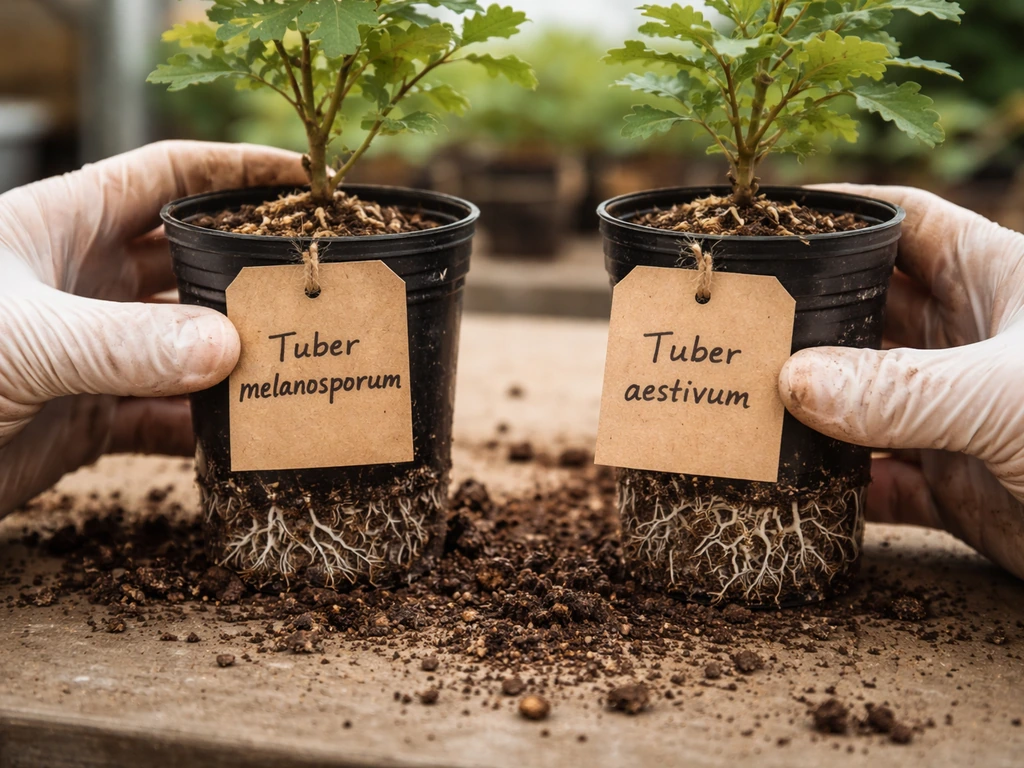
Species choice matters more here than with almost any other cultivated fungus. For indoor or semi-indoor systems, T. melanosporum and T. aestivum are the only realistic candidates. T. melanosporum is the most widely cultivated and has the most research and commercial support behind it. T. aestivum (Burgundy truffle) forms mycorrhizae with a broader range of hosts and tolerates slightly different conditions, which can be useful indoors.
| Species | Common Name | Indoor Suitability | Time to First Fruiting | Notes |
|---|---|---|---|---|
| Tuber melanosporum | Black Périgord truffle | Moderate (container mycorrhization, greenhouse fruiting possible) | 3 to 7+ years | Most research-backed; needs strict soil pH and seasonal cycling |
| Tuber aestivum | Burgundy truffle | Moderate to good (broader host range) | 3 to 6+ years | More adaptable; good for container-to-outdoor pipeline |
| Tuber magnatum | White truffle | Very low (no reproducible indoor protocol) | 4+ years in orchard | Not recommended for DIY indoor projects |
The single most important purchase you will make is a certified mycorrhized seedling, not loose spore slurry, not an inoculant powder, and not an uncertified seedling from an unknown nursery. Mycorrhized seedlings are young host trees (typically holm oak, English oak, or hazel) whose roots have already been colonized by Tuber melanosporum under controlled nursery conditions. Reputable suppliers batch-test these plants using both morphological examination and DNA (PCR/ITS) testing to confirm the percentage of root tips colonized and to rule out contaminating fungi. That certification is not just marketing, it is genuinely important because mislabeling and contamination with unwanted ectomycorrhizal species is a known industry problem. Ask for documentation. If a supplier cannot provide it, shop elsewhere.
When you receive your seedling, inspect the roots. Healthy T. melanosporum mycorrhizae look like small, branched, yellowish-white to pale brown root tips with a visible mantle layer. If you are not sure what you are looking at, a certified lab can confirm colonization via microscopy or PCR before you invest further in setup. This upfront verification step has saved a lot of growers from spending years caring for a plant that was never properly inoculated.
Setting up your indoor growing space
Forget the grow tent with LED panels that works for gourmet mushrooms. A truffle indoor system is closer to a container orchard in a sunroom, greenhouse, or large conservatory. You need natural light or a strong horticultural lighting setup because you are growing a tree, not just fruiting a fungus. The host tree needs to photosynthesize actively to feed the mycorrhizal network. A south-facing window with supplemental grow lighting works for seedling establishment, but for long-term development a greenhouse or polytunnel is genuinely better.
Container size and type
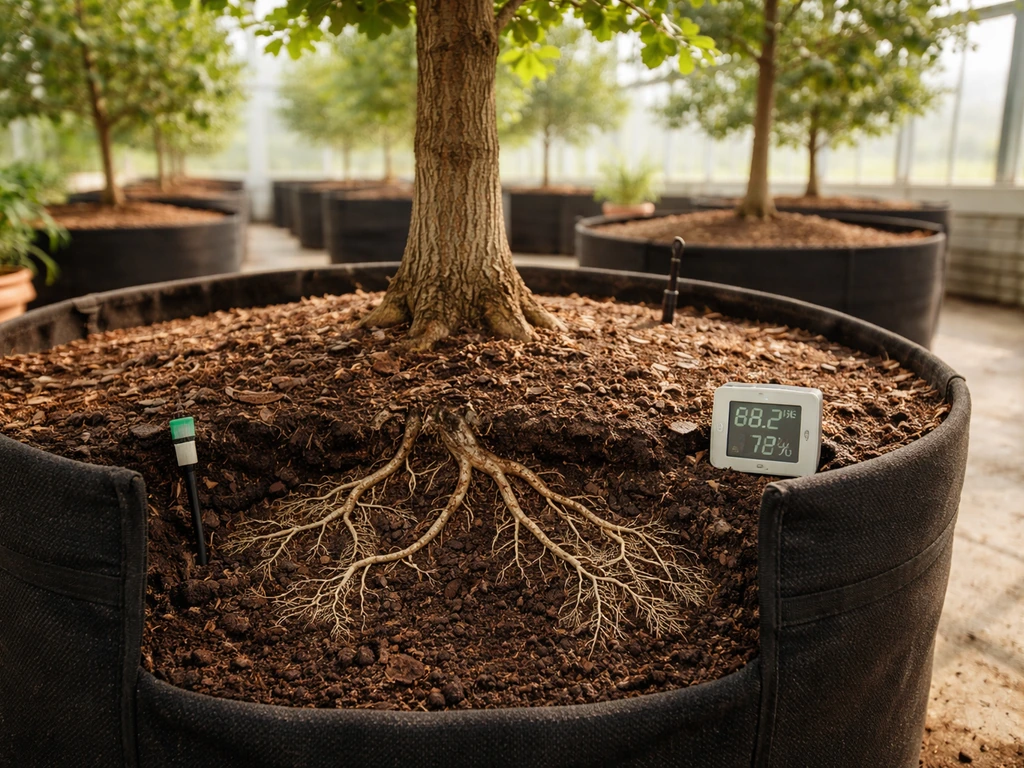
Start seedlings in containers of at least 10 to 15 liters and plan to pot up to 30 to 50 liters within the first two years. Fabric pots work well because they air-prune roots and prevent the root-circling that can destroy mycorrhizal structures. Terracotta or uncoated clay pots also breathe well and help maintain the slightly drier conditions truffles prefer. Avoid sealed plastic containers if you can, as waterlogging is one of the fastest ways to kill the mycorrhizal relationship.
Temperature, humidity, and airflow
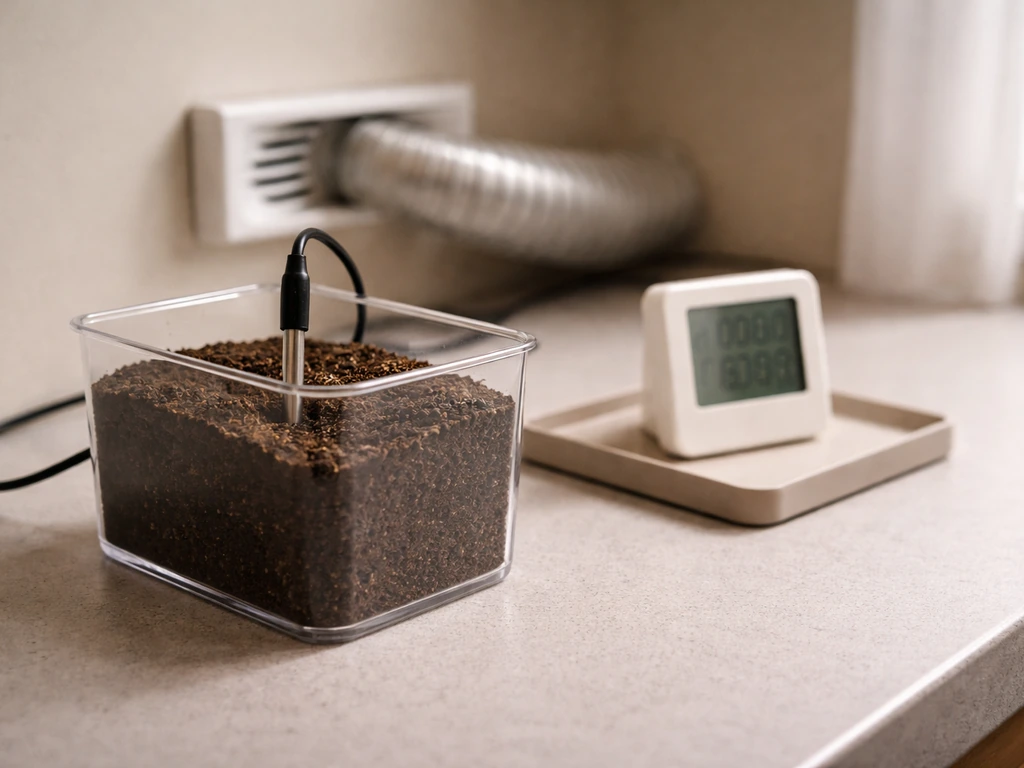
Truffles want temperature seasonality, and this is where indoor systems struggle most. Soil temperature should ideally stay below 22°C during the summer phase and drop to near-dormancy levels (around 5 to 10°C) in winter to support the life cycle. If your indoor space does not naturally cycle through these temperature ranges, you will need to engineer them: move pots to an unheated garage or shed in winter, or use cooling mats and controlled ventilation in summer. Humidity should be moderate, not the high humidity you would target for oyster mushrooms. Aim for 50 to 65 percent relative humidity in the air around the tree, with soil that is moist but never waterlogged. Good airflow matters too; stagnant air encourages mold on the soil surface and on roots.
Host tree requirements and managing the truffle symbiosis
The host tree is not optional equipment. Without a living host providing photosynthate to the truffle mycelium, there is no truffle. Common hosts used in commercial and experimental cultivation include holm oak (Quercus ilex), English oak (Quercus robur), pubescent oak (Quercus pubescens), and hazel (Corylus avellana). For indoor container systems, hazel is often the most practical because it grows faster, stays more compact, and tolerates container conditions reasonably well. Oak species are slower and eventually need large containers or outdoor planting, but they are the traditional choice for black truffle production.
Managing the symbiosis means keeping the host tree healthy and the soil environment stable. Avoid fertilizers high in phosphorus. Research from University of Georgia extension guidance sets a target of less than 10 pounds of available phosphorus per acre, and in container terms this translates to using low-phosphorus or phosphorus-free feeds. High phosphorus actively suppresses mycorrhizal colonization, which is the opposite of what you want. Similarly, avoid broad-spectrum fungicides anywhere near the root zone. The truffle mycelium you are trying to protect is a fungus, and most fungicides do not distinguish between pathogens and your expensive symbiont.
Keep the host tree vigorous but not overfed. Light nitrogen feeding during the growing season is fine. Prune to maintain an open canopy that allows good light penetration, and check roots annually when you repot for signs of healthy mycorrhizal tips. If you see an abundance of white fluffy mycelium or healthy short root branches with a visible mantle, the relationship is active. If roots look brown, slimey, or stripped bare, something has gone wrong, and it is usually either overwatering, phosphorus toxicity, or a competing fungal contaminant.
Substrate, soil mix, inoculation, and long-term care
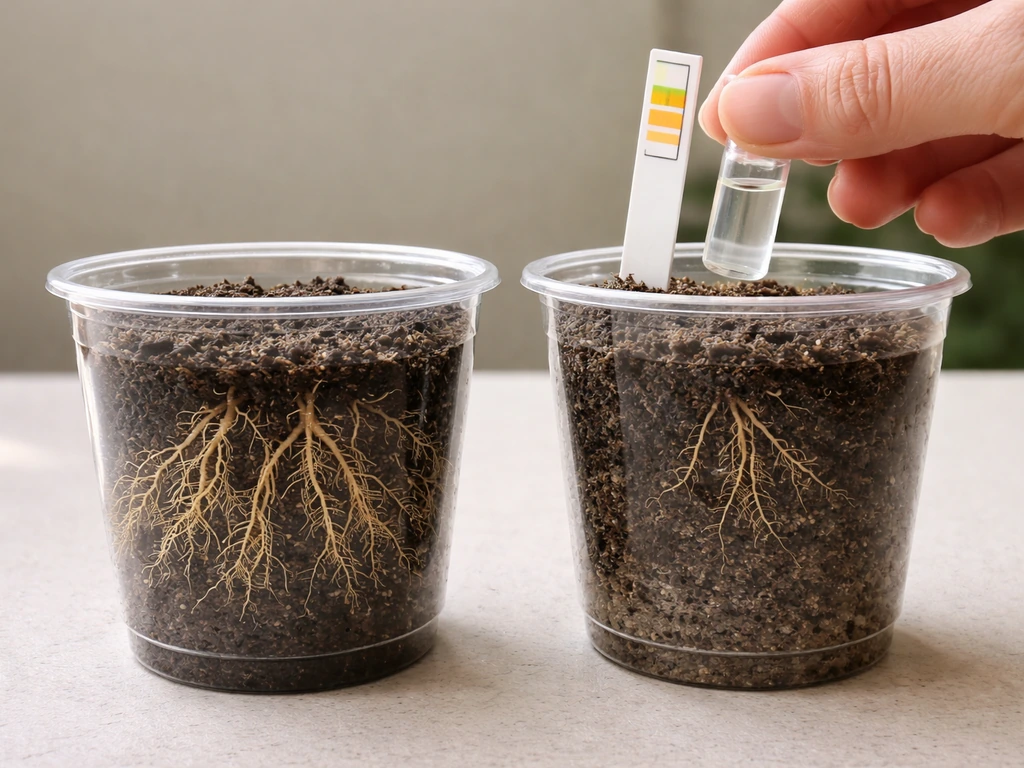
Soil chemistry is non-negotiable for truffles. The pH target is 7.5 to 8.0 according to University of Georgia extension guidance, with some truffle nursery sources recommending up to 8.5. You also want a meaningful calcium carbonate (limestone) component, with industry guidance calling for at least 8 percent active limestone in the soil mix. This alkaline, calcium-rich environment is characteristic of the natural limestone soils where black truffles evolved, and replicating it in a container is one of the more challenging parts of the whole project.
Building your container soil mix
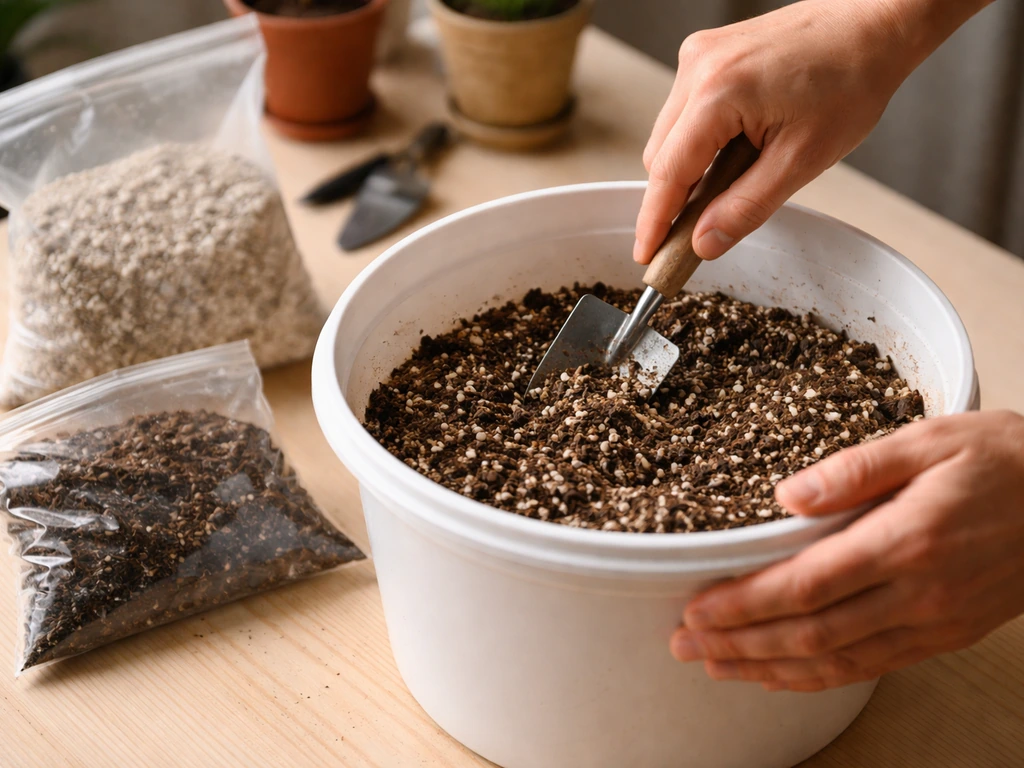
A practical indoor container mix for T. melanosporum mycorrhization looks something like this: 40 to 50 percent coarse horticultural grit or perlite for drainage, 30 to 40 percent pH-adjusted loam or silt soil (limed to pH 7.5 to 8.0), and 10 to 20 percent ground limestone or dolomite. Avoid peat-heavy mixes because peat is acidic and will drag your pH down. Some research on container mycorrhization does use peat-based components, but these are carefully pH-adjusted and tested before use. If you are not testing pH regularly with a calibrated meter (not cheap strips), you are flying blind.
If you are starting from a bare-root seedling rather than a pre-inoculated one, you can attempt inoculation using a spore slurry made from a fresh truffle. Blend a ripe truffle with water at roughly one truffle per liter, then drench the root zone during transplanting. This is not as reliable as buying a certified mycorrhized seedling, but it is a legitimate technique used by some growers and researchers. The trade-off is that you have no confirmation of colonization success until you examine roots months later. Colonization success can be quantified over multiple months, with one Tuber aestivum study measuring colonization at 3, 7, and 12 months in Quercus taxa native to Greece examine roots months later.
Ongoing care calendar
- Spring: Resume watering from winter dormancy, check soil pH, light feed with low-phosphorus fertilizer, inspect root tips if repotting
- Summer: Keep soil temperature below 22°C using shade cloth or moving pots to cooler spots, maintain moderate moisture, good airflow, watch for competing fungi or mold on soil surface
- Autumn: Reduce watering gradually, do not fertilize, allow natural leaf drop if deciduous host is used, this temperature and moisture shift is important for lifecycle cues
- Winter: Keep pots cold but not frozen, minimal watering, allow near-dormancy conditions, this cold period is believed to be important for triggering fruiting in subsequent seasons
- Annually: Test soil pH and adjust with agricultural lime if it has dropped, check mycorrhizal root tips visually, remove any visibly infected or heavily mold-covered soil sections
Realistic timelines, expected yields, and troubleshooting failures
When to expect your first truffle
The honest answer is: not for years. In field orchard conditions, the earliest documented first harvests are around three years after planting, with most orchards not producing reliably until five to seven years or beyond. Under indoor or container conditions, the timeline is unlikely to be shorter and may be longer because the environmental cues that trigger fruiting are harder to replicate consistently. A 2025 review noted cases where T. magnatum produced fruiting bodies about four years after plantation even outside its native range, but only when managed similarly to high-quality black truffle orchards. Do not start this project expecting a harvest in year two.
If your goal is to produce certified mycorrhized trees for eventual outdoor transplanting, that timeline is more manageable: eight to twelve months of container cultivation can produce a well-colonized seedling ready for outdoor planting. This is actually a very practical and rewarding use of an indoor truffle system, especially if you eventually want a garden or greenhouse orchard.
Troubleshooting common failures
| Problem | Likely Cause | Fix |
|---|---|---|
| No mycorrhizal colonization visible after 6 to 8 months | Uncertified or mislabeled seedling, pH too low, high phosphorus in soil | Test pH and phosphorus, verify inoculant via lab PCR, restart with certified seedling |
| Host tree yellowing or poor growth | Overwatering, wrong pH, nutrient deficiency, root rot | Check drainage, test pH, reduce watering, inspect roots for rot |
| Mold or competing fungi on soil surface | Too much moisture, poor airflow, organic matter buildup | Improve airflow, reduce watering, remove affected soil layer, add a thin layer of grit on surface |
| No fruiting bodies after 4 to 5 years | Lack of seasonal temperature cycling, insufficient mycorrhizal nest development, wrong soil chemistry | Introduce cold dormancy period, verify mycorrhizal health, test and adjust soil pH and calcium levels |
| Fruiting body forms but is very small or malformed | Inconsistent moisture, soil temperature too high, immature nest | Improve temperature management, steady moisture regime, allow more years of establishment |
| Competing ectomycorrhizal species outcompeting truffle | Contaminated inoculant, introduced via soil or organic matter | Source sterile soil components, use certified seedlings, verify via PCR if suspected |
The single most common beginner mistake is buying cheap, uncertified seedlings and skipping soil chemistry prep. You can do everything else right, but if the seedling was never properly inoculated or your soil pH sits at 6.5, you will not get truffles. The second most common mistake is treating truffles like oyster mushrooms, expecting a harvest in a few months and giving up when nothing happens. This is a years-long project, and the satisfaction comes from watching a functional mycorrhizal system develop.
It is also worth comparing what you are taking on here with other truffle growing approaches. Growing truffles in a greenhouse gives you more control over temperature cycling than a typical indoor room, and it is genuinely the most promising semi-controlled environment for this project. If you have access to outdoor space, establishing even a small planting of inoculated trees outdoors is still the most reliable path to an actual harvest. Indoor container growing is best understood as the front end of that process, a way to get well-colonized trees established before they go into the ground.
Your practical next steps
- Decide on species: T. melanosporum or T. aestivum are your realistic choices for indoor container work. Skip white truffle for now.
- Source one or two certified mycorrhized seedlings from a reputable nursery that provides DNA-tested documentation of colonization percentage.
- Build or buy a container soil mix with pH 7.5 to 8.0, high calcium content, and low phosphorus. Test pH before planting with a calibrated meter.
- Plant in a fabric or terracotta container of at least 15 liters with excellent drainage, in a space with strong natural or horticultural light.
- Set up a seasonal care routine: active growth in spring and summer, dry-down and cold dormancy in autumn and winter.
- Check root tips at each annual repotting for healthy mycorrhizal structures. If uncertain, send a root sample to a lab for confirmation.
- Be patient. Three to five years before any realistic fruiting chance. Use that time to perfect your soil chemistry and seasonal cycling.
FAQ
Which host tree should I use for an indoor truffle attempt, hazel or oak?
Start by choosing a host tree species that matches how you can keep temperature seasonality indoors. Hazel can be easier to manage in containers, while oaks often need much larger pots (eventually 30 to 50 liters or more) and stable lighting for years. Also confirm the supplier’s certification for the exact truffle species you want, since a seedling colonized with the wrong truffle type will not reliably fruit.
Can I grow truffles indoors to actually harvest them, or only to build mycorrhized trees?
Yes, but only for the initial mycorrhized-tree phase. Most “indoor forcing” claims fail because truffle fruiting needs consistent seasonal and soil triggers for years. The most realistic indoor success metric is healthy, colonized root tips and a stable container orchard setup, not guaranteed harvest.
How do I know if my indoor temperatures are correct for truffle fruiting?
Do not rely on room air temperature alone. Measure soil temperature at root depth, because the truffle life cycle responds to the root-zone, not the thermostat setting. If you cannot keep soil below about 22°C in summer and let it drop toward dormancy in winter, plan on engineering the cycle using an unheated shed/garage or controlled cooling.
What type of container should I use, and is plastic really a bad idea?
Use potting containers that breathe and avoid waterlogging. Fabric pots and uncoated clay are helpful because they reduce root circling and keep oxygen available near the roots. If you must use plastic temporarily, drill ample drainage and never allow standing water, because excess moisture rapidly damages mycorrhizae.
What fertilizer can I use without ruining mycorrhizae?
Fertilize cautiously. High phosphorus suppresses mycorrhizal colonization, so use low-phosphorus or phosphorus-free feeds. For nitrogen, keep it light and seasonal (growing period only), because overfeeding can create fast, weak growth that still fails to support a stable symbiotic system.
How often should I test pH, and can I use test strips instead of a meter?
Calibrate your pH measurement method before you make decisions. Cheap strips are often unreliable for container mixes, so use a calibrated meter, then adjust with liming products only after you understand your starting pH. If your pH drifts acidic, colonization quality can decline even if the tree looks healthy.
What pest or disease treatments can I use if mold appears on the soil surface?
Yes, and it is a major risk factor. Avoid broad-spectrum fungicides near the root zone, since they can harm the symbiotic fungus along with potential contaminants. If you need pest control, use the least disruptive approach possible, and keep treatments away from the soil and root area.
How can I tell healthy truffle mycorrhizae from unwanted mold or fungi?
If you see lots of white fluffy material, it might be active mycelium, but also could be contaminant growth. The key is what happens at the root tips on inspection and repotting, look for short branched root tips with a mantle rather than slimey or stripped roots. When in doubt, have a lab do microscopy or DNA checks rather than guessing.
Can I start from a bare-root seedling instead of buying a certified mycorrhized plant?
It is possible, but it is riskier and slower to evaluate. Inoculating with a truffle spore slurry gives no confirmation until you later inspect roots, so you may spend years caring for a tree that never establishes the correct symbiosis. If you are doing spore slurry, plan for root testing months later so you can decide whether to keep going.
Why is an indoor timeline usually longer than people expect?
Expect longer, because controlled indoor conditions rarely match the outdoor combination of temperature cycling, natural light, and stable seasonal moisture patterns. If you are serious, treat the first years as an orchard establishment phase, and only set “harvest expectations” after you have repeatedly observed stable colonization and strong tree vigor.
How do I water an indoor truffle container without waterlogging the roots?
Start with soil chemistry targets, then match irrigation practices. Truffles prefer moist-but-not-waterlogged conditions, so water based on drainage and topsoil dryness rather than a fixed schedule. With fabric or terracotta pots, you may need more frequent light watering, but you should still avoid letting the mix stay saturated.
What if my indoor space does not naturally get cold enough in winter?
If you cannot achieve seasonal temperature cycling indoors, a greenhouse or conservatory with real winter cooling is typically more workable than a climate-controlled living space. Even if you keep the tree in an indoor structure, you may need to move the pots seasonally to an unheated area or use controlled cooling and ventilation to mimic dormancy.
If I want outdoor truffle production, when should I transplant my indoor-grown trees?
If you plan to transplant later, aim for a well-colonized seedling rather than chasing fruiting indoors. Container cultivation for 8 to 12 months can be a practical window, then move outdoors when conditions and site conditions are compatible with limestone-rich, alkaline soil. Focus on protecting the root ball during transplant to avoid damaging the mycorrhizal network.
What should I ask a truffle seedling supplier to avoid buying the wrong thing?
Skip “home experiments” based on random truffle powders or unlabeled inoculants. The most important purchase is a batch-tested certified mycorrhized seedling with documentation confirming colonization and ruling out contaminating ectomycorrhizal fungi. If documentation is missing, assume risk and choose another supplier.