
King stropharia (Stropharia rugosoannulata) is one of the most beginner-friendly outdoor mushrooms you can grow, and it rewards a pretty simple approach: layer woodchips and straw, mix in grain or sawdust spawn, keep things moist, and wait. After you get basic king stropharia down, you can also learn how to grow stinkhorn mushroom by following the right substrate and moisture setup for stinkhorn species. You don't need a sterile lab, a pressure cooker, or a climate-controlled grow tent.
How to Grow King Stropharia Mushrooms: Step by Step
Marcus Holloway
4 Jun 2026
What you do need is a shady garden bed, the right substrate, good spawn, and a realistic timeline. If you want a quick, practical roadmap, the steps for how to grow beefsteak mushrooms focus on similar essentials like substrate, spawn, moisture, and seasonal timing. Done right, you'll get flushing fruiting bodies in spring and fall, sometimes for multiple seasons from a single bed.
What king stropharia is and where it grows best
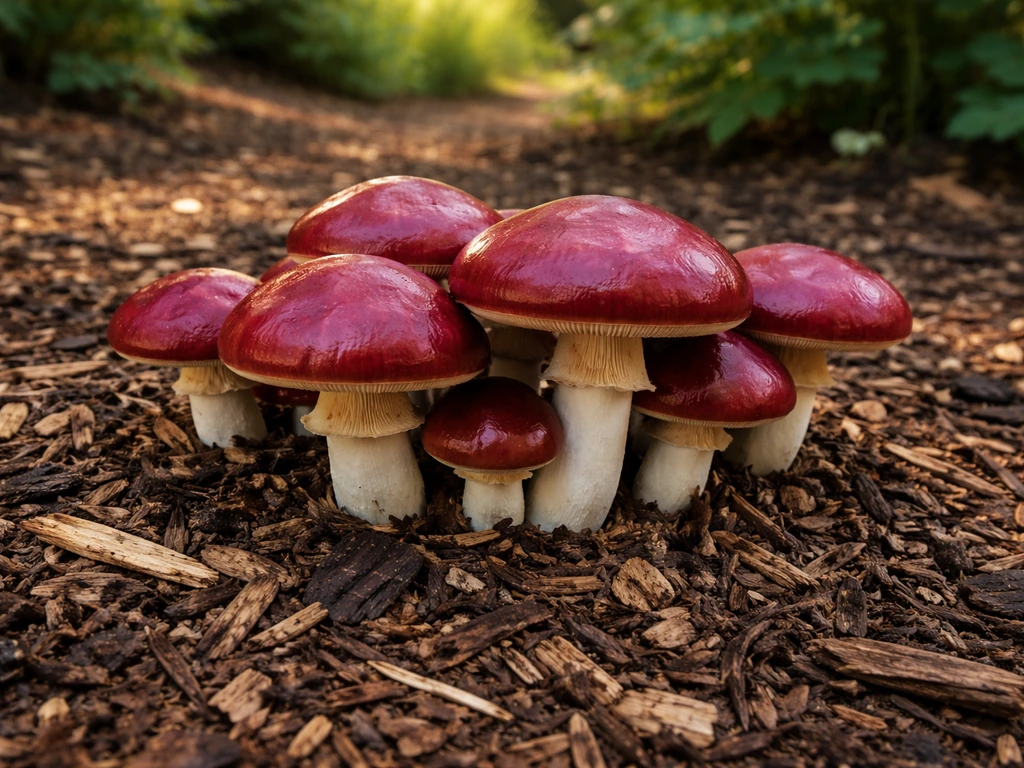
Stropharia rugosoannulata goes by a few names: wine cap (for its deep burgundy to brick-red cap), garden giant, and king stropharia. It's native to North America and widespread in temperate zones, which is exactly why it thrives as an outdoor garden mushroom rather than an indoor species. In the wild, you'll find it at forest edges, in woodchip piles, compost heaps with horse or cow manure, and grassy areas bordering mulched beds. It's a saprotroph, meaning it breaks down dead organic material rather than living off a host plant.
The key thing to understand about king stropharia is that it is the premier mushroom for outdoor bed culture in temperate climates. It's not well-suited to year-round indoor grows the way oysters are. It wants real seasons, cool soil, and the biological activity of an outdoor environment. Fruiting happens in spring and autumn when temperatures sit between 10 and 25°C (50 to 77°F). Push outside those bounds and you'll get poor pins or nothing at all. If you live in a genuinely temperate region, this mushroom is practically made for your garden.
Supplies and choosing a growing method
For most home growers, an outdoor wood chip bed is the right move. It's low-cost, low-maintenance, and mirrors the natural habitat of the species. Indoor cultivation is possible but rarely worth the effort for this particular mushroom. It prefers the microbial complexity and moisture buffering of a real outdoor environment, and getting it to fruit reliably in a grow tent is genuinely harder than just building a garden bed.
Outdoor bed: what you'll need
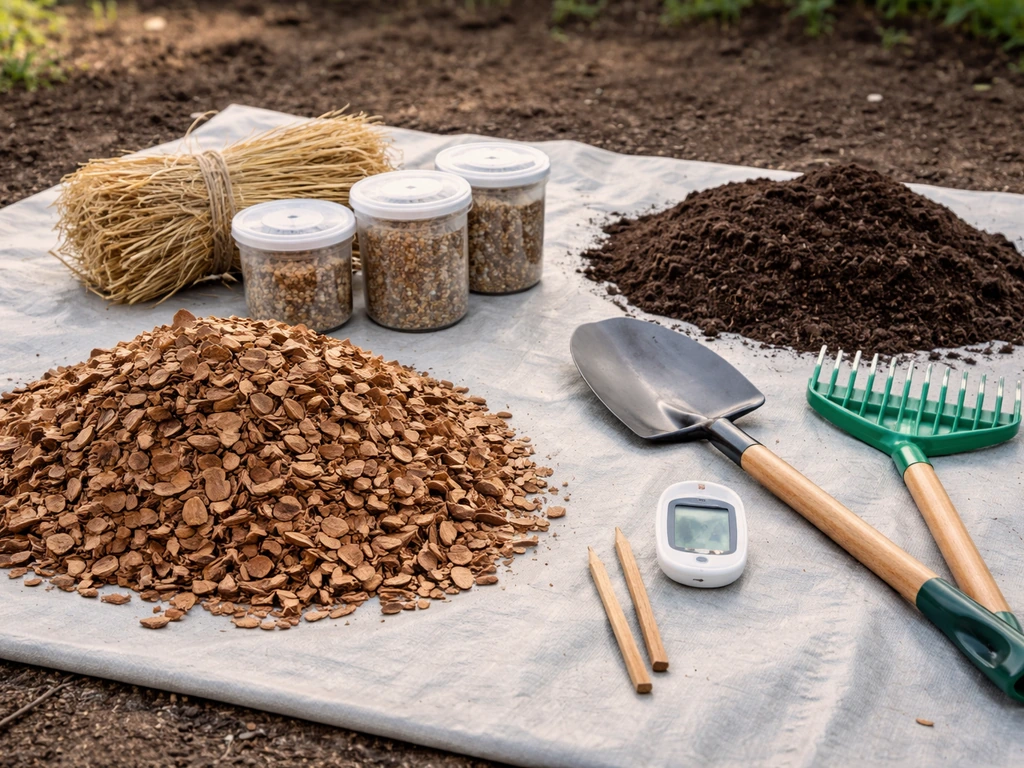
- Hardwood woodchips (fresh or aged up to 6 months), enough to fill your bed 4 to 6 inches deep
- Wheat straw or rice straw (supplemental; adds nitrogen and moisture retention)
- Grain spawn or sawdust spawn inoculated with king stropharia mycelium (rye grain spawn is most common and reliable)
- Finished compost or aged manure (optional but beneficial as a nitrogen boost)
- A shaded garden area or raised bed, ideally under deciduous trees or on a north-facing slope
- A garden hose or watering can for moisture management
- About 1 inch of loose mulch to top-dress the finished bed
On method choice: outdoor beds are the default for a reason. If you want to try something closer to indoor cultivation, you can build a large container bed (a kiddie pool, a tote, or a raised bed with drainage holes) in a shaded spot outdoors. This gives you slightly more control over watering while still benefiting from ambient humidity and temperature fluctuation. A fully indoor setup in a tent with a humidifier is a last resort for this species, and frankly, I'd recommend growing oysters or king trumpet mushrooms indoors and saving your king stropharia effort for the garden.
Substrate prep: building the right mix
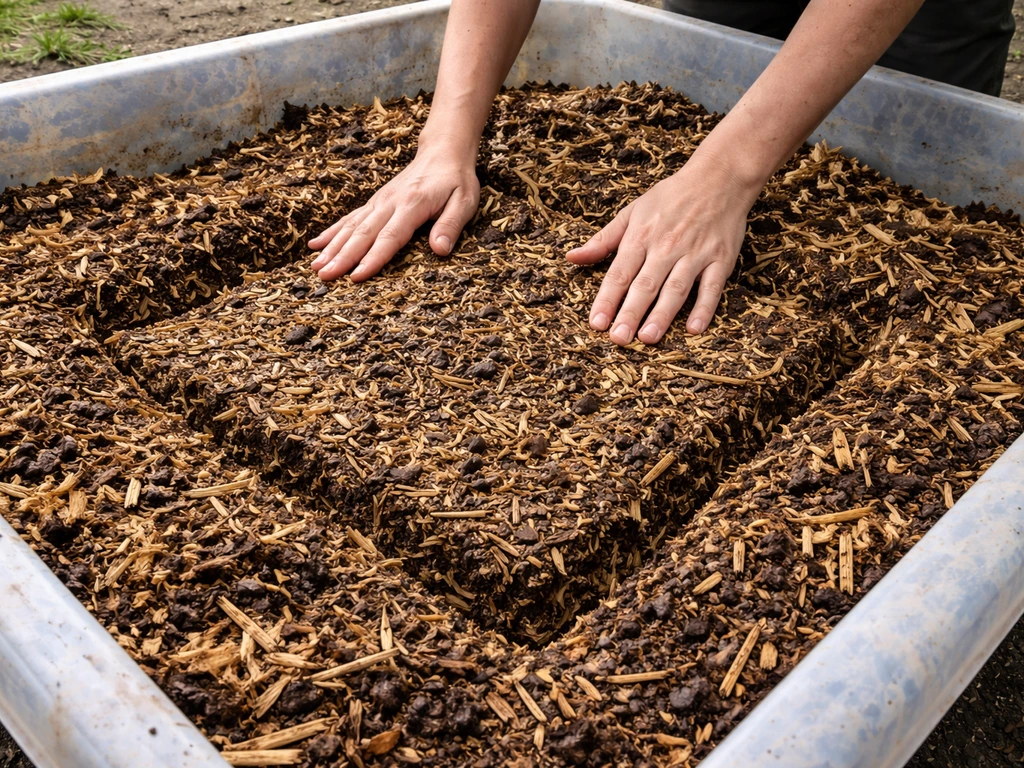
King stropharia is not picky, but it does have preferences. Hardwood woodchips are the backbone of any good bed. You can supplement with straw, finished compost, or aged horse/cow manure to add nitrogen and speed colonization. Commercially, growers have successfully used rice husk, corncobs, and sawdust combinations, but for home growers, woodchips and straw is the classic approach and works extremely well.
A simple substrate formula for a 4x4 foot bed
- Primary layer: hardwood woodchips, 3 to 4 inches deep across the whole bed
- Supplemental layer: a 1 to 2 inch layer of wheat straw, lightly dampened
- Optional boost: a thin layer of finished compost or aged manure mixed into the lower woodchip layer
- Moisture: the whole stack should feel like a wrung-out sponge, roughly 70 to 75% moisture content
Do you need to pasteurize outdoor substrate?
For a traditional outdoor woodchip bed, full pasteurization isn't strictly necessary because the natural microbial load in an outdoor environment is actually helpful for the species. That said, if you're using straw or manure-heavy mixes, pasteurizing that material first will significantly reduce competing molds and bacteria. The standard approach is steam or hot water pasteurization: heat the straw to 60 to 80°C (140 to 176°F) and hold it there for 6 to 12 hours, then let it cool before layering.
For heavier compost-based mixes, the composting process itself functions as pasteurization when the heap reaches 60 to 70°C internally during days three through five of active composting. If you're just using fresh woodchips and garden straw, skip the pasteurization and inoculate directly. The mycelium is aggressive enough to outcompete most competitors in that substrate.
Spawning and inoculation: spawn vs spores
Use spawn. Seriously, skip the spores for your first few grows. Spore syringes and spore prints can work eventually, but they're dramatically slower, have lower success rates, and introduce genetic variability that makes fruiting unpredictable. Grain spawn (rye grain is the traditional choice for Stropharia) or sawdust spawn gives you fully colonized mycelium ready to hit the substrate running. You'll colonize faster, pin sooner, and have far fewer contamination headaches.
How to layer spawn into your bed
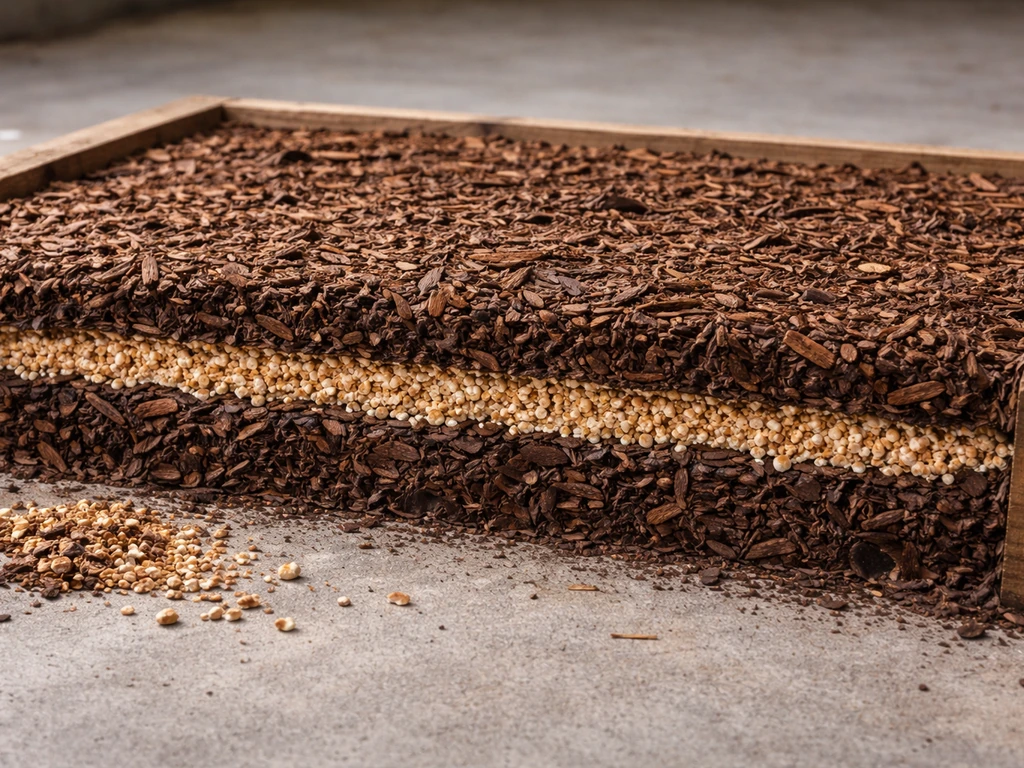
- Wet your woodchips thoroughly before building the bed. The chips should be damp but not waterlogged.
- Spread a 2-inch layer of damp woodchips on the ground as your base.
- Scatter a layer of grain or sawdust spawn evenly over the woodchips. Aim for roughly 10 to 15% spawn by volume of your total substrate (so for a cubic foot of substrate, use about 1.5 to 2 cups of spawn).
- Add another 2-inch layer of woodchips on top of the spawn.
- If using straw, add a 1-inch layer of damp straw over the top woodchip layer.
- Add a second, lighter layer of spawn across the straw layer.
- Finish with about 1 inch of loose mulch or topsoil to help retain moisture and protect the spawn from drying out.
- Water gently to settle everything without waterlogging.
The sandwiching approach gets spawn in contact with substrate on multiple levels, which speeds colonization and helps the mycelium establish before competitors can. For a 4x4 bed at 4 to 6 inches deep, plan on using 3 to 5 pounds of spawn. More spawn equals faster colonization and more reliable fruiting, so don't underspend here.
Incubation: what's happening underground
After inoculation, king stropharia needs time to colonize the substrate before it will fruit. This is the spawn run, and for an outdoor bed it typically takes 2 to 4 months depending on temperature and substrate composition. The mycelium runs best at around 25°C (77°F), though outdoor beds will experience fluctuating temperatures. That's fine. Cooler nights slow things down a bit but the mycelium is resilient.
What you're looking for during incubation is the appearance of white, rope-like mycelium threading through the woodchips when you pull back the top layer of mulch. This is called mycelial rhizomorphs, and they're a good sign. They look almost like thick white strings or shoelaces weaving through the substrate. If you see this within 4 to 6 weeks of inoculation, things are going well.
During incubation, your main job is moisture maintenance. Check the bed every few days in dry weather and water lightly if the surface mulch looks dry. You want the interior of the bed to stay in that 70 to 75% moisture range consistently. Don't soak it, don't let it dry out. Think of it like keeping the soil in a houseplant pot moist but not wet.
Signs colonization is working (and signs it isn't)
| What you see | What it means |
|---|---|
| White rope-like mycelium threading through chips | Healthy colonization, on track |
| Faint sweet, musty smell when you pull back mulch | Normal mycelial activity |
| Substrate looks unchanged after 8+ weeks | Possible spawn death or wrong moisture level |
| Green, black, or pink patches on substrate | Contamination (see troubleshooting section) |
| Yellow or brown slimy areas | Bacterial contamination, usually from overwatering |
| Mycelium visible but no pins after 4+ months | Temperature likely too high or too low for fruiting |
Fruiting setup: getting those pins to form
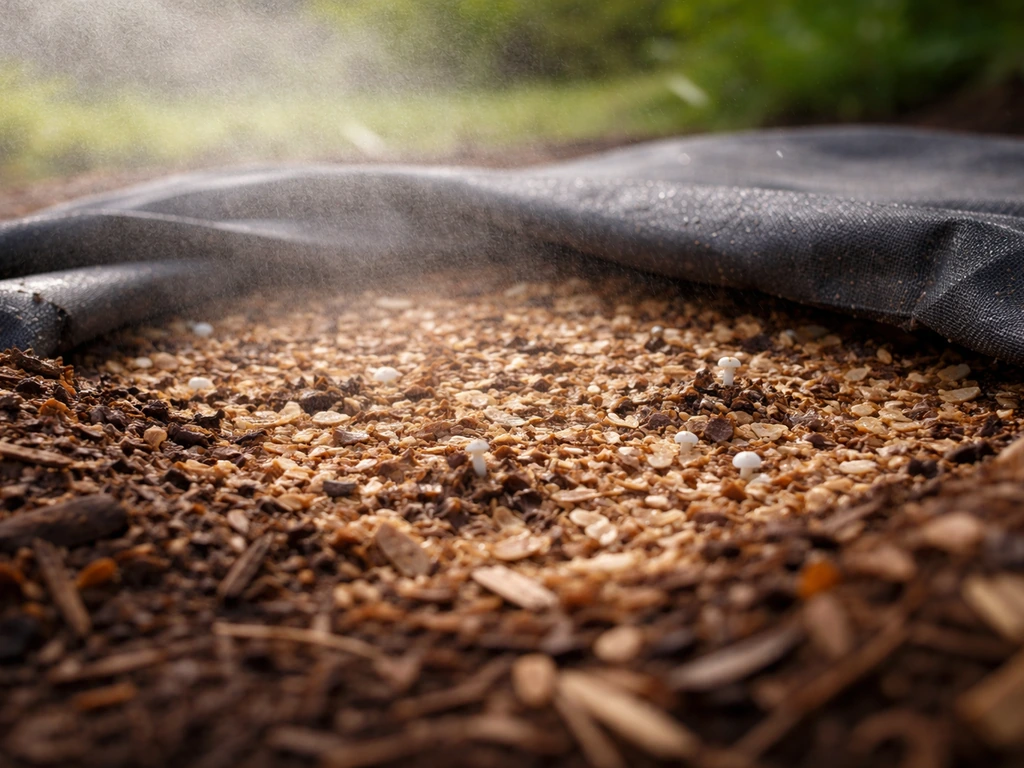
King stropharia fruits in response to cooler temperatures, high humidity, and a drop in CO2 concentration at the surface of the bed. Outdoors, this happens naturally in spring and fall. Indoors or in container beds, you may need to actively manage these conditions.
Target fruiting conditions
| Parameter | Target Range | Notes |
|---|---|---|
| Temperature | 10–25°C (50–77°F) | Sweet spot is 13–18°C; too warm suppresses pins |
| Relative humidity | 80–95% RH | 85–90% is ideal for cap development |
| CO2 at surface | Below 1,000 ppm | Fresh air exchange is critical for cap expansion |
| Light | Indirect/diffuse | No direct sun; 12 hrs ambient light is fine |
| Soil/substrate moisture | 70–75% | Moist, not waterlogged |
Outdoors, you don't need to measure CO2 because natural airflow handles it. But if you're growing in a covered container or indoors, CO2 buildup will cause pins to form long, spindly stems and tiny caps. Crack the lid or add ventilation holes. For outdoor beds, just make sure the bed isn't covered in a sealed plastic sheet during fruiting. A loose burlap cover for moisture retention is fine; anything airtight is not.
Watering during fruiting shifts from passive moisture maintenance to something more active. When you see pins forming, water the bed lightly once or twice a day in dry weather to keep the surface moist. Don't spray directly on emerging pins with high pressure since that can damage them. A gentle mist or a low-pressure hose attachment works best. Research on stipe cracking in wine caps shows that humidity fluctuations around harvest time cause cosmetic defects, so try to keep conditions stable once pinning starts.
Harvest timing, yields, and what comes next
When to harvest
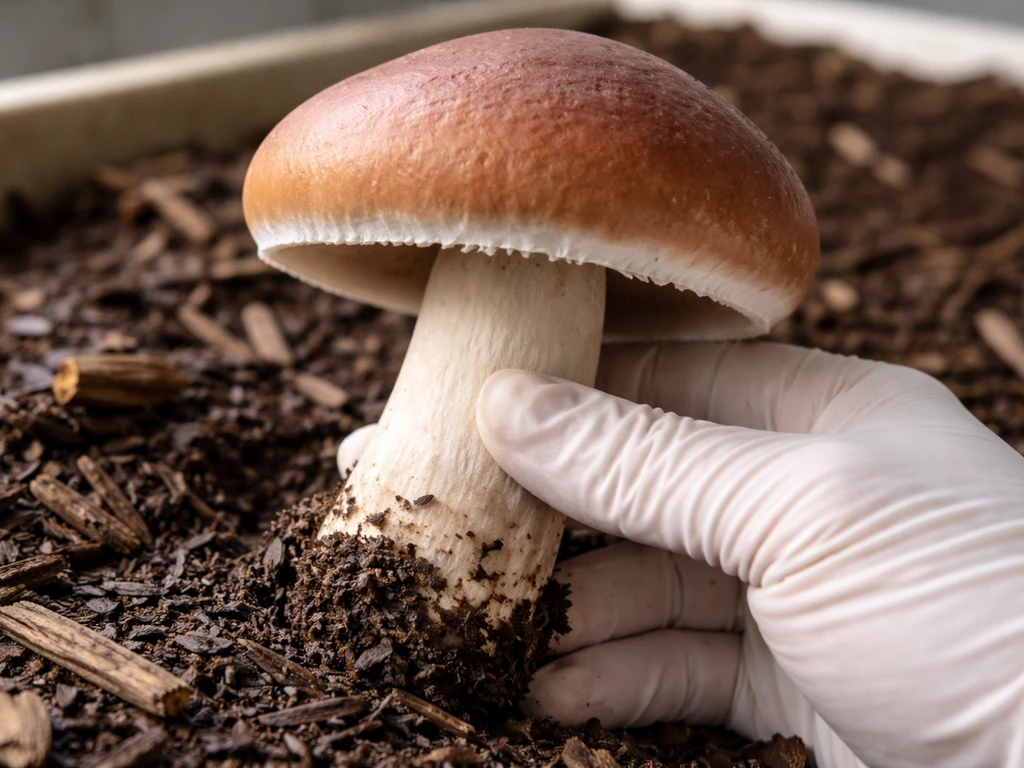
Harvest king stropharia while the partial veil under the cap is still intact, before it tears away from the cap margin. At this stage the cap is still convex or just starting to flatten, and the veil forms a distinct skirt on the stem. Once the veil tears and the cap flattens out, the mushroom is over-mature: quality and protein content drop, the texture gets soft and waterlogged, and shelf life plummets. The wine-red cap color fades to tan as the mushroom ages, which is another visual cue to watch for.
To harvest, grip the base of the stem firmly and twist gently while pulling upward. This removes the whole fruiting body without leaving a stub to rot in the bed. If you have multiple mushrooms at different stages, pick selectively: take the mature ones and leave smaller pins to develop. King stropharia can reach impressive sizes, with caps 5 to 15 cm (2 to 6 inches) across being typical, and occasionally much larger.
What to expect for yields and timing
A well-established 4x4 foot bed can produce anywhere from 2 to 8 pounds of mushrooms in a season, spread across multiple flushes. Your first flush is usually the most dramatic. Spring beds inoculated in late summer or fall of the previous year often produce their biggest flush in the following spring. Don't be discouraged if your first year bed is slow: mycelium is still establishing, and the second year often produces the heaviest yields.
Reflushes happen naturally after the initial flush. Once the first flush has been harvested, keep watering, let the bed rest for 2 to 4 weeks, and the mycelium will often gather resources for a second flush. In ideal conditions you can get two to three flushes per fruiting season. After harvesting, clear away any spent or rotting mushroom bases from the bed surface to prevent bacterial buildup and reduce contamination risk.
Storing your harvest
King stropharia has high water content and respires actively after harvest, which means it degrades fast. Research tracking postharvest spoilage shows Pseudomonas bacteria becoming dominant within about 7 days, leading to softening and off-odors. In practice, plan to use or preserve your harvest within 3 to 5 days at refrigerator temperatures. Store fresh caps unwashed in a paper bag in the fridge, not a sealed plastic bag. For longer storage, sautee and freeze, or dehydrate at around 50°C (120°F) until fully dry.
Troubleshooting common problems
No colonization or very slow mycelial growth
If you see no mycelium after 6 to 8 weeks, the most common culprits are dead or weak spawn, substrate that's too dry, or substrate that got too hot during setup (above 35°C / 95°F can kill the mycelium). Check your spawn source: grain spawn should smell earthy and pleasant, not sour or foul. If it smells off, it's bad. For moisture, dig into the bed and squeeze a handful of substrate. It should feel like a damp sponge. If it crumbles dry, water more aggressively. If it was inoculated in summer heat without shade, the mycelium may have died. Your fix is re-inoculation in a shaded spot with fresh spawn.
Colonization looks good but no pins are forming
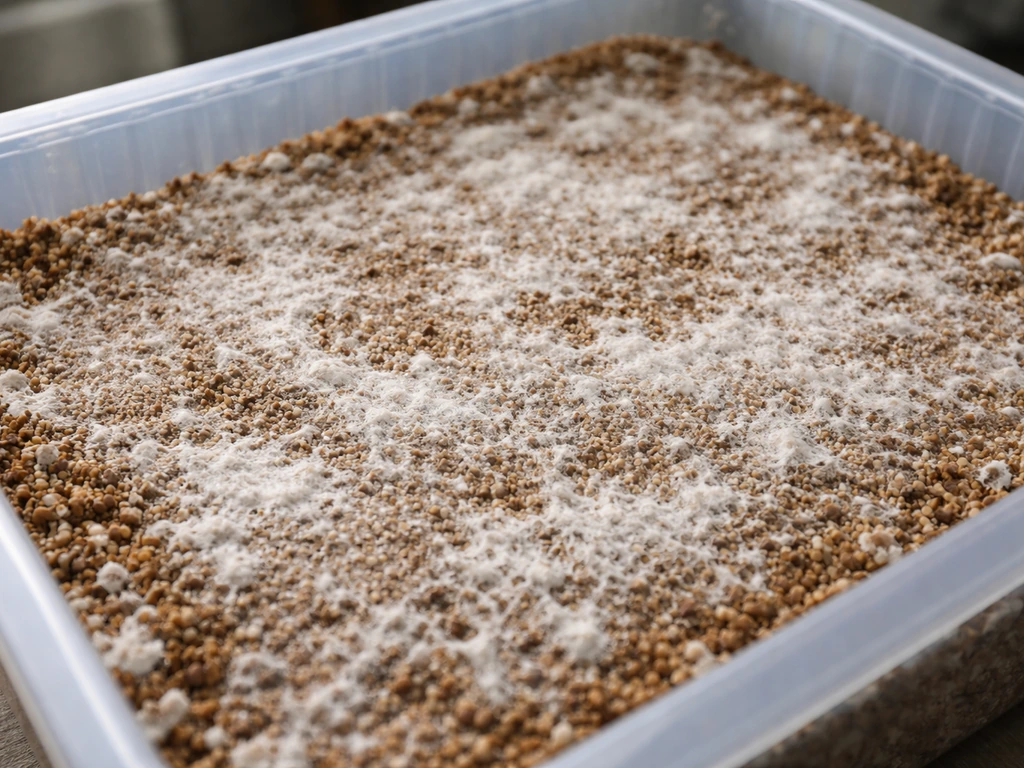
Temperature is almost always the issue here. King stropharia will not pin reliably above 25°C (77°F). If you're inoculating in summer and hoping for a summer flush, you'll likely be disappointed. Wait for fall. Conversely, if temps have already dropped below 10°C (50°F) and stayed there, the mycelium will go dormant and wait for spring. Pinning failure can also happen if the bed is too thick with mulch, blocking gas exchange at the surface. Pull back the top layer slightly if you're in the right temperature window and seeing no action after a few weeks.
Green mold (Trichoderma)
Green patches in your substrate are almost certainly Trichoderma, the most common fungal contaminant in edible mushroom production. It's aggressive, spreads fast, and will outcompete your king stropharia mycelium if left unchecked. In outdoor beds, Trichoderma is more likely when substrate moisture is too high, when there's poor airflow, or when unpasteurized high-nitrogen materials were used. If you catch it early, remove the contaminated section of substrate, improve drainage, and let the bed dry slightly. Prevention is far easier than treatment: use quality spawn, don't over-water, and pasteurize straw before incorporating it.
Bacterial contamination (slimy, smelly substrate)
Slimy yellow or brown areas with a sour or rotten smell mean bacterial contamination, usually from overwatering or from incorporating fresh manure or other nitrogen-rich materials without proper pasteurization. Bacteria thrive when the substrate is waterlogged and anaerobic. The fix is improving drainage, reducing watering frequency, and ensuring the bed has natural airflow. Severely affected sections should be removed. For future beds, always pasteurize any high-nitrogen amendments before adding them.
Weak or small fruiting bodies
Small, pale, or leggy mushrooms usually point to inadequate humidity, too much CO2, or substrate that's been depleted. For humidity, increase your watering frequency and consider a loose burlap or cardboard cover to hold moisture near the surface during fruiting. For CO2, make sure nothing is sealing the bed surface. For depleted substrate, top-dress the bed with a fresh inch of woodchips and a thin layer of new spawn to reinvigorate it. A well-maintained outdoor bed can produce for 2 to 3 years before the substrate is exhausted.
Prevention tactics to apply right now
- Source spawn from a reputable supplier and use it fresh, within a few weeks of purchase
- Pasteurize all straw and manure amendments before incorporating them into the bed
- Build the bed in a shaded location to buffer temperature swings and reduce drying
- Water consistently and check moisture levels twice a week during active colonization
- Harvest mushrooms promptly at the right stage and remove any rotting material immediately
- Top-dress the bed with fresh woodchips each season to replenish substrate
- Never seal the bed surface with airtight plastic during colonization or fruiting
King stropharia is genuinely one of the most forgiving mushrooms you can grow once you understand its rhythm. It wants to fruit in the cool shoulder seasons, it loves your woodchip pile, and it doesn't ask for much beyond consistent moisture and patience. Get the substrate right, use quality spawn, and don't fight its natural seasonal timing, and you'll have a perennial garden bed producing great food year after year. If you want a similar wood-based outdoor project but with a different species, see a dedicated guide on how to grow king trumpet mushroom.
FAQ
Can I grow king stropharia in pots or a kiddie pool instead of a full outdoor bed?
Yes, but only if you control moisture and gas exchange. Use a container or kiddie pool in shade, keep drainage holes clear, and avoid sealing the surface with plastic. During pinning, keep the container breathable (burlap on top is fine), otherwise CO2 buildup can cause long stems and tiny caps.
What should I do if my bed dries out during colonization?
Rehydrate dry beds gradually. Instead of soaking the whole area, lightly water the surface over several days until the bed feels like a damp sponge when squeezed. Sudden overwatering can trigger bacterial slime and Trichoderma, especially in areas with poor drainage.
My king stropharia bed is colonizing in summer, will it fruit then?
It is possible to inoculate in warmer months, but it usually means you should delay fruiting. If temperatures stay above about 25°C (77°F), expect pinning failure and slow colonization. Your best move is to wait for cooler fall conditions, keep moisture stable, and do not assume the bed is “done” if it stays quiet in summer.
How often should I water during fruiting, and does rain count?
Do not rely on ambient rain alone. Use a simple check, pull back a small section of mulch and look for a damp interior, then adjust watering only when the top starts to dry. Overwatering at fruiting time is also a risk, aim for consistent surface moisture, not runoff.
My bed looks healthy but never pins, could the mulch be too thick?
Good mulch coverage is helpful, but thick layering can block airflow. If you see no rhizomorphs or no pins despite correct temperatures, pull back the top layer by a few inches to improve gas exchange and light surface contact, then keep moisture stable.
Can I use fresh manure or compost straight from my pile?
Yes, but make your first choice “clean” and predictable. Fresh manure and very nitrogen-rich compost can increase bacterial pressure and Trichoderma unless pasteurized. If you want to supplement, use aged horse or cow manure and pasteurize it, or use finished compost in smaller proportions.
What should I do if I see green patches (Trichoderma) spreading?
If you find Trichoderma, act early. Remove the infected sections, improve drainage or airflow, and slightly reduce surface moisture for a short period. For future cycles, pasteurize straw or manure-heavy mixes and avoid consistently waterlogged conditions.
Does leaving stubs or rotten stems in the bed affect future flushes?
Use a gentle harvesting approach and remove the entire base. Twisting at the stem base works, then clear any decaying remnants from the surface. If left to rot, they can raise bacterial load and reduce quality in later reflushes.
Why is my first year yield so low?
Plan for the first season to be variable. Many beds do not peak until the second year because the substrate community and mycelium network are still establishing. Keep up moisture and only expect the biggest flush after the bed has fully colonized through.
What is the best way to store king stropharia so it does not go bad quickly?
Cooked storage works best for longer keeping. For quick use, refrigerate unwashed in a paper bag and plan to use within 3 to 5 days. For shelf stability beyond that, sauté and freeze portions, or dehydrate at low heat until crisp.
If I get no mycelium after 6 to 8 weeks, how do I diagnose the problem quickly?
Common causes include dead spawn, overheating during setup, and extended time outside the pinning temperature range. Check spawn smell (grain spawn should smell earthy), verify the bed did not exceed about 35°C (95°F) during inoculation, and confirm moisture is in the damp sponge range.
Does rye grain spawn always work best, or can I substitute other grain spawn?
Some grain varieties colonize faster, but the key is spawn quality and vitality. If the spawn is old or poorly stored it can stall even in perfect substrate. Choose reputable spawn or fresh grain spawn, and avoid “spare” low amounts since the article already notes that underdosing slows establishment.