
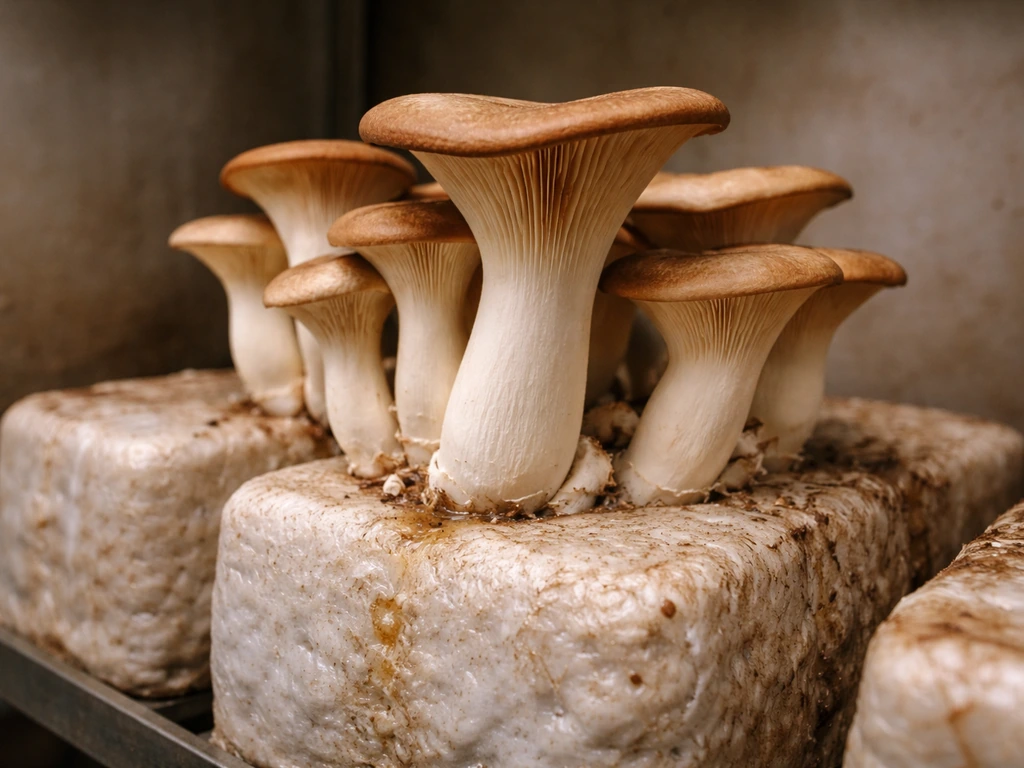
King trumpet mushrooms (Pleurotus eryngii) are absolutely worth growing at home, but they need a little more care than most beginners expect. Unlike the forgiving oyster mushrooms most people start with, king trumpets want sterilized substrate, cooler fruiting temperatures around 13–18°C (55–65°F), and a cold shock to kick off pinning. Get those three things right and you'll be pulling thick, meaty clusters that look and taste nothing like what you find in a supermarket.
How to Grow King Trumpet Mushrooms Step by Step
Marcus Holloway
1 May 2026
King trumpet vs other trumpet mushrooms: what you're actually growing
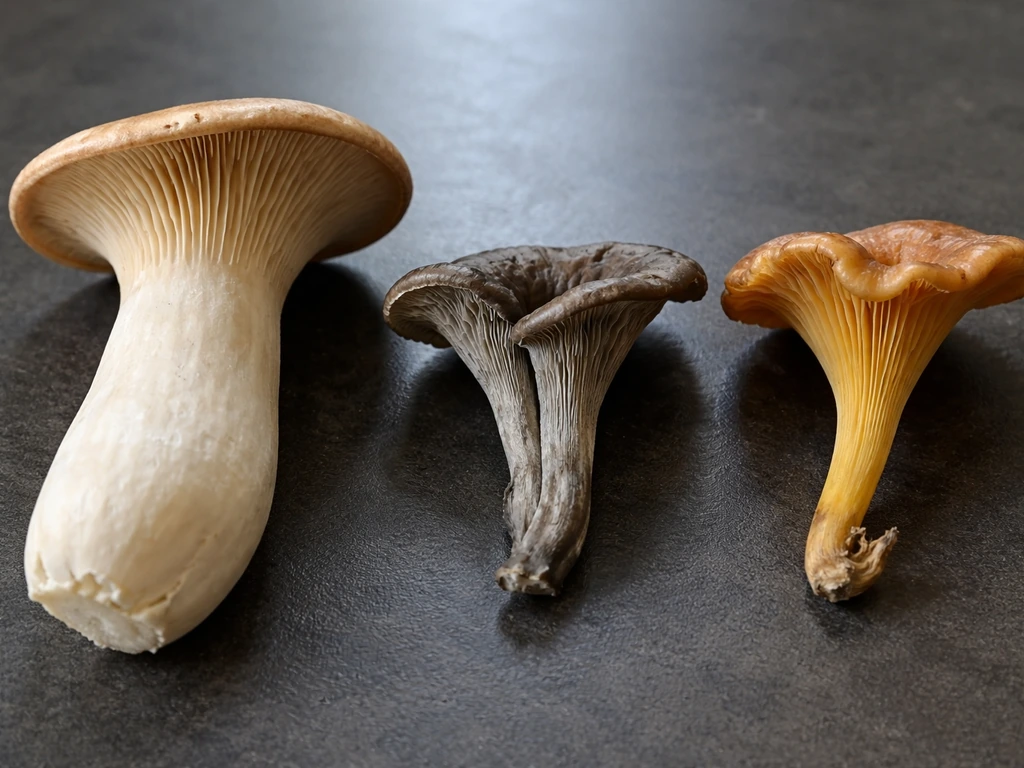
The name 'trumpet mushroom' gets thrown around loosely, and it causes real confusion when you're trying to follow a grow guide. King trumpet (Pleurotus eryngii) goes by several other names: king oyster, French horn mushroom, and eryngi. It's technically in the oyster mushroom family, but it grows very differently from the oyster varieties most guides are written for.
The two other species you'll most likely stumble across in searches are king stropharia (Stropharia rugosoannulata), which is a totally different genus best grown outdoors in wood chips, and black trumpet (Craterellus cornucopioides), a wild species that can't yet be reliably cultivated indoors. If you're comparing notes with someone growing king stropharia mushrooms, be aware that their outdoor bed method and substrate prep won't translate to what you're doing here. If you're specifically trying to grow king stropharia mushrooms, you'll also need an outdoor-oriented approach and a different substrate strategy than king trumpets.
On the oyster mushroom side, common varieties like P. florida and P. sajor-caju are more forgiving: they fruit at 15–25°C and tolerate pasteurized straw just fine. King trumpet is more demanding. It needs sterilized substrate, prefers cooler conditions, and takes longer from inoculation to harvest. That difficulty gap is real, but it's manageable once you know what to expect.
Indoor vs outdoor: picking the right grow method for you
For most home growers, indoor cultivation is the practical choice for king trumpets. Outdoor bed growing is possible in theory but unreliable, because this species doesn't colonize wood chip beds as aggressively as king stropharia does, and you can't control the temperature swings you need to trigger fruiting. Indoors, you control everything.
Expect the full indoor cycle to run about 8–12 weeks from inoculation to first harvest. Colonization alone takes 3–5 weeks at room temperature, which is slower than most oysters. Fruiting then takes another 1–2 weeks after initiating. Don't rush it: forcing fruiting before full colonization is one of the most common reasons for low yields and contamination.
| Factor | Indoor Growing | Outdoor Bed Growing |
|---|---|---|
| Temperature control | Full control, highly recommended | Dependent on season, unreliable |
| Substrate | Sterilized hardwood blocks | Wood chips (not well-suited to P. eryngii) |
| Timeline | 8–12 weeks total | Unpredictable, not recommended |
| Yield reliability | High with proper setup | Low to moderate at best |
| Beginner suitability | Yes, with sterile technique | Not recommended for this species |
If you're determined to try outdoors, late autumn or early spring in a temperate climate gives you the best shot at hitting that 13–18°C fruiting window naturally. But honestly, a small grow tent or a spare room in a cool part of your house will serve you better.
Substrate and spawn: what to use and how to prepare it
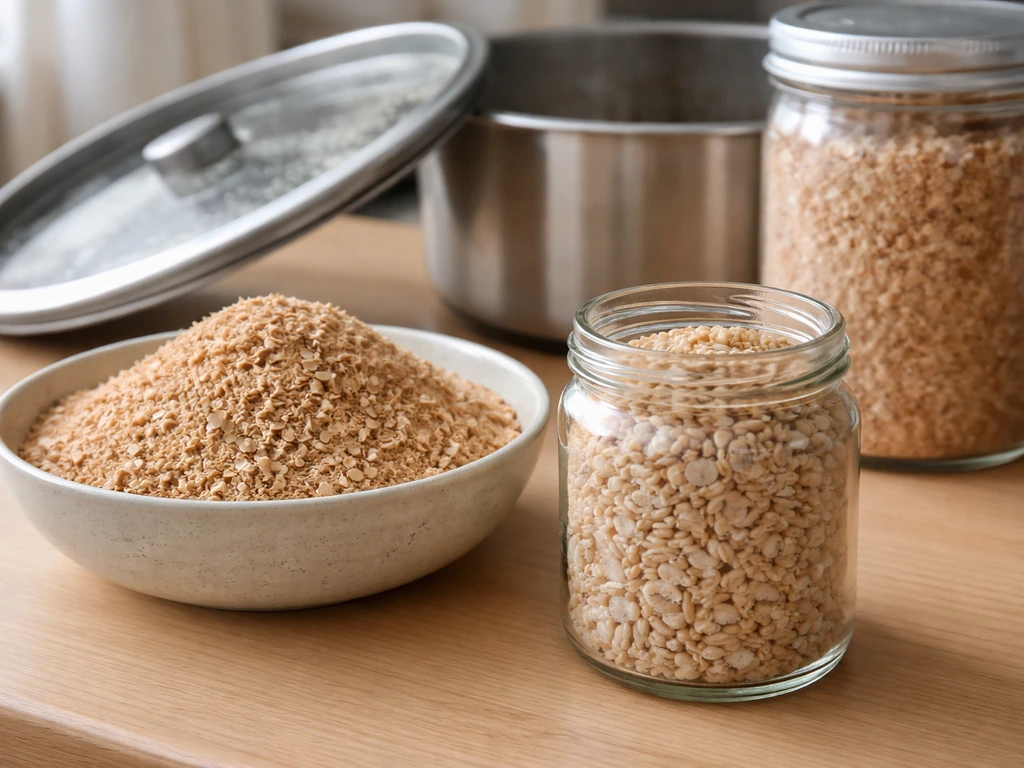
King trumpets are wood-decomposing fungi, so hardwood sawdust is your go-to substrate base. A mix that works well at home is 80% hardwood sawdust (oak, beech, or alder are all excellent) combined with 20% wheat bran or rice bran for nutrition. Some growers add 10–15% rye grain or oat bran in place of bran. Avoid softwood sawdust: the resin content inhibits growth.
Unlike oyster mushrooms on straw, king trumpets need full sterilization, not just pasteurization. That means getting your substrate up to 121°C (250°F) in a pressure cooker for 2.5 hours. If you skip this step and just pasteurize, you're leaving behind competing organisms that will outcompete your spawn on a slow-colonizing species like P. eryngii.
Preparing your substrate blocks step by step
- Mix your hardwood sawdust and bran dry, then add water until the substrate hits around 60–65% moisture content. Squeeze a handful: it should release just a few drops.
- Pack the substrate into heat-resistant bags (polypropylene grow bags work best) or mason jars. Don't pack it too tightly or gas exchange will suffer.
- Sterilize at 15 PSI for 2.5 hours in a pressure cooker. Let it cool completely to room temperature before touching it — usually 6–8 hours.
- In a clean space (a still-air box or near a laminar flow hood if you have one), inoculate with grain spawn at around 15–20% spawn rate by weight. More spawn means faster colonization and less contamination risk.
- Mix or layer the spawn through the substrate, seal your bag with a filtered patch, and move to your colonization space.
For spawn, grain spawn (rye, wheat, or millet) inoculated with P. eryngii culture is the most common and easiest to work with at home. Plug spawn and sawdust spawn also work but tend to colonize slower. You can buy ready-to-inoculate grain spawn from most mushroom suppliers or step up from a liquid culture if you want to produce your own.
Incubation and fruiting: the exact conditions that matter
Incubation phase
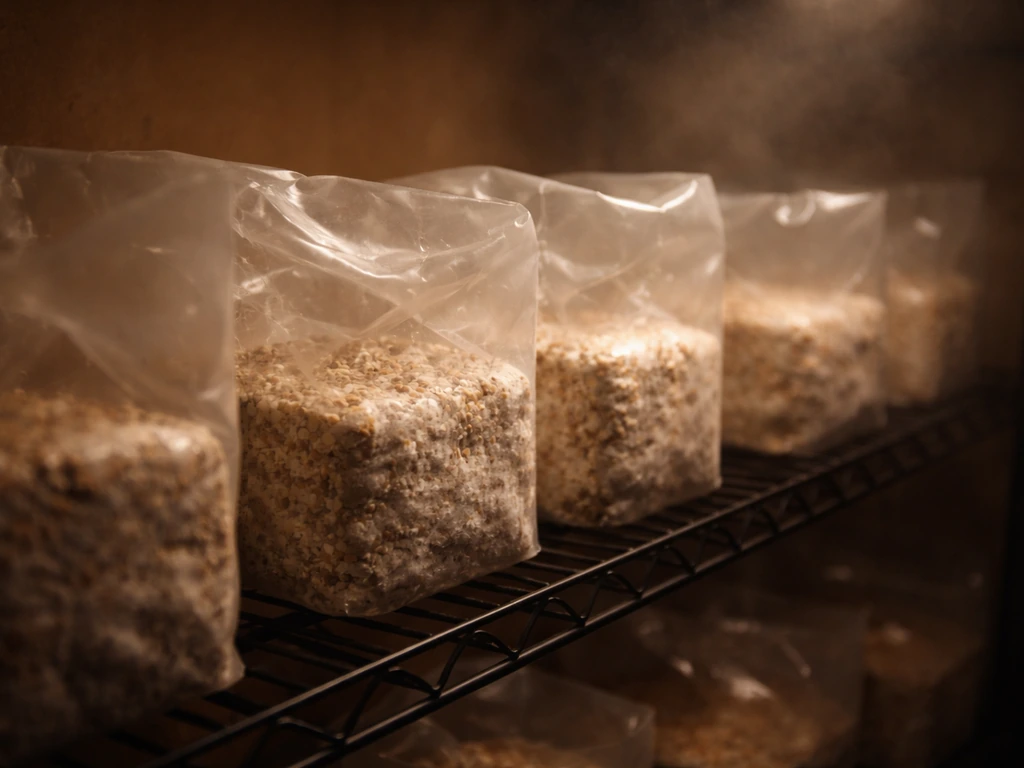
After inoculation, move your blocks to a dark, warm space for colonization. King trumpets colonize best between 21–25°C (70–77°F). This is where they differ from their fruiting preferences: warm for colonization, cool for fruiting. Keep the bags sealed and undisturbed. White mycelium should start showing within 7–14 days. Full colonization typically takes 3–5 weeks. The block will feel firm and look fully white or off-white throughout when it's ready.
Cold shock to trigger pinning
Once fully colonized, king trumpets need a temperature drop to initiate fruiting. Move your blocks to a refrigerator or a cool space at 10–13°C (50–55°F) for 24–48 hours. This cold shock mimics the seasonal shift the fungus would experience in nature. Without it, pinning is often patchy or delayed. If you want the full step-by-step approach, focus on the cold shock timing and the full indoor cycle to grow beefsteak mushrooms successfully. After the cold shock, move blocks to your fruiting chamber.
Fruiting chamber setup
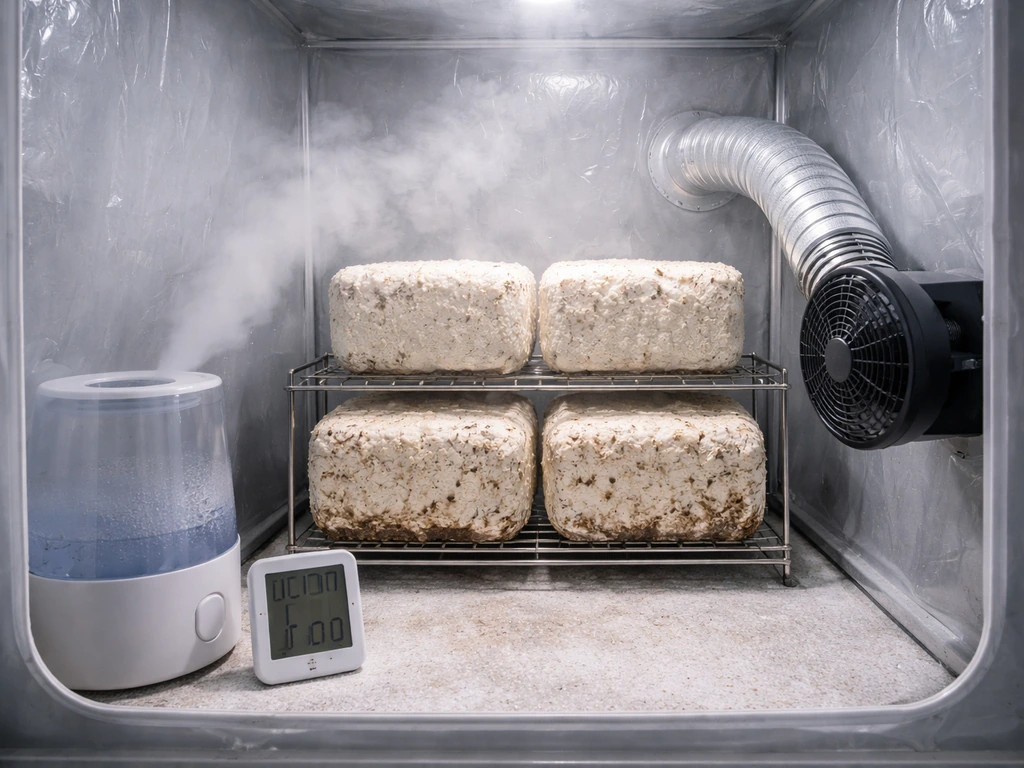
The fruiting environment is where precision really pays off. Here are the targets to hit:
- Temperature: 13–18°C (55–65°F). This is cooler than most home environments in summer, so a basement, garage, or small grow tent with a fan is often needed.
- Relative humidity: 85–95% during fruiting. Mist the walls of your chamber (not directly on the blocks) 2–3 times per day, or use an ultrasonic humidifier on a timer.
- Fresh air exchange (FAE): CO2 buildup causes long, thin stems and tiny caps — the opposite of the thick, trumpet-shaped mushrooms you want. Fan your chamber for 10–15 minutes several times a day, or run a small computer fan on a slow cycle.
- Light: King trumpets don't need much, but some indirect light (a 12-hour cycle from a regular lamp or window) helps with cap development and orientation. Don't skip it entirely.
- Humidity at the substrate surface: once you open or cut your bags, mist lightly to prevent the exposed mycelium from drying out.
Pins should start appearing within 7–14 days of moving to fruiting conditions after the cold shock. The mushrooms develop slowly at these cool temperatures, which is actually a good thing: slower growth means denser, firmer flesh and better shelf life.
Harvesting, yields, and getting second and third flushes
Harvest king trumpets just before or as the cap begins to flatten and curl slightly upward at the edges. At this stage the caps are typically 3–8 cm across. If you wait until the cap fully opens and flattens, you'll notice spore drop starting, a fine white or tan dusting, and the texture softens. Early harvest gives better flavor and shelf life.
Twist and pull gently at the base, or use a clean knife to cut at the substrate surface. Leaving stumps attached creates rot points that invite contamination before the next flush. Clear out any leftover pins or partial fruits at the same time.
Yield from a 2 kg (dry weight) hardwood block typically runs 200–400 g per flush, with 2–3 productive flushes possible. The first flush is usually the heaviest. Between flushes, give the block a rest: keep it at room temperature for 5–7 days, then repeat the cold shock to trigger the next round. Blocks tend to produce smaller yields with each successive flush, and contamination risk rises as the substrate is depleted.
Troubleshooting: fixing the problems most growers hit
Low yield or no pins forming
The most common cause of poor pinning is skipping or shortcutting the cold shock. If you moved straight from colonization to a fruiting chamber without the temperature drop, move the blocks to the fridge for 48 hours and try again. The second most common issue is temperature too high: if your fruiting space is above 20°C, king trumpets will stall. Check your actual temperature with a thermometer rather than relying on ambient room feel.
Long thin stems and tiny caps
This is a CO2 problem almost every time. Increase your fresh air exchange: fan the chamber more frequently, or add ventilation holes to your tent or box. CO2 levels above roughly 1,000 ppm push king trumpets into elongated, leggy growth. Some growers deliberately let CO2 rise slightly to encourage longer stems (the prized trumpet shape), but if caps aren't developing at all, you've gone too far.
Aborted pins and fruits that stop developing
Aborts usually happen because of dramatic humidity swings or low humidity. If your chamber dries out between misting sessions, young pins desiccate and die before they can develop. Check that your chamber is holding 85–95% RH consistently. A digital hygrometer costs very little and is absolutely worth having. Also check that you're not misting directly onto developing pins: water pooling in the cap can cause rot.
Green, black, or fuzzy mold on the block
Green mold (Trichoderma) is the most common contamination in mushroom growing and it almost always means the substrate wasn't fully sterilized, or the inoculation environment wasn't clean enough. A small green spot that appeared late in fruiting, away from the main mycelium, can sometimes be managed by cutting it out and moving on. But if green mold appears during colonization or spreads fast, the block is compromised. Bag it up and dispose of it away from your grow space, Trichoderma spores spread easily and will contaminate future grows. Prevention is the only real fix: sterilize properly, work clean, and inoculate at the highest spawn rate you can manage.
Slow colonization
If you're past 5 weeks with patchy or stalled mycelium growth, the spawn may have been weak or the substrate too wet or too dry. For future blocks, test moisture content more carefully before sterilizing. A colonization temperature below 18°C will also slow things significantly. Warm your incubation space and give it more time before writing off a block, king trumpets are slow but steady colonizers.
Storing your harvest and staying safe in the kitchen
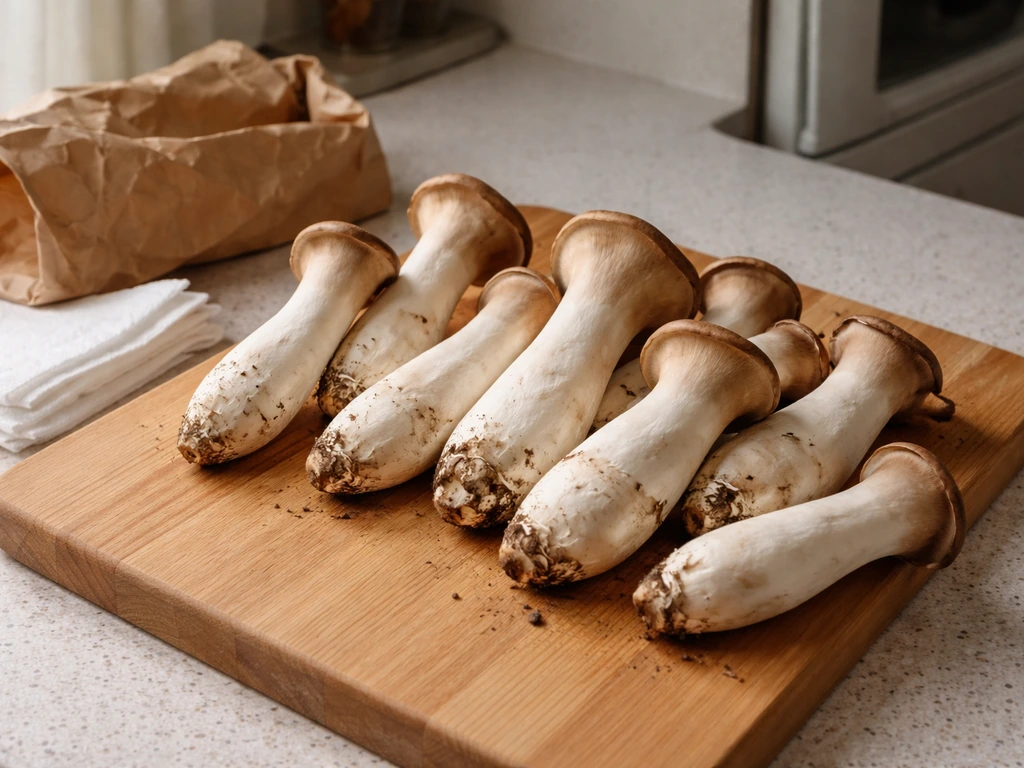
Fresh king trumpets store well compared to most mushrooms: 7–10 days in the refrigerator in a paper bag or loosely wrapped in paper towels (not plastic, which traps moisture and accelerates rot). Their firm texture also makes them excellent candidates for drying: slice them lengthwise and dry at 40–50°C until completely crispy, then store in an airtight jar. Dried king trumpets rehydrate beautifully and keep for a year or more.
Always cook king trumpets before eating. Like most cultivated mushrooms, they contain compounds that can cause digestive discomfort when raw. A few minutes in a hot pan is all it takes. If you're growing from purchased spawn, you're using a cultivated, well-documented strain and the safety profile is well established. If you ever forage wild look-alikes, make sure you have a firm ID: nothing about wild foraging should be assumed from a cultivation guide.
Beginner mistakes that are easy to avoid
- Pasteurizing instead of sterilizing: king trumpets are slow colonizers and will lose to competing organisms on anything less than fully sterilized substrate.
- Skipping the cold shock: this is not optional for reliable pinning. Budget a fridge and 48 hours between colonization and fruiting.
- Fruiting at room temperature: if your space is above 20°C, yields will be poor and mushroom quality drops significantly. This species genuinely needs the cool range.
- Inoculating in a dirty environment: contamination happens at inoculation. A still-air box built from a clear storage tote costs almost nothing and eliminates most contamination risk.
- Over-misting directly onto developing mushrooms: aim for the chamber walls, not the fruiting bodies themselves.
- Harvesting too late: once the cap starts lifting and spores begin dropping, quality declines fast. Pick early and pick often.
- Trying to rush colonization by opening bags early: patience wins. A fully colonized block will always outperform a rushed one.
King trumpet is genuinely one of the more rewarding mushrooms to grow once you get the workflow dialed in. The extra effort compared to growing something like oyster mushrooms pays off in flavor, texture, and shelf life that no store-bought mushroom can match. Get your sterilization solid, keep things cool, and give the cold shock its due, everything else falls into place from there. If you are also curious about stinkhorns, the approach and conditions are quite different from king trumpets, so it helps to follow a dedicated stinkhorn guide how to grow stinkhorn mushroom.
FAQ
How do I tell if my substrate moisture is correct for king trumpet mushrooms?
Use the exact “dry weight” basis when choosing how much substrate and bran to prep. If your block is labeled 2 kg (dry), remember the bagting weight includes added moisture, so you cannot estimate yields from the wet weight. For troubleshooting, weigh a small test block before and after drying a sample portion to confirm your target moisture before scaling up.
What should I do if pins appear but then stop developing?
If your king trumpets start producing pins, then later stall, don’t immediately reintroduce a second cold shock. First verify the chamber temperature is still in the cool fruiting range and that CO2 is controlled with fresh air exchange. Cold shocks are for initiation, repeated shocks can stress developing pins and lead to uneven growth.
How can I raise humidity without causing rot on the mushrooms?
Plan for airflow and condensation management separately. A common mistake is using a humidifier or misting so aggressively that water beads form on caps and stems. Instead, aim for steady high humidity (about 85–95% RH) with gentle misting, and make sure surfaces do not stay wet for long periods.
Do I have to use a refrigerator for the cold shock, or can I use another method?
Yes, you can run the cold shock using a controlled cool environment, but it must be sustained at the right range for the right duration. If your “fridge” area is warmer than expected (or the blocks warm up quickly), pinning can be patchy. Use a thermometer where the blocks sit, not just on the fridge door.
My blocks look fully colonized, but the texture isn’t firm. Should I still start fruiting?
If your substrate blocks are fully white but still feel slightly soft or spongy, give them more time rather than moving immediately to fruiting. King trumpets can look ready before they have fully consolidated, and premature fruiting often leads to weak clusters. As a rule, full colonization should look uniformly white or off-white throughout the block.
When is green mold salvageable, and when should I throw the block away?
First, inspect the location and timing. Green mold that appears late but stays small can sometimes be salvaged, but mold that shows up during colonization, spreads quickly, or appears on multiple surfaces usually means the whole block is compromised. When in doubt, discard away from your grow area to avoid contaminating future blocks and tools.
Why are my king trumpets growing long stems with weak caps?
In most cases, leggy or elongated growth is driven by CO2 that’s too high or airflow that’s too limited during fruiting. Reduce CO2 by increasing fresh air exchange and improving circulation, then keep the fruiting temperature within the cool range. Letting CO2 rise can shape stems, but it should not prevent cap development.
How do I keep king trumpet mushrooms from getting soft or degrading quickly?
If caps are browning early or getting soft fast, harvest timing and post-harvest handling are usually the issue. Pick just before or as caps begin to flatten and curl, then store in the fridge using paper-based wrapping. Avoid plastic wrap, it traps moisture and can accelerate texture breakdown.
Why does colonization keep stalling or turning patchy in some batches?
Starting with a clean, strong grain spawn rate matters, especially because king trumpets colonize slower. If you consistently see slow or patchy growth beyond the typical colonization window, the problem is often spawn vigor or moisture imbalance rather than “not waiting long enough.” For future batches, improve spawn freshness and verify sterilization results before inoculating.
Can I save a contaminated batch, or is it always a loss?
You usually cannot “fix” contamination after it’s visible. If a block shows active contamination during colonization or early fruiting, isolate it and remove it promptly. For next runs, tighten sterile technique, confirm sterilization reached target time and temperature, and do not reuse questionable gloves or tools between blocks.