
Growing foxfire fungus at home is absolutely doable, but the single most important thing you need to know before you start is this: "foxfire" is a folk term, not a species name. To actually grow it, you need to pick a specific bioluminescent, wood-decay fungus and commit to its particular needs. For most home growers in North America, that means Panellus stipticus or one of the Omphalotus species (like Omphalotus illudens, the eastern jack-o'-lantern). These are the species most commonly labeled "foxfire" in cultivation circles, and the method you use changes significantly depending on which one you're targeting and whether you're growing outdoors on logs or attempting something indoors.
How to Grow Foxfire Fungus at Home Step by Step
Marcus Holloway
18 May 2026
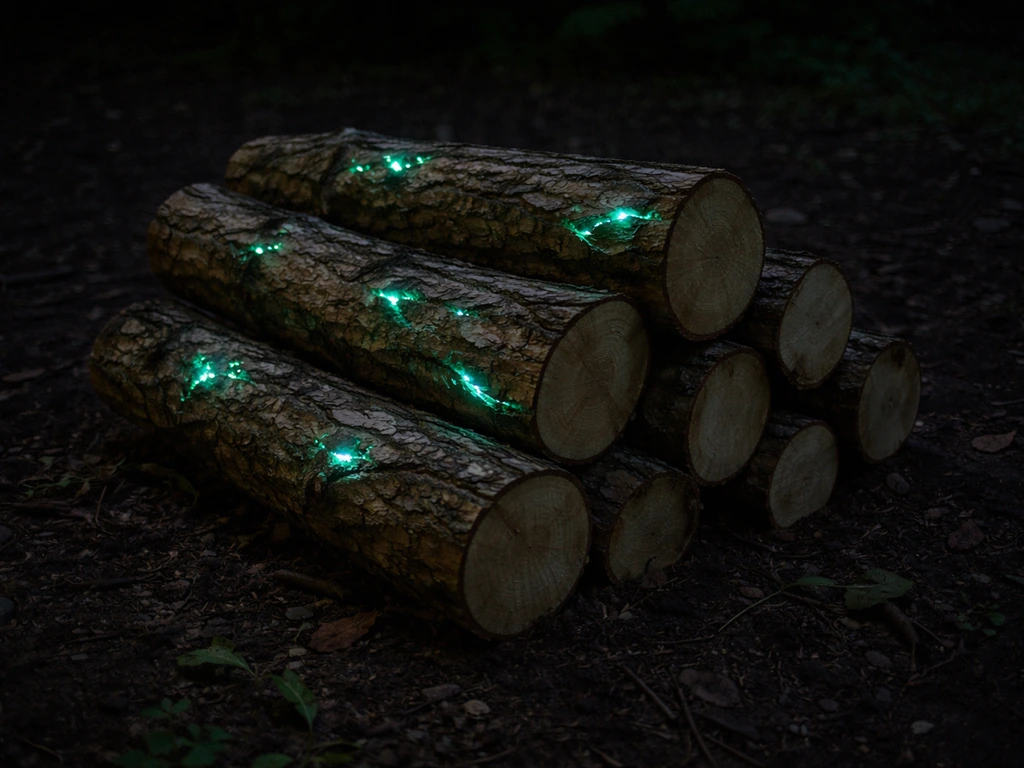
What "foxfire fungus" actually means and which species you're targeting
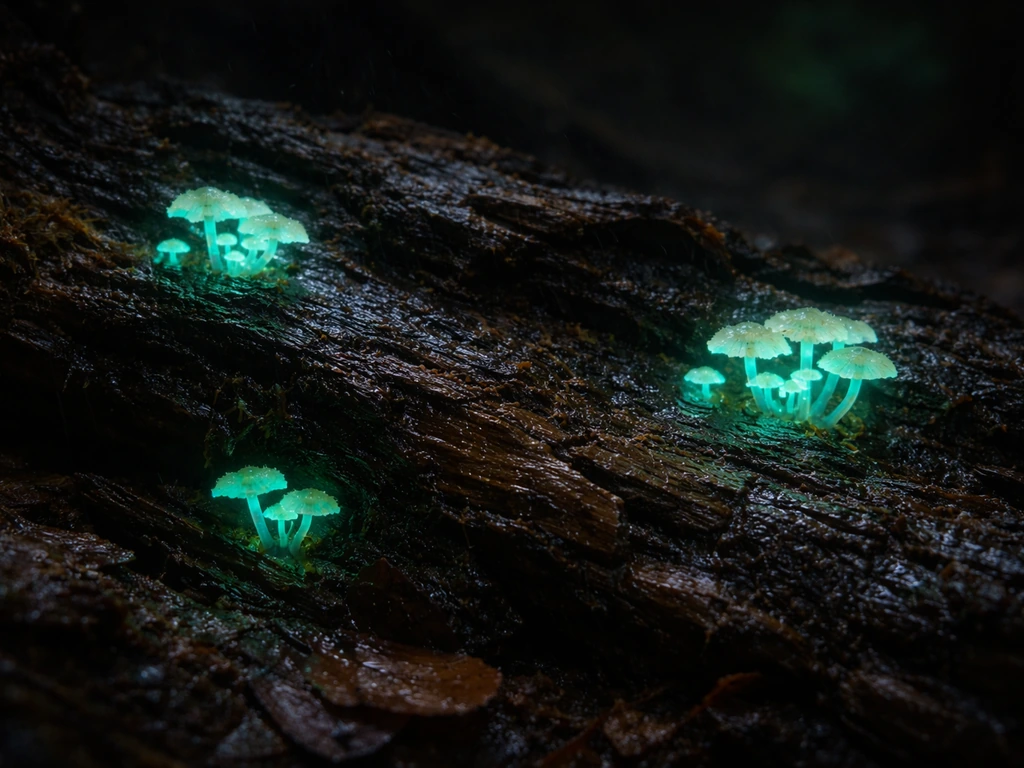
Historically, foxfire refers to any bioluminescent glow coming from decaying wood in moist forests. The light ranges from blue-green to yellow depending on the species doing the glowing. Wikipedia lists several culprits: Panellus stipticus, Omphalotus olearius, Omphalotus nidiformis (the Australian ghost fungus), and others in the Omphalotus lineage. Omphalotus includes multiple bioluminescent species that are commonly called “jack-o’-lantern” mushrooms or “ghost fungus,” depending on locality and species Omphalotus lineage. Bioluminescent fungi are particularly diverse in the tropics, so if you're outside North America or Europe, the species you encounter locally might be something else entirely.
For cultivation purposes, the two most realistic targets for home growers are Panellus stipticus and Omphalotus illudens. Panellus stipticus is a small, shelf-like wood-decay mushroom with bioluminescent mycelium and gills. It's genuinely easier to colonize logs with and tends to be more forgiving. Omphalotus illudens, the eastern jack-o'-lantern, is the showier option: bright orange caps, clusters growing near stumps, and strongly glowing gills. MushroomExpert) confirms the glow in Omphalotus illudens is most visible in the gills), and it's striking when you see it in a dark room. Both are toxic and not for eating, which is worth stating plainly upfront. This grow is purely for the experience, the science, or the spectacle.
Pick your species before you do anything else. The rest of the cultivation workflow depends on it. If you just search for "foxfire spawn" and buy whatever shows up, you might end up with material that doesn't match your growing setup. Most of what I'll walk through here applies best to Panellus stipticus, with Omphalotus notes where the approach diverges.
Outdoor logs vs indoor setups: what's actually realistic
The most reliable way to grow foxfire fungus is outdoors on hardwood logs or stumps. These fungi evolved to colonize dead wood in forest conditions, and replicating that environment indoors takes considerably more effort and equipment than most beginners expect. That said, indoor attempts on sterilized sawdust blocks are possible, especially for Panellus stipticus, so I'll cover both.
Outdoor log growing (recommended for beginners)
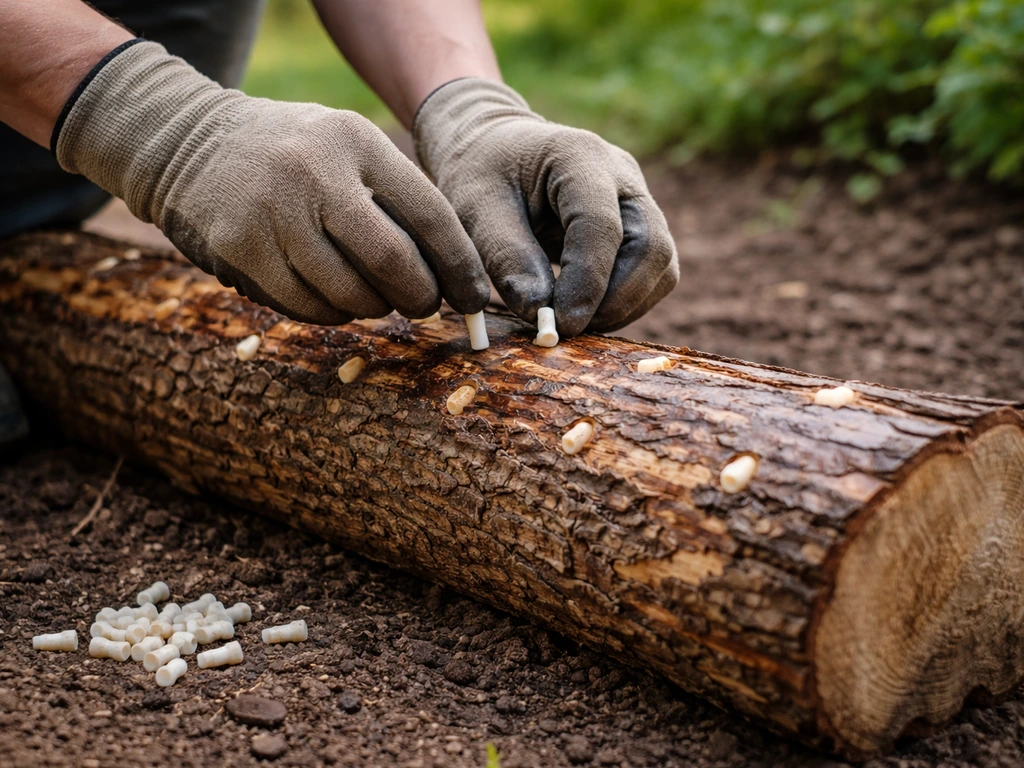
This is the low-tech, high-success path. You inoculate a freshly cut hardwood log, keep it shaded and moist, and let the mycelium colonize over months. Fruiting happens naturally during seasonal moisture events like autumn rains or spring thaw. It takes patience (6 to 18 months before you see anything, depending on log size and species), but the actual labor involved is minimal and the failure rate is much lower than indoor attempts. If you have a shaded yard, a porch, or a spot under a tree, this is the method to start with.
Indoor growing (harder, but possible for Panellus)
Indoor growing on sterilized hardwood sawdust blocks is the faster path to seeing mycelium, and Panellus stipticus is the better candidate here. You'll need to maintain 85 to 95% relative humidity during fruiting, control temperatures in the 55 to 70°F range, and provide a consistent 12-hour light cycle (indirect light or fluorescent/LED lighting works fine). The challenge is that these fungi aren't domesticated crops with predictable yields.
Expect more experimentation and a higher chance of a first-attempt failure compared to growing oyster mushrooms, for example. If you've already tried growing other species at home using the method described in a general guide to growing fungus at home, this is a reasonable next step up in difficulty. If you are also looking into how to grow termite mushroom, the key differences are mainly about the substrate source and how you manage moisture and contamination.
If you want a broader overview of the general process, see our complete guide on how to grow fungus at home.
Getting the right starting material: spores vs spawn
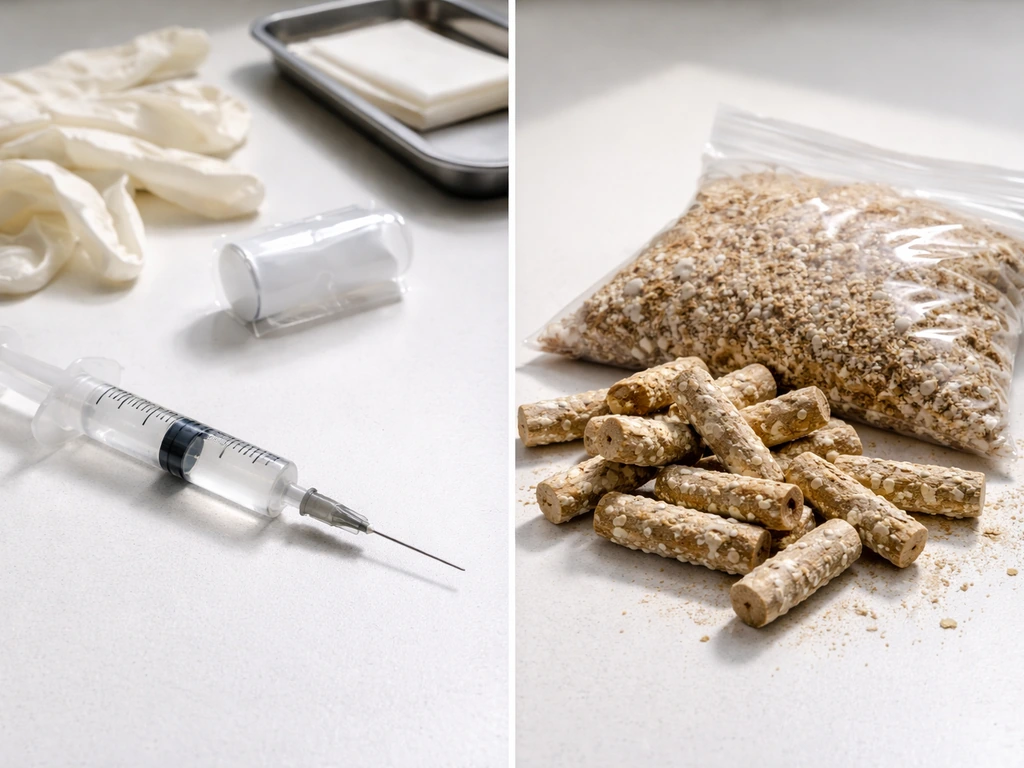
Skip spores for this one. Growing bioluminescent wood-decay fungi from spore prints or spore syringes is genuinely advanced work. Germinating spores requires sterile agar culture techniques, and the success rate for beginners is low enough that it's not worth starting there. What you want is spawn, specifically vegetative mycelium that's already colonizing a substrate and ready to be introduced to new wood.
Spawn for log cultivation typically comes in two forms: inoculated wooden dowels (plug spawn) or grain/sawdust spawn. Plug spawn is the most beginner-friendly format. The dowels are pre-colonized with mycelium, and you hammer them into drilled holes in your log. Sawdust spawn works similarly but fills larger holes or is packed into saw cuts. Cornell Small Farms describes spawn as vegetative mycelium combined with a carrier substrate like sawdust plus a bit of grain, and that's essentially what you're buying or producing.
Where to source it: Look for specialty mushroom suppliers that specifically carry Panellus stipticus or Omphalotus spawn. Not every vendor stocks these species because they're not culinary mushrooms, so you may need to search around. Online mycology communities and forums are good places to find current reliable sources. Be specific in your search because a vendor listing "bioluminescent mushroom spawn" without a species name is a red flag. Confirm the Latin species name before ordering.
Choosing your substrate and preparing for inoculation
Wood species selection
Both Panellus stipticus and Omphalotus illudens are hardwood-decay fungi. Oak is the gold standard, and it's what Omphalotus illudens is frequently found colonizing in the wild. Beech, maple, alder, and elm also work well. Avoid conifer logs (pine, spruce, cedar) because the resins and terpenes inhibit colonization. For log inoculation, use freshly cut logs that are 3 to 8 inches in diameter and 3 to 4 feet long. Freshly cut means inoculated within 2 to 6 weeks of cutting. Too fresh (still saturated with sap) can be problematic, but too old (dried out or already colonized by competing fungi) is worse.
Sterilized vs unsterilized substrate
For outdoor log inoculation, you do not sterilize the log. The wood's natural moisture and density, combined with the vigor of your spawn, is what lets your target fungus outcompete other microorganisms. Fungal activity in soil is driven by similar factors, since moisture, available wood or organic matter, and competition between microorganisms determine how fungi grow how do fungus grow in the soil. For indoor sawdust block cultivation, sterilization (typically in a pressure cooker at 15 PSI for 2.5 to 3 hours) is recommended because the confined environment of a plastic bag or container makes contamination much more likely without it. Pasteurization (185°F for 1 to 1.5 hours) is a lower-tech option but carries more contamination risk.
Log inoculation step by step
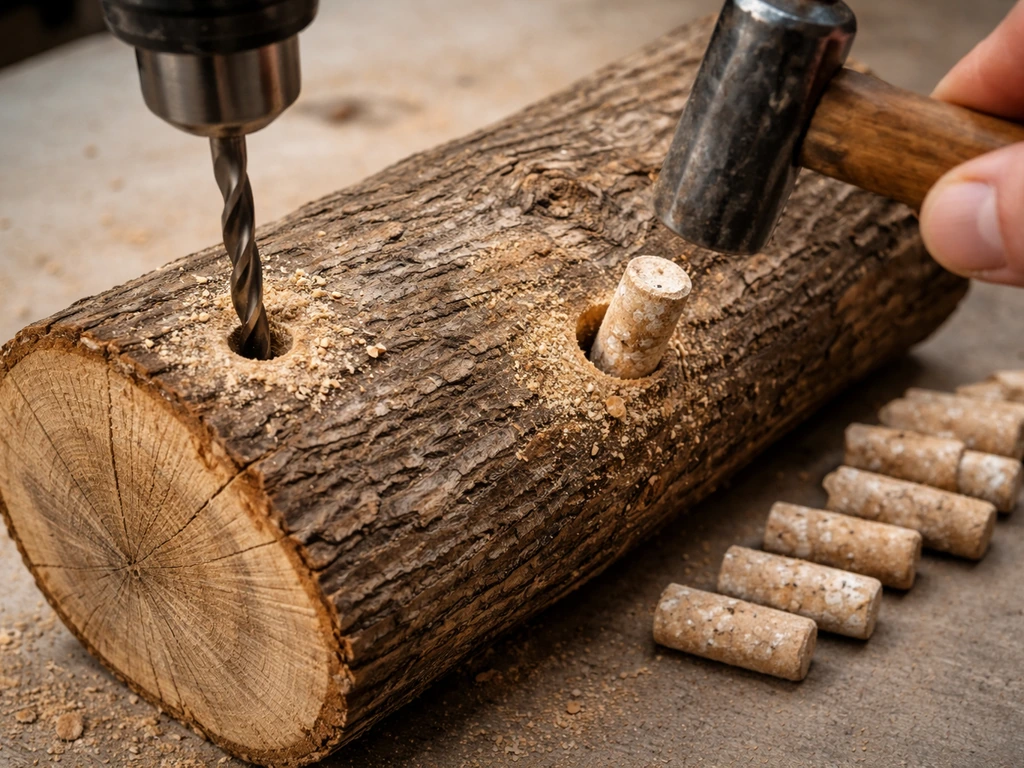
- Drill holes in a diamond or spiral pattern along the log, spaced about 4 to 6 inches apart. Use a 5/16-inch bit for standard plug spawn.
- Tap plug spawn into each hole using a hammer or mallet until it's flush with or slightly below the bark surface.
- Seal every hole immediately with cheese wax or beeswax (melted and applied with a small brush). This keeps moisture in and competitors out.
- Seal the cut ends of the log with wax as well.
- Label your log with the species and inoculation date.
- Move the log to its incubation spot: shaded, off the ground (use a pallet or two bricks), and where you can water it easily.
Incubation: the long wait and how to keep things on track
After inoculation, your log enters the colonization phase. For Panellus stipticus, expect 6 to 12 months for a well-colonized log. Omphalotus can take longer, sometimes up to 18 months on a dense oak log. During this time, the mycelium is silently spreading through the wood, and you won't see much on the surface. Your main job is keeping the log at the right moisture level.
Ideal incubation temperature is 55 to 70°F. Shade is important because direct sun dries logs out fast and UV light inhibits mycelium. Water your logs once or twice a week during dry spells, or soak them in a bin of water for several hours every few weeks if they feel light (dry logs float noticeably in water). The bark should feel slightly cool and damp to the touch, not bone dry or soaking wet and crumbling.
For indoor sawdust blocks, incubation temperature of 60 to 70°F is ideal. Store the inoculated blocks in a dark area with moderate airflow (not direct air blowing on them). You should see white mycelium spreading through the block within 2 to 4 weeks if conditions are right. Wait until the block is 80 to 100% colonized before moving to fruiting conditions.
Triggering fruiting and getting the glow to show
Fruiting in wood-decay bioluminescent fungi is typically triggered by a combination of moisture shock, temperature fluctuation, and seasonal cues. For outdoor logs, this often happens naturally in autumn after the first significant rains following a dry summer, or in spring after temperature shifts. You can encourage fruiting by soaking a fully colonized log in cool water for 12 to 24 hours, then placing it back in a humid, shaded spot. This "shock" technique mimics a heavy rain event and is one of the most reliable fruiting triggers for log-cultivated species.
For indoor fruiting, you need to actively create those conditions. Drop the temperature by 5 to 10°F from your incubation temp, increase fresh air exchange (brief daily fanning works), and run humidity at 85 to 95% relative humidity consistently. A humidity tent (clear plastic bag loosely placed over the block with small holes for airflow) is a simple DIY solution. ATTRA research recommends a 12-hour indirect light cycle during fruiting, and standard cool-white LED or fluorescent shop lights are fine.
About the glow: bioluminescence in these fungi is produced continuously by a biochemical reaction, but it's dim. You need to be in a fully dark room with eyes adjusted for at least 10 minutes to see it clearly. Panellus stipticus glows most noticeably in the mycelium and actively fruiting bodies. Omphalotus illudens glows primarily in the gills of mature mushrooms, according to MushroomExpert. Don't expect a blinding neon effect. It's subtle, blue-green, and genuinely beautiful if you see it under the right conditions. Photograph it with a long-exposure camera setting (30 seconds or more, high ISO) to capture it properly.
Troubleshooting, contamination, harvesting, and storage
Common problems and fixes
| Problem | Likely Cause | What to Do |
|---|---|---|
| No visible colonization after 3+ months | Log too dry, wrong wood species, or spawn was dead/old | Soak log in water for 12 hours, check moisture weekly. Replace with fresh spawn if none appears by month 6. |
| Green or black mold on log surface | Competing fungi (Trichoderma most common) | Scrape surface mold off with gloved hands, dry the area slightly, then re-wax exposed holes. Minor surface mold is often not fatal to colonization inside the log. |
| Indoor block fully overtaken by green mold | Contamination during inoculation or underpressurized sterilization | Discard in sealed bag. Improve sterilization time or pressure before the next attempt. Do not open the block indoors. |
| Fruiting bodies appear but stay small or abort | Humidity dropped below 80% or airflow was too strong | Use a humidity tent, mist more frequently, and reduce direct airflow. |
| No glow visible | Either wrong species, mushrooms not yet mature, or room not dark enough | Confirm species ID. Wait for gills to fully develop. Let eyes adjust 15 minutes in complete darkness. |
| Log produces one flush and then nothing | Log moisture depleted or spawn viability declining | Soak log again and wait 6 to 8 weeks. A healthy log should produce multiple flushes over 2 to 4 years. |
Harvesting and handling
Since Omphalotus and Panellus species are toxic and not edible, "harvesting" here means collecting fruiting bodies for observation, photography, spore prints, or culture work. Wear gloves when handling mushrooms and wash your hands afterward. Do not eat any part of these fungi. Collect mushrooms by twisting them gently from the substrate to preserve the mycelium underneath. For spore prints, place a mature cap gill-side down on paper overnight in a covered bowl. Panellus stipticus produces a white spore print; Omphalotus illudens also produces a white spore print, which is one of its distinguishing identification features.
Storing spawn and keeping your grow going
If you have leftover plug spawn or sawdust spawn, store it in the refrigerator (35 to 40°F) in its original sealed bag. Properly stored spawn stays viable for 3 to 6 months. Don't freeze it. Colonized logs can be stored in a shaded outdoor area year-round. They'll go dormant in winter and resume colonization in spring. During hot, dry summers, weekly watering or shading under burlap helps prevent the log from drying out too much. A log that stays consistently moist and shaded can produce flushes for 2 to 4 years before the wood is too decomposed to support further growth.
If your first attempt doesn't work out
Don't give up after one failure. The most common first-attempt mistake is using a log that was cut too long ago (and already colonized by competing fungi) or spawn that arrived in poor condition. For your second attempt, source spawn fresh from a reputable supplier, use a log cut within the last month, and start in spring when temperatures are mild and humidity is naturally higher. If you've been focusing on Omphalotus and struggling, Panellus stipticus is a more forgiving species for beginners and produces visible mycelial glow that's rewarding even before fruiting.
Scaling up is straightforward once you've had one successful colonization. Inoculate 3 to 5 logs at once on your next round and stagger the inoculation dates by 6 to 8 weeks so you're not waiting on everything at the same time. This is the same staged approach experienced growers use with edible species like shiitake. If you enjoy the wood-decay cultivation method after this, the same log-based techniques apply to a range of other specialty species worth exploring.
One last thing: document everything. Write down your inoculation date, the wood species, the spawn source, and the storage conditions. When something goes wrong (and at some point it will), that log means you'll know exactly what to adjust. Foxfire fungus is one of the more unusual things you can grow at home, but with the right species, the right wood, and consistent moisture management, it's genuinely achievable.
FAQ
How can I tell whether what I bought is actually the right “foxfire” fungus species?
Look for the Latin name on the packaging or invoice, not just terms like bioluminescent, ghost fungus, or foxfire. If the listing says only “bioluminescent spawn” without a species, don’t assume it is Panellus stipticus or Omphalotus illudens, confirm before inoculating any logs.
What’s the biggest sign that my log was cut too early or too late?
If the log is very fresh, the surface can feel overly sap-saturated and may invite aggressive competing growth. If it’s too old, the log often feels drier and lighter, sometimes showing early colonization by other fungi. In either case, your inoculated holes may not establish firm colonization and the log can take far longer than the typical 6 to 18 months.
Should I water or soak the log before inoculating it?
For outdoor log cultivation, you generally want the wood to be naturally suitable and not flooded with water. After inoculation, follow your moisture plan (a light damp feel, not crumbling wet), and only use a soaking step as a fruiting “shock” once the log is fully colonized.
How do I know when my log is ready to fruit, not just colonized underneath?
For log grows, readiness is usually indicated by a strong, fully colonized interior that corresponds to visible mycelium activity when conditions change, plus successful response to a soaking and return to humidity. If you repeatedly do moisture shocks and see no change after long incubation, it may be under-colonized or the log may be too old or wrong substrate.
Can I grow foxfire fungus on wood chips or sawdust outdoors instead of logs?
It’s much less reliable outdoors because wood-decay fungi still need consistent moisture and a stable, competitive environment. Your best odds are with log or stump cultivation outdoors, while outdoor wood-chip approaches usually behave more like uncontrolled microbial compost and can quickly become contamination-prone.
What humidity level is “good enough” for indoor fruiting if I cannot measure precisely?
If you cannot measure with a hygrometer, use a humidity tent and watch condensation and airflow balance. The surface should stay moist but not dripping, and you should see slow drying between mistings, not rapid desiccation. If the block surface visibly dries or cracks, raise humidity and reduce direct airflow.
Do I need fresh air exchange during incubation, or only during fruiting?
During incubation, moderate airflow is helpful mainly to prevent stagnant, overly humid pockets. During fruiting, fresh air exchange becomes more important along with the temperature drop and humidity, so daily brief fanning is most valuable when you switch to fruiting conditions.
Is 85 to 95% relative humidity safe for the whole grow, or only at fruiting?
High humidity is primarily for the fruiting stage. If you keep levels extremely high during colonization without adequate airflow, you may increase surface contamination or unwanted molds. For incubation, focus on maintaining a consistently damp but not wet environment rather than maximizing humidity at all costs.
What should I do if my indoor blocks show contamination before they fully colonize?
If you see fast-spreading colored mold or strong fuzzy growth that doesn’t resemble healthy white mycelium, remove the affected block promptly to protect the rest. Starting over with sterilized blocks and improving clean handling (gloves, wiped work surfaces, minimal opening time) is usually more effective than trying to “rescue” visibly contaminated cultures.
How long can I keep spawn after it arrives, and how do I store it correctly?
Store refrigerated at about 35 to 40°F in the original sealed bag, and use within the stated viability window (often 3 to 6 months for properly stored spawn). Avoid freezing, because it can damage living mycelium, and don’t let bags warm repeatedly during storage.
Can I reuse a log for multiple cycles if I harvest mushrooms?
Often you can get additional flushes for years as long as the log stays shaded and moist enough to keep decomposing steadily. However, heavy harvest frequency and repeated drying can shorten the life of the log. Plan for 2 to 4 years of potential flushes, then replace logs when performance drops.
Is long-exposure photography the only way to see the glow?
No. You can often confirm glow with a dark room and eyes adjusted for several minutes. For capture, long exposure helps, but visually the best results usually come from viewing mature structures in full darkness, with minimal ambient light and time for dark adaptation.
What are safe handling tips specific to toxic, non-edible species?
Wear gloves when handling fruiting bodies and wash hands afterward, even if you only touched surfaces. Avoid touching your face, keep the area away from kids and pets, and do not mix tools used for foxfire cultures with food prep. If you collect material for observation or prints, keep it sealed and clearly labeled.
If my first attempt fails, should I switch species or adjust conditions?
Start by adjusting conditions and logistics first, the most common failure causes are old logs, poor spawn condition, or moisture and shade issues. If you did everything right and still get no colonization or no fruiting response, then switching from Omphalotus to Panellus stipticus (more forgiving for beginners) is a practical next step, since Panellus often gives earlier, more noticeable results.