
To grow lion's mane mycelium reliably, start with a quality liquid culture or grain spawn (not spores if you want speed), inoculate sterilized supplemented hardwood sawdust or sterilized grain, and incubate at 24–26°C in darkness until fully colonized. Expect visible growth within a few days and full colonization in roughly 2–5 weeks depending on your starting point. From there, a cold shock triggers pinning and you move into fruiting. That's the core loop. Everything below fills in the details that actually determine whether you succeed or get a bag of green mold.
How to Grow Lion’s Mane Mycelium at Home Step by Step
Marcus Holloway
27 May 2026
What lion's mane mycelium actually is (and what you're trying to grow)
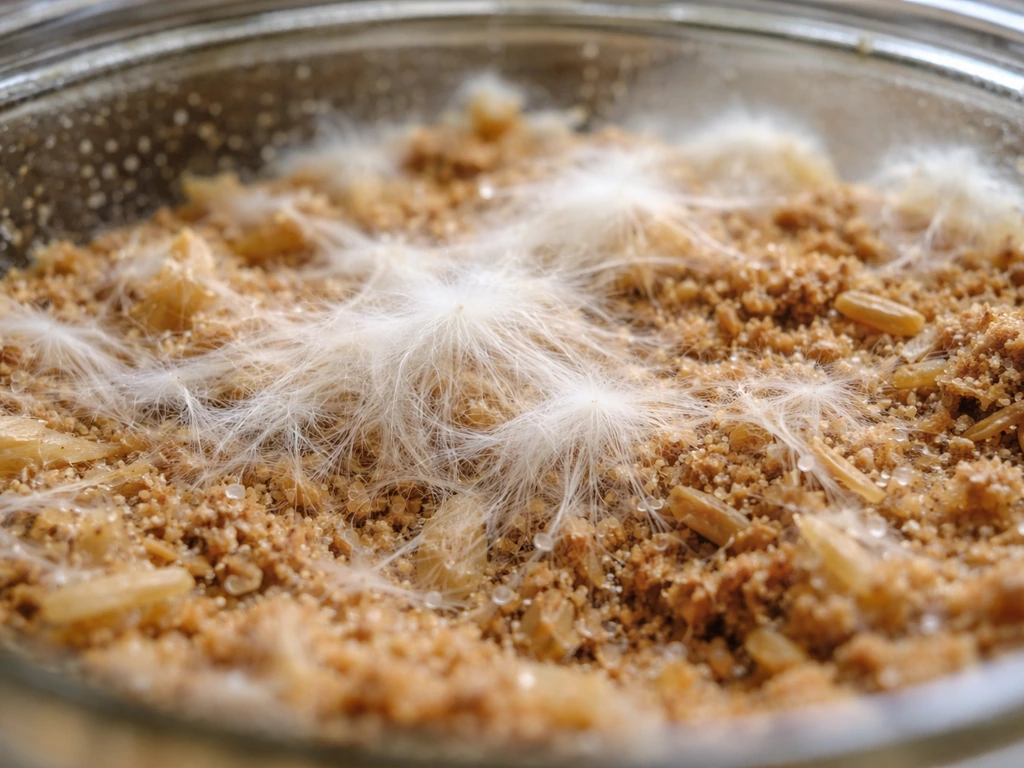
Lion's mane (Hericium erinaceus) mycelium is the vegetative body of the fungus, the network of white, thread-like hyphae that colonizes and breaks down a substrate before any mushroom forms. When you're growing mycelium, you're essentially raising the organism in its feeding stage. The mushroom (the fluffy, white, cascading fruit body) comes later, only after the mycelium has fully established itself and you shift the environmental conditions to trigger reproduction.
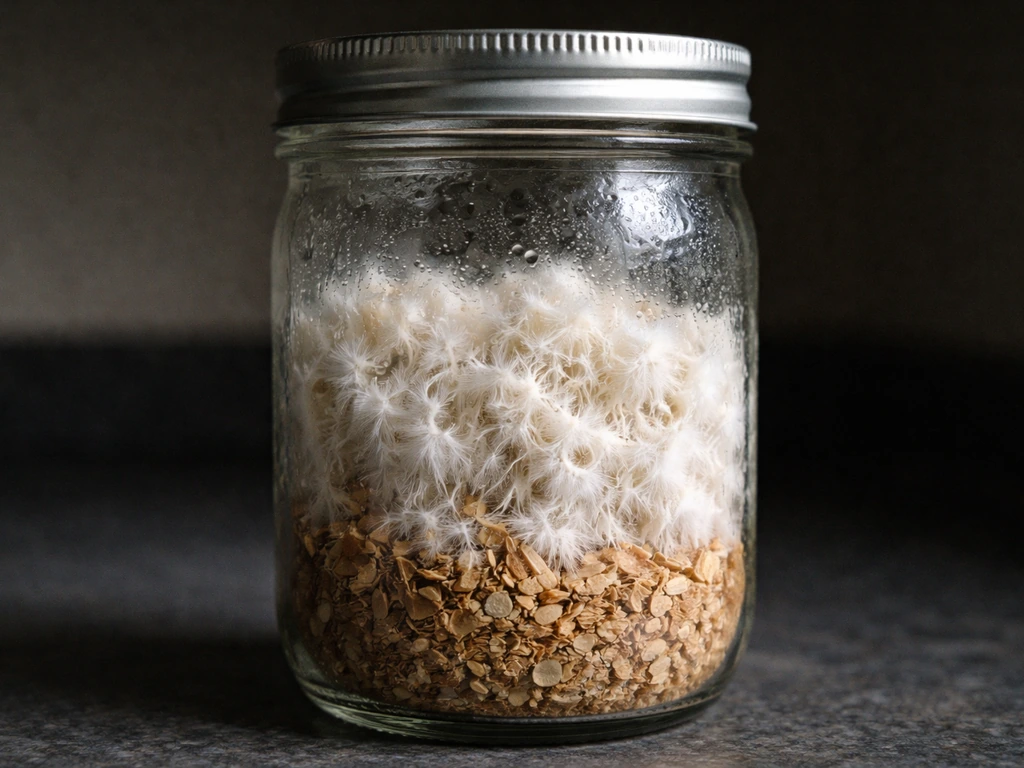
One thing that trips up a lot of beginners: lion's mane mycelium looks different from oyster or shiitake. It's wispy, thin, and comparatively sparse. Where oyster mycelium is ropey and aggressive-looking, lion's mane creeps through substrate in a lighter, almost delicate way. First-timers often panic and assume something went wrong, or worse, discard a perfectly healthy culture thinking it's contamination. It's not. That's just how it looks. As long as it's white and expanding, you're on track.
Best starting point: spores, liquid culture, or grain spawn?
Your starting material is probably the single biggest factor in how smoothly the mycelium stage goes. Each option has real trade-offs, and picking the right one for where you are right now saves a lot of frustration. If you need a slower but more genetics-focused path, check the steps for how to grow lion's mane from spores and plan around the longer timeline.
| Starting Material | Speed to Colonization | Contamination Risk | Skill Level | Best For |
|---|---|---|---|---|
| Spore syringe | Slowest (must germinate and establish) | High (spores bring contaminants) | Advanced | Genetics exploration, agar work |
| Liquid culture (LC) | Fast (12–16 days common) | Moderate (requires sterile technique) | Intermediate | Most home growers scaling to bags |
| Grain spawn | Fastest (ready to mix into substrate) | Low (if sourced clean) | Beginner | First-time growers, quick results |
| Agar culture | Moderate (needs grain expansion step) | Low (culture verified before scaling) | Intermediate-Advanced | Serious growers verifying genetics |
If you're brand new, buy grain spawn from a reputable supplier and skip the spore-to-culture process entirely. You get clean, actively growing mycelium already on a nutrient-dense substrate. Mix it into your prepared block and you're off. If you've done a few grows and want more control over your genetics and sourcing, a quality liquid culture syringe is the next step up.
Liquid culture inoculates grain or substrate directly and colonizes significantly faster than spores, since the mycelium is already active. Spores are really for when you want to work on agar, select your own genetics, or you're curious about starting from scratch. That's a longer, more skill-intensive path covered more deeply in a guide focused specifically on growing lion's mane from spores.
Substrate choices for strong lion's mane mycelium
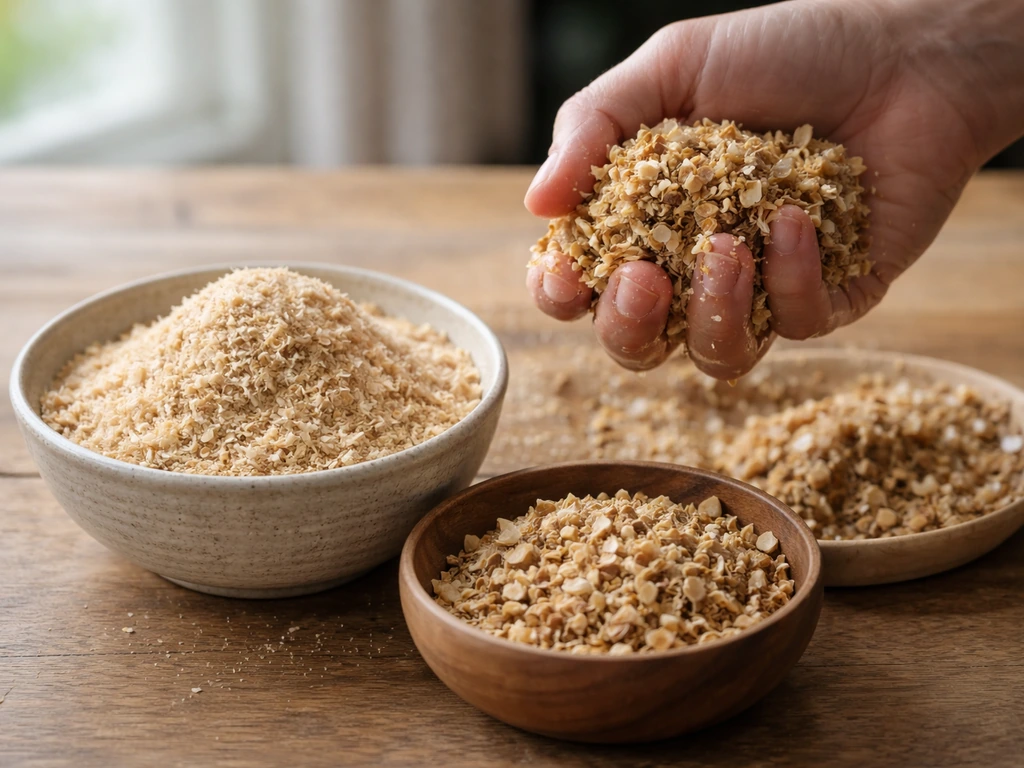
Lion's mane is a wood-loving species, and it thrives on hardwood-based substrates. The classic home-grower recipe is an 80/20 blend of hardwood sawdust (oak, beech, or alder are great) and soy hulls or wheat bran. The soy hulls add nitrogen and nutrients that accelerate mycelial growth, but they also make the substrate more attractive to competing bacteria and molds. That's the trade-off with supplementation: faster, more vigorous growth, but higher contamination risk.
Target a moisture content of around 60–65%. A reliable field test: squeeze a handful of prepared substrate firmly. You want just a few drops of water to come out, not a stream. Too wet and you're inviting bacterial contamination. Too dry and colonization slows significantly.
Plain hardwood sawdust without supplements works too, especially if sterilization isn't your strong suit yet. It colonizes more slowly but is far more forgiving. Master's Mix (50/50 hardwood sawdust and soy hulls) is a popular choice among more experienced growers who want maximum yields but are comfortable with pressure cooking their blocks properly.
Sterilization vs. pasteurization: this is not optional
Supplemented hardwood substrates must be fully sterilized, not just pasteurized. Pasteurization (heating to ~80°C for an hour or so) works for lower-nutrient substrates like straw. But once you add soy hulls or bran, the nutritional profile is rich enough that bacterial endospores will survive pasteurization and absolutely take over your block. You need pressure cooking at 15 PSI for 2.5–3 hours minimum for quart jars or bags. This is the step most people skip or rush, and it's the single biggest cause of contaminated lion's mane grows.
Step-by-step: growing lion's mane mycelium on plates, jars, and bags
Option A: Agar plates (for culture work and verification)
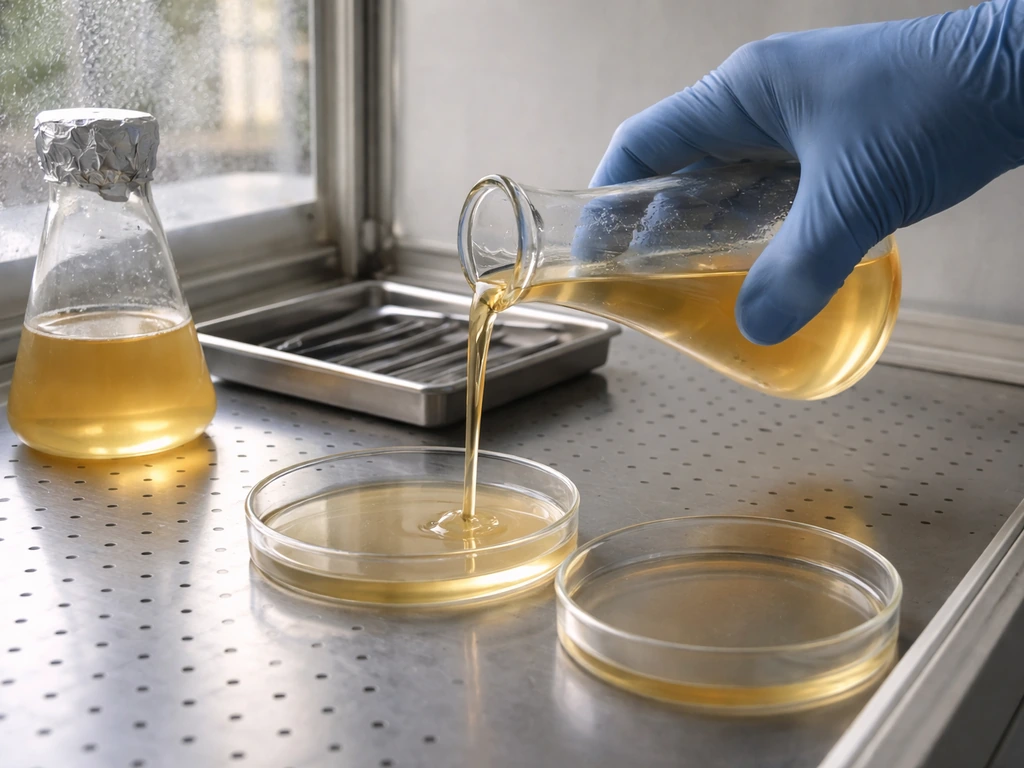
- Prepare MEA (malt extract agar) or potato dextrose agar and sterilize in a pressure cooker.
- Pour plates in front of a still-air box or flow hood and let them solidify.
- Transfer LC or a small spore germination wedge onto the plate under sterile conditions.
- Seal plates with parafilm and incubate at 24–26°C in darkness.
- Check plates daily. Lion's mane grows slower on agar than many species. Expect visible growth in 5–10 days.
- Look for clean white, wispy growth expanding evenly from the inoculation point. Any green, black, or wet patches mean contamination. Discard and retry.
- Once growth is confirmed clean, transfer a wedge to fresh agar (repeat 1–2 times to verify purity) or use to inoculate liquid culture or grain.
Option B: Grain jars (the classic scale-up step)
- Use rye berries, wheat berries, or popcorn. Simmer the grain for 20–30 minutes, drain, and dry the surface until no surface moisture remains.
- Fill sterilized mason jars about two-thirds full. Add a self-healing injection port lid or use a polyfill-filtered lid.
- Pressure cook at 15 PSI for 90 minutes (quart jars) or 2+ hours (larger jars).
- Let jars cool completely to room temperature, at least 12–24 hours, before inoculating. Injecting into warm grain invites condensation and contamination.
- Inject 5–10 mL of liquid culture per quart jar using a sterile syringe. Flame-sterilize the needle between jars.
- Incubate at 24–26°C in darkness.
- Check daily. You should see white fuzzy growth beginning within a few days to a week.
- When about one-quarter colonized, shake the jar to break up and spread the mycelium. This evens out colonization significantly.
- Full colonization typically takes 12–30 days depending on your starting inoculum, temperature consistency, and grain prep.
Option C: Fruiting blocks/bags (the final substrate)
- Mix your hardwood sawdust substrate (80/20 with soy hulls) and adjust moisture to 60–65%.
- Pack into filter patch bags. Leave headspace for gas exchange.
- Pressure cook at 15 PSI for 2.5–3 hours. Let cool completely (overnight is ideal).
- Inoculate in a still-air box or flow hood. Use colonized grain spawn at roughly 10–20% of block weight, or inject 10–15 mL of liquid culture.
- Seal the bag and incubate at 24–26°C in darkness.
- Check every 2–3 days for signs of growth and contamination. Do not open the bag during colonization.
- Colonization is complete when the entire block has turned white throughout. This takes roughly 3–5 weeks from LC or grain spawn, depending on conditions.
Incubation parameters and how to monitor progress
Temperature is your most critical incubation variable. The mycelial growth optimum for lion's mane sits right around 25–26°C. Below 18°C, growth slows substantially. Above 30°C, you risk heat stress and suppressed growth in many strains, and you dramatically increase the odds of bacterial contamination. A basic seedling heat mat with a thermostat is a solid low-cost solution for stable incubation temperatures.
During colonization, you don't need high ambient humidity inside an incubation chamber. Your substrate is sealed in a bag or jar, so internal moisture stays stable. What matters is temperature stability and keeping the exterior of your jars and bags clean and dry. High ambient humidity in a poorly ventilated incubation space actually increases the risk of mold growing on the outside of your containers.
Keep the space dark. Light isn't harmful during colonization, but darkness is generally recommended to avoid any heat buildup from lamps. Check your colonizing blocks or jars visually every 2–3 days. With jars and clear bags you can see progress without opening anything, which is ideal. Maintain a log of what you see: where growth is, if it's expanding uniformly, any color changes.
Remember the visual cue specific to lion's mane: the mycelium will look wispy and relatively thin compared to what you might expect if you've grown oysters before. As long as you see white growth steadily advancing through the substrate without any unusual colors or smells, you're in good shape.
Troubleshooting slow growth, poor colonization, and contamination
Slow or no visible growth
- Temperature too low: check your incubation space with a calibrated thermometer, not just a room thermostat. Cold spots exist, especially near floors.
- Weak or old inoculum: LC loses potency over time. If your syringe has been sitting for months, the mycelium may be stressed or partially dead. Fresh LC from a reputable source makes a big difference.
- Substrate too wet: excess moisture slows mycelial expansion. If your block smells sour or looks waterlogged, that's likely bacterial contamination, not just moisture.
- Over-sterilization of grain (cooked to mush): grain that's too soft clumps and restricts gas exchange. Aim for fully hydrated but not split or mushy grains.
Contamination: what it looks like and what to do
Green mold (Trichoderma) is the most common and destructive contaminant you'll encounter. It usually starts as a small white or pale patch that quickly turns bright green or teal as it sporulates. Once you see green, that container is done. Don't try to save it. Remove the bag or jar immediately from your incubation area, double-bag it, and get it outside. Trichoderma spores spread through the air aggressively and will compromise everything else nearby.
Black or gray molds indicate other fungal contaminants. Wet, slimy patches with a sour or ammonia smell point to bacterial contamination, usually from improperly sterilized substrate, too much moisture, or inoculating while the substrate was still warm. Gray or white wispy growth that doesn't expand normally could be cobweb mold, which spreads rapidly in humid still air and can look deceptively similar to healthy mycelium at first glance.
If you're getting repeated contamination, run through this checklist before your next attempt:
- Are you letting substrate cool fully before inoculating? Warm substrate plus liquid culture equals rapid bacterial bloom.
- Are you working in a still-air box or flow hood? Inoculating in open air is asking for contamination.
- Is your pressure cooker actually reaching 15 PSI and holding it? A faulty gauge or worn gasket ruins sterilization.
- Are your syringes, needles, and injection ports sterile? Always flame the needle tip and wipe injection ports with isopropyl alcohol before use.
- Are you supplementing at the right ratio? Higher bran/soy hull ratios increase yield potential but demand perfect sterilization. Reduce supplementation if contamination is persistent.
Patchy or uneven colonization
If grain jars are colonizing unevenly, that's usually the cue to break and shake. Wait until about 25–30% of the jar is colonized, then shake vigorously to redistribute colonized grains throughout the jar. This spreads inoculation points and can speed up full colonization noticeably. For bags, a gentle massage or kneading works the same way. Don't do this too early (you'll damage fragile early mycelium) or too late (clumping makes it harder to distribute evenly).
From mycelium to fruiting: when and how to make the move
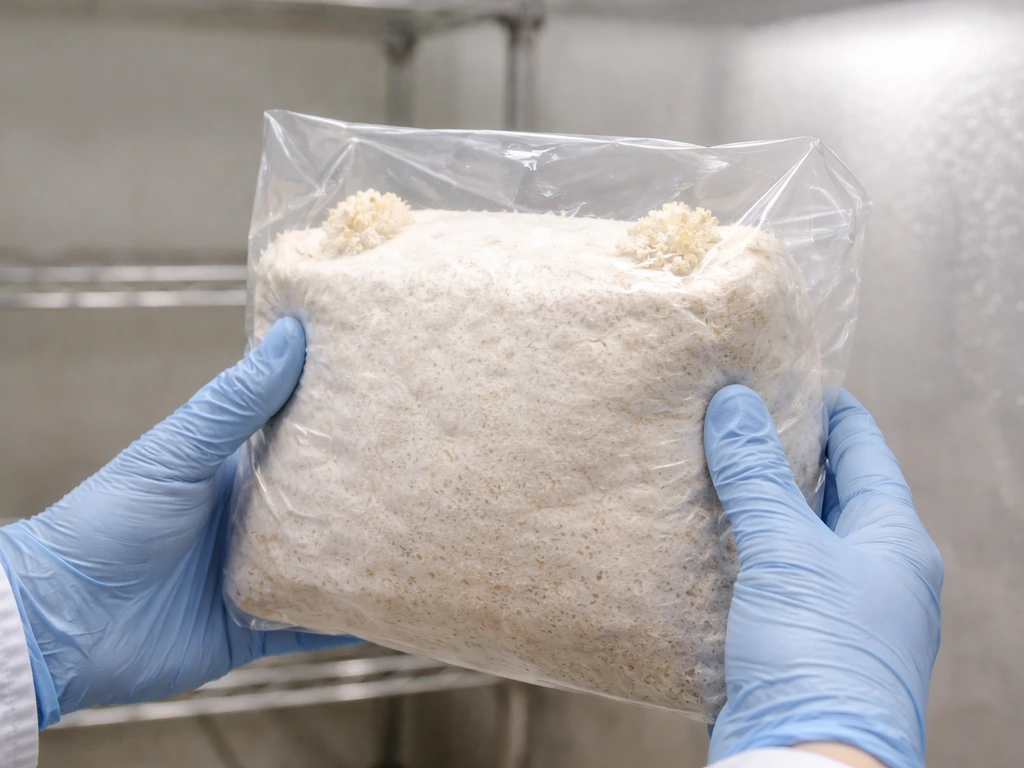
The block or bag is ready to fruit when the substrate is completely white throughout, firm, and the mycelium has consolidated. There should be no soft spots, no smell, and no uncolonized areas. Trying to initiate fruiting before full colonization is a common mistake that results in weak pins or no pins at all.
Lion's mane frequently needs a cold shock to trigger pinning. The standard approach: move your colonized block from incubation at 24–26°C down to a cooler environment in the range of 10–16°C for 24–48 hours. A regular refrigerator works well for this. After the cold shock, move to your fruiting chamber.
Fruiting chamber conditions
- Humidity: 85–92% RH. Lion's mane needs very high humidity to develop properly. Mist the chamber walls (not the block directly) 2–4 times daily.
- Temperature: 18–24°C is the typical fruiting range. Slightly cooler temperatures tend to produce tighter, denser fruit bodies.
- Fresh air exchange: this is critical and often overlooked. High CO2 causes lion's mane to develop long, finger-like projections instead of the full cauliflower-shaped heads. Aim for at least 2 fresh air exchanges per day, or keep a small fan on a brief timer to introduce fresh air without drying the chamber out.
- Light: indirect ambient light for 12 hours a day helps guide fruiting direction but is not the dominant factor.
Once the cold shock is done and fruiting conditions are in place, expect pins to appear within 5–14 days. Full development to harvest-ready fruit bodies typically takes another 1–2 weeks after pinning. Total time from fully colonized block to first harvest is usually in the 2–4 week range. Another incubation-time guide for lion’s mane lists spawn run ranges roughly on the order of ~21, 35 days, varying widely with setup and starting inoculum Total time from fully colonized block to first harvest is usually in the 2–4 week range.. After harvest, rest the block for about 2 weeks and repeat the fruiting trigger process. Most well-colonized blocks on supplemented hardwood will give you 2–3 flushes.
If you're growing in Australia or a climate with significantly different ambient temperatures than the ranges above, the same principles apply but you'll need to adjust your heating and cooling approach accordingly, since seasonal temperature swings can make hitting the 24–26°C incubation window or the cool fruiting trigger more challenging without dedicated equipment.
Realistic timeline summary
| Stage | Duration (Approximate) | Key Action |
|---|---|---|
| Inoculation to first visible growth | 3–7 days | Maintain 24–26°C, darkness, no disturbance |
| Colonization (grain jars) | 12–25 days | Break and shake at 25% colonized |
| Colonization (fruiting blocks) | 21–35 days | Monitor visually, no bag opening |
| Cold shock / fruiting trigger | 1–2 days | Move to 10–16°C environment |
| Pinning after fruiting conditions set | 5–14 days | Maintain 85–92% RH, fresh air exchange |
| First harvest from pins | 7–14 days after pinning | Harvest before teeth elongate fully |
| Between flushes (rest period) | ~14 days | Soak or mist, repeat fruiting trigger |
Growing lion's mane mycelium well comes down to three things: starting with quality inoculum, sterilizing your substrate properly, and keeping temperatures stable during colonization. If you're in Australia, use the same setup, but plan your heating, cooling, and fruiting trigger around local seasonal temperatures for best results growing lion's mane mycelium. If you're also after the shaggy, cascading fruit, check out how to grow shaggy mane mushrooms for the transition from mycelium to fruiting lion's mane mycelium.
Nail those and the wispy white network does the rest. The fruiting side has its own learning curve, especially managing humidity and fresh air simultaneously, but a fully colonized block gives you a real shot at that iconic cascading fruit body. Start simple, document what you see, and you'll dial it in faster than you think.
If you're specifically trying to grow djon djon mushrooms, the core mycelium, sterilization, and incubation principles still apply, but you'll want to follow the right species-specific steps and conditions how to grow djon djon mushrooms.
FAQ
How can I tell if my lion’s mane is healthy when it looks sparse or wispy?
Lion’s mane mycelium is naturally thin and delicate. Healthy growth should be white (or creamy-white), expanding outward from inoculation points, and gradually filling the substrate without fuzzy green, blue, black, or rust-colored spots. Also check for a normal, earthy mushroom smell, not sour, ammonia-like, or rotten odors.
What should I do if my substrate got too wet before inoculation?
If you can squeeze out a steady stream of water, drain and re-sterilize is usually the safer path if contamination is a concern. For an already inoculated batch, higher moisture often leads to bacterial takeover. Increase drying time before inoculation in future batches, and consider using unsupplemented hardwood if sterilization control is still inconsistent.
Do I need to keep my incubation area humid, or is ambient humidity important?
Humidity in the room matters less if jars or bags are sealed, since moisture is already locked inside. Focus on stable temperature and clean, dry exterior surfaces. If condensation forms heavily on bag/jar walls, it can encourage outside contamination, so keep the incubator space as dry as practical.
Can I leave my colonizing containers in total darkness, or should I use light?
Total darkness is fine during colonization. Light is not usually the cause of failed colonization, but darkness helps you avoid heat from lamps and makes it easier to consistently monitor without accidental temperature swings.
Should I shake grain spawn jars, and when is the right time?
Shaking helps when colonization is uneven. Wait until roughly 25 to 30% of the jar is colonized, then shake vigorously to spread colonized grains. Shaking too early can break fragile early growth, while shaking too late often results in clumps that slow even distribution.
Why does my mycelium look white but doesn’t seem to expand after several days?
Slow expansion can be temperature-related, especially if you are below 18°C. It can also happen if the substrate is too dry, too hot during inoculation, or if sterilization was incomplete and competitors are suppressing growth. Before discarding, verify your temperature range and confirm substrate moisture is near 60 to 65% in future batches.
Is pasteurization ever okay for lion’s mane when using soy hulls or wheat bran?
Pasteurization is risky for supplemented hardwoods. Nutrients like soy hulls or bran can allow bacterial endospores to survive pasteurization and dominate. For best results, use pressure sterilization at the stated pressure and time for your jar or bag size.
What if I see white growth that is not expanding uniformly, could it still be healthy?
Occasional unevenness can occur, but lack of expansion is a red flag. Healthy colonization should advance steadily and occupy more of the substrate over time. If growth becomes patchy with a stagnant center, smells sour or rotten, or shows distinct cobweb textures that spread rapidly, assume contamination and remove the container.
Can I salvage a contaminated jar or bag by removing the green area?
No. With Trichoderma, once green forms and sporulates, the container is considered lost. Removing part of it does not prevent spores from spreading through the air. The safest approach is to remove it immediately from the incubation area, double-bag it, and discard.
Do I have to cold shock every lion’s mane block to get pins?
Many lion’s mane grows need a cold shock to trigger pinning, especially if your incubation and fruiting conditions are stable year-round. If your blocks already start pinning without a cold period, you can skip it, but if you consistently get no pins, add a 24 to 48 hour cold shock in the 10 to 16°C range.
What are the signs that a block is ready to fruit, beyond “all white”?
Readiness is not only visual. Look for a firm, consolidated feel, no soft spots, no remaining uncolonized islands, and a neutral or healthy mushroom-like smell. If you detect wetness trapped in pockets or any green/black contamination, delay fruiting or discard that block.
How long should I wait after pinning before harvest, and what should I watch for?
Pins usually appear within about 5 to 14 days after cold shock. After pinning, harvest-ready lion’s mane typically arrives about another 1 to 2 weeks later. Monitor for the fuzzy, cascading form, and harvest before stems become too long or the texture starts to change from dense to overly open.
My blocks produce fewer flushes than expected. What commonly reduces the number of flushes?
Fewer flushes often come from under-colonization at the start, incomplete sterilization leading to low-level stress, or interrupting fruiting conditions (temperature swings, inconsistent fresh air, or incorrect moisture). Also, not resting properly between flushes can reduce vigor for the next round.