
Djon djon mushrooms are a group of black edible mushrooms used in Haitian and Creole cooking, most notably in the iconic rice dish 'Diri djondjon.' The species most reliably cultivated at home under this name is Pleurotus tuber-regium, a tropical oyster relative that grows on hardwood or agricultural waste substrates. You can grow them indoors year-round using sterilized or pasteurized substrate bags, spawn inoculation, and a fruiting chamber you probably already have the materials to build. Expect the full cycle, from inoculation to first harvest, to take roughly 5 to 9 weeks depending on your substrate and conditions.
How to Grow Djon Djon Mushrooms: Step-by-Step Guide
Marcus Holloway
6 Jun 2026
What Djon Djon mushrooms actually are
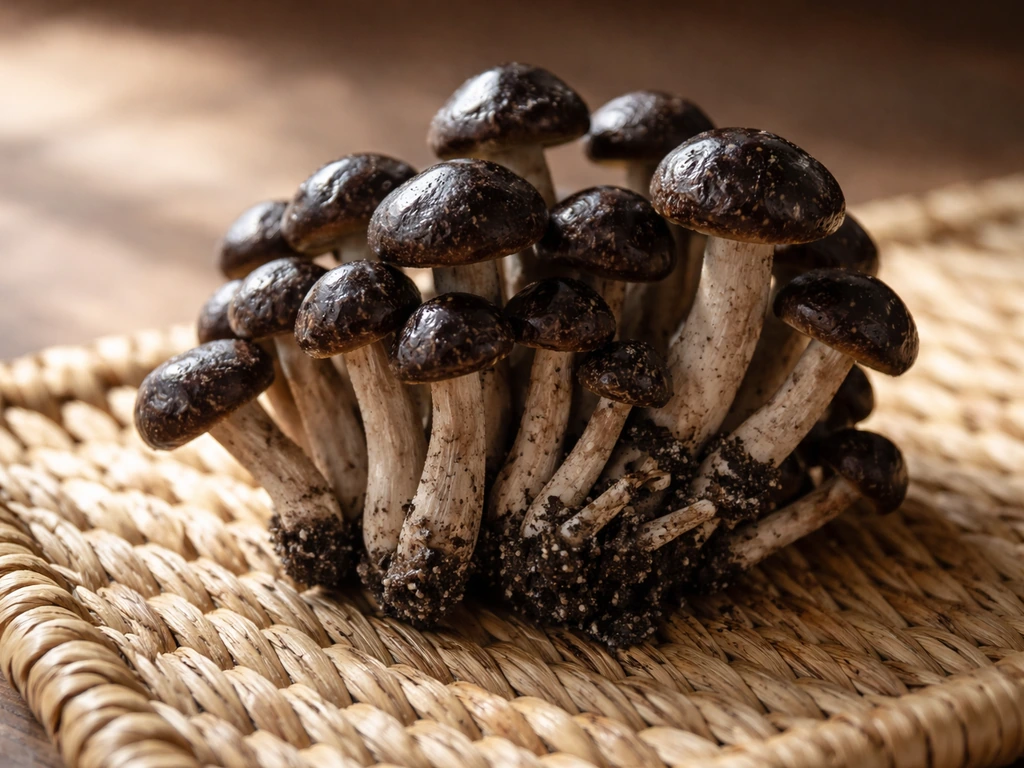
It's worth being upfront: 'djon djon' is a colloquial Haitian/Creole name for a group of small, dark mushrooms, not a single botanical species. Multiple taxonomically distinct species can be sold or foraged under this name. Wikipedia notes that “djon djon” is commonly associated with the scientific name Pleurotus tuber-regium, likely behind the use of the black tuber/king tuber oyster common names [multiple taxonomically distinct species can be sold or foraged under this name](https://en. wikipedia.
org/wiki/Pleurotus_tuber-regium). That said, Pleurotus tuber-regium is the species most consistently tied to cultivated djon djon in agricultural research and in the specialty mushroom market. It produces a firm, flavorful fruiting body with a dark cap and a distinctive earthy aroma that carries beautifully into rice-based dishes. When you're sourcing spawn or cultures for home cultivation, P.
tuber-regium is the species you want to look for specifically. If a vendor just sells 'djon djon spawn' without a scientific name, ask them to confirm it before buying.
This species thrives in tropical and subtropical conditions, which matters for your setup. It likes warmth, tolerating colonization temperatures between 25°C and 30°C (77°F to 86°F), and it prefers a more humid fruiting environment than something like lion's mane or shaggy mane. If you’re specifically aiming to grow lion’s mane in Australia, you’ll want to fine-tune temperature, humidity, and fruiting conditions to match this species lion's mane. If you want the full, step-by-step guide for your own setup, see our instructions on how to grow shaggy mane mushrooms. If you're growing in a cooler climate, you'll need to actively manage temperature, especially during colonization.
Choosing your growing setup before you start
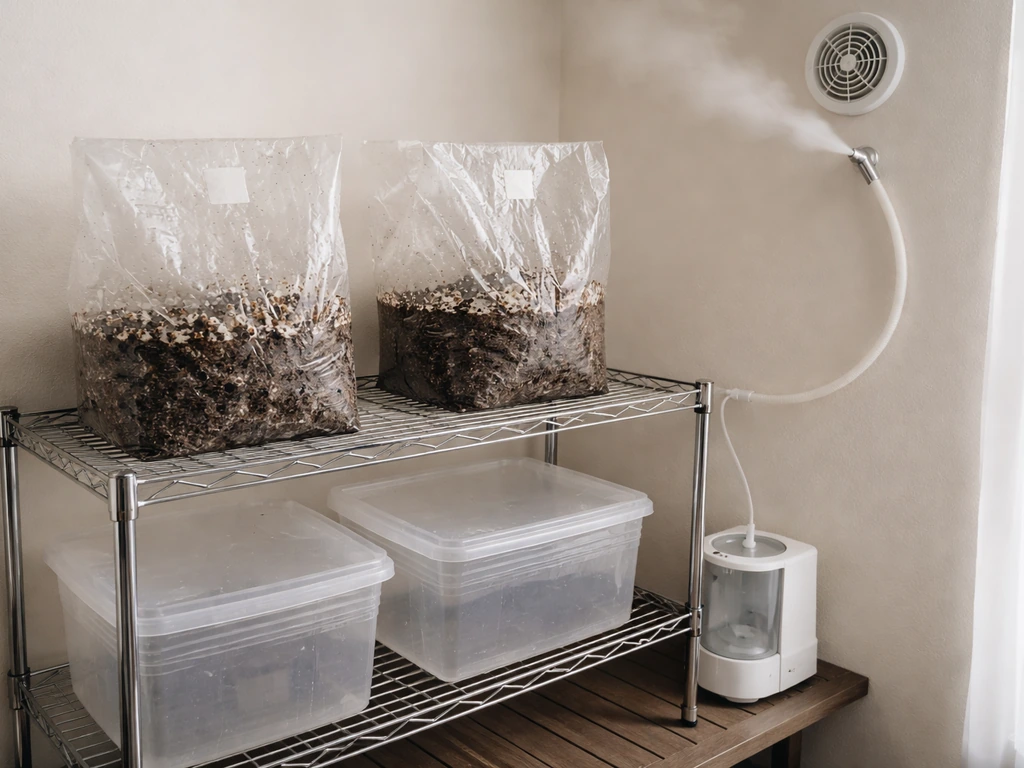
For most home growers, an indoor bag or bucket setup is the most practical and controllable option. Outdoor bed cultivation is possible in warm, humid climates, but it introduces far more contamination risk and seasonal dependency. I'd recommend starting indoors even if you eventually plan to grow outdoors, just to understand how the species behaves before putting it at the mercy of your garden.
Here's what a basic indoor setup looks like. You'll need polypropylene grow bags or wide-mouth mason jars for incubation, a pressure cooker or large pot for substrate sterilization or pasteurization, a clean workspace for inoculation (a still-air box works fine for beginners), and a fruiting chamber, which can be as simple as a large clear tote with holes drilled for airflow. A spray bottle, thermometer, and hygrometer round out the essentials. Nothing on this list requires serious investment.
Where to get spawn and whether to use spores instead
Spawn is far more reliable than spores for beginners. Spores require making agar plates, isolating healthy genetics, and building a culture before you ever touch substrate. That's a fun rabbit hole once you're comfortable, but if your goal is a first successful harvest, start with grain spawn or sawdust spawn from a reputable supplier. Search specifically for 'Pleurotus tuber-regium grain spawn' and verify the species name with the vendor. Some specialty tropical mushroom suppliers, particularly those serving Caribbean and West African diaspora markets, carry it. Online mushroom cultivation communities can be a useful pointer here if commercial availability is patchy in your region.
Indoor cultivation gives you control over temperature, humidity, and contamination risk, which is why it's strongly preferred for a first grow. Outdoor methods, such as log or buried stump inoculation, can work well for P. tuber-regium in USDA hardiness zones 9 and above, but colonization is much slower outdoors and pinning is unpredictable. Stick with indoor bags or jars for your first few cycles.
Picking and preparing your substrate
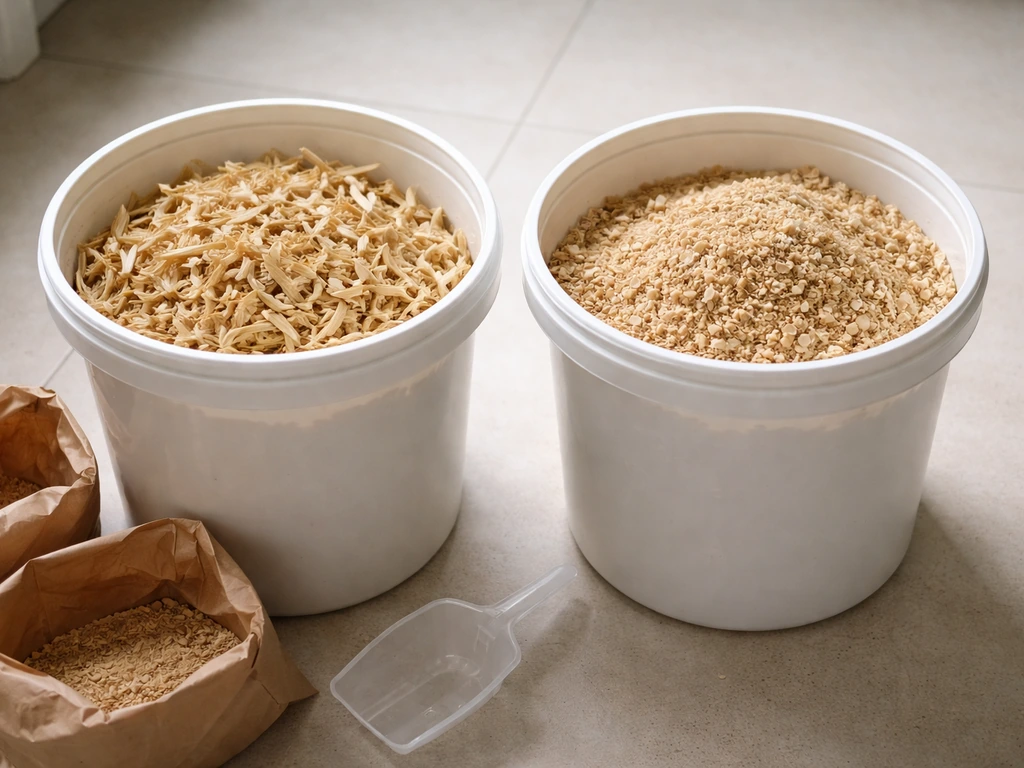
Research on P. tuber-regium cultivation is clear on substrate performance: paddy straw colonizes fastest at around 12 days, sugarcane bagasse takes about 15 days, and sawdust runs slowest at roughly 23 days. If speed matters to you, paddy straw or a straw-sawdust blend is the practical pick. That said, hardwood sawdust (oak, beech, or similar) tends to produce denser, heavier fruiting bodies and is widely available. Many growers use a 70/30 or 80/20 blend of hardwood sawdust and wheat bran or rice bran, which boosts nutrition without becoming so rich that contamination runs riot.
Sterilization vs. pasteurization: which do you need?
Straw-based substrates can be pasteurized rather than fully sterilized. Pasteurization means heating the substrate to 65°C to 82°C (149°F to 180°F) and holding it there for 60 to 90 minutes in a large pot or bucket. This kills most competing molds and bacteria without requiring a pressure cooker. Hardwood sawdust mixes, because they're denser and more nutrient-rich, need full sterilization: 121°C (250°F) for 2.5 hours in a pressure cooker. Skipping sterilization on a sawdust/bran mix is the most common beginner mistake and almost always leads to green or black mold takeover within a week.
Hydration
Target field capacity, meaning the substrate holds moisture but doesn't drip water when you squeeze a handful firmly. For straw, soak it for 12 to 18 hours in cold water or 60 to 90 minutes in hot water (pasteurization method), then let it drain until it hits that squeeze test. For sawdust mixes, add water gradually while mixing until the substrate reaches roughly 60 to 65% moisture content. Over-wet substrate drowns mycelium and invites bacterial contamination. Under-wet substrate stalls colonization. The squeeze test is your most reliable guide.
Inoculation and incubation
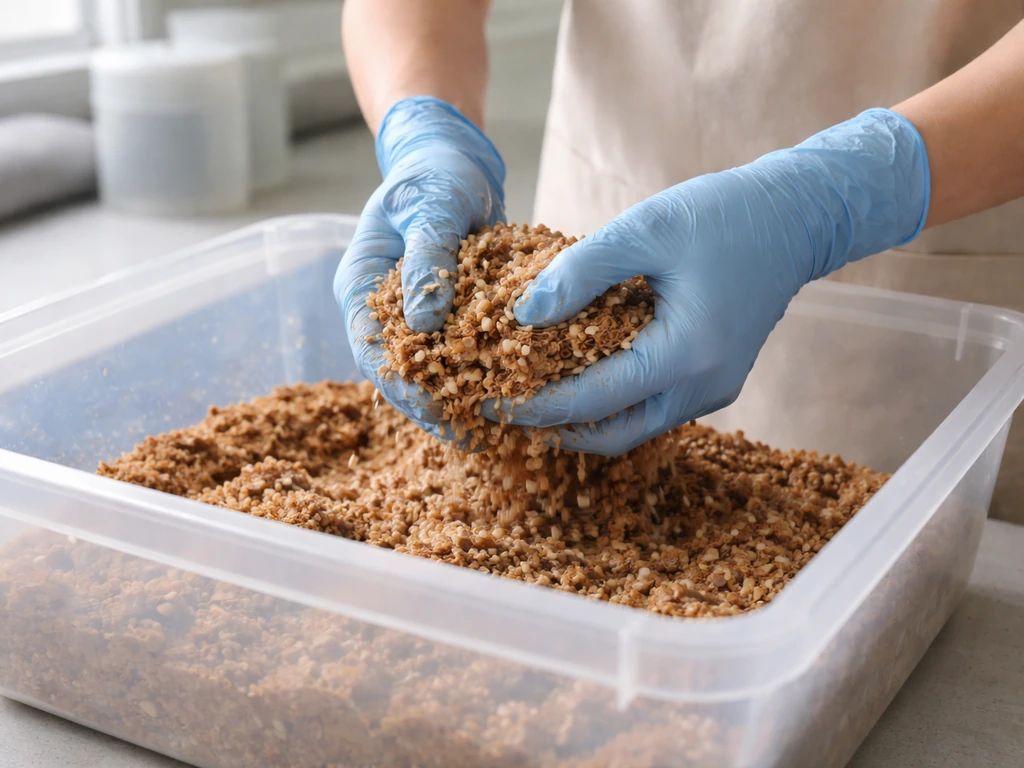
Once your substrate is sterilized or pasteurized and cooled to room temperature (below 30°C / 86°F, and ideally closer to 25°C), you're ready to inoculate. Work in the cleanest environment you can manage. A still-air box, basically a clear tote with arm holes cut in the side, reduces airborne contamination dramatically compared to an open table. Wipe down your work surface with isopropyl alcohol, flame-sterilize any tools, and move deliberately without unnecessary air movement.
Mix grain spawn into your substrate at a rate of about 10 to 20% by weight. Higher spawn rates colonize faster and leave less time for contaminants to establish. Pack inoculated substrate into polypropylene bags, seal them with a filter patch or a stuffed polyfill neck, and label with the date. Place bags somewhere dark, warm, and stable, ideally 25°C to 28°C (77°F to 82°F). A seedling heat mat set to low under the bags works well in cooler homes.
How to tell colonization is working
Within 3 to 5 days you should see white, cottony mycelium spreading out from each spawn grain. It should smell earthy, slightly sweet, or mushroom-like. No visible growth after 7 days usually means the spawn was weak, the substrate was too hot when inoculated, or contamination has taken hold. Healthy colonization is bright white and fuzzy. Anything green, black, orange, or pink is contamination and that bag needs to be removed immediately and sealed before disposal. On straw substrate, expect full colonization in roughly 12 days. On sawdust, give it 3 to 4 weeks.
Setting up your fruiting chamber
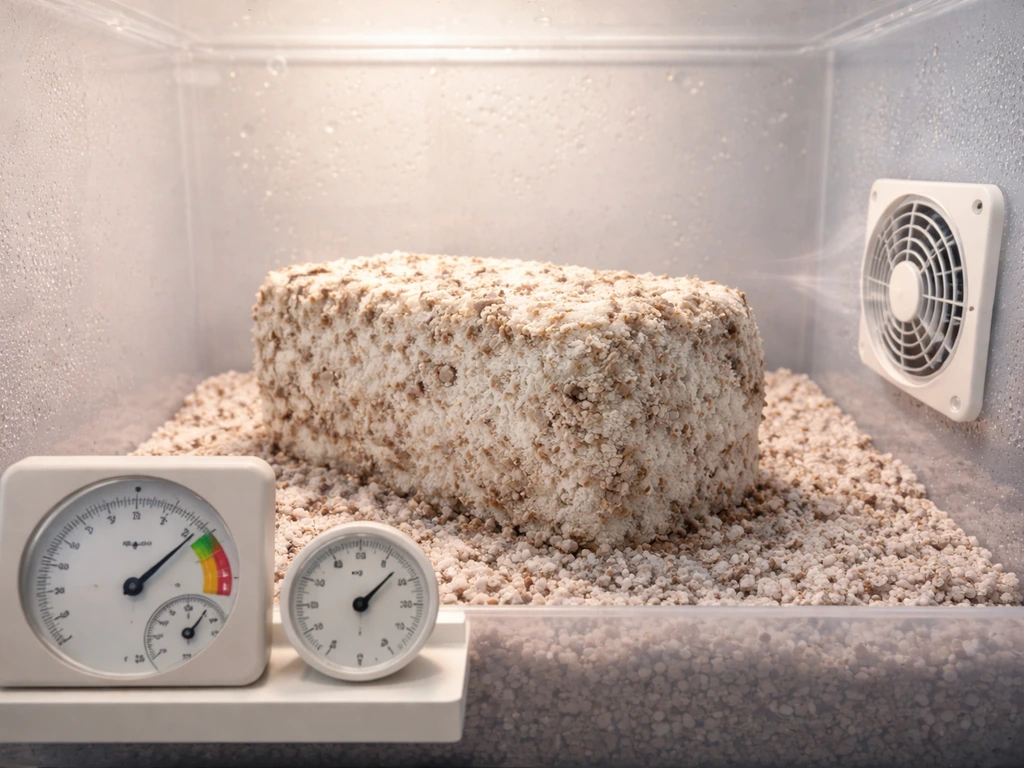
Once the substrate block is fully white with mycelium, it's time to trigger fruiting. The key signals P. tuber-regium needs are a drop in CO2, an increase in fresh air exchange, maintained high humidity, and indirect light. You don't need grow lights, but a few hours of ambient indirect light or a basic LED on a timer helps orient pin development.
- Humidity: maintain 85 to 95% relative humidity inside the fruiting chamber. Mist the walls of the chamber (not directly onto the block) 2 to 3 times per day.
- Fresh air exchange: fan or open the chamber for 1 to 2 minutes at least twice daily to reduce CO2 buildup. High CO2 causes elongated, poorly formed caps.
- Temperature: 22°C to 28°C (72°F to 82°F) for fruiting. A slight temperature drop of 2°C to 5°C from incubation temperature can help trigger pinning.
- Light: 12 hours of indirect or low-intensity light per day is sufficient. Avoid direct sun.
- Watering: never spray water directly onto developing pins or caps. Mist the chamber walls and the exposed block sides only.
The shotgun fruiting chamber (a clear tote with holes drilled on all sides, stuffed with perlite on the bottom to hold moisture) is a tried-and-tested DIY option that handles humidity and airflow well for a beginner setup. If you want more control, an inkbird humidity controller plugged into a small ultrasonic humidifier removes the guesswork entirely.
Harvesting and keeping the flushes coming
Harvest djon djon mushrooms just before or as the caps begin to flatten out, when they're still slightly convex and the veil under the cap (if present) hasn't fully opened. For P. tuber-regium, this typically means caps are 3 to 7 cm across. Waiting too long results in spore drop, reduced shelf life, and a bitter or overly pungent flavor. Twist and pull clusters at the base rather than cutting, which leaves less dead tissue on the block to invite contamination between flushes.
After harvest, remove any remaining stumps or dead material from the block surface, let the block rest for 5 to 7 days with reduced misting, then resume the fruiting chamber conditions. A healthy block from a good substrate and spawn can produce 2 to 4 flushes before yields noticeably drop. Each subsequent flush is typically lighter than the previous one, so if your third flush looks sparse, that's normal, not a failure.
Storing your harvest
Fresh djon djon keeps for 3 to 5 days in the refrigerator, loosely wrapped in paper (not plastic, which traps moisture). For longer storage, they dry well at 40°C to 50°C (104°F to 122°F) in a dehydrator for 4 to 6 hours, and dried mushrooms keep for months in an airtight jar. The dried form is actually how djon djon is traditionally used in cooking, steeped in water to release that deep, earthy black broth that gives Diri djondjon its distinctive color and flavor.
Your realistic grow timeline
| Stage | Straw Substrate | Sawdust/Bran Substrate |
|---|---|---|
| Substrate prep and inoculation | Day 1 | Day 1 |
| Full colonization | Days 12 to 14 | Days 23 to 28 |
| Pins appear | Days 16 to 20 | Days 28 to 35 |
| First harvest | Days 20 to 25 | Days 35 to 42 |
| Second flush | Days 30 to 35 | Days 45 to 52 |
| Block exhausted (after 2 to 4 flushes) | Days 50 to 70 | Days 65 to 90 |
Troubleshooting when things go wrong
No growth after a week
Check your temperature first. If the bags are below 20°C (68°F), mycelium will stall or not start at all. If temp is fine, the spawn may have been dead or old. Always use fresh spawn from a reputable source and check for signs of life (active white growth) before inoculating. Also confirm the substrate had cooled fully before inoculation, because adding spawn to a substrate that's still above 35°C (95°F) kills it immediately.
Contamination (green, black, or pink mold)
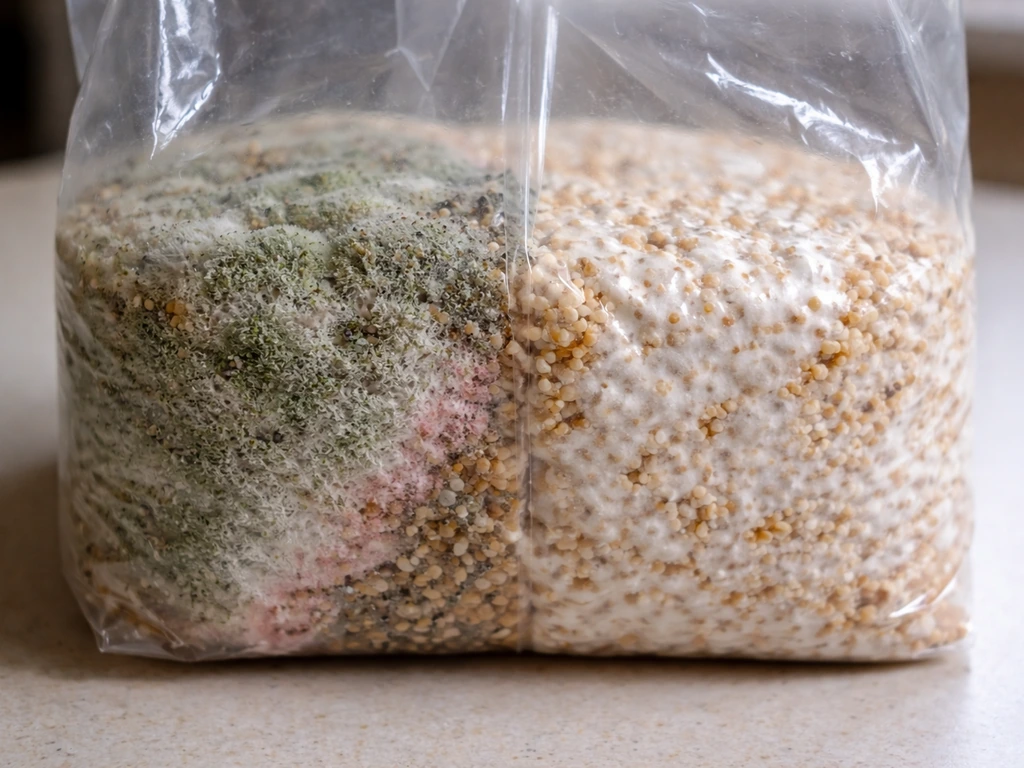
Green mold (Trichoderma) is the most common contaminant and almost always means inadequate sterilization, poor hygiene during inoculation, or substrate that was too wet. Remove the bag immediately from your growing area, double-bag it, and dispose of it outside. Don't open contaminated bags near your clean cultures. Review your inoculation setup and sterilization process before the next batch.
Pins won't form
The most common causes are CO2 buildup (not enough fresh air exchange), humidity too low, or temperature too high. Increase your daily fresh air exchange to 3 to 4 times per day, check that your hygrometer reads above 85% inside the fruiting chamber, and try a small temperature drop of 2°C to 3°C overnight, which mimics a natural signal to fruit.
Malformed caps or long, spindly stems
This is almost always a CO2 problem. Mushrooms elongate their stems in high CO2 environments as a survival response. Double your fresh air exchange frequency. If you're using a sealed chamber with no holes, drill more ventilation and add polyfill filters to keep humidity in while letting gas exchange happen.
Low yield or weak second flush
Low yield on the first flush often means the block wasn't fully colonized before you moved to fruiting, or your spawn rate was too low. For subsequent flushes, make sure you're cleaning the block surface after each harvest and giving it an adequate rest period. Soaking a tired block in cold water for 4 to 6 hours before returning it to the fruiting chamber (a technique called cold shocking) can kick-start another flush.
Quick troubleshooting checklist
- No growth after 7 days: check temperature (target 25 to 28°C), check spawn viability, confirm substrate was cool at inoculation
- Green or pink mold: improve sterilization, improve inoculation hygiene, reduce substrate moisture, remove contaminated bags immediately
- No pins after full colonization: increase fresh air exchange, raise humidity to 85 to 95%, try a 2 to 3°C temperature drop
- Spindly or malformed mushrooms: reduce CO2 by adding more ventilation holes or fanning more frequently
- Weak or no second flush: clean block surface post-harvest, rest block for 5 to 7 days, try a cold water soak before reintroducing to fruiting conditions
- Slow colonization: check that temperature is warm enough, consider switching from sawdust to straw for faster results
What to do after your first successful harvest
Once you've pulled your first flush, the process just loops: clean the block, rest it, return to fruiting conditions, harvest again. After 3 or 4 flushes, spent blocks make excellent garden compost and are particularly good for amending heavy clay soils. If you're hooked, the natural next step is learning to clone from a healthy cap to agar, which lets you preserve your best genetics indefinitely and eventually make your own spawn. That path is similar whether you're working with djon djon, lion's mane, or other specialty varieties. For now, though, getting a clean first harvest is the milestone to focus on.
The biggest thing I can tell you from experience is that djon djon cultivation rewards patience and hygiene above everything else. Most failures trace back to rushing sterilization or getting sloppy during inoculation. Slow down on those two steps and the rest of the process is actually quite forgiving.
FAQ
Can I grow “djon djon” mushrooms from wild foraged material or non-specified spawn?
Yes, but expect results to be inconsistent. The market label “djon djon” can refer to multiple species, and only Pleurotus tuber-regium is reliably cultivated under that name. If you start with a culture or spawn that does not specify the scientific name, you may get a different mushroom with different temperature needs and fruit timing.
What should I do if my home temperature fluctuates during incubation?
Aim for an incubation environment that stays stable in the mid to high 20s Celsius. If your space swings a lot during the day (for example, warm by day and cool at night), colonization can slow and contaminate more easily. A heat mat set low under the bag and a thermometer placed near the bags helps you keep the whole block within range.
How do I tell if my substrate is the right moisture level, and what if it’s too wet or too dry?
Use the squeeze test, and adjust gradually. If water squeezes out readily, the block is too wet, which increases bacterial problems. If no water can be expressed and the mix feels dusty, it is too dry and will stall. For sawdust mixes, add water in small increments and re-check after mixing, because bran and sawdust hold moisture differently.
Should I move to fruiting immediately when the bag is fully white?
Don’t start fruiting just because the bag looks fully white. Wait until colonization is complete and the block is no longer steaming or warm from the incubator, then begin the humidity, airflow, and indirect light signals. If you switch to fruiting while the block is still above about 30°C, you risk stress and uneven pinning.
Can I pasteurize instead of pressure-sterilizing for every substrate type?
Sterilization is critical for hardwood sawdust plus bran. Pasteurization is typically the right approach for straw-based substrates, because straw tolerates that method better. If you use pasteurization on a dense sawdust/bran mix, you may see green or black mold quickly, especially once you introduce fresh-air conditions in fruiting.
What signs help me confirm the mycelium is healthy before fruiting?
Track the stage by smell and appearance, not only color. Healthy colonization should look bright white and fuzzy, with an earthy or mushroom-like scent. If you smell sour, ammonia-like, or unusually “wet” odors, treat it as suspect even if the surface still looks mostly white.
My colonization stalled, what should I check first before assuming my spawn is bad?
If mycelium growth stalls, isolate the batch and check for the most common causes in order: substrate too hot during inoculation, incubation below about 20°C, old or dead spawn, and overly wet substrate. Avoid opening the bag to “check inside” repeatedly, each opening increases contamination risk.
What is the safest way to handle a contaminated bag?
If contamination appears, remove the bag immediately and do not open it near clean cultures. Seal it, then dispose of it outside. Also sanitize the area and tools, because contamination spores spread easily. For your next batch, focus on improving hygiene at inoculation, increasing sterilization quality, and tightening moisture control.
How many flushes should I expect, and what should I do between flushes?
Sawdust blocks and straw blocks can both fruit multiple flushes, but yields often drop after a few rounds. After each harvest, remove dead tissue and give the block a true rest with reduced misting, then reintroduce fruiting conditions. If the third flush is sparse, it often indicates the block is nearing end-of-life rather than a setup failure.
Does cold shocking always work, and how can I avoid causing problems when I try it?
Cold shocking can help, but timing matters. Soak for the short window described in the article (about 4 to 6 hours), then return the block to fruiting conditions and monitor humidity and airflow. Overdoing soaking or failing to dry the surface slightly after can invite bacterial issues.
Why do my mushrooms spoil faster in plastic, and what’s the best way to store them?
Yes, but aim for “paper wrap” breathability. Storing in plastic traps moisture and can accelerate spoilage. If you want more usable time, keep mushrooms cold and dry on the outside, then use them within a few days. For longer storage, drying is more reliable than refrigeration.
How do I get the best flavor for Diri djondjon if I’m using dried mushrooms?
If your goal is the deep dark broth, dry the mushrooms thoroughly and store them airtight. When steeping, use enough hot water to fully rehydrate and extract, and then strain out debris if you want a cleaner broth. Dried djon djon is generally more consistent for flavor and shelf life than fresh.