
You can reliably grow lion's mane mushroom (Hericium erinaceus) in Australia by inoculating a hardwood sawdust block with grain spawn, colonising it indoors at 21–24°C for 3–4 weeks, then fruiting at 18–24°C with humidity above 85% and good fresh air exchange. From inoculation to your first harvest usually takes 5–8 weeks depending on your setup and the time of year. It's not the easiest mushroom to grow, but it's very doable at home if you nail the humidity and CO₂, those two factors are where most Australians run into trouble.
How to Grow Lion’s Mane Mushroom in Australia: Step-by-Step
Marcus Holloway
6 Jun 2026
Choosing a lion's mane strain and where to buy spawn in Australia
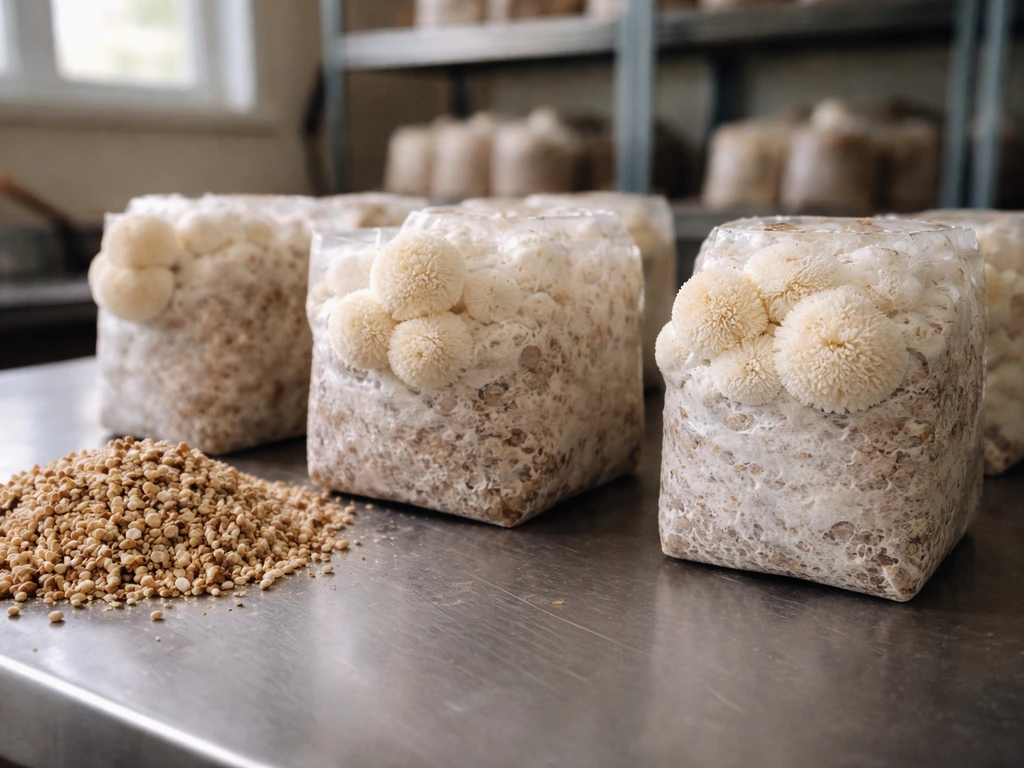
There are a handful of reputable Australian suppliers selling lion's mane spawn and ready-to-fruit grow blocks right now. Melbourne Mushroom Emporium sells Hericium erinaceus millet grain spawn that's well suited for home use, and Little Acre Mushrooms sells pre-made lion's mane grow blocks that are a great starting point if you want to skip straight to fruiting. Inner West Mushrooms is another solid option, particularly if you're in New South Wales. Buying locally means faster shipping, fresher spawn, and you're getting stock that's already been selected to perform in Australian humidity and temperature ranges.
For strain selection, most Australian suppliers carry a single standard Hericium erinaceus strain, which is fine for home growing. You don't need to stress about genetics at this level. What matters more is spawn quality: look for grain spawn that's fully white and fluffy with no green, black, or sour smell. If you're brand new to mushroom cultivation, a ready-to-grow block is genuinely the smartest starting point. It removes the sterilisation and inoculation steps entirely and lets you focus on learning the fruiting environment first. Once you've got a flush or two under your belt, move to making your own blocks from grain spawn.
Indoor vs outdoor growing in the Australian climate
Lion's mane is almost exclusively an indoor crop in Australia. Outdoors, you're fighting heat, low humidity, and wind, all three of which wreck lion's mane fruiting bodies fast. The mushroom is sensitive to drying out and absolutely hates temperatures above 26°C, which rules out most of coastal and inland Australia during summer. In cool temperate regions like the Southern Highlands, parts of Victoria, or Tasmania, outdoor log cultivation in a shaded, sheltered spot can work during autumn and spring, but it's a slow method (12–18 months to first fruit) and you still need to manage drying.
Indoors is the way to go for most Australian growers. A dedicated grow tent with a humidifier and a small fan is the gold standard setup. Even a spare bathroom, laundry, or a tub with a loose-fitting lid can work if you mist frequently. Little Acre specifically notes that if you don't have a tent or chamber, you'll need to mist manually and often to hit the 85%+ humidity lion's mane needs. In practice, a cheap ultrasonic humidifier connected to a humidity controller in a 60x60cm tent costs around $80–120 all up and takes the guesswork out of it completely.
| Method | Setup cost | Climate suitability | Time to first harvest | Best for |
|---|---|---|---|---|
| Indoor grow tent | ~$80–150 | All of Australia year-round | 5–8 weeks | Most growers |
| Indoor DIY humidity box | ~$10–30 | All of Australia year-round | 5–8 weeks | Beginners on a budget |
| Outdoor log inoculation | ~$20–50 | Temperate zones, cool seasons only | 12–18 months | Patient growers in VIC/TAS/NSW highlands |
Substrate options and how to prepare them
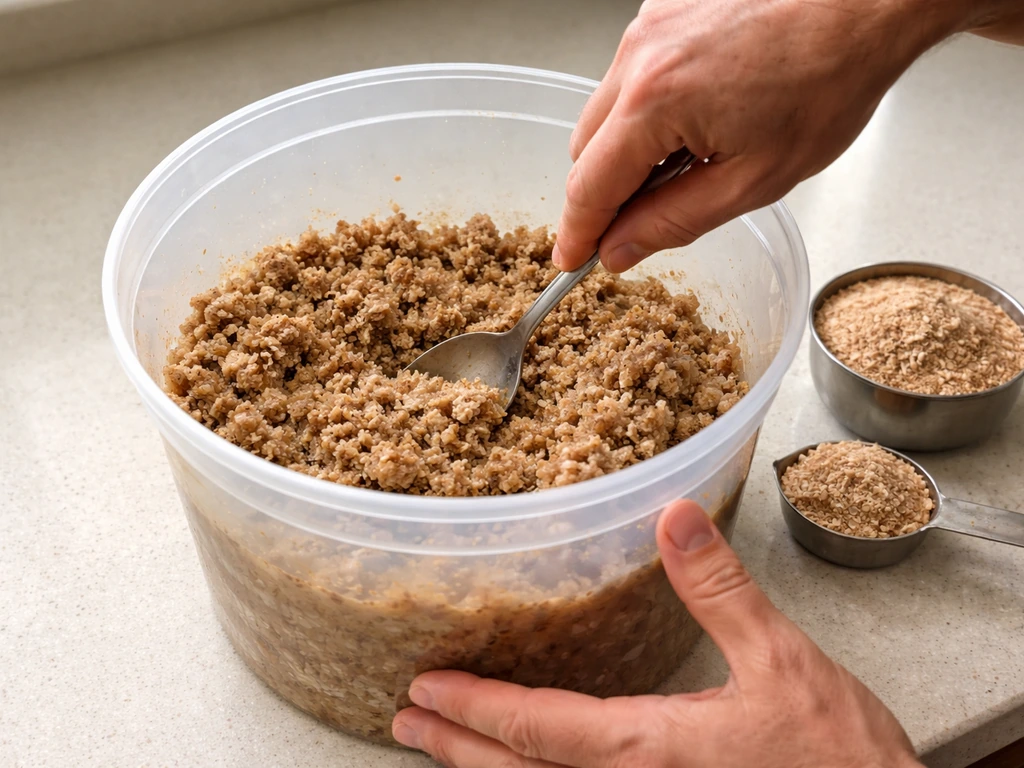
Lion's mane is a wood-loving species and does best on hardwood-based substrates. Melbourne Mushroom Emporium lists Master's Mix as the preferred substrate for their lion's mane grain spawn, with supplemented hardwood blocks and plain hardwood sawdust also performing well. Master's Mix is a 50/50 blend of hardwood sawdust and soy hulls by dry weight, and it consistently produces strong colonisation and good yields. The trade-off is that it's highly nutritious, so it needs thorough sterilisation (not just pasteurisation) or contamination risk goes through the roof.
Hardwood sawdust blocks (the go-to option)
For most home growers, a supplemented hardwood sawdust block is the sweet spot. Use hardwood sawdust or pellets (pellets work great, just hydrate them first), mix in 10–20% wheat bran or rice bran by dry weight for supplementation, and target a moisture content of around 60–65%. That means you can squeeze the mix firmly in your fist and only a few drops of water come out. Pack the mix into heat-safe polypropylene bags with filter patches, then pressure cook at 15 PSI for 2.5 hours minimum. Let the blocks cool completely (overnight) before inoculation.
Hardwood logs (the outdoor long-game option)
If you want to grow outside on logs, use freshly cut or recently felled hardwood, eucalyptus works well, as do oak or alder if you can source them. Cut logs 10–15 cm in diameter and 60–90 cm long. Drill holes in a diamond pattern every 10–15 cm, plug with sawdust spawn or plug spawn (inoculated wooden dowels), and seal with cheese wax. Store in a shaded, humid spot and water the logs during dry periods. Expect 12–18 months before your first fruiting. It's low labour once inoculated, but patience is genuinely required.
Inoculation, incubation, and colonisation: what to expect
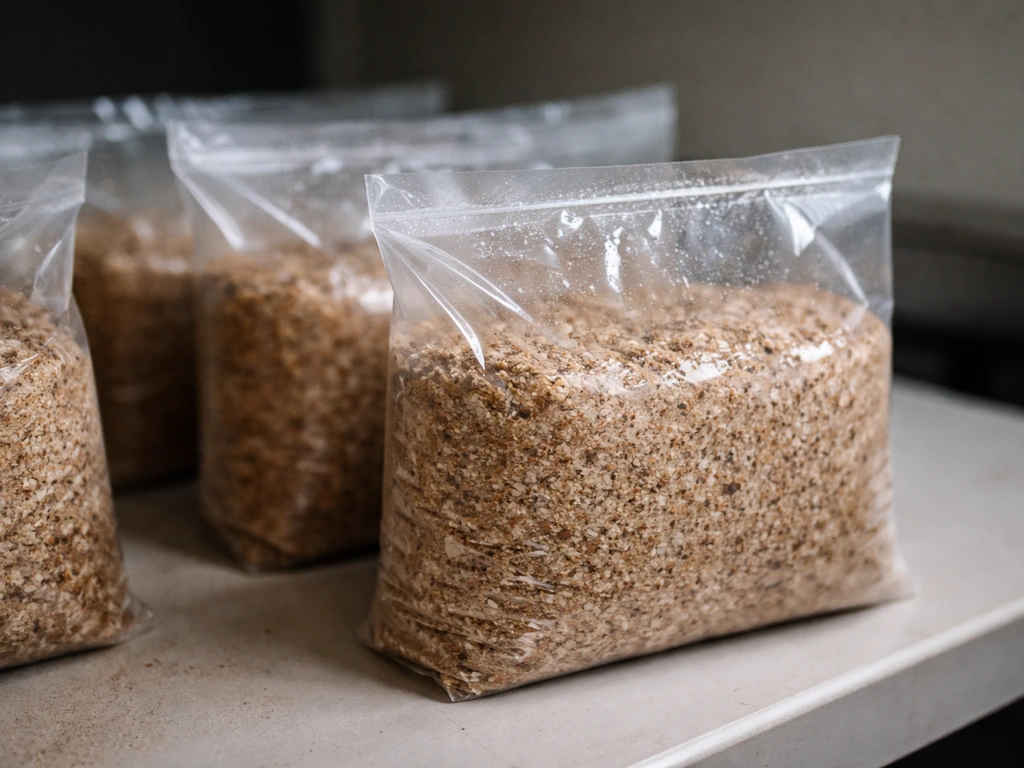
Once your sterilised blocks have cooled to room temperature, inoculate in as clean an environment as you can manage. If you are growing lion's mane from spores, you'll start with spore-based inoculation and then follow the same sterilisation, incubation, and colonisation steps before moving into fruiting. A still-air box (a clear tub with arm holes) works well for home growers. Wipe down all surfaces with isopropyl alcohol (70%), flame your scalpel or inoculation tool, and work quickly. For a standard 1–1.2 kg block, use roughly 100–150 g of grain spawn. Mix or layer the spawn through the block if your bag design allows it, or inject liquid culture through a self-healing injection port if you're going that route. Seal the bag and label it with the date.
During incubation, keep blocks at 21–24°C in a dark location. Don't stress about total darkness, indirect light is fine. Lion's mane colonises more slowly than oyster mushrooms, so don't panic if progress looks slow in the first week. Expect full colonisation in 3–4 weeks for a supplemented block. The mycelium looks bright white and ropy, almost stringy compared to oyster mycelium. Some early yellowing of the block surface is normal metabolic activity, not contamination. However, if you see green, black, or pink patches, that's contamination. Remove the block from your growing area immediately and dispose of it outside.
If you're growing from mycelium rather than fruit bodies, the process builds on these same colonisation principles, the key difference is just your starting material. If you're wondering how to grow lion's mane mycelium specifically, focus on keeping your incubation conditions stable so the culture colonises cleanly before you start fruiting. The colonisation timeline and substrate choices remain consistent.
Fruiting conditions: humidity, CO₂, temperature, and light
This is where lion's mane separates itself from more forgiving species like oysters. Get these parameters right and you'll be harvesting beautiful white cascading pom-poms. If you want the full, step-by-step guide on how to grow shaggy mane mushrooms, follow the same principles for substrate, incubation, and fruiting conditions lion's mane. Get them wrong and you'll end up with small, yellowed, or stunted fruitings.
- Temperature: 18–24°C is the sweet spot. Lion's mane stalls below 15°C and the fruitings turn yellow and bitter above 26°C. In Australian summers, keeping the growing space cool is often the biggest challenge.
- Humidity: maintain above 85%, ideally 90–95% during pinning. A hygrometer is non-negotiable — don't guess at this.
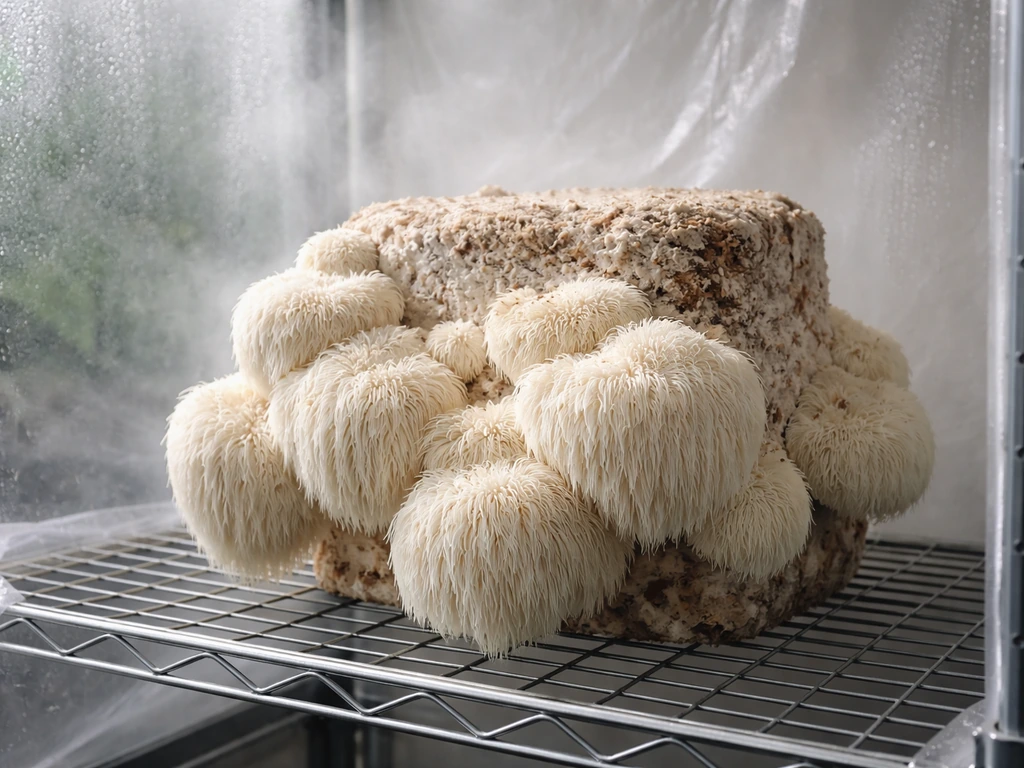
- CO₂: keep levels below 1000 ppm by providing regular fresh air exchange. In a grow tent, a small PC fan running for 10–15 minutes every few hours does the job. High CO₂ causes lion's mane to form long, spindly, coral-like growths instead of the characteristic round pom-pom shape.
- Light: lion's mane needs indirect light to trigger and direct pinning. A 12-hour light cycle from a standard LED or even indirect sunlight through a window works fine. Complete darkness inhibits fruiting.
- Water: mist the exposed fruiting surface lightly twice daily (morning and evening). Never spray water directly onto developing pins — mist the walls of your tent or chamber and let humidity do the work.
To initiate fruiting, cut a 5–8 cm X or cross shape in the bag where you want the mushroom to emerge, or peel back the top of the bag for top fruiting. Some growers do a cold shock first (24 hours in a cooler room or fridge at around 10–12°C) to trigger pinning, though this isn't strictly necessary if your fruiting conditions are already dialled in. Inner West Mushrooms' instructions note that pins typically begin to form near the slits within 5–10 days of initiating fruiting conditions.
Harvesting, getting more flushes, and what actually goes wrong
Harvest timing and technique
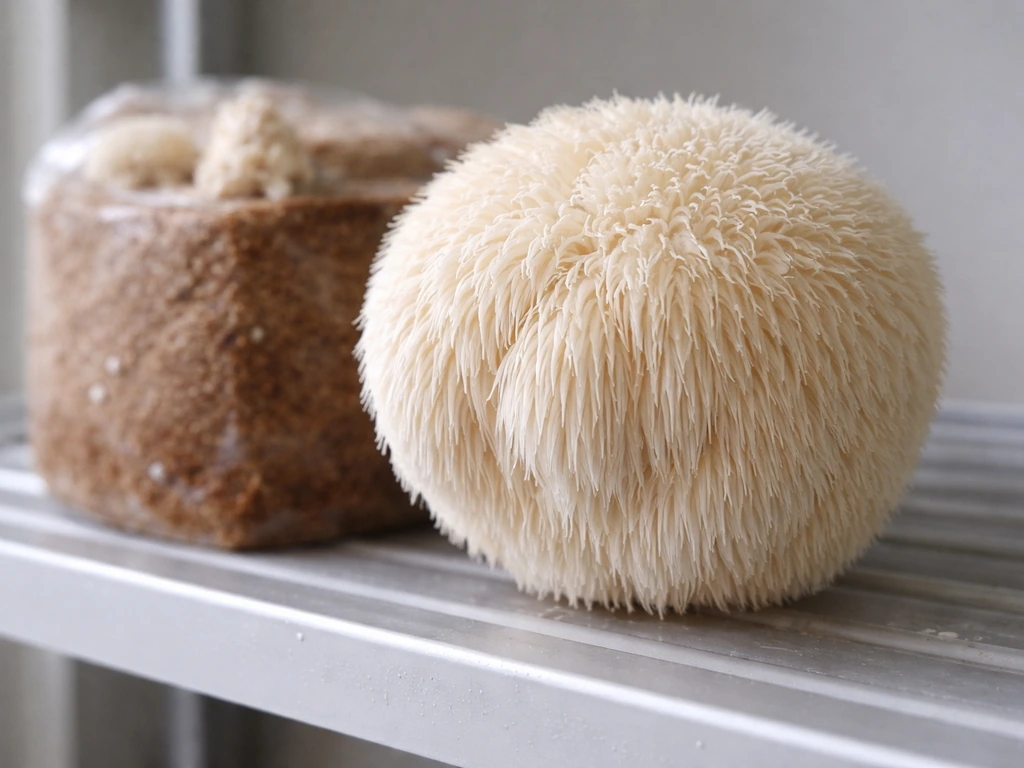
Harvest lion's mane just before or right as the white teeth (the characteristic hanging spines) begin to elongate. At this stage, the mushroom is at peak flavour and texture. If you wait too long, the fruiting body turns yellow and develops a bitter taste. Twist and pull the mushroom cleanly from the block, or cut it at the base with a sharp knife. Don't leave any rotting material behind on the block surface. Little Acre's grow blocks typically deliver a first flush within 2–3 weeks of initiating fruiting. First flush weights vary, but a healthy 1.2 kg block can yield 100–200 g fresh weight per flush, sometimes more.
Getting a second and third flush
After harvest, wipe the surface of the block clean with a damp cloth, close or fold back the bag, and return it to rest conditions at room temperature for 7–14 days. Water the surface lightly every couple of days. Reintroduce fruiting conditions for the second flush. Lion's mane blocks typically give 2–3 flushes before yields drop off noticeably, with the first flush almost always being the largest.
The problems you'll actually run into
No pins forming is the most common complaint. Nine times out of ten it comes down to CO₂ being too high, humidity too low, or temperature out of range. Check all three before assuming your block is a dud. Increase fresh air exchange first, it's the most overlooked factor. If humidity is borderline, increase misting frequency or add more water to your humidifier reservoir.
Yellow, bitter fruitings usually mean heat stress (above 26°C) or the mushroom was harvested too late. In Australian summers, running your grow in an air-conditioned room or placing ice packs near (not on) your tent during the hottest part of the day can make a real difference.
Slow or stalled colonisation is often a temperature issue, either too cold in winter or the block wasn't fully sterilised and is competing with other organisms. Maintaining blocks at 21–24°C during incubation is worth taking seriously in Melbourne winters where ambient room temperatures can drop to 14–16°C.
Contamination (green Trichoderma mould is the most common culprit) usually means your sterilisation wasn't long enough, inoculation hygiene was poor, or the block was opened while still warm. Double your sterilisation time if contamination is recurring. For grain spawn work specifically, pressure cooking for less than 2 hours at 15 PSI is asking for trouble.
Drying and cracking on the fruiting surface is a humidity problem. If you’re wondering how to grow djon djon mushrooms, humidity and airflow are just as critical for getting healthy, strong fruiting humidity problem. In drier parts of Australia (Canberra, Adelaide in summer, inland areas), you may need to mist 3–4 times daily without a tent. A simple humidity tent made from a clear plastic storage tub with small holes drilled in the sides solves this cheaply and immediately.
Seasonal timing across Australia: working with your climate
Autumn (March–May) and spring (September–November) are the easiest seasons to grow lion's mane in most of Australia because ambient temperatures naturally sit in the 18–24°C fruiting window. Summer growing is possible indoors with air conditioning, but you'll be fighting heat stress. Winter growing in Melbourne and Canberra means using a heat mat or placing your grow space in a warmer room to keep colonisation temperatures up at 21–24°C. In subtropical Queensland and northern New South Wales, winter is actually your prime growing season outdoors, while summer is too hot even for indoor grows without cooling.
If you're planning your first grow, aim to start inoculation in late summer or early autumn so the blocks colonise as temperatures cool into the ideal fruiting range. That timing tends to produce the most hands-off, reliable results for Australian home growers. Once you've got a few cycles behind you and understand how your specific setup responds, you can push into the trickier seasons with much more confidence.
FAQ
What should I do if I cannot keep my fruiting temperature in the 18–24°C range in winter?
If your room rarely reaches 18–24°C during fruiting, use a small thermostatic heater or move the tent into a warmer room, rather than lowering humidity to compensate. Lion’s mane stops pinning when either temperature or CO₂ is off, so fix temperature first, then tune fresh air exchange to keep humidity above 85% without stale air.
How often should I open my bags or check the block during colonisation?
Do not open a block for “checking” while it is still warm from sterilising or incubation. Open only in a clean area, use quick hands, and reseal immediately, because every extra exposure increases contamination risk.
Can I grow lion’s mane in a spare room or bathroom instead of a grow tent?
Yes, but your humidity target is the key. If you use a bathroom or laundry instead of a tent, measure humidity with a cheap hygrometer, and plan on misting more often, plus adding a small fan on a low setting to prevent stagnant, overly wet spots.
What causes pins to start forming and then stop growing?
If pins start but stall, the most common cause is CO₂ buildup or uneven airflow around the slits. Increase fresh air exchange first, then slightly reduce surface wetness (more humidity in the air, less standing water on the block).
Can I cut away contaminated parts of the block and keep going?
Green or black patches are contamination, remove the entire block right away. Don’t try to “salvage” by cutting away spots, because contamination often spreads through the block and sporulates into your grow area.
How do I know the exact time to harvest so it does not turn yellow and bitter?
Harvest timing is about when the spines are still mostly white and just beginning to elongate. If you wait until they look more fully extended, they can turn yellow and taste bitter, and later flushes may also reduce because the block spent longer stressed.
How can I tell whether my problem is incubation (colonisation) or fruiting (pins)?
A fast way to diagnose is to compare incubation and fruiting separately. If colonisation is slow at 21–24°C, it is usually temperature or sterilisation, not fruiting conditions. If colonisation looks healthy but no pins appear, focus on CO₂, fresh air exchange, and humidity.
How big and how many slits should I cut for best pinning and yield?
For most home setups, 5–8 cm slits are fine, but the number and location of slits affects where pins emerge. Keep slits evenly spaced and avoid cutting too many openings early, because more holes increase CO₂ leakage and drying, which can reduce yields.
What should I adjust if I get repeated contamination, even when my technique seems clean?
Sterilisation that is too short is a major reason for recurring contamination, especially with supplemented substrates. If contamination repeats, extend pressure cooking time (keeping pressure at 15 PSI), and also double-check that bags are not overfilled, because dense blocks can sterilise unevenly.
How should I handle rest and rehydration between the first and second flush?
Before reintroducing fruiting for a second flush, keep the block in rest conditions for 7–14 days and lightly rehydrate the surface only. Skipping the rest window or over-misting at once can cause weak, uneven fruiting rather than strong second flushes.