
Growing lion's mane mushrooms outdoors comes down to one core method: inoculating hardwood logs (or a wood-based bed) with lion's mane spawn, placing them in a shaded, moist spot, and waiting for colonization before the fall fruiting window kicks in. It takes patience, colonization alone can run 6 to 12 months depending on your method and conditions, but once a log is producing, it can fruit every year for a decade or more. If you've been growing indoors and want to scale up, or if you're starting from scratch and want the most low-maintenance approach, outdoor log cultivation is genuinely one of the most rewarding ways to do it.
How to Grow Lion’s Mane Mushrooms Outdoors Step by Step
Marcus Holloway
1 May 2026
Understanding outdoor lion's mane growing basics
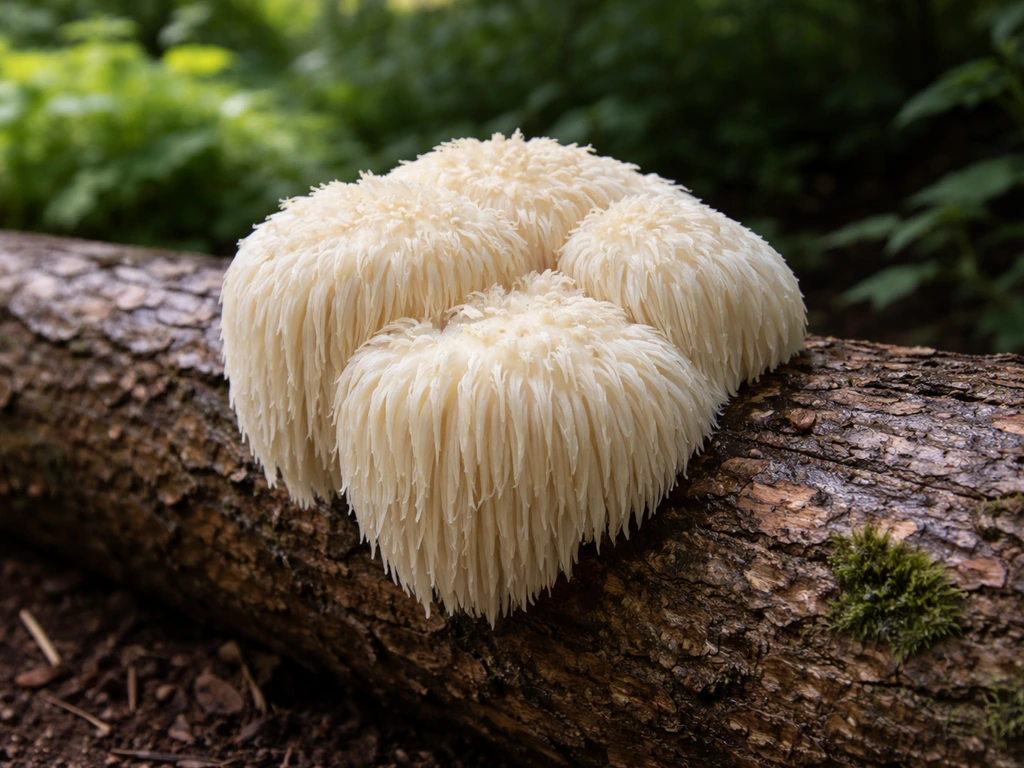
Lion's mane (Hericium erinaceus) is a wood-decay fungus. In the wild, it grows on wounded or dead hardwood trees, oaks, beeches, maples, and similar species, and fruiting bodies appear mainly from August through November. That seasonal window is important because it tells you exactly what the fungus expects: cooling temperatures in fall, higher ambient humidity, and a host that's been fully colonized well before fruiting conditions arrive. Your outdoor setup is essentially trying to replicate those conditions on your schedule.
A few terms worth knowing upfront. Spawn is the inoculated grain, sawdust, or wooden plug material that carries the lion's mane mycelium. You're introducing it to a new host, the log or wood-based substrate, where it will spread (this spreading phase is called the spawn run or colonization). Fruiting bodies are the white, shaggy mushrooms you actually harvest. Outdoors, the whole cycle is driven by ambient temperature and humidity rather than climate control, which is both the beauty and the challenge of this method.
Lion's mane is a bit pickier than oyster mushrooms outdoors. It wants hardwood (not softwood/pine), it doesn't compete well against contamination from other fungi in the environment, and it's sensitive to drying out during colonization. Managing moisture is the single biggest variable you'll be wrestling with throughout the whole process.
Choosing an outdoor method: logs vs. other wood-based setups
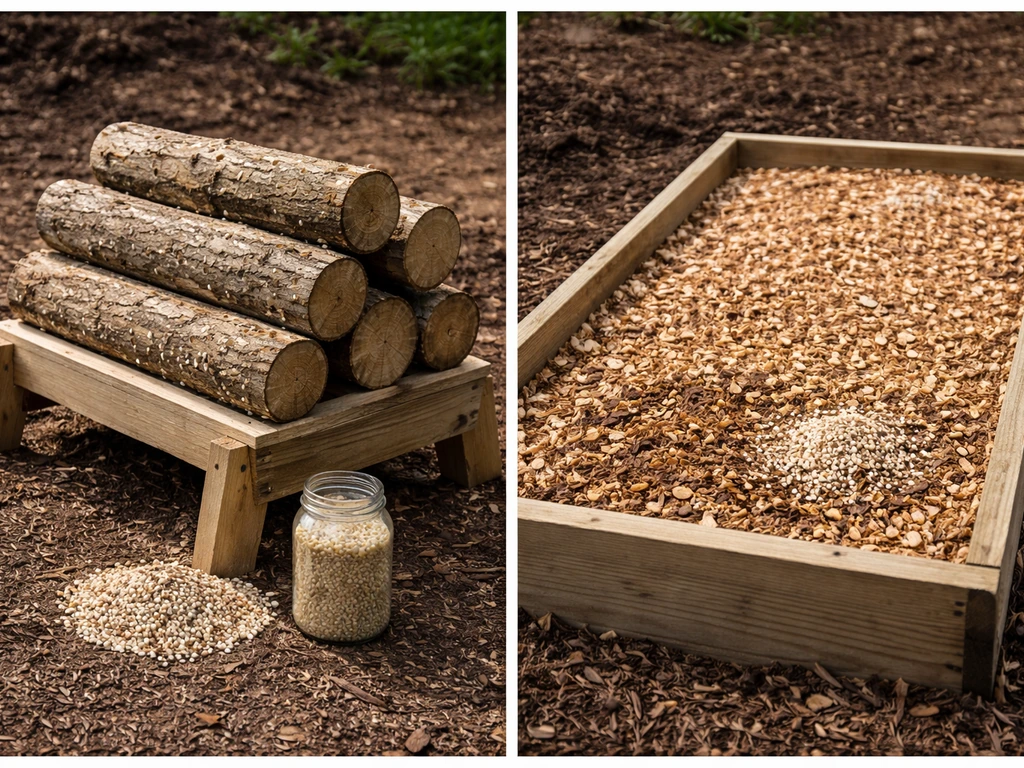
The two main approaches for outdoor lion's mane are inoculated hardwood logs and wood chip/sawdust garden beds. Each has real tradeoffs, and the right choice depends on your space, budget, and how long you want to wait for results.
| Method | Setup Effort | Cost | Time to First Fruit | Longevity | Best For |
|---|---|---|---|---|---|
| Hardwood logs (plug spawn) | Low — drill, hammer, wax | Low-moderate | 12–18 months | 5–10+ years | Beginners, low-maintenance growers |
| Hardwood logs (sawdust spawn) | Moderate — inoculation tool needed | Slightly lower per log | 6–12 months | 5–10+ years | Growers wanting faster colonization |
| Outdoor wood chip/sawdust bed | Moderate — bed prep involved | Low if wood chips are free | 6–18 months, variable | 2–4 years (needs refreshing) | Garden-style growers with space |
| Outdoor totems (log stacking) | Low-moderate | Low | 12–18 months | 5–8 years | Those with larger hardwood sections |
Logs are the most reliable and most commonly recommended starting point. A freshly cut hardwood log, properly inoculated and managed, will produce flushes year after year with minimal ongoing effort. The tradeoff is time: you're investing in a long-term grow, not a quick harvest. Wood chip beds can work and are great for filling a shaded garden area, but lion's mane competes less aggressively than oyster mushrooms in outdoor beds, so contamination from other wild fungi is more of a concern.
My honest recommendation for most people reading this: start with logs. Even two or three well-inoculated logs set up in a shaded corner of your yard will outperform a hastily built wood chip bed for lion's mane specifically. If you already have experience with plug spawn on logs from other species, sawdust spawn is worth the small additional effort for faster colonization.
What to buy and how to prepare your substrate
Sourcing the right logs
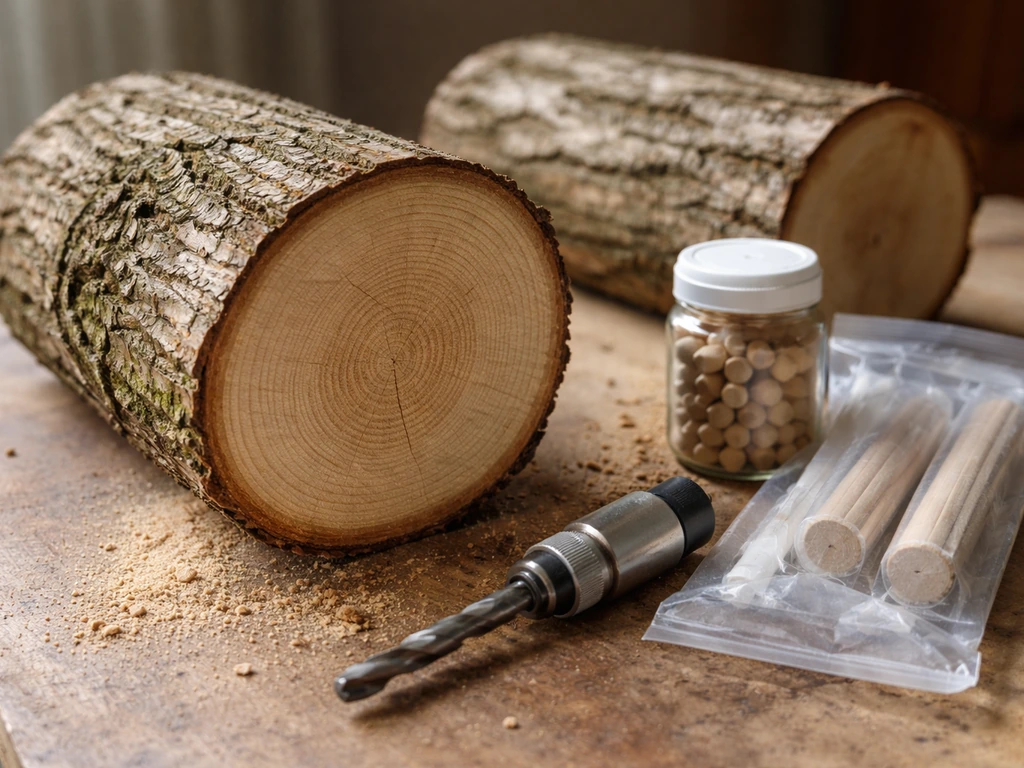
You want freshly cut hardwood logs, ideally within 2 to 6 weeks of cutting, before competing fungi colonize the wood. Oak, maple, beech, ironwood, and hornbeam are all excellent hosts. Avoid softwoods (pine, spruce, fir) and any logs that show signs of existing fungal growth (discoloration, fuzzy patches, existing mycelium). Log diameter should ideally be between 4 and 8 inches; thicker logs hold moisture better and last longer but are heavier to manage. Length of 3 to 4 feet is practical for most backyard setups.
If you don't have access to freshly downed trees, check with local arborists, tree removal services, or firewood suppliers. Many will sell or even give away fresh-cut hardwood sections. Just make sure the wood hasn't been treated with any chemicals or pesticides.
Choosing your spawn type and supplies
For most outdoor growers, you're choosing between plug spawn (wooden dowels pre-inoculated with lion's mane mycelium) and sawdust spawn (a bagged substrate colonized with mycelium). Plug spawn is simpler, you just drill holes and tap plugs in. Sawdust spawn colonizes faster because it covers more surface area per hole, but you need an inoculation tool (a palm inoculator or thumb inoculator) to pack it in.
- Plug spawn (lion's mane specific) — available from reputable mushroom supply companies
- OR sawdust spawn (lion's mane) — produces faster colonization
- Drill with the correct bit: 5/16" (8.5mm) for plug spawn, 7/16" (12mm) for sawdust spawn
- Mallet or hammer for tapping in plugs
- Cheese wax or plug wax (for sealing holes after inoculation)
- A wax melter or small pot for melting wax
- Paintbrush for applying wax
- Fresh hardwood logs (see above)
Preparing the logs
Don't soak freshly cut logs before inoculation, they already have the right moisture content. If your logs have been sitting for more than 6 weeks and feel dry or lightweight for their size, you can soak them in clean water for 12 to 24 hours before inoculating. Plug spawn inoculation drill setups typically use a 5/16" drill bit with a 1-inch depth stop, and plugs are sealed with food-grade or cheese wax (or manufacturer-supplied wax). Let them drain for an hour or so before you start drilling so the surface isn't dripping wet.
Inoculation and colonization: step by step
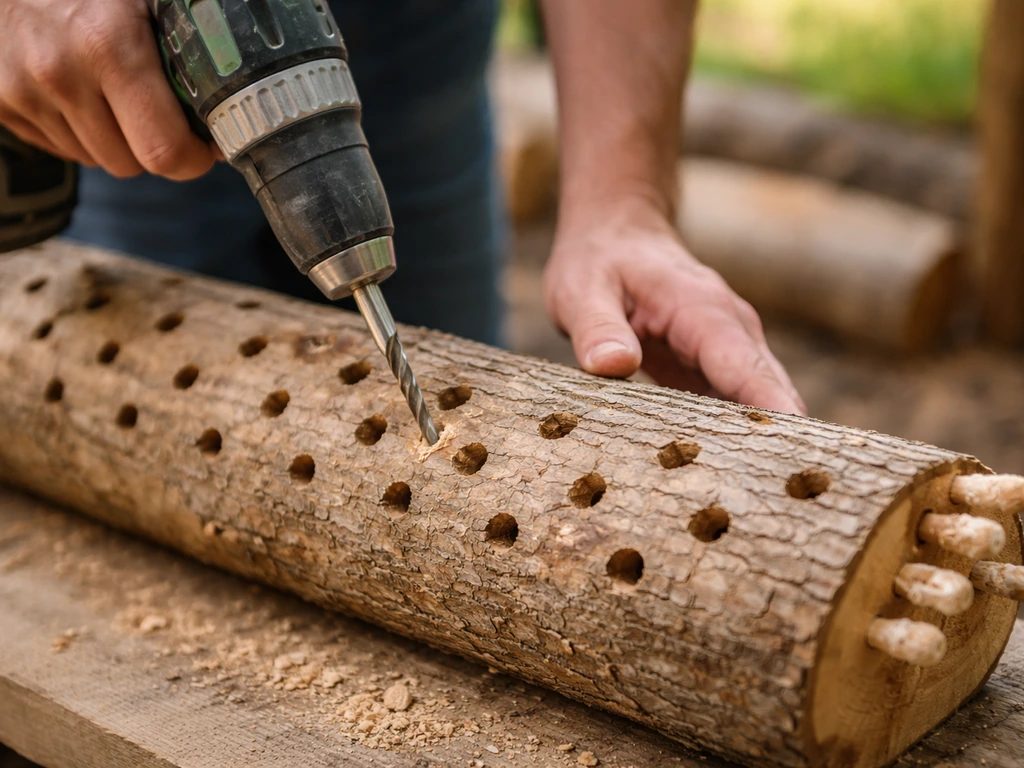
- Drill your holes in a diamond pattern along the length of the log, spacing holes about 4 to 6 inches apart in rows and offsetting each row by about 2 inches. Use a 5/16" bit for plug spawn or a 7/16" bit for sawdust spawn. Drill to about 1 to 1.25 inches deep.
- For plug spawn: tap plugs into each hole flush with or slightly below the surface of the bark using your mallet. For sawdust spawn: pack sawdust spawn into each hole using your inoculation tool, filling the hole completely.
- Immediately seal every hole with melted cheese wax or plug wax. Use a paintbrush to coat the plug or packed sawdust completely and extend about a half-inch onto the surrounding bark. This is critical — unsealed holes let in competing fungi and dry out faster.
- Also wax both cut ends of the log (the flat cross-section ends) entirely. These ends are the most vulnerable entry point for contamination and moisture loss.
- Label your logs with the date and species if you're inoculating multiple logs.
That's the inoculation. It sounds fiddly the first time but goes quickly once you have a rhythm. Plug spawn inoculation is slower per log than sawdust but requires less specialized gear, which is why it's the standard recommendation for beginners. The spawn run, the period when mycelium is colonizing through the log, begins immediately after inoculation.
Colonization with plug spawn typically takes longer than with sawdust spawn. Expect roughly 6 to 12 months for sawdust-inoculated logs and anywhere from 9 to 18 months for plug-inoculated logs before the mycelium has spread enough to support fruiting. Thicker logs take longer than thinner ones. This is not something you can rush, but good site management during this period makes a real difference.
Setting up your outdoor site and managing conditions
Picking the right spot
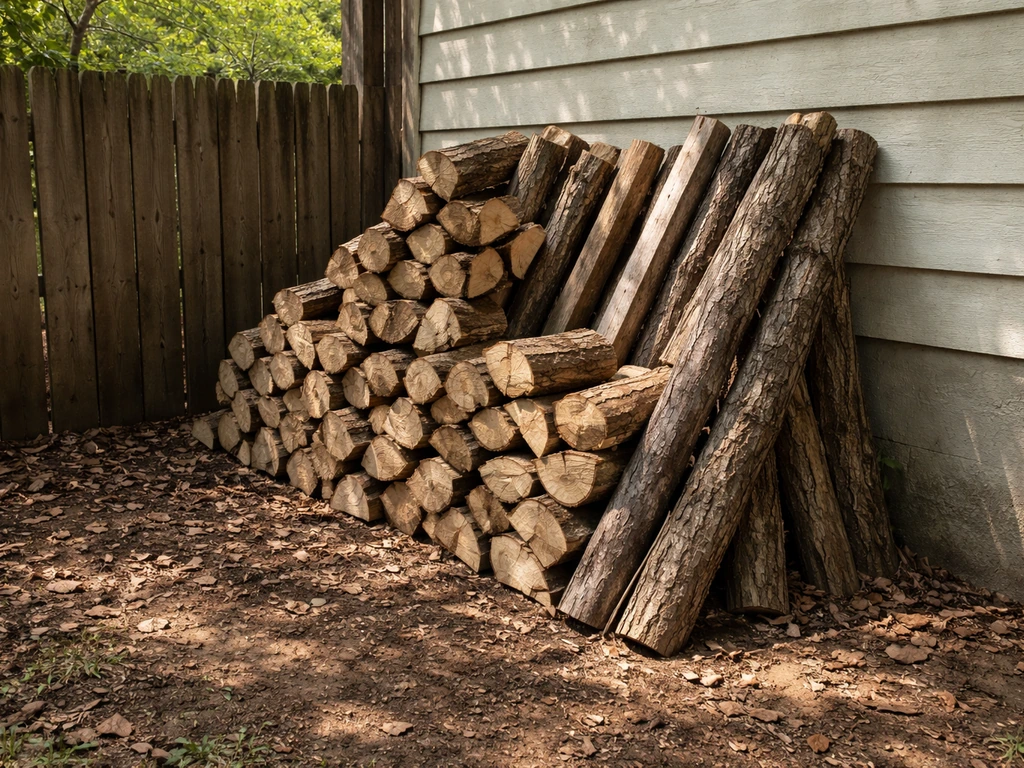
The ideal placement is partial to full shade, north-facing slopes, under deciduous trees, or along a shaded fence or building are all good options. Direct sun will dry your logs out fast, stress the mycelium, and reduce yields. Dappled shade that mimics the forest floor is what you're going for. Avoid spots that flood or stay waterlogged after rain; logs need moisture but not standing water sitting around them.
Positioning the logs
There are a few common positioning styles. Leaning logs upright against a fence or tree ("lean-to" style) makes harvesting easy and allows good airflow. Laying logs horizontally on top of small wooden supports (keeping them slightly off the ground) is another popular approach that reduces contact with competing soil fungi while still maintaining humidity at ground level. Avoid burying the ends or laying logs directly on bare soil for extended periods, as this accelerates rot and increases contamination risk.
Moisture management
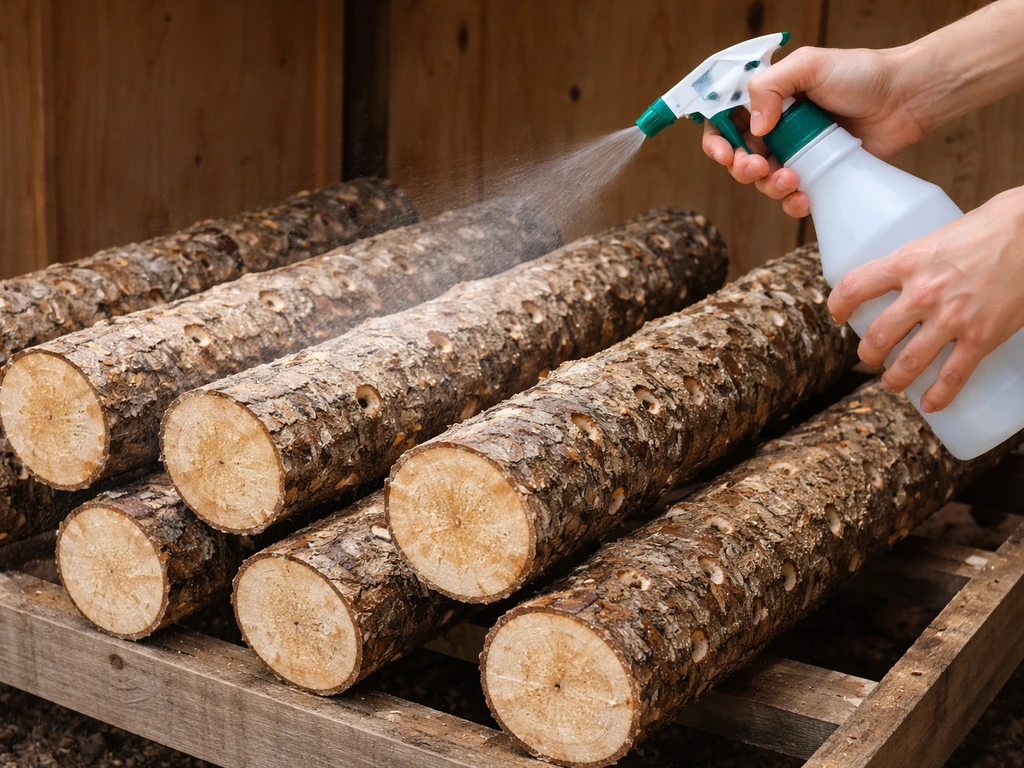
This is the big one. Lion's mane mycelium needs consistent moisture to colonize and fruit, but logs in most climates will dry out between rain events. During dry stretches, water your logs with a hose or sprinkler for 5 to 10 minutes every 2 to 3 days. The goal is to keep the wood feeling damp to the touch without being waterlogged. If you lift a log and it feels much lighter than when you first set it up, it's too dry. Some growers put their log piles under a simple shade cloth structure that also deflects drying wind, which cuts down on how often you need to water.
Airflow
Don't stack logs so tightly that air can't circulate between them. Good airflow prevents the build-up of excess moisture on surfaces (which can encourage mold or bacterial issues), while still letting you maintain overall humidity at log level. Think of it like a forest floor, humid but not stuffy or waterlogged.
Seasonal timing and realistic fruiting timelines
If you inoculate fresh logs in late winter or early spring (February through April in most of the northern hemisphere), you're setting yourself up for the best possible outcome. The mycelium has the spring and summer to colonize, and by the time fall temperatures and humidity arrive, there's a reasonable chance the log is ready to fruit. Don't expect mushrooms in the first fall after a spring inoculation with plug spawn, most logs need at least one full growing season before they're ready. Sawdust-inoculated logs have a better shot at fruiting in their first fall.
Natural lion's mane fruiting in the wild runs from August through November, and your outdoor logs will follow a similar rhythm. Fruiting is triggered by a combination of cooling nighttime temperatures (typically dropping into the 55 to 65°F / 13 to 18°C range) and a period of higher humidity or rainfall. Once those conditions align, a fully colonized log can pin and produce a flush within days. This is why fall is the magic window, the natural environment does the work for you.
If you inoculate in the fall, you're essentially giving the mycelium a head start on winter dormancy. Colonization will pause or slow significantly during cold months and resume in spring. These logs typically won't fruit until the following fall at the earliest, putting your first harvest about 12 months out. That's fine, it's just important to go in with realistic expectations so you don't panic and assume something went wrong.
| Inoculation Timing | Spawn Type | Expected First Fruiting |
|---|---|---|
| Late winter/early spring (Feb–Apr) | Sawdust spawn | Fall of same year (possible, not guaranteed) |
| Late winter/early spring (Feb–Apr) | Plug spawn | Fall of year 2 (most likely) |
| Summer (Jun–Aug) | Sawdust spawn | Fall of year 2 |
| Fall (Sep–Nov) | Either | Fall of year 2 (at earliest) |
Harvesting and troubleshooting
How and when to harvest
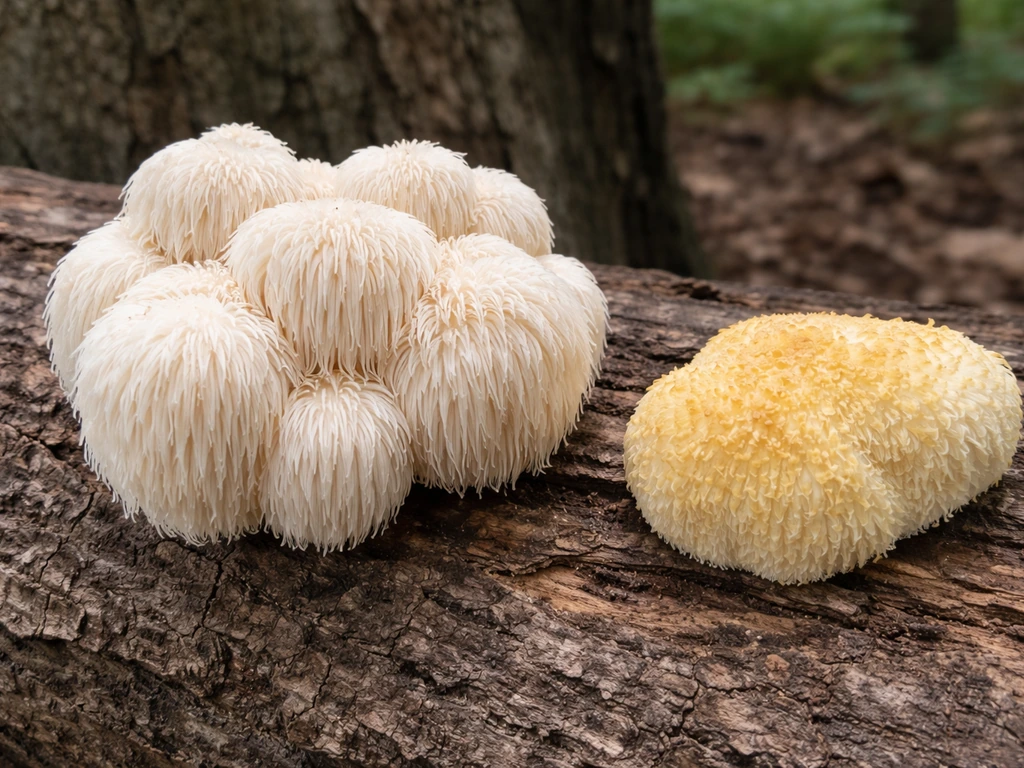
Harvest lion's mane when the fruiting body is fully formed but still white or cream-colored. Once it starts turning yellow or developing a bitter smell, it's past prime. To harvest, twist and pull gently, or use a clean knife to cut the mushroom at the base where it meets the log. Try not to leave a large torn wound in the bark, a clean cut or pull is less likely to introduce contamination to the fruiting site. Harvest in the morning if possible, when temperatures are cooler and mushrooms are at their freshest.
No fruiting bodies after expected timeframe
If fall arrives and a fully colonized log isn't fruiting, try a "cold shock" or "water shock" treatment. Submerge the log in cold water for 12 to 24 hours (or leave it out overnight during a cold snap), then return it to its spot. This mimics the temperature and moisture drop that triggers fruiting in nature. Some growers do this proactively each September to encourage a flush. It works more reliably on a well-colonized log than on one that's still in the middle of its spawn run.
Contamination issues
Green or black mold (usually Trichoderma or Aspergillus species) appearing on the log surface, especially around inoculation holes, is the most common contamination problem. A small amount of surface mold that doesn't progress is usually manageable, the lion's mane mycelium can outcompete it if colonization is well underway. Widespread green mold that spreads quickly is a bad sign and usually means the spawn didn't take hold, the log dried out during colonization, or the wax seal wasn't complete. Wipe small patches of green mold off with a damp cloth and reseal with wax. If a log is heavily contaminated throughout, it's unfortunately not worth saving and should be removed from your growing area to prevent spread.
Slow colonization
If you inoculated more than 18 months ago and still see no signs of mycelium (white fuzzy growth) around inoculation points, the spawn likely didn't take. This is usually caused by logs that were too old and dry at inoculation, incomplete wax sealing, or using spawn that was past its shelf life. Unfortunately, there's no rescue path for a log where the spawn run failed, but the log can often be re-inoculated fresh if it's not already contaminated. Order fresh spawn and drill new holes between (not into) the old sealed holes.
Pests and predators
Slugs and snails love lion's mane fruiting bodies, they'll eat a flush overnight if left unmanaged. Check logs at dusk when fruiting is active and remove any slugs by hand, or use iron phosphate-based slug bait (pet and wildlife safe) around the base of your log setup. Squirrels occasionally gnaw on logs and inoculation plugs, especially in fall. Hardware cloth (wire mesh) draped loosely over logs can deter them without blocking airflow. Fungus gnats are less common outdoors than indoors but can still appear; maintaining airflow and avoiding overly wet surface conditions helps.
Encouraging more flushes and keeping your logs going
After your first harvest, don't neglect the log. Keep up the moisture routine and let the log rest for 4 to 8 weeks before attempting another forced fruiting (cold/water shock). Outdoor logs typically produce one to two natural flushes per fall season, and with good management you can expect multiple fruiting seasons per year in some climates.
The log will continue producing year after year, sometimes for a decade or longer, gradually losing density as the wood is consumed by the mycelium. When a log becomes very light, crumbles easily, or stops producing despite good care, it's at the end of its productive life. At that point, you can compost the spent wood (it's great for garden beds) and start fresh with new logs.
Staggering your inoculations is worth planning for. If you inoculate a few logs each year over a 2 to 3 year period, you'll have logs at different stages of maturity and a more consistent annual harvest rather than a single big season every few years. This is especially useful if you're growing lion's mane for regular culinary or medicinal use.
Basic sanitation goes a long way outdoors. If a log is heavily contaminated, get it away from your healthy logs immediately. After harvesting, don't leave old mushroom stumps decaying on the log surface, clean cuts prevent harboring competing fungi. Keep the area around your log setup free from excessive leaf debris and dead plant material that can become breeding grounds for slugs and competing mold. Beyond that, outdoor log cultivation is genuinely low-effort once you get past inoculation, nature does most of the work.
If outdoor growing has you interested in expanding your lion's mane operation, log cultivation pairs well with indoor grain-to-bulk or plug-based grows for year-round harvesting. Growing lion's mane mushrooms from plugs follows very similar inoculation principles and is worth exploring once you're comfortable with the outdoor log process. If you're also looking for a simple indoor approach, you can use the same inoculation principles from plug-based grows to learn how to grow lion's mane mushrooms at home year-round.
Growing lion's mane mushrooms from plugs follows very similar inoculation principles and is worth exploring once you're comfortable with the outdoor log process lion's mane mushrooms how to grow. The core skills, managing moisture, reading mycelium health, and timing your harvests, transfer directly between indoor and outdoor methods.
FAQ
Can I grow lion’s mane outdoors on softwood, like pine or spruce?
It’s not recommended. Lion’s mane is a hardwood-decay fungus, softwoods don’t provide the right nutrition and structure, and you’ll usually see poor colonization and more competing molds. Stick to oak, maple, beech, ironwood, or hornbeam.
How fresh do my logs need to be, and what if I can only get firewood that sat for months?
Best results come from cutting and inoculating within about 2 to 6 weeks, before other fungi move in. If the wood is very dry or light for its size after weeks of storage, you may need longer soaking and even then colonization may fail, so consider buying truly fresh cuts or asking suppliers for recently cut sections.
Do I need to seal every hole with wax, and what happens if the wax seal isn’t complete?
Yes, sealing is important to keep the inoculated mycelium protected and to prevent moisture loss and contamination at the hole sites. If you miss spots or the wax cracks, you can get widespread surface mold starting around the holes and slower or zero colonization.
Should I drill, inoculate, and then leave the logs wet under a tarp?
Avoid trapping constant standing moisture. A tarp or plastic can help block drying wind, but if it causes overheating or waterlogged conditions, you may encourage bacterial issues or mold on the surface. Use partial cover only, with ventilation and a moisture routine that keeps logs damp, not saturated.
How do I know if my logs are too dry or too wet during colonization?
Too dry shows up as logs feeling much lighter than when first set up, or surface areas looking dry between rains. Too wet often looks like persistent slick surfaces or heavy growth that spreads beyond inoculation points. Your target is damp-to-the-touch wood with airflow around the log pile.
What’s the safest way to prevent contamination from spreading to other logs?
If you see heavy contamination on one log, isolate it immediately from the healthy ones, and avoid working across multiple logs without cleaning your hands or tools. After harvesting, remove old fruiting debris from the surface and avoid leaving torn, ragged areas exposed for long periods.
Can I reuse the same logs after harvesting, or is it better to start over?
You can reuse them for multiple seasons. Keep the moisture routine and allow a rest period between forcing, typically 4 to 8 weeks. Eventually they become light, crumbly, and stop producing even with good care, then it’s time to compost the spent wood and inoculate fresh logs.
Why aren’t my logs fruiting even though I waited more than a year?
Common causes are incomplete colonization, logs drying during the spawn run, or placement that gets too much sun or stays waterlogged. If you haven’t seen white mycelium near inoculation points after a long time, it often means the spawn didn’t take, in which case re-inoculating fresh holes is usually the realistic next step.
How do I do a cold shock or water shock correctly without damaging the log?
Submerge the log in clean water for 12 to 24 hours, then return it to your shaded, ventilated spot. Don’t repeatedly shock an under-colonized log, it’s less reliable and can increase surface contamination risk. Also make sure it drains well so you do not trap puddles around the base.
What’s the best time of day and weather conditions to harvest lion’s mane outdoors?
Harvest in the cooler part of the day, morning is ideal. Aim for days when mushrooms are dry to the touch and not drenched, because wet mushrooms can bruise and spoil faster after picking.
How can I deter slugs without harming airflow or mycelium?
Check at dusk when they’re active, and remove by hand. For deterrence, iron phosphate slug bait around the log base can work. If you use physical barriers, use hardware cloth draped loosely so air still circulates and the logs are not wrapped airtight.
Do I need to remove competitors like other fungi when I see them on the log surface?
Small, localized surface mold patches may be manageable, you can wipe them off and reseal if needed. If contamination spreads quickly or you see widespread fuzzy growth beyond the inoculation area, it’s safer to remove that log to protect the rest of your setup.
Should I inoculate all my logs at once or stagger them?
Staggering is usually better. Inoculating a few logs each year creates different colonization stages, so you get more consistent annual harvests rather than one heavy year followed by a long gap, which is especially helpful for regular culinary or medicinal use.
Can I mix log sizes or host species in one growing spot?
Yes, but keep an eye on moisture consistency. Thinner logs dry faster and may fruit earlier, and different hardwoods can colonize at slightly different rates, so mixing is fine as long as you provide the same shade and watering, and you monitor each group separately.