
You can grow lion's mane mushrooms at home indoors with either a ready-made kit or a block you build yourself from spawn and substrate. Either way, lion's mane needs cool temperatures (55–75°F for fruiting), high humidity (85–90% relative humidity), low CO₂, indirect light, and a substrate with a pH around 5.0–6.5. Get those four things right and you'll have fuzzy white pom-poms ready to harvest in as little as one to two weeks after fruiting begins.
How to Grow Lion’s Mane Mushrooms at Home Indoors
Marcus Holloway
23 Apr 2026
What lion's mane actually needs to grow
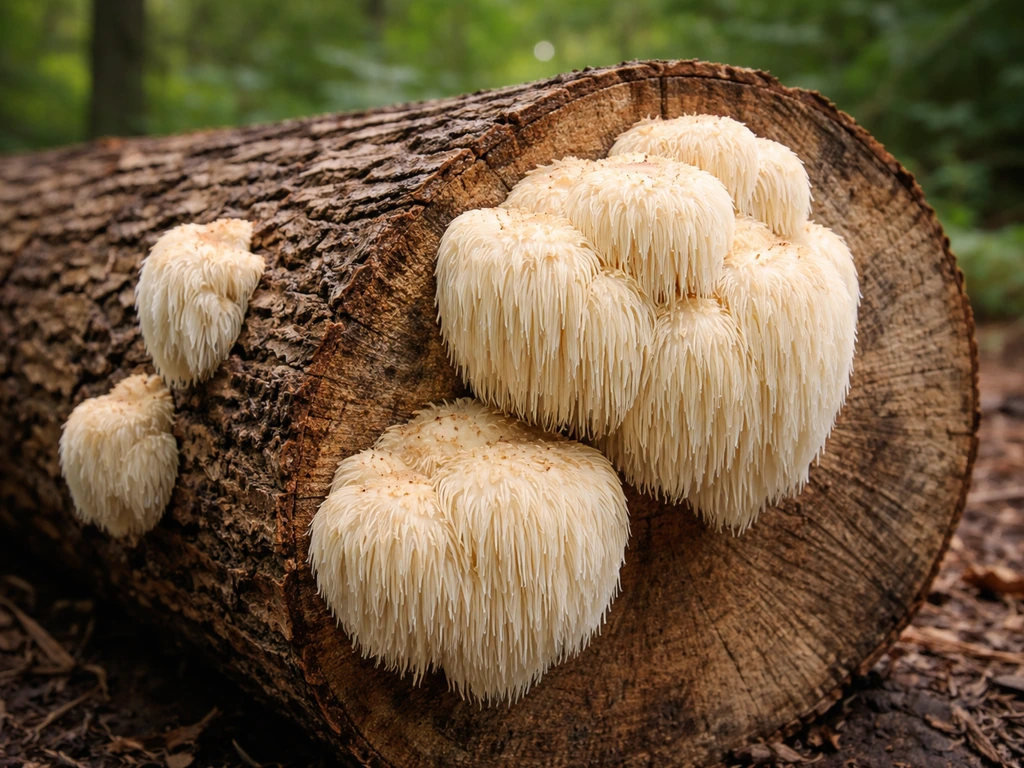
Lion's mane (Hericium erinaceus) is a wood-loving species, and compared to oyster mushrooms it's a bit more demanding. The good news is those demands are predictable and manageable in a home setting once you understand what it's asking for.
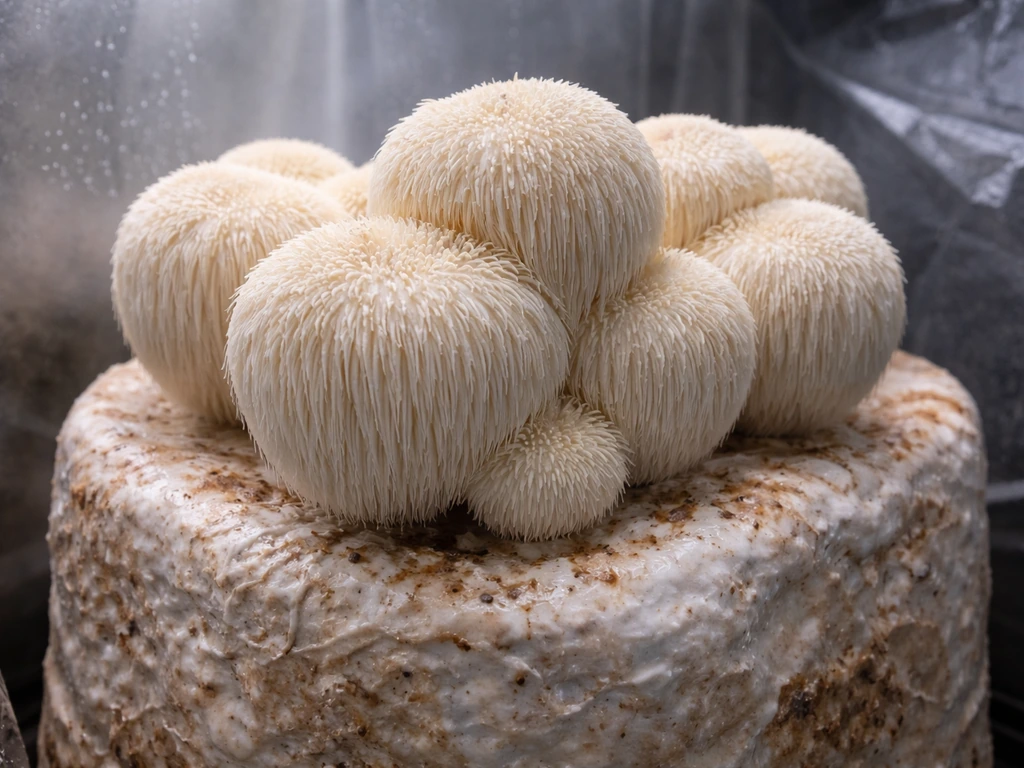
The single biggest factor beginners underestimate is humidity. Lion's mane dries out faster than almost any other edible species. Its dense, cascading teeth act like a sponge when conditions are right, but the moment ambient humidity drops too low, fruiting stalls, the teeth turn brown at the tips, and the whole flush can abort. You need to hold relative humidity at 85–90% around the fruiting block consistently, not just occasionally.
CO₂ is the other key lever. Lion's mane is extremely sensitive to elevated carbon dioxide during fruiting. Keep CO₂ below 1000 ppm by ensuring steady fresh air exchange. High CO₂ is the main reason you get weird, elongated, spiky growths instead of full round pom-poms. Temperature for fruiting sits in the 55–75°F range, which is actually pretty close to normal room temperature in most homes. The substrate pH should land between 5.0 and 6.5, with around 6.0 being optimal.
- Temperature: 55–75°F for fruiting; around 25°C (77°F) for mycelial colonization
- Relative humidity: 85–90% at the fruiting surface
- CO₂: below 1000 ppm (fresh air exchange 4–6 times per hour in a fruiting chamber)
- Light: indirect, ambient light for 12 hours per day — no direct sun needed
- Substrate pH: 5.0–6.5, optimally around 6.0
Indoors vs outdoors: which setup makes sense for you
For most home growers, indoors is the right call for lion's mane. You can control temperature, humidity, and CO₂ levels far more precisely inside, and lion's mane rewards that precision with faster, fuller flushes. Outdoor cultivation is possible (usually on hardwood logs or stumps), but it's slower, more weather-dependent, and you lose the ability to dial in conditions.
If you'd like to go beyond log-based basics, follow a full outdoor guide for timing, placement, and weatherproofing to improve your odds how to grow lion's mane mushrooms outdoors. If you're using logs or stumps, learning the seasonal timing and placement can be just as important as keeping the basics right how to grow lion's mane mushrooms outdoors. If you're curious about log-based outdoor growing, that's a genuinely different process worth exploring separately.
Indoors, you have two main paths: a grow kit (everything pre-colonized and ready to fruit) or building your own block from spawn and bulk substrate. Here's a quick comparison to help you decide.
| Factor | Grow Kit | Spawn + Substrate (DIY) |
|---|---|---|
| Startup effort | Very low — just open and mist | Moderate — sourcing, mixing, sterilizing |
| Cost (first grow) | Higher per yield ($20–$40 typical) | Lower per yield once you have equipment |
| Scalability | One block at a time | Make as many blocks as you want |
| Control over variables | Limited | Full control over substrate, strain, pH |
| Risk of failure | Low if you follow instructions | Higher without sterilization discipline |
| Best for | Complete beginners | Intermediate growers or those wanting multiple blocks |
If this is your first time growing lion's mane, start with a kit. You'll learn how the species behaves, how fast pins form, what healthy vs. stressed fruiting looks like, without the added variable of whether your sterilization worked. Then move to DIY blocks once you've seen a successful harvest. If you want a deeper walkthrough, see Len’s Island for specific step-by-step guidance on growing lion’s mane mushrooms at home len's island how to grow mushrooms.
Growing from a kit: step-by-step
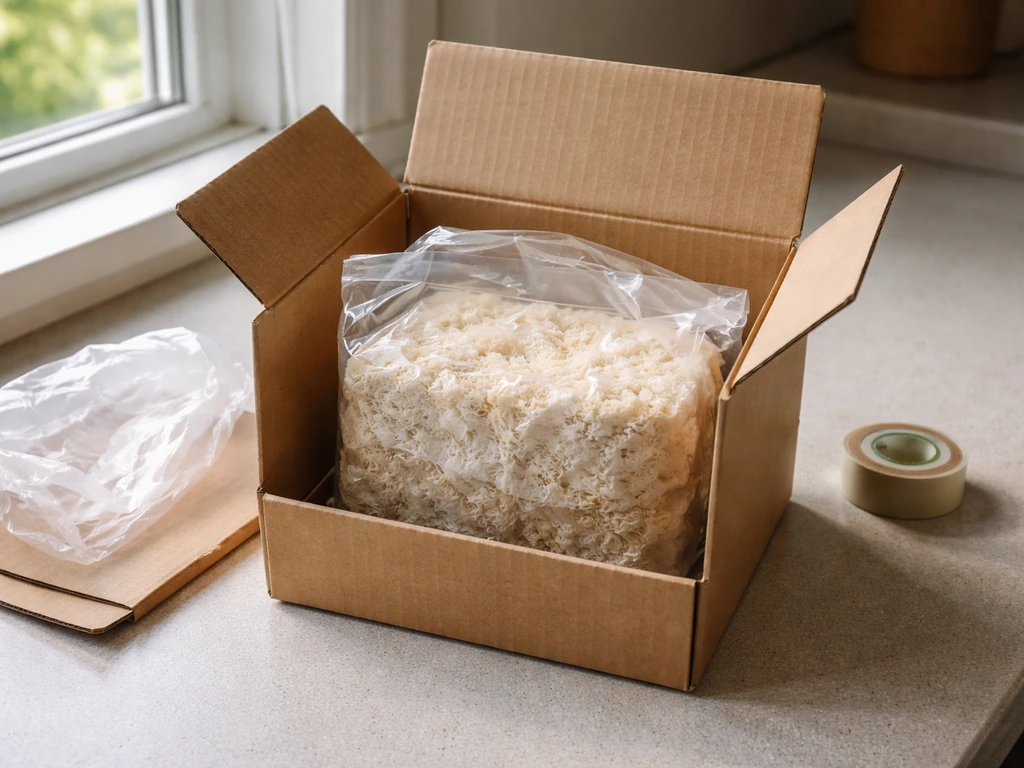
Lion's mane kits come fully colonized and are designed to fruit with minimal intervention. The block inside has already gone through the hard part (mycelial colonization). Your job is to trigger fruiting and keep conditions right until harvest.
- Unbox the kit and let it acclimate to room temperature for an hour if it was shipped cold.
- Cut or open the bag as instructed — most kits have you score an X or open the top to expose the colonized block to fresh air.
- Place the kit in a spot with indirect natural light or ambient room light. Avoid direct sunlight, which dries things out fast.
- Confirm room temperature is in the 55–75°F range. Most living spaces are fine, but avoid placing the kit near a heater vent or air conditioning unit.
- Begin misting the exposed surface at least 2–4 times daily using a clean spray bottle set to a fine mist. Mist the surface and the surrounding air, not just a single blast on the block.
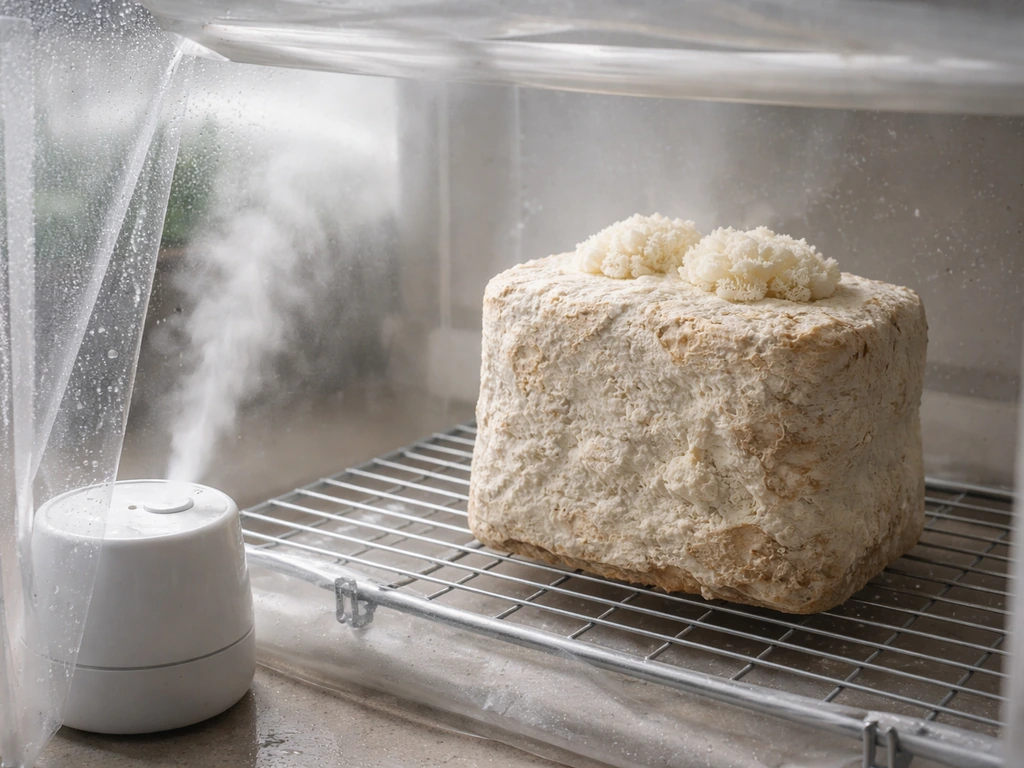
- If your home is dry (common in winter), place the kit inside a large clear plastic bag with a few small air holes, or use a small humidifier nearby to hold humidity at 85–90%.
- Within 5–14 days you should see small white pin formations beginning to emerge. Once pins appear, maintain your misting routine and keep air moving gently.
- Harvest when the teeth (the characteristic icicle-like spines) are well-developed but before they begin to turn yellow or brown at the tips — typically when the mushroom is 2–4 inches in diameter.
- To harvest, twist and pull the entire fruiting body off cleanly, or cut it at the base with a clean knife.
- After the first flush, let the block rest for 7–14 days, misting lightly. A second (and sometimes third) flush is common.
One thing I've noticed with kits: people tend to under-mist in the first few days because the block looks fine. Don't wait for it to look dry. By the time lion's mane looks stressed, you've already lost momentum on the flush. Mist generously and consistently from day one.
Growing from spawn and substrate: materials and process
Going the DIY route gives you full control and much lower cost per block once you're set up. The trade-off is that sterilization is non-negotiable for lion's mane. Unlike oysters, which can be grown on pasteurized straw, lion's mane really benefits from fully sterilized hardwood substrate to reduce contamination risk.
What you'll need
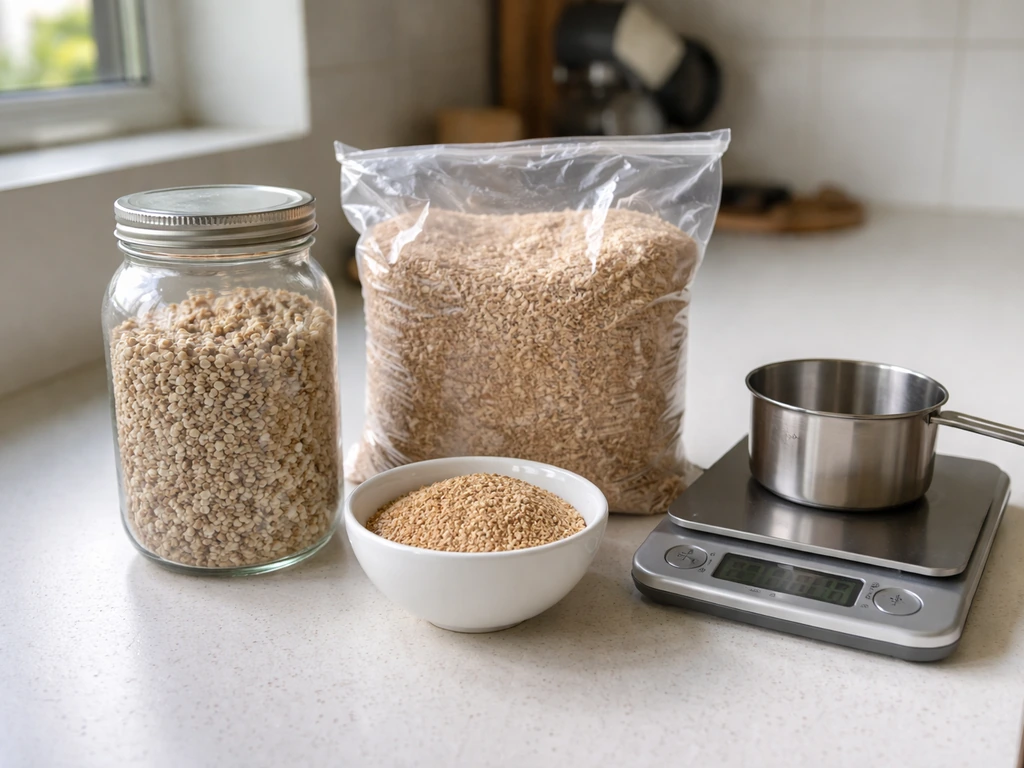
- Lion's mane grain spawn (from a reputable supplier — 1 lb per 5 lb substrate block)
- Hardwood sawdust (oak, beech, or alder work well) — aim for a mix of fine sawdust and wood chips for structure
- Wheat bran or oat bran (10–20% of dry substrate weight) to boost nutrition
- Filtered or distilled water for mixing
- Polypropylene grow bags with filter patches (1–2 quart size for small blocks)
- Pressure cooker (15 PSI capable) for sterilization
- Isopropyl alcohol (70%) and gloves for sterile technique
- A scale for measuring
- Thermometer and hygrometer for monitoring your fruiting space
Mixing and sterilizing your substrate
Mix hardwood sawdust with your bran supplement at roughly an 80:20 ratio by dry weight. Add water until the substrate reaches field capacity, that's when you squeeze a handful and only a few drops come out. The substrate should feel like a wrung-out sponge, not sopping wet. Pack the moistened substrate into your grow bags, filling each about halfway to two-thirds. Fold and seal the top with a clip or tie, leaving the filter patch accessible. Sterilize at 15 PSI for 2.5 to 3 hours. Let bags cool fully (down to at least 75°F) before inoculating, this usually means letting them sit overnight.
Inoculating and colonizing
Work in the cleanest environment you can manage, a still-air box (a clear tote with arm holes) works well for home growers without a flow hood. Wipe everything with 70% isopropyl alcohol. Open your cooled bag and add your grain spawn at roughly 15–20% spawn rate by weight. Mix the spawn into the substrate thoroughly, reseal the bag, and label it with the date. Place colonizing blocks somewhere dark and warm, around 25°C (77°F). You should see white mycelium spreading through the substrate within a week, with full colonization typically taking 2–4 weeks. Don't rush this stage by moving to fruiting conditions too early.
Triggering and fruiting
Once the block is fully colonized (white throughout with no visible green, black, or pink patches), it's ready to fruit. Cut an opening in the bag or remove the block entirely and place it in your fruiting setup. Drop temperatures into the 55–75°F range, begin misting 2–4 times daily, and ensure strong fresh air exchange. From here the process mirrors what's described in the kit instructions above.
Environmental controls that actually matter
You don't need a fancy grow tent to fruit lion's mane successfully at home, but you do need to manage four variables consistently. Here's how to hit each target practically.
Temperature
The 55–75°F fruiting window is forgiving enough that most home environments qualify. The sweet spot most growers aim for is 65–70°F. If your house is warmer than 75°F consistently, fruiting will be sluggish or stall. A basement or a cool room in spring and fall is ideal. During colonization, keep the block warmer, closer to 77°F (25°C), to encourage mycelial growth.
Humidity
This is where most home growers struggle. A cheap ultrasonic humidifier set to run intermittently in a partial enclosure (like a grow tent or a large plastic tote with holes) can hold humidity at 85–90% reliably. A $10 digital hygrometer lets you verify what's actually happening at the block, not just what you're guessing. If you're relying solely on hand misting, you need to be doing it at least 2–4 times a day, and more in dry climates or during winter months when indoor air is particularly dry.
Fresh air exchange and CO₂
Lion's mane is genuinely one of the most CO₂-sensitive mushrooms you can grow. Keep CO₂ below 1000 ppm. In a grow tent, a small USB fan running on a timer for fresh air exchange every 1–2 hours handles this. If you're fruiting in a clear tote with holes, passive exchange usually works if the holes are large enough. Signs of CO₂ buildup are the clearest diagnostic tool you have: if the fruiting body is elongated, weird-shaped, or growing in icicle-like spikes rather than a full round pom-pom, increase your air exchange immediately.
Light
Light is the least critical variable, but lion's mane does use it as a directional cue. Indirect natural light or 12 hours of ambient room light is plenty. A windowsill out of direct sun is a classic spot. Don't grow in total darkness during fruiting.
Timeline: what to expect and when
| Stage | Timeframe | What's happening | What to do |
|---|---|---|---|
| Colonization (DIY block) | 2–4 weeks | White mycelium spreading through substrate | Keep warm (~77°F), dark, and undisturbed |
| Kit setup / triggering | Day 1–3 | Block exposed to fruiting conditions | Open kit, begin misting, check temperature |
| Pinning begins | 5–14 days after triggering | Small white nodules forming on exposed surface | Maintain misting routine, keep CO₂ low |
| Fruiting / development | 5–10 days after pinning | Fruiting body expanding, teeth developing | Mist 2–4x daily, monitor humidity closely |
| Harvest | When teeth are full but tips are still white | Mushroom at peak flavor and texture | Twist or cut at the base |
| Rest and second flush | 7–14 days post-harvest | Mycelium recovering | Mist lightly, wait for new pins |
| Second (and third) flush | 1–3 weeks after first harvest | New fruiting bodies forming | Resume full misting and fresh air routine |
A healthy lion's mane block will typically produce two to three flushes. Yields per flush on a 5 lb block typically range from 100–300g fresh weight, with the first flush usually being the largest. Don't toss the block after the first harvest, keep it going and you'll often get a solid second flush from it.
Troubleshooting common problems
Nothing is happening (slow or no pinning)
First, check temperature. If the block is too warm (above 75°F) or too cold (below 55°F), pinning stalls. Second, check humidity, if the surface of the block looks even slightly dry or crusty, it's been too dry and you need to mist more aggressively and consider adding a humidity tent. Third, make sure there's some light reaching the block; fruiting in total darkness can slow pinning. Finally, be patient: lion's mane can take up to two weeks to show pins after triggering, so don't panic unless it's been more than 14 days with no visible growth at all.
Weird shapes: elongated, spiky, or irregular fruiting bodies
This almost always means CO₂ is too high. Increase fresh air exchange immediately, add more holes to your enclosure, run your fan more frequently, or simply fruit in a more open space. Lion's mane grown in stale air will produce elongated, claw-like growths that look alarming but are actually edible. Improve the air exchange and subsequent flushes will be much better shaped.
Browning tips on the fruiting body
Brown tips mean the mushroom is drying out or stressing. It can also signal that you've waited too long to harvest and the mushroom is beginning to age. If it's happening mid-flush, increase your misting frequency immediately. If it's at harvest time, just harvest it, brown-tipped lion's mane is still edible, just slightly more bitter than fresh white specimens. Avoid misting directly onto the fruiting body itself; mist around it and into the air above to raise humidity without waterlogging the teeth.
Green, black, or pink patches on your block (contamination)
Contamination usually shows up as green (Trichoderma mold), black, or pink patches on or in the block. Green mold is the most common and most aggressive. If contamination is localized to a small spot on the surface and the rest of the block looks white and healthy, you can try to cut the contaminated section out with a clean knife and continue fruiting.
If the contamination is spreading throughout the interior or covers more than a small patch, remove the block from your grow space immediately and dispose of it in a sealed bag. Do not try to salvage a heavily contaminated block. The best way to prevent this entirely is strict sterilization during inoculation and working in the cleanest environment you can manage.
Second flush won't come
After the first harvest, give the block a full 7–14 day rest with light misting. If pins still aren't forming after two weeks, try soaking the block in cold water for 4–8 hours (cold shocking can trigger a new flush), then return it to fruiting conditions. If the block has turned yellow, soft, or smells sour, it's exhausted or contaminated and it's time to start fresh.
Harvesting and what comes next
Harvest lion's mane when the teeth (spines) are fully developed and the fruiting body is a bright, clean white. Once the tips start going yellow or the edges begin to brown, flavor and texture start to decline quickly. Use both hands to twist the mushroom off the block with a gentle rotating motion, or cut cleanly at the base. Eat it fresh within 3–5 days for best flavor, or slice and saute it immediately then freeze for longer storage.
If you're ready to go beyond kits and want to explore growing from plugs on logs or hardwood sections, that opens up a whole different (and rewarding) outdoor and semi-outdoor approach to cultivating lion's mane over multiple seasons. But for getting your first successful indoor harvest, the kit or DIY block methods above are your most direct path.
FAQ
What should I do if my lion’s mane block is fully colonized but never forms pins?
If your block looks fully colonized but still will not pin, first verify temperature at the block surface (not just room temperature), then check CO₂ by looking for spiking or elongated growth. If both are in range, consider lowering humidity slightly during the first 24 to 48 hours after triggering fruiting, then bring it back to 85 to 90% once you see primordia (tiny bumps), because constant very high misting can delay pin formation by creating a wet surface layer.
How can I tell if my substrate moisture level is correct before I sterilize?
Don’t use your “field capacity” hand test only once. Re-check after a few hours because substrate can settle and slightly dry or redistribute moisture. A good target is a substrate that feels uniformly like a wrung-out sponge and does not drip when squeezed; if it drips, it tends to stall or contaminate more during colonization.
Is it okay to mist directly onto the lion’s mane teeth?
Yes, but you generally need to avoid oversaturating. Aim misting around the fruiting block, not onto the teeth, and keep enough airflow that water droplets evaporate quickly. If you see pooled water, condensation running down the bag, or a matte gray look on the surface, increase fresh air exchange and reduce mist volume rather than increasing humidity further.
Can I salvage a contaminated lion’s mane block if the mold is only on one area?
If you see green, black, or pink patches, do not rely on “scraping it off” for anything more than a tiny surface spot. Start with early isolation: move the block away immediately, then inspect daily. For any case where discoloration extends below the surface or the interior is affected, discard to protect other blocks, because spores can spread quickly in shared fruiting areas.
My mushrooms are growing elongated and spiky instead of round pom-poms, what causes that and how do I fix it?
First, confirm the enclosure has enough fresh air exchange, because elongated claw-like growth is a classic high-CO₂ symptom. Second, check your temperature, because warmth above the fruiting range can cause misshapen or thin growth. Third, adjust humidity using a hygrometer at the block location; if RH is fluctuating hard, shapes often swing during a single flush.
When is the best time to harvest lion’s mane indoors, and does it matter if the tips are slightly yellow?
A practical switch is to harvest the moment the teeth are fully expanded and still bright white, usually when the spines look firm and cohesive. If you wait until the tips are just starting to yellow, you may still harvest, but flavor shifts can happen quickly and texture gets more fibrous. For best eating quality, plan to harvest once per day during the final expansion window.
Do I really need a grow tent to fruit lion’s mane successfully?
For most home setups, yes, you can fruit without a grow tent as long as you control humidity and CO₂. The key is to keep RH consistent (85 to 90%) and ensure measurable fresh air exchange. A clear tote or DIY chamber works well if the holes are large enough, and you can run a small timed fan without blasting the block.
What does it mean if my block turns yellow after harvest rest, and can I revive it?
If the block turns yellow, soft, or smells sour, treat it as exhausted or contaminated and remove it. For “just yellow” during the transition or after a rest, let it rest 7 to 14 days first, then re-check temperature, RH, and CO₂. If pins do not appear after two weeks of correct conditions, try the cold soak method once, then discard after a failed second attempt.
If my lion’s mane has brown tips, is it still safe and good to eat?
Yes, brown tips can still be edible, but you should harvest sooner next time and remove any heavily browned sections. If the browning is widespread, it usually means prolonged low humidity or delayed harvesting during the final expansion. To prevent recurrence, use a hygrometer and aim for stable RH rather than relying on “misting feels right.”