
Volvariella mushrooms (most commonly Volvariella volvacea, the straw or paddy straw mushroom) can absolutely be grown at home, but they demand warm, humid conditions that most other edible mushrooms don't need. Keep temperatures between 28–35°C (82–95°F), maintain high humidity, and work with a straw-based substrate that's been properly pasteurized, and you can go from blank" rel="noopener noreferrer">spawning to harvest in as little as 11–25 days. That fast turnaround is one of the best things about this species. The catch is that Volvariella is less forgiving than oyster mushrooms when temperatures drop or the substrate dries out even briefly, so understanding what it needs before you start is worth every minute.
How to Grow Volvariella Mushrooms at Home Step by Step
Marcus Holloway
2 Jun 2026
What Volvariella is and why its environment is everything
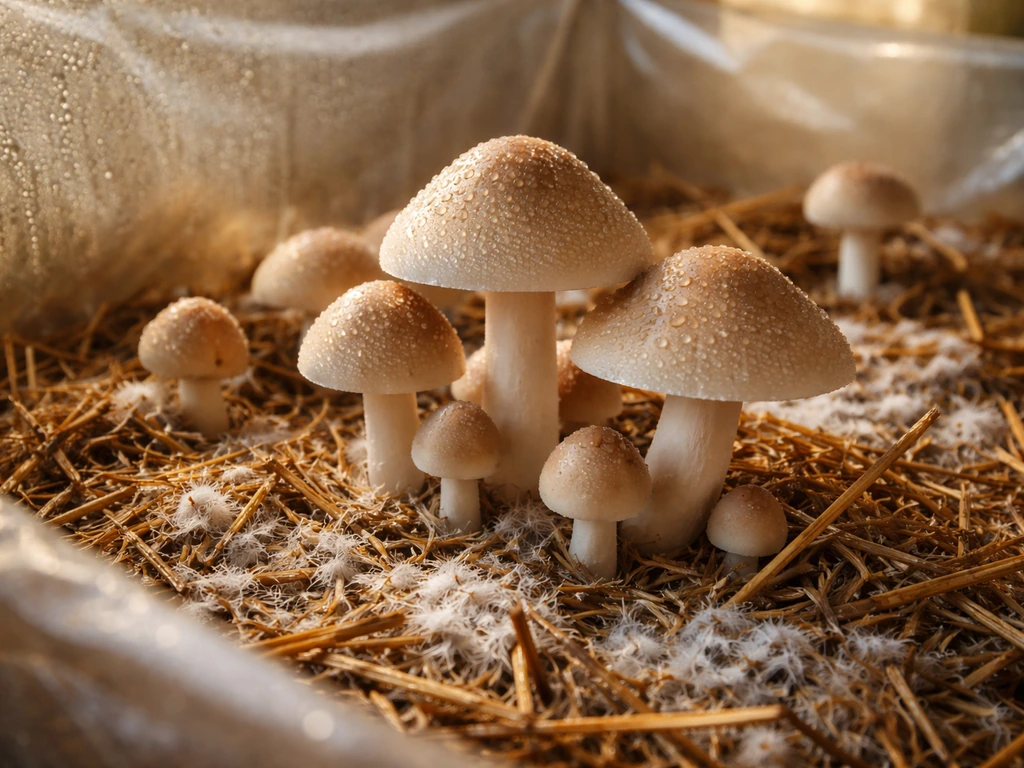
Volvariella volvacea is a tropical and subtropical species that evolved in warm, humid rice-growing regions across Southeast Asia. It's called the straw mushroom because paddy straw (rice straw) is its natural and most common growing medium. In the wild it fruits on decomposing plant matter during the hottest, wettest months of the year. That background tells you everything about what it needs to perform in a home setup.
Unlike oyster mushrooms or shiitake, which tolerate a fairly wide temperature band, Volvariella is a heat-lover in the strictest sense. Drop below 25°C (77°F) and growth stalls. Drop below 20°C (68°F) and your block or bed will essentially stop doing anything useful, and contamination will move in fast. The species also has a dramatically short life cycle once it pins, which is a double-edged sword: you get fast harvests, but you also have to check your grow bed every single day or risk missing the ideal harvest window.
One thing worth knowing before you invest any time: Volvariella is not the easiest first mushroom. If you're completely new to cultivation, gaining some experience with oyster mushrooms first is genuinely helpful. That said, if you live in a warm climate or can reliably provide warm temperatures indoors during summer, Volvariella is an exciting and rewarding grow. The cycle is fast, the mushrooms taste excellent, and straw is one of the cheapest substrates you can find.
Supplies you need and where to get spawn
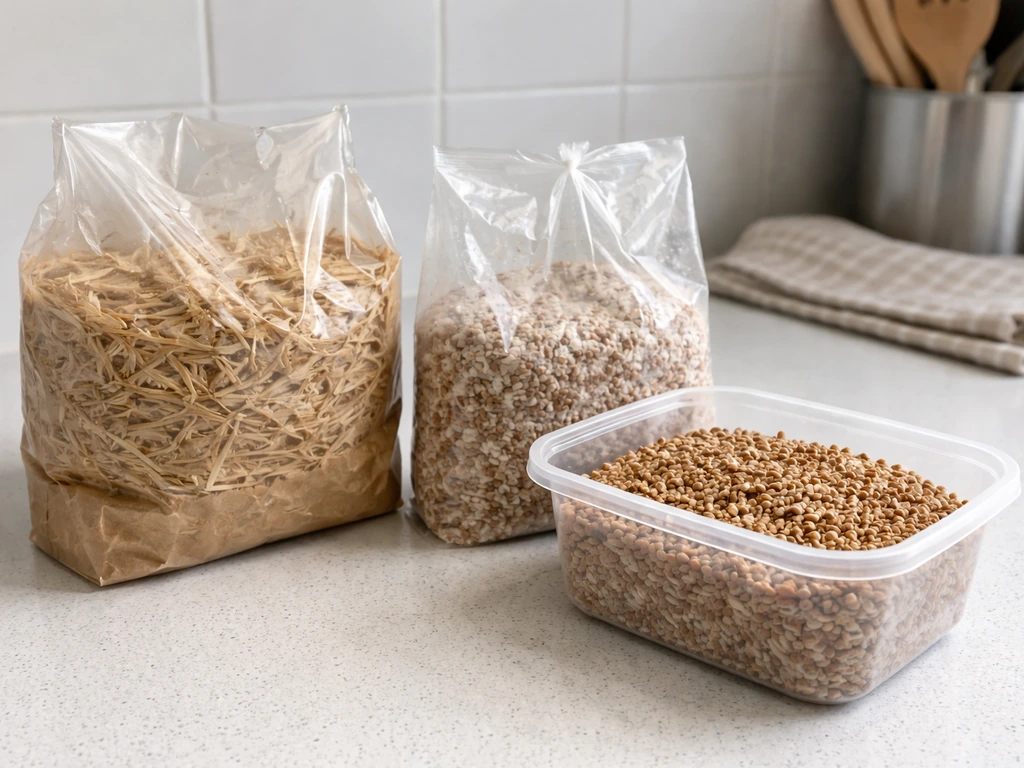
Start with spawn, not spores. Volvariella spores are notoriously finicky to work with, and getting a reliable culture from spores requires agar work and laboratory conditions that most home growers don't have access to. Grain spawn or straw spawn from a reputable supplier is your best option. Look for suppliers who specialize in tropical mushroom species, as many mainstream US and European suppliers don't carry Volvariella. Asian agricultural supply companies and specialty online mushroom spawn vendors are your best bets. When ordering, confirm the strain is active and refrigerated during shipping, as Volvariella spawn doesn't tolerate heat stress during transit.
Here's a basic shopping list for a small home grow:
- Volvariella grain spawn or straw spawn (enough for 10–20% of your substrate weight by dry weight)
- Rice straw, wheat straw, or cotton waste (2–5 kg dry weight for a starter bed)
- Large cooking pot or drum for pasteurization
- Food-grade plastic bags or a shallow wooden/plastic grow tray or bed
- Thermometer (a digital probe thermometer is worth it for substrate temperature)
- Spray bottle or fine mist sprayer
- Humidity tent or simple plastic sheet for covering your bed
- Isopropyl alcohol (70%) and gloves for sanitation
You don't need anything fancy. A clean kitchen pot, some straw from a feed store or garden center, and a warm corner of your home or greenhouse is a legitimate starting setup. Keep your work area clean, your hands cleaner, and don't overthink the gear side of this.
Substrate selection and how to prepare it
Rice straw is the classic substrate for good reason: it has the right structure and nutrient profile for Volvariella, it's inexpensive, and it handles pasteurization well. Wheat straw works almost as well. Cotton mill waste and cotton seed hulls are excellent nitrogen-rich additions that can noticeably boost yield when mixed with straw at roughly 20–30% of total substrate by weight. Some growers also use water hyacinth, banana leaves, or sugarcane bagasse when straw is hard to source locally. The key is using fibrous plant material that's free of pesticides and mold.
Pasteurization vs. sterilization: which one to use
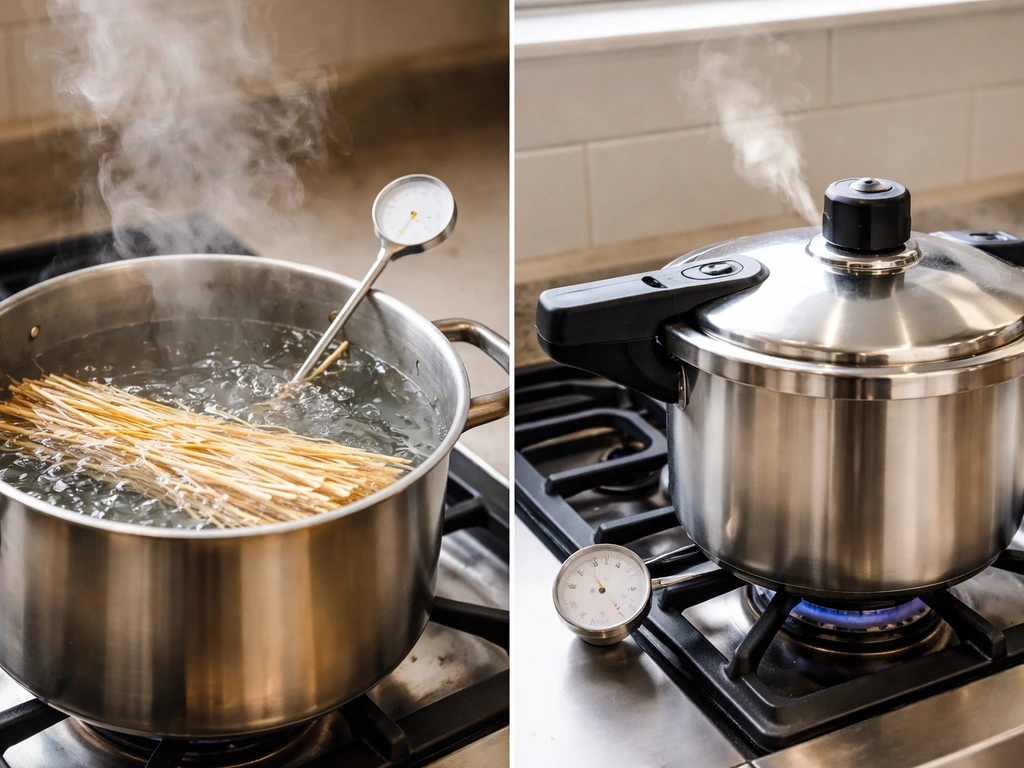
For Volvariella, pasteurization is the standard approach and is almost always sufficient. Full sterilization (pressure cooking at 121°C for 60–90 minutes) makes sense for supplemented substrates with high nutrient content, like masters mix or grain jars, where contamination pressure is high. Straw has a lower nutrient density and a naturally competitive microbial profile that responds well to pasteurization without needing the aggressive heat of sterilization.
To pasteurize straw, soak it in boiling water or hold it at 70–80°C (158–176°F) for 1–1.5 hours. The easiest home method is the 'hot water soak' technique: bring a large pot of water to a rolling boil, submerge your straw (weigh it down with a lid or heavy object), turn off the heat, cover the pot, and let it sit for 60–90 minutes. Drain the straw thoroughly afterward. Target field capacity moisture, meaning the straw should feel damp but not drip water when you squeeze a handful. Too wet is one of the most common beginner mistakes and invites contamination.
After draining, let the substrate cool to below 35°C (95°F) before adding spawn. Adding spawn to hot straw will kill it. This sounds obvious, but in a rush to get going it's easy to skip proper cooling time.
Environmental requirements: the numbers that actually matter
| Parameter | Colonization (Incubation) | Fruiting |
|---|---|---|
| Temperature | 28–35°C (82–95°F) | 28–32°C (82–90°F) |
| Relative Humidity | 85–90% | 90–95% |
| CO₂ Level | Elevated (limited airflow fine) | Needs fresh air exchanges |
| Light | Not required | Indirect light helps trigger pinning |
| Airflow | Minimal | Gentle but consistent fresh air |
Temperature is the variable that makes or breaks a Volvariella grow more than anything else. The substrate temperature (not just air temperature) needs to stay in the 28–35°C range consistently. In practice, if your room is 28°C air temperature, your substrate will typically run a degree or two warmer from metabolic activity during colonization, which is fine. If your ambient temperature drops below 25°C regularly, you need a supplemental heat source. Heat mats designed for reptile tanks, seedling heat mats, or a warm spot near a heat vent all work. Just monitor substrate temperature directly with a probe thermometer rather than trusting room air temperature.
Humidity needs to be genuinely high, especially during fruiting. Plastic-eating mushrooms are a different, specialized group, but the same core principles around temperature, humidity, and a properly prepared substrate apply Humidity needs to be genuinely high. The simplest low-tech approach is to cover your grow bed loosely with a plastic sheet or set it inside a plastic tent, misting the walls and surface 2–3 times daily. Don't mist directly onto developing pins, as this can cause them to abort. The goal is to keep the microclimate humid while avoiding waterlogged substrate.
Light plays a minor but real role in triggering pinning. Indirect natural light or a simple LED grow light on a 12-hour cycle is more than enough. Don't put your grow bed in total darkness for the entire fruiting period.
Inoculation and incubation: step-by-step
- Sanitize your hands, gloves, and any tools with 70% isopropyl alcohol. Work on a clean surface. You don't need a sterile flow hood for straw pasteurization, but being clean makes a real difference.
- Confirm your pasteurized straw has cooled below 35°C. It should feel warm but not hot.
- Mix spawn into the straw at roughly 10–20% of the dry substrate weight. Higher spawn rates speed colonization and reduce contamination risk, which is worth the extra spawn cost for beginners.
- Layer the method works well: add a few inches of straw to your bag or tray, then sprinkle spawn, then more straw, then more spawn, repeating until full. The final layer should be straw, not spawn.
- Pack the bed moderately firm. Too loose and colonization is patchy. Too compressed and you restrict airflow through the substrate.
- Seal bags loosely or cover trays with a plastic sheet with a few small holes for minimal gas exchange. This holds moisture and CO₂ while letting a little fresh air in.
- Place the bed in your warm grow space at 28–35°C. In 5–10 days you should see white mycelium threading through the straw.
During incubation, check your substrate temperature daily. If it gets above 38°C (100°F), the spawn can be killed by heat buildup from its own metabolic activity. This is most likely to happen in the first few days when colonization is peaking in a well-colonized bed. If you see temperatures climbing, open the bag or tent slightly to release heat.
Getting mushrooms: fruiting, pinning, and harvest timing
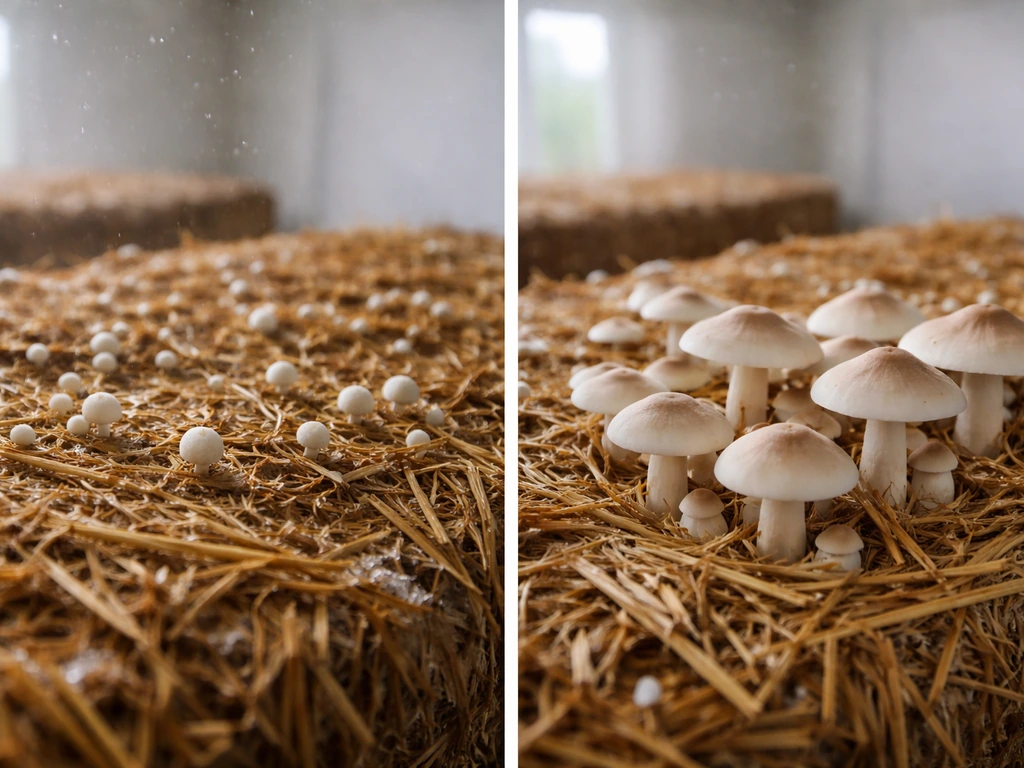
Once the straw is well-colonized with white mycelium (typically 7–12 days after inoculation), it's time to trigger fruiting. The main trigger for Volvariella is fresh air and a slight temperature fluctuation. Open the bed or bag fully, increase misting frequency, and expose the surface to indirect light. Some growers lightly case the surface with a thin layer of pasteurized casing soil (a 50/50 mix of coco coir and vermiculite works fine) to help retain moisture and encourage pinning, though it isn't strictly necessary.
Pins appear as tiny white buttons. This is where Volvariella's fast pace becomes critical to manage. The mushrooms move through developmental stages rapidly, and the ideal harvest stage is before the veil ruptures: the 'egg' stage, where the mushroom is still enclosed in its universal veil (the white membrane that surrounds young Volvariella), or the early 'button' stage when it's just beginning to open. Once the veil breaks and the cap fully expands, the mushrooms deteriorate quickly in the warm conditions they need to grow. Check your beds at least twice a day once you see pins.
Harvest by twisting gently at the base rather than cutting. Cutting leaves a stump that can harbor contamination. After the first flush, remove any spent or dead mushrooms, mist the bed, and wait 5–7 days for a second flush. Yields vary with substrate quality and strain, but a well-run straw bed can produce 15–25% biological efficiency (meaning 15–25 grams of fresh mushrooms per 100 grams of dry substrate weight) across two flushes. The entire crop cycle from inoculation to end of harvest is typically 11–25 days.
Storing your harvest
Volvariella mushrooms have a notably short shelf life, even shorter than oyster mushrooms. At room temperature in warm conditions, they'll start deteriorating within hours of harvest. Refrigerate them immediately at 4–10°C and use within 2–3 days. For longer storage, drying works reasonably well: slice and dry at 40–50°C until fully desiccated, then store in an airtight container away from light. Dried straw mushrooms are widely used in Asian cooking and rehydrate well in hot liquid.
Troubleshooting the most common Volvariella failures
No pins forming after full colonization
This is the most common frustration. If your substrate is fully colonized but nothing is pinning, the first thing to check is temperature. Volvariella pins best when there's a slight drop (3–5°C) from peak colonization temperature. If your grow space is holding steady at one temperature 24 hours a day, try introducing a small daily fluctuation, like dropping it slightly overnight. Also check that you've actually opened the bed to fresh air, as elevated CO₂ from a sealed bag inhibits pinning. Increase misting and try exposing the surface to indirect light if you haven't already. Casing with a thin layer of moist coco coir can kickstart stubborn beds.
Green, black, or pink contamination
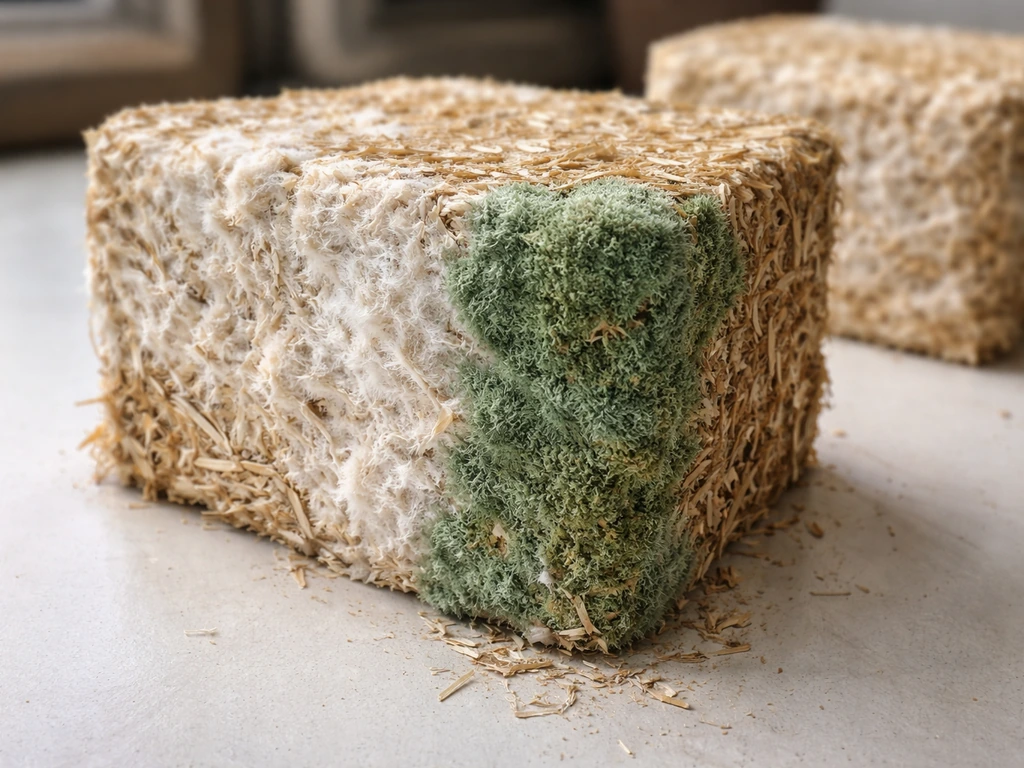
Trichoderma (green mold) is the most common contaminant and thrives in the same warm, moist conditions Volvariella loves. If you see green patches, the contaminated section cannot be saved. Remove it immediately, dispose of it far from your grow area, and do not compost it indoors. Prevent recurrence by ensuring your pasteurization was thorough, your spawn rate is high enough (10–20%), and you're not working spawn into the substrate with dirty hands or tools. Pink or orange discoloration can indicate bacterial blotch, usually caused by substrate that was too wet at inoculation.
Slow or stalled colonization
If mycelium is barely growing after 5–7 days, your substrate temperature is almost certainly too low. Get a probe thermometer into the substrate itself, not just the room air. Warm the environment and recheck. If the substrate smells sour or slimy, it was too wet at inoculation and has gone anaerobic. Unfortunately, a sour-smelling substrate is very hard to recover. Drain and re-pasteurize if possible, then re-inoculate with fresh spawn, but if contamination is widespread, starting fresh is often faster.
Pins aborting or drying out before harvest
Tiny pins that form and then shrivel and die almost always indicate humidity that dropped below acceptable levels. Mist more frequently and check for drafts hitting your grow bed directly. Even a ceiling fan running nearby can dry out a bed fast. If you're using a plastic tent, make sure it's retaining humidity properly. Also confirm temperatures haven't dropped below 25°C during the night. A single cold night can abort an entire flush.
Mushrooms opening too fast before harvest
This is a Volvariella-specific problem that surprises first-time growers. The mushrooms move from button to fully open in hours at peak growing temperatures. Check your beds twice a day once pins appear. If you're consistently missing the harvest window, try harvesting a touch earlier at the egg stage, before the veil even begins to show any sign of opening. Eggs are fully edible and actually preferred in some culinary traditions for their texture.
A few honest expectations going in
Volvariella is a genuinely exciting mushroom to grow, but it rewards preparation more than most species. Your first grow may be imperfect, and that's fine. The cycle is fast enough that you'll learn quickly and can adjust on your next run. If you've grown oyster mushrooms before, the workflow will feel familiar but with tighter temperature and timing margins. If Volvariella isn't quite what you're after, there are plenty of other interesting grows to explore, including more forgiving outdoor varieties and specialty edibles in different temperature ranges. But if warm weather cultivation is calling your name, straw mushrooms are one of the most rewarding and fastest-turnaround crops you can try. If you're specifically looking for how to grow ghost mushrooms, the best starting point is to match the right warm, humid conditions and use reputable spawn. Poisonous mushrooms are a different challenge than growing straw mushrooms safely, so always focus on correct identification and safe cultivation practices. If you're specifically interested in how to grow wild mushrooms, the key is matching the species to the right conditions and using safe, reliable starting material.
FAQ
Can I grow Volvariella mushroom outdoors in warm climates, or does it have to be indoor?
Outdoor growth is possible when you can keep the environment hot and humid, but you must protect the bed from direct sun, drying winds, and sudden cold nights (below about 25°C stalls growth). Use a shade structure plus a plastic tent or greenhouse section so humidity stays high during peak pinning and you can still open for fresh air without letting the bed dry out.
What humidity level should I target, and how do I know if it is too low or too high?
Aim for a consistently humid microclimate rather than a single number. If pins shrivel or abort, humidity likely dropped, drafts may be drying the surface, or nighttime temperatures fell. If the straw stays waterlogged or smells anaerobic, humidity is too high and/or the substrate moisture was excessive at inoculation.
Is casing (coir/vermiculate) required to get pins?
No. The bed often fruits well without casing if you manage fresh air, misting, and temperature fluctuation correctly. Casing is most useful when you have good colonization but persistent lack of pinning, or when the surface dries between checks.
How much spawn should I use, and what happens if I use too little or too much?
A spawn rate around 10–20% is a practical target for many home setups. Too little spawn can slow colonization and increase the window for contamination, too much can raise the chance of heat buildup and accelerate drying during the fast early stages. If you add supplements, keep the spawn rate on the higher end and manage temperature carefully.
Do I need fresh air control, or is misting alone enough?
Fresh air matters, elevated CO2 can inhibit pinning if the bag or tent stays too sealed. Don’t rely on misting alone, crack the enclosure to exchange air while still maintaining humidity, especially once pins start forming.
Why do my mushrooms stop growing after the first few hours of pinning?
The most common causes are short-term cold exposure, humidity drop, or letting the surface dry out. Because Volvariella moves fast, even a brief dip during the night can abort an entire flush. Check substrate temperature with a probe and inspect the bed at least twice daily once you see pins.
What is the safest way to handle and harvest if I want to avoid contamination?
Harvest at the egg or early button stage, twist gently at the base, and remove spent or dead mushrooms promptly. Use clean hands and tools, and keep contaminated sections isolated immediately rather than trying to “clean up” the area. Cutting stumps can leave material that stays wet and invites fast secondary contamination.
How do I prevent Trichoderma if I only pasteurize straw?
Pasteurization is helpful, but prevention also depends on cleanliness and speed. Maintain thorough soaking and drain properly to avoid overly wet substrate, use fresh spawn from a reliable supplier, and avoid cross-contamination from other grow projects. If green mold appears, remove it immediately and increase attention to sanitation around your warm, humid work area.
My substrate is colonized but no pins appear. What should I try first?
Start with substrate temperature and fresh air. Volvariella often pins after a small drop from peak colonization temperature (roughly 3–5°C) plus opening for fresh air. If that doesn’t work, increase misting frequency, provide indirect light, and consider a thin casing layer to hold surface moisture.
How can I tell if the straw is too wet before inoculation?
Too wet straw often leads to anaerobic conditions. Signs include a sour or slimy smell and poor, weak colonization progress. For better control, target “damp but not dripping” by squeezing a handful after draining, then wait for the substrate to cool before adding spawn.
What should I do if my substrate gets hotter than 35–38°C during incubation?
If substrate temperatures climb into the danger zone, heat buildup can kill spawn or stall colonization. Open the enclosure slightly to vent heat, reduce external heat input, and verify temperatures with a probe inside the substrate, not just in the room.
How should I store Volvariella mushrooms so they do not spoil quickly?
Refrigerate immediately after harvest at about 4–10°C and plan to use within 2–3 days. Keep them dry and cool in the fridge, don’t leave them sitting at room temperature since they degrade within hours in warm conditions. For longer storage, dry them at low heat (around 40–50°C) until fully desiccated, then store airtight away from light.