You can grow wild mushroom species at home, but you almost certainly can't dig up a clump of mycelium from the forest floor and expect it to produce reliably. What actually works is recreating the natural conditions those species need and starting with clean, verified spawn or spores from a reputable supplier. That combination, the right species plus the right habitat cues, is how home growers consistently pull flushes from species like shiitake, oyster, lion's mane, and wine caps that you'd otherwise only find in the wild.
How to Grow Wild Mushrooms: Home Methods, Steps, and Tips
Marcus Holloway
6 May 2026
Why "growing wild mushrooms" is more complicated than it sounds
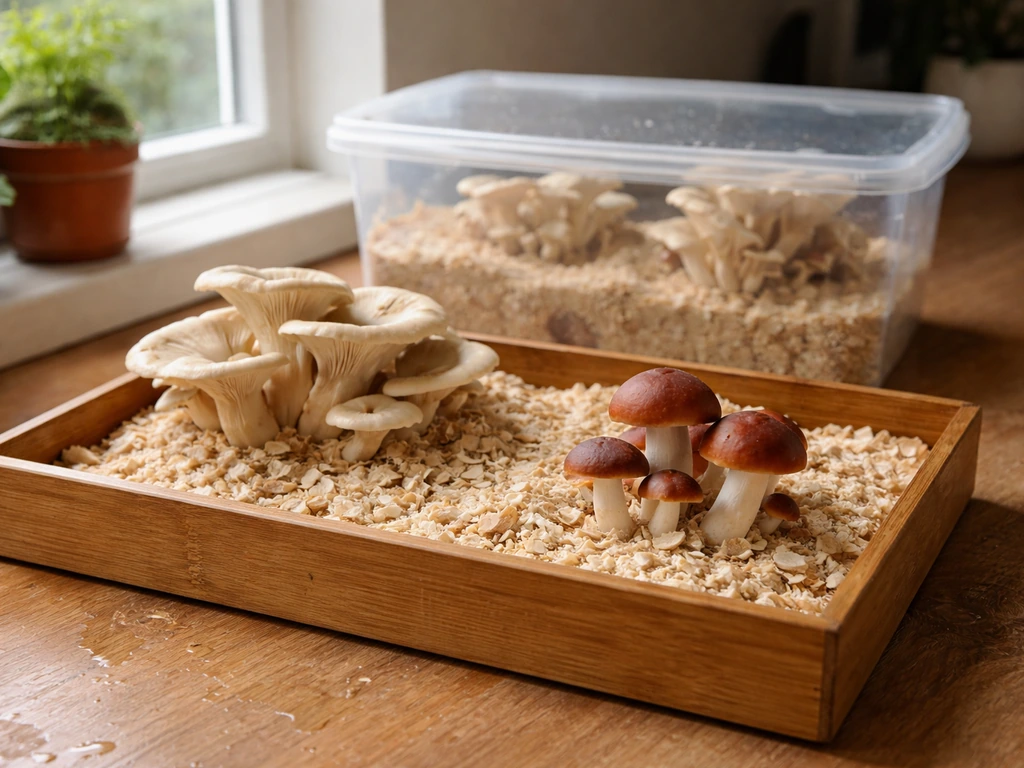
The phrase "wild mushrooms" means different things depending on who's asking. Foragers use it to mean anything growing uncultivated outdoors. Regulators, like Illinois Extension's food handling guidelines, use it as a legal category separating wild-harvested product from intentionally cultivated mushrooms (and those two categories carry very different rules if you're selling). Illinois Extension’s cottage food guidance treats wild-harvested, non-cultivated mushrooms differently from cultivated mushrooms for product eligibility Illinois Extension's food handling guidelines. For growers, the practical question is simpler: can you take something from nature and grow it? The honest answer is that wild-collected material is almost always contaminated with competing molds, bacteria, and unknown fungi that will outcompete your target species before it gets established. That's not pessimism, it's just mycology.
What you can do is cultivate the same species. Shiitake grows on oak logs in Japanese forests. Oyster mushrooms colonize dying hardwoods. Wine caps push up through wood chip mulch in shaded gardens. Every one of those species is available as clean, commercially produced spawn, and every one of them will grow at home if you give them the substrate and environmental triggers they need. That's the reframe that makes this whole thing work. If you want a more specific target, the process for growing volvariella mushrooms at home follows the same idea of providing the right substrate and fruiting conditions grow at home.
How wild mushrooms actually grow
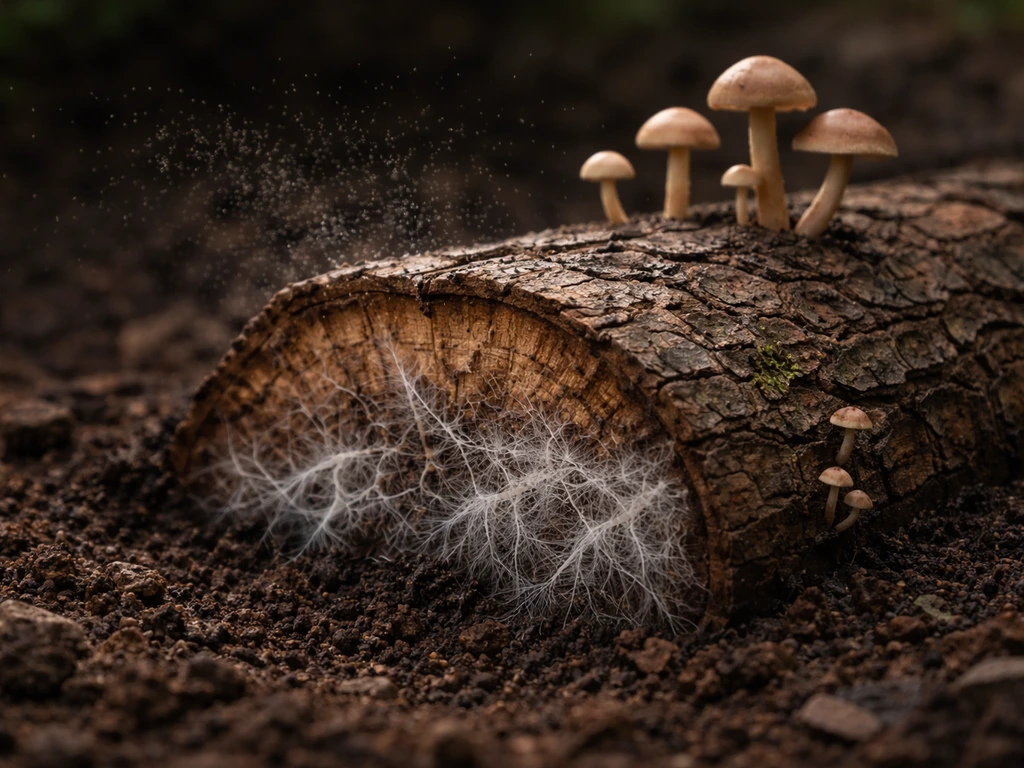
Understanding the life cycle matters because cultivation is just mimicry. In nature, a mushroom releases spores that land on a suitable substrate, germinate (when conditions allow), and send out thread-like hyphae that fuse together into a network called mycelium. That mycelium colonizes the substrate, breaking it down and absorbing nutrients. This phase can take weeks to years in the wild depending on species and conditions. Then, when the environment shifts, typically a combination of temperature drop, increased moisture, fresh air, and sometimes light, the mycelium shifts from vegetative growth into reproductive mode and produces fruiting bodies: the mushrooms you see and eat.
Substrates in nature match what each species evolved to decompose. Wood-loving species like shiitake and oyster need lignin-rich material: logs, hardwood sawdust, wood chips. Straw works well for oyster because it's cellulose-rich. Agaricus species (your classic button and portobello) grow in composted manure and soil. Wine caps (Stropharia rugosoannulata) thrive in wood chip mulch. Getting the substrate right is half the battle because mycelium simply won't colonize material it can't digest.
The fruiting trigger is the other half. In the wild, autumn rains drop humidity up and temperatures shift. Growers replicate this by changing conditions after colonization is complete: dropping temperature by 5 to 10°F, soaking logs or blocks, increasing fresh air exchange, and maintaining 85 to 95% relative humidity. Without those signals, fully colonized substrate can sit there indefinitely and never pin.
Picking your approach: mimic nature outdoors or control conditions indoors
The realistic choice for most beginners comes down to two paths. The outdoor path is lower-tech, slower, and more forgiving of imperfect conditions, but it's seasonal and less predictable. The indoor or controlled path gives you more control over fruiting triggers and faster turnaround, but requires managing temperature, humidity, and air exchange actively. Both can work beautifully. Many growers do both at the same time, which honestly makes sense because they complement each other.
| Factor | Outdoor (logs/beds) | Indoor (grow bags/tubs) |
|---|---|---|
| Best species | Shiitake, oyster, wine caps, lion's mane | Oyster, lion's mane, king oyster, shiitake |
| Startup cost | Low to moderate | Moderate (pressure cooker needed) |
| Time to first harvest | 6–18 months (shiitake logs) | 4–12 weeks (fast oyster strains) |
| Environmental control | Relies on seasonal cues | You control temp, humidity, CO2 |
| Contamination risk | Low (outdoor buffering) | High if sterile technique slips |
| Ongoing labor | Minimal | Regular misting and monitoring |
| Yield predictability | Seasonal, variable | Consistent with good management |
My honest recommendation for a first-time grower: start with an outdoor log or wood chip bed for shiitake or wine caps while simultaneously running a low-tech indoor bucket or tub for oyster mushrooms. The outdoor project teaches you how mycelium behaves in real conditions. The oysters give you fast, visible results that keep you motivated while the logs do their slow thing.
Spores vs spawn: which one should you actually start with
Spawn wins for beginners, and it's not particularly close. Spawn is mycelium that's already been established on a carrier material, typically grain, sawdust, or wooden dowels. It's essentially a mushroom "seed" that's ready to colonize. Spores, by contrast, are the mushroom's equivalent of pollen: they need to germinate, mate with a compatible spore, and establish from scratch. As Penn State's mushroom research program notes, spore germination in nature is unreliable and unpredictable, which is exactly why commercial and serious home growers don't seed substrate directly with spores.
That said, spores do have a role. If you want to work with a species that isn't available as commercial spawn, or if you're interested in developing your own cultures, you can use spores to inoculate sterilized grain via liquid culture, then grow that out into grain spawn. The workflow goes: spores into liquid culture, liquid culture injected into pressure-cooked grain (250°F at 15 psi for about 120 minutes), then grain colonizes and becomes spawn. It works, but it adds complexity, time, and contamination risk. Save that path until you've successfully grown something the easy way first.
What to buy and where to start
- Plug/dowel spawn: pre-colonized wooden dowels designed for drilling into logs. Easy, reliable, and widely available for shiitake, oyster, and lion's mane.
- Grain spawn: colonized grain (rye, wheat, oats) used to inoculate bulk substrates like straw or pasteurized hardwood sawdust. Best for indoor setups.
- Sawdust spawn: denser than grain, slower to spread but a good match for hardwood log-style outdoor setups.
- Liquid culture syringes: a step up from raw spore syringes; the mycelium is already germinated and suspended in nutrient solution. Much faster and more reliable than spore syringes for colonizing grain.
- Ready-to-fruit grow kits: fully colonized blocks that just need humidity and fresh air. Good for seeing what success looks like before you build your own setup.
Outdoor growing: logs, wood chip beds, and woodland-style setups
Outdoor cultivation is where growing wild mushroom species feels most natural, and for good reason: you're genuinely recreating the habitat they evolved in. The main methods are log inoculation and wood chip/mulch bed inoculation, and they suit different species.
Log inoculation for shiitake and oyster
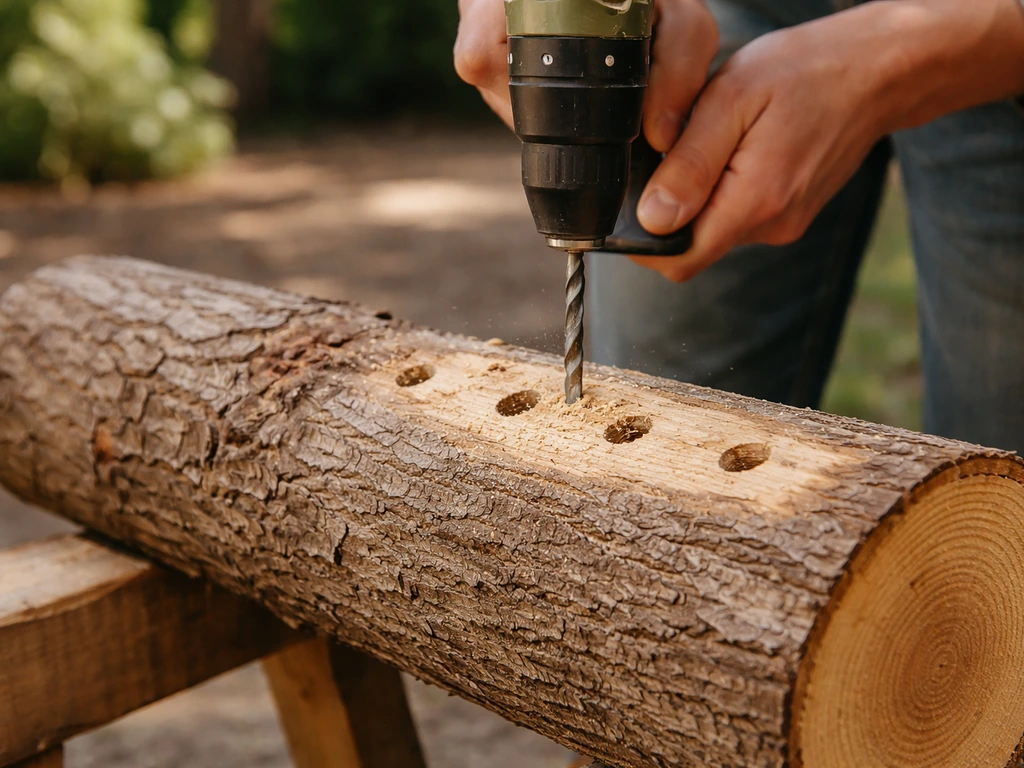
Use freshly cut hardwood logs, 4 to 8 inches in diameter and 3 to 4 feet long. Oak is ideal for shiitake. Alder, maple, poplar, and cottonwood work well for oyster. WSU Extension recommends felling trees in late winter when the wood is full of carbohydrates and before competing fungi get established. Don't use conifer logs for edible species; the resins inhibit growth.
- Drill holes in a diamond pattern along the log, about 1.5 inches deep and 6 inches apart in each row, staggering rows by 3 inches.
- Press or hammer plug spawn (pre-colonized wooden dowels) into each hole.
- Seal every hole with melted cheese wax or food-grade wax to lock in moisture and keep competing organisms out.
- Stack logs in a shaded, humid location, like under deciduous trees, away from direct afternoon sun.
- Water logs during dry periods; if humidity drops low, sprinkle two to three times per day to keep them moist.
- Wait. Colonization takes 6 to 12 months for shiitake, sometimes longer in cold climates.
To force fruiting after colonization, soak the logs in cold water for 12 to 24 hours, then move them to a shaded spot with high humidity. N.C. Cooperative Extension reports mushrooms typically ready to harvest within 12 days of soaking in their guidance, while WSU Extension describes a 5 to 7 day development window after forcing depending on temperature. Expect multiple flushes from the same log over several years.
Wood chip beds for wine caps and outdoor oysters
Wine cap mushrooms (Stropharia rugosoannulata) are one of the easiest and most rewarding outdoor species for beginner growers. They colonize wood chip mulch beds readily and produce large, burgundy-capped mushrooms with almost no input once established. Build a raised bed or clear a garden area, lay down 4 to 6 inches of hardwood wood chips (not cedar or black walnut), spread grain or sawdust spawn throughout the chip layer, cover with another inch or two of chips, and water well. Keep the bed moist and shaded. You can expect first fruiting within 3 to 6 months in warm months, with the bed continuing to produce for several years as you add fresh chips each season.
Indoor and controlled growing for wild-type species
Several species commonly found in the wild adapt extremely well to indoor cultivation with the right substrate and environment. Oyster mushrooms are the go-to starting point because they colonize fast, fruit aggressively, and tolerate a wider range of conditions than most. Lion's mane is another strong indoor performer. King oyster (Pleurotus eryngii) takes longer but produces dense, meaty clusters.
Substrate preparation
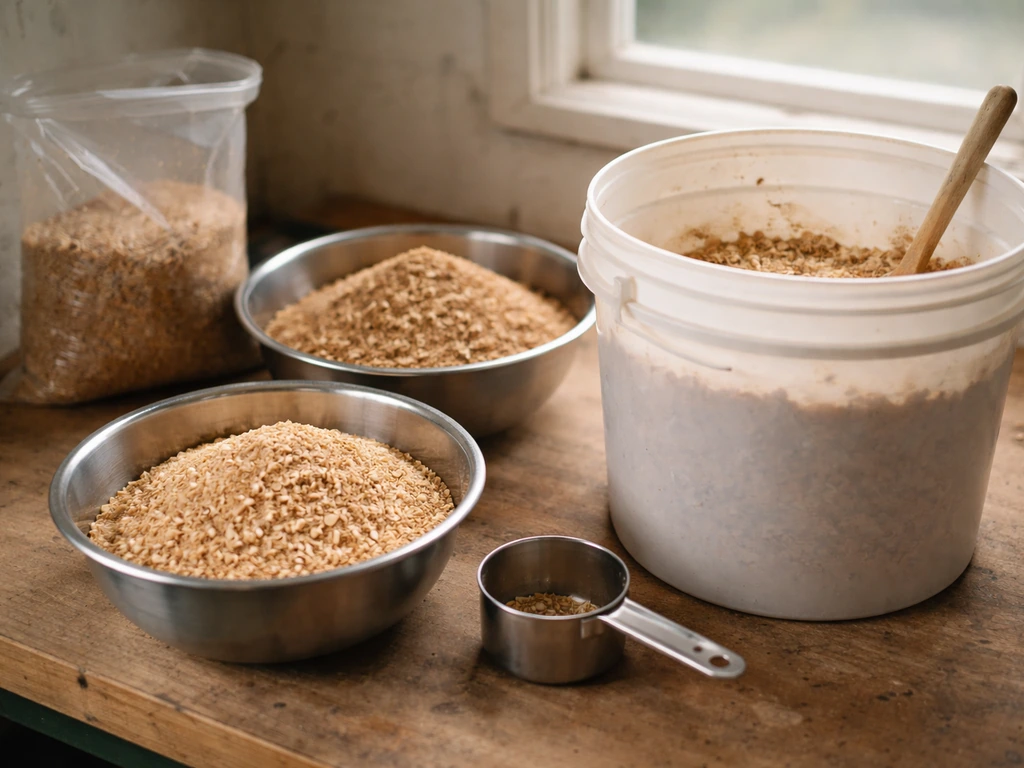
For indoor wood-loving species, the standard substrate is hardwood sawdust supplemented with wheat bran or oat bran at roughly 80/20 by weight, or a mix of straw and sawdust. Straw alone works fine for oyster mushrooms and is much easier to work with because it only needs pasteurization (soaking in hot water at around 160 to 180°F for an hour) rather than full sterilization. For supplemented hardwood blocks, you need a pressure cooker because supplements raise the nutrient level enough that competing molds will take over without full sterilization at 250°F and 15 psi for at least 90 to 120 minutes. Coco coir mixed with vermiculite is another clean option that pasteurizes easily and suits several species well.
Environmental controls during colonization and fruiting
During colonization, keep your inoculated bags or containers at the species' preferred temperature range (typically 65 to 75°F for most temperate species) in a dark or dim spot. Don't open containers unnecessarily. Mycelium needs oxygen but CO2 buildup in sealed bags actually suppresses contamination at this stage, so minimal airflow is fine until colonization is complete, which you'll recognize as full white mycelium coverage throughout the substrate.
Once colonized, the fruiting environment changes significantly. You need to drop the temperature a few degrees, dramatically increase humidity to 85 to 95% relative humidity, and introduce fresh air exchange. CO2 above about 1% (10,000 ppm) inhibits fruiting body development, and levels above 5% have been associated with complete failure to pin. In practice this means fanning your fruiting container several times a day if you're doing low-tech, or installing a fan on a timer if you've built a fruiting chamber. Misting the walls of the chamber (not directly onto mycelium) two to three times daily keeps humidity up. If you boost airflow and pins start drying out or cracking, increase misting frequency rather than cutting air exchange.
Troubleshooting: what goes wrong and how to fix it
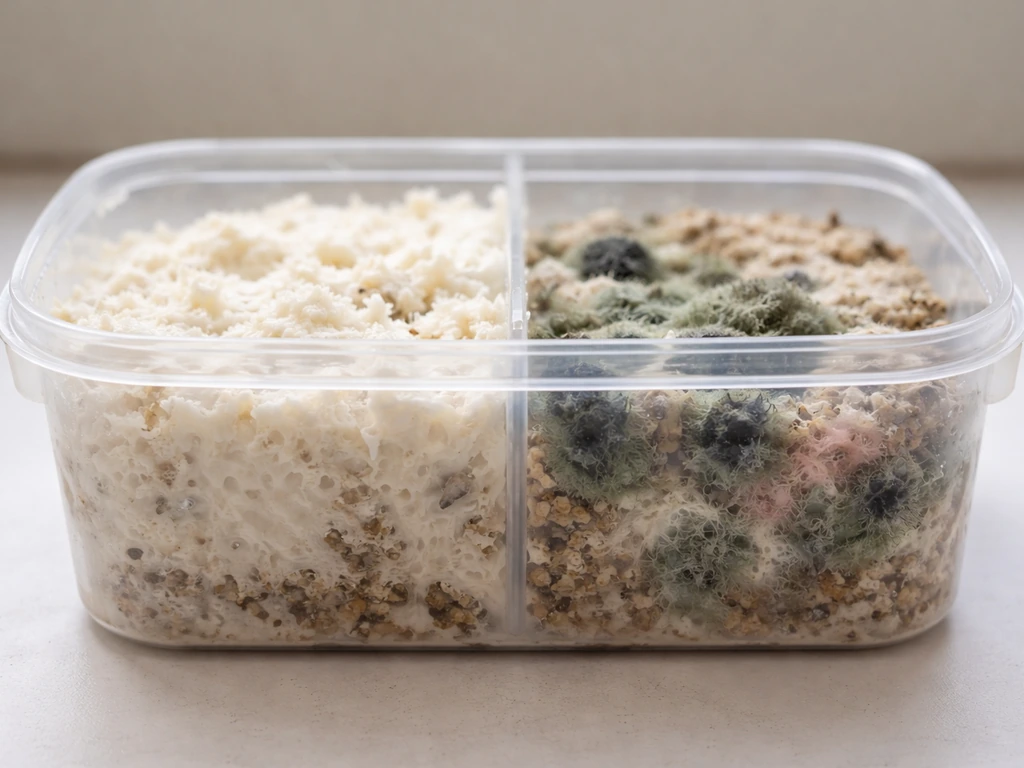
Most failures in growing wild-type mushroom species fall into four categories. Here's how to recognize and address each one.
Green, black, or pink mold taking over
This is the most common failure, especially indoors. Competing molds like Trichoderma (green) or Neurospora (orange/pink) move faster than your mycelium if the substrate wasn't properly sterilized or if contamination was introduced during inoculation. Prevention is easier than cure: sterilize properly, work in as clean an environment as possible, wipe surfaces with isopropyl alcohol before inoculation, and use a still-air box or flow hood if contamination is a recurring problem. As USU Extension's beginner guide puts it directly, cultivation is a constant fight against competing molds, and cleanliness is the core tool you have. If contamination appears in a grain jar before it's spread to bulk substrate, discard the jar immediately in a sealed bag outside your grow space.
Mycelium colonized but nothing is pinning
This almost always means the fruiting trigger hasn't been given clearly enough. Check these things in order: Is humidity actually at 85%+ or are you guessing? Get a cheap hygrometer and measure it. Is CO2 too high from insufficient air exchange? Is the temperature still at colonization-range warmth rather than the slightly cooler fruiting range? Has it been given any light cue (indirect light matters for orienting pins in many species)? For outdoor logs, the fix is soaking in cold water for 12 to 24 hours and moving to a humid, shaded spot. For outdoor log inoculation, a common community suggestion is to wax-seal the plug holes and pre-soak or hydrate the logs for about 12 to 24 hours soaking in cold water for 12 to 24 hours. For indoor blocks, try a cold shock (move to a cooler space like a garage or refrigerator for 12 hours) combined with increased misting and fresh air.
Slow or stalled colonization
If mycelium is growing but extremely slowly, temperature is usually the culprit. Most species stall below 55°F and slow dramatically above 80°F. The other common cause is spawn ratio: if you inoculated a large bulk substrate with very little spawn, colonization takes much longer and gives competitors more time to establish. A general rule is 10 to 20% spawn by weight relative to bulk substrate for indoor methods. For outdoor logs, the more plug spawn holes you drill, the faster and more reliably colonization proceeds.
Mushrooms aborting or drying out before they develop
Pins that form and then shrivel before developing into full mushrooms are a humidity problem almost every time. Humidity dropped below 80% at a critical development stage. Young pins and small fruit bodies need sustained high humidity to expand. If you see this, increase misting immediately and look for drafts or leaks in your fruiting setup that are dropping moisture. Don't compensate by sealing everything shut though, because you'll drive CO2 up and abort pins for a different reason. The balance is high humidity plus fresh air, both at the same time.
Realistic timelines to expect
| Species | Method | Colonization time | First harvest |
|---|---|---|---|
| Oyster mushroom | Straw bucket or bag (indoor) | 1–3 weeks | 2–5 weeks from inoculation |
| Lion's mane | Supplemented hardwood block (indoor) | 3–5 weeks | 5–8 weeks from inoculation |
| Shiitake | Hardwood sawdust block (indoor) | 8–16 weeks | 10–18 weeks from inoculation |
| Shiitake | Hardwood log (outdoor) | 6–12 months | After colonization + forcing soak |
| Wine cap | Wood chip bed (outdoor) | 1–3 months | 3–6 months from inoculation |
| King oyster | Supplemented hardwood block (indoor) | 4–6 weeks | 6–10 weeks from inoculation |
Your first steps starting today
If you want to get something going right now, the fastest path is ordering oyster mushroom grain spawn and a bag of pasteurizable straw, or buying a pre-made ready-to-fruit oyster block to see what success looks like immediately. If you're thinking longer-term and have outdoor space, order shiitake plug spawn and start sourcing freshly cut oak logs now while the season is right. Both projects can run in parallel and will teach you different things about how mushroom mycelium behaves.
If you want to explore more unusual territory, there are some genuinely fascinating related directions in the world of specialty cultivation worth knowing exist, from species with industrial or ecological applications to rare or ornamental varieties with their own distinct growing requirements. If you’re curious about the unusual specialty goal of growing plastic-eating mushrooms, you’ll need to treat it like a biohazard-sensitive research project with the right strains and contamination controls how to grow plastic-eating mushrooms. The core skills you build growing shiitake and oyster outdoors transfer directly to almost anything else you decide to try.
The most important thing is to just start with clean spawn, match your substrate to your species, give the mycelium what it needs during colonization, and then flip the environmental switch to trigger fruiting. Wild mushrooms grow where nature accidentally creates those conditions. These same principles for replicating nature also explain why growing poisonous mushrooms is extremely risky and not something to try at home Wild mushrooms. You're just doing it on purpose.
FAQ
Can I take a piece of wild mushroom or wild mycelium and grow it at home?
In most cases, you should not. Forest-collected material often contains competing fungi and bacteria that will take over before your target species establishes. If you want a “wild-to-culture” approach, start by using verified commercial spawn or spores to build a clean culture, then use that culture to inoculate your substrate.
Why does growing from spores work worse than using spawn?
Spawn-to-spore conversion is not reliable for home use, because spores must find compatible mating partners and suitable conditions. If you already have spores, expect lower success rates and longer timelines, especially indoors, unless you grow them into liquid culture and then into grain spawn using strict sterile technique.
Should I start indoors or outdoors if I’m learning how to grow wild mushrooms?
A practical decision rule is to base your choice on how you can control fruiting conditions. If you can keep 85% to 95% relative humidity and provide fresh air, indoor oyster or lion’s mane are good starters. If you cannot manage that reliably, outdoor wine caps or shiitake on logs are more forgiving because the environment does much of the work.
When is the best time to start a log or wood-chip bed project?
For logs, late winter hardwood is usually best because it is before competing fungi become established, and the wood has the right carbohydrate profile for colonization. For wine caps, timing matters less than keeping the bed shaded and moist year-round, but you still tend to get the best first fruits during warm, wet months.
What should I do if my grow room is too dry or too humid?
Yes, but you need to change your strategy. If your indoor space is dry, use a humidifier and keep misting focused on chamber walls rather than spraying directly onto colonizing substrate. If airflow is too low, CO2 can suppress pinning, so increase fresh air exchange in small increments while watching humidity.
If my mycelium is colonizing but not pinning, what should I check first?
No, your conditions can be “right” for colonization but wrong for fruiting. Mycelium often colonizes at warmer temperatures and needs a cooler phase with higher humidity plus fresh air to initiate pins. A common fix is a documented cold shock (for example, moving containers to a cooler room for about 12 hours) before intensifying misting and fresh air.
How do I know if my humidity and fresh air are really correct?
Measure them. A cheap hygrometer will tell you whether you are actually hitting the target humidity, and a CO2 reading (even a basic monitor) helps you troubleshoot stalled pins caused by poor fresh air exchange. Guessing humidity is one of the fastest ways to end up with shriveled or failed pins.
How much should I soak or mist, and can I overdo it?
Not always. Some species do better with a full soak (logs), others prefer high moisture in the fruiting phase without constantly saturating the substrate. As a rule, soak logs to trigger fruiting, then in containers avoid overwetting, because waterlogged surfaces can encourage contamination and cause malformed fruits.
What spawn amount should I use so my project colonizes fast enough?
Spawn quantity affects both speed and competition. If colonization is slow, competitors gain time. A common beginner target for indoor supplemented blocks is using roughly 10% to 20% spawn by weight relative to bulk, while outdoor log colonization usually improves with more inoculation points (more plug holes).
Why do I get pins that stop growing or shrivel?
Some “success” signs are misleading. Full white coverage means colonization, but you still need the fruiting trigger, especially CO2 control and humidity at 85% to 95%. If pins appear then stall, look for humidity dips and drafts, then adjust misting frequency rather than sealing everything shut.
Can I use the same type of spawn for every substrate?
Try to match the carrier to your plan. Grain spawn is great for quick colonization into bulk, while plug spawn is designed for inoculating logs. If you use the wrong inoculation method for the substrate type, your yield will drop even if the species is correct.
Does it matter legally whether the mushrooms were grown from wild material or commercial spawn?
It depends on your local rules and on whether you are selling. Regulations often treat wild-harvested product differently from intentionally cultivated mushrooms, so even if the species is the same, labeling and documentation can matter. If you are distributing beyond personal use, check your local food handling and sales requirements first.