
Mazatapec is a cultivar of Psilocybe cubensis, the same species behind most named "strains" you'll find in cultivation communities. It's named after the Mazatec region of Oaxaca, Mexico, and it's known for slower-than-average colonization, above-average potency, and a forgiving, beginner-friendly fruiting temperament. If you've already grown another P. cubensis variety, the process here is almost identical. If you're brand new, this guide walks you through everything from sourcing spores to harvesting your second or third flush.
How to Grow Mazatapec Mushrooms at Home Step by Step
Marcus Holloway
8 Jun 2026
What Mazatapec mushrooms actually are
In cultivation practice, "Mazatapec" is a cultivar label, not a separate species. It's maintained as a lineage within Psilocybe cubensis through repeated selection by growers, and it's sold under that name by most spore vendors.
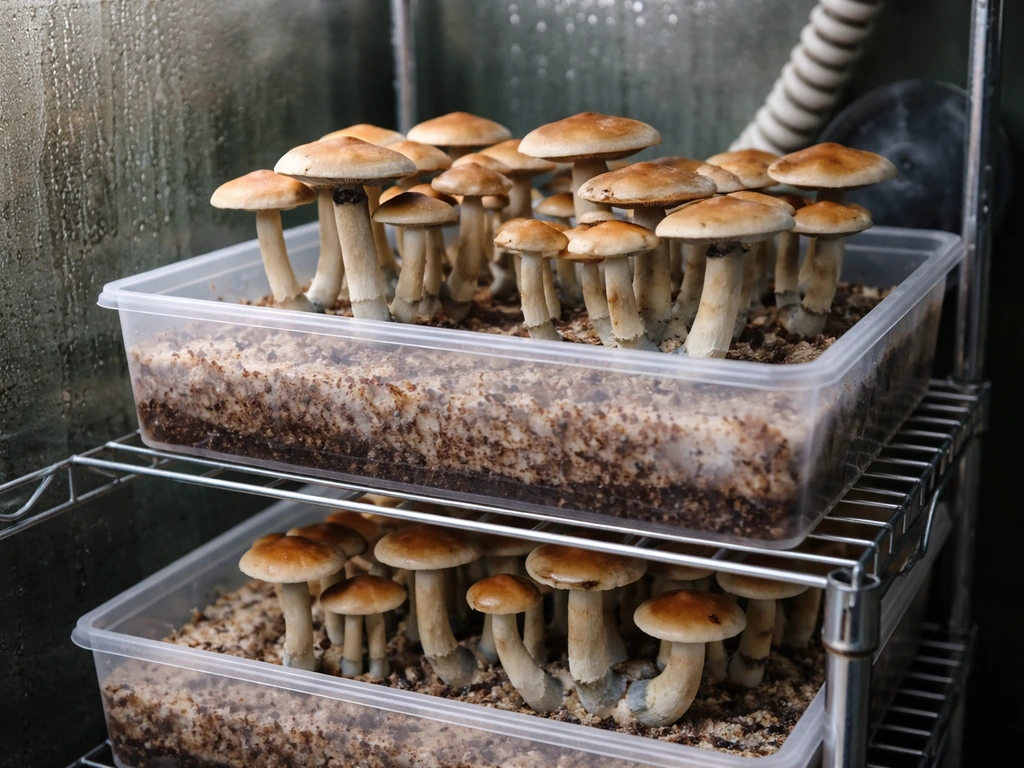
Like other P. cubensis cultivars (B+, Ecuador, Golden Teacher, Tidal Wave, and so on), it has no formal botanical distinction from the base species. What the name really tells you is where the original collection came from and what traits growers have historically associated with it: tall, slender fruiting bodies with wavy caps, a pale golden-to-caramel coloration when mature, and strong bluing when bruised.
Wavy cap mushrooms are a trait associated with certain Mazatapec lineages, and getting consistent fruiting conditions helps them show up reliably wavy caps.
One honest caveat worth knowing: cultivar labeling in mushroom communities is largely trust-based. Golden Teacher Mushrooms strain guidance similarly notes that while sellers and communities treat “strain” as a maintained set of observable traits, confirming genetic distinctness typically requires lab methods such as DNA sequencing rather than appearance alone cultivar labeling in mushroom communities is largely trust-based. Without DNA sequencing, you can't confirm that what a vendor calls "Mazatapec" is genetically distinct from another P.
cubensis lineage. Research into fungal identification has documented widespread mislabeling even in formal collections. In practice this matters less than it sounds, because the cultivation process for any P. cubensis cultivar is essentially the same.
But it does mean you should buy from vendors with strong reputations and good reviews, not just whoever has the cheapest listing.
On legality: Psilocybe cubensis produces psilocybin and psilocin, which are Schedule I controlled substances in the United States and are similarly regulated in most countries. Spores are legal to purchase for microscopy in many US states (not Oregon, California, or Georgia), but germinating them and growing the fungus is federally illegal in the US and illegal in most jurisdictions. Laws are changing in some municipalities and states. Know your local law before you proceed. This guide is written for educational and informational purposes.
Indoor vs outdoor growing, and what containers to use
For Mazatapec specifically, indoor cultivation is almost always the better choice. Psilocybe cubensis is a tropical dung-loving species with no real cold hardiness and a specific humidity requirement that's hard to maintain outdoors in most climates. Outdoor beds in consistently warm, humid environments can work, but you lose environmental control, contamination rates spike, and you can't manage fruiting triggers reliably. Unless you're in a subtropical climate and willing to accept inconsistent results, grow indoors.
For most beginners, the simplest indoor setup is an all-in-one grow bag or a shotgun fruiting chamber (SGFC), which is just a clear plastic storage bin with holes drilled every 2 inches on all sides and the bottom, stuffed with perlite. It's cheap, it works, and it gives Mazatapec the high humidity and airflow it needs. More experienced growers often upgrade to a monotub (a large unmodified or lightly modified tote with a substrate layer of 3 to 6 inches) or a Martha tent setup for larger yields. Mazatapec responds well to the monotub method because the deep substrate layer supports the mycelium's preference for a slower, thorough colonization.
| Method | Best for | Yield potential | Difficulty | Cost to start |
|---|---|---|---|---|
| Shotgun fruiting chamber (SGFC) | Beginners with PF Tek jars | Low to moderate | Easy | Under $30 |
| All-in-one grow bag | Beginners wanting a faster start | Moderate | Very easy | $15-$40 per bag |
| Monotub | Intermediate growers, bulk grows | High | Moderate | $30-$60 DIY |
| Martha tent | Experienced growers, multiple tubs | Very high | Moderate-high | $100-$200+ |
My honest recommendation for a first Mazatapec grow: start with PF Tek jars in a shotgun fruiting chamber. It's a small investment, the failure modes are obvious and recoverable, and Mazatapec's vigorous mycelium does well in that format. Once you've run one successful cycle, step up to a monotub on your second grow.
Getting the right genetics: spores, liquid culture, or spawn
You have three realistic options for sourcing Mazatapec genetics: spore syringes, liquid culture (LC), or ready-to-inoculate grain spawn. Liberty cap mushrooms have a different life cycle and need different outdoor conditions than Psilocybe cubensis cultivars. Each has tradeoffs.
- Spore syringes: The most widely available option. A syringe contains spores suspended in sterile water, typically for microscopy. Spores have no active mycelium, so there's a germination step involved, and contamination risk during early colonization is slightly higher. Cost: $10-$20 per syringe from reputable vendors.
- Liquid culture syringes: These contain already-germinated mycelium suspended in a nutrient solution. They colonize faster than spores, have a lower contamination risk early on, and are the better choice if you can find them from a trusted source. Cost: $15-$25.
- Grain spawn: Colonized grain (rye, wheat berries, oats) ready to be mixed into bulk substrate. The fastest route to fruiting, but you need to trust the supplier's sterility practices completely. Cost: $20-$40 per bag, and shelf life is short.
For sourcing, look for vendors who are well-reviewed in cultivation communities, operate within the legal framework of your jurisdiction (spores for microscopy), and use clean room or laminar flow hood practices. Avoid vendors who advertise vague "exotic genetics" with no specifics, or who have no verifiable community presence. A reputable spore syringe will get you started; a reputable liquid culture will get you started faster.
Substrate preparation: what Mazatapec mycelium actually likes
Mazatapec, like all P. cubensis, is a primary decomposer that does best on manure-based or coco coir-based substrates. For PF Tek (the beginner method using mason jars), the substrate is a mix of brown rice flour and vermiculite. For bulk grows in a monotub, the most popular and reliable option is coco coir and vermiculite, sometimes called CVG. More advanced growers use pasteurized manure-based mixes (horse or cow dung with straw) for even higher yields.
PF Tek substrate (for jars)
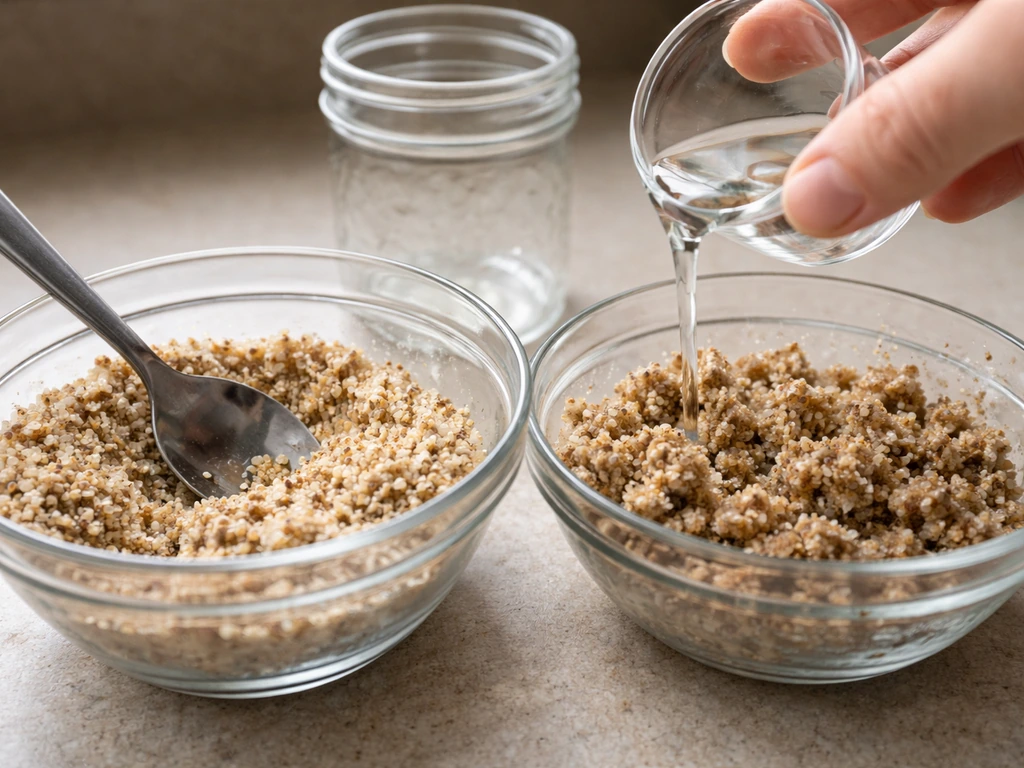
- Mix 2 parts vermiculite with 1 part brown rice flour by volume.
- Add water until the mix clumps when squeezed but doesn't drip (field capacity).
- Fill half-pint mason jars about two-thirds full, leaving a dry vermiculite layer on top as a contamination barrier.
- Cover lids with tin foil and pressure cook at 15 PSI for 60-90 minutes, or steam sterilize in a regular pot for 90 minutes.
- Let jars cool completely (12-24 hours) before inoculating.
Bulk substrate (CVG for monotubs)
- Mix 650g dry coco coir with 650g vermiculite.
- Boil 2 liters of water and pour over the mix. Stir thoroughly.
- Cover and let it pasteurize by sitting for at least 1 hour (the internal temperature should reach 160-180°F and hold).
- Let it cool to room temperature (below 80°F) before use. This takes 4-12 hours.
- Check field capacity: the mix should hold moisture but not drip when squeezed hard.
A word on supplements: adding bran, coffee grounds, or other nitrogen-rich materials to bulk substrate will boost mycelium activity but also dramatically increases contamination risk. For a first grow, stick to plain CVG. Supplemented substrates make more sense once you have a pressure cooker and a cleanroom workflow. Mazatapec actually produces solid yields on plain CVG without supplements, so don't feel like you're leaving gains on the table.
Inoculation and incubation
Inoculation is the step where contamination is most likely to happen, so cleanliness here matters more than anywhere else. Work in the cleanest space you have, ideally with still air (close vents, don't move around), wipe surfaces with isopropyl alcohol, wear gloves, and flame-sterilize your needle before and between each jar. A still air box (a clear plastic tote with arm holes cut in the side) dramatically reduces airborne contamination risk and costs almost nothing to make.
Inoculation steps for PF Tek jars
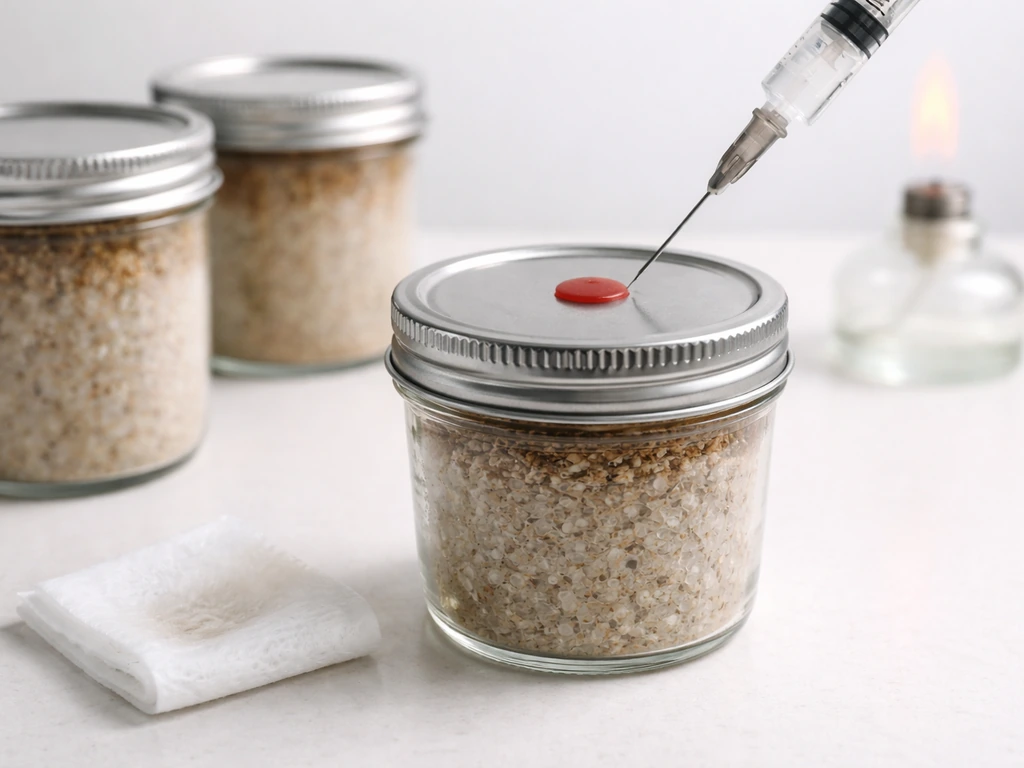
- Flame sterilize your needle until it glows red, then let it cool for 10 seconds.
- Wipe the injection port or lid with 70% isopropyl alcohol.
- Inject 1-2 cc of spore or LC solution per jar, distributing it around the inside edge in 3-4 spots.
- Wipe any exposed surface again with alcohol and seal.
- Label with date and cultivar.
For incubation, Mazatapec colonizes best at 75-80°F (24-27°C). It's notably slower than many other P. cubensis cultivars, so don't panic if you're not seeing aggressive growth in week one. Full colonization of a PF Tek jar typically takes 3 to 5 weeks for Mazatapec compared to 2 to 3 weeks for faster strains. Keep jars in a dark location with stable temperature. Avoid stacking them in ways that trap heat. Do not introduce fresh air during incubation: mycelium needs CO2 accumulation to drive colonization. Humidity during incubation is not a concern since the jars are sealed.
| Incubation parameter | Target range | Notes |
|---|---|---|
| Temperature | 75-80°F (24-27°C) | Avoid fluctuations over 5°F; heat mats with thermostats work well |
| Light | Dark or dim | Mycelium doesn't need light; light can signal fruiting too early |
| CO2 | Elevated (sealed jars) | Do not vent or fan during colonization |
| Humidity | Not actively managed | Jars are self-contained; substrate moisture handles this |
| Duration (PF Tek) | 3-5 weeks | Mazatapec is a slow colonizer; be patient |
Setting up the fruiting environment
Once your jars or substrate is fully colonized (white throughout with no green, black, or orange patches), it's time to trigger fruiting. For PF Tek, this means removing the colonized cakes from jars, doing a 24-hour dunk in cold water to rehydrate them, then placing them in your shotgun fruiting chamber on a layer of hydrated perlite. For a monotub, it means mixing your colonized grain spawn into your bulk substrate at roughly a 1:3 ratio by volume, flattening the surface, and waiting for full colonization of the bulk layer before introducing fruiting conditions.
Mazatapec is a humidity-hungry strain. It wants 85-95% relative humidity during fruiting, which you maintain in a shotgun chamber by misting the walls (never directly on the substrate or pins) 2-3 times per day and fanning with the lid briefly to exchange air. In a monotub, you can achieve this with a tighter lid seal and smaller vent openings, fanning 2-3 times per day. Letting humidity drop below 80% for extended periods will cause premature cracking of caps and veil tearing.
| Fruiting parameter | Target | What happens if off |
|---|---|---|
| Temperature | 72-78°F (22-26°C) | Below 65°F: stalled pins; above 82°F: contamination risk climbs |
| Humidity | 85-95% RH | Too low: caps crack and dry; too high with no airflow: mold develops |
| Fresh air exchange (FAE) | 3-6 times per day, 30-60 sec each | Too little: CO2 buildup causes leggy, deformed stems; no pinning |
| Light | Indirect, 12 hrs on/off | Not essential but helps cue pinning; direct sun dries substrate fast |
| CO2 | Low during fruiting | High CO2 (poor FAE) causes long, thin stems and weak caps |
One thing I've noticed with Mazatapec specifically: it tends to throw fewer but larger pins per flush compared to faster strains. Don't interpret a sparse pin set as failure. Give it time. The first signs of pinning usually appear 7 to 14 days after fruiting conditions are introduced, sometimes longer on a cold grow. Once pins appear, they develop into harvestable mushrooms in another 5 to 10 days.
Harvesting, flush expectations, and post-harvest care
Harvest Mazatapec mushrooms just before or as the veil underneath the cap begins to tear. Once the veil breaks, the mushroom starts dropping spores, which is not a problem for your health but does make your growing area purple-black and can stress the substrate. To harvest, grip the stem near the base and twist gently while pulling upward. Don't cut with scissors unless you have to, because leaving a stem stub invites bacterial rot.
Yield expectations for Mazatapec are solid but not record-breaking. A single PF Tek cake typically yields 1 to 3 dry ounces across multiple flushes, depending on hydration, temperature management, and genetics. A well-run monotub with 10 liters of bulk substrate can yield 1 to 3 dry ounces on the first flush and similar amounts on subsequent flushes, for a total of 3 to 6 dry ounces over 3 to 4 flushes. Mazatapec often has a strong second flush that rivals the first, which is a nice trait.
The dunk and rehydrate method between flushes
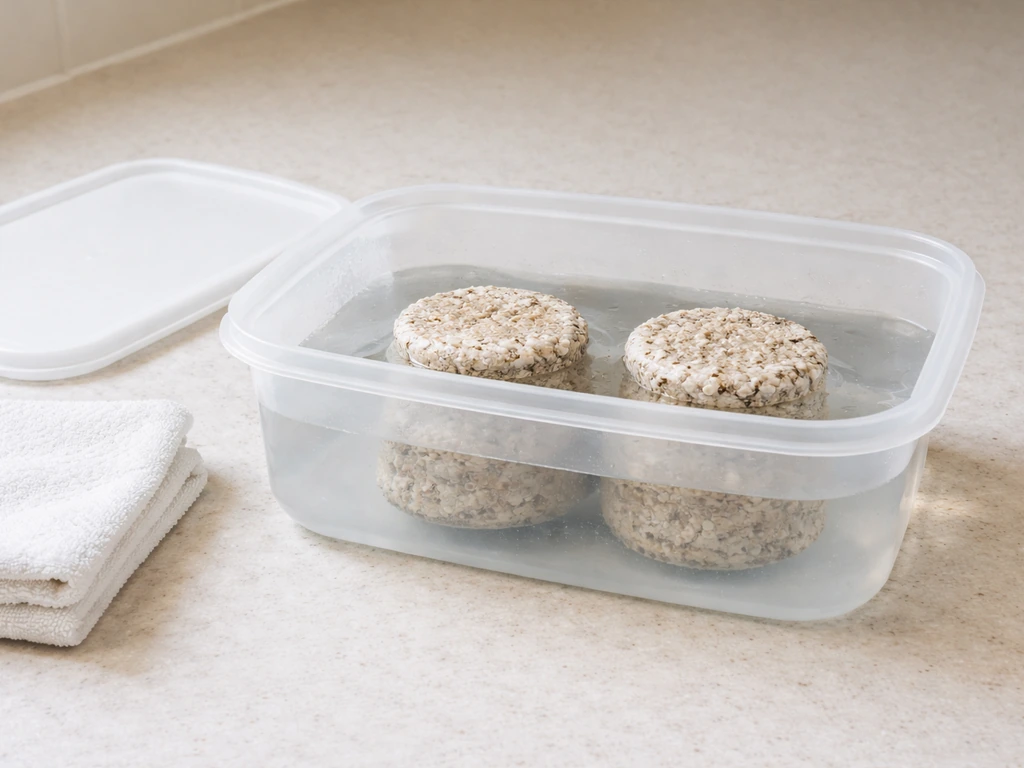
- After harvesting all mushrooms from a flush, remove any remaining stem stumps or aborts by hand.
- For PF Tek cakes: submerge cakes in cold water for 12-24 hours, then return to the fruiting chamber. For monotubs: add a thin layer (half inch) of cold water to the surface, let it absorb for 1-4 hours, then drain excess.
- Resume fruiting conditions. The next flush typically begins pinning within 7-14 days.
- Repeat for up to 4-5 flushes until the substrate turns green with mold or produces no new pins.
For storage, fresh mushrooms degrade fast, within 3 to 7 days in the refrigerator. Dry them properly if you're storing for longer. Use a food dehydrator at 95-110°F until they're cracker-dry (no flex in the stem when bent). Properly dried Mazatapec mushrooms stored in an airtight container with a food-safe desiccant pack will last 12 months or longer without significant degradation.
Troubleshooting the most common problems
Green, black, or orange patches on substrate (contamination)
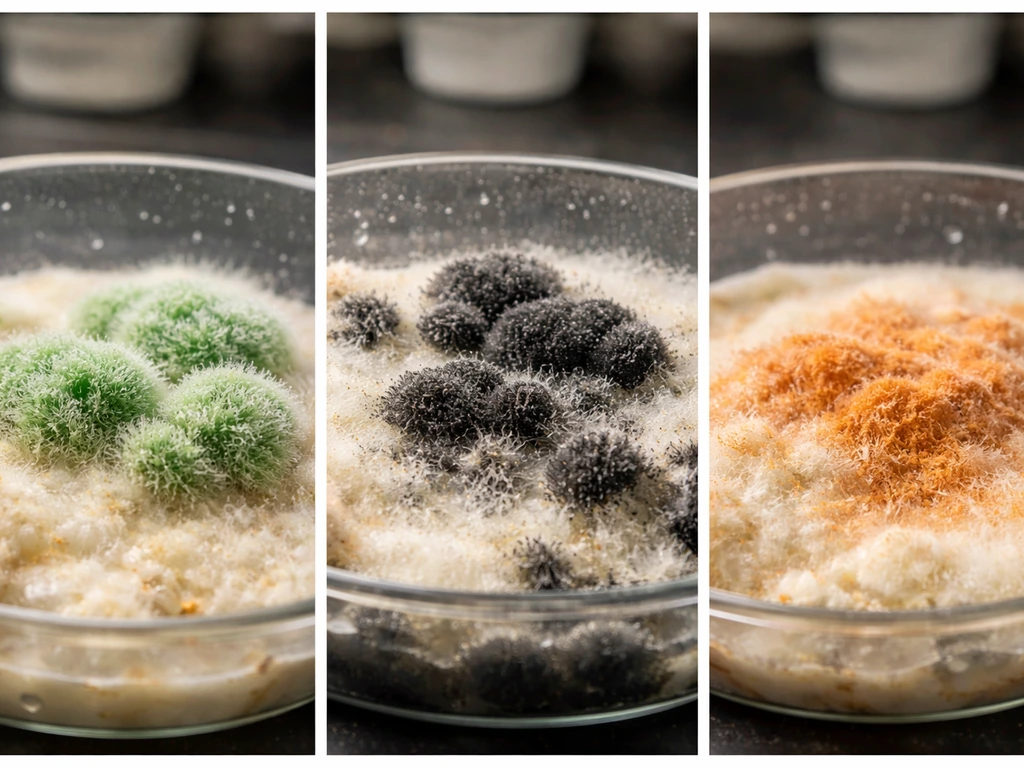
Green mold (Trichoderma) is the most common contaminant and is almost always caused by non-sterile substrate, dirty tools, or poor airflow management. If you see green on a PF Tek jar, isolate it immediately in a sealed bag and discard it outside. Do not open contaminated jars indoors. If a small green patch appears on a monotub corner, some growers attempt to scoop it out and continue, but honestly, the contamination is usually deeper than it looks. Cut your losses and start fresh. Prevention is the only real fix: sterilize properly, work clean, and don't rush the cooling period after sterilization.
Stalled or stopped colonization
If growth stops before full colonization, the most likely causes are temperature too low (below 70°F), substrate too wet (which chokes oxygen to mycelium), or a weak spore syringe. Check your temp first. If it's in range and growth has genuinely stopped, the batch is likely a loss. On your next run, verify field capacity (the squeeze test) and source a fresh syringe. Mazatapec is a naturally slow colonizer, so what looks like stalled growth is sometimes just the strain's pace. Wait a full 5 to 6 weeks before giving up.
No pins forming after colonization
This is almost always a fresh air exchange problem. High CO2 from too little fanning is the number one reason P. cubensis (including Mazatapec) won't pin. Fan your chamber 3 to 6 times per day for 30 to 60 seconds each time. The second most common cause is temperature: if your fruiting area drops below 68°F at night, pins stall. A heat mat under or beside the tub (not inside) can help stabilize temperature.
Low yields or weak second flush
Low yields typically come from one of three places: inadequate rehydration between flushes, harvesting too late (after spore drop stresses the block), or substrate that was too thin to begin with. Make sure you're doing a proper cold water dunk or soak between every flush. If your second flush is dramatically weaker than the first, your substrate may be depleted. Four flushes is a realistic ceiling for most setups; don't expect miracles from a sixth flush.
Mushrooms drying out or aborting before maturity
If small pins are forming and then dying before developing into full mushrooms, humidity is too low or airflow is hitting them directly. Mist the walls of your chamber more frequently, check that your perlite layer stays visibly wet, and reduce direct fanning onto the substrate surface. Aborts are also more common late in a substrate's life when nutrients are depleted, which is normal.
A starter materials checklist and realistic timeline
- Half-pint mason jars (6-12 for a starter PF Tek run)
- Brown rice flour and coarse vermiculite
- Coco coir (for bulk substrate on second grow)
- Spore syringe or liquid culture of Mazatapec from a reputable vendor
- 18-gauge needle (comes with syringes, or buy separately)
- 70% isopropyl alcohol and disposable gloves
- Clear plastic storage tote (for shotgun fruiting chamber or still air box)
- Perlite (for fruiting chamber humidity layer)
- Spray bottle for misting
- Digital thermometer and hygrometer
- Food dehydrator for drying harvest
| Stage | Duration | What you're doing |
|---|---|---|
| Sourcing and setup | 1-3 days | Order spores, gather materials, prep jars |
| Sterilization and inoculation | Day 1-2 | Cook jars, cool, inoculate in still air |
| Incubation | 3-5 weeks | Store in dark warm place, check for contamination |
| Fruiting setup | Day 1 of fruiting | Dunk cakes or prepare monotub, move to chamber |
| First pins visible | 7-14 days after fruiting starts | Maintain humidity and FAE, do not disturb |
| First harvest | 5-10 days after pinning | Harvest before veil tears, twist and pull |
| Subsequent flushes | Every 7-14 days for 3-4 flushes | Dunk, wait, harvest, repeat |
| Total grow cycle | 8-12 weeks from inoculation | Expect 3-6 dry grams per flush on a PF Tek setup |
Mazatapec is a genuinely good strain for learning the full cultivation cycle. Its slower colonization forces you to be patient and observe carefully, which builds better habits than faster strains that paper over beginner mistakes with speed. If you've read through other guides for similar P. cubensis cultivars, the parameters here will look familiar because the fundamentals are the same across the species. The main thing Mazatapec asks for is time and consistent humidity. Give it both and it usually delivers. If you want the full walkthrough, see our detailed guide on how to grow tidal wave mushrooms too.
FAQ
Can I substitute another Psilocybe cubensis cultivar procedure for Mazatapec exactly, or are there special timing differences?
The steps are the same, but Mazatapec needs patience during colonization (often 3 to 5 weeks in PF Tek, longer than faster strains). When troubleshooting, treat Mazatapec like a slower benchmark, wait through the full window before assuming failure, then adjust fruiting conditions rather than repeating inoculation early.
What’s the best way to confirm a “healthy” PF Tek cake before dunking and fruiting?
Look for uniform white growth with a consistent texture, no green, black, or orange patches, and no sour smell. If the cake looks fuzzy but has discolored specks, those spots can expand quickly after dunking, so it is safer to isolate and assess before moving it into the chamber.
How do I avoid over-hydrating cakes during the cold-water dunk between flushes?
Stick to the typical 24-hour dunk, then let cakes drain so they are rehydrated but not pooling water. If you see water beading on the surface for long periods, your setup is effectively too wet and can increase bacterial issues, which often shows up as slimy patches and stalled pins.
How often should I open or fan a shotgun fruiting chamber, and what’s the “too much” limit?
3 to 6 brief fanning sessions per day usually works. If you fan aggressively or keep the lid open long enough to visibly dry the perlite and walls, humidity can drop below the target range and you can get cracked caps or veils tearing early. Aim for short exchanges, not prolonged exposure.
Do I need a humidity gauge, or can I rely on visual cues with Mazatapec?
A hygrometer helps, but visuals matter too. The practical cue is the perlite layer staying visibly wet and the chamber walls showing fine condensation between misting cycles. If the walls are consistently dry or beads evaporate immediately after misting, humidity is likely too low even if your gauge says otherwise.
Why does Mazatapec sometimes pin later than expected, even when conditions look right?
Two common reasons are temperature dips at night and CO2 imbalance from insufficient or poorly timed air exchange. Stabilize fruiting temperature (especially nights) and keep a consistent fanning schedule, because pinning often starts 7 to 14 days after fruiting conditions, sometimes longer if the environment runs cool.
What should I do if only a few large pins appear instead of lots of pins?
A sparse pin set is not automatically failure with Mazatapec. Give the block more time, because it often throws fewer but larger primordia per flush. If primordia stop progressing after they appear, then reassess humidity and airflow, but do not harvest early just because pin count is low.
How can I tell the difference between aborts from normal depletion and problems caused by contamination?
Aborts from depletion usually look like small shriveled growth that later dries, without expanding colored mold. Contamination risk tends to show increasing discoloration, off smells, or fuzzy spreading beyond the immediate pin area. If you see green, black, orange, or rapidly spreading growth, isolate and discard rather than trying to “save” the block.
Is it better to harvest at veil break, or can I wait until the caps fully open for a larger size?
Harvest just before or as the veil begins to tear. Waiting longer can increase spore drop, which can stress the substrate and makes cleanup harder, plus it can cause uneven quality across the flush. The practical goal is consistent harvest timing across the chamber so later picks do not over mature.
How do I reduce the chance of green mold in future runs, beyond “work clean”?
Focus on controllable failure points: ensure correct substrate moisture (not soggy), verify sterilization is fully effective for your method, cool everything to inoculation temperature without lingering warm periods, and minimize unnecessary movement in the inoculation area. Also, avoid reusing any tools that contact contaminated material, even briefly.
What are the most common reasons for “no pinning” besides humidity?
CO2 and temperature are the top two besides humidity. If fresh air exchange is too low, blocks can stay vegetative, and if night temperatures drop below about 68°F, pinning can stall. If you fix only one variable, prioritize airflow timing and temperature stability.
How should I plan for temperature management during fruiting in different seasons?
Use a stable heat source outside the grow container, such as a heat mat placed under or beside the tub, and avoid putting electronics inside the enclosure where moisture and condensation can damage them. In cooler seasons, aim for consistent room and surface temperatures so the chamber does not swing below the effective fruiting range at night.
How should I store dried Mazatapec mushrooms for best shelf life?
Dry fully until they snap without bending, then store in an airtight container with a food-safe desiccant. Keep it in a dark, cool place to slow degradation. If you notice any rehydration (softening or sponginess), it usually means moisture entered the container, and the product should be rechecked or re-dried.