Wavy cap mushrooms (Psilocybe cyanescens) are one of the most potent wood-loving species in the Psilocybe genus, and growing them successfully comes down to three things: a wood-chip substrate, cold fruiting temperatures between 10–18°C (50–65°F), and a lot of patience. They're not beginner-friendly in the way that some other Psilocybe species are, but if you give them the right conditions, they will fruit. This guide walks you through every stage, from substrate prep to harvest, with honest notes about where things go wrong. If you are specifically looking for mazatapec mushroom cultivation, the process still starts with dialing in the right substrate and environmental triggers.
How to Grow Wavy Cap Mushrooms: Step-by-Step Guide
Marcus Holloway
13 May 2026
What wavy cap mushrooms are and what you'll need
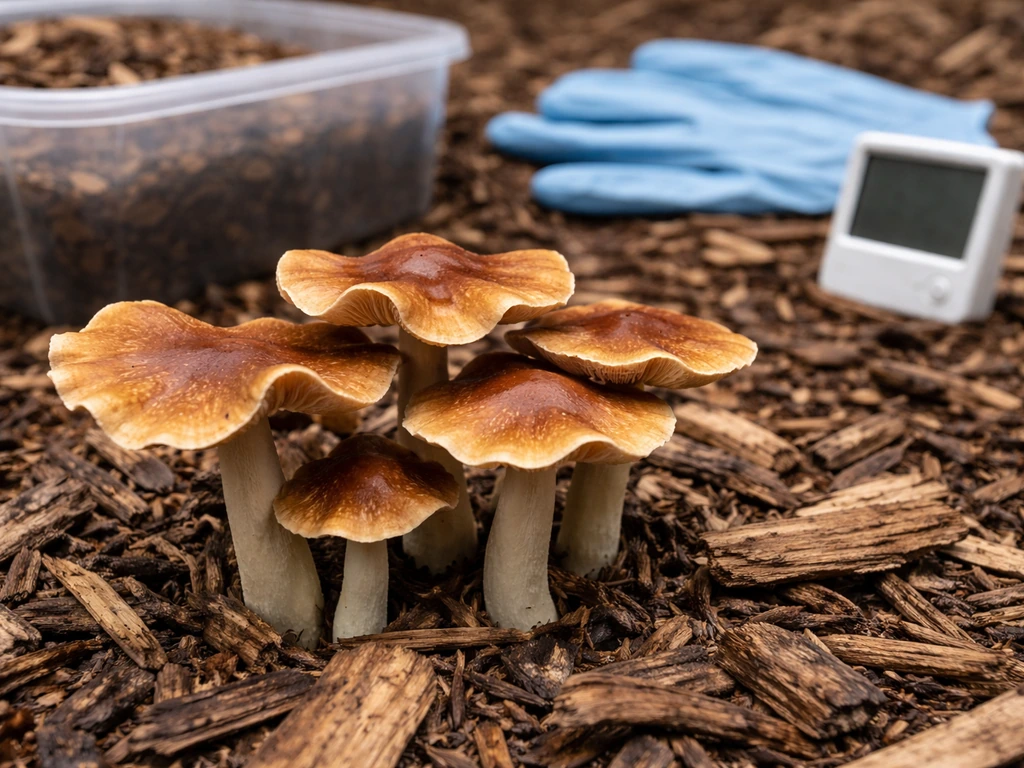
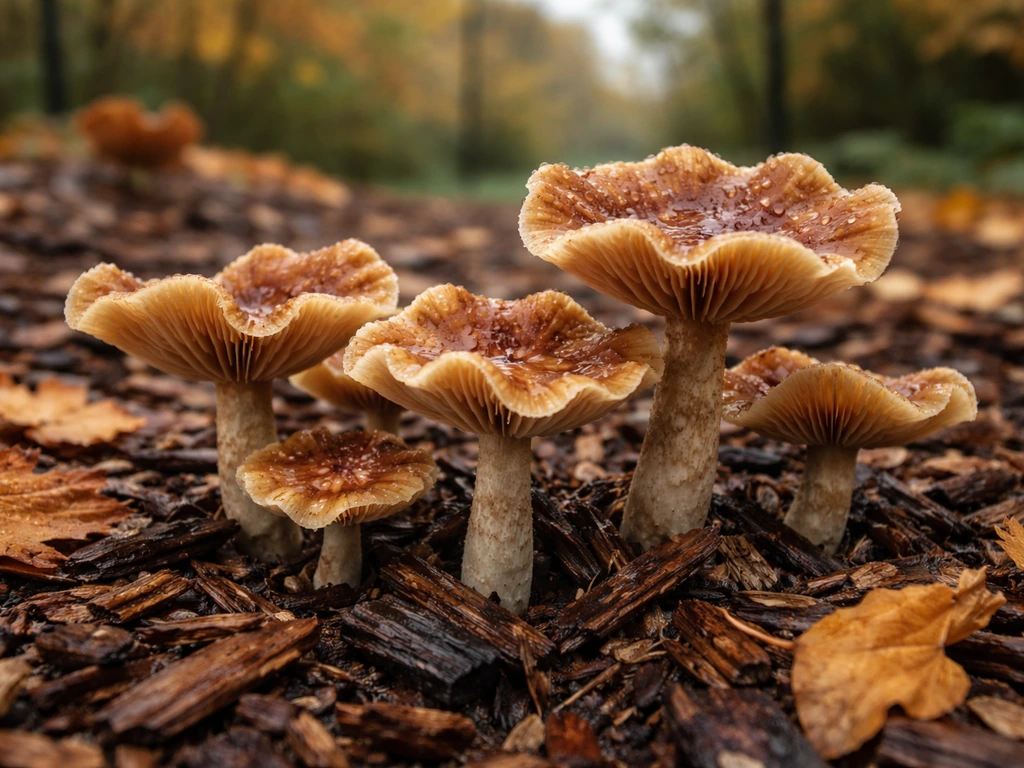
Psilocybe cyanescens gets its common name from the distinctive wavy or undulating cap margin that develops as the mushroom matures. Caps are typically caramel to chestnut brown when moist, fading to a pale buff as they dry out (a trait called hygrophanous), and range from about 2–5 cm across. [The gills start off a lighter brown in young specimens, then shift to a dark purplish-brown as spores mature. ](https://zombiemyco.
com/pages/wavy-cap-psilocybe-cyanescens) The stem bruises bluish-green when handled, which is caused by psilocin oxidizing on contact with air. This bluing reaction is one of the key identifiers, but it is not unique to this species alone, so don't use it as your only identification cue. Psilocybe allenii is a close lookalike, and one reliable way to tell them apart is cap shape: allenii's cap margin stays relatively flat and doesn't develop the wavy, rippled edge that cyanescens shows at maturity.
Before you start, here's what you'll need to pull together:
- Wood chips or hardwood sawdust (alder, oak, beech, or fruitwood are ideal; avoid cedar and pine)
- Wheat straw (optional, as a supplement or mix-in)
- Spawn (grain spawn or wood dowel spawn colonized with P. cyanescens mycelium) or a spore syringe
- Large buckets, tubs, or a raised outdoor bed for growing
- A pressure cooker or large pot for pasteurization
- Isopropyl alcohol (70%) and nitrile gloves for sanitation
- A humidity source: spray bottle, ultrasonic humidifier, or a fruiting chamber
- Thermometer and hygrometer to monitor your environment
- A refrigerator or cold space capable of reaching 10–15°C for fruiting induction
One honest heads-up: P. cyanescens is genuinely blank" rel="noopener noreferrer">challenging to fruit indoors compared to species like Psilocybe cubensis. The cold-shock requirement and their preference for outdoor wood-chip beds means most successful grows happen outside in autumn. That said, indoor fruiting is possible with the right setup, and I'll cover both.
Choosing a grow method: outdoor beds vs indoor containers
This is the most important decision you'll make before starting, and the honest answer is: outdoor wood-chip beds are the most reliable method for wavy caps by a wide margin. P. cyanescens thrives in mulched garden beds, landscaped paths, and wooded areas where it can colonize freely at its own pace and fruit naturally when temperatures drop in autumn. If you're in a temperate climate with cool, wet falls, an outdoor bed is your best shot at a productive grow.
Indoor growing in tubs or containers is possible but requires you to simulate the seasonal cold trigger artificially. You're essentially trying to recreate a Pacific Northwest autumn in your spare room or fridge, which takes more equipment and more fiddling. That said, it gives you more control over timing and is the only viable option if you don't have outdoor growing space or live somewhere with extreme winters.
| Factor | Outdoor Bed | Indoor Tub/Container |
|---|---|---|
| Fruiting reliability | High (natural season trigger) | Moderate (requires cold shock setup) |
| Setup cost | Low (mulch, bed space) | Medium (humidifier, fridge or cool room) |
| Colonization speed | Slow (weeks to months) | Moderate (controlled temps) |
| Yield potential | High over multiple seasons | Lower, single or double flush |
| Control over conditions | Low (weather-dependent) | High |
| Best for | Temperate climates with cool autumns | Year-round or indoor-only growers |
| Difficulty | Moderate | High |
My recommendation: if you have a garden or access to outdoor space, start with an outdoor bed. It's less work, more forgiving, and wavy caps evolved to grow this way. Use the indoor method as a secondary option or for off-season attempts.
Substrate and prep: wood chips, straw, and what actually works
Wavy caps are wood-decomposers, not dung or straw specialists. Their mycelium is adapted to break down lignocellulose in hardwood material, and this is non-negotiable for consistent results. The best substrate is hardwood wood chips, specifically alder, oak, beech, or fruit trees. Some growers mix in wheat straw at around 20–30% by volume to add bulk and water retention, but wood chips should make up the bulk of your substrate. Softwoods like cedar and pine contain antimicrobial compounds that can inhibit or kill mycelium, so avoid them entirely.
Supplementing with composted manure or coffee grounds can increase nutrient availability, but it also raises contamination risk significantly. For beginners, keep it simple: hardwood chips, maybe some straw, and nothing else. The mycelium will colonize inert wood-chip substrate just fine on its own.
Pasteurizing your substrate
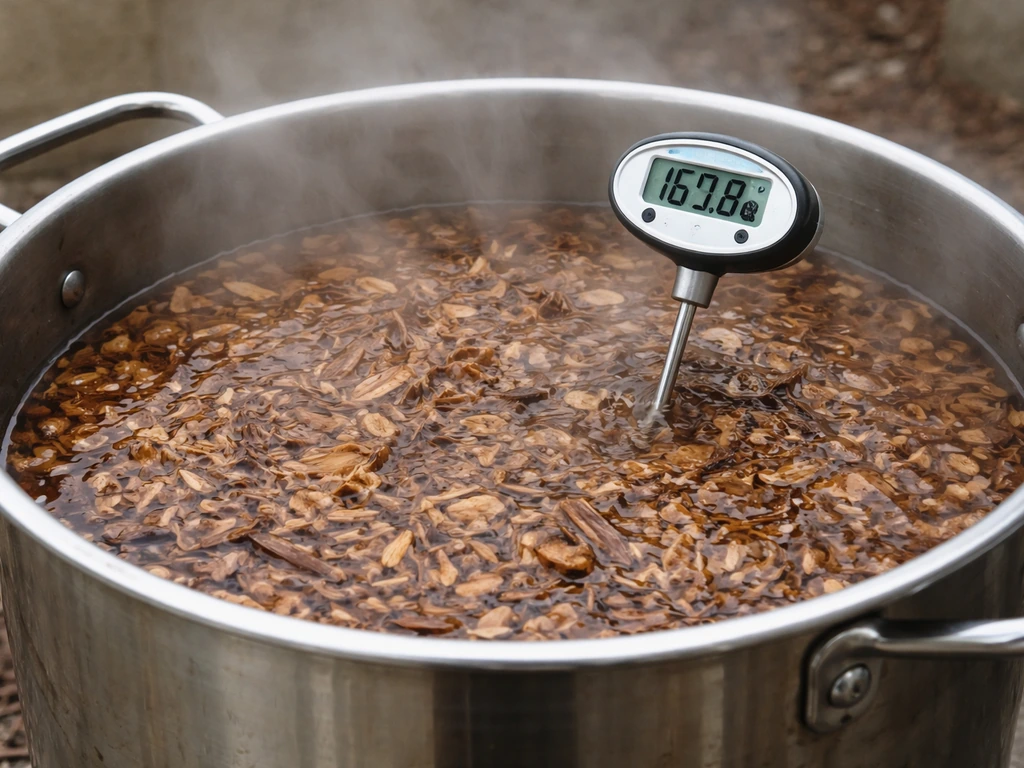
Pasteurization is the standard treatment for wood-chip and straw substrates. You're not trying to sterilize the material (which would require a pressure cooker and much higher heat), just knock back competing bacteria and mold spores enough that your Psilocybe mycelium can get established first. The target temperature range is 160–180°F (71–82°C), held for 60–90 minutes. Here's how to do it at home:
- Fill a large pot or bucket with your wood chips and cover with water.
- Heat to 160–180°F (71–82°C) and maintain that range for 60–90 minutes. Use a thermometer, not guesswork.
- Drain the substrate and let it cool to room temperature (below 80°F/27°C) before adding spawn. Hot substrate kills mycelium.
- Squeeze a handful: it should hold its shape and release only a few drops of water. Too wet and you'll get anaerobic bacteria; too dry and colonization stalls.
- Work with clean hands and surfaces. Wipe down your workspace with 70% isopropyl alcohol and use gloves throughout.
For outdoor beds, pasteurization is optional but still recommended for the top layer of chips you'll mix spawn into. You can pour boiling water over the chips in the bed, cover with a tarp, and let it cool overnight. The deeper layers of the bed will naturally contain more competition, but the mycelium can usually outcompete it over time outdoors.
Spawning: how to inoculate and what colonization looks like
You have two main inoculation options: grain spawn or spore syringes. Grain spawn (rye, wheat, or oats colonized with P. cyanescens mycelium) is faster and more reliable because you're introducing established, actively growing mycelium directly into your substrate. Spore syringes work but take longer since the spores need to germinate first, and success rates are lower on the first attempt.
For grain spawn, the standard ratio is about 10–20% spawn by weight or volume relative to your substrate. So for a 5-liter container of wood chips, you'd use roughly 0.5–1 liter of grain spawn. Mix it thoroughly through the substrate so the spawn is distributed evenly rather than concentrated in one spot. For spore syringes, inject 1–2 mL per liter of substrate, distributed across multiple injection points if you're using a sealed container.
For outdoor beds, mix your spawn into the top 5–10 cm of the chip layer, then cover with a thin layer of fresh (uncolonized) chips to protect the inoculation from drying out and UV exposure. Water the bed gently and cover with cardboard or burlap to retain moisture.
What colonization should look like
Healthy P. cyanescens mycelium appears as white to off-white, fluffy or rope-like strands threading through the wood chips. It has a faint earthy or slightly sweet smell. Colonization in wood-chip substrate is slower than in grain or agar, typically 4–12 weeks depending on temperature, moisture, and how well your inoculation was distributed. Outdoors, colonization often happens over an entire spring and summer before fruiting in autumn. Don't rush it. If you see patches of green, black, or pink, that's contamination, which I'll cover in the troubleshooting section.
Fruiting environment: cold, humid, and patient
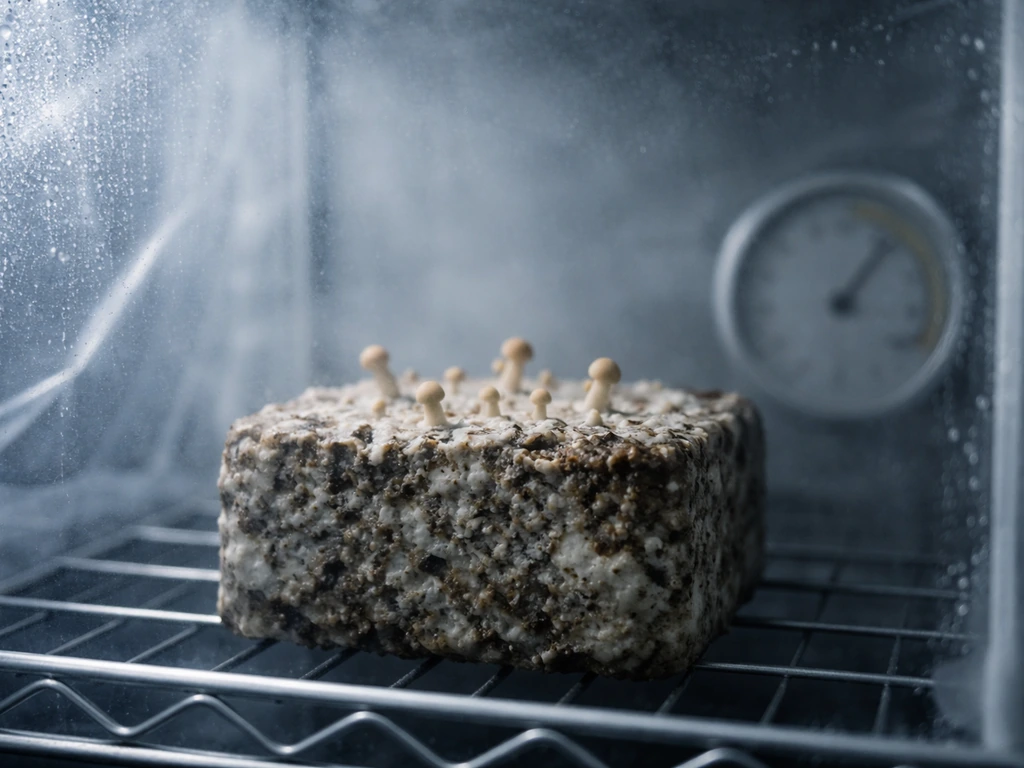
This is where wavy caps diverge sharply from most other commonly grown Psilocybe species. They need a cold trigger to initiate pinning. In nature, fruiting begins when autumn temperatures drop to the 10–18°C (50–65°F) range. If you're specifically looking for how to grow shiaqga mushroom, focus on nailing the cold-fruiting trigger first, since that’s what starts the pinning process. Trying to fruit them at room temperature (20°C+) almost never works. This is the single most common reason people fail with this species.
Cold shocking for indoor grows
Once your substrate is fully colonized, you need to introduce a cold shock. One practical approach that hobbyist growers have had success with is placing the colonized container in a refrigerator or cold space for 1–2 weeks, then bringing it back to a slightly warmer but still cool environment (around 13–16°C) and beginning regular misting. Some growers report success by freezing colonized wood chips for approximately two weeks, then thawing and watering to trigger fruiting, though this is a more aggressive technique and results can vary.
For outdoor beds, you don't need to do anything. Just wait for autumn. When daytime temperatures consistently drop into the 10–15°C range and you're getting regular rain or dew, pins should start appearing on their own.
Humidity, fresh air, and light
Once fruiting is initiated, wavy caps need high ambient humidity in the 85–95% range. Mist the walls of your fruiting chamber (not directly onto the substrate surface) two to four times per day, or run an ultrasonic humidifier on a timer. Fresh air exchange is equally important. CO2 buildup from mycelial respiration inhibits pinning and causes long, thin, malformed stems. If you're using a closed container, fan it open or fan fresh air through it for a few minutes several times daily. A small computer fan on a timer works well for a dedicated fruiting chamber.
Light isn't strictly required for fruiting but does help orient pin development. Indirect natural light or a simple LED on a 12-hour cycle is plenty. Direct sunlight will dry out your substrate, so keep it indirect. Keep fruiting temperatures steady in that 10–18°C band throughout the fruiting phase.
Watering, maintenance, and knowing when to harvest
During colonization, check substrate moisture every few days. It should feel damp but not waterlogged. If the surface looks dry or the mycelium is pulling back, mist lightly or add a small amount of water around the edges of the container. Don't drench it.
Once pins appear and fruiting begins, increase misting frequency and keep the humidity high consistently. Check the bed or chamber daily at this stage. Growth can be rapid once it starts: pins can go from tiny white dots to harvest-ready mushrooms in 5–10 days depending on temperature.
When and how to harvest
Harvest wavy caps just before or right as the veil underneath the cap begins to tear. At this point the cap has developed its characteristic wavy margin, the gills are darkening toward purplish-brown, but the spores haven't fully dropped yet. Waiting too long means the cap will flatten and release a black spore print all over your substrate, which can reduce future flushes and makes a mess.
To harvest, grip the stem near the base and twist gently while pulling upward. Try not to leave behind a stub, as rotting stem material invites contamination. For outdoor beds, use clean scissors if the mushrooms are tightly grouped. After each flush, remove any dead or aborted pins from the surface, mist the area, and allow the bed or substrate to rest for 1–2 weeks before the next flush.
Yield expectations: outdoor beds can produce multiple flushes over several weeks in autumn and may continue producing for several seasons as the mycelium continues colonizing. Indoor tub grows typically yield one to two flushes before the substrate is exhausted. Specific biological efficiency data for P. cyanescens isn't as well documented as it is for more commonly cultivated species, so treat any yield estimates you read online as rough ballparks rather than guarantees.
Troubleshooting: what's going wrong and how to fix it
No pins forming
The most common cause is temperature: if your fruiting space is above 18°C, wavy caps usually won't pin. Make sure you've actually provided a cold shock and that you're maintaining temperatures in the correct range. The second most common cause is insufficient fresh air exchange, which lets CO2 build up and suppresses pinning. Fan the chamber more frequently and check that your humidity isn't being maintained by a completely sealed container with no air circulation.
Slow or stalled colonization
P. cyanescens colonizes slowly even in ideal conditions, so some patience is warranted. That said, if you see no visible mycelial growth after 3–4 weeks indoors, check your moisture level first. Substrate that dried out early will stall colonization completely. Also check your temperature: colonization in wood chips happens best around 21–24°C (70–75°F). Cold storage during colonization will slow things down significantly.
Mold and contamination
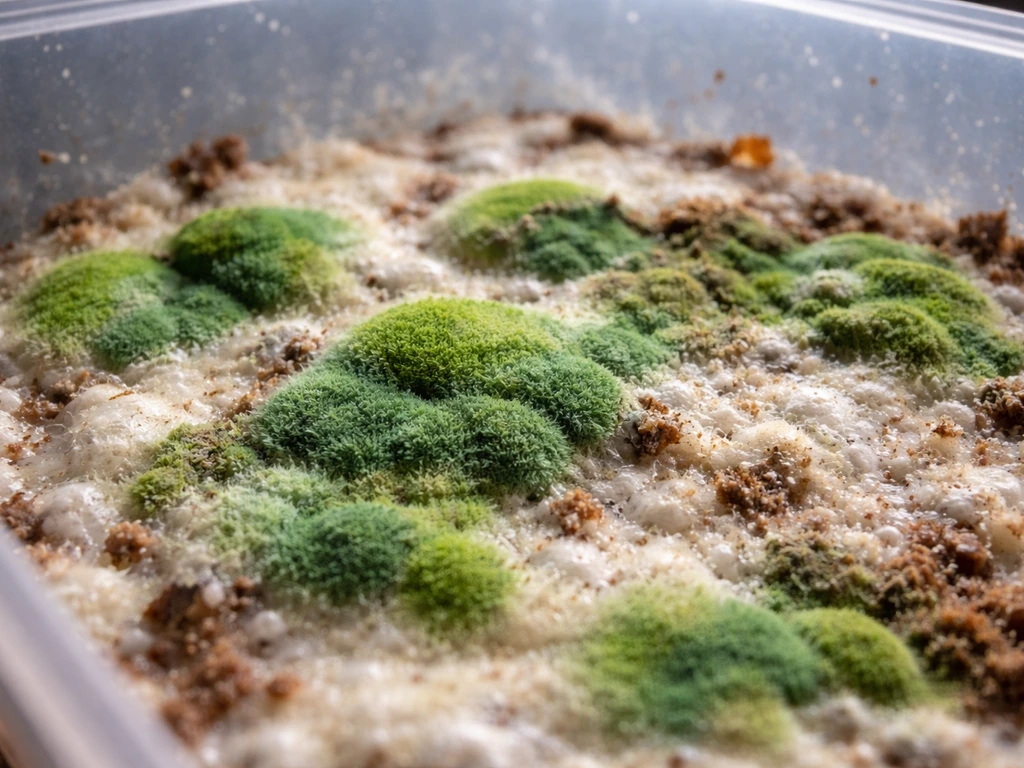
Green mold (Trichoderma) is the most common contaminant and looks like patches of bright or dark green powder on your substrate. If it's isolated to a small area, some growers try removing the affected section and continuing, but in a tub or container, green mold usually spreads quickly and the grow is often a loss. Prevent it by ensuring your pasteurization was thorough, your workspace was clean, and your substrate isn't too wet or too nutrient-rich. Black mold and pink contamination (Neurospora) are also possible and indicate similar sanitation failures.
Bacterial slime and wet rot
If your substrate develops a slimy, foul-smelling wet patch, that's bacterial contamination, often from overwatering or poorly pasteurized substrate. There's no saving a substrate with wet rot. Remove it, discard it outside your grow area, and sterilize the container before reusing it. Next time, check that your substrate is at the right moisture level (the squeeze test) before inoculating.
Drying out
If the substrate surface looks crusty or the mycelium is pulling back from the edges, it's drying out. Rehydrate carefully by misting the surface gently over several sessions rather than dumping water in all at once. For outdoor beds, cover with a layer of damp cardboard or burlap and water the surrounding soil to raise ambient moisture.
Pests
Fungus gnats are the most frequent pest problem, especially indoors. Their larvae tunnel through substrate and damage mycelium. Use yellow sticky traps around your grow area, cover your substrate surface with a thin layer of dry substrate or perlite to discourage egg-laying, and keep your growing space clean of decaying organic matter. Outdoor beds can also attract slugs, which will eat pins before you get a chance to harvest them. A ring of crushed eggshells or diatomaceous earth around the bed helps.
Legal and safety notes: know the law before you grow
This section matters, and I'm not going to gloss over it. Psilocybe cyanescens contains psilocybin and psilocin, which are controlled substances in most countries. Before you attempt to cultivate this species, you need to understand the legal situation where you live.
In Canada, psilocybin and psilocin are controlled under the federal Controlled Drugs and Substances Act (CDSA). Possession, production, and distribution are prohibited under Schedule III of the CDSA, with exceptions only for authorized exemptions granted by the Minister for medical or scientific purposes under Section 56. Simply buying a spore syringe doesn't put you in a legal grey zone if you cultivate it: the act of growing mycelium that produces psilocybin is production under Canadian law.
In the UK, psilocybin-containing mushrooms are classified as Class A substances following amendments under the Drugs Act 2005. The Crown Prosecution Service's guidance on psychoactive substances makes clear that 'production' covers cultivation by any method, and producing Class A substances carries more severe penalties than simple possession. This is not a technicality to work around.
Laws vary by jurisdiction: some US states and cities have decriminalized psilocybin or moved toward regulated frameworks, while federal law in the US still classifies psilocybin as a Schedule I substance. Always check the current laws in your specific location before proceeding, and understand that legal status can change.
On the safety side: never eat a mushroom you've foraged from the wild and identified as a wavy cap without extensive, verified identification experience. P. cyanescens has lookalikes, and some toxic mushrooms share similar features. The bluing reaction and wavy cap margin are useful identifiers but not foolproof on their own. If you're growing from verified spawn or a known culture, you can be confident in what you're producing. Wild foraging for this species requires a significantly higher level of expertise.
Finally, realistic expectations: wavy caps are one of the more challenging Psilocybe species to cultivate, especially indoors. The cold-fruiting requirement, slow colonization on wood substrate, and limited published cultivation data compared to other species means your first attempt may not produce a harvest. That's normal. Most experienced growers treat their first outdoor bed as a long-term investment that yields results in its first or second autumn, not in a few weeks. Approach it with that mindset and you'll be far less frustrated when things move slowly. If you want the full walk-through for getting them to fruit, follow the detailed steps in the guide on how to grow tidal wave mushrooms.
FAQ
What do I do if my temperatures never reach 10–18°C during the fall?
If your area does not naturally drop into the 10–18°C window, you need an artificial cold trigger. For indoor attempts, plan on a 1 to 2 week cold period at fridge-like temperatures, then move to a stable cool range around 13–16°C for pinning. Avoid “cooling” by only turning down a thermostat, room-temperature air above 18°C usually will not initiate pinning for wavy caps.
Can I grow wavy cap mushrooms in a larger tub or should I keep the containers small?
Yes, but only if you can keep the container from drying out. A larger container (or an outdoor bed) buffers temperature and moisture swings, which helps wavy caps maintain a consistent cold, damp microclimate. If you scale up indoors, prioritize stable humidity and airflow, and expect longer colonization because wood-chip colonization is slow.
How can I tell the difference between “dry surface” and “dry substrate,” and how should I correct it?
Don’t rush to rehydrate if the surface is slightly dry or cracking. For wood-chip beds, rehydration is best done gradually, misting lightly over several sessions so the mycelium is not shocked by a sudden soaking. If you see the mycelium pulling back, use small additions of water around edges first, then reassess after 24 hours.
What moisture level should the wood chips be at before and during fruiting?
Use the “squeeze test” to guide watering. A properly hydrated wood-chip substrate should feel like damp sponge, it should not stream water when squeezed. Overwatering is a common cause of bacterial wet rot, a slimy foul-smelling patch, so if water runs or chips are glossy, let it drain and improve airflow before introducing more moisture.
How exact do I need to be with harvest timing for wavy caps?
Timing is usually the mistake. Remove the mushrooms when the veil is just starting to tear, this helps avoid heavy spore drop and helps the bed keep producing. If you miss that window, expect more mess and potentially weaker subsequent flushes because a lot of energy goes into spore production.
What should I do between flushes to encourage the next crop?
After a flush, misting the area and resting the bed 1 to 2 weeks is the standard recovery window. If pins do not return, first check two things before changing everything: fresh air exchange (CO2 buildup can suppress pinning) and surface moisture (drying between flushes is common).
Does high humidity alone prevent CO2 issues, or do I still need airflow?
Fresh air exchange matters most once pinning starts. In a small chamber, even with high humidity, you can still get CO2 buildup if the chamber is airtight. Use a simple fan cycle and keep the chamber from being sealed, fresh air should be exchanged several times a day rather than continuously blasting.
If I’m using spore syringes and nothing happens, how long should I wait before restarting?
If you switch to spore syringes, expect longer delays and lower odds, spore germination and early growth are the slow bottlenecks on wood. If your first attempt is stalling, a more reliable next step is to start over with grain spawn or improve your pasteurization and hydration before assuming the spawn is dead.
Can I save a tub if I see green mold, or should I start over?
Yes, and it is a common reason tubs fail. Green mold often wins when substrate stays too wet, nutrient-rich, or incompletely pasteurized. If green appears, isolated removal can work in some outdoor beds, but in containers it usually spreads quickly, so prevention via correct moisture and thorough heat treatment is the better strategy.
If I see bluish bruising, does that confirm I grew wavy caps?
Wavy caps bruise bluish-green when handled, but that is not a final identification test. Before you trust your ID, compare more than one trait, cap margin waviness at maturity, gill color shift as spores mature, and stem bruising. If you did not source from verified spawn/culture, assume misidentification risk is still high.
What’s the safest and most effective way to control fungus gnats during fruiting?
Fungus gnat control works best as prevention. Use yellow sticky traps, remove decaying plant debris, and keep the top of the substrate covered with a thin layer of dry inert material like dry wood chips or perlite to discourage egg laying. If you use pesticides near a fruiting area, avoid residue contact with the chamber and mushrooms.
Where should I place an outdoor wavy cap bed for best cold-trigger results?
If you cannot access verified cold conditions, outdoor is still possible in many regions with careful site selection. Choose areas that get natural autumn cold and regular moisture, like shaded woodland paths, and consider insulating the bed slightly from direct sun while still allowing cold air and rain to reach it.
My substrate looks colonized, but I never get pins. What should I check first?
If you have repeated “no pinning” failures, the likely culprits are above-range temperatures during fruiting, insufficient fresh air exchange, or incomplete colonization timing. Confirm colonization is fully established before cold shock, then ensure fruiting temperatures stay in the target band and the chamber is not sealed.