
You can grow fly agaric (Amanita muscaria), but not the way you grow oyster mushrooms or shiitake. There's no bag of substrate, no fruiting chamber, no reliable indoor method. Fly agaric is an ectomycorrhizal fungus, meaning it lives in a genuine partnership with the roots of specific living trees. Without that tree relationship, the mycelium won't persist and the mushroom almost certainly won't fruit. The realistic path is an outdoor, multi-year project where you inoculate a compatible host tree seedling and wait. It's genuinely fascinating, genuinely difficult, and genuinely unlike any other mushroom cultivation project you've done.
Can You Grow Fly Agaric Mushrooms? Realistic Guide
Marcus Holloway
30 May 2026
Is growing fly agaric at home actually possible?
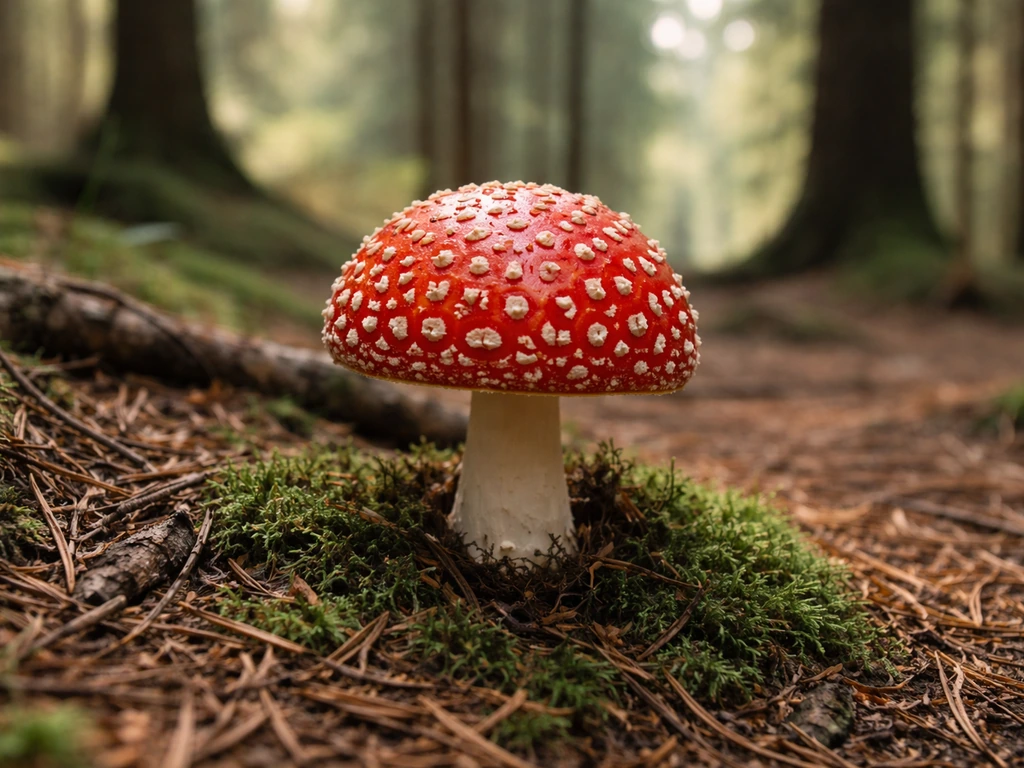
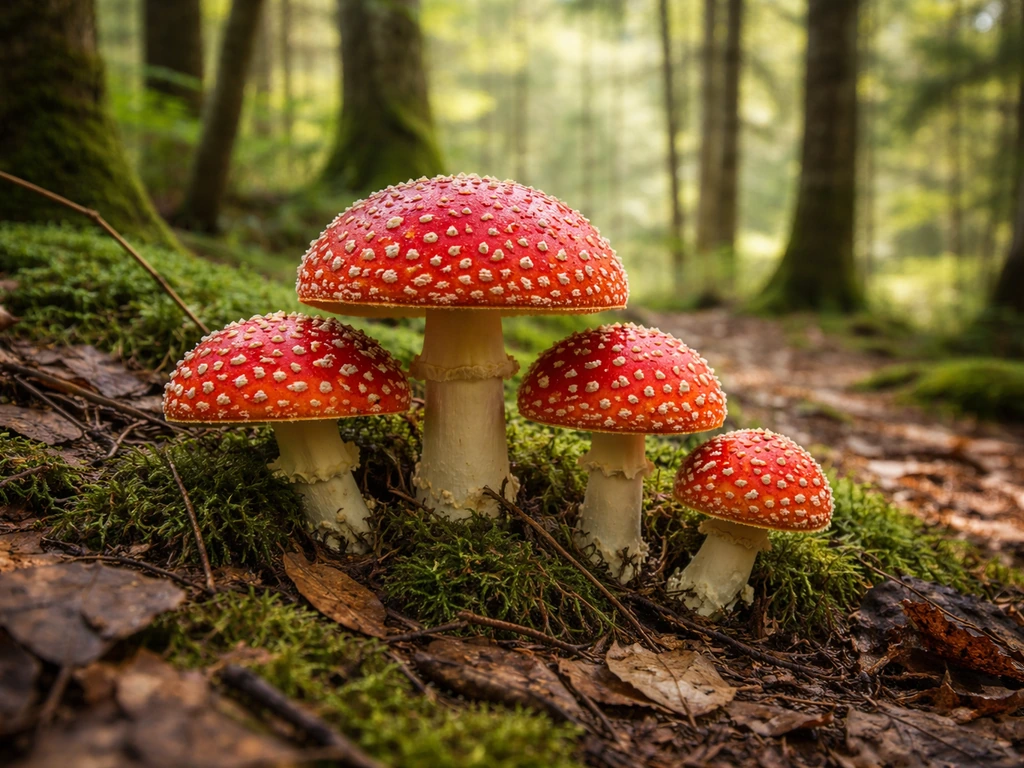
Yes, with a big asterisk. As of today, there is no peer-reviewed, reproducible protocol for fruiting Amanita muscaria indoors on an artificial substrate. That's not a gap in the hobby literature; it's a gap in the scientific literature. Researchers who study this species focus on its ecology, chemistry, and ectomycorrhizal biology, not on cracking a cultivation method. The reason is fundamental: A. muscaria is an obligate ectomycorrhizal (ECM) fungus. It doesn't break down dead wood or compost like saprophytic species do. It trades sugars and nutrients with living tree roots. Take away the tree, and the fungus loses its reason to fruit.
So "growing" fly agaric means establishing a mycorrhizal relationship between A. muscaria mycelium and a compatible host tree, then maintaining that tree outdoors for years until conditions trigger fruiting. It's closer to orchard cultivation than to typical mushroom growing. If you've done other challenging ECM species or read about how to grow agarikon mushrooms, you'll recognize the pattern: long timelines, ecological dependencies, and results that reward patience rather than technique alone.
What fly agaric actually needs: host trees and the mycorrhizal relationship
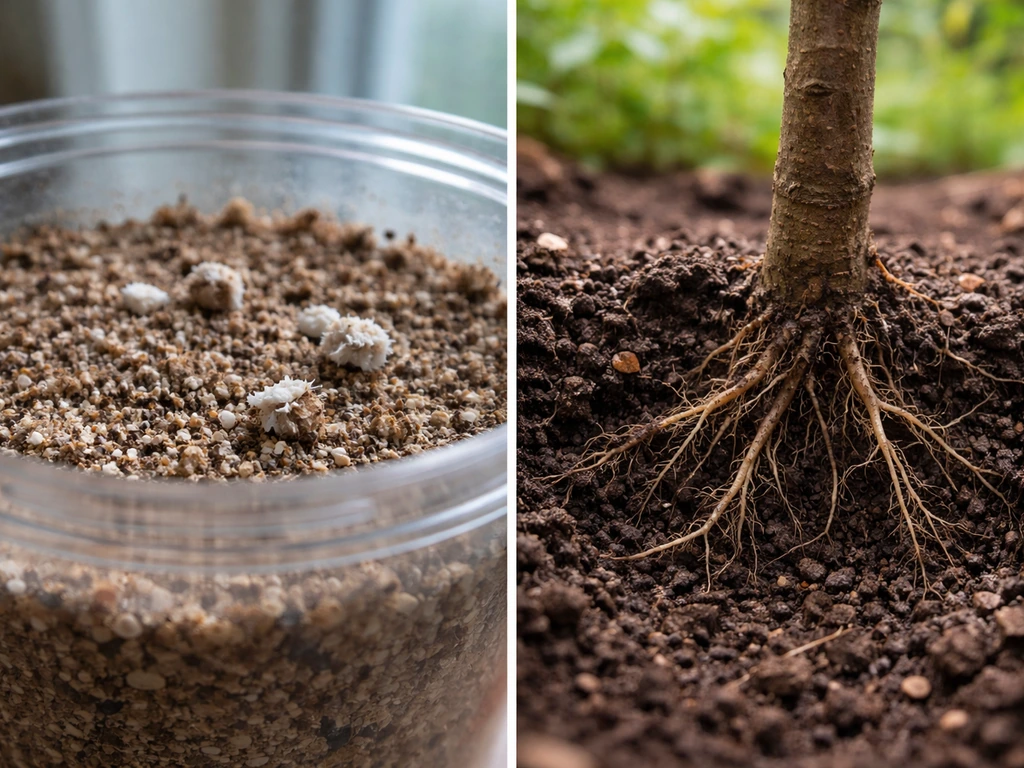
Ectomycorrhizal fungi wrap around the tips of tree roots, forming a structure called the Hartig net, a sheath of fungal tissue that interfaces directly with root cells. The fungus gets photosynthate (sugars) from the tree; the tree gets improved water and mineral uptake from the fungus. For A. muscaria, this isn't optional. It's the only way it grows.
The confirmed host tree genera are broad enough that most temperate gardeners can work with at least one of them. Documented hosts include birch (Betula), pine (Pinus), spruce (Picea), fir (Abies), larch (Larix), oak (Quercus), beech (Fagus), poplar (Populus), and willow (Salix). In research settings, A. muscaria has been shown to form functional mycorrhizas with Norway spruce (Picea abies) and even with southern beech (Nothofagus cunninghamii) in the Southern Hemisphere. Birch and pine are the most commonly cited partners and probably the most practical starting points for home growers in temperate regions.
One more layer of complexity worth knowing: research has shown that certain helper bacteria, specifically a Streptomyces strain called AcH 505, improve ECM formation rates significantly. In one experiment, A. muscaria with Norway spruce achieved 44.4% mycorrhizal colonization without helper bacteria and 66% with them after four months. You won't have access to lab-grade Streptomyces cultures at home, but this tells you something important: the system is ecologically complex, and even scientists need help to get it working reliably.
Indoor attempts vs. outdoor host-tree setup: which actually works?
| Method | Feasibility | Why it does or doesn't work | Realistic outcome |
|---|---|---|---|
| Indoor substrate (bags, jars, buckets) | Not feasible | No living host roots; A. muscaria cannot form ECM or fruit on artificial substrates | Mycelium may survive briefly, will not fruit |
| Indoor potted seedling + inoculation | Very low, experimental only | Small root system, poor seasonal cues, insufficient tree biomass for sustained relationship | ECM establishment possible in theory, fruiting extremely unlikely |
| Outdoor inoculated seedling in ground | Low to moderate over multiple years | Provides living roots, seasonal cues, natural soil microbiome; still no guarantee of fruiting | Best realistic chance; fruiting possible after 3-10+ years |
| Inoculating established host trees | Low to moderate | Mature root systems give the fungus more to work with, but competing soil fungi are a major obstacle | Unpredictable; may work if site conditions align |
The clear recommendation is the outdoor seedling method. Plant a compatible host tree seedling in suitable ground, inoculate it with A. muscaria material at the root zone, and maintain the site for years. It's the only approach with any scientific basis for eventually producing fruiting bodies.
If you're used to growing gourmet species like Agaricus bisporus where you control every variable in a controlled indoor space, this project will feel frustratingly hands-off. p10s4 how to grow fly agaric. If you want a more predictable indoor option, start with Agaricus bisporus and learn the typical grow setup used for button mushrooms.
If you want a more straightforward home grow, the methods for how to grow Agaricus bisporus at home are much closer to the controlled indoor approach most people expect. That's intentional. You're working with ecology, not engineering.
Getting started: sourcing spores and starting material
This is where things get tricky. Unlike oyster mushroom spawn or shiitake dowels, there's no mainstream commercial supply chain for A. muscaria inoculant. The hobby market is thin and often unverified. Here's what's realistically available and what to look for:
- Spore prints or spore syringes: These exist in the hobbyist market. Spores are not the same as mycelium, and using them requires getting germination and early colonization right before you can even attempt inoculation of a seedling root system. Viability varies widely depending on how the spores were collected and stored.
- Mycelium on agar or grain: Occasionally available from specialty mycology suppliers. This is more practical than starting from spores because the mycelium is already established, but supply is inconsistent and quality is hard to verify.
- Wild inoculation: Some growers have reported attempting to transfer soil from around a known wild A. muscaria fruiting site to a new host-tree location. This is imprecise and introduces unknown soil biology, but it's historically how ECM fungi have been spread informally.
- Avoid products marketed as A. muscaria extract, tincture, or dietary supplement: These are not cultivation materials, and the FDA has explicitly flagged A. muscaria and its constituents (including muscimol and ibotenic acid) as unapproved for use in conventional food. They have nothing to do with growing mushrooms.
Whatever starting material you source, check the supplier carefully. Ask whether the material has been confirmed as A. muscaria via microscopy or genetic testing, not just by appearance. Amanita species identification from spores or mycelium alone is not straightforward, and misidentification is a real risk in the hobby space.
Step-by-step: setting up your outdoor grow site
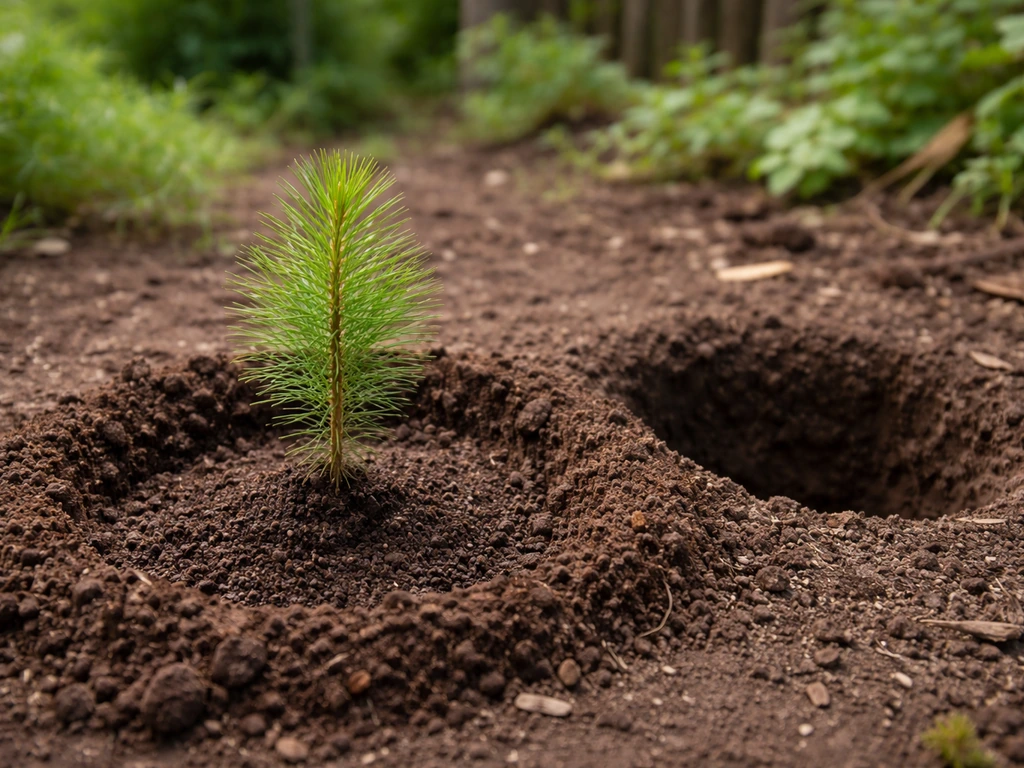
- Choose your host tree species. Birch and pine are the most practical options for most temperate climates. Get a seedling that's healthy and 6-12 months old, ideally grown in sterile or low-competition soil so its roots aren't already colonized by competing ECM fungi.
- Prepare your site. Pick a location with partial shade, good drainage, and naturally acidic to neutral soil (pH 5.5-6.5). Avoid heavily amended garden beds. The goal is a soil environment that resembles the forest floor: slightly organic, not overly rich in nutrients, and with some leaf litter.
- Prepare your inoculant. If you're using a spore syringe, mix it into a small amount of sterilized or low-nutrient peat-based medium. If you have mycelium on grain or agar, crumble it into the planting hole directly. Work quickly and minimize contamination exposure.
- Inoculate at the root zone. When transplanting your seedling, apply your inoculant directly to the root ball and the surrounding soil within about 5-10 cm of the roots. Don't bury it deep. ECM formation happens at fine root tips, which are close to the surface.
- Mulch the site. Apply a layer of wood chip or leaf mulch (4-8 cm) around the base of the tree, not touching the stem. This moderates soil temperature and moisture, mimicking forest floor conditions. Hardwood or conifer chips from compatible species are ideal.
- Water consistently but don't overwater. The site should stay moist but never waterlogged. In dry periods, water deeply once or twice a week. In autumn, reduce watering and let natural rainfall take over, as autumn moisture after warm summers is the primary trigger for fruiting.
- Leave it alone. Seriously. Don't dig to check for mycelium. Don't move the seedling. Don't add fertilizers, especially high-nitrogen types, which suppress ECM fungal activity. Revisit the site seasonally to check tree health and mulch condition, but otherwise let the relationship develop.
- Mark the site and track the seasons. Keep a simple log of when you planted, what starting material you used, and what the tree looks like each year. Document any autumn conditions (heavy rain, temperature drops) that might trigger fruiting when it eventually happens.
What to expect and when: a realistic timeline
In controlled research settings, ECM formation between A. muscaria and compatible seedlings can be detected within two to three weeks after inoculation, and full colonization of secondary roots has been measured within two months. That's the good news. The bad news is that mycorrhizal colonization is not the same as fruiting, and the jump from one to the other is where most home attempts stall indefinitely.
Fruit body production typically requires multiple years of established mycorrhizal relationship, a sufficiently mature tree root system, and the right seasonal conditions. Most informed sources frame this as a three to ten year wait, and some attempts never fruit at all. Fly agaric in the wild fruits mainly from late summer through autumn, peaking around September and October in much of the Northern Hemisphere, though timing shifts on the Pacific coast (later, into early winter) and varies with elevation and local climate. The trigger is a combination of warm soil temperatures from summer, followed by heavy autumn rain and overnight temperatures that stay above freezing.
"Success" in the early years looks like a healthy, growing host tree and (if you're careful and patient) faint signs of mycelial activity in the soil around the root zone. Actual fruiting bodies are a bonus at this stage, not an expectation. Adjust your mindset accordingly: this is a long-term ecological project, not a grow cycle.
Why it's not fruiting: troubleshooting a stalled setup
If you've had your setup going for a year or more and nothing's happening, work through these possibilities before giving up or starting over:
- Wrong host tree or unhealthy tree: If the tree is stressed, diseased, or simply not a confirmed host, the ECM relationship may have never established. A thriving, fast-growing tree is your first indicator that the root system is healthy enough to support fungal colonization.
- Inoculant was not viable: Spores lose viability quickly if stored incorrectly (warm temperatures, high humidity, light exposure). Mycelium on grain can be killed by contamination or drying out. If you're unsure about your starting material's quality, this is the most common silent failure point.
- Competing soil fungi: Wild soils are full of ECM fungi, and established competitors can outcompete A. muscaria before it gets a foothold. This is why starting with a seedling grown in sterile or low-competition substrate and inoculating at transplant time gives the best odds.
- Soil conditions are wrong: High nitrogen (from compost, fertilizer, or lawn runoff), poor drainage, or soil pH outside the 5.5-6.5 range all suppress ECM activity. Test your soil and adjust mulching strategy before assuming the inoculant failed.
- Not enough time: Three years feels like a long time when you're waiting. For this species, it may not be enough. If the tree is healthy and the site conditions are good, the most likely answer to 'why isn't it fruiting' is simply 'not yet.'
- Seasonal conditions weren't right: Fruiting requires specific triggers. If your region had a dry autumn, a warm winter, or an early hard freeze, fruiting may have been suppressed even with an established mycelial network. Track autumn conditions each year and compare them against fruiting activity in nearby wild populations if any exist.
- The site was disturbed: Digging, heavy foot traffic, root damage from nearby construction, or soil compaction near the tree base can all interrupt the mycorrhizal relationship. Keep the area undisturbed.
Safety, legality, and handling this species responsibly
Before you plant a single spore, you need to understand what you're working with. Amanita muscaria contains ibotenic acid and muscimol, two isoxazole compounds with psychoactive and toxic properties. These are not theoretical risks: ibotenic acid has been detected analytically in both the caps and spores of the mushroom. Ingesting A. muscaria causes a clinical toxidrome that includes confusion, hallucinations, delirium, and in severe cases, more serious neurological effects. Handle any fruiting bodies with basic precautions: wash hands after contact, don't rub your eyes, and keep children and pets away from the grow site.
On the legal side, the situation in the U.S. is layered. Federally, A. muscaria is not a controlled substance. However, Louisiana has specific legislation that restricts it, with an ornamental or aesthetic use exception in the statutory language. Other jurisdictions around the world have different frameworks, so check local law before you start. Growing a fly agaric for ornamental or ecological purposes is generally not the same legal risk as producing and selling extracts or food products containing it.
The FDA's position is worth being clear-eyed about. The agency has explicitly stated that A. muscaria and its constituents, including muscimol and ibotenic acid, are unapproved for use in conventional food or as dietary ingredients. FDA has issued warning letters to companies marketing A. muscaria products for consumption. This doesn't make your backyard tree project illegal, but it does mean that any intention to use, sell, or market fruiting bodies or extracts for food or supplement purposes puts you in direct conflict with federal food law. Grow it for the science, the experience, and the ecology. Keep it out of the kitchen.
One more practical note: proper identification is non-negotiable. Amanita species include some of the most deadly mushrooms in the world, including Amanita phalloides (death cap) and Amanita ocreata (destroying angel). If you're new to Amanita identification, study up carefully before handling any wild material or attempting to work with fruiting bodies. A. muscaria is distinctive but not infallible for beginners to ID correctly, especially in button stage.
Where this leaves you: next steps to take today
If you've read this far and you're still interested, here's the honest summary: fly agaric is one of the most biologically complex mushrooms you can attempt to cultivate. It's not impossible, but it's a multi-year ecological commitment with uncertain fruiting outcomes. The people who are most likely to eventually see a fruiting body are the ones who plant a good host tree today, inoculate it properly, and maintain the site patiently for years without expecting results on a mushroom-growing schedule.
- Check your local laws before doing anything else. Confirm A. muscaria's legal status in your state, province, or country.
- Source a compatible host tree seedling, ideally birch or pine, grown in sterile or low-competition substrate.
- Research reputable mycology suppliers for A. muscaria spores or mycelium, and verify material quality before purchasing.
- Identify your outdoor site: partial shade, good drainage, acidic to neutral soil, away from lawn fertilizers and heavy foot traffic.
- Plan your inoculation for spring transplant time, when root growth is active and the seedling will establish quickly.
- Set up a simple grow log and commit to checking the site seasonally, not daily or weekly.
- Learn to identify Amanita muscaria reliably before you ever handle fruiting material.
This project won't reward impatience. But if you're the kind of grower who finds the biology as interesting as the harvest, it's one of the more genuinely fascinating things you can do in the mushroom cultivation space.
FAQ
Can you grow fly agaric mushrooms indoors, even if you can’t get fruiting yet?
It’s possible to establish a relationship between the fungus and a tree, but “growing indoors” usually fails because the ectomycorrhizal partnership needs living roots outdoors, seasonal cues, and stable soil microbes. If you try an indoor setup anyway, expect long-term colonization attempts to stall before fruiting, and treat it as an experiment rather than a realistic crop cycle.
Can I grow fly agaric on pasteurized soil, compost, or mushroom substrate the way I grow other mushrooms?
No, you generally should not. Fly agaric does not behave like saprophytic mushrooms, so a typical “substrate bag” approach won’t support persistent growth. The closest workable method is inoculating a compatible host tree seedling and then keeping that tree in appropriate outdoor conditions for years.
How do I know if my fly agaric project is working before any mushrooms show up?
In early years, you often won’t see obvious mycelium. A more realistic early indicator is a healthy, vigorous host tree that maintains growth after inoculation, and subtle changes around the root zone. Even when colonization is happening, fruit bodies may not appear for years, so don’t judge the project only by lack of mushrooms.
When should I expect fly agaric mushrooms to fruit where I live?
The timing is driven by local climate, especially warm soil followed by autumn rains and cooling nights that remain above freezing. If you live in a different region from the species’ “typical” Northern Hemisphere pattern, your best approach is to track your own first consistent late-summer to autumn fruiting conditions and be patient through that seasonal window.
Can I increase my chances by sterilizing the soil or changing the ground around the seedling?
Yes, but it can reduce success. Contaminants and competing soil fungi and bacteria can interfere with ectomycorrhizal establishment, especially right after inoculation. Avoid heavy soil disturbance near the seedling’s root zone and avoid repeated “re-inoculating” or digging around to check progress.
Do I need helper bacteria like AcH 505 to grow fly agaric successfully?
Helper bacteria are interesting for research, but most home growers cannot reliably source or apply the right microbial strain in a controlled way. Because of that, you should treat any “bacteria included” products as unverified unless the supplier provides identity confirmation and practical evidence of ECM establishment, not just marketing claims.
How can I make sure my inoculant is actually Amanita muscaria?
Use validated identification, not appearance. Amanita species can look similar, and misidentification is a major risk. Ask whether the inoculant has been confirmed as Amanita muscaria using microscopy and/or genetic testing, because “looks like muscaria” is not enough for safety and outcome.
If I see no progress after a year, should I restart or troubleshoot first?
Long timelines are common, so waiting is normal, but there is a point where you should reassess. If the host tree is thriving and your site conditions are stable for multiple seasons without any signs of ectomycorrhizal success, consider changing variables like host species compatibility, planting location, or inoculation technique rather than giving up immediately after one year.
Does it matter how old the host tree seedling is when I inoculate?
Because Amanita can fruit when trees reach maturity, tree age and root system development matter. A very young seedling may colonize roots but still not reach the size and seasonal readiness needed for fruiting. Plan your expectations around tree maturation, not a fixed “spawn to mushroom” schedule.
What safety steps should I follow if I manage a fly agaric grow site?
Yes. Fly agaric is toxic, and the safest handling practice is to treat any fruit bodies as hazardous biological material. Wash hands after contact, avoid touching your face, keep children and pets away, and do not attempt ingestion or extract use. Also, you must be able to distinguish A. muscaria from lethal Amanitas if you ever handle wild or volunteer specimens.