
Growing pine mushrooms at home is genuinely difficult, and you deserve a straight answer upfront: the true pine mushroom (Tricholoma magnivelare, the American matsutake, and its close relatives) cannot be grown in a bag, on a log, or in a fruiting chamber the way oysters or shiitake can. These are ectomycorrhizal fungi, meaning they live in an obligate partnership with the roots of living pine trees. No pine roots, no mushrooms. That said, this guide will walk you through exactly what that means for you as a grower, what realistic cultivation approaches exist, and how to set yourself up for success whether you want to attempt a serious long-term forest inoculation project or pivot to a related species that actually fruits in a home setup.
How to Grow Pine Mushrooms: Step-by-Step From Start to Harvest
Marcus Holloway
30 May 2026
What pine mushrooms actually are and what you need before you start
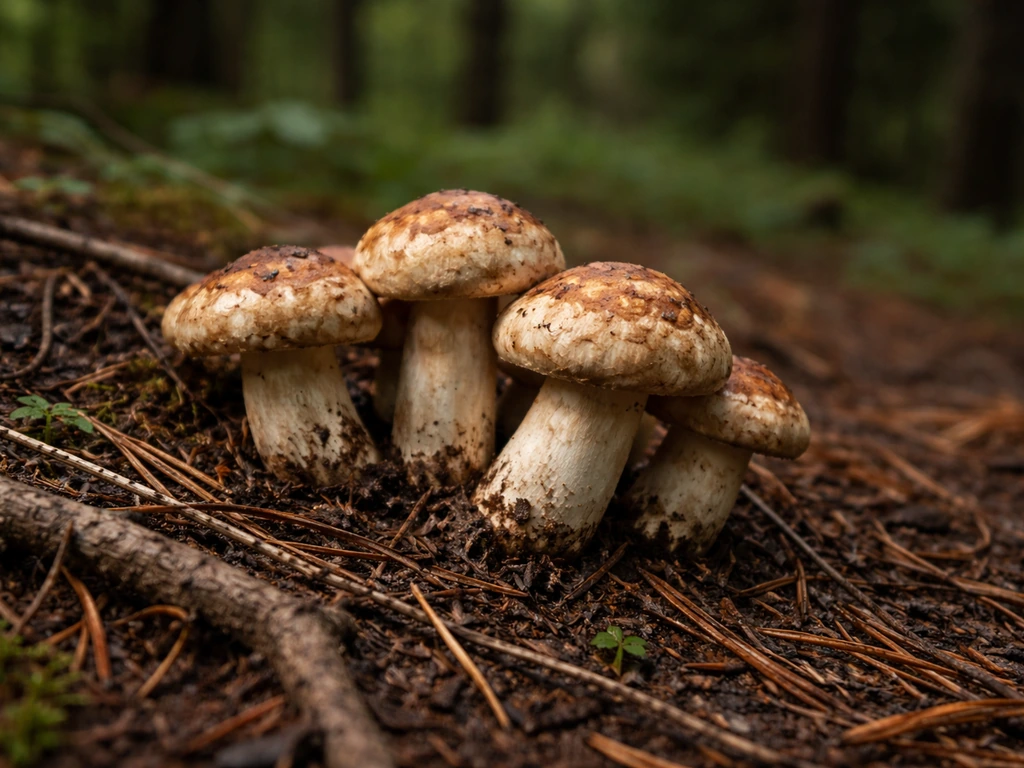
The name 'pine mushroom' gets applied to several species depending on where you are. In North America, it most commonly refers to Tricholoma magnivelare, the American matsutake, sometimes called the ponderosa mushroom. In Japan and parts of Asia, the reference is Tricholoma matsutake. Both are closely related and share the same fundamental biology: they are ectomycorrhizal, forming a tightly integrated symbiotic relationship with the roots of compatible living host trees, primarily pines like lodgepole pine in the Pacific Northwest. The USDA Forest Service has documented commercial harvesting of T. magnivelare specifically in lodgepole pine forests, which illustrates just how tied these mushrooms are to a particular ecosystem, not a substrate bag.
Before you start, be honest with yourself about what you have access to. If you have a property with mature pines or can plant pine seedlings and are willing to think in timeframes of years, a field inoculation project is worth considering. If you want mushrooms on your kitchen counter in a few months, pine mushrooms are not the right target right now. Unlike saprotrophic mushrooms such as oysters, shiitake, or even the more adventurous black morels, Tricholoma species cannot colonize dead wood or sterilized grain. That distinction matters enormously for how you plan your grow.
- Access to a compatible living host tree (pine species) or willingness to grow pine seedlings over multiple years
- Patience: establishment of ectomycorrhizal associations with pine hosts can take roughly 6 months just to confirm colonization, and fruiting bodies may take years to appear
- A reliable inoculum source: spores, cultured mycelia, 'shiro' fragments (the mycelial mat found around existing fruiting sites), or infected seedlings
- Outdoor space with appropriate soil, drainage, and canopy conditions if you are going the field route
- Realistic expectations: even researchers working with sterile lab conditions and controlled pine seedlings struggle to reliably trigger fruiting
If you are a beginner and want something that looks and feels like a pine mushroom grow project but is actually achievable, some growers use the name 'pine mushroom' loosely to refer to species like Suillus or certain Lactarius varieties that also associate with conifers. For a true beginner grow-at-home win, species like parasol mushrooms or black poplar mushrooms are far more tractable and use the bag or bed methods this site covers extensively. Keep that option in your back pocket.
Choosing your growing method: logs, bags, beds, or the forest floor
Because pine mushrooms are ectomycorrhizal, the method comparison looks completely different from what you would see for oysters or shiitake. Forget bags of sterilized grain or pasteurized straw as standalone fruiting units. The methods that have actually produced results fall into a few categories, all of which are ecosystem-based rather than substrate-based.
| Method | What it involves | Difficulty | Realistic timeline to first flush |
|---|---|---|---|
| Spore spraying (field) | Spraying spore solution onto soil around pine tree root zones | Moderate setup, long wait | 3 to 7+ years, highly variable |
| Soil inoculation with cultured mycelia | Introducing lab-cultured mycelium into soil near pine roots | High (requires lab culture or specialist supplier) | 2 to 5+ years |
| Shiro fragment transplant | Moving pieces of the naturally occurring mycelial mat from a known fruiting site to a new compatible location | High (requires access to a known shiro) | 1 to 3+ years |
| Infected seedling planting | Growing pine seedlings colonized by Tricholoma mycorrhizae, then planting them out | Very high (requires lab or specialist) | 3 to 10+ years to first fruiting |
| Forest ecosystem management | Thinning canopy, managing understory, and maintaining site conditions around naturally occurring shiro | Low-moderate if you have the land | Improves existing patches; no new colonies guaranteed |
For most home growers, the most practical entry point is spore spraying around the root zone of existing compatible pines on your property, combined with long-term site management. It is slow and uncertain, but it requires the least specialized equipment. If you have access to an existing matsutake fruiting site, shiro fragment transplantation has shown the best success rates in field research, though it still is not reliable by cultivated mushroom standards.
Substrate and material prep: what the soil and root environment needs
For ectomycorrhizal species, 'substrate preparation' means preparing the soil and root environment, not filling bags with wood chips. Pine mushrooms thrive in well-drained, slightly acidic, sandy or loamy soils with low organic matter competition. They do not like heavy clay or waterlogged ground. If you are setting up a site, avoid adding nitrogen-rich compost or fertilizers, which tend to favor competing organisms and suppress mycorrhizal establishment.
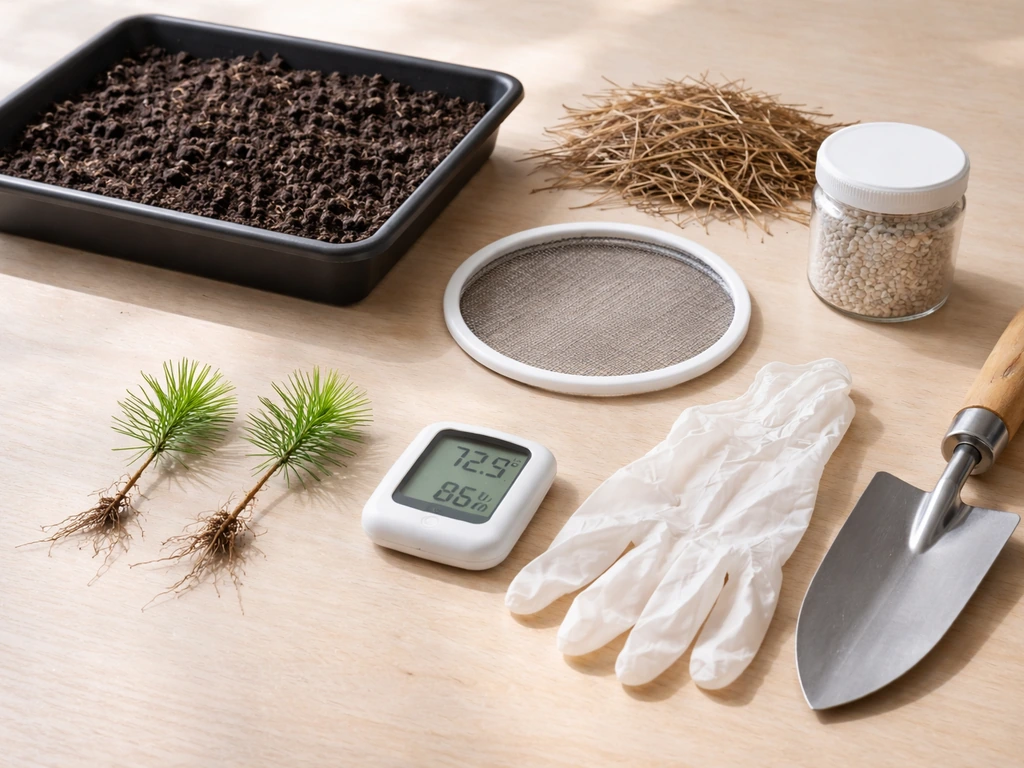
If you are growing inoculated pine seedlings before transplanting them, you will need a sterile or near-sterile rooting medium in the nursery phase to ensure the Tricholoma mycelium colonizes the roots without competition from other fungi. Autoclaving growth media at 121°C for around 35 minutes is the standard sterilization approach for lab-scale seedling prep. For field soil amendment (not full sterilization), some practitioners pasteurize a top-dressing material by heating it to 71 to 82°C for about 60 minutes to knock back competing organisms before applying it around target trees, similar to how pasteurized straw is used for saprotrophic species.
Contamination control in this context is about limiting soil disturbance and competing fungal species around your inoculation zone. Avoid tilling deeply. Minimize foot traffic on the inoculation area. Keep hygiene standards high when handling inoculum: wash hands before and after, avoid eating or drinking in the work area, and use clean tools for each site to avoid cross-contaminating with unwanted fungal strains. These habits carry over directly from general mushroom production hygiene practices.
Inoculation: getting your starting material and applying it correctly
Spores vs. cultured mycelia vs. shiro fragments
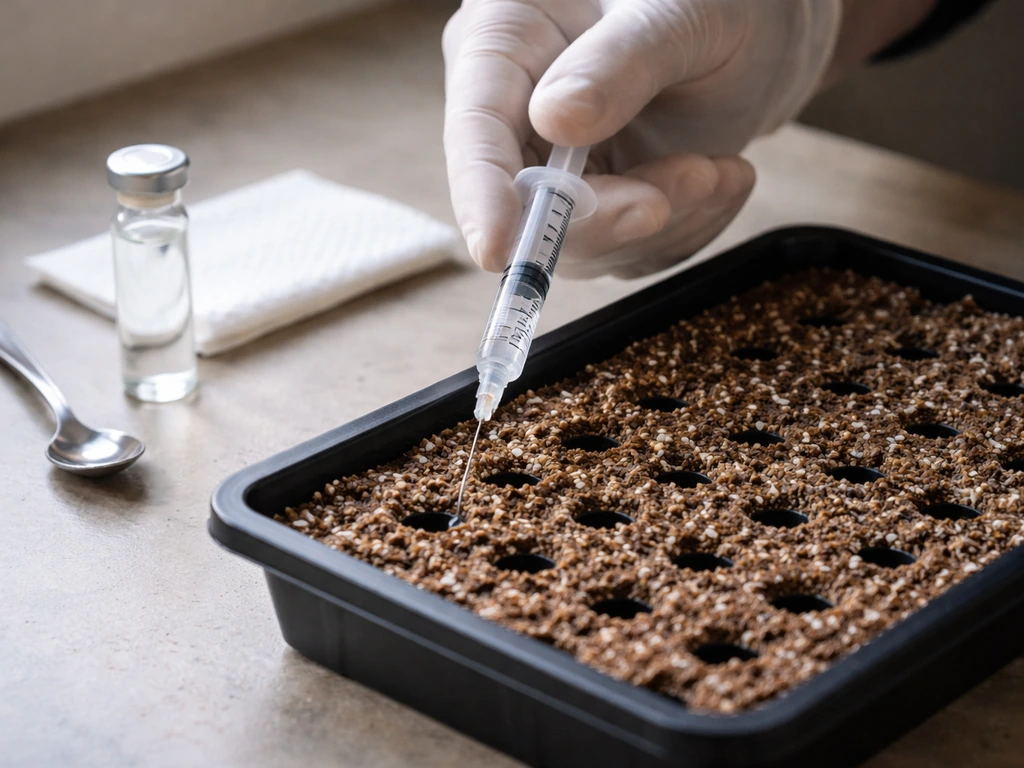
Spores are the most accessible starting point. You can collect a spore print from a fresh pine mushroom cap, dissolve it in clean water (roughly 1 gram of spore mass per liter of water), and apply the solution to the root zone of your target pine trees. Dig gently into the duff layer to within a few centimeters of feeder roots without severing them, apply the spore solution, and replace the duff. This is low-cost and low-tech, but success rates are genuinely low and timelines are long.
Cultured mycelia, produced under lab conditions from tissue or spore cultures, offer a more controlled inoculum with confirmed viability. A few specialist suppliers sell Tricholoma mycelium for research purposes. The inoculation procedure is similar: apply the cultured material to the root zone of compatible pines, ideally young trees with active feeder root growth. Research suggests that younger trees establish ectomycorrhizal associations more readily than mature ones.
Shiro fragment transplantation is the most reliable documented approach, but it requires access to an existing fruiting site. A shiro is the ring or arc-shaped mycelial mat that develops underground around established matsutake colonies. Carefully excavating small sections of shiro-containing soil and transplanting them to a prepared compatible site near pines gives the mycelium a head start with an already-established colony structure. Handle fragments carefully, keep them moist and cool during transport, and replant them as quickly as possible at the same depth.
Step-by-step inoculation for a home forest site
- Identify compatible host trees on your property: pine species appropriate to your region, ideally 5 to 20 years old for the best root activity
- Prepare your inoculum: spore solution, cultured mycelium, or shiro fragments, sourced or collected hygienically
- Choose your inoculation points: 1 to 3 meters from the base of each target tree, where feeder roots are most concentrated
- Gently pull back the duff layer (fallen needles and organic matter) without disrupting root structure
- Apply inoculum directly to exposed feeder roots or to the mineral soil surface immediately below the duff
- Replace the duff layer carefully and press it down lightly to retain moisture
- Mark each inoculation point discreetly so you can monitor the site over time
- Water gently if the soil is dry, then leave the site undisturbed
Incubation and fruiting: what the mycelium needs year by year
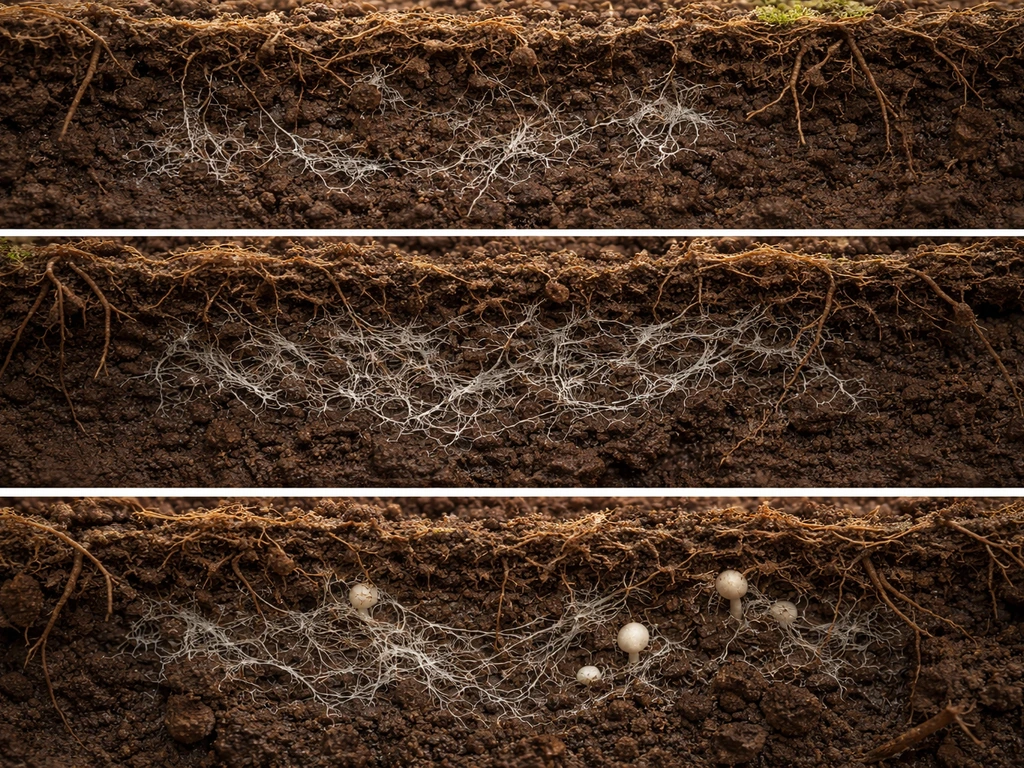
There is no 'incubation chamber' for pine mushrooms in the traditional home-grow sense. The mycelium colonizes and expands underground over years, and fruiting bodies appear when environmental conditions align correctly, primarily driven by seasonal temperature shifts and moisture events. Research tracking matsutake fruiting ecology has found that after a suitable temperature stimulus, fruiting bodies can emerge within 10 to 20 days depending on soil temperature and moisture. The trigger is typically a drop in soil temperature in late summer or early autumn, combined with adequate rainfall.
Environmental targets for the fruiting period, based on field ecology research, look like this: soil temperatures dropping into the range of roughly 10 to 15°C (50 to 59°F) tend to be favorable for primordia development. If soil temperature climbs back up above comfortable thresholds or drops too sharply after primordia have formed, abort is common. Primordia develop just below the surface of the shiro and take 10 to 20 days to open into full fruiting bodies under good conditions.
Soil moisture is critical. A period of reasonable precipitation before and during fruiting is the main trigger that field researchers and foragers consistently identify. If your site is in a dry spell, supplemental irrigation of the root zone can help mimic this, but avoid waterlogging. Think of it as keeping the soil consistently moist at root depth, not saturated.
Canopy management plays a role too. Pine mushrooms tend to fruit in areas with moderate canopy cover. Dense, closed canopies suppress airflow and desiccate the duff layer during dry periods, while very open sites lose moisture too quickly. If you have the land and the trees, thinning the canopy moderately and managing competing understory vegetation can meaningfully improve fruiting conditions over time. This is actually the most proven practical intervention for improving yields from existing natural patches.
If you are growing inoculated seedlings indoors first
If you are taking the seedling route, you will maintain your inoculated pine seedlings in a nursery environment for at least 6 months before transplanting. During this phase, keep the seedlings under appropriate grow lighting, maintain moderate humidity, and use a controlled temperature range suitable for your target pine species. Do not over-fertilize. Once the seedlings show healthy root development and ideally confirmed ectomycorrhizal colonization (visible as short, branched, thickened root tips rather than long thin roots), they are ready for transplanting to your prepared outdoor site.
Harvesting, managing your site over time, and storing your pine mushrooms
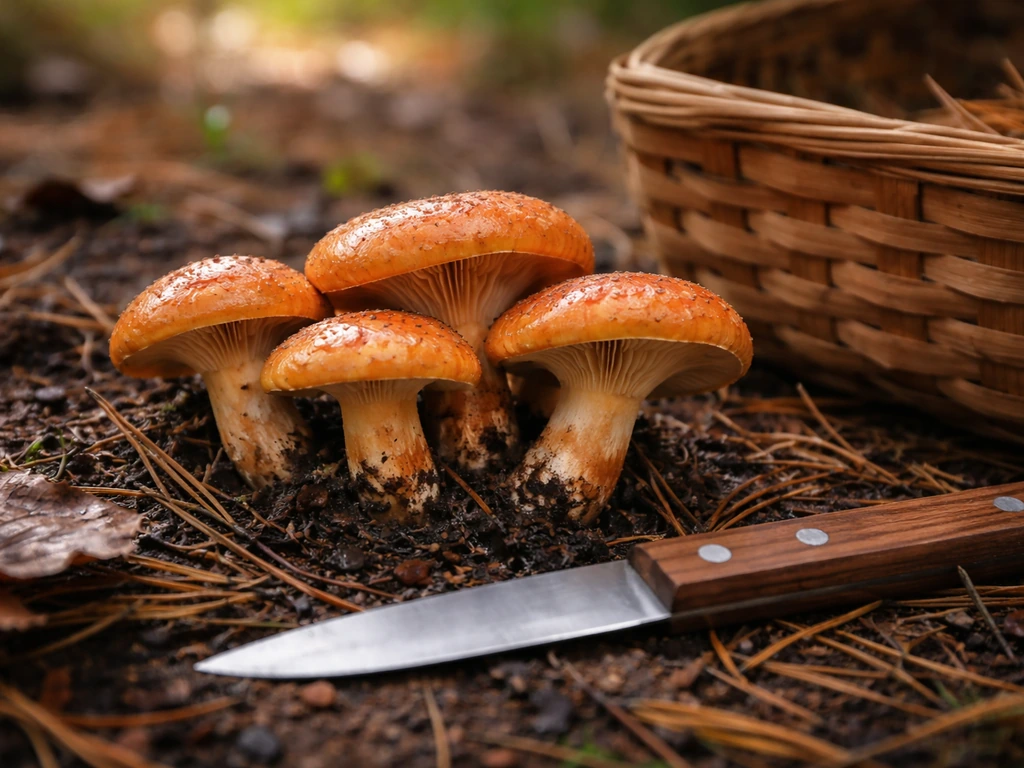
When fruiting bodies do appear, timing your harvest matters. Pine mushrooms are prized partly for their aroma, which is most intense before the veil beneath the cap breaks. Once the veil tears and the cap flattens and opens fully, the aromatic compounds diminish significantly. Harvest when the veil is still intact or just beginning to stretch, by gently twisting and pulling the mushroom from the soil rather than cutting it, to avoid leaving a rotting stump that can harbor pathogens in the shiro.
Pine mushrooms do not produce 'flushes' in the same reliable cyclical sense that saprotrophic species do. Fruiting is seasonal and tied to environmental cues each year. If your site is producing, the most important thing you can do is continue to manage it well: maintain canopy conditions, avoid soil compaction around the shiro, and let some mushrooms mature and drop spores naturally to help the colony persist and expand.
For storage, fresh pine mushrooms are perishable. Wrap them loosely in a paper bag and refrigerate them immediately after harvest. Do not store them in plastic, which traps moisture and accelerates deterioration. Stored this way in a cold refrigerator (close to 0°C), they will hold reasonable quality for 3 to 5 days. For longer preservation, slice and dry them in a food dehydrator, or freeze them after a brief blanch. The drying process concentrates the flavor well, though some of the fresh aroma volatilizes during drying.
Troubleshooting the most common problems
No visible growth or colonization after inoculation
This is the most common and frustrating outcome, and honestly, it is expected for at least the first year or two. Ectomycorrhizal colonization happens underground and is invisible without excavation. Give your site at least two to three full growing seasons before drawing conclusions. If you want to check progress, very carefully excavate a small area near a target root zone and look for the characteristic short, dichotomously branched mycorrhizal root tips that indicate successful colonization. If you see none after three years, the inoculum likely failed, and you can try again with a fresh application.
Contamination in nursery seedling production
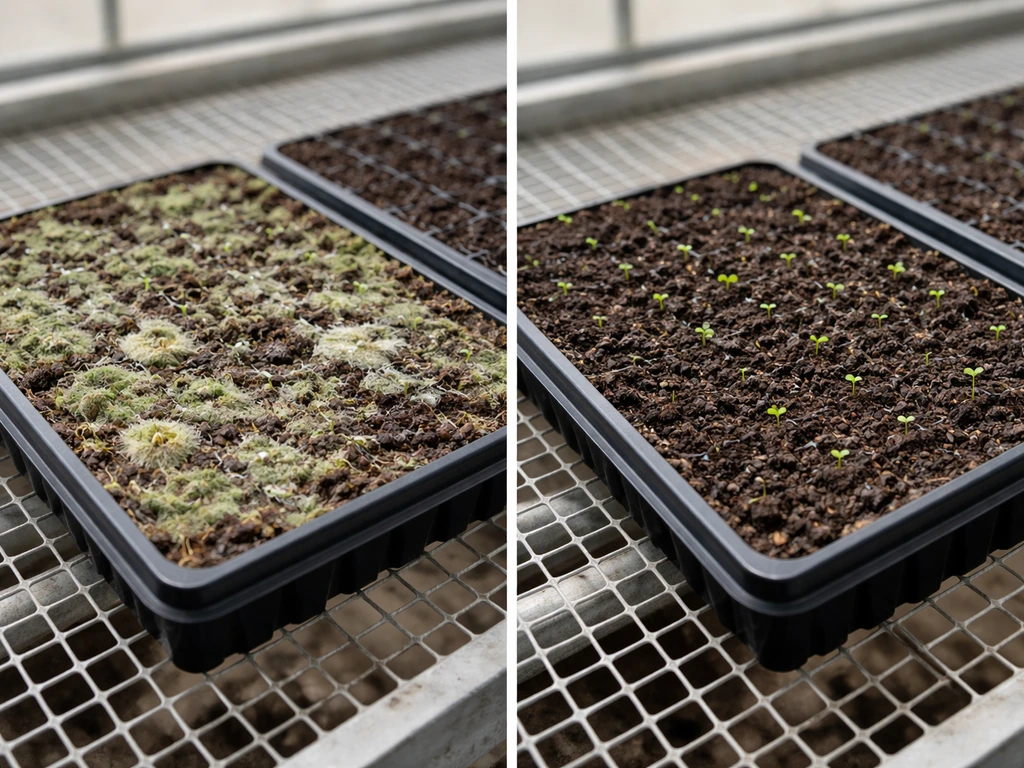
Competing fungi, especially fast-growing saprotrophs, will colonize seedling growth media if it is not properly sterilized. Trichoderma (visible as green mold) is the most common contaminant. If you see green, black, or other colored mold on your seedling substrate, that batch is compromised. Discard it, sterilize your equipment thoroughly, and restart with properly autoclaved media. Do not try to salvage contaminated seedling substrate.
Primordia forming but aborting before becoming full mushrooms
Abort at the primordia stage usually comes down to temperature fluctuation or moisture stress. If soil temperature spikes after primordia have formed (a late heat wave, for example), abort is almost inevitable. There is limited intervention available in a field setting, but mulching over the inoculation zone with pine duff can buffer soil temperature swings somewhat. Consistent soil moisture during the fruiting window is the other lever: if conditions dry out sharply after primordia form, they will abort. Supplemental irrigation applied slowly and deeply (not surface sprinklers) can help in dry autumns.
Poor site productivity despite established colonization
If you know colonization has occurred but fruiting is inconsistent or absent, the issue is almost always environmental triggering. Canopy that is too dense can suppress the temperature drop needed to trigger fruiting. Moderate selective thinning (removing competing trees to open the canopy by 20 to 30%) has been shown to improve fruiting from existing patches. Also check that your host trees are healthy: stressed or disease-affected pines provide poorer mycorrhizal support.
When pine mushrooms just are not the right fit right now
If you are reading through this and realizing that a 3 to 10 year timeline before your first flush is not what you signed up for, that is a completely reasonable conclusion. Species like black morels also require patience and specific ecosystem conditions, but other specialty edibles like black poplar mushrooms or parasol mushrooms can be cultivated on prepared substrates with far shorter timelines.
If you specifically want to grow black morels, focus on their habitat needs and patience, since they also rely on very particular seasonal conditions. Species like black poplar mushrooms can be cultivated on prepared substrates with far shorter timelines than pine mushrooms.
Getting a few successful grows under your belt with more tractable species will also sharpen your understanding of mycelium behavior, substrate management, and environmental control, all of which are useful if you do eventually return to a pine mushroom project. If you are looking for faster, more beginner-friendly results, you may want to explore how to grow parashrooms instead of pursuing a long pine-mushroom timeline.
FAQ
Can I grow pine mushrooms in a greenhouse or fruiting chamber if I control humidity and temperature?
Not in the typical “chamber” sense, because the fungus needs living pine roots to sustain an ectomycorrhizal partnership. A greenhouse can work only as a staging area for inoculated pine seedlings or to buffer weather during the fruiting season, but the actual underground establishment and seasonal triggers still depend on the host tree system outdoors or in a large, long-term container setup.
What counts as a “compatible” pine tree for how to grow pine mushrooms?
Compatibility is more specific than “any pine.” Success is best when the host species and local ecosystem match what the mushroom is adapted to (for example, lodgepole pine is commonly associated with American matsutake in the Pacific Northwest). If you have pines on your property but they are not the locally compatible host, you can inoculate, but expect much lower odds.
How do I know whether my inoculation actually took, if I cannot see the mycelium?
Look for ectomycorrhizal root tip morphology rather than surface signs. After a suitable waiting period, do a very small excavation near treated feeder roots and check for short, thickened, branched root tips with a mycorrhizal appearance. Visible mushroom fruiting can lag by years, so root confirmation is the most actionable way to judge progress.
Should I use nitrogen fertilizer or compost to help the pine grow faster?
Avoid nitrogen-rich fertilization around the inoculation zone. More nitrogen and rich compost can favor competing organisms and reduce the chances that the ectomycorrhizal fungus establishes. If you improve tree health, do it broadly and cautiously, but keep the treated soil relatively low in nutrients and well-drained.
Is spore spraying better than using cultured mycelium or shiro fragments?
Spore spraying is the easiest and cheapest but has the lowest success rate and longest timelines. Cultured mycelium is more controllable, but availability and viability can vary. Shiro fragment transplantation generally has the best documented odds because it transfers an already established colony structure, though it requires an existing fruiting site and careful, fast handling.
Can I start pine mushrooms from a mushroom I foraged and planted?
You can collect spores from a fresh cap, but “planting the mushroom” or burying mushroom pieces does not replicate how the fungus establishes symbiosis. The practical route from a forage is making a spore slurry and inoculating the root zone of compatible living pines, with the understanding that results are slow and uncertain.
What’s the right way to inoculate without damaging the feeder roots?
Work gently into the duff layer only a few centimeters, aiming for feeder-root proximity without cutting major fine roots. Replace the duff the same day and avoid repeated disturbance. If you can, treat only a small section per tree so you reduce compaction and stress while giving the colony time to expand.
How much irrigation should I do during the fruiting window?
Mimic consistent root-depth moisture, not surface wetness. In dry periods, apply slow, deep watering so the area stays reasonably moist at depth. Avoid waterlogging, since saturated soils can suppress primordia development and raise the risk of competing growth.
If primordia form but then the mushrooms abort, what should I troubleshoot first?
Temperature swings and moisture stress are the top culprits. Check whether the soil warms back up quickly after the temperature drop, and whether the treated zone dries abruptly. A practical field mitigation is using a pine-duff mulch layer to buffer soil temperature changes, without sealing the soil into a constantly soggy state.
Does canopy thinning always help pine mushrooms fruit?
Often it helps, but the target is “moderate” openness. Too dense a canopy can prevent the seasonal airflow and temperature shift cues, while an overly open site can desiccate the duff and reduce moisture retention. Consider selective thinning and understory management around the inoculated patch, and avoid major clear-cutting.
How long should I wait before concluding that my inoculation failed?
Plan for multi-year timelines. Many attempts do not show meaningful results in the first one to two years because the underground partnership is invisible. If you have no evidence of ectomycorrhizal root tips after about three years, it likely did not establish well and repeating inoculation is reasonable.
Is it safe or practical to compact soil or place heavy mulch over the inoculation area?
No, heavy compaction is a frequent failure mode, especially around the shiro region where primordia eventually develop. Use mulch that buffers moisture and temperature, but do not press it down or run equipment over the area. Keep foot traffic minimal so the soil structure stays intact.
How should I store pine mushrooms right after harvest?
Refrigerate quickly and keep them dry enough to avoid sogginess. Use a paper bag rather than plastic, and aim for cool storage near 0°C for a few days of best quality. If you plan to keep them longer, slice and dry for concentrated flavor, or freeze after blanching to reduce quality loss.
What’s a realistic “beginner mistake” when trying to grow pine mushrooms?
The most common mistake is expecting a substrate-grow method like bags of sterilized grain, logs, or a standard fruiting chamber to work. Pine mushrooms require living pine roots and ectomycorrhizal establishment. If you do not have access to compatible pines and the patience for ecosystem-based management, switching goals to a conifer-associated beginner species is often the more practical path.